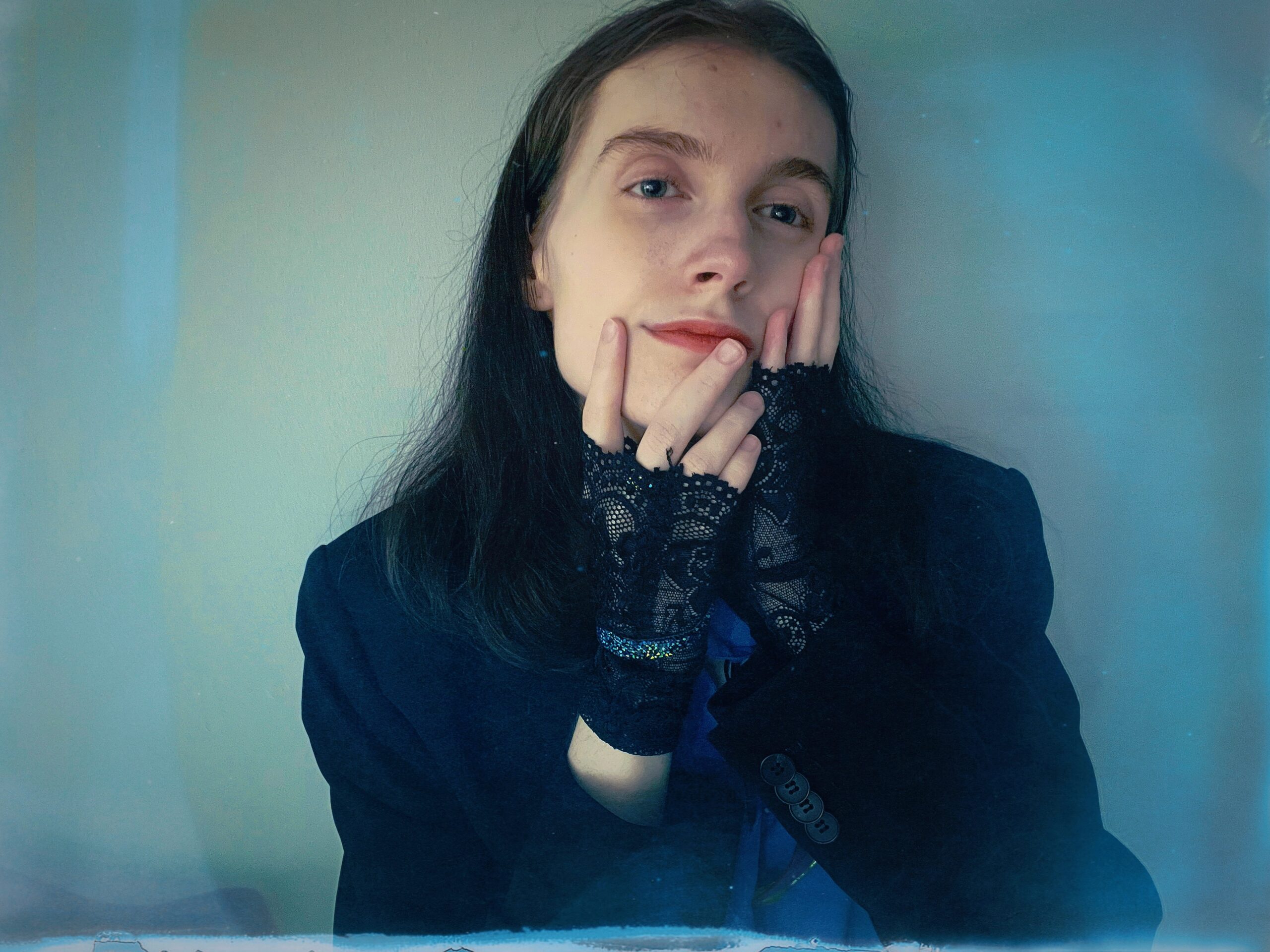
Skaivi is a Chicago-based singer, songwriter, music producer, and recording engineer with six years of experience working in recorded audio. An independent artist with entrepreneurial ambitions, she produces and engineers her own music and hopes to eventually establish a company encompassing all aspects of her creative and music-related work.
Music has been part of Skaivi’s life from an early age. She comes from a musical family: her grandfather was a guitarist, and her mother studied classical piano in Stalowa Wola, Poland, before later becoming a lyricist. Her mother encouraged Skaivi’s creativity throughout her childhood, supporting her interest in singing, songwriting, and music and helping lay the emotional and practical foundation for her eventual career.
Skaivi began writing songs at 13 and trained in classical opera at 14 while continuing to independently develop her vocal skills across a range of styles. Her musical background also includes experience with clarinet and percussion in her school orchestra, as well as independently learning ukulele, acoustic and electric guitar, and keyboard.
Her path into audio production began at 17 when she started creating demos using GarageBand on her iPhone. Through those early productions, Skaivi discovered that she had an intuitive understanding of how sounds and textures could work together. Producing gave her a new way to fully express herself and, for the first time, made a career in audio feel like something tangible rather than simply an aspiration.
Creative control became an important part of that journey. Earlier experiences working with other producers often resulted in songs that did not capture what Skaivi heard in her head. As someone who prefers to be deeply involved in her own work, she realized that learning production and recording engineering would allow her to translate her ideas into music more authentically. While she enjoys collaboration, being directly involved in creating her solo work has become central to her identity as an artist.
Skaivi’s development as a producer and engineer has largely been self-directed. She has completed Music Business coursework through Berklee Online, studied basic music theory through Coursera, and received private classical vocal training, but she has not followed a traditional audio education path. Instead, she has built her production and engineering skills through hands-on experience, experimentation, intuition, independent learning, and online tutorials when she needed to solve specific technical challenges.
Growing up, Skaivi rarely saw women represented in technical audio roles. Women in music were most often presented to her as singers, performers, and occasionally songwriters. As a child, that lack of representation meant she did not initially see production or engineering as possibilities for herself. Once she entered the audio field, she became increasingly aware of what it meant to be part of a much larger shift in the industry.
Today, Skaivi sees her work as both a personal creative pursuit and part of expanding what is possible for the women who come after her. She hopes that greater visibility for women producers and engineers will allow future generations to enter technical audio with greater confidence, comfort, and a genuine sense of belonging.
As she continues building her career, Skaivi plans to deepen her skills in music production and recording engineering while expanding into mixing and mastering. At the heart of her work is a desire to remain hands-on, continue learning, and maintain the creative independence that first drew her to audio.
Early Life & First Exposure to Audio
When did you first realize audio could be a career path for you?
I would say that moment arrived when I produced some demos on my iPhone’s GarageBand app when I was 17. I realized that I had a strong intuitive sense in how various sounds and textures can go together. Putting together a song was not a difficult battle for me at all, rather something that let me feel like I could finally express myself to my fullest potential. Even my very first productions were, honestly, very good for a beginner on a phone. It wasn’t just me who thought so, but multiple of my family members too. Even the ones who were the type to hold strong, honest opinions enjoyed my beginning work. At that point, I knew I had something good brewing for me when it comes to music production. It wasn’t just a faint dream or general possibility anymore. It was something I now knew I could actually do, and do well.
What initially sparked your interest in audio or sound?
What sparked my interest in audio was the fact that whenever I got someone else to try to produce my songs and capture my vision, it never worked out. It didn’t sound like what was in my head, and that bothered me as a perfectionist. Also, I learned over time that I like to be very personally hands-on with my work. Looking back, that was a big factor of why something never felt right in officially releasing songs others produced for me as well. I’m totally fine with collaborating and having my vocals or writing on someone else’s production, but when it comes to my main solo discography, then I need to put in a large amount of the work myself or else it doesn’t feel like it’s my music. Getting into the realm of music production brought me that power to bring my creative dreams to life more accurately than anything else ever did.
Was music or sound an important part of your life growing up?
Oh, absolutely. My mother’s side of the family is very musical, and that carried over to me as well. My grandfather was a guitarist, and my mother was also a musician from a young age. She
went to music school from 2nd to 7th grade and trained as a classical pianist in Stalowa Wola, Poland, later going onto becoming a lyricist in her adult years. She always encouraged music (and all art) for me and my brother growing up. I’m sure she was really happy to see I was so
naturally inclined towards it! We loved listening to music together, she always recorded me singing covers of Lady Gaga songs, and I know she would have signed me up for piano lessons, too, if she could. When I started showing interest in advancing my skills as a young teenager and then eventually wanting a professional career, she was fully supportive. Everything from getting me opera lessons to helping me set up what would become the (emotional and practical) foundations of my professional career, she was there for all of it. So, music was in my life from the very beginning. My mom’s own musical life, RedOne’s glamorously dramatic production style…it all impacted me a lot, and very positively.
Did you see anyone who looked like you working in audio when you were younger?
No, not really. When I saw women involved in music, it was always as a singer and performer. Sometimes I saw one as a songwriter too, but never in anything technical when I was a kid.
If not, how did that impact you?
Growing up as a younger kid, it made it not even seem like an option for me to be in technical audio. Since women were always shown as performers, that’s where my mind always automatically went when it came to women’s roles in the industry. As a teenager and now young adult, by then I knew it was possible because that’s when I started my journey in audio…but even though I actually went for it, there was still always a sense of being an outlier. When you join something where there’s already many women—where they’re welcomed and seen as totally capable and not an alien—it’s just different from an area where there are very few women present. I felt (and still feel) like someone who is actively part of a larger movement in changing what women do in the music industry. It’s a big thing to sit with. I feel a kind of responsibility to brave it out as a woman in the audio sphere so that future generations of women producers and engineers can join the technical side of music creation with more confidence, comfort, and a genuine sense of belonging.
Education & Training
Did you attend a university, college, trade school, or training program? ● Institution name: Berklee Online, private classical opera training, Coursera basic music theory course
- Area of study: Music Business, Music
- Degree or certification earned (if applicable): Coursework complete; degree not pursued
Do you have a musical background?
Yes, I trained in classical opera when I was 14 (along with my general ongoing, independent vocal learning since then in all styles), I have been writing songs since I was 13, and my
production and engineering skills were always used to create my official music releases as a professional artist. I also, at one point, actively taught myself and played ukulele, acoustic guitar, electric guitar, and electric keyboard. I would love to get back to playing electric guitar and keyboard again eventually. And when I was around 11-12 years old, I participated in my school’s orchestral band. I started on clarinet and switched to percussion halfway through (snaredrum, glockenspiel, gong, etc.). I actually scored the 2nd-highest out of my whole grade on the Selmer Music Guidance Survey, being just one point off from a perfect score.
Were there any classes, programs, or experiences that were especially influential?
I would say that my experience in school band in elementary school was definitely influential, as it allowed me to experience music in a semi-professional setting for the first time. What was also very influential were my first attempts in an official music career at around ages 14-16. I went through multiple aliases and visions for my career, of my music, but it didn’t work out. This was also the time when I had other people produce my music, so there’s no surprise it didn’t work out. Honestly, I am glad it didn’t…I was too young, and I was outgrowing things quickly. What that time period did help me with was figuring out the foundation of what I wanted versus didn’t want in my career for the future. I then started my actual career in early adulthood with a decent idea already of what I desired my path to really look like. That I am grateful for.
What education or training do you feel helped you the most once you entered the field?
I never actually had any formal education or training in audio yet, but I am open to it. What has led me this far has purely been my own intuition, hands-on experience, and a few random Youtube tutorials here and there for when I needed help with something specific. Although, I definitely want to expand my skills in both music production and recording engineering even more, as well as start learning mixing and mastering, so perhaps something more official in terms of training would be beneficial for me soon.
Career Beginnings
How did you get your start in audio?
I started on my iPhone at 17, after deciding to finally give music production a try. It was something that was always in the back of my mind, but I didn’t find the courage to believe in myself until I came across Grimes and found out about all the audio work that she has done in her own career. Seeing her journey and how she developed her technical music skills from beginning to end was fascinating and really made me believe that I could do it too. After I made some demos on that iPhone of mine and even got confirmation from the people around me that what I was making was good, my mother and brother eventually gifted me a MacBook Pro when I was 18. That’s when I downloaded Logic Pro and finally started diving into real music production. Recording engineering for my vocals came a bit later, when I was 20 years old, as that’s when I first started singing in my music (my first vocal-led release was my song “Selene Of The Night”).
What were your first jobs, gigs, or internships like?
I have not done any internships, nor do I plan to at this point unless it’d be something particularly special to me. So far, I have only done production and engineering for my own music (both solos and collaborations), but I would absolutely be down to produce another artist’s song or record and comp someone’s vocals in the future! If the right opportunity comes my way, I’m happy to take it.
What skills or lessons did you learn early on that still serve you today?
One of the best lessons I’ve learned is being okay with being a learner. It doesn’t matter what your skill level or age is. Stay curious, stay open. We are all students of life who will always have new things to learn, new information to process, new experiences to live through. Take it all in with a child-like heart. You don’t have to be “the best,” and no one will ever objectively be the best anyways. It’s better to be the most receptive and curious-minded version of yourself that you can be, and then to use that knowledge you gain to better your life, broaden your perspective, and discern what is best for you as an individual. Again, living is all about that constant learning. It’s okay to be wherever you are in your journey, as we are all students in our own ways, experiencing things the way we are meant to be experiencing them through our own lens. As someone navigating and figuring out my own journey in audio these last few years, this has been something helpful to remember. I don’t need to be the most proficient producer and engineer in the whole world to be good at what I do. What matters is that I keep that passion within me brightly on fire and continue to learn more as I go on.
Did you have a mentor or someone who significantly supported your growth?
My mother, a hundred percent. There were so many times in my life where she was pretty much the only person on Earth who fully championed me with complete sincerity. She was someone who always truly believed in my visions and ambitions. Her heart was always in the right place when it came to me. She has also had a large hands-on role when it came to my career as well. She assisted me with anything I had trouble with, she helped me prepare for things (like photo shoots and single releases, among other things), she did hours and hours of hard work in getting my name out there to the media…she was always right with me through the lowest lows and highest peaks. I couldn’t ask for a better mother and supporter than her.
What barriers did you encounter early in your career, if any?
Would it make sense to say it was my own emotional barriers that I encountered? In the beginning, I actively had to push through and work on that mental wall of being “not good enough” or “not smart enough” for audio work. I was brave enough to go for it, yes, but getting into audio, and especially fully owning myself as someone who can do technical things, was definitely one of those “do it even if you’re scared or unsure” type deals. I was usually viewing myself as someone more elusively, fluidly creative, less so technical at first. Allowing myself to own my special space in that area of music was definitely something I had to learn how to do confidently. That was part of the bravery as well.
Your Career Today
What does a typical workday look like for you now?
I would say it depends on the day. Sometimes I mix it up and do multiple things in a day, but it’s also common for me to spend a whole day focusing on one thing. Some days, that’s production, like either starting a completely new work or continuing to produce a song I haven’t finished yet. I often find myself perfecting the smallest details in the latter choice. Other days, I’ll spend hours
in my home studio, getting my vocals down for a song in the best way I can. I love to perform theatrically (all over the spectrum from dark to silly) and with some sort of drama to my voice! And then other days I’ll spend songwriting, practicing singing, and/or doing administrative work like dealing with metadata, registrations, music rights, etc. It’s all fun to me in its own way.
How do you stay organized and manage the demands of your work?
I make sure that the most important or urgent things take the most priority in my workflow, or I at least make sure to spend the most time on them…I also try not to be too rigid, though. Allowing myself the freedom to move between things is what allows me to function. If I tether myself to one thing and one thing only, it stresses me out and I can’t get things done. So ironically, for me personally, having multiple things to do actually allows me to work better and with less pressure. That’s why it’s important to find what works best for you, not listen only to what works for others. Also, I make sure to keep an organized system. On my computer, I have my important music releases organized in folders with proper artworks, files, metadata, stems, etc. so that I have it handy and can access it quickly. Keeping the actual files (or physical items) organized can help you save time and live with less hassle.
What do you enjoy most about what you do?
Getting to bring new music into the world and bring the ideas from my head into real life is what I enjoy so dearly about what I do. There’s a reason music feels like actual magic to me. Crafting songs with your own soul and hands, turning something that is not here yet into something that actually exists and that other people enjoy…it’s beautiful. It’s so fun getting to create new sounds.
What aspects of the job are the most challenging or least enjoyable?
I would say I actually enjoy most things about technical audio. Sure, there can be a learning curve for some things…but it’s still getting to add something new to your skillset, and I find that enjoyable in itself. What is really most challenging for me personally is that sometimes I don’t always have the energy to get things done, and that can interfere with the workflow. Working on a project while tired is obviously harder to do than while feeling energized and refreshed. I can
handle doing production work during these days, but recording work tends to need to be on another day, which sucks when you know you have songs to finish.
What is your favorite way to spend a day off or time away from work?
I usually love either listening to music—such as in the electronic genre (everything from Joost Klein to Lady Gaga and Twenty One Pilots) or metal genre (love Spiritbox, Poppy, and Evanescence), or watching TV shows and movies. I’ve been really fond in recent times of watching my favorite American shows dubbed in Polish. Like, lately I’ve been watching Victoria Znaczy Zwycięstwo, which is Poland’s title for Victorious. It helps me a lot with keeping my Polish language skills up! Good for me, considering that’s my heritage language and I am building an active presence in Poland.
Challenges, Growth & Perspective
What obstacles or systemic barriers have you faced in the industry?
Honestly, an obstacle that has stood out to me these last few years has been the lack of a true, close friendship with another professional musician. I’m someone who has always tended to exist as a bit of a lone wolf—not at all because I dislike relationships, but I tend to need very deep and true connections in my life for them to satisfy that need for human friendships. It’s hard for me to build on top of connections that are more casual, and I definitely cannot do shallow. As you can imagine, it does sting a bit inside when I see working musicians who have genuinely meaningful comradery with each other. Sometimes they even form friendship groups with each other, and with that they can collaborate on music and share resources, and that’s beautiful. Other than the emotional aspect, having close relationships in the industry is important because you’ll need support in one way or another…sometimes it’ll be for needing a listening ear, sometimes for something practical, other times they may help you get an opportunity (and you the same for them, in all those things). I hope to someday find “my people,” especially in an industry where that can be tough to do due to competition, not always being able to trust everyone, lots of different people on the scene, etc. Not to mention, being independent, there’s some gatekeeping with some potential friendships as well and finding opportunities to make good connections. Even with all that, I am sure I’ll cross paths with the right artists at the right time though.
How have you navigated or pushed through those challenges?
Overextending myself for so long was definitely not the right move. I learned that it’s best to pour your energy into what you find gives you back the most vitality and joy. Running after every little connection, even if you like that person and even if they’re in the music industry, in hopes that they might possibly return a sliver of the support back to you, will only exhaust you. These days, I have decided to be kind and loving and openhearted, but let most people who are interested come to me instead. The only exception is that I feel a particularly strong pull to come to them first, much more than I do towards other people. Otherwise, I try to stay in my own power and lane the most. With that philosophy, I can make sure to focus the most on myself, my music, and tending to the connections with others that truly make me happiest.
Have you seen the industry change during your career? If so, how?
Oh, absolutely. When I was younger (not even that much younger), there were barely any women music producers and engineers. It has only been in the last few years that I see women really starting to get into audio and achieving more credits in technical roles on a larger scale. I think it’s because of social media. I see some women who work in audio online encouraging other women to step foot into this world, and I think it’s really helping women newer to this world take that leap. Social media amplifies things, so when they see people who look like them doing these sorts of jobs, they feel better about trying it out too.
What still needs to change to better support women and marginalized genders in audio?
I think building an even more active push to showing women the world of audio would help. Showcasing people’s journeys from newbie to professional (to curb the perfectionist mindset), spotlighting women producers and engineers often, bigger acts in the music industry recruiting women for these roles in their songs (shoutout to Addison Rae; Elvira Anderfjärd and Luka Kloser were excellent producers in her recent album), and just, in general, normalizing women in audio in as many ways as can. Normalizing women as producers and engineers, and celebrating women’s work loudly, is the biggest key to better supporting women’s paths towards audio. I do have to mention one big elephant in the room, though, and that would be sexual harassment. I’ve seen so many women in the industry talk about how they have struggled with those kinds of experiences. We have to somehow foster more respect and less entitlement in the industry. Let’s encourage each other to stick up for others when we see something wrong going on, especially men with their fellow male colleagues, and let’s build up and support people who are known to be respectful collaborators. Proper resources for women (or anyone who goes through those experiences) are also important: how to recognize if something inappropriate has happened, what to do about it and where to get emotional and/or legal support, how to protect yourself.
Advice & Looking Forward
What advice would you give to women or young people interested in entering audio?
My advice would definitely be to remember to keep the process of learning audio light and fun! Don’t pressure yourself to become “perfect” (that doesn’t exist) or to reach a certain amount of skill within a specific amount of time. Remember why you have an interest in audio in the first place, and keep in mind that the journey is just as important as the destination.
What skills—technical or otherwise—do you think are essential for success?
I think having a good ear for the various dynamics of sound and how the different elements dance around with each other is very important. Being able to pay attention to the little details like that, so you can build the best song possible or adjust the levels properly, helps to really elevate a track. I also think the skill of persevering is important as well. The area of audio can have its tough moments (especially in the beginner phases), but as long as you don’t give up and strive to find solutions, you’ll be all good.
What long-term goals or aspirations do you have?
I have so many! I love to keep learning and improving. One of my goals is to learn my DAW completely, like it’s the back of my hand. Obviously I know how to generally use it, but I want to go deeper into all the things I can do with it. I feel like it’d really open up not only my technical skills, but my creative world as well since I’ll know how to do new techniques. I also would love to learn how to mix and master. It’s great getting to collaborate with others and see what they can do with your song in that regard, but I also want to have the freedom to mix and master whenever I choose to as well. It’s a valuable skill to add to my arsenal and also more cost-effective. I’d also be able to do that sort of engineering for other artists too, which is really cool…and honestly, a good way to earn extra income.
Is there something you wish you had known earlier in your career?
I wish I knew that I could truly do anything I put my mind to! No skill is completely out of reach unless I put that limit on myself (and it’s better to never limit yourself like that from insecurities). As long as I put in the effort and time to actively learn it, it’s possible to really be able to do something new. I wish I also knew it was okay to use my labels proudly: yes, I am a producer! And that is that.
Favorites & Personal Touch
Favorite or most-used gear:
I love all my gear…but in recent times, I’ve fallen in love with my Shure SRH840A headphones. I got them a few months ago, and they’ve been great for recording my vocals in my studio. Usually, I find a lot of studio-monitoring headphones to be so incompatible with my ears; they’re so tinny and lack any sort of bass at all. It’s straight up irritating for me to use them. But these Shure headphones, on the other hand, fix those issues for me amazingly. The high end still sticks out the most, which is vital for hearing any artifacts I don’t want in my vocal takes…but
that higher end keeps its clarity in a rather soothing way to listen to. It’s like listening to a delicate crystal timbre rather than a brash trumpet. Meanwhile, the lower end stays relatively neutral but doesn’t completely get rid of any hint of bass. That helps both balance how the song sounds in my ear on a personal level, as well as keeps me in the vibes of the song as well. I like to have fun when recording, so the fact that a little, tiny bit of bass is still detectable makes it a better process for me when playing everything back.
A piece of gear you can’t live without:
I definitely cannot live without my precious Logic Pro DAW. Honestly, I’ve tried so many DAWs through the years, and I just can’t work with them for some reason. I found a lot of them so clunky overall. But Logic…I was able to start intuitively using that one from the very start, totally on my own. The UI is so clean and effortless for me. I’m sure, if absolutely needed, I’d somehow eventually be able to learn another DAW if Logic disappeared from the face of the Earth (please don’t do that, though), but it would never be the same like it is with Logic. That’s my baby! I love Logic so much. It just flows perfectly with me.
A moment in your career that made you feel proud or affirmed:
There’s quite a few special things that happened for me that made me so happy! One moment in particular that sticks out a lot for me is when I was in a video call with Troy Carter, and he told me about how what I am doing is different, and how I pull from the universe and channel like that to create my art. I still remember how he did a fun gesture when saying that too—it was something like him pulling from the sky into his head with his hand. And in general, he was just expressing a lot of interest and belief in my music throughout the call (along with giving some good advice from his years in the industry). It was very sweet and really made me have full confidence that I am doing something right. Someone who has seen so many different types of artists come and go in the industry, and who has been the manager of some of the most important musicians’ careers, thought that what I was doing was special. It leaves a positively lasting mark on the soul when something like that happens. Not to mention, one of his past main clients, Lady Gaga…she has always been one of my biggest inspirations both musically and in just every way artistically, and so has RedOne (a past producer of hers) and his production style. So having someone who was that involved in her career say something like that about me is honestly awesome.
Anything Else
Is there anything else you’d like to share or contribute?
Keep on rockin’, ladies! I believe in you all and your careers in audio. You can do it and get through anything, no matter what. I wish you all so much success.