For Hannah Brodrick, music has always been at the center of her life, but it wasn’t performing that ultimately led her into the industry. Growing up in Sussex, England, she studied piano, trombone, and later bass guitar, spending countless hours immersed in music lessons, rehearsals, gigs, festivals, and record shops. While she loved music, the pressure of classical training and performance left her searching for another way to be part of the world she loved.
That path revealed itself when she discovered Music Technology as an academic subject. For the first time, Hannah realized there were careers in music beyond being a performer. The discovery opened the door to a future where her curiosity about sound, recording, and technology could become a profession.
Her fascination with audio began long before she knew live sound engineering existed. As a child, she and her sister spent hours recording songs from the radio and creating their own stories on a dual-deck cassette recorder, captivated by the idea that sound could be captured and replayed. As a teenager, she became deeply involved in the rock and metal scene, documenting every concert she attended in a handwritten gig diary complete with ticket stubs, wristbands, and notes about how each show sounded. Looking back, she realizes she was analyzing live productions years before she understood that someone was mixing them.
Hannah earned a BA (Hons) in Music Technology & Sound Design from the University of Hertfordshire before continuing her education with the Advanced Live Sound course at Britannia Row Productions Training. She credits the program and mentors Barry Bartlett and Marcel Van Limbeek with helping bridge the gap between education and the realities of professional touring. Later, an advanced wireless systems course with Sennheiser sparked a passion for RF coordination, leading directly to her first major touring position as an RF Technician and laying the foundation for an expertise that continues to shape her career today.
Like many women entering professional audio, Hannah initially saw very few people who looked like her working behind the console. Without visible role models, she questioned whether she belonged in the industry at all. It wasn’t until she began meeting other women in live sound that she recognized the issue wasn’t a lack of ability, it was a lack of representation. Those experiences reinforced the importance of visibility, mentorship, and creating pathways for the next generation of engineers.
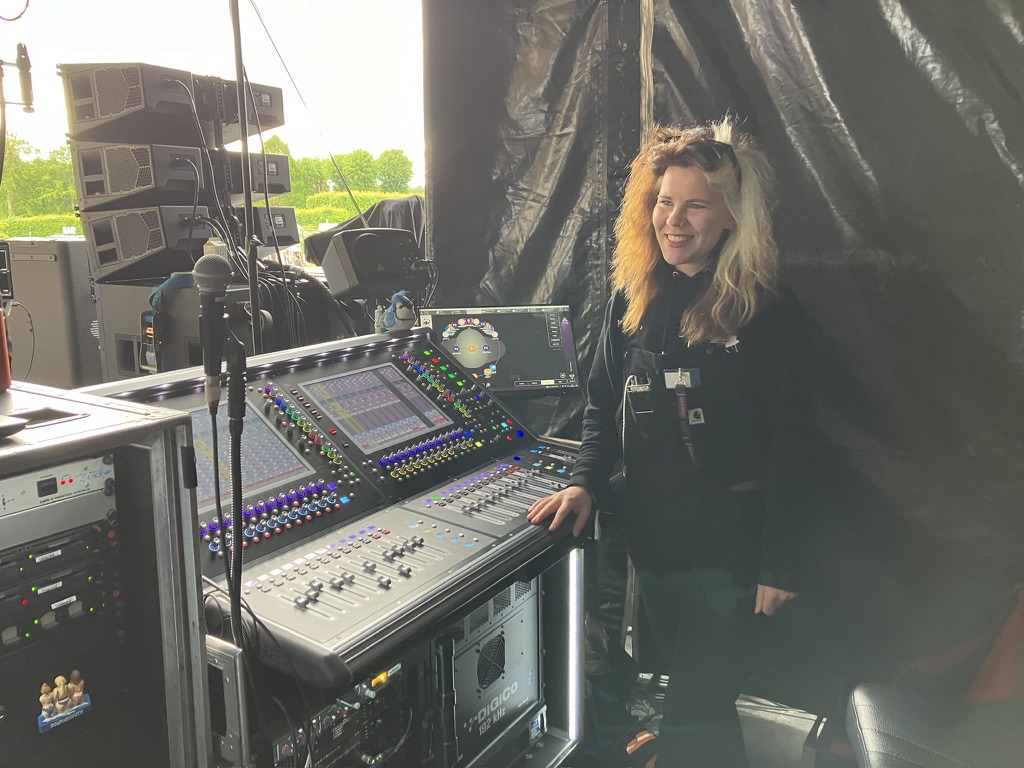
Today, with more than fifteen years of experience in live sound, Hannah is the Monitor Engineer for Florence + The Machine, where she combines technical expertise, RF knowledge, and a collaborative approach to deliver world-class performances night after night. She remains passionate about continuous learning, mentoring others, and encouraging aspiring engineers to recognize that there is no single path into audio, only a willingness to stay curious, keep learning, and say yes to opportunities.
For Hannah, the most rewarding part of the job is helping create unforgettable live experiences while proving that there is room for everyone in professional audio. Her journey stands as a testament to the power of representation, education, and believing that passion, not perfection, is what builds a lasting career.
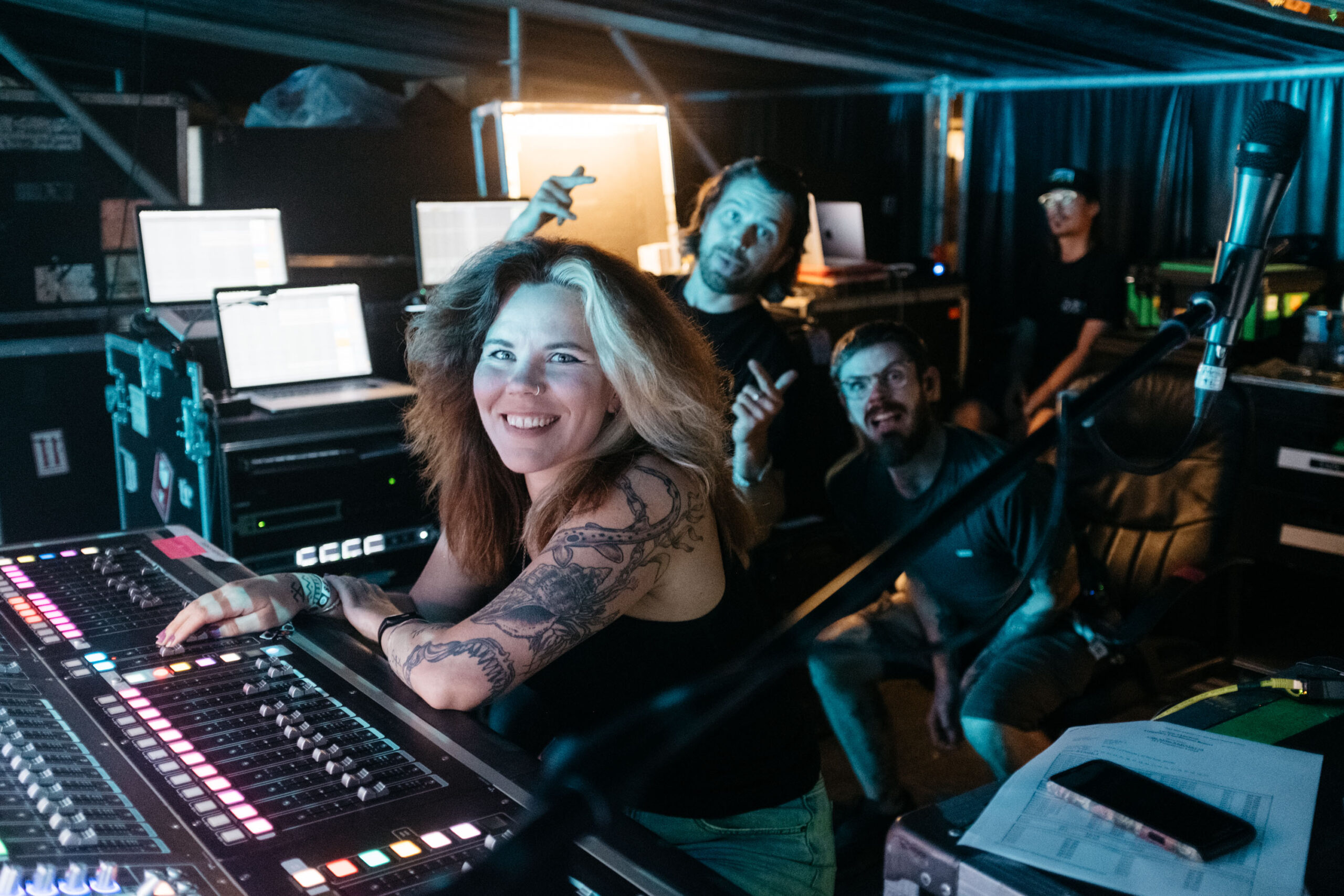
Career Beginnings
How did you get your start in audio?
Like many people, it took me a while to get my foot in the door, taking various unpaid internships and applying for anything remotely music-related. It was frustrating at times, but I was determined and fortunate enough to still be living at home, which meant I could afford to take opportunities that simply didn’t pay.
My first real break came through local theatre and production work. I found myself doing a bit of everything; building stages, loading trucks, running cables, operating basic sound and lights, and generally saying yes to any opportunity that came along. Looking back, that broad experience was
invaluable because it gave me an understanding of how live events function as a whole rather than just from the audio perspective.
From there I completed the Advanced Live Sound course at Britannia Row Productions Training, began working in their warehouse and on events, and gradually progressed into touring.
What were your first jobs, gigs, or internships like?
Chaotic, if I’m honest! I initially tried to get work experience in recording studios, but none of them ever replied to my emails. The only part of the music industry that seemed willing to hire me was music PR and marketing, where I was exploited pretty heavily and given very few opportunities to learn or grow. Thankfully, that didn’t last long and I eventually managed to wrangle my way into the local theatre.
From there, I began working as a casual technician in local theatres and running basic sound and lighting for community events. I also spent plenty of time in warehouses peeling tape off cables and preparing equipment for jobs. One week I might be building stages, the next operating sound, and the week after driving a van full of equipment somewhere.
What skills or lessons did you learn early on that still serve you today?
One of the biggest lessons I learned early on was that growth is uncomfortable. Every meaningful step forward in my career has involved saying yes to something I wasn’t entirely ready for and then feeling completely out of my depth for a while.
When I was starting out, I spent a lot of time worrying that everyone else knew what they were doing except for me. Over time I realised that becoming good at something requires being willing to be bad at it first. Whether it’s learning a new console, taking on a new role, or stepping onto a bigger tour, there’s always a period where you’re figuring things out and making mistakes.
I think a lot of people, especially early in their careers, mistake that discomfort for failure. In reality, it’s usually a sign that you’re learning. The ability to tolerate that feeling and keep going has probably been one of the most valuable skills I’ve developed.
Did you have a mentor or someone who significantly supported your growth?
Not at the very beginning, and I think I felt that absence quite strongly.
As my career developed, however, I was fortunate to meet people who had a huge influence on me. My tutors Barry Bartlett and Marcel Van Limbeek at Britannia Row Productions Training were incredibly important, not just for the technical knowledge they shared but because they genuinely cheered me on and encouraged me to pursue a career in live sound.
Karrie Keyes, founder of SoundGirls, was another significant influence. Seeing women successfully operating at the highest level of the industry helped me believe it was possible for me too.
Alex Cerutti, a monitor engineer whose work I greatly admire, has helped me through various difficult points in my career and is still someone I reach out to for advice.
These days, I don’t think of mentorship as something that comes from one person. I’ve learned from colleagues, artists, crew members, friends and peers throughout my career, and I still do.
What barriers did you encounter early in your career, if any?
The biggest barrier early on was simply getting access to the industry. I didn’t know anybody working in live sound, I had no contacts, and I had very little understanding of how careers actually progressed.
Being a woman certainly presented some challenges too. Early in my career I missed out on opportunities because tour managers or employers were uncomfortable with the idea of mixed accommodation or simply weren’t used to seeing women in technical roles. Thankfully I encounter that sort of thing far less often these days, but it was definitely part of the landscape when I was starting out.
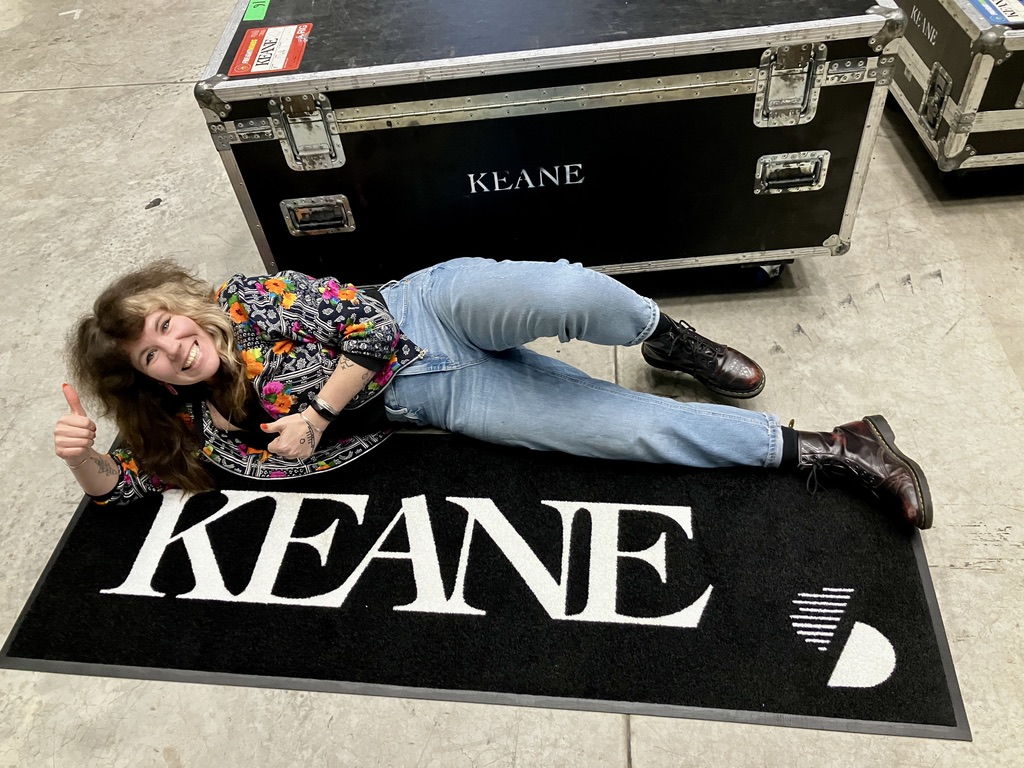
Your Career Today
What does a typical workday look like for you now?
There isn’t really such a thing as a typical workday, which is one of the reasons I enjoy it so much. But if I’m on tour, I usually arrive at the venue mid-morning and start by checking in with the crew, reviewing the day’s schedule and making sure all of our audio and RF systems are behaving themselves and that we’re ready for the band to soundcheck by around 4pm.
The day is then a mixture of problem solving, preparation and communication. There might be radio frequency coordination to deal with, equipment issues to troubleshoot, guest artists arriving, or changes to the show. A big part of my role as a monitor engineer is making sure things remain consistent for the artist day after day and dealing with the variables that come from changing location every day.
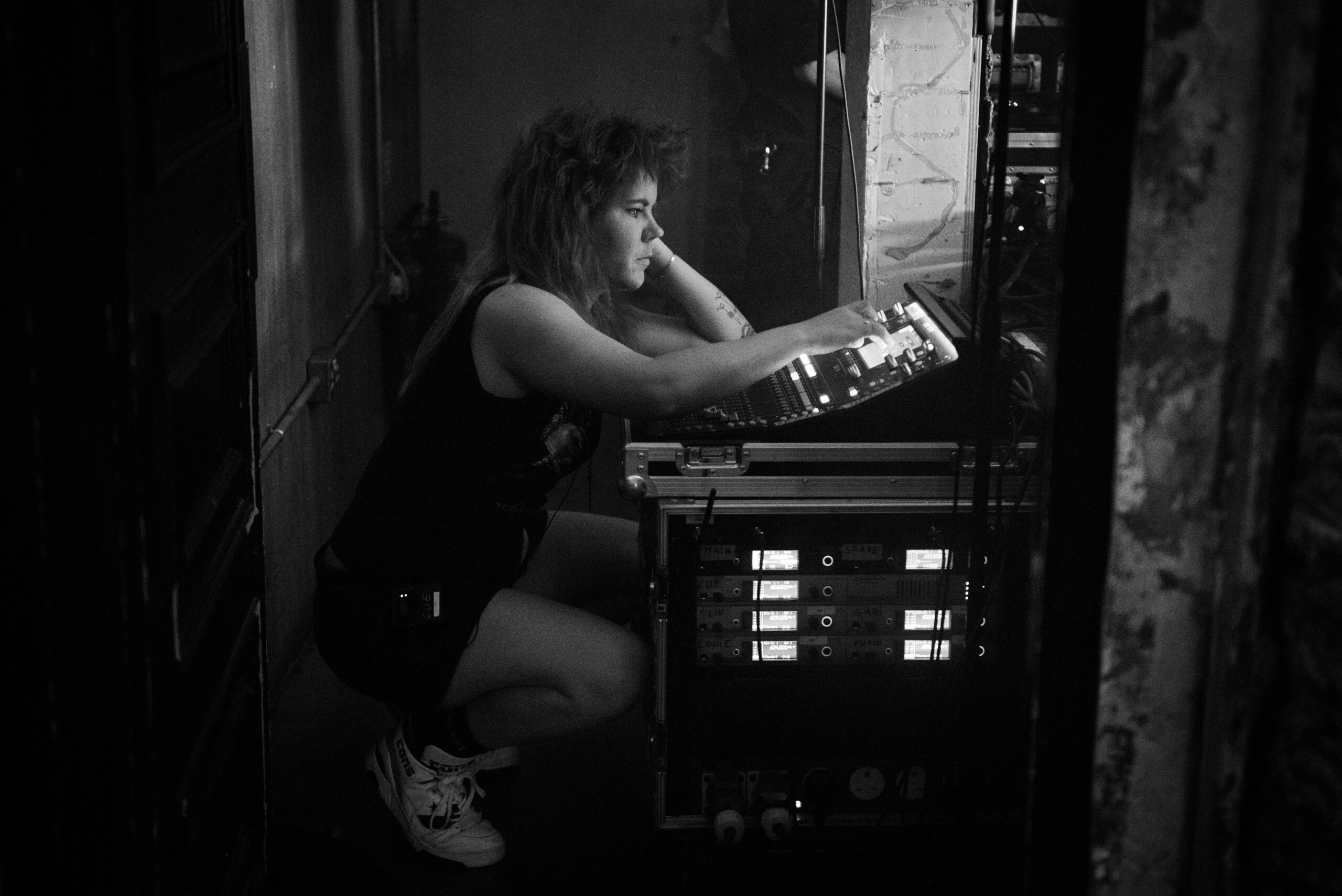
Once the show starts, I stay pretty much glued to the console. I’m watching for visual cues, responding to requests and making adjustments to mixes in real time. Every show is slightly different, so the job requires constant attention and anticipation.
Then, once the audience has gone home, we pack everything back into trucks and move on to the next city to do it all again.
How do you stay organized and manage the demands of your work?
Preparation is probably the biggest one. Live events move quickly, and problems tend to compound if they’re not dealt with early, so I’ve learned to stay one step ahead wherever possible.
I’m a big believer in keeping things organised and simple. Labelling equipment properly, keeping show files tidy and having consistent workflows might not be the most exciting part of the job, but it matters when you need to fix a problem very quickly, which is basically all the time.
Organisation isn’t always about being neat, although I do enjoy a well-labelled flight case; it’s about creating enough headspace and room to deal with the unexpected.
What do you enjoy most about what you do?
I love the combination of technical problem-solving and human interaction that the role requires. Helping artists perform at their best is very rewarding. As a monitor engineer, my work is largely invisible when things are going well and often goes unnoticed by the audience, but there’s something incredibly satisfying about knowing you’ve played a small part in making a show happen for all those people.
What aspects of the job are the most challenging or least enjoyable?
Touring is a funny one; from the outside it looks exciting, and don’t get me wrong, it absolutely is, but there can also be a lot of boredom, loneliness and repetition. You’re often working long days in windowless arenas, eating whatever food happens to be available and spending hours in airports.
One of the biggest challenges for me is maintaining healthy routines. When you’re constantly moving, it can be difficult to get enough exercise, spend time outdoors, eat well or prioritise rest.
I’ve learned over the years that looking after yourself isn’t a luxury in this industry; it’s a necessity. The work is demanding, and if you don’t make a conscious effort to create balance, it’s very easy for the job to consume your entire life.
What do you enjoy most about touring?
The variety. I’ve been lucky enough to see parts of the world I would never otherwise have visited and meet some incredible people along the way.
I also love the sense of teamwork that develops on tour. When you’re working closely with the same group of people day after day, you build strong friendships and a real sense of trust. Some of my favourite memories from touring have happened away from the stage entirely.
What do you find most difficult?
Maintaining balance. Touring can be physically and mentally demanding, and it’s easy for healthy habits to slip when you’re constantly moving between cities and working long hours.
I also miss simple things that most people take for granted; having a routine, seeing friends and family regularly, cooking my own meals, and sleeping in my own bed.
What is your favorite way to spend a day off or time away from work?
I really value simple things. My ideal day off usually involves going for a long walk, doing some birdwatching, phoning home and going to the gym. I do the same when I’m at home so this keeps me grounded.
Challenges, Growth & Perspective
What obstacles or systemic barriers have you faced in the industry?
As a woman, I also encountered situations where people underestimated my abilities or made assumptions about what roles I was capable of doing or comfortable with. I found this particularly challenging on tours where I was responsible for directing crew. Frequently men who were older than me simply didn’t want to take instruction from a younger woman, regardless of my position or experience. It was incredibly frustrating.
How have you navigated or pushed through those challenges?
Early in my career, I probably spent a lot of energy trying to prove myself. Over time, I realised that not every battle is worth fighting and that some people’s assumptions have very little to do with me.
As my knowledge and confidence grew, I became more comfortable backing myself and trusting my own judgement. I also learned the importance of finding supportive environments and surrounding myself with people who valued my contribution rather than constantly questioning it.
Have you seen the industry change during your career? If so, how?
The most obvious change is that there are far more women and underrepresented groups visible within the industry than when I started. Social media and organisations like SoundGirls have played a huge role in creating networks, opportunities and visibility that simply didn’t exist when I was trying to get into live sound.
Perhaps the biggest change, though, is that we’re having more open conversations about well-being, burnout and sustainability. I think there’s now a much greater recognition that looking after yourself and building a sustainable career is just as important as working hard.
What still needs to change to better support women and marginalized genders in audio?
I think visibility is still incredibly important. It’s much easier to imagine yourself in a role when you can see people like you already doing it.
We also need to look at retention. Getting people into the industry is one thing; creating an environment where they can build long, sustainable careers is another. Long hours, extensive travel, insecure employment and a lack of work-life balance don’t just affect women and marginalised genders, but they can disproportionately push people out of the industry.
Advice & Looking Forward
What advice would you give to women or young people interested in entering audio?
Don’t wait until you feel completely ready. Most career growth happens outside your comfort zone, and if you wait until you’re 100% confident before taking an opportunity, you’ll probably be waiting forever.
Be curious, ask questions and don’t be afraid to admit when you don’t know something. The people who progress fastest are rarely the ones who know everything; they’re the ones who are willing to learn.
Finally, remember that this is a people industry as much as a technical one. Your reputation, attitude and ability to work well with others will take you further than your technical skills.
What skills—technical or otherwise—do you think are essential for success?
Be a nice person.
Technical skills matter, but your ability to build relationships, earn trust and work effectively with different personalities is just as important.
Adaptability is another huge one. Every artist, crew, venue and tour is different. Being able to read a room, adjust your communication style and fit into different social and professional environments is an incredibly valuable skill. Sometimes you need to lead, sometimes you need to listen, and sometimes you need to stay completely out of the way.
Above all, I think emotional intelligence is essential. Understanding people, managing pressure and communicating effectively will take you much further than simply knowing how a piece of equipment works. These days I probably read more about psychology than audio.
What long-term goals or aspirations do you have?
I’m incredibly grateful that I’ve already achieved many of the goals I set for myself when I was starting out: touring the world, winning awards and working with artists I admire.
These days, my ambitions are a little different. I’m increasingly interested in building a sustainable long-term career that allows me to spend more time at home and pursue other interests alongside touring. I’ve also developed an interest in audiology and would love to learn more about hearing health and maybe train to be able to perform in-ear impressions.
I’d also like to become more involved with the music and audio community closer to home. As I get older, I’m increasingly interested in finding ways to contribute locally, whether that’s through education, mentoring or supporting the next generation of people entering the industry.
Is there something you wish you had known earlier in your career?
That it gets easier.
When I was starting out, I spent a lot of time worrying that everyone else knew what they were doing and that I was somehow falling behind. I was often afraid to ask questions or reach out to people because I didn’t want to look inexperienced or be judged.
What I’ve learned since is that everyone starts somewhere. We all make mistakes, we all have bad shows, and we all spend periods feeling completely out of our depth. That’s not a sign that you’re failing; it’s usually a sign that you’re learning.
I wish I’d trusted the process a little more and been kinder to myself. Growth is uncomfortable, but if you keep showing up, stay curious and remain open to learning, things have a way of working out.
Favorites & Personal Touch
Favorite or most-used gear
Probably my in-ear monitors. Mine are customised with beautiful mother-of-pearl faceplates, and it’s nice to have nice things!
I spend a huge amount of my life wearing them, and they feel uniquely mine. Nobody else can use them and in that way they’re a little bit like a superpower. They’re the tool I rely on most, but they’re also something that’s completely personal to me.
A piece of gear you can’t live without:
My Leatherman. It’s not particularly glamorous, but I use it almost every day at work.
A moment in your career that made you feel proud or affirmed
Winning Monitor Engineer of the Year at the TPi Awards last year was a particularly proud moment.
Not because of the trophy itself, but because it represented so many years of work, learning and persistence. Like a lot of people in this industry, I spent a long time loading trucks, coiling cables, taking whatever opportunities I could get and wondering whether I was actually any good at what I was doing.
Receiving the award, I found myself reflecting on the younger version of me who couldn’t see many women doing this job and wasn’t entirely convinced she belonged in the industry. It felt like a moment of recognition not just for me, but for everyone who had supported and encouraged me along the way. It still feels a little surreal.
Is there anything else you’d like to share or contribute?
One thing that has been incredibly important in my career is service. So many people gave their time, knowledge and encouragement to me when I was starting out, and I’ve always tried to pay that forward wherever I can.
Not everything has to be transactional. Some of the most rewarding experiences of my career have come from mentoring, volunteering, supporting community initiatives and helping other people navigate the industry. I think there is real value in contributing your time and energy to something bigger than yourself, even when there isn’t an obvious personal benefit.
Ironically, those experiences have been some of the most valuable for my own growth as well. Giving back has been good for my career, but more importantly, it’s been good for my soul.