It’s easy to miss the SoundGirls news and blogs, so we have put together a round-up of the blogs, articles, and news from the past week. You can keep up to date and read more at SoundGirls.org
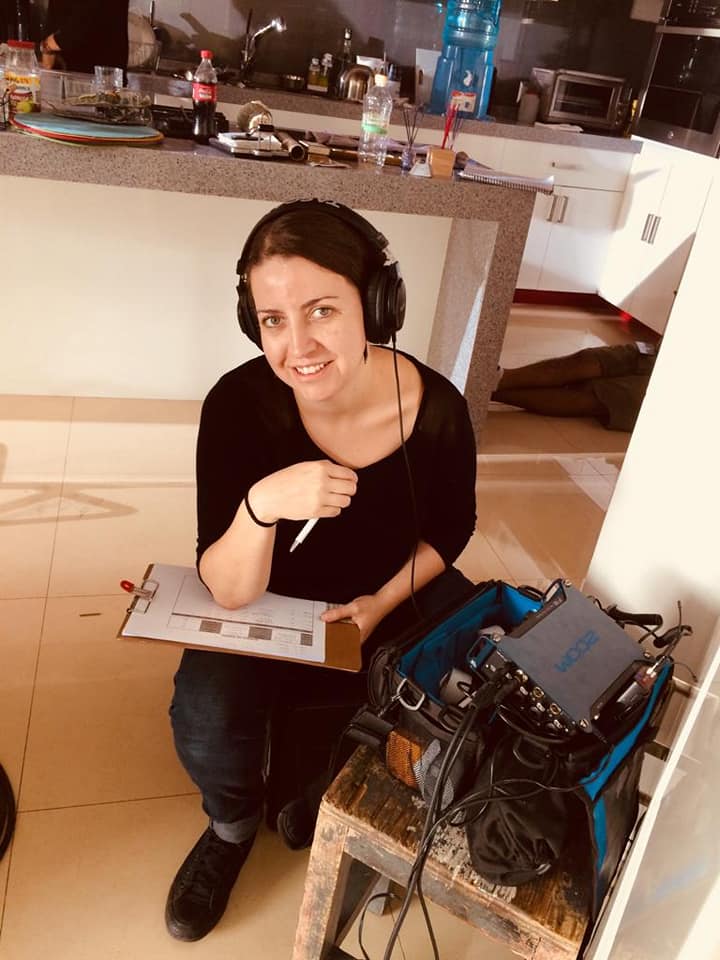
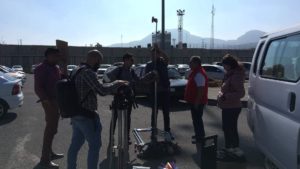
https://soundgirls.org/shannon-deane-post-production-engineer-and-stunt-car-driver/
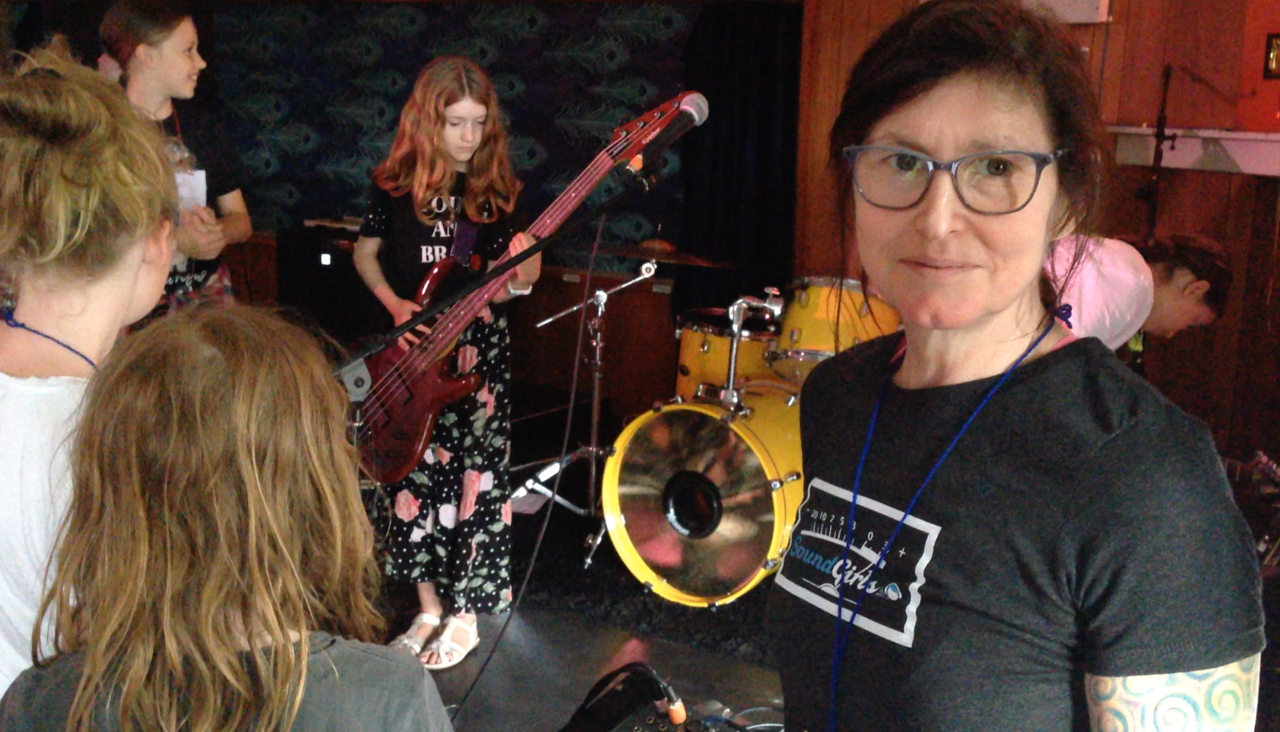
“Part of what Sound Girls is trying to do is just show that, ‘Hey there’s other women out here doing what we’re doing. We exist and we’re doing the job well,’” Tucker said.
“It’s a matter of representation,” Jett Galindo said. “Just seeing themselves on these websites, on the Academy Awards, on the Grammys, succeeding…it reminds them that it’s doable.”
The Recording Academy Task Force on Inclusion and Diversity is announcing the first ever industry-wide Producer and Engineering Inclusion Initiative. Together with prominent producers, labels, artists, agencies, management companies, and other stakeholders we’re making strides to create industry-wide change.
The Initiative asks that at least two women are identified and therefore considered as part of the selection process every time a music producer or engineer is hired. It also asks working producers to agree to take issues of gender diversity within music’s technical fields into account when deciding who to mentor and hire for further development. You can find women to hire on The EQL Directory
https://soundgirls.org/event/soundgirls-mentoring-session-at-expoacustica-2019/?instance_id=1460
https://soundgirls.org/event/orlando-soundgirls-social-5/?instance_id=1457
https://soundgirls.org/event/houston-soundgirls-social/?instance_id=1459
https://soundgirls.org/event/bay-area-chapter-1st-mondays-meetings/?instance_id=1451
https://soundgirls.org/event/an-evening-with-bob-horn/?instance_id=1456
SoundGirls Launches Initiative for Members Working in Production Sound
https://soundgirls.org/shadow-foh-ld-on-amanda-palmer-tour/
https://soundgirls.org/soundgirls-mentoring/
https://soundgirls.org/about-us/soundgirls-chapters/
Working professionally as a sound designer and composer has a lot of perks. It’s not the kind of job that has you answering phones all day or dealing with a lot of crabby people. This is the work of artists and creators. It’s the kind of job people have when they say, “Love what you do, and you’ll never work a day in your life.” It sometimes feels almost surreal to me that I can spend the greater part of a workday trying to develop the perfect sounding tornado, complete with distressed cows, splitting lumber, gale-force winds, and a menacing thunderstorm. When you’re finally ready to put that “Finished” stamp on your labor of love, though, it is so satisfying, that is if the director is as excited about your tornado as you are.
They might not be. They might not want a tornado at all, and this is the part that hurts. You spent all that time letting your creative juices flow into this tornado, and it was perfect! You let so many people listen to it, and everyone loved it. Everyone except the one person who gets the final say. “Let’s cut the tornado cue,” will be the saddest thing you’ve heard all day. I know. I’ve been there too. One of the things I’ve learned over the years, though, is how to take the note and move on. It was tough at first, but it gets easier and easier with every show.
When a piece of music or a sound effect that I have created gets cut, I can’t help but feel personally rejected. This is the hardest hurdle to get over. It reminds me of the preschool work my 4-year-old brings home from school every day. Of course, I love it so much. I’m so proud of the work she’s done, but it is just not possible for me to keep every single scrap of paper she has ever touched. The first time she saw me throwing away some of the worksheets she had brought home that day, she questioned my decision. She told me that she had made that at school, and she wanted to know why I would throw away something she made. I told her that I was so happy she shared it with me, I enjoyed looking at them, and I did keep one of the five worksheets she brought home because it was really special. I told her I would keep other future projects and worksheets, but not everything. She got it, and it sparked an epiphany for me. My work is not my baby.
If a director cuts something I’ve created, it’s only because it wasn’t right for this moment. I’ve had directors many times tell me, “Wow, this piece of music you’ve written is so beautiful, but I think it just changes the intention of this scene. We need to go in a different direction.” This is completely fine for me to hear now. Once I learned to separate my personal attachment from my work, it became much easier to receive constructive criticism.
Ok, so we’ve learned the difference between constructive criticism and rejection, but what about all the time we lost making that piece of music that is now not going to be used at all? What if I spend tons of time on the next piece just to have it cut also? Dwelling on all the “what ifs” is a trap. Do not allow yourself to fall in. Instead, use the piece that got cut to your advantage. There’s a reason you wrote it the way you did, so there must be something about it that matches the scene. Ask the director what specifically they do and do not like about this piece. Tempo? Length? Orchestration? Lots of times I’ll get answers like,”I really like the piece, but I just wish it was guitar instead of cello, and I wish it was faster and shorter.” This is an excellent note because it means you can just tweak a few things on the same piece of music.
I find that many directors have a hard time envisioning (aurally and visually) a concept without the actualized completed project in front of them, so when presented with something they did not have in mind, their instinct is to cut. It is our job as designers and composers to guide directors through our concept and to help them get specific about their feedback. Taking a little extra time to talk through why a note is being given can be the difference between a cut and a tweak of your work.
While turning a cut into a tweak is always a possibility, it is not always going to happen. Sometimes the final result is a cut. That’s ok too. It’s important not to get discouraged about that. Never throw away work that you like. It might not be right for this project, but if it’s something you’re proud of, you will use it again in the future. In 2002 I wrote a piece of music for one of my weekly production class lessons that never really got any use, but I always kept a recording so that I wouldn’t forget about it. In 2016 my writing partner and I were working on a new musical. I kept skipping the big, show-stopping ballad because I just couldn’t think of something that was everything that particular moment needed to be. I sprung up out of a dead sleep one night and remembered that song I wrote in college. It was perfect. All I needed to do was change the lyrics, add a few more instruments, and there it was. It ended up being everyone’s favorite song of that show, and it fit the actor who was performing it perfectly. I know 14 years is a long time to wait, but it was an easy wait. When the time was right to bring it out again, I just knew.
Sometimes presentation is all about timing. When I’m sound designing a show that will utilize ambiances, for example, I almost never load those cues into a rehearsal room unless it’s imperative to the rehearsal process. When I was first starting out, I would give the rehearsal everything I had as soon as it was ready. Unless you’re lucky enough to work with a company that is rehearsing in the space where they will also be performing, I think it’s safe to say that the rehearsal space almost never accurately represents the performance space. The rehearsal spaces I generally work with consist of a free version of QLab and two speakers. That’s it. If I’m creating a beach ambiance, it might consist of twenty separate files that are all sourced from different places at different levels and times. It can be difficult for the director to have the foresight of that final product when the thing that they have as a placeholder is twenty sounds coming at them from two speakers that are focused directly at their face. I find that I have a higher chance of avoiding an ambiance cut by waiting until tech for the reveal. So much of that kind of cue relies on programming and placement, and I want to make sure a director is correctly informed before they make a final decision. If the director does end up cutting the ambiance during the tech process, I feel better about that decision because I know they heard the cue precisely the way I intended. If the cue had been cut while still in the rehearsal space, it would be harder to move on knowing that the decision might have been different if the director had heard the final version of the cue with all of the technical elements in place.
I also find that accepting a cut is easier if I have a few options when presenting a cue or piece of music to a director. I think of each cue as an audition where I’ve been asked to perform a few contrasting pieces. Of course, I will present my favorite option first, but if it’s not matching the director’s vision, I have two more chances before having to go back to the drawing board. This makes the blow of the initial cut a little easier, and the bonus is that all three options could be useable! Either way, you’ve created three things that might be useable in a future project, if not this one. No creative work is a waste of time; it’s just a matter of finding the right application.
Overall, the thing to remember is that not everything you create will be used right away. That’s the deal we accept when we choose to collaborate with others. It would be very dull to work with a team of people that had the same thoughts and ideas as you. Approach your projects with grace and positivity. Know that everyone is there to serve the project, and any cuts or changes made are in support of that idea. Prepare your work to be presented in the best light possible, but be ok with letting it go…for now. If you are a working composer and/or sound designer, it is because people know you do good work. You will be able to keep moving forward and making adjustments to the work until the right thing pops out. If you start to feel discouraged when part of your work doesn’t make the cut, trust the process, take the note, and move on.
Questions about pay rates show up often on the social media and trade forums for our industry. Many times, the response is something along the lines of knowing your worth, past experiences, what the job is, and balancing the rate to the market. All are valid benchmarks that can lend a hand to helping determine a standard rate but also makes it hard to assign a specific number due to a lack of clarity. Another component for rates in our industry are classifications such as A1, A2, Breakout Tech and more.
Determining the rate can be frustrating and confusing. Most of those searching hope to find a specific number shared by those with substantial experience in the pricing game. The reality is that many won’t share that detail because they don’t want to lose their edge in the market or get undercut and lose work. I understand the competitive nature of the industry, but the lack of sharing can leave those new to the field or to the area at a disadvantage to getting the pay they deserve. Those that underestimate their value bring the market down for all of us as well. I wish there was the perfect formula for rates in our industry, but that is not the case. The geographic market varies, and I don’t have the knowledge from a comprehensive perspective to add value to that component, but I can offer my perspective on some other qualifiers that you might take into consideration as you determine your rate.
Start by analyzing what is being asked for. For example, will your responsibilities require you to provide leadership, communications, task management of others, or client relations? These are soft skills that come via education and demonstrated leadership. If so, take into consideration your skill set with these components as part of your value. Consider accessing your level of expertise with these components on a rating scale (i.e., 1-5). Gathering feedback from mentors, colleagues, and your employers can help you make these determinations. Being able to lead a team, provide clear communication, delegate tasks, problem solve, maintain a level head, and setting an example of how to relate to the client are all skills that have value and should be part of the formula in rate setting.
What’s your experience?
Your experience comes into evaluation in several ways. Somethings to consider include the size of the event and the equipment required. Evaluate the experience you have in comparison to these event details.
Event needs aren’t always determined by audience size, but there is a growing intensity that comes with larger venues. Consider developing a scale by event size. For example, set a value to events that range between 1- 500, 500- 5000, 5000 – 10,000 and so forth. Think of it this way, if you can run an arena-sized PA without batting an eye your rate should be significant.
Classifications
Rates also fluctuate between job classifications. These classifications often describe the expectations of the work. An A1 is the leader, usually FOH person, and determines many aspects of the audio for the event. Whereas an A2 is their support throughout the show with stage patch, changeovers, and more. Depending on the size of the event, positions can break down into more detailed groupings such as breakout tech, Mon tech, RF tech, system tech, etc. Assess the classification that best associates to the role you will serve and determine a value for that.
Updating your rates
Overtime with gained experience your price should go up. Some people do a yearly increase, others every couple of years. This depends on how quickly you are learning and gaining skills as well as the different kinds of events you’ve worked on. This also comes with time; seniority leads to higher rates than someone who has just started in the field. Everyone should stay up to date on new technology.
Leverage your experiences overtime to justify your rates. If this is your first time out your rates will be lower than the rates of a seasoned professional. This is simply due to limited experiences, just like getting a job at a big box store. A new hire will start at a low rate and as they prove themselves and gain experience the store will give raises over time. This is no different for us.
Analyze the market
Each market can have a different rate as well as different breakdowns of positions and needs.
Attempt to assess what the resource market is in the area you live and for the event scale in question. Often in large markets, the workforce is flooded with freelancers creating a highly competitive bidding market. If there are 100 events in one day and 300 qualified A1’s to choose from you may find to land the job you need to lower your rate. This could be due to others being willing to work for less than not work at all. The supply for technicians is high while the demand for technicians is low.
In reverse of that, if you’re in a market that is growing faster than the rate of established technicians your prices could be higher because you are a rarity and organizations find more value in you for their show. The supply is low while the demand is high, of course, you will need to make sure your skillset is on par. Your established skillset can drive higher rates too, but that usually comes with time to prove yourself or by developing an established career with excellent references.
Geographic and demographic economics affect rates too. The market also includes what clients are willing to pay. Sometimes in smaller markets with a lower cost of living, rates end up being smaller because clients aren’t necessarily ready to pay the big bucks for a show, wherein in other markets clients are willing or have to put more money toward a project for the outcome they want.
There is still no magic formula that gives you an easy to apply rate. Many of the components I have mentioned are common factors in the industry. As you take a job or establish your rates, consider an incremental assessment of your role and experience, event size and equipment requirements, the tech classification that applies, and what the market will bear to help determine your rate. Solidly knowing how you define your value can be used to justify your rate or start the negotiations.
The first person to win a Grammy for Best Engineered Album, Non-Classical was Ted Keep for “The Chipmunk Song” in 1959, the year of the inaugural ceremony.
Sound engineering has come a long way since the days when creative usage of variable tape speed was a cutting-edge production technique. The audio engineer, in turn, has become more than just a technician. The quality of production can—and often does—make or break a record. For that reason, the Grammy for Best Engineered Album, Non-Classical is a coveted and prestigious award.
Though audio has made many advancements, women’s representation is still playing at a low volume: Out of 415 nominations in this category, only ten women have ever been counted as nominees.
When we shuffle through the history of recorded music, it’s impossible not to notice that female engineers are mostly unaccounted for. Stories of Delia Derbyshire, Ethel Gabriel, and Cordell Jackson occasionally glimmer through to the surface, but they’re few and far between. Seeing as women have been systematically gatekept from STEM fields, this makes historical sense. Even so, it’s a bit shocking that there was a total absence of women in the Best Engineered Album, Non-Classical category for 40 years until Trina Shoemaker was nominated for and won the first award in 1999.
Women only comprise about 3% of studio engineers today. Breaking into and advancing in the studio environment continues to be challenging for women, especially as the competition to get into the room is fierce even among men.
The good news is that our numbers are going up. The past decade has seen more female engineers receiving Grammy nominations than ever before. Women have been consistently represented in Best Engineered Album, Non-Classical for the past four years in a row. In 2019, three of the five projects up for the award have featured female tracking, mixing, and/or mastering engineers. Efforts are being made towards inclusivity; the Recording Academy launched a Diversity Task Force and hosted open forums in multiple cities, and a growing number of producers and studio owners have pledged to focus on diversifying their staff.
How’s that for a “step up?”
“BEST ENGINEERED ALBUM, NON-CLASSICAL”
Female Nominees / Winners Timeline
1959
No women nominated.
1960
No women nominated.
1961
No women nominated.
1962
No women nominated.
1963
No women nominated.
1964
No women nominated.
1965
No women nominated.
1966
No women nominated.
1967
No women nominated.
1968
No women nominated.
1969
No women nominated.
1970
No women nominated.
1971
No women nominated.
1972
No women nominated.
1973
No women nominated.
1974
No women nominated.
1975
No women nominated.
1976
No women nominated.
1977
No women nominated.
1978
No women nominated.
1979
No women nominated.
1980
No women nominated.
1981
No women nominated.
1982
No women nominated.
1983
No women nominated.
1984
No women nominated.
1985
No women nominated.
1986
No women nominated.
1987
No women nominated.
1988
No women nominated.
1989
No women nominated.
1990
No women nominated.
1991
No women nominated.
1992
No women nominated.
1993
No women nominated.
1994
No women nominated.
1995
No women nominated.
1996
No women nominated.
1997
No women nominated.
1998
No women nominated.
1999
The Globe Sessions (Sheryl Crow) – Andy Wallace, Tchad Blake & Trina Shoemaker, engineers
***WINNER
2000
No women nominated.
2001
No women nominated.
2002
No women nominated.
2003
C’mon, C’mon (Sheryl Crow) — Trina Shoemaker & Eric Tew, engineers
2004
No women nominated.
2005
No women nominated.
2006
No women nominated.
2007
No women nominated.
2008
No women nominated.
2009
No women nominated.
2010
Ellipse (Imogen Heap) – Imogen Heap
***WINNER
2011
No women nominated.
2012
No women nominated.
2013
No women nominated.
2014
The Blue Room (Madeleine Peyroux) — Helik Hadar & Leslie Ann Jones, engineers; Bernie Grundman, mastering engineer
The Moorings (Andrew Duhon) — Trina Shoemaker, engineer; Eric Conn, mastering engineer
2015
No women nominated.
2016
Recreational Love (The Bird and the Bee) — Greg Kurstin & Alex Pasco, engineers; Emily Lazar, mastering engineer
2017
Dig in Deep (Bonnie Raitt) — Ryan Freeland, engineer; Kim Rosen, mastering engineer
Undercurrent (Sarah Jarosz) — Shani Gandhi & Gary Paczosa, engineers; Paul Blakemore, mastering engineer
2018
Every Where Is Some Where (K. Flay) — Brent Arrowood, Miles Comaskey, JT Daly, Tommy English, Kristine Flaherty, Adam Hawkins, Chad Howat & Tony Maserati, engineers; Joe LaPorta, mastering engineer
No Shape (Perfume Genius) — Shawn Everett & Joseph Lorge, engineers; Patricia Sullivan, mastering engineer
2019
All The Things That I Did And All The Things That I Didn’t Do (The Milk Carton Kids) – Ryan Freeland & Kenneth Pattengale engineers); Kim Rosen (mastering engineer)
Colors (Beck) – Julian Burg, Serban Ghenea, David Greenbaum, John Hanes, Beck Hansen, Greg Kurstin, Florian Lagatta, Cole M.G.N., Alex Pasco, Jesse Shatkin, Darrell Thorp & Cassidy Turbin (engineers); Chris Bellman, Tom Coyne, Emily Lazar & Randy Merrill (mastering engineers)
Head Over Heels (Chromeo) – Nathaniel Alford, Jason Evigan, Chris Galland, Tom Gardner, Patrick “P-Thugg” Gemayel, Serban Ghenea, John Hanes, Tony Hoffer, Derek Keota, Ian Kirkpatrick, David Macklovitch, Amber Mark, Manny Marroquin, Vaughn Oliver, Chris “TEK” O’Ryan, Morgan Taylor Reid & Gian Stone (engineers); Chris Gehringer & Michelle Mancini (mastering engineers)
* When I was compiling data for this article, scrolling through the years where no women were nominated had a profound impact on me. I felt it was important to include them here. – AE
ROUNDUP:
Trina Shoemaker (Winner)
Imogen Heap (Winner)
Leslie Ann Jones
Emily Lazar
Shani Gandhi
Kim Rosen
Patricia Sullivan
Kristine Flaherty
Michelle Mancini
Amber Mark
Viva La Muxer annual benefit event at Plaza de la Raza on May 25th is seeking SoundGirls Members to Volunteer. This is a great event and a great way to get work experience. If you are interested in volunteering please apply here
Positions include
Call times are 12 pm to 11 pm, all volunteers will be provided meals.
About Viva La Muxer
Viva La Muxer is Las Fotos Project’s annual fundraising benefit that celebrates and uplifts women-identified artists, entrepreneurs, and changemakers from across Los Angeles. The 5th annual arts and music benefit event features live performances, 100+ curated arts exhibits, family-friendly workshops, resource booths, food and drinks, dancing, networking, and more!
100% of Viva La Muxer proceeds will support Las Fotos Project programs, a nonprofit organization and brave space where teenage girls gather to collaborate, learn, and be inspired through photography
This year’s theme, Migrant Mamas, is an ode to all women who have transcended geographic and generational borders in order to lay the groundwork for future generations. This event will be dedicated to elevating the migration stories of the women who move us to dream big, take risks and to lead with love. ⠀
⠀
We celebrate their stories as “migrant” stories, because their journeys are not static. The influence they have on the people they touch are continually flowing between the lands they call home. Their individual contributions create widespread economic, cultural and political impacts. ⠀
⠀
We honor them as “mamas”, not only as biological mothers but as spiritual ones as well. They are women who have nurtured new lives, provided spaces for healing and cultivated the growth of new generations. We reach for their wise words, the smells from their kitchens, the sounds of their songs and the inspiration from their stories.
It’s easy to miss the SoundGirls news and blogs, so we have put together a round-up of the blogs, articles, and news from the past week. You can keep up to date and read more at SoundGirls.org
https://soundgirls.org/shannon-deane-post-production-engineer-and-stunt-car-driver/
The Recording Academy Task Force on Inclusion and Diversity is announcing the first ever industry-wide Producer and Engineering Inclusion Initiative. Together with prominent producers, labels, artists, agencies, management companies, and other stakeholders we’re making strides to create industry-wide change.
The Initiative asks that at least two women are identified and therefore considered as part of the selection process every time a music producer or engineer is hired. It also asks working producers to agree to take issues of gender diversity within music’s technical fields into account when deciding who to mentor and hire for further development
In November 2018, Marta Salogni and Lauren Deakin-Davies emerged victorious at the Pro Sound Awards, winning the Studio Engineer and Breakthrough Studio Engineer awards respectively. Now, in a PSNEurope first, Daniel Gumble sits in on a conversation between the two as they interview each other on their fascinating careers to date
https://soundgirls.org/event/bay-area-chapter-1st-mondays-meetings/?instance_id=1450
https://soundgirls.org/the-studio-side-an-evening-with-bob-horn/
SoundGirls Launches Initiative for Members Working in Production Sound
https://soundgirls.org/shadow-foh-ld-on-amanda-palmer-tour/
https://soundgirls.org/soundgirls-mentoring/
https://soundgirls.org/about-us/soundgirls-chapters/
SoundGirls Presents an Evening with Bob Horn.
Ali “A MAC” McGuire will be in discussion with Bob Horn about his career. Bob will deconstruct a track he has worked on explaining his workflow and process. The evening will end with a Q&A from attendees.
Bob Horn has mixed for multiple grammy award winning artists as well as some of the industries’ most famous including Usher, Timbaland, Lupe Fiasco, Brandy, Akon, Ne-Yo, Brian Culbertson, Nelly, Macy Gray, Everclear and more. In 2013, Bob won a latin grammy for mixing Beto Cuevas’ album “Transformación”.
Hey there SoundGirls! This month I chose a topic that I feel is super important to dive into, but before we dig into that let me tell you about the months following. For March, April, and May I’ll be writing about the process of recording a simple four-piece band. Each month I’ll break it down by instrument (March/drums, April/guitars/bass, May/vocals), but we’ll get to that more next month. This month I would like to touch on the importance of being an artist with a knowledge of what’s going on behind the board.
So you love music, you play music, you write music, music is what fuels you. Maybe you’re a tad interested in learning about the audio engineering world- but what are the benefits, you ask? Some positives to having audio engineering skills:
Since I started audio engineering four years ago, I think one of the most valuable things I’ve taken away is networking. I’ve had consistent internships at multiple studios in Austin, and because of that nearly every session I assist on, there is at least one person I have met before, that is playing in the band.
Why is that valuable you say? When an artist sees you multiple times at different studios or the same studio- you might not realize it, but you are building trust with them. Since music is such a personal and sensitive thing, it’s essential for an artist to trust you. If an artist trusts you with their music, their next project might be going to you instead of the person next to you. This is an opportunity to grow as an engineer, as well as build your client list.
As an artist, networking, building friendships, and professional relationships with people in the industry could help you with growing your network with bands you’re meeting in studios. You could become friends, and they may even want to play a show together if they like your music. You never know. Example: My band is very new to the Austin music scene, but for our first show we got to play with two amazing, established bands, at a great venue. I met both of these bands multiple times in and out of recording studios, went to their shows, and became acquaintances with them. It was full circle to share a bill with these bands, four years ago when I assisted on their sessions, who knew we’d be sharing a bill?
So that’s just ONE benefit to being an audio engineer as well as being an artist. I’m going to touch on two more reasons why I think it’s important to dive into audio engineering (even if it’s just a little bit of research or a couple of months of an internship). I’ll pose a question. Is being a jack of all trades a bad thing? I don’t think so; in this day and age- it’s important to be skilled in multiple areas of the industry.
One thing that I think deserves its own paragraph is the importance of being comfortable in a studio. Studios can be intimidating; I know this from my personal experience, (cue, storytime). I remember the first time I ever walked into a recording studio. I was taking a tour of my soon-to-be school for audio engineering and music production in Austin, Texas. I remember seeing all of the gear, and not knowing a single thing. I had never even messed around in GarageBand. I was so intimidated, but also had this hint of excitement the moment I walked into the studio. I was excited to learn; I was excited to be challenged, I was excited to grow, and be an artist that also has valuable knowledge of audio engineering.
Now that it’s been four years, I can speak from experience. Whenever my band is in the studio, or I’m recording vocals for my songs, I’m comfortable. I’m in my element. If you told me four years ago that I wouldn’t be completely nervous singing in a recording studio, I might not have believed you. I couldn’t even sing in front of my friends without turning around! Having that experience in the studio on the other side of the glass gave me confidence in myself, and gave me a sense of purpose. It also gave me a sense of trust in the person who is engineering my vocals, because I know exactly what is going on. I want every other girl/woman that steps into a studio to eventually work their way towards feeling that confidence too, and that’s why I think having audio engineering knowledge is so important.
Last, but not least. The importance of knowing how to record, mix, and master. By having these skills, you are taking the time to learn what is going to be the icing on the cake for your songs. Learning what microphones are going to best capture the way your guitar or vocals sound, and knowing how to mic up a drum kit. Understanding what mixing is, and creating your own mixing style — learning basic mastering skills. All of these things are incredibly beneficial. Not only that, but it’s honestly very exhilarating (and a struggle at times) to work on all aspects of your own music as an artist.
Also, I think I’ve learned more through mixing my own music than I have when mixing others. This might be because of how critical my own mind is towards my work. Not only that, but I believe I have become a better musician from learning audio engineering because my ears are trained, I know what to listen for, and for the simple fact that I am around music all the time. If you’re around something almost every day, you’re going to become good at it. Whether it be, audio engineering, guitar, drums, or singing. You’re going to become better. As an engineer, you will never stop learning. In this craft, you learn something new every time you step foot into a studio. That type of consistency keeps your mind flowing, as well as your creativity. That’s why I believe being an artist as well as having valuable knowledge of engineering is important. Your creativity will never stop.