Empowering the Next Generation of Women in Audio

Join Us

Signal Flow


In Yvonne’s Top 52 Tips To Remember, signal flow was one of the things I flagged as important, so I thought it might be a good idea to cover that in more detail. You have a bunch of awesome equipment, you have awesome musicians, and you need to get the sound from the musician or SFX playback computer through all that awesome equipment and out into the world or recorded in some way. Once you understand signal flow, troubleshooting will become a whole lot easier.

No matter how big the system is, the same principles of signal flow apply. If you are responsible for that system going together or responsible for keeping it working, then it’s important you understand the signal flow of that system.

Signal flow in relation to fault finding

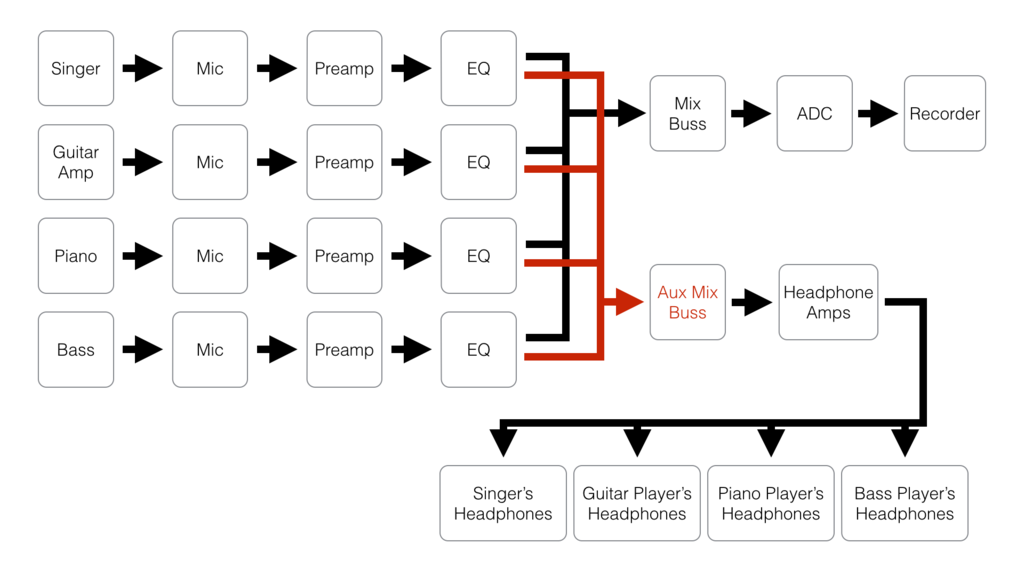
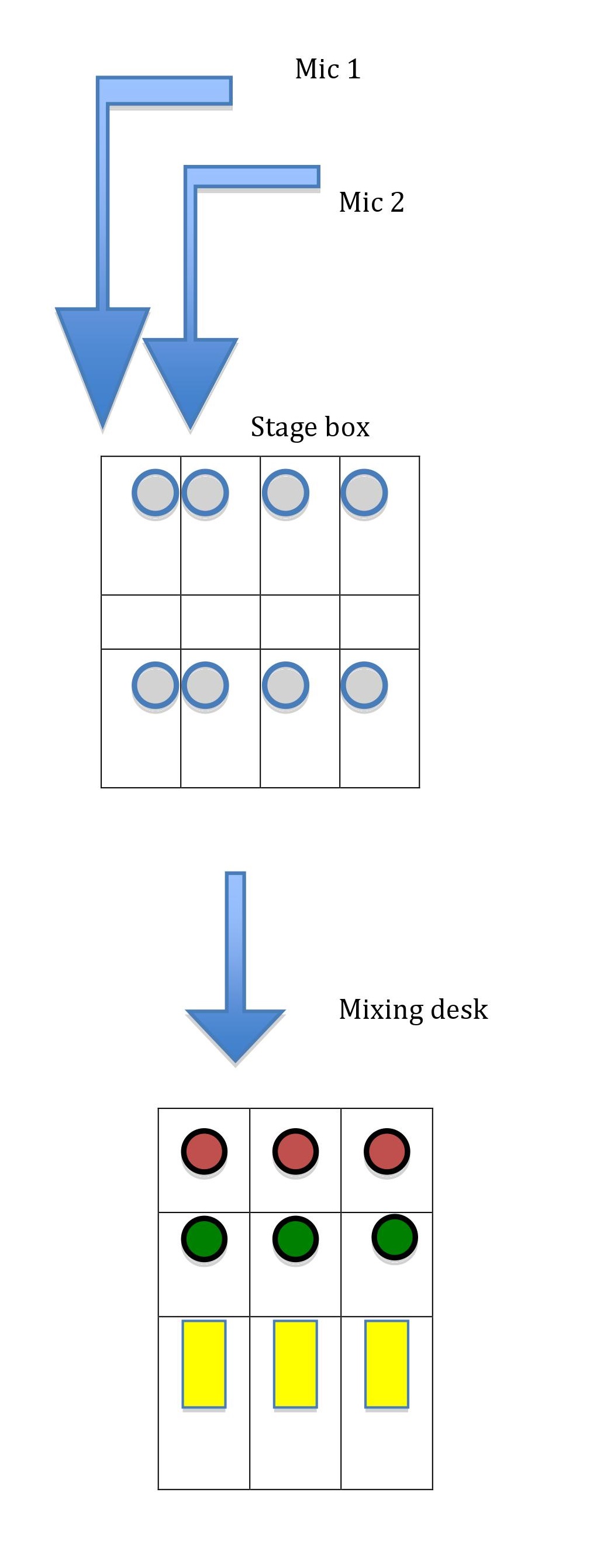
Signal flow in its most basic form can be expressed as Fig. 1
sigflow-fig1

Fig. 1

.

Assume you have plugged mic one into line one on the stage box and line one is patched into channel one on the desk. Assume you have done the same thing for mic two – mic two to line two to channel two.

If you aren’t getting signal into the desk from mic two, and when you swap the mics the problem doesn’t move, you know the problem isn’t with the microphone. The signal from mic one to the desk works, the signal from mic two to the desk doesn’t. If the only thing you have done is swap the mics and the signal still isn’t getting to channel two, then the fault is further up the signal chain than the microphone. If you swap the XLRs between the mics and the stage box and the fault still doesn’t move, you know it’s further up the signal chain. Work your way up the signal chain swapping equipment until the fault moves. When you manage to get the fault to move, you will know which piece of equipment is faulty – or at least where in the signal chain the fault is likely to be. This is fault-finding in its most basic form. Sometimes a cable will start working again, though not for long because you touched it and made the dry solder or loose connection make contact.

sigflow-fig2

Fig. 2

Internal to the desk, the same principles of signal flow apply (Fig. 2). The signal flows from the input through the group or aux into the matrix and out of the desk. If you can follow the signal through the desk, then you should be able to find the fader that has been left down or channel that is muted, or where the fault is.

Signal flow in relation to monitoring when fed from the FOH desk.

Imagine you have a band with an Aviom or wireless in-ear system and a stage that you’ve put into different time zones. There is a DSM/show caller that needs to hear the vocals, a feed going off to archive, and the band and an offstage vocal booth who need to hear what’s happening on stage. Where in the signal flow do you tap off the vocal monitoring to feed the different needs of the listeners?

If you send the vocal feed from the radio mics pre-fader (i.e before the fader in the signal flow), the person listening will hear the cast offstage and in their dressing rooms. But if you want to send the feed off to multitrack or a broadcast truck where it will be mixed later, then pre-fade may be the correct think to do.

The band and the vocal booth aren’t going to want to hear the radio mics pre-fader; they will only want to hear the mics that are live to front of house. So you’ll want to send post-fade. But do you want to send it to the band/vocal booth direct from the channels or from the vocal group? If the vocal group has a changing delay time to allow for stage position, what would happen to the vocal booth if they were singing along to it? What would happen to the band if they had a feed that was time-delayed before it reached them?

Signal flow in system design

When using compression, where in the signal flow should it be: on an individual channel, on a group, or across the outputs? Do you want to EQ something that’s been compressed, or do you want to compress something that’s been EQ’d? The effect is different depending on which way round you do it.

Putting processing in different places in the signal flow can have very different results. If you needed to use EQ on a signal processed with reverb, should you EQ the aux send to the reverb, or should you EQ the return channels from the reverb back into the desk? There are no correct answers, other than what fits the situation at the time But understanding the signal flow will enable you to make better decisions in order to achieve the results you want.

Being The Boss (Even When You Aren’t) – Part 1


boss

Have you ever had a boss that you absolutely despised?
Someone unorganized, impatient, and short-sighted?
Didn’t make you enjoy your job, did it?

A quality leader can make or break any business or project. As the boss, you are the face of the team. What your team does reflects on you, and vice-versa. If you’re unorganized, or don’t know your crew, or have no goals, how can you expect to lead anyone anywhere? A leader needs to have many positive qualities in order to be successful.

Get to Know Your People

You don’t need to remember your technician’s great-aunt’s birthday to know them. Learn their strengths, weaknesses, what they enjoy about work and what they don’t, who they work well with, etc. It also doesn’t hurt to get to know them outside of work-themed bullet points. Are they married? Do they have kids? What do they like to do outside of work? Get to know them as human beings, instead of just employees or teammates.

Some of my worst managers knew a lot about me personally but nothing about me professionally, so they didn’t place me where I needed to be. Others were familiar with me professionally but not personally, so they weren’t sympathetic to anything that may have been happening outside of work. Find a balance. You don’t have to be best friends, but you should at the very least acquaint yourself with them on a basic level.

Push Them

growthAn important part of any job is growth opportunity. Without growth we are stagnant and begin to lose interest in learning. When I stop learning, I get bored and enthusiasm dies, which causes my performance to suffer. Even if you aren’t 100% comfortable letting them do something, let them do it. Watch over them, supervise, make sure they don’t destroy something or kill someone, but let them dive in. Sometimes, being thrown to the wolves is how some of the most valuable learning happens.

Personally, I love being pushed past where I thought I could go. I find this idea especially important for young women because we so often tell ourselves we aren’t good enough or aren’t ready for something when we are. Each person deserves to learn and grow as a human and as a fellow worker in the industry. With that being said, it’s a fine line between pushing them to succeed and pushing them right off the cliff. If you place your team members in situations they can succeed in, not places they’re bound to fail in, you have that much less to worry about.

Communication

directionLike all relationships, communication is key. I cannot stress this enough. If you don’t efficiently communicate with your team, your leadership means nothing. Part of communicating well has to do with knowing your team, as we discussed before. Some people respond well to straightforward directions (i.e. “go there,” “do this,” “do NOT do that”). Other people need a little bit of an explanation (i.e., “go there because”, “do this while”, “this causes that”). Some people work in an entirely different way. You should know how each of your team member’s understands tasks best. I can tell some of my team members a very general idea of what I need to be done and they can fully transition that into a finished task. Some of my other team members need an exact list of every single thing that needs to be done to finish satisfactorily.

Another part of communicating well is listening. Communication is a two-way street, you know! Make sure that you hear your crew, and that they know you are hearing them. I ensure that everyone is comfortable coming to me and asking a question or asking for advice. I would much rather answer the same question 10 times than have someone go in confused or accidently irreparably damage something. If a crew member needs to know something, or they’ve got a problem with a co-worker, or an outside client is acting disrespectfully, I want to know. We can’t fix or address what we don’t know. Open communication lines.

Next blog will continue part two of this series on how to be an effective leader!

Independent Contracts – The Business Skills You Need

As a sound technician (sound engineer, mixer, editor), there’s generally two types of gigs:

(more…)

Navigating a New Building – Planning the Build.

Over the last four years, I have been a part of the planning and designing committee for a new student union. Over this journey, I have learned many things when it comes to building a new structure and that the process can be very complicated and messy. If you ever get the opportunity to be a part of the planning process for a new venue, do it.  It will be an experience you may hate at times, but it is rewarding.  It has been a great learning experience. (more…)

The Life Long Learner

Personal growth and professional growth work hand in hand for me. The more I expand my mindset, the greater the possibilities. Julia Child said it best “You’ll never know everything about anything, especially something you love.” So why should we stop learning, right?

I started my journey in media at a young age within a place of worship. Audio has always been my focus point. But I noticed as an in-house engineer once communication was set and audio was brought up to a standard of excellence there was still more work to be done. Which led me to expand my reach as a freelance technician.

Once I set up a multimedia platform for one worship center I continued to research equipment that could take the worshiping experience to the next level. From audio consoles to projectors, from lights to CD duplication. From live broadcasting to DVD production, they all played a significant role in creating this great experience. The leaders loved the thought of having all these outlets to help spread the gospel. Not only did it help the leaders and the congregation. It helped me gain experience, which births excellent technicians.

After working in places of worship for over eight years and graduating from a Media Tech Institute with a diploma in audio engineering and multimedia. I choose to see what other routes I could go with this passion and experience. I then found the wonderful world of AV (Audio and Visuals). A place where being proficient in all areas of event technology is golden. I had been in AV for years and didn’t even know it. I just specialized in worship centers; now I’m branching out even more. Seeing what all the world has to offer a young audio engineer willing to learn and grow.

Being an audio engineer can take you in many different directions, but no matter which route you take, the more you know, the more you grow. You can start as a monitor engineer and then move to mixing at FOH. You can be a boom microphone operator and develop into recording and mixing Foley. I started in AV as a stagehand just doing load in and load-outs. You never know, continue to keep an open mind. Never stop learning. The possibilities are endless, so is the amount of growth within the industry. Once you feel you know everything there is to know, you put a cap on yourself and opportunities. Don’t be a know it all, be willing to learn it all.

The Art of Being an Evil Genius

There’s this moment that occasionally occurs when I’m working on a project in the studio. I like to call it “The Evil Genius Moment.” (more…)

Norah Seed – Finding your Dream Job

By Toni Venditti

Norah Seed is an audio engineer who has worked in Live Sound for over 25 years. She has worked in theatre, television, and AV. She currently heads the audio department for the Shell Theatre in Alberta, Canada.

(more…)

EAW ADAPTive™ Systems Training

By Amy Truong

IMG_5073

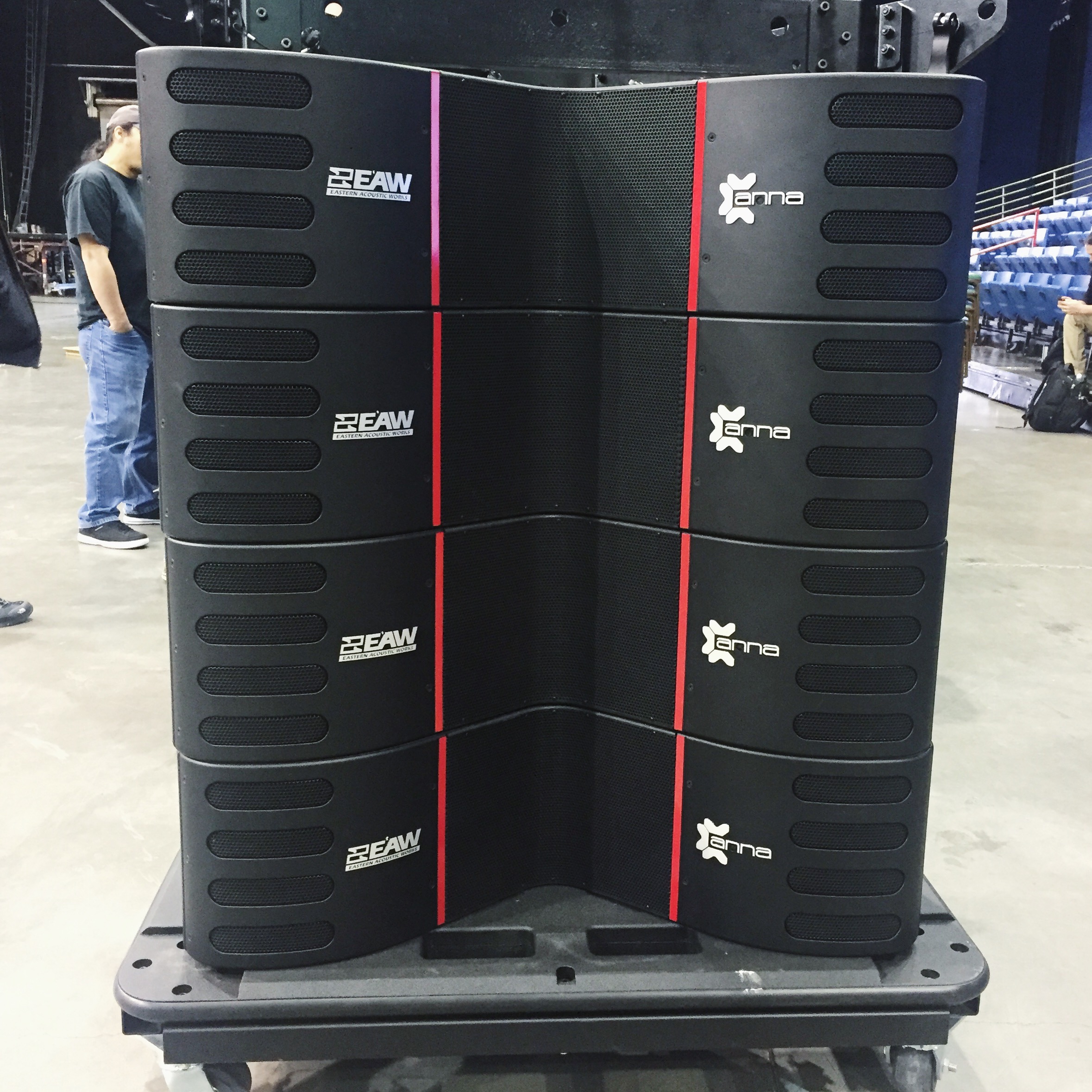
A few days ago, I attended the EAW ADAPTive™ Systems Level 1 Training Program held in Primm, NV. It was two consecutive days and lasted approximately 8 hours each day (with lunch provided). This was my first time attending a non-console based training class.

(more…)

A Month in the Life of a London SoundGirl

Let me first say, London rush hour is awful and I do whatever I can to avoid it. Sometimes I cannot, early morning production meetings and tech rehearsals have me squeezing onto a London tube with a rucksack that has a laptop and my hard drive. Not Fun.  This last month I have found myself doing a lot of rush hour commuting.

First, I was working on two musicals, both were small-scale productions and they were running at the same theatre, but on alternating nights. Keeping track of both was a skill in itself.  There were scary schedules issued with no time allotted to work on sound, that had to be dealt with. After pointing this out, we were able to get a few solid hours to set up the system, which had been rigged the week before.  We set amp levels, and eq’d and time-aligned the system. Then I started plotting the SFX. I discovered there would be no full runs of the show until I was in tech for the other show. I knew what the SFX would be and had met with the director, but would not be able to see the context of the cues until we were in tech. It did make for a couple of weeks of really long days with a commute of over an hour each way.

I went to visit Motown the Musical, it was fitting up in the west end.  I knew most of the sound staff as I had worked with them on Rock of Ages and other shows over the years. I needed to talk to the UK designer about a show he had asked me to be his associate on. The West End Musical – Theatre scene can be a bit like a Victorian Lady Socialite. In that, you visit other shows, go and say hello during the production and tech. weeks. You poke around the sound system, ask questions and exchange gossip. It’s a good way to remind people that you exist and it’s an excellent opportunity to learn about a sound system that you haven’t had a hand in putting together.

I submitted my tax return, something that would be easier to do if I’ve been organised through the year. Last year I promised myself to take my receipts out of my pockets and my wallet at the end of every day and sort them. Maybe I’ll do it at the end of every week.

Chasing invoices is something I don’t enjoy doing and I’ve had to do that twice this month. One was a genuine mistake but the other was with a company that was refusing to pay me until I proved that I have self-employed status. I sent more information than I have ever done before to this company and still nothing. Thank goodness I’m still a member of a union. I had been considering not renewing my membership of BECTU. You get a good deal on public liability insurance from BECTU but I had recently joined the Association of Sound Designers  who also offer insurance. But I’ve never had anyone refuse to pay me before and after many emails and phones calls it became apparent that having the weight of a union behind me was a useful thing. They managed to resolve the issue quickly with no more input from me.
I went to visit a theatre I may do a show with later in the year. It’s the Rose Playhouse in Southwark and it’s in the basement of an office block. The Rose is the first Tudor theatre built on Bankside and they are raising money to preserve the theatre. The sound equipment is limited and we will supplement it a bit. But it is Shakespeare and it will be atmospheric.

I occasionally mentor students at Royal Central School of Speech and Drama. I had been brought in to look after the operator for the musical they are running.  The students are in their third year and are of a high standard. They were doing Sweet Charity with loads of radio mics and a full band.

This is an example of a typical and varied month for me. A bit of tech, specing equipment, keeping on top of the business end and production meetings, Mostly I love it but not that commute.


X