Former Black Flag vocalist Henry Rollins once said, “Questioning anything and everything, to me, is punk rock,”, to which I believe everyone that identifies themselves as punk can agree with; punk is about not accepting what society tells you, to fight back against it by speaking up against the injustices you see from the mainstream and taking a stand against blatant acceptance of what you’re told you’re supposed to do. Then why is it that that sexism, which is a prominent part of the foundation of society, is still existent in the alternative scene? Female musicians aren’t treated as equal to their male counterparts, girls at shows, whether they be fans or people working in the industry, are still dealing with harassment, and no viable solutions have been offered to counter this rampant problem. But, by educating each other on sexism in the scene, we can work towards eradicating this issue.
At this point in the game, there’s no ability to deny that female musicians aren’t given an equal platform as the all-male bands in the scene. According to the article “Warped Tour’s Women Problem,” less than 20% of the 120+ bands at Warped Tour 2014 contained at least one female in the band line-up and only 15% of bands at Riot Fest 2014 had females in the line-up at announcement time. Kevin Lyman, founder of Warped Tour, was interviewed for the article and countered the lack of diversity within bands with “If you Google-search bands in the world, the vast majority of them are male,.” Which may be true; maybe there’s just a serious lack of female-inclusive alternative bands out there. But this begs the question of why? The same article states that 53% of ticket sales came from females, so how is it that these women don’t feel inspired to start making music of their own? Jennie Russell-Smith, co-organizer of UK’s Rebellion Festival, states in in a Guardian article “Punk Has a Problem with Women, why?” that years ago [she] actively sought out women bands [for Rebellion’s line-up], but that now, there are [many] girl bands getting out there and doing it.” People of many different gender identities are coming together to create music and transcend the well-known standard of cis, white men being at the forefront of the alternative scene.
It doesn’t seem like it’s a lack of female-inclusive bands that’s the problem, but rather the unwillingness to go out and find them. And while some may argue that putting in more effort to find bands that have girls in them is putting them on a pedestal so to speak, administrative teams running these festivals also need to recognize that rolling up your sleeves a little will even out the playing field in the long run so that you won’t have to do so much digging in the future when fans see that “hey look at all these girls playing in bands, maybe I can do it too,”.
But, in the early days of punk (when Lollapalooza was still a traveling festival and patched up denim vests were still a statement rather than a fashion trend), there was no shortage of women in line-ups or out there making a difference in the scene. A Shockwave Magazine article draws on some themes presented in the punk rock documentary “The Decline of Western Civilization: Part 1” of how the “minorities” (women, LGBT, POC) of punk rock were actually the ones that stuck true to the genre more so than their straight, white cis male counterparts that seemed to dominate in popularity. “Despite today’s common perception that punk is strictly a suburban, Caucasian, straight, cis male genre, the film showcases how, in the late 70s and early 80s, female punks were almost, if not just as prevalent as males both in bands and listeners.”
The punks of this era eventually inspired and began the famous Riot Grrl Movement, which “began in 1991, when a group of women from Washington, D.C., and Olympia, Washington, held a meeting to discuss how to address sexism in the punk scene. The women decided they wanted to start a ‘girl riot’ against a society they felt offered no validation of women’s experiences.”, as stated in The History of Riot Grrls in Music. The Riot Grrl movement was important because it offered “girls ideas on how to make their own music. It was a realistic assumption that girls inspired by Bikini Kill could and would start their own bands…girls who heard these songs had the experience of realizing how their own personal problems fit into larger political structures. Bands also received scores of letters from girls who wanted to relate how these lyrics had affected their lives”.
But even back then, the movement received harsh criticism from the media. “Stories about Riot Grrrl often were misinformed, antagonistic, or banal. In the liner notes to Bikini Kill’s self-titled 1994 CD, Tobi Vail outlines why the group refused to do interviews: too often the band had been misrepresented and taken out of context, making them appear immature and ridiculous. In Angry Women in Rock, Andrea Juno quotes Kathleen Hanna as saying that Newsweek purchased a picture of her and friends at the beach in bikinis to print with the article about Riot Grrrl. The photo was purchased in an effort to discredit her feminism; she was in a band called Bikini Kill, yet she wore bikinis. Melody Maker, the leading music journal in England, writes, ‘The best thing that any Riot Grrrl could do is to go away and do some reading, and I don’t mean a grubby little fanzine.’ The authors of these articles gave Riot Grrrl a cursory glance and dismissed the movement as juvenile and unimportant.” Although the movement began declining by 1996 (Riot Grrl Is Dead, 2010), the themes and ideals they presented to the masses of putting their hardships as women in society into music and not being ashamed about it is a direction that we should have continued to move towards, even after the movement’s heyday ended.
So, in today’s alternative scene, how can we encourage girls to form their own bands and contributions to the industry, when there are countless stories of women being seen as less than or incapable of making a difference because of their gender? In the Fuse article “Here’s What It’s Like Being a Female Musician on Warped Tour” Sydney Sierota of the band, Echosmith goes in depth about an instance of sexism she faced at her own show. “I wasn’t let on stage once because [security] thought I was a fan and not in the band. The fans were even screaming ‘She’s in the band! She’s in the band!’ I told security ‘I will give you a million dollars if I am not in the band. I promise.” Taylor Jardine of We Are the in Crowd also shares another experience she witnessed at a show: “I was at this Tigers Jaw show in Brooklyn, and when Pity Sex were playing, this kid grabbed my friend Brittany and kissed her on the cheek…this guy grabbed her head, forcibly moved her and kissed her. He wasn’t taken out by security-my fear is that they thought it was funny-and he did it again to the woman in Tiger’s Jaw”.
This isn’t a very welcoming environment for women to be in, and musicians aren’t the only ones that face misogyny and harassment. Chicago-based photographer Kailyn Johnson opened up about her experiences with gender-based harassment at a couple of local shows in an online interview. “[I] was at a show at Concord Music Hall, (I honestly don’t remember who it was) but the manager of the band directly contacted me to shoot the show, so of course I was there. The second we got into the pit and started shooting, this man came over to me and told me I was going to need to leave the pit because he didn’t feel it was fair that I was in there when I ‘must have had to sleep with a security guard or a band member to be here’…he kept trying to get security to remove me from the pit constantly and continued to harass me until we left”.
Lorena Cupcake, leading contributor at the Chicago-based blog storebrandsoda (voted Chicago Reader’s Best Music Blog 2016), explains why it will take her a long time to feel safe at a punk show again. She explains in her blog post “Imagining a Safer Space” that the drummer of one of the band’s playing at the show she was attending attempted to flirt with her and grab her body after she repeatedly told him “no.” He immediately switched gears, from curdled attempts at courtliness to aggression. “You probably don’t even listen to Iron Maiden,” he began, referring to my Hot Doug’s shirt He told me that I wasn’t really punk, and I didn’t belong at the show, and called me a cunt and a poser…For about five minutes, at the top of his lungs, I was told that I was a poser and everything wrong with the punk scene. He told me that rich bitches like me were what was ruining the scene, and that I wasn’t really punk, and that I should never come to another punk show again.” The alternative scene is meant to be a place of acceptance, a safe haven where all you have to worry about is how sweaty you’re going to get during a mosh pit (the answer is always a lot) and whether you’re going to be able to remember all the lyrics to your favorite songs in the heat of the moment. Sexism in the scene is still alive and well and it never should have been, nor should it continue to be a place where misogyny is acceptable.
So how do we go about making the alternative scene a platform of equality for everyone? First of all, we need to acknowledge that sexism is still an issue, despite the lack of recent articles from any major punk news outlet on the issue (the articles cited published dates’ range from 2013-2015, it’s almost 2017). We need to listen to survivors’ (not victims) stories of the harassment and assault they went through and made them feel like it’s okay to speak up about their attacker; the words of encouragement can often be a source of strength. A woman named Beth, contributor to the blog Put Your Damn Pants On, explained how acts of solidarity against the band The Casualties, whom the author claims raped her when she was 16, explains that the people who took the time to listen to her story were the ones that made all the difference: “The one amazing thing all of these complete strangers had in common was that they believed me. They felt compelled to talk, cry, relate, or brainstorm. Like this was a totally fucked up thing that happened and we were not going to sit by and take it anymore. In the end, 100% of the people I talked to removed the shirt/ patch/ pin/ etc. of the band. One boy even took his shirt off and heaved it into a fire. All really small gestures to you, but to me, it felt really empowering to tell my story. To have someone, through actions, say, ‘Yeah man. I’m on YOUR side.’ ‘You can only be a victim if you admit defeat,’ were words I lived by. These random faces gave me strength by standing behind me”.
Taking the time to sit and listen to survivors is a great act of solidarity, and so is standing up for someone you see getting harassed at a show and being As an Ocean’s previous Chicago photographer Jamie Kranig gives his account on stopping harassment at one of the band’s shows. I was shooting BAAO from the audience, and I noticed a ton of dudes giving these two girls a hard time and calling them sluts and whores and altogether being shitty people to them, for, from what I could tell, [for] no good reason. So I scooched over a couple spots so I could be by them and guard them because some of the dudes were purposely running into them while “dancing.” [I] never asked names, never asked if they were good, ‘cause it was clear that shit was getting out of hand; I just know some assholes go to shows just to fuck with people. Through the set, I got people to stop messing with them.” Jamie later saw those girls backstage talking to the band, and the harassers from the audience also noticed and shouted ‘I told you! Don’t you feel stupid now?’
I think its too widely accepted by the societal collective that men are better than women, or that women have specified roles to which deviation is frowned upon. That’s why more people don’t step up; they see it happen all the time and assume its simply the norm. A person’s intentions for attending a show is irrelevant to any other individual present. As long as you mind your own in regards to not harming or forcing something onto others, no one should give a single fuck about anyone else.” Jamie brings up a valid point that people will often demonize women sexually in order to make them seem less significant in the scene.
But even if a girl listens to a band because she thinks they’re cute, who cares? These females are also the ones that are buying merchandise, buying tickets to shows, promoting bands on social media, supporting the band like fans are supposed to do. As long as they aren’t acting like that “fan” that forced himself upon Tiger Jaws singer while she was performing and being inappropriate and committing acts of harassment, who cares? As long as there’s a respect between the fans and the artists and a genuine appreciation of the music and experience being shared, it doesn’t matter if there’s an “ulterior motive.” It’s good from a business standpoint, even if it’s disheartening as an artist. We also need to hold the harassers and assaulters responsible for their actions and uphold no tolerance policies at music venues. Lorena Cupcake of storebrandsoda suggests “Don’t book abusers at your space. Don’t buy their records. Don’t show support to people who know better. If you run a DIY space, fest, or work at a venue, you need to have a clear plan of action on what to do when harassment occurs at your events and the means to enforce your policy.”
Bands, too, need to take the time to make it clear that they’re in support of women and their struggles in the scene. “At Bikini Kill shows, microphones were often passed around so that the audience could share stories of sexual abuse.” (The History of Riot Grrls in Music). Defend Girls Not Pop Punk, a Twitter page dedicated to highlighting and stopping misogyny in the local scene, recently put on a show, where bands (gender mixed) opened up the floor to discuss the problem of sexism at local shows and encouraging people to speak up about it.
Finally, we need to recognize that fighting against sexism in the scene does NOT mean putting females in the scene on a pedestal simply for being sexism; that completely goes against the point of feminism, which is equality. Women don’t want special treatment; women don’t want to be seen as the best without having earned that in the scene. While we need to fight against sexism and harassment in the scene, we also need to make it an equal platform and not make an entire bands’ reputation be centered around having a female musician.
There’s a saying that punk is dead; it isn’t. Punk rock and alternative music are alive and well, more so than they’ve ever been. But, if punk has always been synonymous with the mainstream it’s always been against in its acceptance of sexism, maybe it should have never been alive in the first place. Although the alternative scene has always preached acceptance of everyone, there’s still a heavy prejudice towards women in the scene, a blatant contradiction of its supposed ethics. Female musicians aren’t given the same platform as their male counterparts, musicians, fans, and industry professionals alike have face harassment and assault in the scene, without many solutions being offered to help combat this issue. My punk is a haven for those that feel they aren’t accepted by the mainstream and don’t want to be. My alternative scene is a place of acceptance of everyone, a place of equality, a refuge. Anything else is not a scene I want to be a part of.
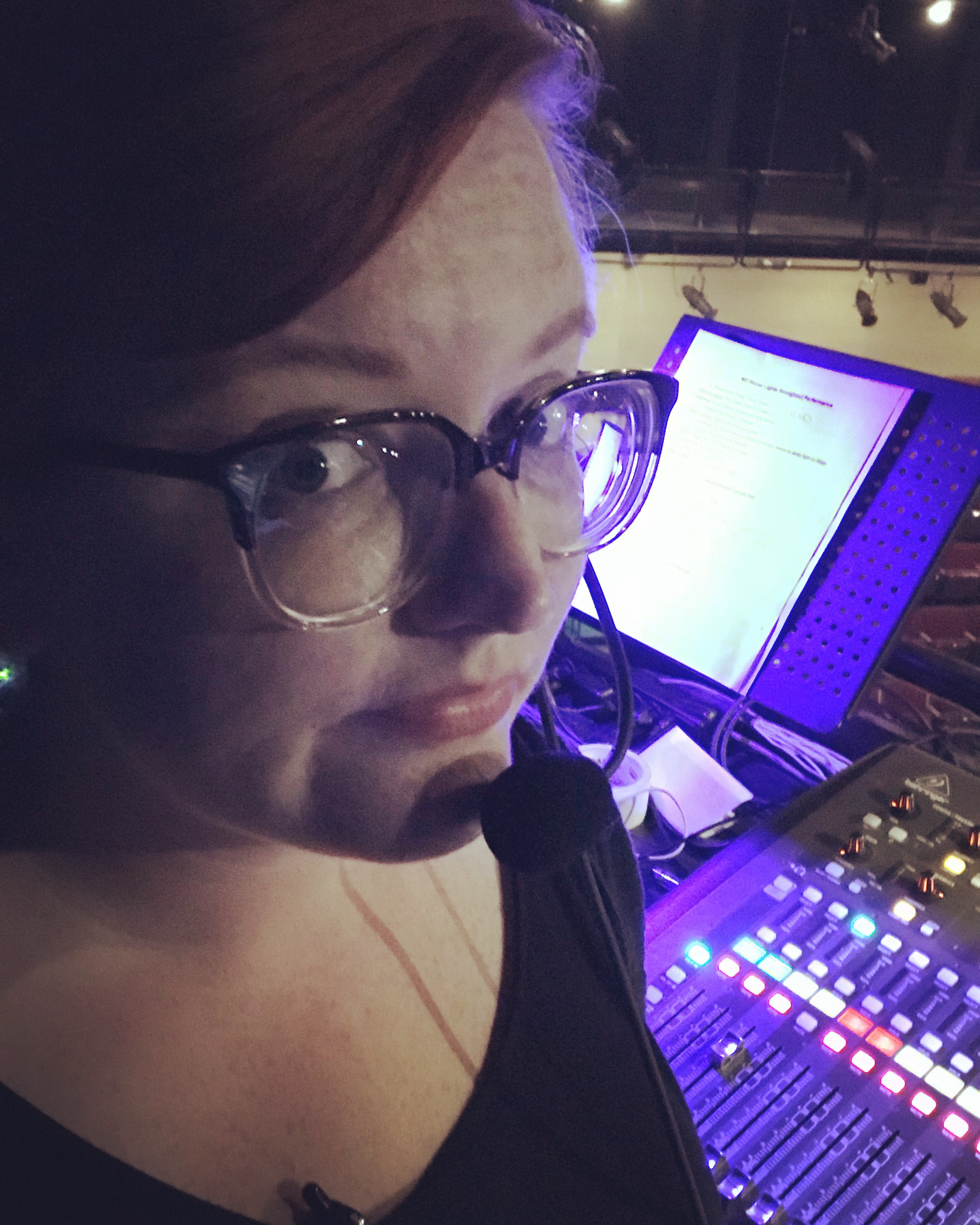
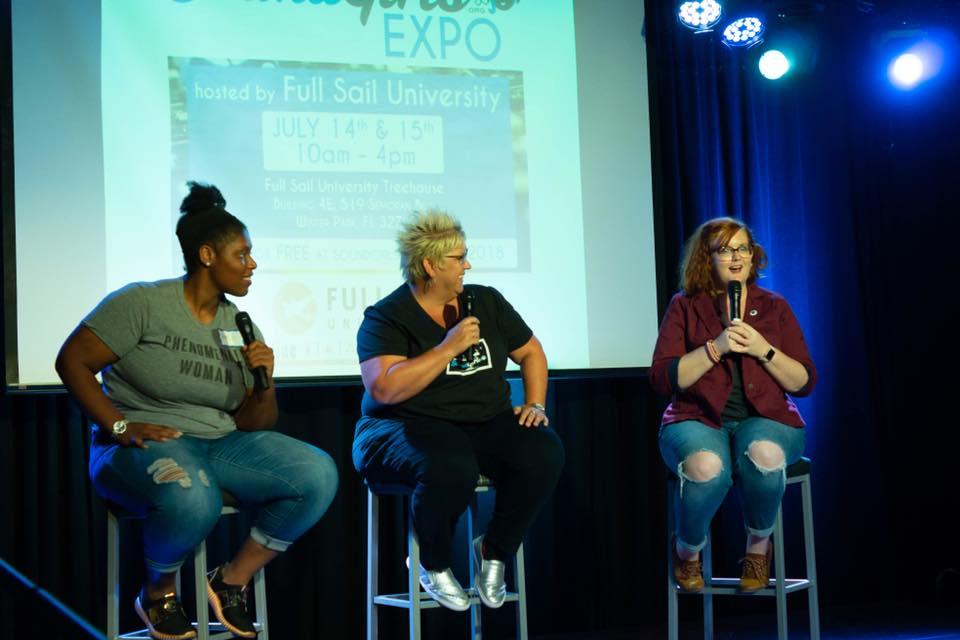
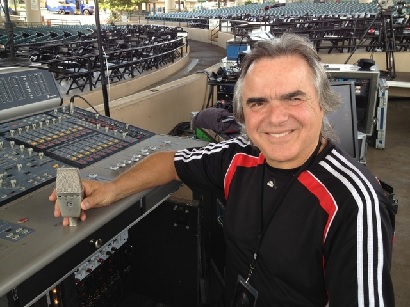
 Skylar D.C. is a live sound engineer just getting started in the industry but has a great passion for working with artists and working in the live scene. Audio was something she fell into by accident after getting offered a scholarship from Flashpoint College. She graduated in October of 2017 and kept her focus on live sound in school and outside of school. She loves working with bands and artists and enjoys seeing other people succeed!
She has worked in multiple roles for different companies, venues, and artists, including FOH, MON, stagehand, merch seller, graphic designer, executive producer, and writer. Her full-time gig is as a front desk manager at Music Garage Chicago, a rehearsal facility in the West Loop and picks up gigs on the side. You can usually find her standing next to the soundboard at a concert she’s attending, paying more attention to the engineer rather than the band. She loves asking questions and meeting new people and appreciates gaining new insights into the live world.
When she’s not working a show, Skylar spends her time taking non-credit classes to learn more about the business aspect of the music industry as well as refining her live sound and audio skills. She’s a self-taught musician/producer and hopes to use her skills to share music with people. She also enjoys traveling and plans on gaining enough experience to go out on tour and make a living off of audio full-time. Eventually, she would like to open up a venue/business focused on helping local artists and creating safe space for people to learn and grow as music industry professionals.
Works Cited
Andrews, Charlotte Richardson. “Punk Has a Problem with Women. Why?” The Guardian. Guardian News and Media, 03 July 2014. Web. 05 Nov. 2016.
Decoursey, Jacob. “The Decline of Western Civilization: A Retrospective Analysis of Punk Rock.” Shockwave Magazine. N.p., 4 Sept. 2015. Web. 19 Nov. 2016.
Elizabeth. “Guest Post: I Won’t Apologize For Being Assaulted.” Put Your Damn Pants On. WordPress, 08 Nov. 2013. Web. 05 Nov. 2016.
“Jamie Kranig.” Online interview. 28 Oct. 2016.
“Kaitlyn Johnston.” Online interview. 28 Oct. 2016.
@lorenacupcake. “Imagining a Safer Space: Building Community & Ending Harassment inPunk.” Store Brand Soda. N.p., 28 Apr. 2015. Web. 05 Nov. 2016.
North, Anna. “Riot Grrrl Is Dead, Long Live Riot Grrrl.” Jezebel. N.p., 08 Oct. 2010. Web. 20 Nov. 2016.
Schilt, Kristen. “The History of Riot Grrls.” The History of Riot Grrls – The Feminist EZine. N.p., n.d. Web. 20 Nov. 2016.
Seling, Megan. “Warped Tour’s Woman Problem.” Wondering Sound. Wonderingsound, 6 June 2014. Web. 05 Nov. 2016.
Sherman, Maria. “Here’s What It’s Like Being A Female Musician On Warped Tour.” Fuse. Fuse.TV, 26 June 2014. Web. 13 Nov. 2016.