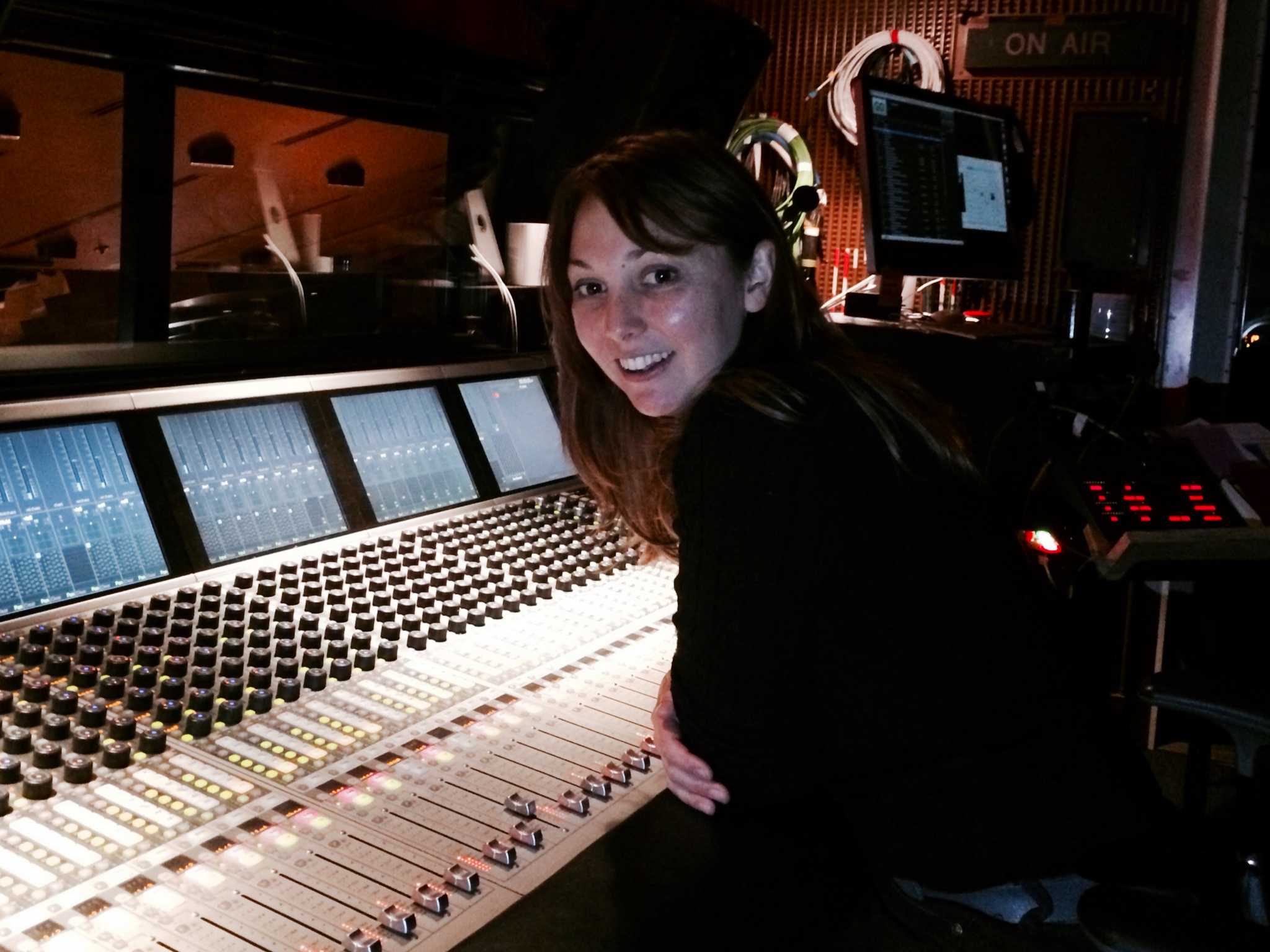
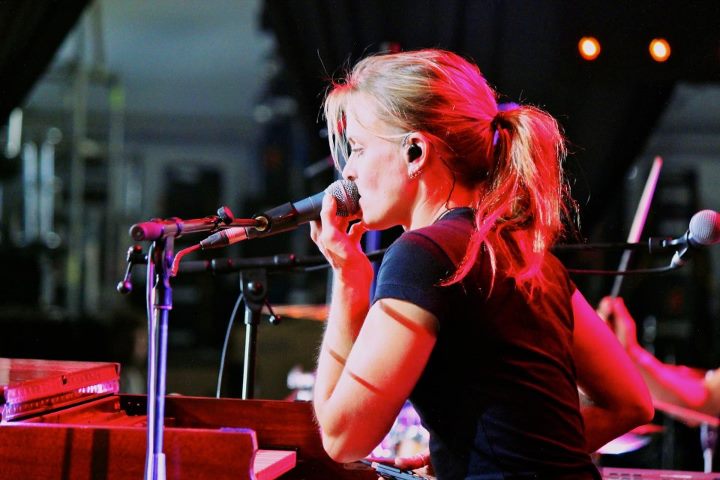
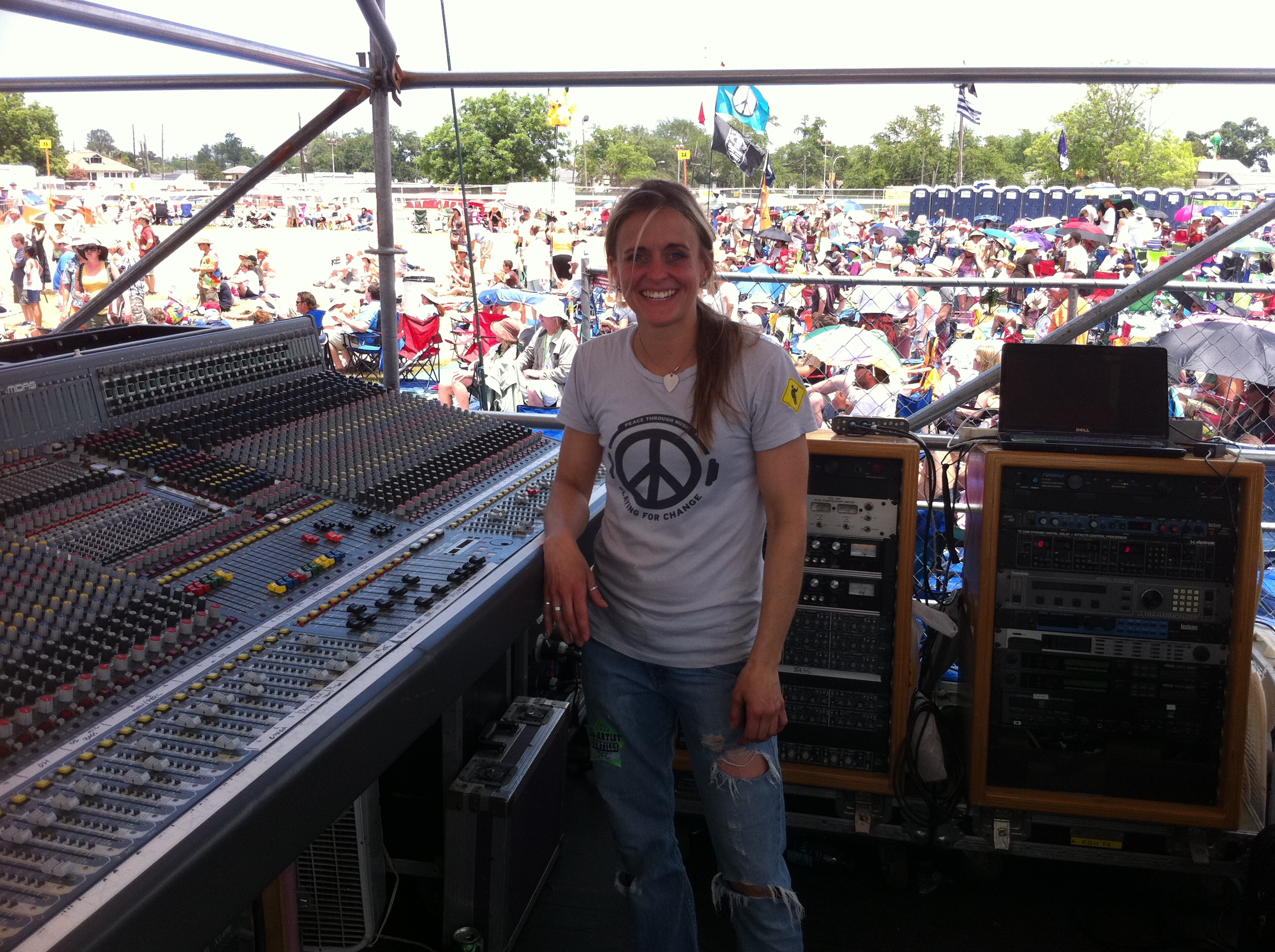
Sarah Black has been working in live sound since 2006, and is one of the seven women on the sound crew at the iconic Sydney Opera House. Sarah shares her experiences working Vivid Live with SoundGirls.Org.(more…)
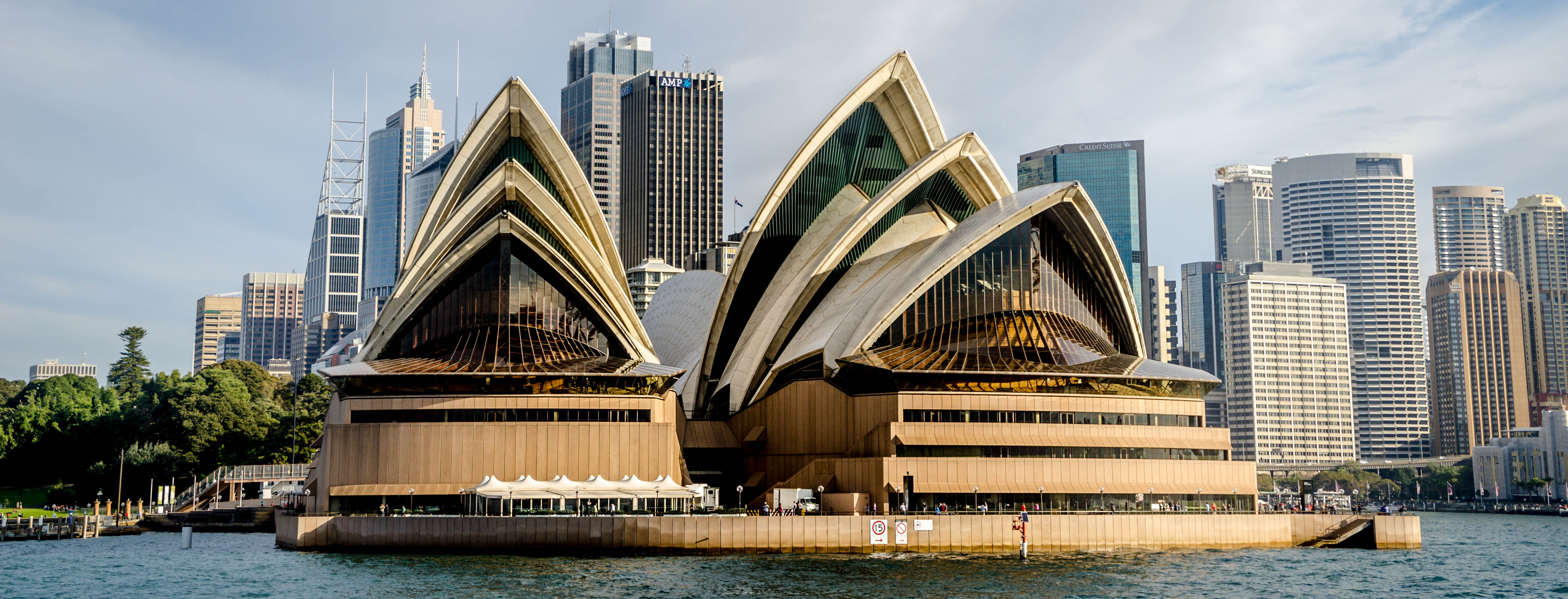
The Sydney Opera House
By: Karrie Keyes
Sydney Opera House
The Sydney Opera house is an iconic performing arts center in Sydney, Australia. It was designed by Danish architect Jorn Utzon and opened in October 1973. The first performance was the Australian Opera’s production of War and Peace. The Syndey Opera House cost over one million Australian dollars to build. The Sydney Opera House hosts over 3000 events each year with over two million people attending, and provides guided tours to over 200,000. It is 185 meters long and 120 meters wide, has 2194 pre-cast concrete sections in the roof, with sections weighing up to 15 tons. There roof is held together with 350 km of tensioned steel cable and has over one million tiles. There are 6225 square meters of glass and 645 kilometers of electric cable. The Sydney Opera House has 1000 rooms.(more…)
Burning River Fest Part One
A couple of weeks ago I got to work at one of our local festivals in Cleveland, OH called Great Lakes Burning River Fest. It’s a two-day festival based on environmental awareness to maintain a cleaner lake and to support environmental issues in the Cuyahoga area. It also celebrates local live music, food, art, and of course The Great Lakes Brewery with their famous Christmas Ale. (more…)
The Gigs I Will Never Forget
The gigs that you remember usually have had a great impact on you. They can inspire & empower or devastate & destroy you. They can humble you. They can make you laugh or make you cry. They can provide a sense of accomplishment. Sometimes you witnessed a performance that becomes legendary or history being made. They can open your eyes to other viewpoints, cultures, musical genres, and artistic expression. The gigs you remember are the ones where you stood on your own when everything clicked when you overcame challenging situations. They are the ones where you thought “I Have the Best Job in the World”. The gigs we remember shape our lives in small ways that may be unnoticeable, but sometimes they alter our life path. The gigs that you remember provide us with experiences that make us stronger humans and engineers. (more…)
The Ones That Make it Have a Gift- Melissa Britton
Melissa Britton started in live sound 20 years ago mixing in a classic rock biker bar. “My friend Casey knew I was interested in learning how to do sound. He was mixing at a club and told me I could come in on Sunday and mix the “Ladies Afternoon Stripper Party” Which was great! I rolled some cd cues and watched hot guys strip. I started working on the weekends mixing local bands. Eventually, Casey left to go work at the sister club, and I was hired on full time.”
While mixing five nights a week, Melissa was also going to school and working a regular job. She moved on from the club to work for Dowlen Sound in Denver, CO, where she worked festivals, graduations, corporate gigs, plays, comedy, and a large variety of music. “I worked really hard. I was determined to succeed. I would run circles around the guys. Bret Dowlen taught me a lot. He built his whole sound company from scratch, and even though I came into it 10 or so years after he’d started, I learned a lot from him. Watching him take apart consoles and fix them (analog consoles), watching him build crossover’s, wedges, Subs, and PA stacks and then take it all out and put it all up and analyze it, figure out how it could be better, throw farther, etc.… I learned priceless info from being around all that. “
Melissa with Bret Dowlen
Melissa mixed in every club she could get a gig in doing Monitors or FOH. “I worked every day, seven days a week. I learned by watching others and implementing their style, their technique, their flavor, into my own style, when it was my turn to mix.” “I learned to work with older analog consoles. Gamble EX56, ATI Paragon, Soundcraft Series 4, 800B, 800, Midas H3000, XL4, Bret even had a couple of Harrison’s.”
What got Melissa into this business in the first place was a love for music. “I am in love with music. I played music growing up. My dad played music while I was growing up. Actually, he still plays, and we are getting ready to cut an album at the end of this month, his lifelong dream I’m very excited about that. “ “I wanted to be involved in music somehow. I knew I wasn’t interested in performing, but I was passionate about music. Mixing was a way to be involved without having to perform on stage. I just wanted to be a part of it. “
Melissa has been working as an independent engineer for ten years now and specializes in monitors but is starting to do more and more FoH. “Dave Koz picked me up in 2001/2002, and I’ve been touring with him ever since. “ “I’ve done several short tours. The longest being about eight weeks, mixing monitors mostly. I was flying PA and teching and mixing monitors on my first tour, which was great a good way to stay in shape.”
“I love touring. Especially the way I do it. Which normally is four days on three days off. Almost like a regular job. Going out on a bus tour is great too! You get into a groove on the road. You connect with new people and develop great relationships. It becomes a family away from your family. I never dreamed when I started that I’d be out on the road touring. It just happened. “
Touring life and the road does come with its own inconveniences. “I started touring when my daughter was five years old. I missed so much of her life over the past 12 years. You can’t get those years back. They are gone forever. I haven’t been home for the Christmas season in 12 years. You’ve got to make the best of the time you have. Out of all the holidays, birthdays, school events, sports events I’ve missed I make up for the time I have off. Because when I’m off I’m really off and the time is mine to manage. So that’s what I like least. I don’t like missing the things that a 9-5’ver mom gets to experience. But, I LOVE what I do…and she sees that, and now that she’s older she can appreciate that. How many people can say that about their jobs? I love my job. I wouldn’t change anything.”
Melissa’s favorite day off activities includes DJ’ing. “I have a little turntable rig at home, and sometimes I just hang out and spin. I love house, techno, and dubstep. I’m learning how to work with Ableton and Serato and learning how to remix songs. It’s something I’ve always been interested in. “I also like playing basketball. I keep working on my shot and being a better player. There’s incredible satisfaction in making a great shot. “ “And I like hanging out with my kids. They are the super special people in my life. I love them so much. “
Kingston Audio Jazz Fest
“One of the highlights of my career was when I was teching/mixing FOH for Rave on the Rocks in 2000, at Red Rocks Amphitheatre. Best show EVER. Paul Oakenfold headlined it was so great. “
Melissa’s long-term goals are to continue learning. “I’m always learning something. If I had to set a goal, it would probably be to take more risks.” “I’d like to tour with some other music genres; pop or rock, but I’m pretty satisfied with where I’m at now…I was just asking myself hmm what’s next
Favorite Gear:
VDOSC and K1 line array systems, Telefunken M80’s, and Shure Microphones.
“A Midas XL4 is probably still my favorite console, but I hardly see them anymore. I like the Pro9. Lexicon Reverbs, (Best thing about the Vi6). Digital is cool. There’s still something to be said for being able to see all your inputs at once. And analog feels good. For me, there are happy memories associated with it. But in the end, I‘ll take what I can get. There’s always something new to learn on whatever piece of gear you have. “
What does Melissa consider to be must-have skills for working in live sound?
“Patience and a good attitude. The days are long and sometimes roll into the next day. 4 am lobby calls for day of show fly dates requires a good attitude patience and a sense of humor.”
“I believe there’s a certain amount of talent a person has to have to make it this business. It’s not just technical. There’s a feel and an intuition. I don’t know how to describe it. It’s more than just faders and knobs. If you don’t touch the gear with respect and love, it’s not going to work for you.”
“The driver I had on the way to the airport this morning told me that it was a gift that I had. His gift was purifying water for the local water company, and mine was mixing and putting up a show. I had never thought about it like that before. But he’s right…. the ones that make it have a gift. “
How to Set Yourself Apart from the Competition and Get the Gig.
By: Michelle Sabolchick Pettinato
If you ask the women with successful careers in professional audio, how they got to where they are, I think most of them would tell you that they made their own way into the business. You would also find several common themes: they were persistent, driven, showed initiative, and had the right attitude, and they went after their jobs whole heartedly. (more…)
How did you get that gig?
How did you get that gig?
I’ve been asked this many times over the years. There is no secret formula. It as much as being in the right place at the right time as it is in who you know. It’s also being really good at your gig and being available at a moment’s notice. I’ve had more than one gig come about last-minute- getting a phone call asking, ‘Can you be on a plane in the next 24 hours to start a tour?’ (more…)
Techniques for System and Wedge EQ
By: Michelle Sabolchick Pettinato
Tuning the system and ringing out wedges. There are many different techniques and everyone has their favorite- from simply speaking into the lead vocal microphone to utilizing tools like Smaart. SoundGirls.Org spoke to several engineers to find out what techniques they employ. (more…)
Traveling the Long Road – Karrie Keyes
Beginning her career in live sound at the age of 18, Karrie Keyes has been the monitor engineer for Pearl Jam and Eddie Vedder for 27 years. She’s also spent ten years 1990-2000 as a monitor engineer for Red Hot Chili Peppers and has mixed a very diverse list of additional artists.
Aversion to Conformity
As a teen, Karrie wasn’t sure what she wanted to do, but she knew one thing – she wasn’t going to conform to society’s standards and soon found that the punk rock scene gave her the philosophy and ideals she found most suited her. “During my teen years, I rebelled against all things that sought to mold and conform me; school, church, societal norms, and expectations. I mainly hung out with two groups of guys as I found I related to them easier than girls. The commonality between the two different groups was music, one group mainly listened to rock music, and the other group listened to punk rock.” Karrie eventually began to hang out more and more with the punk rockers and during that time started dreaming about traveling the world as a writer. “I would have none of the trappings of society; no mortgage, no boss, no husband, and no kids. Each of the guys had similar dreams, but theirs revolved around touring the world as a punk rock band.”
“I watched and listened as they learned to play their instruments and write songs. They never once asked if I wanted to be involved and I did not have the courage to ask. I could be a spectator, a fan, a girlfriend. One day we went to a friend’s rehearsal space, and I saw a soundboard for the first time and wondered if I could run it? Our friend, Ben, was older and in a band that got paying gigs, he laughed at me and told me girls couldn’t run the soundboard. I wondered what other skills were needed to run it or if the only qualification needed was being a dude.”
“I then started to wonder what other jobs there might be in the music industry and had only a vague sense of what roadies did or what it took to put on a live show. I was in orchestras and band through school and knew I wanted to be involved in music but did not know how.” When Karrie inquired in high school about careers in the field, she was told that no one made a living in the music industry. “I wondered how that could be. I saw bands and artists all the time on MTV and thought – they must be making a living? I only had the vaguest sense of what it took for a band to make an album or to put on a concert, but I sensed Fleetwood Mac was not setting up their equipment and I was sure Van Halen was not just paying their roadies with beer and pizza. I had no idea how one would go about becoming a roadie, but sensed that being a woman would be a huge obstacle.”
After high school Karrie ‘half-heartedly’ enrolled in a community college where she did what any other 18-year-old with no idea of what they want to do does: “I worked part-time, showed up at some of my college classes, and went to punk rock shows.”
“As it is with so many things in life, my path would instantly change over a simple decision. The decision was- what punk rock show to go to Fear or Black Flag? The choice was pretty simple as my friends were going to Fear and I could get a ride – Black Flag was to be attended on a public bus that stopped running at 10 pm, which meant I would be stranded until the morning. Black Flag it was! I never did things the easy way!”, she laughs. “The show was a video shoot for the In My Head Tour and Painted Willie and Gone opened up. I managed to weave my way up to the front. Minutes before Black Flag went on, one of their roadies came over and talked to me and I explained I wanted to learn what he did, to learn to do his job! He told me to hang out after the show, and he would show me. Of course, I had no idea what he actually did. So I hung out after the show and he taught me one of the things he, as a sound engineer, had to do: wrap a mic cable. The next day I found myself in Palo Alto with Black Flag and by the time we returned to Los Angeles I knew what I wanted to do – Sound – and my new friend Dave was going to teach me. He inspired me not to give up. Shortly after Black Flag finished their tour, I started working every gig I could with Dave and Rat Sound. I eventually was able to quit my part-time job and never went back to school.
Working for the Underdog
At Rat Sound, Karrie started out at the bottom, loading and unloading trucks full of PA systems and working every show she could from punk rock to gospel and everything in between. This gave her the opportunity to learn all about the gear, how it works and how to troubleshoot. She found the hands-on time with the equipment and opportunity to try things that were not exactly the norm, were invaluable learning experiences. “I did everything – load in and load out, setting up the sound system, wiring the stage, and doing the set changes on weekends for like 20 dollars a show or something ridiculous.”
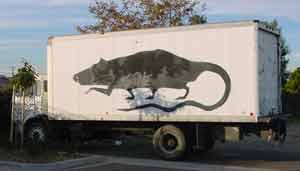
There were two partners in Rat Sound- Dave and Brian, who each had their system. Karrie worked for Dave. “Dave and I did every show by ourselves for years. Sometimes we would hire a third person, but for the most part, it was just the two of us.”
Rat was hired for many Goldenvoice shows, and Goldenvoice promoted most of the punk rock shows in Southern California. Rat first was hired because the punters could not climb the sound system. Goldenvoice and the So Cal Punk Rock scene were somewhat accepting towards everyone, and Karrie did not face obstacles because of her gender. “The Heavy Metal scene of the ’80s in LA was not very inviting for women ‘roadies’, but for Punk Rock and Alternative, it was hardly an issue. In all of them, Rat, Goldenvoice, and Punk Rock, the common thread was; we were all underdogs working towards a common goal.”
What obstacles have you faced?
“Being a woman. I just worked as hard as I could. Working for a small sound company had its challenges as well, I was either proving myself as a woman or as a small sound company.” In her early days at Rat Sound, she ran into cultural bias. “I always had a difficult time working with Middle Eastern acts, who just could not wrap their heads around a woman in my position. It was just so against their culture. I use to get very upset, and I now realize it was probably very confusing and upsetting to them as well. When I started doing sound almost 30 years ago, I took a lot of heat from people. You just didn’t see women doing monitors, you still don’t, but I can say it has mellowed a bit. Either that or I just don’t care anymore and tune it out.” Karrie recalls that the core crews she’s toured with have always been respectful, and being a woman has not been an issue. “Although there is always the jerk on tour. I ignore them at this point, and often they are only touring with us for a short period. Usually, I don’t even know about it, as they would not dare say anything to me. I get more shit from the local crews.”
On tour with Danzig and Soundgarden 1990
What are some of the lessons you’ve learned throughout your career?
Karrie’s experience of mixing so many styles of music (Jazz, Metal, Country, Punk, Reggae) in her early days with Rat has helped contribute to her job mixing Pearl Jam, who is not your straightforward rock band. The five members have widely ranging monitor needs with each mix being completely different from the others.
“I still think the way to gain the most experience with live sound is by being on the ground and working as many shows as you can. Working for a smaller sound company affords these experiences. The diversity in shows provides you with so much experience when it comes to mixing. The sheer number of engineers you end up working with, and you get to see their ideas and processes working or not working.”
A terrible show in her youth would have devastated her, but now she realizes that you just can’t always have perfect shows. However, she does try to draw from the bad shows and analyze what she could have done differently. “I’m always learning”.
What are the benefits of working with the same band for so many years?
“You can keep evolving and perfecting. Eventually, you all know each other so well and navigating the other personalities becomes natural. However, you cannot become complacent in the job. You have to keep working on issues or progressing forward, whether by learning new gear, or learning new tricks, but you get to a point when you’ve really got it down and no longer need to be changing things and starting over with new gear. Sometimes it can get old when you keep hitting the same issues, such as the volume on stage. I am trusted so have more leeway to try different things – but I also know my band very well and don’t expand trying new things into areas that I know are not going to fly.”
Advice for those getting started:
My advice is just to keep going and not to give up – if one door is shut on you, try another door. You are going to knock on a lot of doors, but the ones that open for you – walk through and keep going.
Always keep learning- take advantage of all the online courses and information out there.
Network – find a mentor.
Show up when you say you will – be reliable, ask questions, and take risks
When you are given an opportunity, take it.
Hone your diplomacy skills – they will benefit you on the job and also help you navigate through any sexist crap that you are going to have deal with.
Career Highlights
The Untouchables were a popular Southern California Ska band; No Doubt often opened for them. It was my first gig as an engineer for the band. It was an important step as I took over for the ME as he moved to FOH. That organization not only gave me a chance but Rat Sound as well and always believed in us. The gigs were always full on and taught me how to work fast and to deal with the needs of ten musicians.
Social Distortion – I worked and was hired for many shows Social Distortion did in the Southern California area. They were one of my favorite bands and I spent a lot time pinching myself. Social Distortion taught me that one size does not fit all. Mike Ness wanted his mix to sound as if it was coming from FOH. It was not as easy to achieve as you think.
Touring with Fugazi -The best live band ever! Every show made all the driving, the Motel 6’s, the Denny’s, the gigs with no local crew, security, barricade, or catering worth it. Every single day. If their indefinite hiatus ever comes to an end, I will gladly climb back into the truck. It was a privilege.
Pearl Jam – VH1 Tribute to The Who
Again there have been so many gigs that were important, challenging, fun, and played through tears and pain over the years – but this one stood out. It was a marker of how professional our organization had become. How our team pulled together, dropped all ego, and did what we needed to do so the band could do what they needed to do. Anyone that has seen it knows that Pearl Jam nailed it.
Red Hot Chili Peppers – Woodstock III
While there are many memorable shows over the ten years I worked for them, Woodstock III stands out. This gig happened after I left their organization to be off the road for my daughters. This gig fell in between one of the firings of the ME and hiring a new one. I would always fill in until another engineer was hired. I remember being happy and relieved that I would not have to mix this show.
We had played the second Woodstock, going on before Peter Gabriel, who headlined. It was a complete disaster. We did not have a line check earlier in the day, did not have any monitor equipment and were stretched thin with a bare bones crew. I let the sound guys push me around and mix position was about 80 feet from the band.
Needless to say, I was not happy when I found myself being asked to do this gig. I made a few demands – we were bringing in our system (which is not uncommon now, but was not standard practice then) this made our production manager less than happy as well as production on the Woodstock end.
We only had one promo warm up gig before going in, so the mixes were not dialed, and the system was not set up to go into a festival. I worked thru the day doing whatever I could during other band’s set changes so I would be ready. The sound and production guys were awesome and helpful.
When the band hit the first notes, I knew I had nailed it. It sounded great, and I knew the band was happy. At the end of the gig, I discovered Pearl Jam’s site coordinator and stage manager was head production on Woodstock and had told everyone to help me and listen to me as I knew my shit. The sound crew came up after the gig and said it was so nice to see an engineer that knew what they were doing. And three weeks later at a band rehearsal, Anthony told me that the sound was perfect.
We use cookies on our website to give you the most relevant experience by remembering your preferences and repeat visits. By clicking “Accept All”, you consent to the use of ALL the cookies. However, you may visit "Cookie Settings" to provide a controlled consent.
This website uses cookies to improve your experience while you navigate through the website. Out of these, the cookies that are categorized as necessary are stored on your browser as they are essential for the working of basic functionalities of the website. We also use third-party cookies that help us analyze and understand how you use this website. These cookies will be stored in your browser only with your consent. You also have the option to opt-out of these cookies. But opting out of some of these cookies may affect your browsing experience.
Necessary cookies are absolutely essential for the website to function properly. These cookies ensure basic functionalities and security features of the website, anonymously.
Cookie
Duration
Description
cookielawinfo-checkbox-analytics
11 months
This cookie is set by GDPR Cookie Consent plugin. The cookie is used to store the user consent for the cookies in the category "Analytics".
cookielawinfo-checkbox-functional
11 months
The cookie is set by GDPR cookie consent to record the user consent for the cookies in the category "Functional".
cookielawinfo-checkbox-functional
11 months
The cookie is set by GDPR cookie consent to record the user consent for the cookies in the category "Functional".
cookielawinfo-checkbox-necessary
11 months
This cookie is set by GDPR Cookie Consent plugin. The cookies is used to store the user consent for the cookies in the category "Necessary".
cookielawinfo-checkbox-others
11 months
This cookie is set by GDPR Cookie Consent plugin. The cookie is used to store the user consent for the cookies in the category "Other.
cookielawinfo-checkbox-performance
11 months
This cookie is set by GDPR Cookie Consent plugin. The cookie is used to store the user consent for the cookies in the category "Performance".
viewed_cookie_policy
11 months
The cookie is set by the GDPR Cookie Consent plugin and is used to store whether or not user has consented to the use of cookies. It does not store any personal data.
Functional cookies help to perform certain functionalities like sharing the content of the website on social media platforms, collect feedbacks, and other third-party features.
Performance cookies are used to understand and analyze the key performance indexes of the website which helps in delivering a better user experience for the visitors.
Analytical cookies are used to understand how visitors interact with the website. These cookies help provide information on metrics the number of visitors, bounce rate, traffic source, etc.
Advertisement cookies are used to provide visitors with relevant ads and marketing campaigns. These cookies track visitors across websites and collect information to provide customized ads.