Music has played a prominent role throughout Jessica Berg’s life. From an early age, she was often singing solos in choir and performing with her cousin’s bar band near the family cabin in northern Minnesota. At age 14, Jessica began playing guitar and writing songs with her best friend, one of which they recorded for a class project, and this began Jessica’s fascination with the world of audio technology.
In high school, she would often hang out at a friend’s recording studio, and another friend gave her a Tascam four-track cassette recorder. During her senior year, Jessica began performing at open mic nights and was featured as a solo artist on a local radio station’s weekly program, “MN Homegrown.” For Jessica’s high school graduation gift, her dad brought her to a studio in the mountains of Colorado to record a three-song demo. Soon after that, she joined a band and began performing around the Minneapolis-St. Paul area both as a solo artist and in bands, all the while practicing and learning the art of four-track recording.
In 2002, Jessica decided to pursue her passion for audio and enrolled at The Institute of Production and Recording in Minneapolis, MN. Within her first year, she was offered a live sound gig working with Le Cirque Rouge Burlesque Cabaret Troupe. Jessica says, “Working with this group was the best way to cut my teeth in live sound. It was a theater-type crew, who rarely stuck to the script, and I was often working on crap gear that I had to make sound good. Sometimes I even ran lights. Everyone got paid off the door. It was awesome.” Working with the cabaret troupe led to another live sound gig working with Cuban jazz group Charanga Tropical. Both clients had shows regionally, so Jessica had the opportunity to work in a variety of situations with two very colorful and talented groups.
While still in audio school, Jessica began interning at A440 Studios, one of the last large studios operating in town and negotiated a paid assistant engineering gig for regional rock band Skywynd’s “Escape Plan” album. “The lead engineer had a young child at home so that he would leave every night around 5 or 6 and I’d take over. We were tracking to 2” tape and transferring into ProTools. I was in heaven,” she says.
Jessica also interned with legendary promoter Sue McLean, and would get paid work as a runner on her shows. Around this time, she also began running sound at The Dakota, one of the top 100 jazz clubs in the world. Jessica remained on the house audio crew until she moved to Los Angeles in late 2013. “It’s an international listening room – Meyer had tuned it, it was intimate, and many shows were so attentive you could hear a pin drop,” she says. “I’ll always love that room.”
Not long after graduating from audio school, Jessica would become the dub room engineer at a top voiceover studio, Voiceworks (now Audio Ruckus.) Since the studio operated nine to five weekdays, the owner offered up the keys, and Jessica would bring in her clients in during off-hours. She was also on the call list with the Local 13 IATSE stagehand union for a year or so.
In 2006, she became the full-time Concert & Events Coordinator for the Minneapolis Park & Recreation Board, running four outdoor venues with over 220 shows between Memorial Day and Labor Day, including large community festivals and other park events throughout the year. Jessica says, “I walked into a 122-year-old tradition that had been a bit neglected, and I was determined to help nurture and fix it. Gear was broken, figurative duct tape left everywhere, people were unhappy. I was given a file box with a stack of papers and a bag of keys, a Motorola phone, an office in a historical building, and told to ‘go’ – so I did.” Over the next three years, Jessica helped raised support from within the Minneapolis Park & Recreation Board, built a strong team of seasonal sound engineers, worked with local community groups to purchase new audio gear and introduced the concept of allowing Music in the Parks sponsorships to the organization’s Board of Commissioners.
During this time, Jessica also served as a board member of the Jackie Lee Robinson Foundation, who was one of the original founders of IPR, and in cooperation with the Minneapolis Park & Recreation Board and other professional audio companies, helped to start the Ideawerks recording studio educational program in the parks. The program is free for youths aged 12-17. After her third season of running the Music in the Parks, Jessica decided to move on. Today, the Minneapolis Music in the Parks program has never been stronger and brings joy to thousands of people every summer.
During her time in Minnesota, Jessica received certification in Festival and Event Management through the University of Minnesota Tourism Department and was introduced to the Head of Production for the WeFest and the 10K Lakes festivals in Detroit Lakes, MN. The WeFest is the largest camping and country music festival in the nation. Jessica would start out working as a stagehand and work her way up to the Backstage Production Assistant. She was in charge of backstage production parking and would run sound for the VIP area near the backstage area, post- main stage show. Jessica has continues to work these festivals and says “We are like a big family, and I have learned what it takes to run a huge, multi-act, multi-day show. It reminds me why I got into the business in the first place – I love that crew.”
Jessica would go on to work for IPR as an Academic Coordinator and become a founding member of the Twin Cities Mobile Jazz Project non-profit organization, bringing jazz music and education to youth into underserved communities throughout the local region. She would also return to school and receive a BS in Media Business. She never stops learning and seizes the opportunities presented to her.
As a graduation gift, one of Jessica’s closest friends in Los Angeles bought her a one-way plane ticket and offered her a place to live. “I knew I wanted to spread my wings and get out on the road more. I loved what I was doing in Minneapolis and the people I worked with, but it is the biggest small town you could ever be from. I figured I’d give it hell for two years and see what kind of magic I could stir up,” she says. So after breaking the news to her jobs and making sure they weren’t left high and dry, then releasing an album/love letter to her Minnesota life, giving away her furniture, and shipping a couple of pallets of boxes via Amtrak, Jessica flew to Los Angeles on Halloween in 2013. “It was one of the best decisions I’ve ever made,” she says. “As many wise mentors have shared – in this industry, if you either have a job or a place to live, you gotta make that leap.”
Soon after landing in Los Angeles, Jessica discovered SoundGirls while searching the term “sound girl” on the Internet. It was too much of a coincidence that she had started her website soundgirlproductions.com a year earlier, in honor of the endearing nickname given to her by fellow Dakota crew. Not only that, but Jessica had been involved with a few different “women in music” groups in Minneapolis, and she feels none had emphasized live sound in the way that SoundGirls.Org does. “I felt like I found my tribe,”
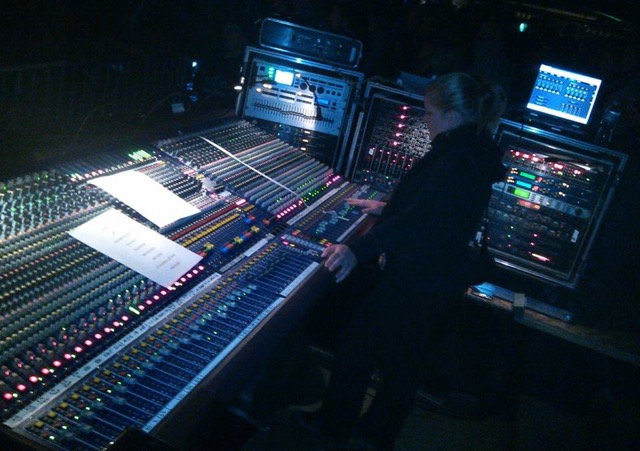
Quadron Tour 2014
Jessica would check out the site almost daily and one day, a job post flew by on my Facebook feed. It read – “TM/FOH needed ASAP…” and included an email address. I responded right away and two hours later I was in a meeting at the Avalon in Hollywood, where an upcoming concert was in pre-production.
The woman hiring for the TM/FOH position brought me on as her PA for the Avalon show to see how we would work together. When the Avalon concert was over she said, “OK you’re hired, we’ve got a lot of stuff to do!” I was on the road as TM/FOH with Quadron less than a week later, opening for Mayer Hawthorne. It was a dream come true.”
That one gig has led to the next two-plus years of mostly touring work for Jessica, and the woman who originally hired her became a mentor. When she got back from the Quadron tour, Jessica worked as a Project Manager at Biz 3 (a publicity company) for about six months, while running sound at a couple of local LA clubs and doing one-offs working with her mentor. Jessica applied and got on the call list with a stagehand company, which has led to a variety of different gigs throughout Southern California when she is off the road.
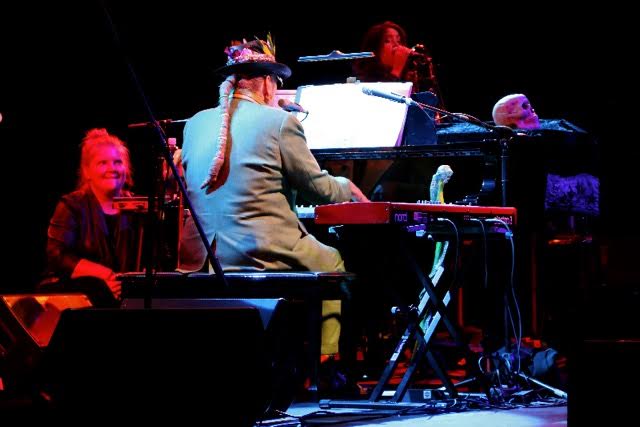
Dr. John
In late 2014, Jessica was offered a gig to be Dr. John’s tour manager during his US/UK Winter 2015 run. In the interim, Jessica accepted the gig of TM for Waka Flocka Flame. These two tours took up most of 2015, minus a six-week stint running monitors and working on the audio crew at the Maui Arts and Cultural Center.
After returning from Dr. John’s tour, Jessica knew she wanted to reconnect with the SoundGirls community and signed up for the group’s SSL Live Training at Rat Sound. She is excited to be volunteering with a growing organization and community that is achieving its mission – to help empower the next generation of women in audio, expanding opportunities for girls and women in the audio and music production fields, and sharing resources and knowledge through cooperation, collaboration, and diversity. Jessica shares, “SoundGirls is truly a haven for women in our field. I feel so fortunate to have found our community. The supportive vibes and being able to relate to each other is huge. It also led to my first paid touring gig out of Los Angeles, which has led to pretty much all the other gigs I’ve had since I left Minneapolis!”
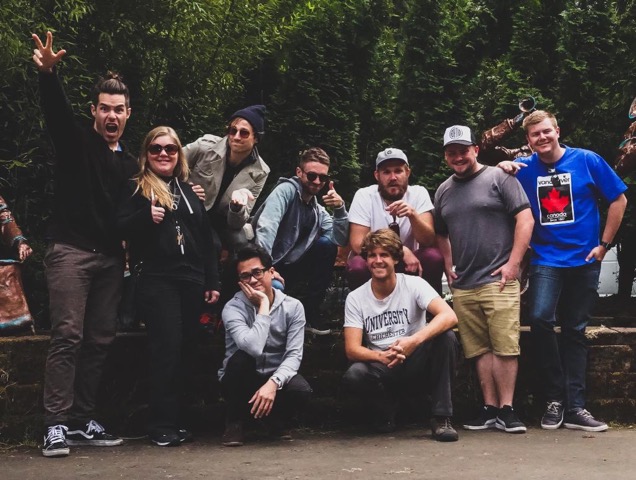
Saint Motel Tour Crew
As of late, Jessica is continuing her professional adventures in the freelance TM/FOH/MON world, mainly as TM with Phoebe Ryan. She also works on audio crews with a few production companies when home in the Los Angeles area. While her career is a primary focus, Jessica said that this year she’d like to pick up her guitar a bit more, sing a little louder in the car, remember to take five-minute dance parties when needed, and help our SoundGirls.Org community continue to grow and evolve on a global scale.
What do you like best about touring?
Time and space seem to shift, and there’s a lot of magic that happens in that flow. The key is to not resist it. Touring reminds me to live in the moment and make ‘em count. What I like best about touring is that I get to work on my feet, literally and figuratively – tapping into all my life skills, knowledge and intuition to help make some really cool stuff happen in the moment. I’ve also met some amazing people while working on the road, and I’ve been fortunate to have worked alongside some incredibly talented industry professionals along the way. As an engineer and musician, for me personally, there are no other jobs that allow for such an exercise of the heart and mind quite like the ones in the touring industry. There is always something new to learn.
What do you like least?
Being on tour can feel like living in a bubble. It’s important to stay connected to loved ones while on the road and take time for self-care. Post-tour depression is a real thing.
What is your favorite day off activity?
TMs don’t really get days off. I usually enjoy my off days playing catch-up on life and work, finding some healthy food, maybe get a mani/pedi, and taking a walk in some nature if I’m lucky. Sleep!
What are your long-term goals?
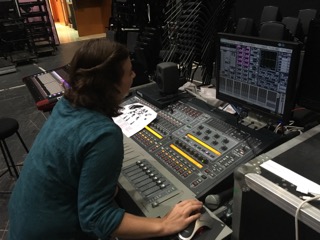
Health, happiness and love 🙂 To keep learning and evolving. To master the SD5 and do a stadium tour. To help make a difference every day, no matter how big or small.
What if any obstacles or barriers have you faced?
I’ve definitely felt the challenge of having to prove my worth as an engineer and tour manager – which, being highly competitive fields, felt more like an educational lesson than any kind of obstacle. Either I was learning or I was teaching someone else. I dug in, took initiative, asked questions, got up in there with the rest of ‘em, pulled my weight, sweat, smiled, and kept a positive attitude throughout. Was it easy? Hell no. But it has absolutely been worth it. The uncertainty of a sustainable career in the beginning of my journey was an obstacle of sorts as well, since everyone needs to eat and have a place to sleep at night.
How have you dealt with them?
I eat obstacles for breakfast. We wouldn’t be worth our salt as engineers if we didn’t. Every day on the job we are faced with creative problem-solving situations and asked to find the solution. Whatever perceived barriers or obstacles I’ve faced, I simply try to not put too much energy into the problem and instead focus on the solution. In the beginning of my career I worked whatever jobs necessary to survive and kept a low overhead, so that I could work with good people and take advantage of industry opportunities to further my skills. Perseverance, connecting with my network of supporters, and my belief in myself carried me through the tough days. Same goes for tour managers.
Advice you have for other women and young women who wish to enter the field?
Do it! It’s a life-long adventure. Prepare to be in it for the long haul. Be patient with yourself and ask lots of questions. There are a significant amount of men in the industry who are supportive of women working in the field – don’t let the haters ruin it for all the good ones out there. Embrace your gifts and talents and everything unique that you bring to the table. Remember that women scientifically have better hearing than men. You’ll have to passionately pursue your education, whether formally or in the real world because nobody is just going to hand it over. Stay hungry. Keep an open mind and explore all the possibilities.
Must have skills?
Must have skills include: a positive attitude, showing up on time, perseverance, having a solid understanding of signal flow, training your ear to hear different frequencies, time management, ability to take charge when needed, ability to troubleshoot technical issues, and/or find resources, remaining calm under pressure, and being able to maintain a professional demeanor. I think working in the service industry is the best way to prepare for working in the field, as you learn almost all of these skills but especially how to work with different kinds of people. Learn how to solder.
Favorite gear?
I’m admittedly not a gearhead, but I do love working on a large-format analog console. Don’t get me wrong – flying around on a digital console has its own particular merits and brand of swagger. However, having everything all laid out in front of me has a definite charm and feels like I’m working from a different place in my brain. My other favorite gear would have to include the SM57 and SM58 microphones – because if you can’t do a show using only these microphones then, well, I don’t even know. Sometimes that’s all you got to work with. I love em for their strength and reliability. An xlr sniffer/sender cable tester will become one of your best friends. My favorite tour manager gear is my portable printer, hands down.