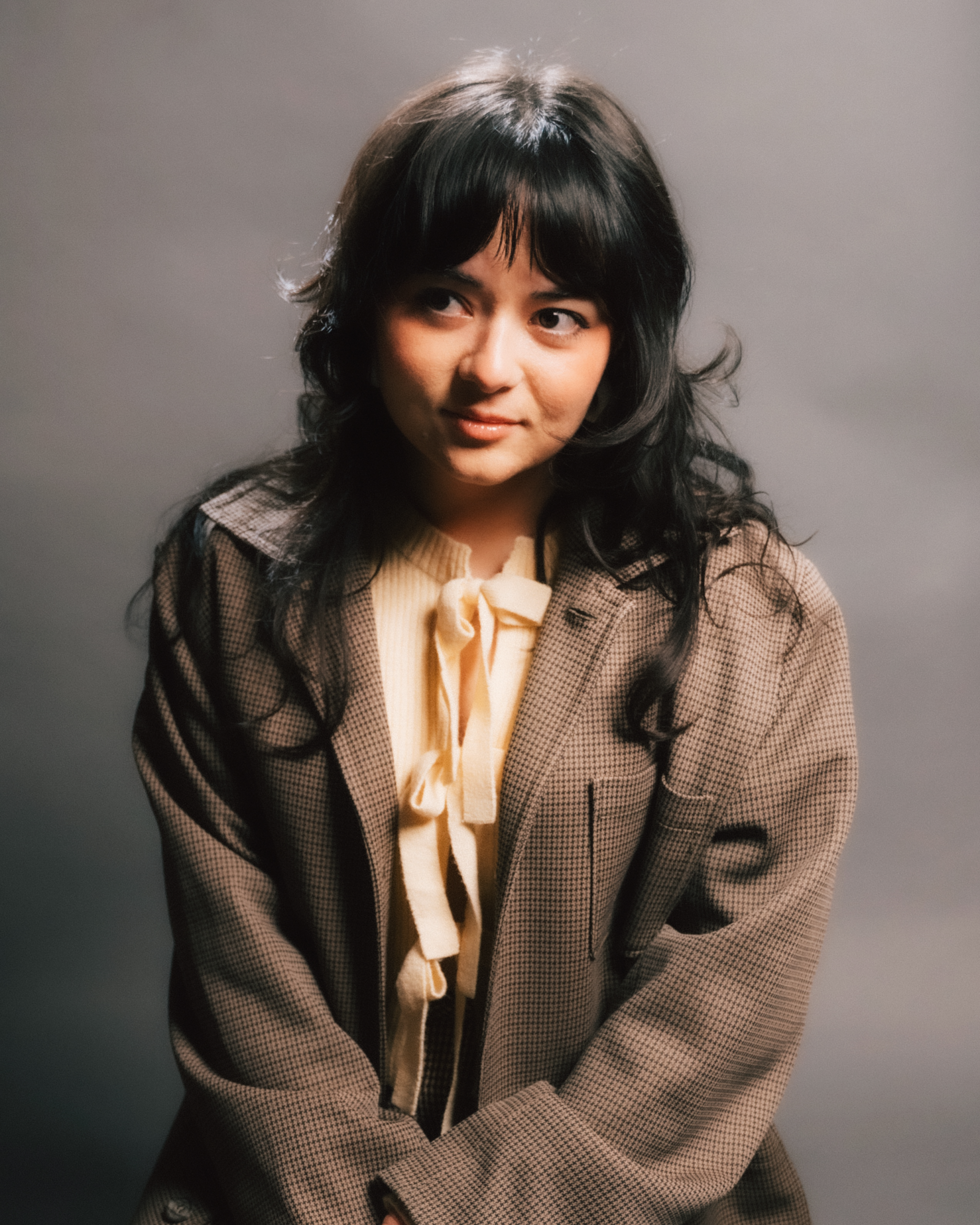
It has become increasingly common for YouTubers and other online creators to pivot to music—some for a brief season, to sing their heart’s song and experience the joy of bringing an original composition or two into the world, and some for a long-term shift (Addison Rae being, perhaps, the most famous example of someone pursuing this path). In many of these cases, the common, perfectly acceptable practice is to find a producer to work with who can midwife songs along with each artist to help them to live out their musical dreams. But this is not how Gabi Belle does things.
While most of her content can be classified as “commentary,” as she analyzes films and consumer products with her characteristic humor, chic style, and colorful decor, there has always been an instrument or two peeking out from behind her in her videos—a keyboard here, an electric guitar there—and a Beatles album is always visible (to my delight). This is not just an aesthetic or affectation. Gabi frequently brings her musical chops into her work, whether she’s exposing seemingly “live” TikTok videos as having been secretly auto-tuned (her channel’s most viewed video) or demonstrating concepts through Logic Pro X, as in a recent upload showing how tracks sourced from Suno can be used to fake a production workflow. Thus far, she has written and released some singles of her own, with videos and physical merchandise to accompany them, as with the bossa nova-style “Brigadeiro” on retro-inspired vinyl complete with a recipe for the delectable subject of the song on the back of the record’s sleeve. On June 5th, though, she is releasing her first full-length album CITY GIRL, tracked and produced entirely by Gabi herself along with her close friend, collaborator, and fellow content creator Josh Dare. We spoke virtually about her process in creating it as well as the challenges of being taken seriously as a musician, songwriter, and producer after having first achieved success creating content for the internet.
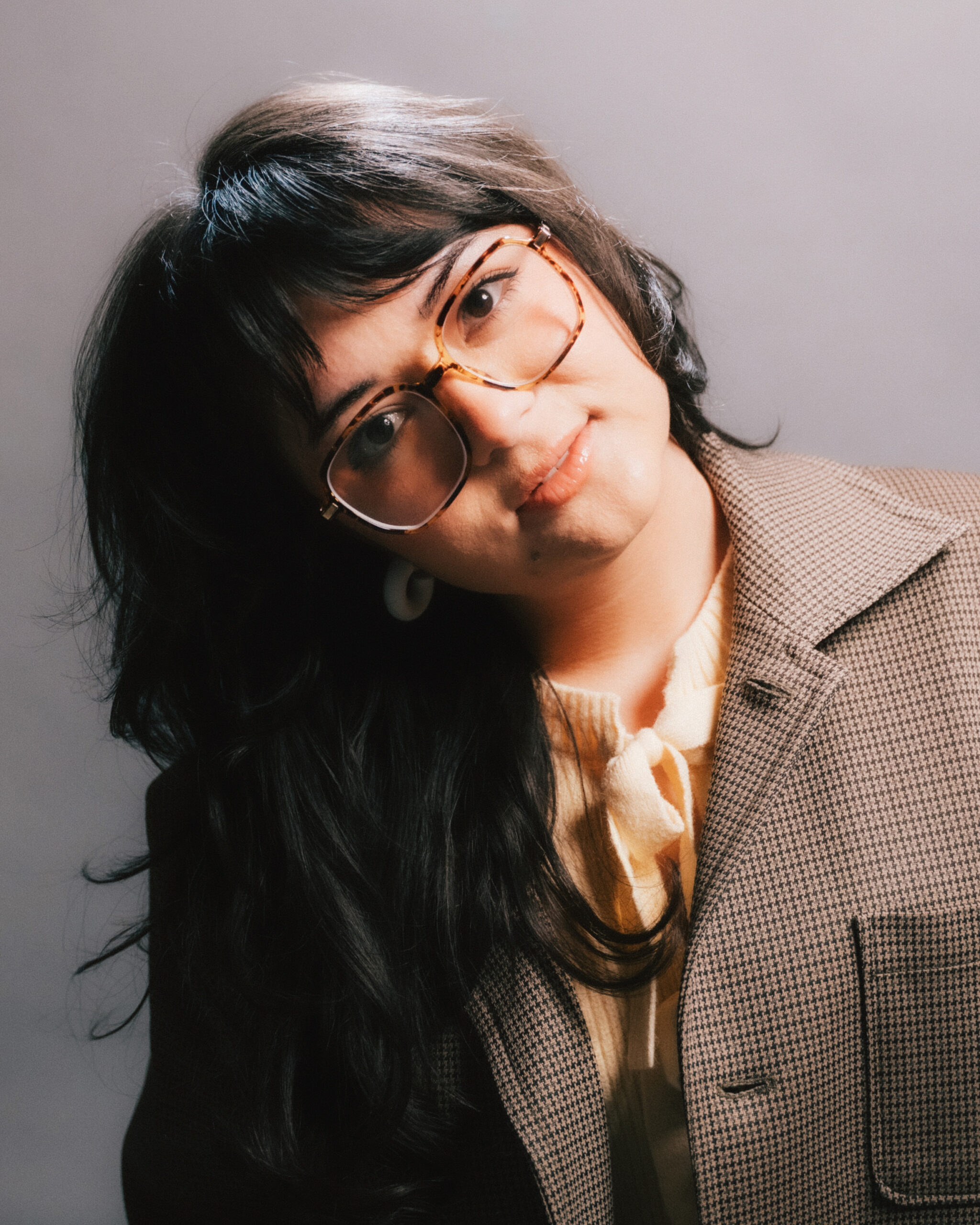
Meredith Hobbs Coons: What is something that you wish people understood about your background in music?
Gabi Belle: In general, when people hear “YouTuber doing music,” it’s kind of an eye roll. That’s a completely understandable reaction, but it’s interesting to see that because not every YouTuber is the same. That’s the beauty of YouTube: we’re all different. So I think people are gonna be surprised when they hear my album. People expect garbage—I don’t know how to phrase it better.
With my channel, specifically, my audience completely understands that I am a musician first. I have made that really clear in my content since the beginning, because I’ve had [pursuing music] in mind the whole time. I need people to know that I was a musician before YouTube.
Meredith: What did that look like? Before YouTube?
Gabi: I was so annoying. I loved High School Musical—I was, like, six, probably. I was just constantly singing. I would intentionally learn both parts of the duets for HSM so that I could learn how to do harmonies on my own. My mom plays bossa nova, so we always had a nylon guitar at home, and when I was 11 or 12, I became more interested in learning [myself]. She taught me how to play a few chords, like, A, E, and C, and from there, I spent the entire summer, and onward, learning how to play music. I’d start with Taylor Swift and the most accessible songs, then learned “Teardrops on my Guitar”—that kind of stuff. I love Lady Gaga. I’m a pop girlie at heart.
I also taught myself piano. My mom put me in vocal lessons to have me sing with technique, and my teacher was more of a contemporary theater person, so she had me sing in that fashion. It was cool to learn mixed voice and actual vocal training. That’s where I started [musically].
With DAWs, when I was 12, I would just plug in the aux cord of, like, a USB microphone to record into Audacity, or Windows Movie Maker, and it was probably the worst thing you’ve ever heard. Then, in early high school, I would download any free DAW that was around to figure it out. That’s also when I got my first microphone.
Meredith: What’d you get?
Gabi: I actually still use it. It’s a blue AKG Perception 220, and it is dented to hell. I’ve dropped it so many times, but it has never broken. It has never failed me. It’s awesome.
Meredith: That’s amazing. What were the free DAWs you were using and how were you learning to use them?
Gabi: When I was trying to learn DAWs and music production, it felt like you needed to have preliminary knowledge of music production, or a family member who already had a studio and could actually teach you things—I didn’t have any of that. YouTube tutorials were fine, but I feel like information is so much more accessible now. I didn’t have GarageBand or anything back then; I didn’t know that you needed an interface. I was like, “Where am I supposed to plug in this microphone?” I was stumbling my way around until I figured it out, which sucked.
I looked up a ton of microphone comparisons, information on a female voice and what would sound best with my voice, and only now that I am doing YouTube, do I even have access to [those mics].
Meredith: A lot of people have to work a day job—or be independently wealthy—to access materials to make their music sound the way they want it to. In that sense, YouTube seems like a day job in the way that anything else would be.
Gabi: Yeah, it was a means for me to be able to do music, essentially. I still love doing YouTube, but it can also fund my music endeavors.
Meredith: Yes. Prior to YouTube did you pursue gigging? Do you have experience in a local scene or anything like that?
Gabi: Yes. Oh my gosh. At first, I was doing any talent show that would take me: YMCA talent shows, any school talent show. I would also do open mic nights at my local library. That’s where I got a lot of experience gigging and singing live. That was especially important to do, because I didn’t have enough musician friends to actually perform with me. That’s always been the through line: having to do things myself. Even right now, I could hire someone else, but I’m like, “I think I’ll just do it myself.”
Meredith: That is such a gendered experience, too.
Gabi: That’s been my only experience. When I’ve worked with a producer, it has been nearly impossible to find someone who has the same vision, who will actually listen. I’m the only female producer I know. That’s why I look up to artists like PinkPantheress who are producing their own stuff. In almost every experience I’ve had with a male producer, they have not listened or understood my vision at all.
Even on this recent album, I sent a demo to a male producer—-a male drummer, actually. I just wanted the drums recorded. I explained exactly the kind of drums I wanted, had the MIDI drums recorded. I was like, “I basically just want this with extra fills,” and he took my demo, and was like, “Hey, me and my bros are really excited about this. Can we flesh out the song? Can we flesh out the demo?”
Meredith: That makes me so mad for you.
Gabi: Thanks. It gets worse. I was like,
“Okay, maybe it’ll be awesome.” I sent him the original chords. Then he sent me back something that was completely reharmonized. He changed all of the chords. He completely misinterpreted the sound I was going for. I had sent him examples of the sound that I was going for, reference tracks, and he sent me something that was completely different, that didn’t sound anything like what I was going for.
That’s why I was just like, “I’ll just do it myself,” so I’ve been working with a close friend, Josh Dare, because he completely understands the vision, and he trusts me to make the right call. We have equal level conversations about what will serve the vision of the song and album best. He actually respects and trusts my creative vision. He’s like, “It’s your album. You make the last call.” And we have similar taste, which helps a lot.
Meredith: It sounds like you’ve found an incredible collaborator for this stage of your career.
Gabi: Yeah, it’s hard to find someone who gets the creative vision and believes in it and your ability to do it. It has been demotivating, and has made me a little cynical, growing up in that producing space where it feels like no one gets it, no one thinks I can do anything right, no one believes in my ability to make music.
Also, the genre of the album is city pop, which, compared to general pop, or country, is kind of niche. A lot of people don’t get the sound. A lot of city pop inspiration is jazz fusion artists from the ‘70s, like Masayoshi Takanaka. That’s something I’m incorporating into the album, but that means there’s a lot of genre crossover that most people don’t fully get. A lot of the chords are complicated, a lot of the string parts are complicated. I’ve personally been playing the flute on the album, so there are a few flute solos on it, too, which is really fun. There’s a lot of key changes in the songs, 7 bar phrases, time signature changes, some phrases that are 6 bars before it goes into the next chorus—a lot of fun stuff that I think music nerds will enjoy, but that people who just like music will also like.
Meredith: Who are some of the other people who come to mind as influences?
Gabi: Well, Paul McCartney and Wings has been a big one. ABBA has been a big one. Lamp (a Japanese duo group) has been an inspiration, as well as a lot of bossa nova artists: Jobim, Astrud Gilberto, “Girl from Ipanema”—bossa nova classics.
Meredith: It seems like that’s been meaningful for you too, because your mom plays bossa nova.
Gabi: Exactly. She has been really enjoying all of the songs that I’ve been showing her for that reason.
Meredith: Does she do that professionally or for fun?
Gabi: Just for fun. She grew up playing guitar. She plays at church, and she plays Brazilian, bossa nova stuff. She sings also. She grew up playing with her family, with friends. At Christmas, we have family jam sessions, just me and her. My dad will sit by and kind of sing along and have a good time.
Meredith: Oh, that’s nice. I grew up in that kind of environment, too, so I’m rooting for human musicians, always and forever.
Gabi: Always. Yes. No AI whatsoever involved on this album—not even close to a little bit.
Meredith: In a recent video, you pulled apart songs created in Suno in your own DAW. How good did it feel, after making that video, to see the AI video company Sora crash and burn?
Gabi: Oh my God. I mean, it’s nice, but it’s also like whack-a-mole. They’re not done. It doesn’t actually stop the greater the bigger picture of everything that’s happening. Just because Sora’s done, that doesn’t mean that there aren’t ten other AI companies that are excited to take its place.
Meredith: You have done videos on the return of physical media. Is that something that you want to have as a part of this release?
Gabi: Yes. Vinyl, CDs, and we really want to make it a point to include digital so people can have a high quality download that they can keep forever with the full art and album package. I think people will really like all the avenues of accessibility. And it’s hopefully something where people will want to look through the little booklet again or something, even with CD booklets. It doesn’t have to be vinyl, but vinyl is so satisfying because you can include so much in a vinyl release. I love seeing physical products like that returning—within the last 10 years, especially.
Relevant links:
Website – https://gabibelle.com/
Bandcamp — https://gabibelle.bandcamp.com/
YouTube – https://www.youtube.com/@itsgabibelle
YouTube music – https://www.youtube.com/@gabibellemusic
TikTok – tiktok.com/@itsgabibelle
Instagram – instagram.com/itsgabibelle
Spotify – https://open.spotify.com/artist/35XGyNw5Q7bvcF8BWWXbom?si=uCmakuPVQO6x0VFX2sO9rQ