It is incredibly interesting how we are often inspired by sound— an intangible vibration of airwaves that can resonate with the deepest corners of our souls. Personally, I have always been moved by music. Getting my hands on a saxophone, then learning to sing, then finally learning about music production have all helped to deepen my appreciation for music over the years. When I was younger, I would sit listening to music and often ask myself, “Why does this song sound so good?” Now, with many years of music production experience and a sound engineering degree under my belt, I have a clearer sense of the elements that make a record resonate with the deepest corners of our souls. And oftentimes it is when the lyrics, music production, and sound engineering of a song create a synergy together. As my time as a SoundGirls blogger commences, I will continually analyze different records and projects to answer that exact question — why does this song sound so good?
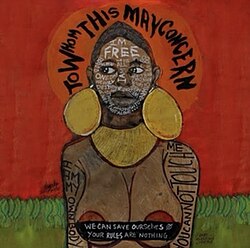
Like many R&B fans, I have long awaited Jill Scott’s new music. I love that this newest project, To Whom This May Concern, sounds incredibly true to her and her artistry. She delves into themes of love: for self, community, ancestors, romantic interests, and music, amongst many other experiences. Frequently, these themes are expressed with her Black womanhood at the forefront, and it is displayed not just in the lyrics but also in her delivery, the production, and the engineering of the songs. Her newest project, To Whom This May Concern, is unequivocally Black in its lyrics’ themes, and the way its production and sound engineering collaborate with the lyrics to deepen that message. Some standout songs that will be analyzed for their intersection of lyrics and engineering are Be Great, Pay U On Tuesday, and Right Here, Right Now.
Be Great
Everything about this project is intentional. It is no mistake that she released it during Black History Month. In a similar vein, it is no mistake that one of the first songs on the album is Be Great. It sets the tone for themes that will unfold throughout the project. This song is written and produced by Jill Scott, Troy Andrews (aka Trombone Shorty), Adam Blackstone, and Donovan Knight (aka DK the Punisher). The first thing that stood out to me was the horn production of this record. With Trombone Shorty as one of the writers and producers, it is clear to see how he contributed to the song; the horn parts are a mix of his classic New Orleans style with clear influence from Historically Black Colleges and Universities (HBCU) marching bands. HBCUs are home to a special type of marching band that goes beyond sideline entertainment at football games, but expands to represent Black history and culture. The spirit and legacy of that is heard on Be Great through the low-end support of tubas, bright interjections of trumpets, and countermelodies of saxophones and baritones.
Jill Scott’s delivery of the lyrics highlights the message of the song that is already heard in the production. In the verses, she has a word in each phrase that she sings with more emphasis, and the notes she chooses on those words are sung higher in her voice; she intentionally wants to make us feel the meaning of each phrase she sings. Furthermore, she utilizes a common vocal production technique in the choruses called vocal stacking. It is the layering of multiple vocal tracks to add density, texture, and emphasis to what is being sung. I love that she chose to keep it unison and leaves space for the horn parts at the end of each phrase. It comes across more impactful that way due to the horns serving as a response to her call, an affirmation to her deciding to “be great” regardless of the “history that made [her] cry.” Even the lyrics embody the spirit of the production. HBCU marching bands are one of many instances in Black history where something meant to harm Black folks (segregated schools) was used by Black folks to instill confidence and pride in our abilities and culture. What better tool to utilize in a song about rising from circumstances meant to make you fall than production that highlights that resilience?
The song reaches a climax around 2:15, when a hallmark of HBCU marching bands comes to fruition— the battery breakdown section. Scott’s lyrics bounce effortlessly on top of the knocks of the snares, claps of the cymbals, and marching quads playing fills as the vamp repeats and builds. Resilience is not only heard in her lyrics; it is felt from the song’s production as well.
Pay U On Tuesday
As someone whose first musical influence was jazz, I was quite pleased to hear this blues on the project. Whether you are a sound engineer, a classically trained musician, commercially trained, or you are hailing from musical theater spaces in the United States, it is likely that any of these musical contexts has made you encounter the blues. For more history on the blues and its meaning, see here.
The song was produced by Jill Scott, Adam Blackstone, Charles Harmon, and Claude Kelly. The space and panning of this record so clearly mimics 1920s and 30s jazz; it makes me wonder what recordings Jeremy Hunter and Eduardo Ghigo might have been using for reference mixes. One of the first things I noticed in this song is the panning. The rhythm section is panned piano right, upright bass in the center, guitar left, and the drum set is panned throughout the width of the entire mix. It leaves space in the mix for the response of the horn section. It’s natural that Scott utilizes call and response; it’s a hallmark of this genre. And of course, as blues typically does, Scott sings of her woes. In this case, an unreliable nuisance of a man. I’m sure we, unfortunately, all relate to a thing or two in those lyrics!
Right Here Right Now
Scott takes us on a journey with Right Here, Right Now, answering the question posed in the lyrics, “Does love still exist?” It is produced by Jill Scott, Lamar Andrews, Carvin Haggins, Yountie Sticklin, Keith, and Malek Isreal. Aside from this being my personal favorite song on the album, this song’s lyrics highlight how love is truly in everything if we pay enough attention to the present. This record is a House track — a music known for its ability to curate a sonic experience that keeps you present in the moment. House music hails from Chicago and is influenced by underground Disco music, queer culture, and Black culture. Its sounds often bellowed from the walls of The Warehouse in Chicago. Jill Scott’s mere use of the genre as a vehicle for this lyrical poem underscores how her identity as a Black woman is present in every section of this album.
The lyrics are affirmations of love. It is in the flowers, the trees, the rainfall, in me, in we. The poem Scott crafts over this house beat is one that highlights not only her own personal feelings but also the importance of the present moment, “right here, right now.”
The journey begins low, thin in texture. There are only a few layers — wide synth pads, Roland TR808 drum machine echoing rhythms sparsely yet with a pace, and Scott’s voice with heavy reverb and pan automation, placing it hard left then hard right. As the journey continues, claps on two and four link up with the synth bass to deepen the rhythm. When the peak is approaching, vocal stacking is utilized in the pre-chorus and is fully exposed as the song ascends into the chorus. “In you is me, I am here” is heard solo for the last measure before the beat drops at the beginning of the chorus. The beat hits on “here” because it is the first beat of the chorus. The message of presence, the importance of just being here, is emphasized in production and lyrics.
And that is just the first build of the song. This song possesses a few peaks and valleys, as house music typically does. Yet, even this first ascension teaches us to be present, to feel and hear love in this song, in nature, and beyond.
Outro – Àṣẹ
Though my analysis of this project stops here, Scott invites us to continually revisit it and listen again. She highlights this and more in an interview where she speaks on the meaning of Àṣẹ as a song and as a spiritual concept. In short, it is a life energy. To Whom This May Concern invites us into Jill Scott’s unapologetic Black womanhood that intertwines with the sonic energy found in its production, giving us life energy. Listen and listen again. And when you do, let me know what production elements and engineering techniques you notice that enhance the lyrical content in the comments!