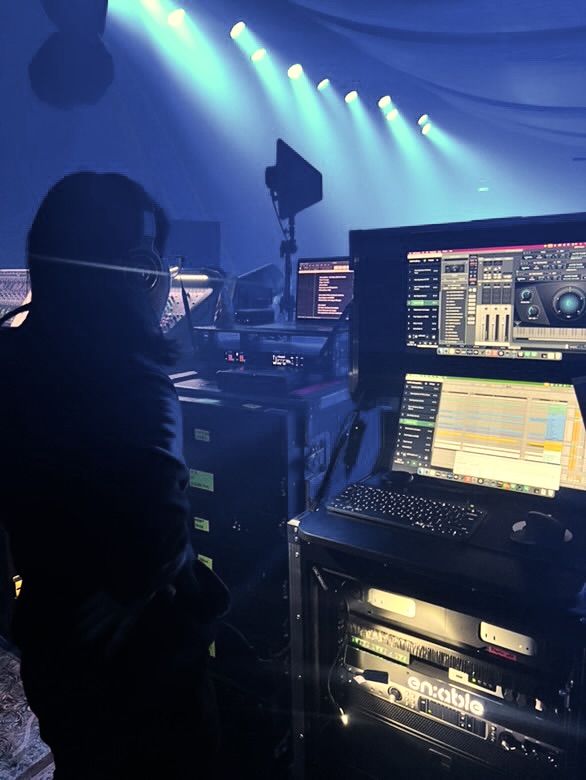
In the last decade, a new role has cemented itself into almost every international pop tour: the playback engineer. Although playback has been around since artists were lip syncing on CRT televisions, the field has undergone a lot of innovation in the live event industry, and continues to grow as productions increasingly rely on automated, fail-safe systems.
Playback generally refers to running pre-recorded material in sync with other events. This material can involve backing tracks, click tracks, timecode, and other content that drives a show. It can also play different roles depending on the context: from synchronizing audio/light/video/FX cues, to feeding references into in-ear monitoring, to fattening up musical arrangements. The playback engineer can build and supervise a hardware setup fitting the production, and ensure that this additional point of failure is, well, not failing.
The bulk of playback engineering work takes place during pre-production. In live music contexts, programming a show depends on the arrangement, and its complexity decides what tools are necessary. For example, the number of backing tracks influences hardware input/output requirements, and a jam band that improvises will require different cuing workflows than a musical that runs on rails.
While playback can be as barebones as an Ableton Live set running on a laptop, the possibilities (and budget) are truly limitless for integration. The wide range of responsibilities that comes with playback, along with its show-critical role, is why companies offering show programming services, apps, and hardware are thriving. Playback apps, like setlist management tools, are increasingly marketed to be user-friendly. Small businesses construct bespoke rigs, ready to plug and play. Engineers exchange templates, Max devices, and program presets.
Of course, costs mount quickly in this realm — budgets literally double for a redundant system that falls back on a second machine if the primary computer drops out. Jess Jacobs, DJ Tech and Synth Tech for Linkin Park’s Joe Hahn, wants to see affordable options when it comes to automation and communication on-stage. “Being able to control the stage the way Linkin Park does is great, but sometimes out of reach for club-level artists,” Jess says. “If indie artists could harness the power of these tools, they’d be really happy with the level of production even in small venues. The price point is not crazy, but it’s not cheap.” Money can certainly buy flexibility and stability.
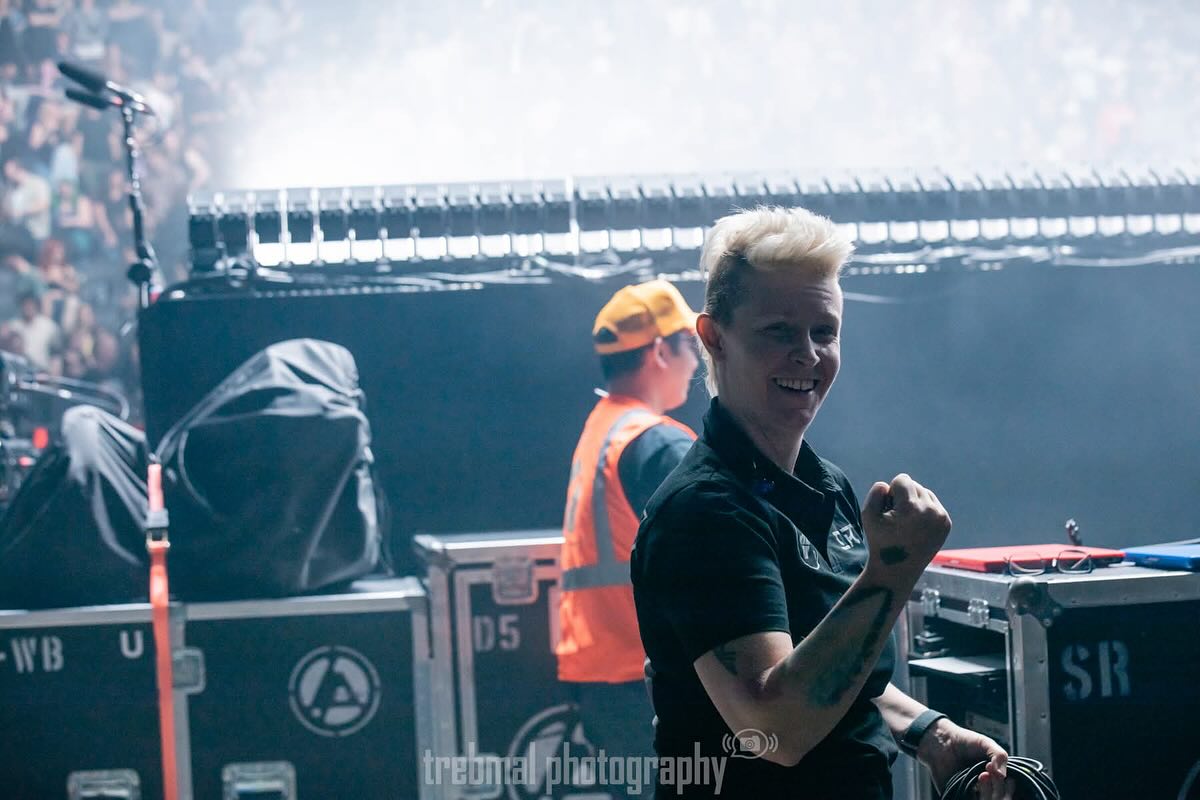
Jess Jacobs behind the scenes at TD Gardens
Even more valuable than the systems are the experts operating playback in live events that have only grown in scope and size. Many, like Jess and Laura Escudé, live show programmer who founded Electronic Creatives, landed in the playback role due to their Ableton Live skills. They act as a bridge between performers and technology, enabling performers’ creative expression within technical limitations. For Keana Peery, playback engineer and show programmer whose credits include The Recording Academy and BET, “Playback techs sit in a grey area. You’re not part of the band and not strictly part of the crew. You’re often working closely with the artist and the music director, so you need to understand musical intent while executing it technically.”
The creative impact that playback can have on the content and flow of a show is unlike other roles in the audio team. Often, it’s also combined into other roles such as monitors, backline, or even run directly by a musician on stage. “I first discovered playback from being a drummer and having to run tracks,” says Georgia Challinor, drum & playback technician for The Last Dinner Party. “Sometimes one takes priority over the other, but playback usually wins if you’re programming on the fly.”
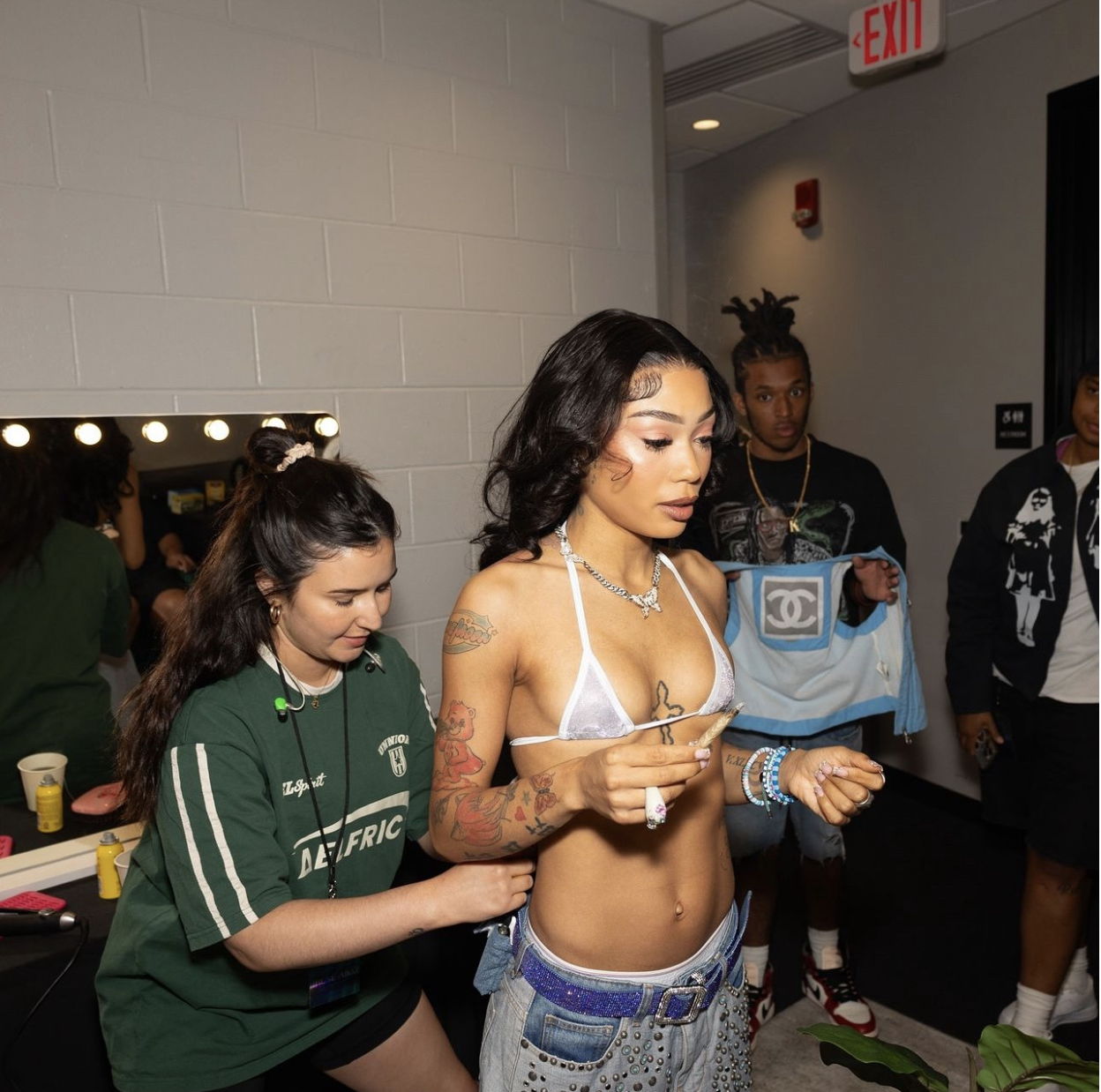
Keana Peery preparing an artist backstage
Auto-Tune operation tends to be corralled into playback, with the plug-in interface running on playback computers. This gives the playback engineer another artistic responsibility, directly manipulating main vocals and changing parameters on the fly. It even has its own role on productions, as Keana reports, “Sometimes an artist will have their DJ running playback while I focus solely on vocal production and Auto-Tune operation. As a vocalist, I really enjoy that because I get to adjust parameters live depending on how the vocalist is performing in the moment.” The role morphs from production to production.
When a show goes on the road, the playback tech’s priorities change. Attention shifts from developing the creative content to making sure everything runs consistently. Playback must be prepared for anything- set changes, guest performers, and of course, technical issues. “A recent problem was when a USB hub on the DJ table was damaged and caused a short, which flowed back to a central communication point on a device chain,” Jess recalls. “I had to swap out every single piece along the way in order to ensure that it was fully functional.” The stakes in playback are certainly not for the faint of heart. A jack of all trades overview of audio, networking, OS/software and hardware can prevent showstoppers. For Karma Catena, Ableton operator and producer, “that’s the best part of playback: when you find the hiccup in the system and get to fix it. It’s always satisfying.”
The Wild West of playback, there are no laws for playback workflows and no cut and dried role descriptions for what playback engineers. From Tate McRae, to Cirque du Soleil, to megachurch worship services, you’ll be hard-pressed to find the same playback setup. Playback techs are finally gaining recognition for their versatility, which encourages further innovation. I think we’re just seeing the dawn of what’s possible in playback.
Huge thanks to the following contributors:
Georgia Challinor, drum & playback tech for The Last Dinner Party and playback for A Work In Progress
Jess Jacobs, DJ tech & synth tech for Joe Hahn of Linkin Park
Karma Catena, Ableton operator, songwriter, producer
Keana Peery, playback engineer & show programmer previously for The Recording Academy, BET, Saturday Night Live, Yeat, Heidi Montag, Gunna, Lil Uzi Vert, Flo Mili, Coi Leray
Further reading: Laura Escudé: Show Designer & Playback Engineer