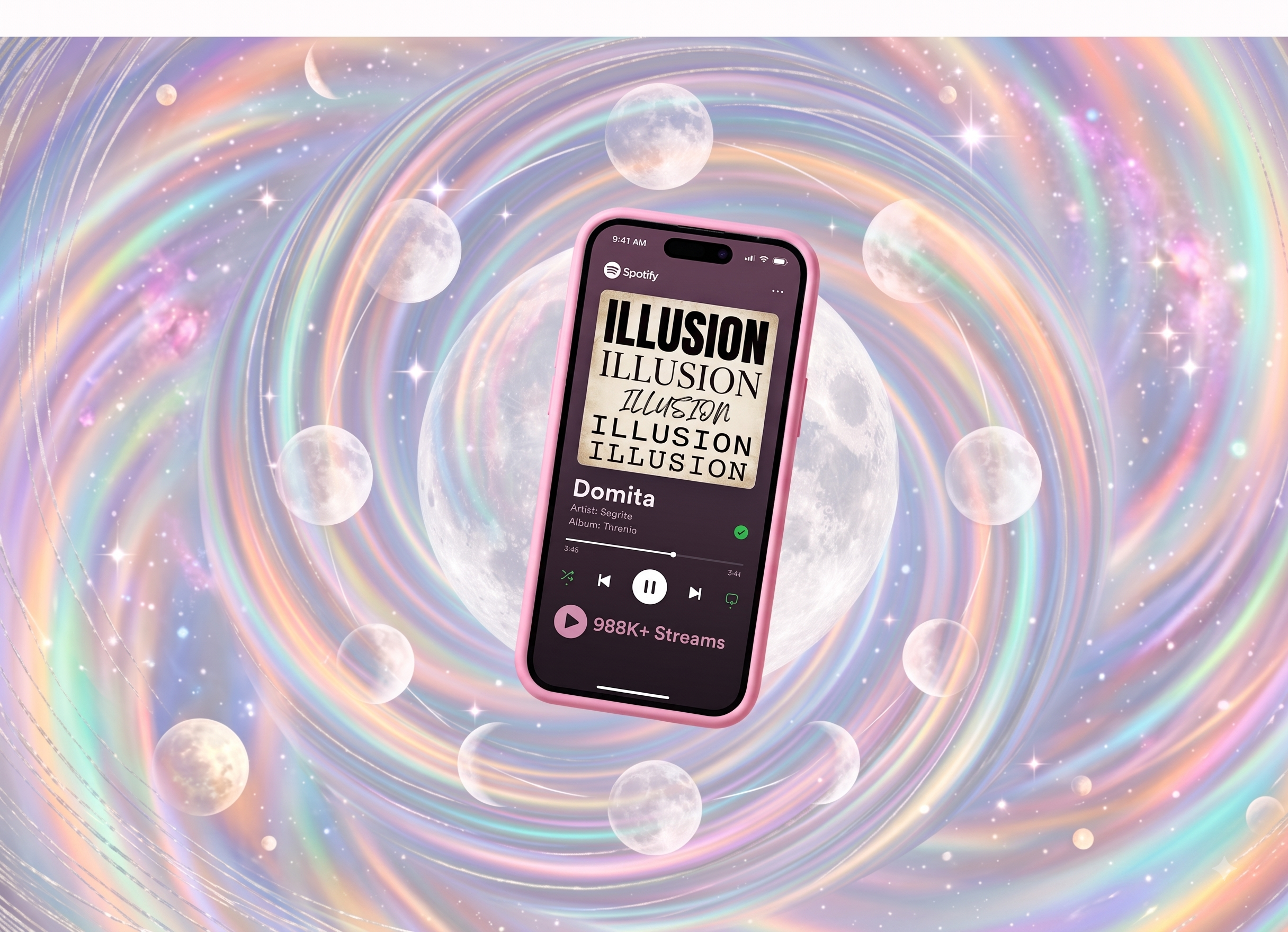
It is amazing when you hit thousands of streams on a new release and celebrate the tasty victory of all the work it took you to get there. Those moments are unforgettable and become tangible proof that your hard work is finally bearing fruit. But it is just as important to understand that those streaming numbers alone do not necessarily mean you have built a loyal fan-base that brings you venue tickets, merch sales, or a genuine following. At least not yet.
As we can see, the platform’s algorithm can create an “illusion” of reach for real audiences, and staying aware of this is the secret to managing your data and turning those passive listeners into a dedicated community.
The illusion of reach we talk about exists because of how the streaming platform’s measurement system works. When your songs land on a popular playlist, there is a high chance that listeners will play them from a playlist and have them in the background, for example, to study, work out, cook, you name it, and all this to be swapped out for another song that will fill up that same temporary auditory need in your audience.
All this sounds alright, but is it truly what you want as an artist?
On the other hand, from the service perspective, your songs have been played multiple times in full and are showcasing very attractive numbers on your profile. And that is pretty awesome! But again, those numbers do not guarantee true fan reach, as the listener who just enjoyed your song may not even know who you are as an artist, what your brand represents, or where to find you to connect deeper.
As the algorithm pushes your music into an ocean of thousands of other options, it becomes very hard for listeners to choose from. Deciding then seems like a task, a mental effort, so letting the platform handle the selection for them feels much easier, shifting their attention away from you and onto the app that gives them the feeling they seek.
It’s like a song in a movie scene; you feel the mood of the moment, but then turn the TV off without ever checking who sang or wrote it.
The emotional bond is built around the playlist, and unconsciously they start positioning the service in their minds as the primary filler for their needs, leaving the artists completely ignored.
Psychology here can help you understand why this supposedly discovery fails to connect songs with listeners, as 80% of passive background sound is forgotten instantly, in just 3 to 4 seconds.
In contrast, deep listening takes another form, as it smoothly penetrates the music into someone’s self-concept, resonates with the emotions, and even mirrors the soul.
That is why discovering music on a playlist that requires zero friction is quickly categorized by the brain as low value, as the human system is designed to conserve energy, and whatever takes it away from it should be worth the time.
So, for you as an artist, this means that if a listener put no effort into finding you, they will feel no psychological attachment or emotional connection with your music, since no energy was spent on their part.
Now you can see that hitting thousands of streams on a new release is a triumph worth celebrating, but it is only the first step of the journey.
Understanding how the mind processes passive listening at a cognitive level helps you make sense of your streaming data and determine what actions to take next toward your future goals.
You can always treat playlists as a discovery tool and use that initial algorithmic spark to strategically guide listeners off the platform and into your own ecosystem, breaking the illusion of reach and building a real fanbase.