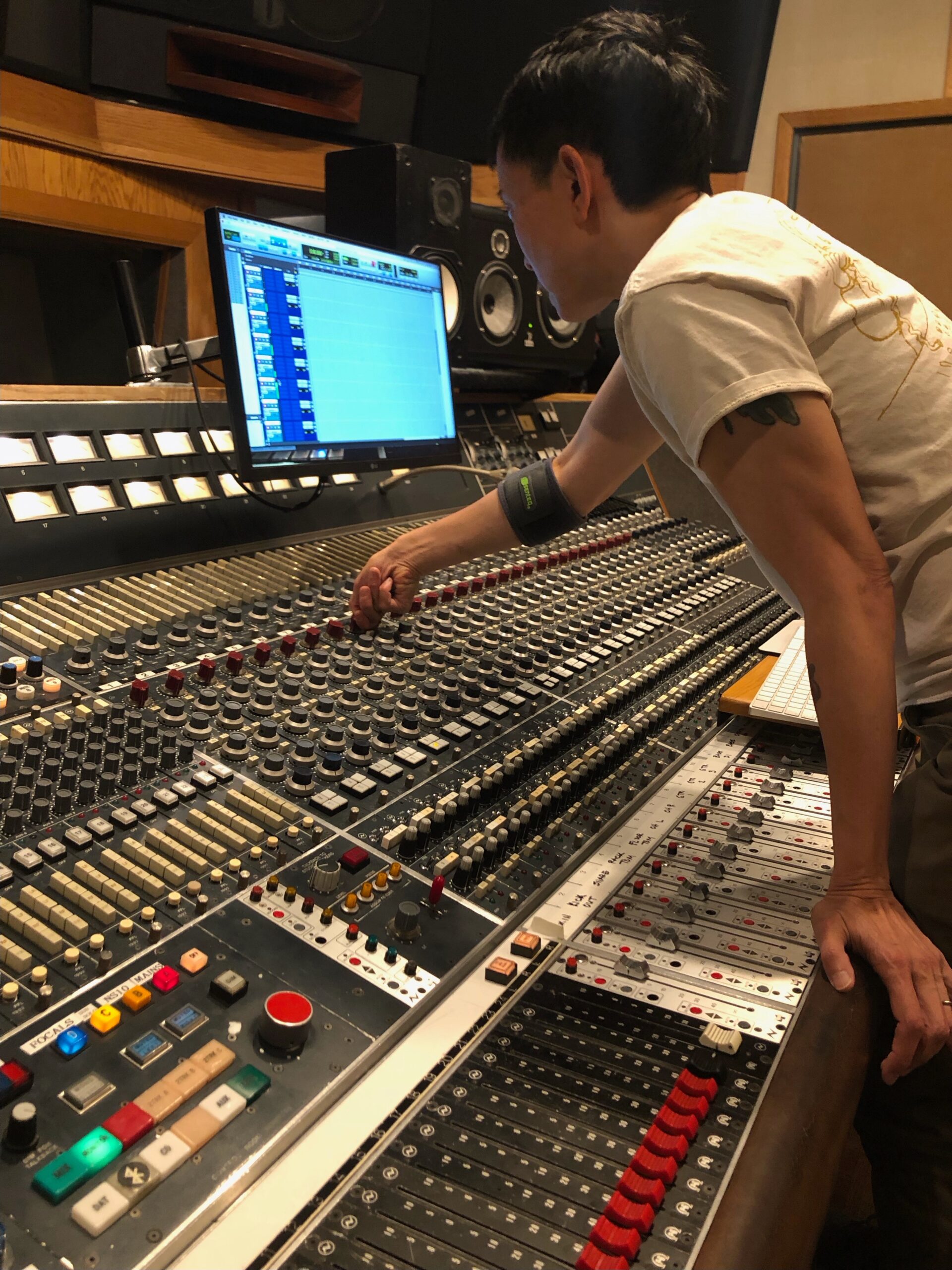
Last summer, a student asked my former audio instructor for references for “coffee chats with audio engineers to discuss how they achieved their success and the advice they have for up-and-coming audio engineers and producers.” My instructor referred her to me. When I got the email, I laughed out loud. I’m lucky enough to be an intern at two world-class studios, but that’s all I am – an intern. At the time, I felt I could use a coffee chat myself for advice to get into the recording part of the studio experience.
“I’m not sure how much help I can be to you, as I’ve been feeling a bit at a crossroads, myself,” I wrote back. “I know it looks like I have some cool jobs, and I kind of do, but it would be cooler if they paid a living wage! But I am totally down to tell you what I’ve seen so far in my journey.”
We met up at Hyde Street Studios in San Francisco and the conversation really helped clarify things for me and gifted me the acquaintance of a smart, funny, motivated, Black woman who works with me to this day. I don’t remember her exact questions, but I thought I’d put down some of the things we talked about.
I had met her before at an event called Bay Area Audio Nerds, which is an informal meetup of audio engineers that sometimes takes place at local studios. 2200 Studios, formerly known as The Record Plant Sausalito, was hosting, and I was there as one of the studio interns. “When I saw you walk into the control room,” she said at our meeting, “I thought, ‘oh, thank goodness.’”
Now, I’m Chinese-American; both my parents immigrated from China in the 1950s. But how bad does racial disparity in an industry have to be to be that a Black woman sees me and says, “Oh, thank goodness?” There are essays that can be written about the differences in racism against different demographics, and this is not one of them. I’ll just say that I felt uncomfortable in the unspoken proximity to any comparison between Black and Asian experiences in the US, but glad if I could be of any help.
“I’m not an engineer yet,” I told her. “All I can tell you is what I’ve seen.”
“Well, from what you’ve seen,” she said, “What is the path to becoming a recording engineer?”
As far as I’ve seen, there is no path. You make your own path. And that’s both freeing and confusing for people who come right out of the structure of educational institutions or hierarchical jobs. There’s no showing up for work every day and doing a good job and getting promoted. Nobody makes you an engineer, you have to make yourself an engineer.
The important thing is access, and that’s what an internship gives you. You can’t learn to use gear if you have no gear. You can’t learn to run a recording session by imagining it; you have to do it. There are so many moving parts, the musicians, the instruments, the microphone choice and placement, the routing. Troubleshooting noise, line of sight, isolation, software glitches, pivoting with sudden changes of plan. It’s lunchtime, is everyone going to take a break, or will they get really hangry? In the middle of the orchestrated chaos, you’re also responsible for the vibe. You have to be everywhere but not in the way. It’s amazing any music ever comes out the other end, but it does, and it’s glorious, a miracle.
I’m filled with gratitude every day that I get to swim in that soup. And that’s important, too, because you have to love it to do it. Even for engineers that have been recording for decades, there are months when clients don’t call, when they start thinking that they need to find another job. A lot of recording engineers do have other jobs: stagehand, live sound, corporate A/V tech. The pay is not great, the hours are long and inconsistent, schedules change at a moment’s notice. “I can only be friends with other people in audio,” another friend once joked. “Nobody else understands why I have to cancel plans all the time.”
Most internships will have some kind of arrangement that allows the interns to access the studios. It’s usually some kind of work trade agreement, or maybe a discounted house rate. This is where you make yourself an engineer. Book a session, just with some friends jamming, and try recording them. Fail. Kick yourself. Tear your hair and curse. I told an engineer about my first attempt at recording, saying, “It didn’t go perfectly, but lessons were learned.”
He laughed. “You just gotta throw yourself on the fire, “ he said.
After a few sessions with friends, I approached a local band I liked and asked if they’d want to have a free session with a novice engineer, and they said yes. I hadn’t seen the full band, because they played with various configurations of bandmates and even as a duo sometimes, and it turned out to be a six-piece band, including fiddle and pedal steel guitar. They invited a seventh, a professional Americana guitarist and vocalist who had been signed to a label. To say that I was nervous doesn’t even come close. I was sick with apprehension.
Did it go perfectly? No. Did they have a good time and leave happy? Yes. It was a 15-hour day for me, no breaks. There were things I realized afterwards that I didn’t do or that I should have done differently. But two engineers listened to the rough mix and both commented, “This was well recorded.”
Totally worth it.
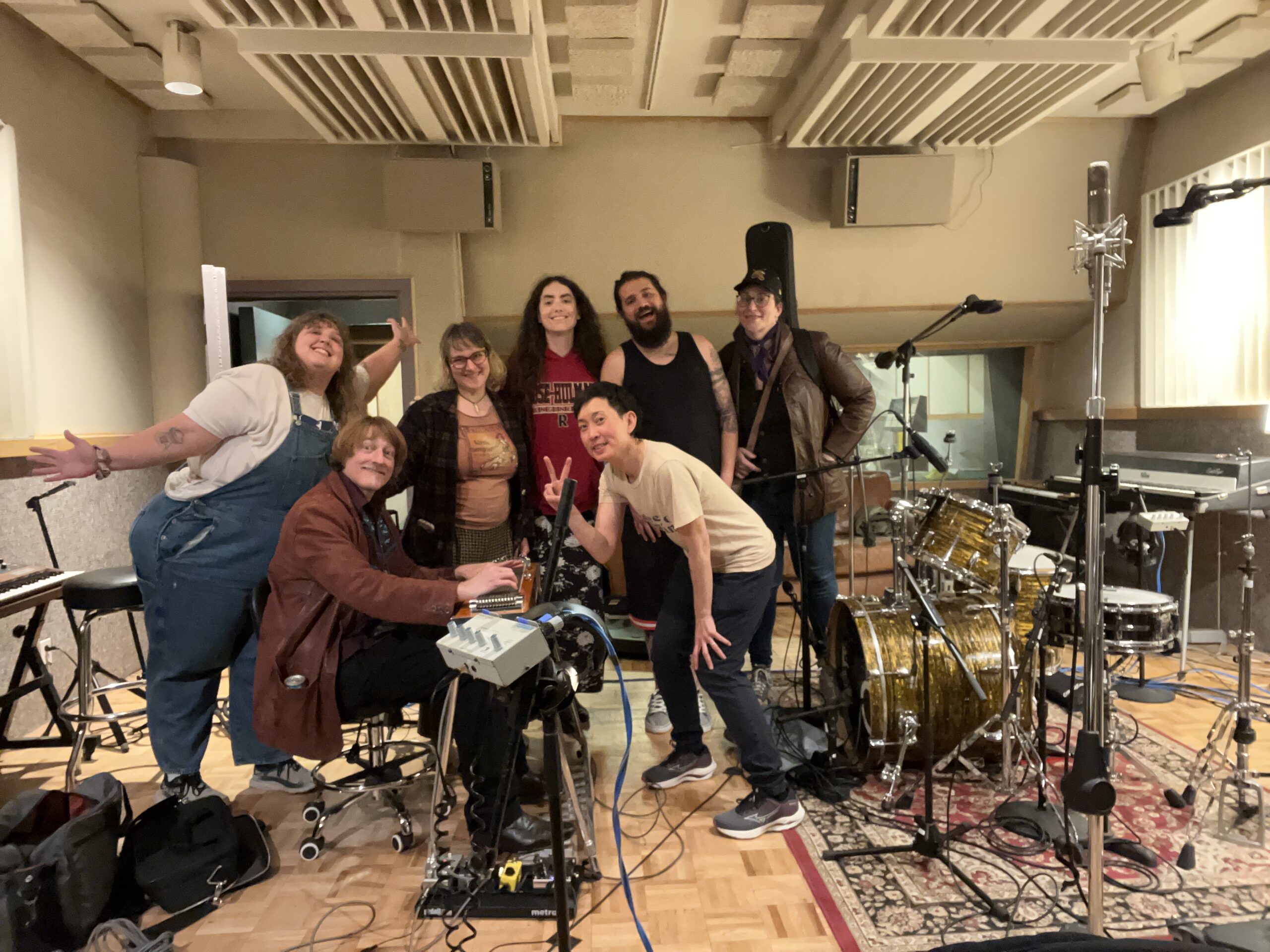
Squeakie, with guest musician Mya Byrne.
I hate making mistakes. It feels really dark, like I’ve broken some kind of moral rule. But I can honestly say that every mistake has turned into a skill, because there comes a time when I don’t make that mistake anymore. So don’t let the fear of mistakes keep you from trying things. Spoiler alert: you will make mistakes. They are the seeds of who you will become.
As we were wrapping up our coffee chat, the student said to me, “What advice do you have for a woman of color trying to get into this industry?”
Maybe here it turned out to be a good thing that I had been having a bit of an existential career crisis, because I’d been feeling like I should give up, and had given my situation a lot of thought. There’s both camaraderie and competition among recording engineers, and being an intern can feel a little bit Lord of the Flies at times.
“Two things,” I said. “Remember why you got into this. If you love recording, do it for the love. I got into this because I wanted to help people be heard that don’t always have access to or feel comfortable in a recording studio. I want to record those people so they can get their voices out there. I don’t need to be the best, or the top, or win any awards, so I can’t waste my energy thinking about that.
“The second thing is something that someone in an online group told me, when I had to go in and have a difficult meeting with HR at my old job. They said, ‘Go in clear on who you are.’ People are always going to try and tell you who you are, and act like they know who you are better than you do. You’re the one that knows. You’re you. You’re the only one who knows.
“Remember why you’re doing it, and go in clear on who you are. Take those two things and hold them in front of you and then just move forward.” I laughed, holding my hands in front of me in a wedge shape. “Like a ship parting the waves.”
As I walked to the station afterwards, I felt lighter and clearer, myself, on who I am and why I’m doing what I do; I felt those two things in front of me, ready to part the waves. So one more piece of advice: don’t be afraid to talk to people and ask them questions. Who knows, you might be helping them figure things out.