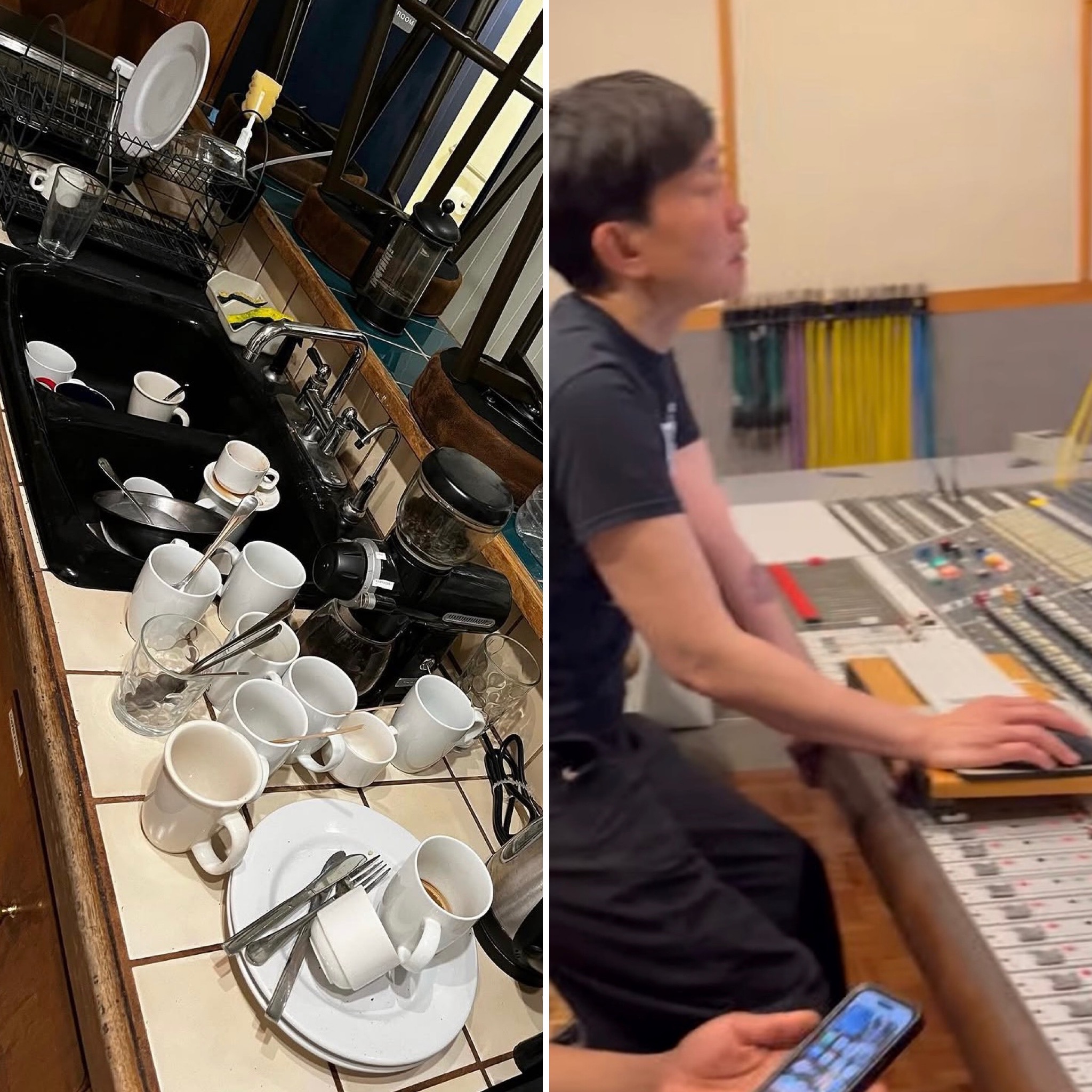
I just worked my first session as a paid engineer at a historic studio where I’ve been working for free for two years. In honor of that milestone, here are my thoughts on working without monetary compensation.
Getting started in audio engineering involves a good amount of working for free. It sounds like a drag, but it can be a great experience. Audio is something you can’t learn without doing, and so there’s a tradition of “shadowing,” of finding situations where you can follow an engineer around on the job. They don’t have time to explain what they’re doing, but some will teach you to help them and give you the time to build understanding. You can meet some great people by shadowing, because it’s usually the more generous souls that welcome novices.
Another great reason to work for free? Community! I love to volunteer for no- or low-paid gigs where I feel like I’m among my people and we’re all working for a shared goal. I’ve done live sound effects for all-volunteer theater to raise money for charity, I’ve worked for negligible amounts to help bring music and vibe to a community center pumpkin patch, and I’ve recorded local bands for nothing, spending trade time that I had worked for. I felt great after doing those things; it was good for my soul, I had fun, and I met wonderful people.
More formally, there are also internships, a commitment between an organization and a novice to provide training in exchange for labor. Sometimes these are unpaid. It’s easy to call that exploitative, but the exchange can be satisfactory to both parties, which is more than you can say for some paid jobs.
The trick with working for free is to start thinking in terms of work-trade rather than the traditional employer-employee model. You’re putting your energy into something, and you should get something back, even if it’s just happiness, or else you’ll end up feeling like you’re throwing the best of yourself down a hole. Shadowing and volunteer service is fairly easy to understand, but the culture of internships can be varied.
The best internships will maintain a fair balance of work to education, foster a sense of community, and acknowledge the financial reality that there are only a certain number of hours in a week, and a certain amount of money you need each week to live. A true work-trade will make you feel a level of basic respect. You’re still a novice, but you’re also a human being, and you’re there because you want to learn. They will be as appreciative of your presence as you are to be there.
The worst internships will have a culture of dominance and competition. If a mentor is jealous of your success, you won’t succeed. If they treat you with derision because you don’t know something, you know they have no interest in mentoring you. After all, you’re there to find out the things you don’t know, and you’re providing work in exchange for finding out those things. Someone who makes you feel dumb is a bad mentor. Someone who makes you feel like giving up is someone to get away from.
Deciding what’s worth your time is a very subjective and personal task, and that is completely okay. While I was still in school, my band recorded with an engineer who was interning with the same studio that I intern with today. She was dissatisfied with the experience, and said that they intentionally left lots of dishes for her to wash because she was a woman, and she didn’t feel welcome. When I interned there, I did occasionally come in to find a sink overflowing with dishes, but because of my own experience with beloved (but lazy) family members, it didn’t feel insulting to me. I stayed for two years, learned a lot, and felt like part of a community.
All this is leading up to a couple of questions. When is it a good idea to work for free? And, when is it time to stop?
Only you know the answer to those questions for yourself. You know what you want to gain from a situation, and what you have to give, and those things should feel balanced to you. Even if you’ve been in a situation for a while that felt good in the past, once something starts to feel unbalanced, it’s time to ask yourself again. And, something that feels okay to someone else may not feel okay to you. What matters is how you feel; it’s your life and you’re choosing a path that you’ll be on for a while, so choose one that feels sustainable.
The ability to work for free is a privilege: some people can never afford to work for nothing. The one thing we all have in common is that we should always be asking ourselves those questions, and seeing how they fit into our lives. And, when we get in a position to mentor others, let’s not forget to ask those questions for the people working for us.