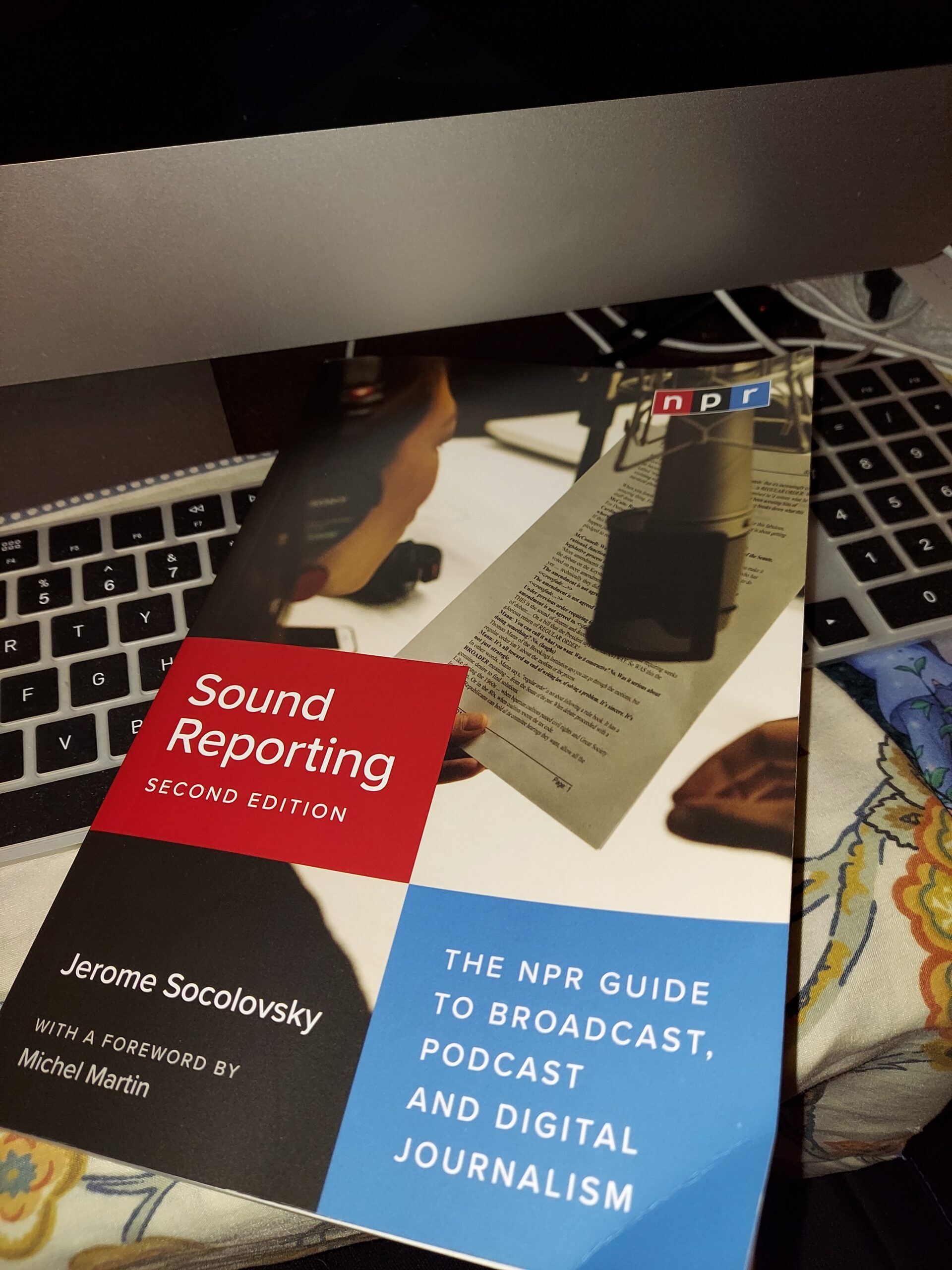
About a year ago I saw a slick poster for a film adaptation of a book I was excited about. I shared the post without a second thought, but then I went to look up the details, nothing. I went back to the original post and found an AI content farm. I was embarrassed, I thought I was savvy to the AI tells and I was even teaching students about basic AI ethics. However, AI is getting better at tricking us and that won’t be the last time that I see something that sneaks past my internal “Turing Test.” (A test in which the computer “passes” if it is indistinguishable from a human respondent named after famed computer scientist Alan Turing.). If I can fall for a fake industry poster, then my peers could too, and that matters when movie announcements means jobs. How can we filter through the noise of bot postings and bad actors to get to the real human communication? The answer is to think like a journalist. I turned to the Sound Reporting: The NPR Guide to Broadcast and Digital Journalism by Jerome Socolovsky and News Literacy Project for the intel.
Originally intended as an internal publication for new journalists, Sound Reporting is a treasure trove of advice for any non-fiction media creator. It covers everything from pitching a story, to podcasting, to crafting a story from gathered tape. In this second edition it adds a section on Safety and situational awareness. Sound Reporting begins in the ethos behind NPR (National Public Radio). In that first chapter, Socolovsky highlights accuracy, credibility, impartiality, and transparency. These words are not redundant, their nuances highlight NPR’s dedication to reporting facts. Because NPR publicly states their redactions and potential biases, I know I can trust the information I was given. News Literacy Project affirms this philosophy with their seven standards of quality journalism: multiple credible sources, avoidance of bias, documentation, verification, balance, context, and fairness. “Multiple credible sources” sounds a lot like my previous articles on editing Wikipedia. Credibility is something that AI can mimic, but not truly replicate.
Screening sources is the biggest defense against AI. Click the link and see where the post came from. Is it trustworthy? What does this new site reference? Consider looking at the “About Page” for admissions of bias or agendas. Think about what the original poster has to gain about posting. It might be content engagement (aka “pay for clicks”) or it might be influencing you in other ways. Consider what emotions the post evokes, and be aware of posts causing strong emotions. Instead of acting on those emotions and sharing immediately, do a quick search. See what more familiar channels are saying about the same topic. If more information is missing, that is a red flag.
News Literacy Project identifies five types of misinformation: stolen satire, false context, imposter content, fabricated content, and manipulated content. Stolen satire is when the original comedic post is stripped of context and reposted as fact. It is related to false context, where the post may be authentic but is reposted with alternate captions or articles suggesting the wrong narrative. Manipulated content alters existing posts and media, while fabricated is created from scratch. Imposter content imitates celebrities and other trusted sources to create posts either by branding or impersonating. Double check your feed for any of these nefarious beasties.
Curiosity, skepticism, and tenacity are features of a good reporter according to Sound Reporting. Good reporters also protect themselves from misinformation. They look for numbers and information they can verify, avoiding words like “best” or “most.” Pay attention to what is being posted on your feed. Look at where the posts are coming from: what are the sources, what is their agenda? Pause after the initial reaction and do your research. Avoid acting from your emotions first. Think like a reporter, and stay safe SoundGirls.