You’ve fine-tuned lyrics, found the perfect chord progression, and secured the producer to make your song shine. Now it’s time to uncover your vocal performance. The vocal performance to a finished record is arguably one of the most important parts of the production process, and it’s easy to see why: vocals tend to be what the average listener gravitates to and leaves with when they listen to your song. Additionally, according to a study done by Spotify, “vocals ranked high as a self-reported factor for a listener liking or disliking a track.” (More about that can be found here)
If you’re anything like me, you don’t want to drop the ball at this step. The truth is, curating a killer vocal takes a lot of soul-searching, forethought, technical skill, and discerning ears (more than two is ideal :)). Here are some things to consider as you embark on this important part of your vocal recording artistry.
Serve the song’s story
It’s really important to start on this step first. Whether you wrote the song yourself, or you’re performing a song that someone else wrote, context matters.
It’s really critical to understand the main message that you are trying to communicate within the song as a whole, and also within various sections of the songs. What emotion are you leaning into in the song? What is the song’s backstory (i.e. what occurred that inspired the song in the first place)? These are the sorts of questions that you should use as a guiding light as they will inform the theatrical side of your vocal quality as you dig into the lyrics.
As part of serving the song’s story, it’s important to make sure your vocal sounds convincing to the emotion you are portraying. This is often a delicate blend of acting and technical vocal skill, and sometimes an accidental, but emotional vocal take that is not “perfect” communicates the song’s story better than flawless singing.
Make space for experimentation
One thing I really like to do with every song I am recording is make space to experiment with my expression of singing before committing to the final vocal performance. This can happen a lot of different ways, but I like to do a mix of singing and recording the song in different ways on different days. For example the following:
Sing the song all the way through, live on your mic/speaker a few times and record it casually on your phone. Do this for several days, listen back with a critical ear, and fine tune the performance to hone in on the lead vocal
Create a demo of the song – a tracking session with the backing track/instrumental in your DAW and record a few takes section-by-section to laser focus on one part of the song (aka verse, pre chorus, chorus) at a time
Try different microphones or play with vocal effects chains so you can envision direction for the final sound. If possible, practice with a vocal plugin that has presets of the vibe you’re going for so that you aren’t just hearing your “dry” vocals during experimentation
Dedicate a day or two to play around with potential background vocals, ad libs, response vocals, or vocal textures
Get coached
Whenever possible I bring songs to a professional vocal teacher/coach so they can help bring a better performance out of me. It’s inevitable that a vocal coach will bring up something that you might not have considered yet for the song. It’s great if this person is trained vocally and knows you/your voice, but it can also be a producer if that individual is comfortable playing that role and pushing you. Either way, it’s ideal to spend some time here and be open to feedback, all in the spirit of getting a better performance than you already have.
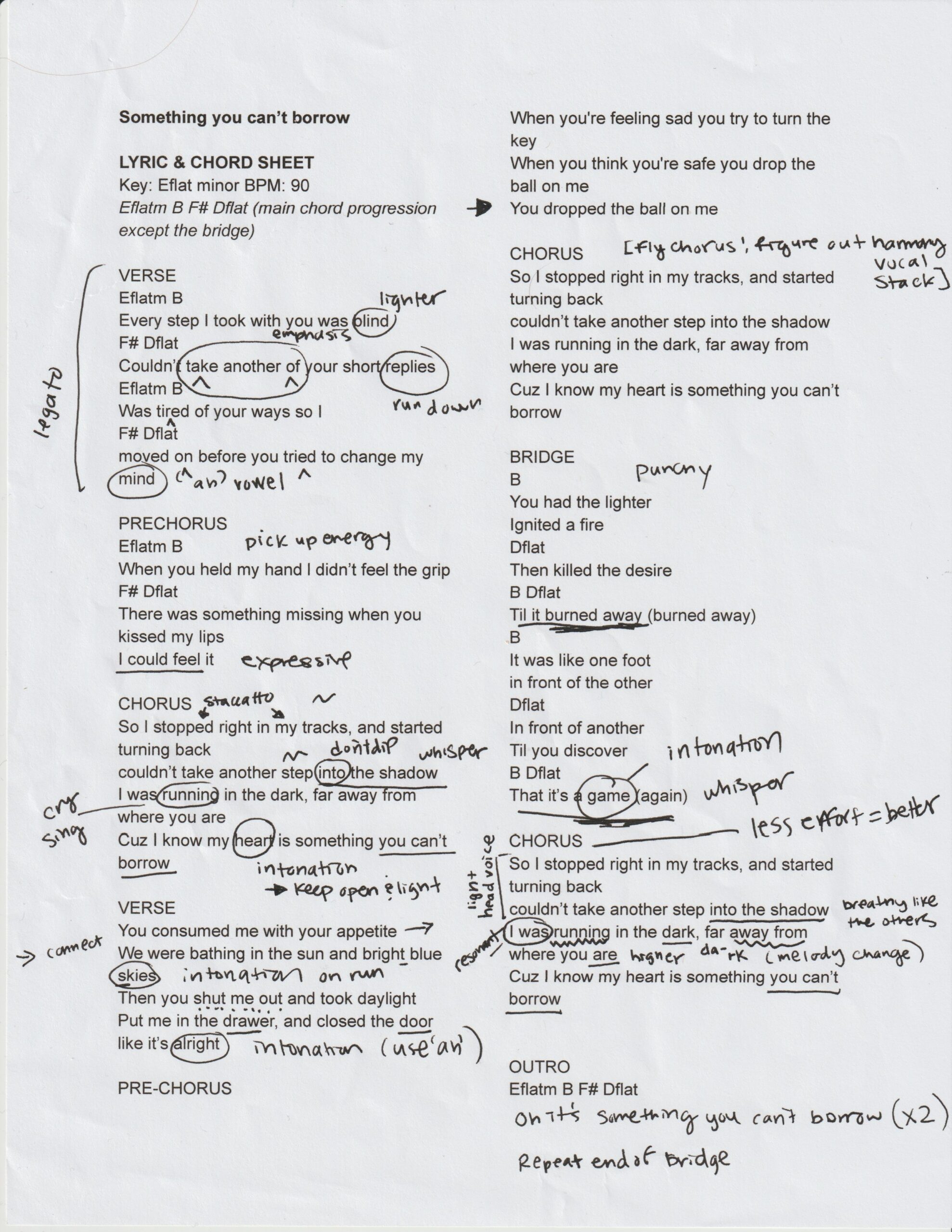
Utilize a Lyric Sheet to mark up notes for your vocal performance (check out the end of this blog post for an example lyric sheet to one of my songs!). The lyric sheet notes can be personal scribbles that make sense to you – it’s great to include expressive notes for the lyrics, technical/vocal cues you need to remember, and any tips about how you will sing or emphasize certain words, phrases or sections of the song. Be extremely detailed here and don’t be afraid to edit / adjust things as you refine the performance.
Pro Tip: If you are scheduling a voice lesson I highly recommend bringing your lyric sheet and taking notes during the lesson itself
Along with getting a coach for the song itself, it’s really important to work on your voice in general. The more you take your voice seriously and incorporate regular practice and lessons, the more confident you will be as a singer. This takes time, and there isn’t an overnight fix, but the technical aspects of voice–like tone, pitch, breath control, and belting–need to be nurtured.
Planning & Pre-production
Along with all of the above steps, a granular plan for your vocal performance should be made. While it’s sometimes fun to have a little spontaneity in the studio or during your vocal recording at home, we don’t want to leave too much up to chance as your performance might lose direction or you might burn too much studio time still figuring out what you want rather than simply laying down the vocal. A lot of producers get impatient if you’re not prepared on the day of recording too; it’s important to prep for that day as if it’s an important business meeting.
If you need some inspiration it can be helpful to find a reference track (s) whose vocal performance is close to your vision. This could be the same reference track that you already used for the production, but it could also be something else altogether. I recommend listening to some of your favorite artists and playing their songs repeatedly to analyze what they’ve done with their vocals.
Make an initial list of vocal parts and vocal effects you might be hearing so that you stay inspired and incorporate those in your final record or performance
Meticulously plan out each vocal take and the overall vocal arrangement for the song (i.e. lead vocal, background vocals for verses, double and triple leads for chorus, ad libs) in advance. Write down each item/vocal needed so you can check it off as you go during your recording session.
Pro Tip: Send the list to your producer in advance so they can prep the session quickly.
Practice each specific part of your vocal arrangement on its own until you can sing it with clarity and confidence. Take note of any difficult parts so that you can work through those, and on the day of recording, consider recording those last so that you don’t wear your voice out prematurely
Day of Recording (or Performance)
Make sure that you’re well rested and well hydrated 24-48 hours before your vocal session/show
Warm up before your session – don’t overdo your warm ups!
Bring your lyric sheet, vocal arrangement notes, reference track, and anything else that will keep you focused and comfortable during your recording session. You should have the song memorized at this step but if you’re in recording session its ideal to be able to reference the lyrics
For a record, make a plan for when you will “comp” your vocal session. It’s great to do this the same day with your producer to make sure you have the perfect performance; this ensures that you’re ready to move onto final editing and mixing
If you run out of time during your session (or you’re simply sick or not ready that day), book another day to finish the song. It’s ok if recording takes a little time 🙂
As you can see, most of the preparation for killer vocals happens before the Day-of-Recording. When you get to that day, you should intimately know your song and how you want to express it.
Happy singing!
Daniela
Lyric Sheet