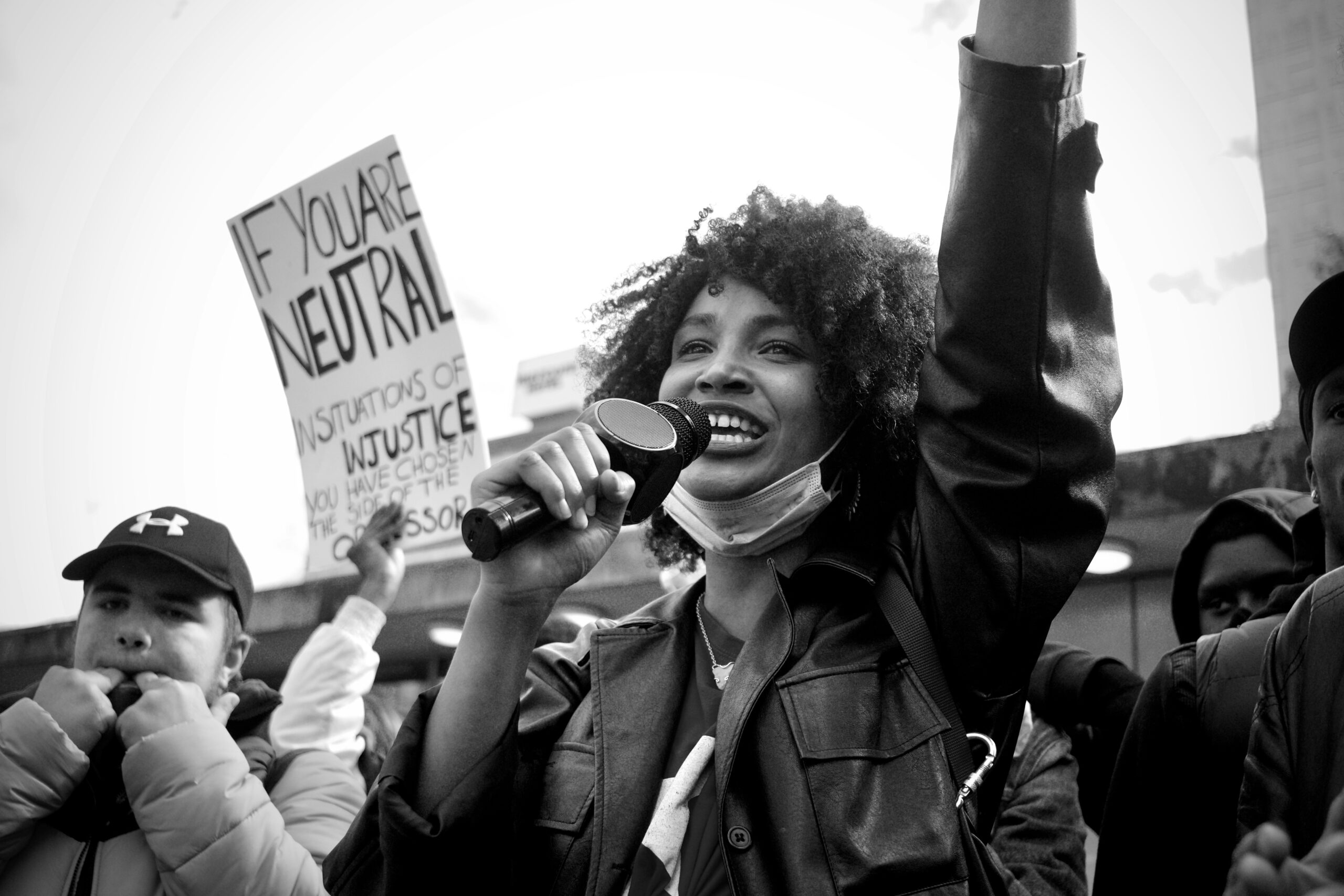
Why Sound matters and should not be an afterthought. It helps people hear important information clearly, keeps crowds connected and engaged, supports accessibility, and allows speakers, performers, organizers, and communities to communicate effectively in difficult environments. Poor sound, on the other hand, can create confusion, fatigue, safety issues, and frustration.
Unlike concerts or corporate events, protest sound often happens in unpredictable spaces with limited setup time, changing weather, moving crowds, limited power access, and minimal budgets. The goal is not perfection — it is clarity, reliability, flexibility, and safety.
Here are some best practices for organizing and running sound at protests, marches, rallies, and direct actions.
Prioritize Speech Intelligibility
At protests, the most important thing is usually speech intelligibility, not volume or musical fidelity. People need to clearly hear announcements, safety information, chants, speakers, and directions.
Focus on:
- Clear vocal microphones – use windscreens
- Controlled volume levels
- Avoiding distortion
- Minimizing feedback – Speaker should be behind the PA boxes and speak directly into the microphone.
- Proper speaker placement
If people cannot understand what is being said, louder sound will not solve the problem.
Dynamic vocal microphones are generally the best choice because they reject background noise better than condensers and are more durable in outdoor environments.
Keep the System Simple
Complex systems create more opportunities for failure, especially in fast-moving or high-pressure situations.
A basic protest sound setup may include:
- Battery-powered speaker or portable PA
- Wired vocal microphones with windscreens
- Small mixer
- Backup cables
- Portable power solution
The simpler the setup, the faster it can be deployed, troubleshot, and packed down.
Wireless systems can be useful but also introduce frequency coordination issues, interference, battery management problems, and additional points of failure. In crowded RF environments, wired microphones are often the most reliable option.
Plan for Power
Power is one of the biggest logistical issues for protest sound.
Questions to ask:
- Is AC power available?
- Will generators be needed?
- How long must the system run?
- Is battery backup available?
- Can the system move locations?
Portable battery-powered PAs have become significantly better in recent years and are often ideal for marches and smaller rallies.
If using generators:
- Keep them away from microphones
- Bring extra fuel
- Use proper grounding and power distribution
- Protect cables from foot traffic
Always have backup charging options for phones, radios, and communication devices.
Think About Coverage, Not Just Volume
Many inexperienced operators try to solve coverage problems by simply turning the system louder. This often makes things worse.
Instead:
- Elevate speakers whenever possible – they should not be blocked by bodies which make fantastic sound absorbers.
- Aim speakers toward the audience, not reflective surfaces
- Use multiple smaller speakers instead of one overloaded source if possible
- Avoid blasting the front rows while the back cannot hear
Outdoor spaces do not reinforce sound the same way indoor venues do. Wind, traffic, buildings, and crowd noise all affect intelligibility.
For marches, mobile sound systems mounted on carts, bikes, or vehicles can help maintain consistent coverage.
Prepare for Weather
Outdoor events mean exposure to:
- Heat
- Rain
- Wind
- Dust
- Humidity
Bring:
- Plastic covers
- Towels
- Tarps
- Gaffer tape
- Sandbags
- Zip ties
Protect power connections and mixers from moisture whenever possible.
Heat can also impact equipment and people. Have water available for crew and speakers.
Build Redundancy Into Critical Systems
Anything mission critical should have a backup.
Examples:
- Extra microphones
- Spare XLR cables
- Additional adapters
- Backup playback device
- Power banks
- Extra batteries
A single failed cable should not shut down an entire rally.
If speeches or performances are essential to the event, have a contingency plan if the main system fails.
Accessibility Matters
Good protest sound is also an accessibility issue.
Clear audio helps:
- Deaf and hard-of-hearing attendees using assistive devices
- Elderly attendees
- People far from the stage
- Multilingual audiences
- Crowds in noisy urban environments
Whenever possible:
- Share printed or digital speeches
- Provide ASL interpretation visibility
- Use clear pacing for speakers
- Avoid unnecessary distortion or excessive music volume
If there are interpreters, lighting and stage placement should allow them to remain visible.
Coordinate With Organizers
Sound teams should maintain close communication with organizers and marshals.
Important questions include:
- Is the event stationary or mobile?
- What permits exist?
- What is the expected crowd size?
- Are there multiple speaking locations?
- What is the run of the show?
- Are there legal observers or medics who need communication priority?
Clear communication prevents last-minute confusion.
Protect the Crew
Protest environments can become unpredictable.
Crew safety matters.
Best practices include:
- Work in teams
- Keep valuables secured
- Have emergency contacts
- Know exit routes
- Wear comfortable and weather-appropriate clothing
- Stay aware of surroundings
Situational awareness is just as important as technical skill.
Community Knowledge Sharing
One of the most valuable parts of protest sound culture is knowledge sharing. Many people learn through mutual aid networks, community organizing spaces, DIY venues, grassroots media projects, and activist communities rather than formal training programs.
Sharing system diagrams, equipment recommendations, power solutions, deployment strategies, and lessons learned helps strengthen collective capacity and makes future actions safer and more effective.
Protest sound is ultimately about communication, accessibility, and community support. The goal is not creating the perfect mix. The goal is helping people hear each other clearly in moments that matter.