These foundations explain why music feels personal, why listener attention shifts so fast, and why emotion drives connection. As emotional beings, audiences rely on fast experiences and engaging stories that pull them in before they ever stop to think. These are the patterns that help us understand why songs can instantly click with us and leave lasting emotional impressions in our memory long after they have faded.
Throughout history, people have formed their identities through the groups and communities they connected with. Values and behaviors have been adopted, and we have started acting like those around us. In the music industry, the same thing happens. Fans connect with artists because they see something of themselves in them. Whether it is their style, personality, or melodies, it hits subconsciously, leading fans to view the artists as part of their own identity.
So, how does this connect with attention in music then? Well, they are linked: If identity shapes who you are, the attention pull is what gets you.
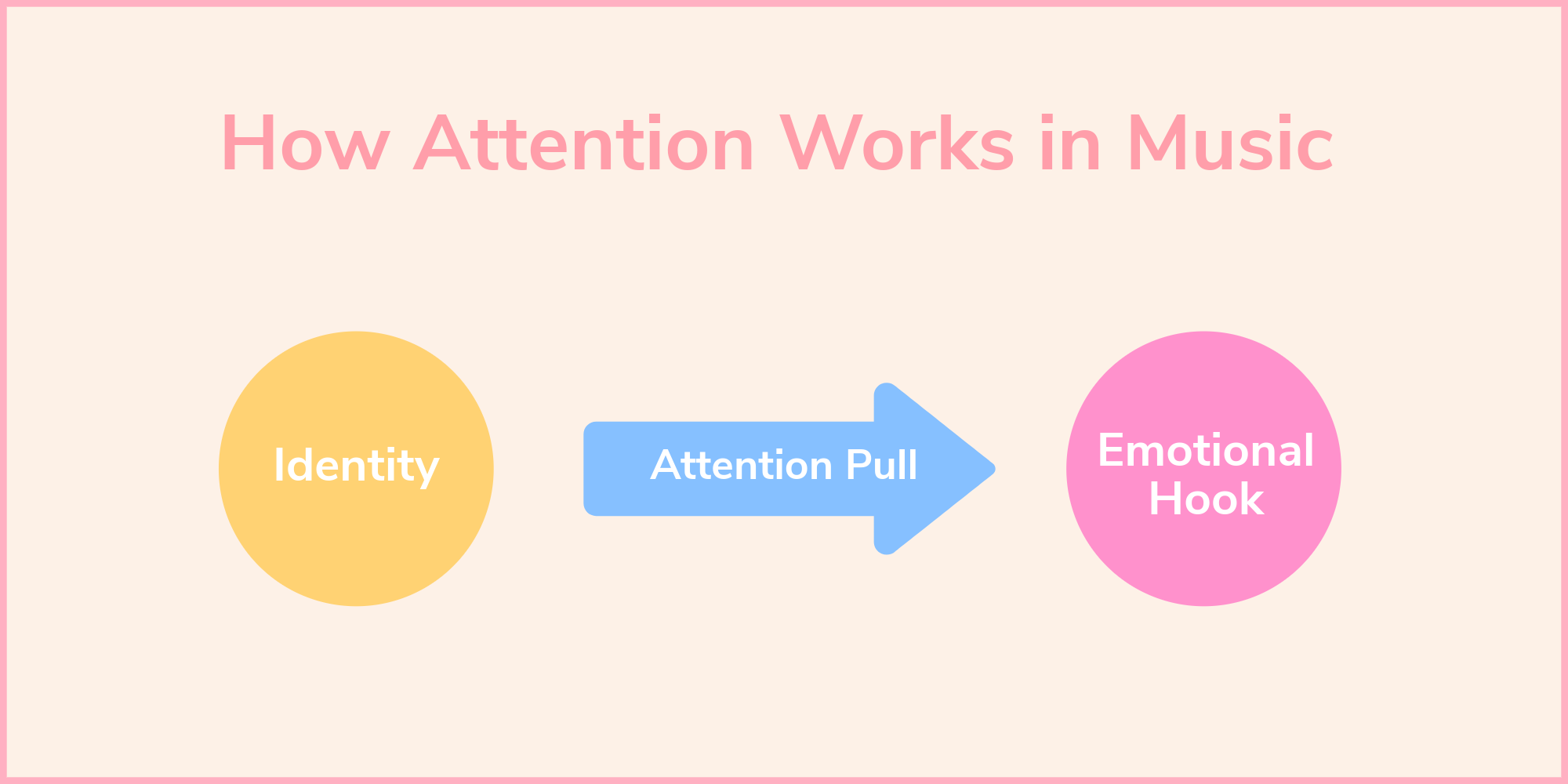
Attention behavior is the intersection between what we intend to focus on and what ends up pulling us away. In music, nearly half of listeners skip a song before the 30-second mark because something else creates a stronger hook. And social media platforms – which are designed to tap into what feels good to the brain – often keep fans scrolling for the next quick stimulation, preventing them from sticking with a single song until the end.
Nonetheless, the real spark happens way deeper. This is the part I consider the heart of the whole framework: the emotional connection.
This powerful sensation begins in the body long before our minds can make sense of it. When we hear a song we like, our biology reacts at once, producing a physical shift that acts as a magnet.
With time, those sensations become the emotions that influence our memory and help us remember how something made us feel. We then associate that moment with an emotional anchor that stays with us.
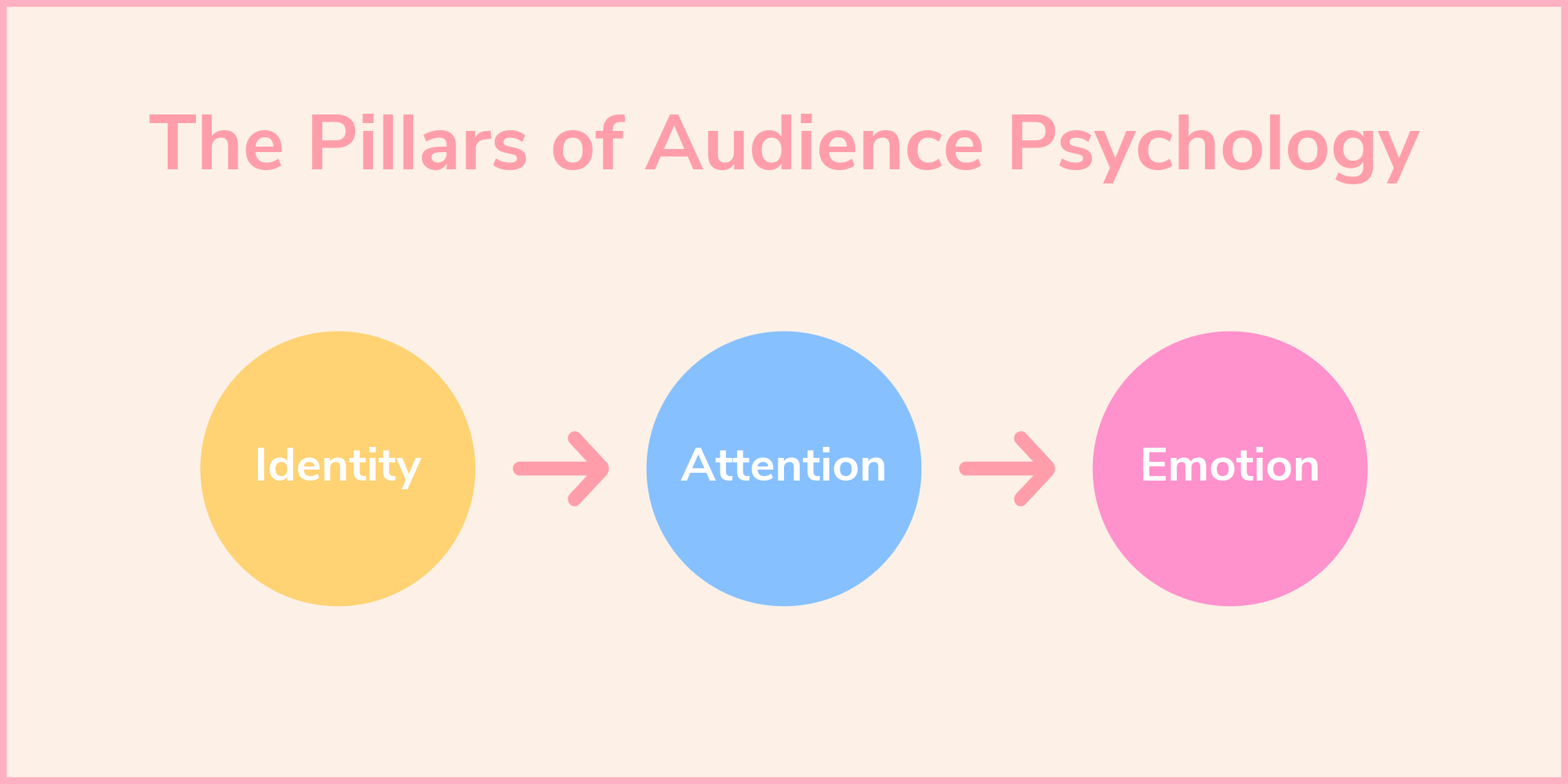
By understanding the intrinsic ways these subjects work together, we can interpret their patterns and guide our choices when designing experiences for our audiences. As we have seen, each one of us has something that mirrors the melody we love; a part in our hearts that recognizes itself in the music, and when that happens, the real understanding of audience psychology truly begins.