Introduction
In the last month, I did something that, for the past two years, I had never done before from an artist’s point of view: I booked a recording session outside of my bedroom. For a long time, my bedroom has been my safe space creatively — the place where I write, produce, and record without anyone watching, judging, or interfering. But after my mid-budget dynamic microphone broke and I spent a couple of months recording vocals on a cheap replacement, I started wondering whether my sound was missing something that I couldn’t give it on my own. Maybe what I needed was better gear, better recording techniques, or simply another set of hands.
So, after weighing a few deliberate pros and cons, I booked a half-day session with a local recording engineer and producer in my neighbourhood. I went into it expecting to think mostly about microphones, vocals, acoustics, and whether working with someone else would improve my music.
Instead, the thing that stayed with me most had nothing to do with recording at all. The monster that is Imposter syndrome.
The Monster
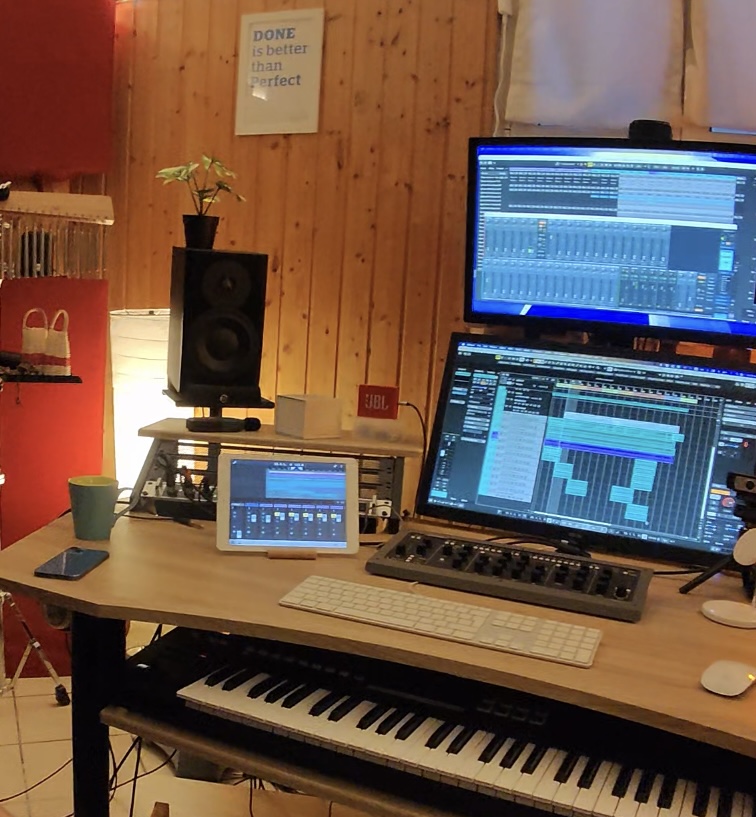
I am unsure about what I will say next will be comforting or terrifying to hear for you readers. Whether you’re a producer making a living off of your work, or a struggling artist who just set up your first monitors on the old maple-wood desk in your bedroom, every person in this world has experienced, at one point in their life, the phenomenon that is imposter syndrome. At its core, imposter syndrome can be defined as a psychological condition characterised by constant doubt of one’s abilities or accomplishments, often accompanied by the fear of being exposed as a fraud – or an “imposter” – despite evidence of ongoing success (Webster). While some people argue this syndrome has led them into unhealthy spirals of exponentially growing self-doubt and despair, others say it has motivated, or even forced them to refine their craft to perfection, achieving no levels of satisfaction until reaching an objectively recognised goal or outcome. While the latter observation may ring true in many other industries, it gets more twisted in the creative world. Because how do you measure what mix is objectively the best? What lyrics will be the catchiest hook? What type of piano will make this record sound grammy-worthy? You can’t. The painful beauty of making music is that there is not one true formula for creating what is best. There are lots of records that have been and still are criticised for their mixes, but I defy you to find an average listener that rejects a song because “the low-end on the snare should be cut by 0.2dB”. It sounds silly. Because it is.
The Art of Preemptive Apologies
So anyway, the reason that I’ve realised this imposter syndrome is a very shared experience, is partly due to the recording session I had with this producer I mentioned earlier. Before we started any work, he wanted to show me a couple of mixes he did for other clients so I could get an idea of his approach. Before he pressed play, he was already apologising for like 5-10 things that he thinks he did a bad job on. I was caught a bit off guard. Mixing-wise, I was certainly nowhere near his level. I’m an artist and a producer, not a
mixer. Still, he apologised in advance for what seemed to me like a protective coat to shield from any criticism I had locked and loaded after listening to his mixes. I must say, from an artist point of view, it was a bit unsettling to see this certainly human insecurity revealing itself from someone who is a professional at their craft. I thought to myself: Half of the reason I’m paying you is for you to take the weight off my back and confidently carry it to the finish line. And he was a good mixer as well, so I think him criticising himself right at the get-go helped neither of our confidence heading into this collaboration. But alas, everyone has their demons to fight.
A Glass half full
A glass is half full take-away that I had from this situation though, is the comforting fact that producers at higher levels experience the same self-doubt that we as beginners do. Is it scary that it’s omnipresent through all levels? Yes. But is it reassuring that this imposter syndrome is not an unstoppable force on your way to success? Certainly. Another producer I’ve met recently – one who mixes A-listers of the likes of Billie Eilish and Raye – also shared his experiences of the discouraging cycle of self-doubt. One that he couldn’t escape until a couple of years ago, where he was already mixing grammy-nominated projects. I will talk more about the experience of meeting him in my next blog, but I couldn’t bring myself to not mention this at all, since it’s so relevant to what is being discussed for today.
Closing Thoughts
Once more, this anecdote reinforces the idea that whether you’re just starting out in the industry, or you are the industry, everyone is told by their own voice, at one point, that they’re not good enough. It’s important you don’t listen to it too much.