Empowering the Next Generation of Women in Audio

Join Us

A Perspective on Success

Many people define success in different ways: A good setup, starting on time, a sold-out show, or more.  Industry success is often defined by the number of awards that someone has won, which internationally acclaimed band they are touring with, or by that bright and shiny new equipment they can afford.  Obviously, there are hundreds of ways to define success and just as many that could be used to call something failure.

Recently, when working with a student staff member they told me all they wanted was for one show to go perfectly right, exactly as planned.  That idea intrigued me, mostly because I never really thought about it that way, so I asked for them to share more with me. I learned that their desire was to never have to go back and change or fix something. They wanted to set the mics in the exact right spot, get the monitor mixes perfect during soundcheck, and have the entire system plug and play properly so nothing ever needs to be traced back for corrections. I do find value in that idea, but I think it is impossible. Now people who know me know that I don’t think of many things as impossible. There is always an option or a workaround to get something done. However, with the nature of the business and the nature of a young and learning staff team, one must realize that it is impossible to have everything go exactly right the first time around. Why is that? My guess is human nature and how communication works and the fact that people change their minds all the time.

On the other hand, as I define the success of the staff I have to keep in mind that normally 50% of this staff team has never touched an XLR cable before they joined the team while the others are learning to watch for the details, keep track of timing, and teaching the new staff; also that most staff member only gets three years in staff before they graduate. Everyone’s on a steep learning curve and to master it all in a short period of time is impossible.

This is where I challenged that staff member to change their frame of mind. Redefine what success in an event looks like. Change the impossible into something achievable and value the successes that come with each event – find the bright side. Success for a staff team like this is a moving target. Each person is working towards their individual goals, and each individual is working within the team to achieve the teams’ goals. The team goals cover the broader picture like having the PA plugged in and tuned early so soundcheck can occur when the artist is ready, packing the cases properly and checking off the pack list so they don’t have to run back for missing equipment, leading the team, and being able to make adjustments on the fly as things always change.

I define success as someone on the team learning something new or showing that they learned from their mistake by doing it right the next time.  They have grown and are able to take on larger events with more independence. They can set up and fully troubleshoot the night taking care of concerns as needed. Success is demonstrated by someone being able to think through the situation with all the variables and make the right decisions that result in a great event.

hhjune2016-2I look at success as a bigger picture. I find my success in the growth the staff has, the increase in services we can offer, and by watching each team member going from never wrapping a cable right to leading the entire team during one of our large event setups. For some, these changes may seem to be too small and take too long to see the results. For me it’s about the bigger picture. The small successes here will lead to these students’ larger successes in the future.  For me it is all about what is next for these staff members. I find my success in the education and training can I provide them so they become valuable employees for their next position.

How do you find success? Are you looking for the impossible to define your success or do you celebrate the short-term wins? You may not have a staff where you can see their successes like me, but there are many ways to see individual successes. Success can be recognized by seeing your growth from small shows to larger ones, gaining more leadership within and during the event, or by increasing your knowledge of the board you’re using that night.  There are many ways to define success, define yours by setting some goals that are achievable quickly and others that might take more time and work towards those goals. Instead of striving for perfection, strive for success. Either way, if you’re a veteran in the industry or someone just starting out, think back to when you started and where you are now. Think of all of those successes that occurred over time, define what they mean to you, and continue to strive to be more successful; not perfect.


Tiffany Hendren – Dedication, Hard Work and Emotion

By: Toni Venditti

Tiffany Hendren was one of those kids that listened to the teacher with one ear and had music playing in the other. Her hair hid the headphones of the CD player shoved into her backpack at her feet (yes, it was the 90’s). There was one CD; Aenima by Tool, that she listened to so many times that the disc stopped working!

Listening to music was (and still is) about feelings for Tiffany. She explains that music to her is like a rollercoaster of emotions elicited by a really great album and her mixes are based on these feelings that she gets to share with the audience.  As a full-time sound engineer, she is involved in making people feel the emotion in the music the way that she does, albeit a little differently. Whether it’s pushing up the fader for a particularly awesome guitar solo or dialing in the perfect vocal effect for a more intimate song, it’s hugely rewarding to watch people experience the music instead of just listening to it, and know that she has had a part to play in that.

When she was at school she was pretty set on being a performer – the kind of performer that made people feel the way she felt when she listened to a song. However, she was well aware that she had no actual talent to speak of, aside from a halfway-decent singing voice, and taking lessons of any sort was out of the question. It was her sophomore English teacher who opened up the world of sound to her by assigning her to do a report on what she wanted to be when she grew up. Tiffany still badly wanted to be involved in the industry, but her perceived lack of talent started her researching the other types of jobs available.

Her other interests were mainly in computing and electronics, so the tech side called out to her pretty loudly. At first, she thought of engineering in a studio, but then she found out that live sound engineers existed.  Growing up in a small rural-ish town, she had never been to a concert or any major experience and had only seen that type of event on TV. It never occurred to her that anything really went on behind the scenes, so to find this out was pretty exciting and the idea that she didn’t have to be on stage to be part of a live show was SO exhilarating. When she started going to concerts regularly, there was nothing more she wanted than to do live sound.

The next ten years took Tiffany in another direction. She joined the military and worked a couple of office jobs because having money was sort of a priority at the time. She also spent a fair amount of time working for a local/regional rock band, organizing the street team and doing merch and some light tour managing when they were on the road. Tiffany’s experience from the office jobs really paid off for this role when it came to paperwork, organization, and time management. At the same time she was taking classes for a degree in Public Relations – her fallback career choice was music industry PR. Looking back, Tiffany is convinced this is something she would have hated, so she is rather pleased she didn’t follow that path.

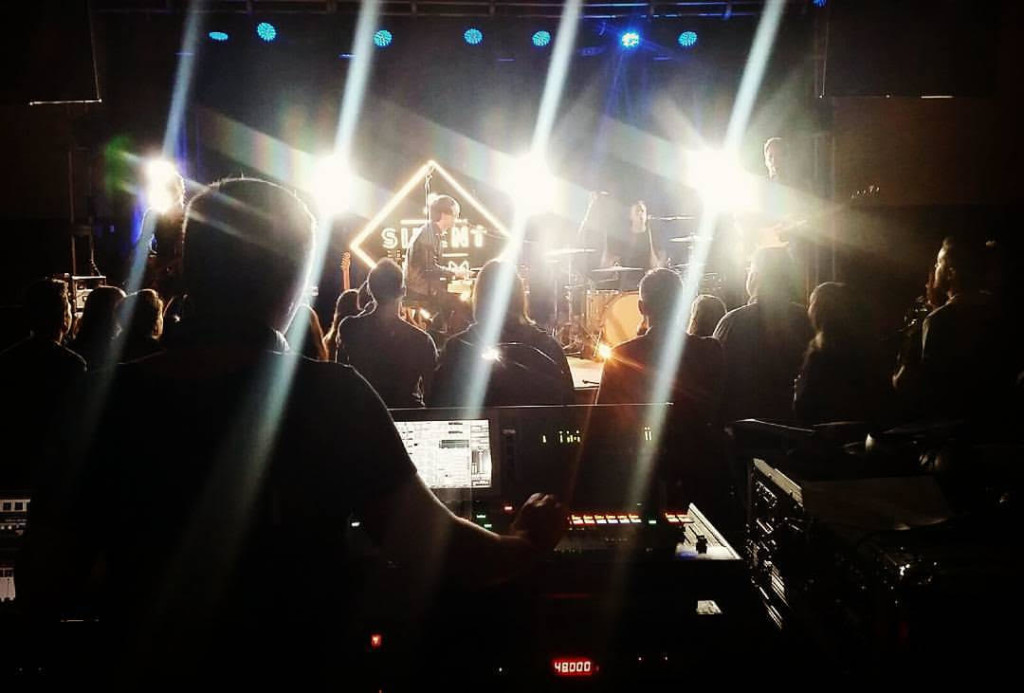
In late 2008, Tiffany was laid off from her last office job, starting a new direction in her life and leading her back to her first love. She started working in the coffee/merch shop of The Pageant in St. Louis. After a few months, an audio intern position opened up and Tiffany grabbed it with both hands. She spent the next year and a half interning in The Halo Bar, a 150 capacity venue attached to The Pageant, as well as reading and watching everything audio-related she could find.

Working in The Halo Bar involved a lot of what Tiffany refers to as “combat audio”. The gear is decently maintained, but as the gear is older things are more likely to break at the exact worst moment, which gave Tiffany the best experience in troubleshooting. The internship also offered the opportunity to learn skills in a lower-stress environment. When The Pageant’s full-time monitor engineer moved on to a new venue, Tiffany was offered his position. While not being exactly qualified, her boss had faith in her and within a few months, it was relatively smooth sailing.
unnamed

The gear at the Pageant is all analog at the moment. They have a Midas XL250 for monitors and a Heritage 1000 and two giant racks of outboard gear at FOH, and they all work!  Tiffany loves the sound of the analog Midas compared to most of the digital desks that are out there, but the venue is aware that it’s not the most convenient for visiting monitor engineers who don’t travel with a console. Eventually, they will go digital, at least in the monitor world, but Tiffany thinks they are secretly waiting for something tragically sad to happen to the XL250 first!

If you ask Tiffany what her favorite desk, PA, piece of outboard gear, etc. is, she will quickly tell you that it’s whatever is available and working properly! When touring with A Silent Film, it’s desk du jour. Some of her favorite shows have been mixed on an M32 from an iPad. Getting back to the feelings that music produces, Tiffany really enjoys mixing from the crowd instead of FOH – calling it unconventional but she personally enjoys the show a lot more and likes to hear exactly what the fans are hearing. Plus, the bar seems to be exactly where the FOH should be in a lot of smaller venues, and she thinks it’s nice to not be stuck under a stairwell or against a wall at the back of the room.  Tiffany tells us that it definitely helps that the iPad app for the M32 is surprisingly well done. If she had an endless budget, however, she would definitely prefer the DiGiCo and Midas Pro series desks.

The Pageant is currently in the process of deciding on consoles and PA for their new sister venue, the 800 capacity Delmar Hall. Tiffany will be the FOH engineer when it opens. She’s also continually learning and this year is taking a few classes that she is excited about – SMAART training and a stage electrics class.
SGcollage

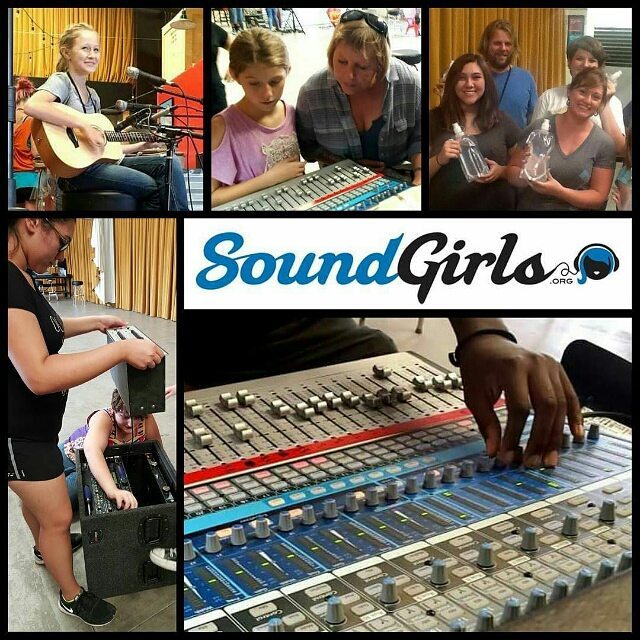
Live Sound Camp for Girls 2015

Mentors played a huge part in Tiffany’s learning. The Pageant’s FOH and monitor engineers, Randy Noldge and Adrian Silverstein, really took her under their wing when she first started learning sound. Tiffany says she wouldn’t be where is today without their patience and willingness to teach. Also, Tiffany looks up to and really admires Soundgirls.Org co-founder – Karrie Keyes saying “she’s one of the most driven and productive people I’ve ever met. I have absolutely no idea how she gets so much work done every day”.  Tiffany says Karrie is a living embodiment of the DIY mindset – Karrie will say – “Don’t know how? Figure it out and then go do it.” Plus, Tiffany declares Karrie is an excellent teacher, and Tiffany really enjoys being involved in the live sound camps with Karrie.

Tiffany has experienced some discrimination working in a lot of male-dominated workplaces and industries, saying “you can always run into the odd sexist remark or behavior no matter where you go, but I’ve been mostly lucky with my jobs”. Tiffany would like to stress here that the majority of people that she has worked within this industry are awesome and treat her like a human being, however, she finds that most of the bad experiences are confined to other crew members. She has run into a person or two that “just doesn’t work with women”. One memory that remains is where one crew member even tried to have her sent home and she has definitely had a few people get a little too touchy-feely. One guy in a town wouldn’t let her mix the band who had hired her – he wouldn’t even speak to her! On tour, it takes longer than expected for some house engineers to warm up. Tiffany’s solution is to just get the job done, saying that once they see her pushing cases and setting up drums, they’re suddenly much friendlier.

Tiffany has actually lost tour work by being a woman, with excuses like “We’re just a bunch of guys, you wouldn’t fit in with us,” and “The band’s wives wouldn’t be comfortable with a woman on the bus”!!! On top of that, some guys have the idea that women are mainly interested in working in the music industry so they can date guys in bands.

The idea that being a woman is a setback is not only confined to the music industry, though. Women have to work harder and be better at their jobs, flawless even, to get the same recognition and reputation, and for less money.  The band Tiffany is working with at the moment were shocked that this attitude exists, as it had never entered their minds that working with a woman would be any different than working with a man.

Sometimes she will have a show to do that has previously had women working for them and will hear comments like, “Oh, the monitor engineer is a girl, we’re gonna have a good night!” At this point, Tiffany has just introduced herself and hasn’t lifted a finger but somehow, everything is going to be awesome. It makes her happy to think they have encountered other women out there that are awesome and kicking ass, making her job easier.

Tiffany’s message to young girls coming into the industry is “take physics, math, and music classes. Don’t put up with any nonsense and don’t let anyone tell you that you can’t”. She recalls reading an article posted by SoundGirls about how men are more willing to take a position they’re not fully qualified for and figure it out as they go, and women feel like they have to know the skills 110% before they even think about applying.  This really made her examine how she’d been approaching her career, as she had always felt that she was being judged extra hard because she was female. Whether that’s true or not, she felt she had to be perfect all the time with no mistakes, ever. That meant that she didn’t take a lot of chances on things she wasn’t sure about – her mantra being  – If you don’t know every little thing about how that piece of outboard gear works you had better not touch it until you do hours of research!

Tiffany says that when she started, there were no women around her on a regular basis until she discovered SoundGirls.Org, and she could count the number of female sound techs she’d met in the previous five years on less than two hands. Also, she had never seen a woman behind the board at any show she had attended. She states now that if she’d had a group of like-minded women as mentors, she would have been so much more comfortable asking questions, experimenting more, and generally taking more chances.unnamed (6)
Tiffany is currently the monitor engineer at The Pageant in St. Louis and tours with the band “A Silent Film” doing FOH. She has been involved in sound professionally for around seven years, full-time about five. Tiffany became the co-director of SoundGirls.Org in August 2015. She also co-produces an annual invitational motorcycle showcase in St. Louis, MO – Cycle Showcase STL. When she gets some time – her other hobbies include crocheting scarves that never get finished, cross-stitching bad words onto things, learning to actually ride her motorcycle, and finally taking guitar lessons.
Occupying Both Sides of the Glass

When I’m working with other artists in the studio, my main concern is emotion. I start by recording as many instruments as possible live, preferably with minimal metronome use, to keep everything sounding organic. I keep the emotion of the song at the front of my mind, with technique taking the side burner (not completely top priority, but still important). I’m in the business of tugging heartstrings, of helping to create impactful art that is also something that the artist can feel proud of. However, when it comes to developing my own music, it’s a totally different story.

I had an interesting realization recently: In all my time being involved in the music world, never once have I entered the recording studio as simply an artist. Every time I entered that space to record my own music, I was either the engineer, the producer, the intern, assistant, mixer, writer, or a combination of all of them, in addition to being the one recorded. As such, when I am developing my own music in the studio, I am very much in a production state of mind.

I have absolutely no idea what it’s like to be just the artist in the hands of a producer (though I’d imagine that it’s something like going to the auto mechanic when you know next to nothing about cars). Becoming an educated listener and engineer has definitely impacted the way I look at my own music when developing my songs in a recording session. For one thing, not only am I analyzing the way everything sounds, but I end up becoming so nitpicky that it’s darn difficult for me to ever call a mix, “finished” (though I’m sure that’s true for most sound engineers, no matter who you’re recording). Instead of viewing my songs as stories, I start using them as a sonic playground, blank canvasses to experiment with different mics and instrumentations.

It’s always a significant challenge to take a step back and to try to “hear the full picture,” as it were. On the one hand, it’s a great way for me to unleash the experimental side of myself without worrying about paying the engineer’s hourly rate. On the other, however, is a risk of never finishing anything. But it’s always an excellent exercise in letting things go as they are completed, and in keeping the overall goal in mind.  


On the Road with Jenny Douglas


Jenny Douglas grew up in the small town of Ozark, Missouri. She developed a passion for music by going to local shows with her older sister, who sold merch for bands. When it came time to attend college, she chose to study studio sound (more…)

Cedar House Productions Co-Owner – Suzie Brutke-Smurdon

By: Toni Venditti

EPSON MFP imageSuzie Brutke-Smurdon has always loved music and knew she wanted to be involved in the music industry, but being a musician and performing in front of a crowd was not for her. Instead, she started looking at audio engineering with a plan of going into music production.  She is now the Co-Owner of Cedar House Audio Productions in Seattle.

Suzie found a short course that was being offered at a local recording studio back home in Oregon.  It was just an overview of what it’s like to work in a studio, but it interested her enough to continue her studies. She then enrolled in Full Sail and studied recording engineering and loved her time there.  She talked about the great teachers and how she met a lot of amazing people at the school.  One of the biggest things she learned was that school is great for the basics, and it gets you prepared to work in a studio, but once you get to a real studio, there is still a lot to be learned.  Each studio is different and has their own way of doing things.  She believes basic signal flow is critical and is surprised at how many engineers these days don’t understand it.

She has been an audio engineer and sound designer for over 20 years. Once she finished school, she took an internship at a recording studio in Seattle. She did well and was hired full-time to work in the dub room doing duplication work. From there, she worked her way up to Production Assistant and finally Sound Designer. She had started out with a plan of going into music production, however with the changes in the music industry at that time, she ended up focusing more on post-production.

Suzie describes sound design in her line of work as all about creating a whole and complete “picture” by using different sound sources.  It’s not just making sound effects; it’s a matter of putting all of it, sound effects, music, dialog, and ambiences, together and making it sound great. Suzie spent over eight years at that studio before moving on to do freelance work and eventually ending up where she is now, co-owner of Cedar House Audio Productions, a company that specializes in spoken word audio.

Cedar House Audio was originally started by talented actress and Audio Book narrator Kate Fleming; Suzie worked as her Technical Director, and Lyssa Browne was Production Manager.  In December of 2006, Kate was killed tragically when a flash flood trapped her inside her basement studio.  After some soul-searching and speaking with Kate’s family to get their blessing, Lyssa and Suzie decided to continue in Kate’s honor and the new Cedar House Audio Productions was born.

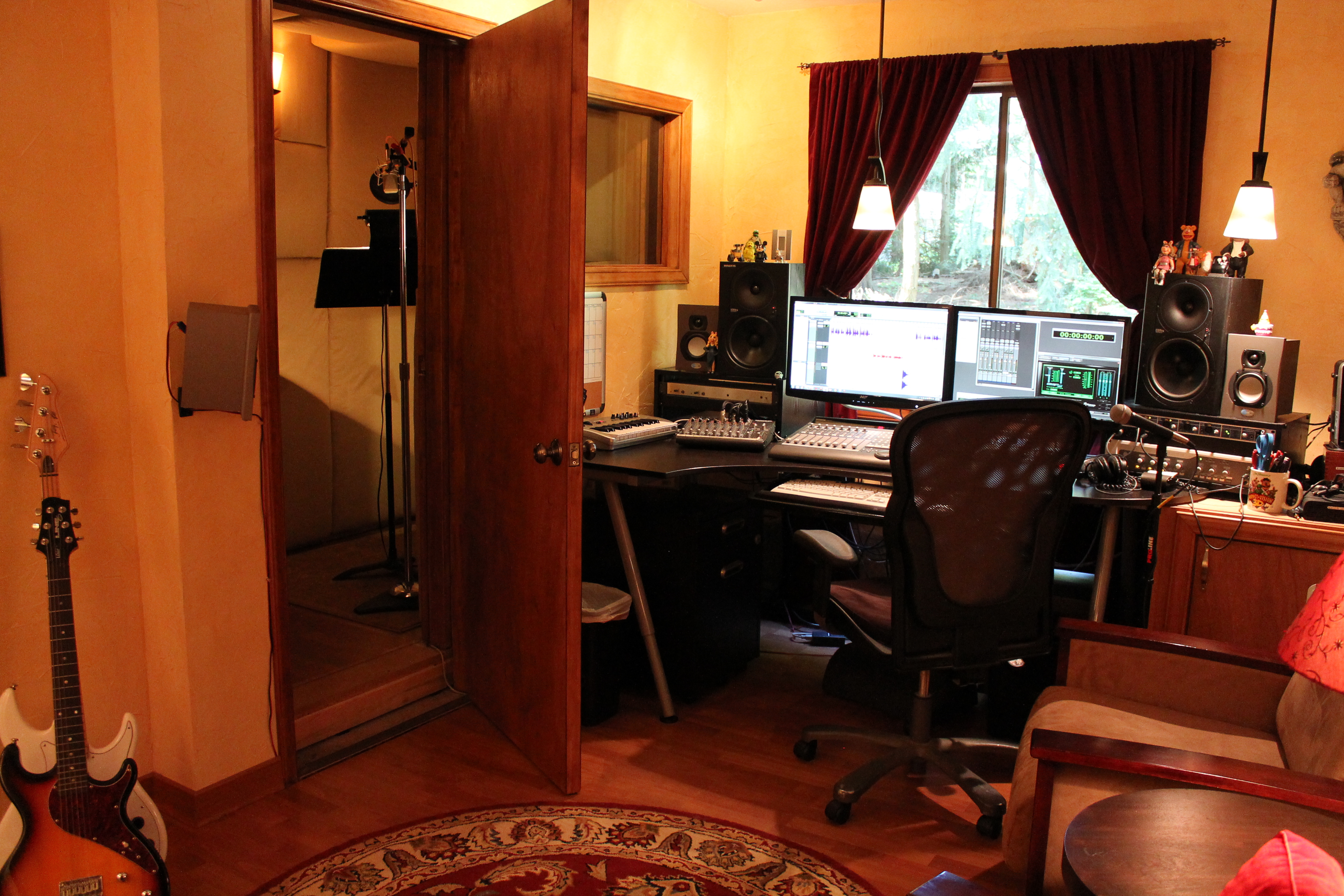
StudioExplaining the differences between recording the spoken word and how it differs from recording music, Suzie says with audio book recording, the biggest difference is that all you have is the voice.  Most of the productions they do are voice only, with the occasional musical transition.  This means the recording has to be as clean as possible so that there are no distractions to take away from the listener’s experience.  The vocal booths are extremely dead at Cedar House Audio Productions.  They should be as quiet as possible with no reflections.  They monitor on headphones instead of speakers so that each little movement, mouth click or stomach gurgle can be heard.  The studio mainly uses Neumann mics and Pro Tools for all projects.

Over the years, Suzie has worked on radio and TV commercials for various clients.  She has also done sound design for video games, TV shows, films, travel tours, and podcasts. She was a dialogue editor on several independent films and has also recorded voice-overs for video games, DVD commentaries, e-learning projects, and audio books, as well as dialogue replacement for TV shows and films.  Suzie also sound designed for Disney theme parks. Being completely different skill sets demonstrates Suzie’s versatility, as most of the work she has done for Disney involved post-production of videos shown in the ride queues.  One of her favorites was for the old Rocket Rods ride. The video was shown in the nine-screen CircleVision 360 Theater. Her job for these projects was to build the sounds for the videos before being sent to a mix engineer.

Her work on video games includes the individual sounds for each element before they are implemented into the game’s sound engine and mixed.  When Suzie is creating sounds for a game, she is provided with video captures of certain elements or creatures. Then she’ll interpret what they should sound like.  Sometimes she will get builds of the game to enable her to see the elements in context, and then she will create sounds to match. Suzie explains that video game cinematics are more comparable to doing post for video, where you’re building a whole soundscape and not just the individual elements.

SuzieBrutke-SmurdonSuzie loves creating things that will be around for people to hear for many years to come and loves the sense of fulfillment when a big project is finished.  The Book of Stars was one of the several notable projects and was the first indie film where Suzie worked as the dialogue editor. This film helped her to realize how much she liked working on films and longer form projects.  The Bill Nye the Science Guy TV show was another favorite, and always a lot of fun.  Voodoo Vince was the first video game that Suzie got to do actual sound design for – and not just voice recording. She has also really enjoyed recording a lot of amazing people over the years and hearing some great stories

Suzie’s life lessons are that if there is something you want, go for it; you should never be discouraged by being a woman in a male-dominated field.  There is always new or improved gear and tech coming out so never stop learning. She says having the ability to troubleshoot when things go wrong is always an important skill to have, as well as being able to stay calm under pressure. 

Suzie thinks that one of the most important things, especially when you are just starting out, is to make sure you don’t have a bad attitude.  There’s most likely going to be some grunt work, and you’re going to have to fetch coffee, get lunches, or whatever, so it should be done without an attitude. Be proactive.  If there is something that needs to be done, take the initiative instead of waiting around till someone asks you to do it and always be open to learning.  You can pick up a lot of tips and tricks from other engineers or sound designers.

Independent Contracts – The Business Skills You Need

As a sound technician (sound engineer, mixer, editor), there’s generally two types of gigs:

(more…)

Navigating a New Building – Planning the Build.

Over the last four years, I have been a part of the planning and designing committee for a new student union. Over this journey, I have learned many things when it comes to building a new structure and that the process can be very complicated and messy. If you ever get the opportunity to be a part of the planning process for a new venue, do it.  It will be an experience you may hate at times, but it is rewarding.  It has been a great learning experience. (more…)

The Life Long Learner

Personal growth and professional growth work hand in hand for me. The more I expand my mindset, the greater the possibilities. Julia Child said it best “You’ll never know everything about anything, especially something you love.” So why should we stop learning, right?

I started my journey in media at a young age within a place of worship. Audio has always been my focus point. But I noticed as an in-house engineer once communication was set and audio was brought up to a standard of excellence there was still more work to be done. Which led me to expand my reach as a freelance technician.

Once I set up a multimedia platform for one worship center I continued to research equipment that could take the worshiping experience to the next level. From audio consoles to projectors, from lights to CD duplication. From live broadcasting to DVD production, they all played a significant role in creating this great experience. The leaders loved the thought of having all these outlets to help spread the gospel. Not only did it help the leaders and the congregation. It helped me gain experience, which births excellent technicians.

After working in places of worship for over eight years and graduating from a Media Tech Institute with a diploma in audio engineering and multimedia. I choose to see what other routes I could go with this passion and experience. I then found the wonderful world of AV (Audio and Visuals). A place where being proficient in all areas of event technology is golden. I had been in AV for years and didn’t even know it. I just specialized in worship centers; now I’m branching out even more. Seeing what all the world has to offer a young audio engineer willing to learn and grow.

Being an audio engineer can take you in many different directions, but no matter which route you take, the more you know, the more you grow. You can start as a monitor engineer and then move to mixing at FOH. You can be a boom microphone operator and develop into recording and mixing Foley. I started in AV as a stagehand just doing load in and load-outs. You never know, continue to keep an open mind. Never stop learning. The possibilities are endless, so is the amount of growth within the industry. Once you feel you know everything there is to know, you put a cap on yourself and opportunities. Don’t be a know it all, be willing to learn it all.

The Art of Being an Evil Genius

There’s this moment that occasionally occurs when I’m working on a project in the studio. I like to call it “The Evil Genius Moment.” (more…)

X