Empowering the Next Generation of Women in Audio

Join Us

The Sacrifices of Study

There are always going to be obstacles on the path towards dreams and goals. The real question is how much are you willing to sacrifice in pursuit of them? For a lot of people, sacrifices mean smaller or more trivial things; skipping a Starbucks coffee, eating in for supper, not buying a new Xbox or skipping getting your car detailed. For me, well, let’s just say I’ve always been an extremist…

In September of 2016, I had just wrapped up my last festival for the summer where I got my feet wet with stage managing and caught my first glimpse into the world of sound. I had already learned a lot from witnessing the relationships and interactions between techs and performers and I’d also been put to the problem-solving test of running an entire stage for a whole weekend without knowing what the hell I was doing. My trick in that department boiled down to two key components.

1) Always observe the what is going on around you, and if you find yourself stagnant, walk a lap. Chances are you saw that musician put his sunglasses down backstage, and you’ll probably walk by as he’s enlisting all of his friends on the hunt for them. Grab the glasses and deliver, when it is his turn on stage your relationship is already gravy and you will thank the heavens above for this happenstance. At first, I thought I was magic, no lie. I seemed to just see it all and fix all the problems, but the reality is if you pay attention – you are effective. Even when in conversation, keep half an ear to conversations around you. This will save you! Whether you’re working in concert, theatre, film or probably any job ever.

2) You don’t have to know how to fix a single thing. You just need to know who does! Network. Pay attention. I had a full stage running ten minutes behind because of roaming musicians and ten minutes before an eight-piece Argentinian clown band was meant to hit the stage I was informed that there is no mirror backstage for them to use for makeup application. Let me explain that we are in the middle of a field in the middle of nowhere, on an island in the ocean! Before even batting an eye I accepted his needs and scanned the faces in the immediate area. I went on my gut instinct about this one person’s connection with another person who may be able to help, but who is at the other end of the field. I attempted the delegation and continued on with my rushed plethora of duties. No more than two minutes later (and I was watching the clock) a full-body mirror was being toted backstage. Hazaa!! Faith! Observation! Delegation! What a victory! The show may go on! I put in the effort and believed that I could accomplish anything. From mirrors to electrical work! Anything is possible.

After this experience, I was confident that if I pursued this path, I could find success. So as I was leaving Vancouver Island, I got in touch with a sound tech that I had met at festivals up north. He invited me to stay at his place/studio with him and let me shadow him at work. I didn’t even stop for Vancouver pizza or sushi; I went straight to his work from the boat. He was awesome. I felt at ease being upfront with how little I knew. I straight up told him I knew nothing, had zero experience but was going to be good at this quickly. He laughed, nodded and shared his knowledge, and answered all of my questions. I stayed with him two days and during that time connected with some other folks I had met up North on the festival circuit.

A new pal Joey was having his CD release party up in Prince George on Oct 1. and Danny Bell was going to be mixing him at the Legion there. I barely knew Danny from Adam but I got in touch and asked to shadow. He agreed! Now I had one week to get there. I had no money and no vehicle. If I stayed in one place I could grab a job and get a house and be warm and comfortable, but I wanted to LEARN, and I felt like I was out of time.

That evening, outside with my new mentors (he didn’t know that was his title yet) Vancouver workplace we ran into a festival-goer from up north. He offered me a seat in the rideshare to Kamloops that he was taking the very next day! From there I got to the highway and stuck out my thumb. It was cold, I was tired, and I was terrified that I was making a fool out of myself, but I decided I had no time to be embarrassed. This was the beginning of a new path, a new me, and I was going to be fearless and unstoppable.

I was lucky to stay with some lovely pals in the evenings along the route, and although I was fully prepared and even expected to be sleeping outside, it thankfully wasn’t in the cards this trip.

When I got to PG, I had a day or two to kill, then came the show! I was so nervous. Danny was great and showed me how he set up the stage, what his methodology was and talked through his mixing with me. He didn’t make me feel like a jerk for mentioning instrument imbalances. This was before I knew how rude it was to approach techs with that, and maybe that’s the reasoning behind why a useful skill of mine is balancing ensembles. Possibly because he let me talk about it so freely. My biggest memory of this event was having him explain compression and showing his X32 app to me on his iPad. I watched that ball bounce around like it was a secret code. Within its fluctuations were a language that might be able to explain to me….what the hell compression even was! I smiled and nodded and promptly added it to my lengthy note of necessary sound things to google.

On the longish walk back to Danny’s place reflected on the sacrifices I had made. What the hell was I doing? I asked. I just wanted a house, and a partner, maybe some kids, or at least a dog and some friends and a car. Why am I hitchhiking across British Columbia with everything I own on my back, just to not understand anything I was being taught. Ahhh, because you see, I was facing my fears. I was embarking on an uphill battle to complete a task, to work towards a goal and follow through. To realize a dream you must first climb mountains, and I was just learning how to walk on my own, so it felt insurmountable. I could feel the arduous path before me, and it was a terrifying realization.

Around this time another new festival-goer friend and musician had been telling me that they knew some techs that lived in Edmonton and that they would probably be willing to meet with me. And with that, it was decided I was hitchhiking to Edmonton to meet and find my next round of educators.


Janna Dickinson aka JDog broke into the industry last year when she accidentally worked nine festivals! At the Last-ival, having worked every volunteer role through to stage-managing, she watched the techs and realized that she had finally found a job where her varied skillsets could finally all work in unison. She spent nearly two months couch hopping while hitching to every tech across BC that she had met at festivals who were willing to teach her anything. Her first gig was waiting for her when she returned! With a childhood free from live music, she had never played in a band or plugged in an electric guitar. She was learning it all from scratch! So, learning WHAT an XLR cable is called, let alone what it’s for! She returned to the same festivals this year with a new role and received honorable mentions at each one. Follow her on her journey of navigating such a complex industry as a complete novice, working solely on instinct, an ear, and the drive to work at her passion no matter the odds. Unafraid to ask embarrassing questions on her quest for excellence, she carries with her goals of touring, teching/tuning, tv and teaching. Her freelance company is Penny Lane Audio & Production.
Read Janna’s Blog 

Hand Drafting for Impromptu Meetings

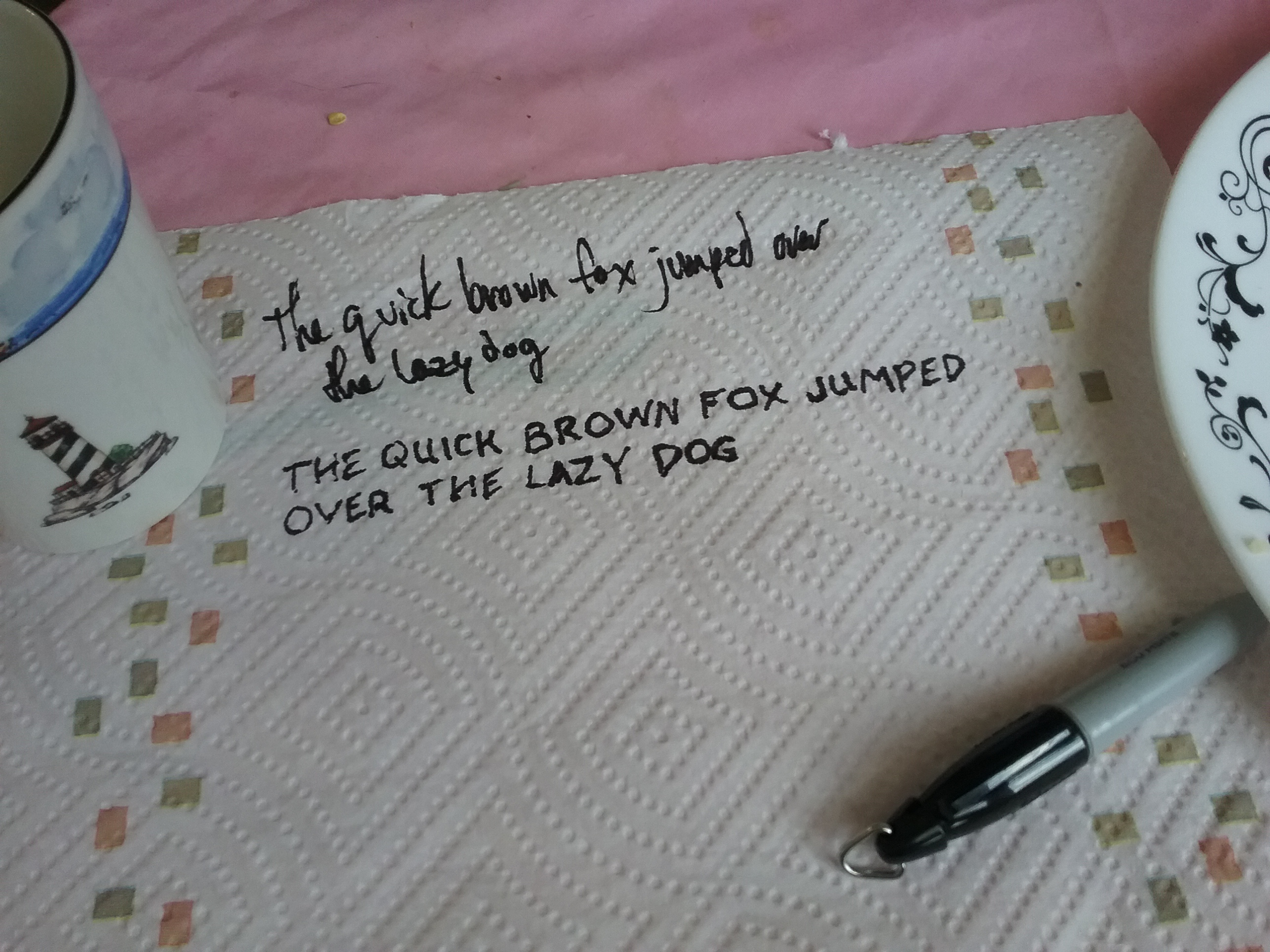
In the age of computers most drafting is done with sophisticated software, however not every production meeting is done in the office.  What happens when you are asked to make changes at bar or café away from your desk? And if the changes are only half thought out, is it necessary to delete several hours’ worth of work to accommodate them?  Hand drafting is the old world solution to a new world conundrum. I was fortunate enough to learn hand drafting in a theatre-specific drafting course (computer-aided drafting was covered later). Besides the basics of drafting, it covered an entertainment business requirement:  how to do your work at a bar with little space and little resources. The final exam was to draft stage plots on diner placemats while eating and conversing with classmates (in my case delicious Finnish pancakes with thimbleberry jam). So, besides it being the best final exam ever, it was one of the most applicable.

The key is clarity.  A stage plot is useless if your hungover future self is unable to read the mess of beer stains and drunken scrawl. This might mean you have to take your time or use several napkins. Do not be afraid to write clarifying notes, especially when your drunk brain is not on the same wavelength as your sober one.  Also, I generally print in all caps if I want someone else to read my handwriting. There is a proper way to draft each letter that involves methodical straight edges and deliberate italics, which I struggle to follow.  In any case, it is probably best to avoid cursive. The letter ‘M’ is a good guide for spacing between words. If there is any chance of someone other than you using your napkin sketch as a reference, then avoid shorthand.

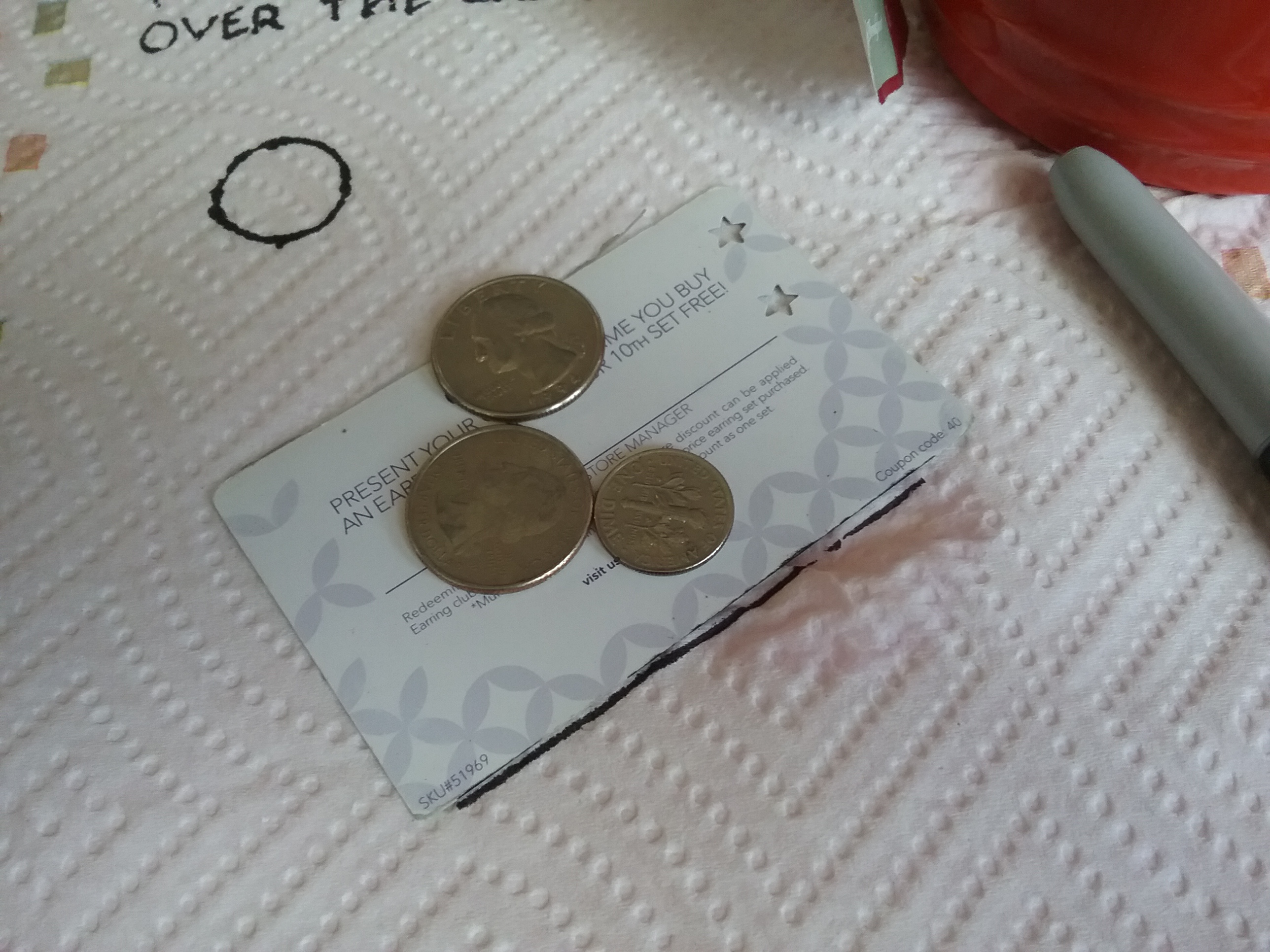
The clarity in sketches comes from straight lines and consistent proportions.  Discount cards are great straightedges, cocktail napkins for paper, and coins and picks are useful for curves.  In my diner final, I was restricted to what I generally carried on my person, so I used a pen and a student ID. If a more complicated sketch is required of you, start by using boxes and lines to set up proportions.  From there the more organic shapes can be estimated, and usually intricate details can be listed for later rendering in a more appropriate workspace. Also, be mindful of the scale of the actual dimensions and proportions.  Sometimes drawing a figure to represent a 6-foot tall human will make the error of the 18 inch Stonehenge obvious before its construction. A handy guide for drawing humans who look humanesque is to start by drawing seven evenly spaced horizontal tick marks.  In between the top two ticks is where the head is, the second, third, and fourth tick marks are for the upper body as four vertical parallel lines. Finally, the last half of the tick marks are for the legs with three vertical parallel lines. This little figure is useful for anywhere you want to upgrade from a stick figure:  lighting plot, mic plot, set design, and even storyboards.

If this article seems relevant to your work environment, then practice drawing shapes and writing in block print.  With time it should become faster and easier, and your sketches will make more sense. Sketching is one of those hobbies that can easily be an on-set pastime or make a long bus trip seem shorter.  There is a whole segment of the art community dedicated to quick sketching of the scenery around the artist: Urban Sketching. It is like people watching, but with style. And if you need inspiration, look at Sylvia Massy’s artwork of the audio world.  Or if you have a more literary bent, you could work on calligraphy, and have the hottest slates at the studio. Okay, you do not have to master bar sketching, but working in a little practice here and there will up your communication game.


Opportunities in Audiobook Editing Video Conference

Join SoundGirls for a Video Conference on Audiobook Editing

May 2, 2018

2:00 PM Eastern Time

In this session, narrator-producer Andi Arndt and audio engineer Amanda Rose Smith discuss the exploding audiobook industry, which took in $2.5 billion in 2017 with an estimated 79,000 titles produced.

There are unlimited opportunities in audiobooks for diligent, deadline-driven audio engineers, working for publisher-owned audio production houses as well as indie producers, authors and narrators. Andi and Amanda will let you know a little more about the typical workflow of an audiobook editor and answer your questions about how you can learn the craft and take advantage of this booming sector of the publishing industry.

Andi Arndt is an Audie Award winning narrator and producer of over 250 audiobooks in genres from children’s to biography to mystery and romance.  She works from a home studio in Virginia for clients across the English speaking world. In May 2018, she will be inducted into the first class of the Audible Narrator Hall of Fame.

lyricaudiobooks.com andiarndt.com romancenarrators.com

Amanda Rose Smith originally a musician, after earning a BA in Music Composition from Smith College, Amanda discovered that she loved recording as much as she loved composing, and moved to NYC where she completed a Masters Degree in Music Technology at New York University.  Since then she’s worked in various industries, as a live sound engineer, recording over 900 audiobooks, music, film, television, video games, and commercials. She was ADR engineer on season 2 of Netflix’s “Orange Is The New Black” and dialogue editor for Telltale Games’ “The Walking Dead: The Game”.  Amanda continues to compose music in addition to recording, editing, and directing voiceover. She loves most things Star Trek, scuba diving, and hopes to visit all seven continents before she dies.

www.amandarosesmith.com

SoundGirls.org Audiobook Editing Webinar

May 2, 2018 2:00 PM Eastern Time (US and Canada)

Join from PC, Mac, Linux, iOS or Android: https://zoom.us/j/334316389

Or iPhone one-tap :

US: +16699006833,,334316389#  or +14086380968,,334316389#

Or Telephone:

Dial(for higher quality, dial a number based on your current location):

US: +1 669 900 6833  or +1 408 638 0968 or +1 646 876 9923

Meeting ID: 334 316 389

International numbers available: https://zoom.us/zoomconference?m=4othVwofxG0wqgC5Zd2NMXwk4AvwrNK4


Intern with Stealth Sonics @ Sound:Check XPO 2018, Mexico City

Stealth Sonics, manufacturers of precision in-ear monitors, are seeking two (2) members of SoundGirls to intern with the company during the upcoming Sound:Check XPO.

Interns will need to be available from April 21 – April 24, 2018.

Dates and Times

April 21 – Setup/Training – Arrive at the booth by 3:00PM

April 22 – 24 – Show hours: 12 PM – 8 PM – Arrive at the booth by 11 AM

April 24 – Dismantle booth starts at 7 PM

Responsibilities

Welcome guests and introduce product line. Also, act as translators for non- Spanish speaking staff and customers at the booth. Answer any product questions you feel comfortable answering Guide guests to Stealth Sonics for any questions that cannot be answered. Help ensure all product demonstrations are displayed and functioning properly. Assist in product dismantle/packing at the end of the show.

Show Location:

CIEC – WTC, Cuidad de Mexico

Compensation: Successful interns will be compensated in either:

1) A choice of custom IEMs of their choice (retailing up to a value of US$1,499) OR

2) A total of US$250 for the duration of the internship

Please send a cover letter of why you would like to intern and a resume to soundgirls@soundgirls.org

Festival Guide part 2: In-house Tech/Engineer

Much like in part one of my festival guide, the key to working in-house at a festival is to be prepared. Pack warm, waterproof clothes, way more socks than you think you’ll need, sanitiser, etc. If you have any special dietary requirements make sure they know as soon as possible, and bring extra non-perishable food in case the message doesn’t get passed on. The days are long and busy; you may not get a chance to sit down to eat your meals, let alone leave the stage to get them. Someone else might pick your food up for you, and they might not understand what Coeliac is, for example, so have a backup ready.

When prepping the gear, read all the specs you’ve been sent carefully (e.g., a Shure Beta 98amp, 98AD/C and 98H/C may all have the same capsule, but they are not interchangeable) and allow for several bands to be mic’ed up at the same time if you have rolling risers. Pack extra mics (I’d recommend mainly Shure SM57s. We joke about it, but they really will work on almost any instrument) and adapters so you’ll be ready when someone inevitably brings more than what was on their spec. In fact, take the specs as a guide rather than gospel and plan to be flexible. If you are operating a desk, try to find out whether the bands have their own engineers, and whether they have a show file. If not, along with your generic starting file you can start building ones for them to save time on the day (but expect there to be changes!).

If you’re in charge of patching, discuss with the rest of your department whether you’ll work “1 to 1” (everyone gets plugged in as per their channel list) or if you’ll have a festival patch (all bands use the same channels, with similar instruments grouped together. e.g., inside kick drum is 1, guitars all go in 13-16, brass in 24-30, etc.). Festival patch can be a lot quicker if you’re using analogue desks, sharing backline and mics throughout the day, or if you’ll be mixing most of the bands yourself. It helps the in-house monitor engineer in particular because they can leave rough mixes up and just tweak them band to band instead of starting fresh every changeover, which can be very time-consuming. 1 to 1 is obviously a lot easier for guests, though, especially if they have programmed a lot of scenes for their set in their file which could take too long to adjust after a soft patch.

Festivals can be intense, with very short changeovers, so staying organised is paramount. Label absolutely everything. Imagine you were to suddenly get ill and have to leave. Would a colleague be able to step in and know where and what everything is? If not, label it up until there’s no way anyone could get confused. If the worst happens and you do have to go, someone will be able to pick up where you left off. More importantly, when you’ve been working flat out for 14 hours and your brain goes blank right at the critical moment when you’re fault finding, you’ll be able to rely on the labels to get you through. If coloured tape everywhere doesn’t suit the look of the show (for example if it’s being broadcast), silver marker pen on black tape is a lot more subtle. Keep your paperwork and a pencil with you, so you can note down any changes as you go along. Don’t forget to update anyone else who needs to know, e.g., other stage crew, engineers or the broadcast truck. Carry a phantom power checker, and a small mic with a patch lead and an XLR to jack for DIs so you can test any lines that go bad straight away (after making sure that channel is muted!).

Don’t wait for bands or engineers to come to you, go and find them as soon as they get to the stage. Check for any changes to their spec, ask them how they like their mixes if you’re doing monitors for them, and so on. Musicians can be very laid back, so you need to be friendly but firm to keep them on schedule. At the changeover, make sure they set up as quickly as possible. Take the lead for line check if you’re mixing. Ask for the instruments you want to hear, and politely tell them to stop playing the ones you don’t. For monitors, the quickest way to get usable mixes is to ask everyone to put their hand up when they want the instrument that is being checked in their mix, and not to put them down until it’s loud enough for them. Don’t get flustered trying to give everyone what they want at the same time, just calmly work from one side of the stage to the other and let impatient people know you’ve seen them and you’ll get to them. If the engineer on the other end of the multicore is moving too fast for you, ask them to slow down. You both need to hear everything, so they should be happy to oblige.

Festivals can be manic, challenging, wet and cold, but it’ll be over before you know it, and that huge sense of achievement you feel at the end might even be enough to persuade you into another field the next week. You’re going to need more socks.

Other articles on Festivals with useful information

Festival Guide Part One

Working Coachella and Surviving Festival Season: How Two Monitor Engineers Approach Festival Season

Coachella Music and Arts Festival: Two Companies that Did!

Rat Sound Answers Your Questions about Coachella


Maintaining Client Relationships

Business relationships are built on the premise of buying and selling and within the audio industry we are often on both sides.  Sometimes we are the customer renting and buying services such as talent, venues, equipment, and staffing. Sometimes we are the company that is booking talent, venues, and staff.

There is an old saying that says the customer is always right – I disagree with this ideology as it is often a two-way street between companies and customers to create the most beneficial outcome for both parties. In this two-part series, I would like to take a look at some things companies and customers should do to develop successful business relationships. Relationships that are productive and strong.

Companies service our industry in many different facets;  venue booking, talent booking, equipment rentals, staffing, trucking, catering, security, and more. Most of these companies work in broader environments than just the entertainment industry, and they will have more than one customer at a time. However, to be a productive company, it is beneficial to strive to balance old and new customers, maintain and keep up with new inventory and industry trends, and to get creative in how to support the customer needs.

It is easy to get caught up in building new customer relationships – new projects and the challenges those projects bring can bring significant benefits and increase profit. Be careful to not forget to take care of your long-term clients. These relationships are already built, but still,  need to be maintained.

Make sure to tell all customers about new services or products that are offered as well as the new and exciting things happening within the company. The trust has been built for continuous sales so market new and improved services or inventory to support the company.  Continue to maintain existing relationships to ensure income. A non-proactive approach can drive customers to the competitors, so take a dynamic approach to building old and new business relationships.

Don’t shortchange the existing customers for new ones, strive to maintain and exceed the professionalism that has been provided in the past as new customers are added to the company’s base. Shortchanging any customer for a one-time exciting show could result in a loss of profit with both the new and old customer going to the competitor next time. Finding a balance is essential.

Business relationships are not a perfect science, but some steps can be taken to develop these relationships to maintain a steady stream of shows and income, which can result in increasing the company’s inventory, services, and capacities.

As mentioned these interactions are two-way so watch for next month’s blog on how the buyer or customer should hold up their end of the business relationship.

Internship City Winery New York

Accepting cover letters and resumes. Please send to soundgirls@soundgirls.org. Interviews are currently being conducted for April training and start in May.

City Winery – New York

Six-month internship – set day or two days per week.

The intern will receive call time in advance as well as a production email from the engineer on duty.

Intern will learn

When the internship ends they have a brunch on Sundays perfect to start solo mixing shows after you are comfortable in mixing the brunches, you can move them into the upstairs room 300 cap room on the CL1 as well as over to our other venue down the street that has a simple rack/iPad mixing unit. Once you have worked your way up, City Winery will bring you back to work evening shows and will be part of the City Winery family and will be qualified and able to work at any City Winery in the Country.

The internship is not compensated, but you gain hands-on work experience. A daily meal will be provided on work days.

Send cover letter with your interest and resume to soundgirls@soundgirls.org and we will forward your information.

The Six Figure Home Studio: A Review

When I first heard about The Six Figure Home Studio, I was skeptical. Who was this guy and was he really making six figures? Could a 31-year-old engineer/mixer really have enough experience to give solid advice to the thousands of people coming to his site?

I was surprised to find what Brian Hood has to say has a lot of value. In six years, he grew $5,000 and a studio in his parent’s basement to a 6-figure income (gross/pre-expenses) business in Nashville. He recognizes common business struggles for home studios (and freelancers) and has come up with easy and practical tools to help. I reviewed the website, podcast, video series (free portion), mailings, and Facebook group. A few elements stood out as the best:

 I Publicly Shared ALL Of My Studio’s Income, Expenses, and Tax Numbers

Brian posted his business earnings from 2014 (month by month) and yes, it was over six figures (around $120,000). The catch: After expenses and taxes his net income was around $50,000. This is an excellent case study of the reality of owning a home studio.

Website Download: Rate Sheet

(link at the bottom of the page)

This is a free download if you give an email address (which does sign you up for the mailing list). The rate sheet is geared towards music production but has a lot of great advice and the rate ranges provided seem reasonable and realistic.

Facebook group: The Six Figure Home Studio Community

The first two rules for this group are “No gear talk unless it’s related to business/budgeting/growing your bottom line” and “No mixing talk. There are more than enough groups for this.” It feels like a community – the conversations are interesting, and everyone is treated with respect (including the women in the group). It’s a great resource for business questions.

Video course: The Simple Business Roadmap

This free “course” is a collection of videos that can be watched in about an hour. In the videos, Brian gives simple suggestions how to start a business and create a plan. It’s worth it to sign up for the video about sales where he talks about how to target potential customers (including online strategies).

Article: Why Most Home Studios Fail To “Make It” (Spoiler: It Has Nothing To Do With Marketing)

Brian has created “The Home Studio Hierarchy of Needs” which shows “the fundamentals necessary to create a successful, profitable, flourishing home studio business.” When it comes to finding business, studio owners (and freelancers) tend to work in a lot of different directions without much focus. Brian breaks this down into a process that is easy to understand and implement.

Home Studio Assessment

This is an assessment based on his above “Home Studio Hierarchy of Needs.” It only takes a few minutes (answering questions on a scale from low to high). The questions range from your social skills to beliefs about business or marketing. The results help zero-in on problem areas such as “skills & knowledge,” “relationships and ethics,” or “profit and maximization.”

Room for improvement

I love the overall concept (a business resource specifically for home studios), but sometimes it comes across as just a personal blog that’s Nashville-centric. I was hoping to see perspectives from a variety of professionals, but the only views other than Brian’s were on the private Facebook page and the podcast’s second host.

While I see value in the site’s paid content, I fundamentally disagree with targeting colleagues (versus clients) for profit. Most professionals in our industry will offer information for free to support colleagues in times of need. We’re all running businesses and everyone doing this has tricks and “secret sauce” that could probably help a lot of people. This site sells it openly; there’s a $695 program that essentially is a mentorship. That’s a lot for a struggling business or someone getting off the ground. It’s like a neighbor asking for sugar; you could ask for money but is that what’s best for the relationship in the long run? In this field, sustaining is about the long game – not the race to the top.

Lastly, in the videos Brian says many times, “I know guys who do this” or talking about “getting connected to the right guys.” I was surprised to hear it given that female engineers and mixers do exist, many of us own home studios, and inevitably one (or many of them) would find the site. It’s disconcerting for a site that’s promoting itself as “The #1 Resource For Recording Studio Businesses” and over 9,000 Facebook followers to be speaking as though women in the industry don’t exist. If nothing else, I hope this is remedied in the future of the site.

Overall

Business education is lacking from audio education curriculum, and it’s often low on the priority list for a lot of freelancers and home studio owners. Owning a studio is about so much more than what gear to buy or learning how to mix better. The Six Figure Studio fills some of the business gaps and offers some interesting and valuable content on the topic. But, it’s also a site somewhat early in its own growth and expertise. There’s a lot to take from it (with a discerning eye).

Heather Augustine – Patience, flexibility, and persistence

Heather Augustine’s introduction to theatre sound happened almost by accident.

Now Head of Sound for the US National Tour of Les Misérables, she recalls how in high school, it was initially acting that drew her to theatre, “I loved that idea that in theatre you can break the mold and push boundaries.” It was a surplus of female actors for the annual musical that led to an unexpected introduction to technical operations: “I actually wanted to do lights, but my sister was older, so she got to pick first, and she picked lights. Little did I know that running sound for that musical would set me up for the rest of my career!”

That initial step led to further sound and tech work at high school and at 16, she got a job as an audio operator at the San Antonio SeaWorld park. When it came time to consider college, it seemed a natural step to continue working in technical theatre.

Her “official” introduction to theatre sound design came after meeting Curtis Craig at a Texas Thespian Festival. Craig became her sound design professor at Penn State, where Heather studied for a Bachelor of Fine Arts in Theatrical Design and Technology, with an emphasis on Sound Design and Costume Technology.

At college, she expanded on the skills she learned in high school and at SeaWorld. “[which] were more “this happens, you push this button” with a little bit of mixing,” and was introduced to all aspects of technical theatre. These aspects included scenic, lighting, costumes and technical direction, with higher-level classes and show assignments in her areas of emphasis.

Heather PSU Tailgate

After graduating, connections and recommendations from Penn State enabled her to get a job with NETworks Presentations. Following college, she started touring as an A2 (Assistant Audio, also called Sound No. 2 in the UK). Aside from some summer festivals and freelance design/mixing work for smaller theatres in Dallas, Texas (where her family is based), she’s toured for the past six years. Over this time she’s worked on six shows, moving up to the A1 (Head Audio, or Sound No. 1) position for the last two shows.

Early on in her career, she felt pressure to be more technically adept than her male counterparts. “I’m quick to pick up a mix, and I can organize and do split and cut tracks faster than most, but I have to get my hands on gear and spend time with it before I really understand it. I can’t rattle off hundreds of model numbers, and it took me a while to be okay with that. You need both sets of skills to make a show work.”

Even so, she says that her real challenge was her mindset, “It took me a bit longer than it should have to make the transition from A2 to A1 because I would let my insecurities get the better of me and convince me that I wasn’t ready to do it on my own. When I finally decided to make the shift, I found out I was fine. There’s always more to learn, and sometimes you have to force yourself to make that leap.”

Heather OZ FOH

In her current role as Head of Sound for the US National Tour of Les Misérables, Heather is responsible for mixing the show, maintaining the overall sound design and managing the logistics of getting the system in and out of the various venues.

Like any major touring production, the national tour of Les Mis travels with everything needed to walk into a bare stage and set up a show from scratch. Set, costumes, electrics, audio and everything else required fits into eleven 53-foot semi-trailers. With a show this size, planning is paramount, and long (and early) hours are part of the job.

Sound get-in at a new theatre starts with an advance rigger/swing tech who leaves the previous city on load-out day (usually Sunday) and works with the local crew in the new theatre on the next day (Monday) for five hours to rig the monitors. The rest of the crew finish the load out from the previous theatre around eight to ten hours after the last show goes down (usually Sunday evening into the early hours of Monday morning), jump on a bus and go to the next city. The full load-in starts at 2 pm on Monday and finishes around 11 pm, with a dinner break. The crew go back in at 8 am the next morning (Tuesday) for another eight hours, with a show on Tuesday night. The rest of the week runs with one evening show on Wednesday, Thursday and Friday, and two shows on Saturday and Sunday. For a week “sit,” load-out happens after the second show on Sunday, and the process repeats for the next city. Every couple of weeks the show might stay at a theatre for two to three weeks, and the crew will get Mondays off.

Heather PSU Truck Loading

Heather admits that her least favorite part of the job is working between 5 am – 7 am: “I don’t care if we’re loading out and it goes into the morning, or if we start the day with a 6 am call, I’m happiest when I never have to look at a clock during those hours.”

During load-in, as A1 (Head Audio) Heather is responsible for getting the system up and running and tuning and timing it. The current Les Mis system comprises a DiGiCo SD7 at Front of House (FOH), Meyer Leopard arrays, UPJ center cluster and delays truss, UPM front fills, 600HP and 500HP subs. D&B E5s are used for under-balcony delays and onstage monitoring. Meyer Galileo and Callisto systems are used for processing, with two redundant QLab machines for playback. They use a Sennheiser SK-5212 wireless system with DPA 4061 mics.

After the show is in, Heather will mix the majority of the shows, as well as being available for rehearsals (possibly one or two a week), particularly “put-in” rehearsals. These are essentially full runs of a show with full tech elements for swings, understudies or new members of the cast: “People will start leaving for various reasons (contracts end, other jobs come up, etc.), so the cycle continues as you continue to rehearse and put new people into the show.”

The second person in the sound department, the A2, will mix around two shows a week and runs the “stage sound” – the backstage aspects of the show. This includes managing all radio and onstage mics, troubleshooting and running a show track or teaching this to a local stagehand. Heather jokes that “the A2 is the PR rep for the department because [they are] the one around all the actors and crew while the A1 is out at FOH during the show.”

As well as the responsibility of getting the sound up and running at each new theatre, the A1 has to think ahead to the next stage on the tour.

The system is specified before the tour by the Sound Designer, whose job it is to work with the director and MD (musical director) to create and define the overall sound for the show. This will include choosing the speakers, mics, console, processors and everything else that’s required for the system, tuning it, and sourcing or creating sound effects and soundscapes. The job of the A1/Head Audio is to learn the sound and replicate this in each theatre on the tour. Part of the A1’s role is, therefore, to consider whether the tour has enough speakers to cover the next space and whether it can accommodate their rig.

Does the new venue have any quirks for which they need to plan?

It’s clear that as well as technical expertise, the job of an A1 requires solid organizational skills, flexibility, patience, and persistence. Heather emphasizes these last three as being key when touring: “Things are never going to work out quite the way you want them to, and mistakes are going to happen. [You have] to get right back up and try again.”

She encourages any women and young women who want to work in theatre sound to “Figure out what your thing is and go with it. I hear a lot of people trying to figure out the “right” way to deal with discriminatory situations, but there is no one-size-fits-all solution. Learn from others, but realize that it’s okay to have a different way of dealing with people, and find out what makes you comfortable.”

Heather Phantom FOH

From Heather’s perspective, theatre can be a supportive environment for women. “[There’s] a lot of support. Both from women who are already in the industry, and from a lot of guys who are happy to see more and more women in audio. I can’t count the number of times that someone has told me it’s great to see a woman or an all-female audio team (when my A2’s have been women) come into their theatre.”

As for the future of theatre sound, Heather believes there will be a shift towards using more digital technology. This is particularly in light of the FCC (Federal Communications Commission, the regulatory authority for wire and radio communications in the US) moving to auction off increasing amounts of the RF (radio frequency) spectrum. She also believes departments will become more integrated. Many shows, like Les Mis, already link sound and lighting cues through MIDI, and other elements such as automation and effects can also be linked together.

In terms of her own career, Heather would love to mix on Broadway. She’s also looking towards a time when she has the financial independence to be able to work on smaller or newer projects that feed her passion.

For the moment, Heather appreciates her job for two reasons.

First, the people: “It’s still mind-boggling to me how you can know someone for only a couple weeks, but after you tech, a show, do a couple grueling load-ins and outs, you form a bond, and it feels like you’ve known each other for years.”

And second, “there are times I watch as I’m mixing, and take a moment to appreciate what an amazing show it is, and how incredibly proud I am of it. Those moments make all the days of planning, the long hours working, and (sometimes) the lack of sleep worth it.”

X