Empowering the Next Generation of Women in Audio

Join Us

El proceso creativo de la Iluminación

La importancia que tiene la luz, no sólo es para que apreciemos  el escenario y el espectador vea al artista, ya sea actor, músico, bailarín, etc.

La iluminación es un complemento para el espectáculo igual de importante que cualquier otro. Con la luz podemos crear todo un concepto, una atmósfera única para cada espectáculo más allá del tipo de evento que se trate.

Ahora, ¿cómo se puede lograr esto?, pues definitivamente no es una tarea fácil,

Primero que nada se debe tener en cuenta que para ser iluminador es necesario tener conocimiento del equipo, teoría del color, voltajes, entre otros, además debemos de tener  mucha práctica, ya que la iluminación es una profesión como cualquier otra.

Segundo, hay algunos factores específicos que debemos tener en cuenta antes de comenzar; empecemos por identificar el tipo de espectáculo que vamos a iluminar, puede ser danza, ópera, un concierto o televisión, dependiendo del tipo de show es la manera en que vamos a iluminar. Una vez que lo identificamos, hay que conocer el concepto global de la obra, por ejemplo, si nuestro artista tiene un concepto más teatral como: la Castañeda, Triciclo Circus Band, Lady Gaga, Michael Jackson, por mencionar algunos. El trabajar con este tipo de artistas es complicado ya que tienen una forma muy peculiar de visualizar su espectáculo  (la música, el concepto teatral, la dramática del show) y la forma que buscan comunicarse con su público es complejo, no quiero decir que otros artistas no tengan su complicación, pero estos ejemplos me sirven ya que la idea de un concierto sobrepasa lo que usualmente vemos en un espectáculo, esto lo hace único e inolvidable para todos y cada uno de sus espectadores.

Ahora bien, ya que contamos con el concepto; el siguiente paso es saber los gustos de nuestro artista (colores favoritos, si les gustan los estrobos, etc.), este paso es primordial para comenzar a diseñar, y lo podemos hacer sin necesidad de un equipo o software muy sofisticados, simplemente con tener una gran imaginación, papel en blanco y algunos colores es más que suficiente, aunque lo anterior nos facilita considerablemente el trabajo.

Para diseñar, primero debes realizar tu lightplot o plano de luces, éste es la base de todo tu diseño, ya que en él colocas el equipo que vas a utilizar y la ubicación de acuerdo a las características del lugar en donde se presentará el espectáculo. En él debes especificar el tipo de luminarias que necesitas, si son convencionales, LED, móviles, etc., Cuántas necesitas, el voltaje que utilizan, los watts de potencia que requieres y de ser necesario los filtros, gelatinas o Lucas (como sea que les llames) e inclusive la consola que deseas utilizar.

Una vez tienes tú lightplot, entonces comienzas a diseñar tus cues o render, esto lo puedes realizar desde un software de descarga ya sea libre o alguno pagado, existen muchos en el mercado, pero algunos de los mejores que yo he probado son Titan de avolites, MA de Grand MA y Magic Q de ChamSys, además son gratuitos; pero como ya lo dije, no es obligatorio que los uses, puedes utilizar una hoja de papel y colores, lo importante es que al momento en que llegues al venue tengas claro qué es lo que quieres lograr.

La ventaja de diseñar utilizando un software es que puedes llegar con un show programado y  optimizar el tiempo en la consola para poder corregir las posiciones de las luces que utilizarás en los momentos importantes, en resaltar una acción o al artista mismo. Aunque en el mundo del espectáculo no todos tenemos la oportunidad de tener siempre la consola que deseamos, llegará un momento en el que podamos pedir y tener un rider fijo, aunque para eso se necesita mucha experiencia y paciencia.

En caso del teatro, dependemos de la consola con la que cuente el recinto, por ejemplo, en el teatro libanés que es donde yo trabajo, hay una ETC Element y próximamente llegará una ETC ION XE, pero en el Teatro de la Ciudad Esperanza Iris hay una consola roadhog y otra avolites pearl expert (ambos Venues ubicados en la CDMX), razón por la cuál es más complicado programar un show, pero una vez teniendo tu render, puedes llegar al recinto para programar tu show sin ningún problema.

Finalmente, un buen diseño de luces no depende del equipo con el que se cuente, sino de la creatividad e imaginación que cada iluminador tiene, además de la constante preparación y práctica, la prueba y error que cada uno de los operadores pueda tener hace que tu desempeño crezca.


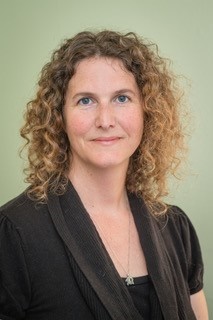
Mary J. Varher – Bailarina, coreógrafa, docente e iluminadora. Comenzó su carrera de bailarina en Guadalajara a los      14 años y a los 15 la de actriz, ahí fue donde tuvo su primer acercamiento a la iluminación. Posteriormente se mudó a la CDMX donde estudió la licenciatura en docencia de danza clásica en la Escuela Nacional de Danza Clásica y Contemporánea, en donde también recibe clases de producción escénica de parte de Jana Lara, teniendo así su segundo acercamiento a la iluminación y quedando fascinada por lo que puede lograrse con un elemento tan poco tangible. Hizo su servicio social en el Teatro Raúl Flores Canelo bajo la tutela de Ivonne Flores. Conforme sus necesidades fueron aumentando, continuó aprendiendo de grandes maestros como lo son Carlos Mendoza, Zanoni Blanco y Mario Flores. Ha trabajado en diversos proyectos como lo es “Conexión sonido-cuerpo-imagen” bajo la dirección de Antonio Isaac, en las compañías de danza “Proyecto Bara” “Spatio Ac Tempore” y “México Espectacular”, entre otras, ha participado como ingeniero de iluminación con artistas tales como: Genocidas del Misterio y Descartes a Kant. Actualmente se encuentra como jefa de iluminación en el Teatro Libanés del centro Libanés ubicado en la CDMX.


SoundGirls and SoundGym

Collaborate to support women in the audio industry

SoundGym and SoundGirls collaboration in order to encourage and support women and girls in the audio industry.

SoundGym members have been donating Pro subscriptions to support women in sound.

First Step Register for a free account at soundgym.co
Then in your settings use our school code CP8I4084H89
The second Step Fill out this form and we will provide you a year subscription.

Register Here


Career Paths in Film and Television Sound

Tour of The Bakery, Sony Scoring Sound Stage, Panel Discussion, Q&A, Networking and Mentoring Social.

You must register for this event to obtain parking permit and reservation

Register Here

Moderator: Anne Marie Slack – Executive of Organization Services Motion Picture Sound Editors (MPSE)

Panelists

Karen Baker – Supervising Sound Editor, Warner Brothers

Karen is a two-time Academy Award-winning sound editor. She also has won and been nominated for several Motion Picture Sound Editors awards as well as winning the BAFTA Award for Best Sound. Her credits include Skyfall and the Bourne films.

Onnalee Blank, CAS – Re-Recording Mixer, Warners Brothers

Onnalee was a ballet dancer before getting into audio. Since then, Onnalee has won 3 Emmys and 5 Cinema Audio Society (CAS) awards for her work as dialog and music mixer on Game of Thrones.

Karol Urban, CAS, MPSE – Re-Recording Mixer

Karol has worked on Grey’s Anatomy, New Girl, Station 19, Band Aid, Breaking 2, and #Realityhigh. She has a diverse list of mix credits spanning work on feature films, TV (scripted and unscripted), TV movies, and documentaries over the last 18 years. She currently serves of the TV Academy’s Governor’s Mixing Peer Group as well as on the board of directors for the Cinema Audio Society and is an editor of the CAS Quarterly publication.
Katy Wood – Supervising Sound Editor, Warner Brothers

Katy has worked as ADR supervisor on the recent films such as Sicario: Day of the Soldado and Guardians of the Galaxy Vol. 2. Katy’s career in sound for film has spanned the last 20 years. Katy has worked extensively in the United States, New Zealand (including the Lord of the Rings series), Australia, and the United Kingdom.


Do you have a passion for sound? Music sound… movie sound… all audio sound? Then you should consider a career in audio post production. Audio post-production careers cover a lot of areas including television, web, movies, commercials, live events, scripted shows and movies, documentary/reality, sports, and more.
Join us for a panel discussion and Q&A featuring some talented women working and succeeding in the world of post-production audio. The evening will end with a casual mentoring and networking session.
Below are just a few of the exciting jobs in post production audio.


Sound assistants or machine room operators prep materials and offer tech support to sound editors, mixers, and engineers.

Dialog editors focus on spoken word. A dialog editor listens to all of the mics for quality, smooths out transitions, fixes technical problems, and removes unwanted sounds from dialog when possible.

Music editors are responsible for adjusting music edits and finessing placement for music in a scene. A music editor also coordinates with the composer on a project, delivers all the music to the re-recording mixer, and often attends mixes (as the representative of the music department).

Sound fx editors (sound designers) are person responsible for non-language sounds. The sound designer has a sound effects library (a catalog of sounds) but also records specialized sounds when needed. He/she adds background ambience sounds and will embellish sounds like explosions, car engines, or guns. The sound designer also has to build sounds from scratch for visual effects or creatures that don’t exist.

ADR Mixers are responsible for recording actors in a studio. The actor performs the line while watching it on a screen and the ADR engineer adjusts microphones and watches for sync (how well the new recorded audio matches their lip movements on-screen). In some cases, ADR is recorded without picture (some cartoons, for example).

Foley mixers are responsible for recording certain non-speaking sounds. The Foley engineer works in a studio with a Foley artist, who makes the sounds while the engineer records it. The Foley team covers sounds such as footsteps, cloth movement, eating, touching or handling objects.

Supervising Sound Editors (or Sound Supervisors) oversees the sound crew working on a project (sort of like a manager). They communicate with directors, producers and picture editors about sound, supervises ADR sessions, and attend the dub mix. Sometimes there are multiple sound supervisors on a project and are split up by element. ADR & Dialog Supervisor, for example, only focuses on those two elements.

Re-recording mixers combine all the sound elements (dialog, voice-over, sound fx, Foley, and music) into one project. The mixer adjusts the levels of those sounds together (similar to the job of a live sound mixer or a music mixer). Sound mixers may work alone or in teams with each person focusing on different elements. After the re-recording mixers adjust for balance (looking at it technically and creatively), there will be a review with the producer, director, picture editor, or other members of the film crew to listen, give notes, and make adjustments.

Basic Sound Circuit Glossary

Have you ever read the spec sheet on your favorite piece of gear and wondered what the terms mean?  Are you interested in modifying your gear, but are intimidated by the jargon? Now you can have a cheat sheet for those little components that work hard to make electricity into music.

Active device – A component that uses an outside electrical signal to control current.  Transistors are generally active devices.

Attenuator – A signal dampening device that is often in the form of a potentiometer (pot), a variable resistor like a volume knob or fader, but can be as simple as a single resistor.

Capacitor – A passive component that stores charge, and is often used in the circuit like a temporary battery.  It is also used to remove unwanted DC electricity from a circuit. When repairing circuits this is the little demon that can cause harm even when the power is off.  It also has a tendency to short, and is generally the first component to go bad.

Diode – A component that only allows current to pass one way.  It is used in voltage rectifying (turning AC into DC). Light emitting diodes (LED) are another common application for these components.

Inductor – A passive component that stores magnetic charge, and resist changes in current.  It can be used to block AC electricity while allowing DC to pass through.

Load – Any device that you plug into your designed circuit.  It is the catchall term, especially when the circuit is in the designing stage.

Operational Amplifier – A voltage amplifier that uses an external DC voltage to produce a high gain output.  It often takes the difference between two input signals and outputs a single amplified signal. They are a key component in analog circuits, and have a variety of useful functions when combined.

Oscillator – A circuit that creates a periodic signal, often sound when energized, usually by a DC signal.  There are a variety of ways to build an oscillation circuit, but many of them function on the principle of creating a feedback cycle that self-sustains.

Passive device – A component that does not control the electrical current by means of an outside electrical signal.

Resistor – The simplest, passive component on your circuit board.  It attenuates or dampens the signal. Every circuit has a resistor in some form, and a circuit without any resistance is a short.

Transformer – A device that transfers electricity to another circuit using magnetically coupled inductors.  They can be used to step-up or step-down the voltage from one circuit to the next.

Transistor – An active device that can amplify or switch electric signals.  It is one of the key components in electronics. They are used in analog and digital circuits, and can be found in tube or chip form.


SoundGirls Expo in Orlando, Florida

The event was hosted by the Orlando SoundGirls Chapter and Full Sail University.

A while back a few of us were talking at one of our monthly meet-ups, and I asked everyone “what would you all like to see us do and what do you want  to learn” The responses were varied, but everyone agreed they wanted a day of training and networking with other women working the industry.

From those conversations, I started dreaming about what we could do. I made a few calls and sent some emails. I asked Karrie Keyes for some advice, and she suggested I reach out to some of the local manufacturers that had shown interest in supporting SoundGirls, and I did just that. One of the emails I sent was to Full Sail University to see if we could do some training at the university. Mark Johnson head of the Show Production program at Full Sail University asked me to come in for a meeting with them, and from there, things just started coming together.

One of the teachers for the entertainment business program, Monika Mason, said she was a member of SoundGirls and wanted to help any way she could. Mark suggested having a two day Expo with manufacturers, and Monika suggested we also have panels and discussions surrounding women in audio. I’ll be honest it was a big event to try to pull off and I wasn’t even sure anyone would attend as we are still a growing chapter that hasn’t been up and running for even a year yet. We had two more monthly meet-ups where we spread the word, and we all started talking about it on social media. Mark from Full Sail connected me with Chet Neal from Mainline Marketing who has a ton of reps under their belt. He asked me a lot of information and told me he wanted to see if he could get different manufacturers to come and have female reps and promote what we do. I thought that was a nice touch.

We started planning in January and landed on a date in July. July is a slower month for us in Orlando, so that worked well for others in the industry to be able to attend. We continued planning, talking, and dreaming. Manufacturers like Shure jumped on board and said they would send Laura Davidson, Analog Way jumped on board and said they would send Chrissy Spurlock, Allen and Heath jumped on board and said they would send Willa Snow (who happens to be the Chapter Head for SoundGirls in Austin, TX), and local SoundGirls supporters Clear Tune Monitors jumped on board and said they would send Sandra Cardona and Castor Milano. This was all coming together! I started to get excited!

One of the greatest things I saw while putting this all together was how everyone was so willing to say “yes” and “what can I do to help?” My company, B4 Media Production sponsored breakfast for the vendors and volunteers. Chet’s company,  Mainline marketing sponsored lunch for the vendors and volunteers. Mark, Monika, and Full Sail got us crew, a space on Campus to have the event, and also marketed to the students.

I reached out to some other women who have been in sound for years to have a panel discussion, an audio engineer for a local theater who also teaches audio and video at Full Sail, Susan Williams, a sound engineer from NASA, Alexandria Perryman, and myself did the panel discussion and we just opened it up for any questions. That was my favorite part of the entire event. We had a real discussion about real topics for over an hour both days. Everything from “how did you get your foot in the door?” To “what is a good freelance rate to quote someone.”  All the manufacturers joined in, and attendees all asked questions. We laughed, we were encouraged, and we learned so much from one another.

In addition to informative training sessions, and interactive gear displays, the event highlighted and supported the SoundGirls organizational mission, “to create a supportive community for women in audio and music production, providing the tools, knowledge, and support to further their careers.”

One of the SoundGirls I talked to this last weekend told me “I got emotional seeing all the women in one place learning from other women on the consoles and the Shure system and the IEMs and so on. She said she had always been one of the only girls in the field and she was so encouraged to be surrounded by women running top-of-the-line gear in the real world.” It was great hearing just how energized she was.

I still can’t get over how much fun we had and how inspiring it was. As a veteran of this industry for 18 years, this is the first time I was ever a part of something that helped raise us up as women in this field without it being a requirement or a political statement to do so. Professional women just being professionals, helping and inspiring up and coming women and helping them get a leg up on a ladder that took a lot of us a long time to climb.

I spoke with two other women at the (who found us via the social media events pages) veterans of the industry while at the Expo, one who has been a broadcast engineer for 20 years and one who has been a FOH engineer for 42 years and both women encouraged us to keep going and said, “if you do another one we will come and bring our friends and contacts too.” One of those ladies said to me “you know a lot of our generation is getting ready to retire, it’s great to see the future of the industry is in such great hands and I wanna help you ladies out!” One of the women said, “I wished when I was coming up we had something like SoundGirls, this is such an encouragement to me as a veteran to see women working together not back stabbing one another for the one spot available to women. She shared how men have always helped her, and how great it is to see us come together and unite with one another and the men supporting us to help raise us up not tear us down.” I said, “I to am encouraged by that!” She said, “are you doing another one next year?” I said, “I don’t see why we wouldn’t! This just proved to me that we need these kind of events as well as the monthly meet-up to be an encouragement to one another if nothing else “ she agreed and then said, “I’m going to reach out to all my contacts and help you make this even bigger next year.”

I would encourage all the SoundGirls chapters to try to have some sort of training or expo where you can invite new people and open discussions where you can share with one another. It was one of the most amazing productive things I have ever been a part of in our industry. We will definitely do this again next year! I am looking forward to what the future holds for us women in audio now.


Beckie Campbell is the owner of B4MediaProduction, a growing production company, supplying anything from small corporate set-ups and medium to large concert system set-ups. Being versatile, Beckie also works as an independent contractor to several companies around the US. Beckie’s experience  in the audio field is comprehensive, having the ability to work as Production Management, FoH/Monitors, and as a PA/System or monitor tech. Beckie is the chapter head of the SoundGirls Orlando Chapter. Read SoundGirls Profile on Beckie Campbell

SoundGirls and Girls Rock Camp

Orlando SoundGirls Susan Williams, Cristina Sigala, Roey Lee and myself Tzu-Wei Peng were invited by Rachael and Jamie O’Berry from Girls Rock Camp St.Pete to provide a workshop about basic live sound techniques and what to expect in production. We adjusted the content of workshops for different ages of girls covering all the positions behind a gig, signal flow, what is feedback and how to avoid it, to production dress code, tools and how to work as a team, etc.

Susan and Cristina are both great teachers and professionals in the industry; it was great having them at the workshop!

Hands on experience time.
Susan is teaching her how to patch a microphone and signal flow.


Cable wrapping skill is a must learned, no matter you are a musician or a production people. And Lilly is doing great on this!


Tzu-Wei is showing Audretta how to read the layout on a console and operate it.

The main objective of Girls Rock Camp is to promote self-confidence, creativity, and a sense of community amongst girls and young women through music.

This is our very first time got involved with Girls Rock Camp in Florida, and we had a blast! The girls were eager to learn and paid attention during the class. We have heard that they were taking things they learned from the workshop and putting it to use in their band practice. They are the future kick-ass women in the music industry!

Beckie Campbell started Orlando SoundGirls Chapter this year, and she has been organizing events and meet ups to encourage more women in Florida who are interested in sound to network. We will keep this community growing and empower more women in sound like we did with Girls Rock Camp!


Tzu Wei Peng works in Live Sound Production as a sound engineer and backline tech. She also works as a recording engineer and is an active member of SoundGirls.

Live Digital Audio in Plain English Part 1

Digitizing the audio

Digital audio is nothing new, but there is still a lot of misunderstanding and confusion about how it really works, and how to fix it when things go wrong. If you’ve ever tried to find out more about digital audio topics, you will know that there are a lot of dry, complicated, and frankly, boring articles out there, seemingly written by automatons. I’m going to spend the next few posts tackling the fundamental ideas, specifically as they relate to live audio (rather than recording, which seems to have been covered a lot more), in plain English. For the sake of clarity and brevity, some things may be oversimplified or a bit wrong. If unsure, consult the internet, your local library, or a pedantic friend.

So, how does audio become digital in the first place? The analogue signal travels from the source (e.g., a mic) into the desk or its stagebox, where it gets turned into a series of 1s and 0s by an analogue-digital converter (AD converter or ADC). AD converters work by taking lots of snapshots (called samples) of the waveform in very quick succession to build up a digital reconstruction of it: a method known as pulse-code modulation (PCM. Don’t worry about remembering all these terms; it’s just useful to understand the whole process. In over ten years of live gigs, I’ve never heard anyone discuss PCM, and I’ve heard some pretty nerdy conversations). Two factors control how accurate that reconstruction will be: sample rate and bit depth.

Sample rate is the rate at which the samples are taken! Not surprisingly, the more samples per second, the smaller the gap between them (sample interval) and the less information that is lost. Think of it like frame rate in film – a low sample rate is like a jerky, stop-motion video, high sample rate is like 48 frames per second fancy Peter Jackson stuff.

Bit depth is the number of bits (piece of information encoded in binary for electronic use – so a 0 or a 1) in each sample. 8 bits make a byte, and samples are set to capture the same number of bytes each time. They record the amplitude of the signal – more bits mean there are more discrete amplitudes that it can be recorded as (See figure 1), so the resolution of the soundwave becomes clearer. Bits are like pixels on a screen – low bit depth is similar to blocky, unclear footage, high bit depth is like high definition where you can see every detail. Back in the early days of computer games, there wasn’t much available memory in the cartridges, so all the sound was recorded in 8-bit. The low-resolution audio matched the pixelated video.

Figure 1: Bit depth vs. sample rate. Time is represented on the x-axis, amplitude on the y-axis. Source: https://www.horusmusic.global/music-formats-explained/ Original source unknown.

Looking at figure 1, it’s clear that the longer the bit depth and the higher the sample rate, the closer you can get to the original waveform. Realistically you can’t take an infinite number of infinitely detailed samples every second – even very high values of each produce an unmanageable amount of data to process, and costs too much to be practical. The Nyquist-Shannon theorem states that to reproduce a waveform accurately for a given bandwidth you need to take more than twice as many samples per second as the highest frequency that you are converting. If you take fewer samples than the highest frequency, an entire wavelength could happen between samples but wouldn’t be recorded. With between as many and twice as many, you still wouldn’t collect enough data about that waveform to differentiate it from all other frequencies, as is shown in figure 2.

Figure 2: Aliasing. If a waveform isn’t sampled often enough, it can be confused with other, lower frequency, ones.Source: Eboomer84 via Wikimedia Commons https://commons.wikimedia.org/wiki/File:Aliasing.JPG

For music, we usually assume the bandwidth is the range of human hearing: roughly 20Hz-20kHz. Twice that range is just under 40kHz, but the Sony corporation figured out that 44.1kHz synced up nicely with the video recording equipment they already had while leaving a nice margin for error, so it became the standard for recording film audio and CDs. Later 48kHz was adopted because it worked well with new digital video recording gear, and could reproduce even higher frequencies. Most digital mixing desks work on 48kHz or 96kHz.

Moiré patterns like this, or the weird lines when you take a photo of a screen, can be caused by the visual equivalent of aliasing. We have more in common with the video department than we might like to admit. Credit: “angry aliasing in a webgl fragment shader” by Adam Smith on flickr. https://creativecommons.org/licenses/

Why bother with 96kHz? No one can hear 48kHz, so what’s the point in sampling enough to cover it? It isn’t strictly necessary, but there are a few reasons to do it anyway. Firstly there’s the argument that, much like when choosing a speaker’s frequency range, frequencies above the limit of human hearing can still affect the overall waveform, and so ignoring them can change the resulting sound. Secondly, in digital sampling, higher frequencies can have a real and detrimental effect called aliasing. In figure 2 you can see that the AD converter would not be able to tell whether the points it’s recorded belong to a very high-frequency waveform or a lower one. It has been told what bandwidth to expect to see, so it will assume that waveform is the lower one, within the defined bandwidth. This causes it to be artificially added to the digital audio, making it sound… just not quite right. AD converters use low pass filters, called anti-aliasing filters, to get rid of these high frequencies but they aren’t perfect; they aren’t like a brick wall stopping everything above 20kHz (or whatever they’re set to) getting through, they have a sloping response just like other filters. Increasing the sample rate can clarify which waveform is which and take the pressure off the anti-aliasing filter, moving the highest frequency that can be accurately recognised higher than that slope. Thirdly, AD converters use complex mathematical formulae to take an educated guess at filling in the blanks between samples, known as quantisation. The more samples you have, the smaller the blanks that need to be filled and the more accurate that quantisation can be.

Increasing the bit depth also greatly reduces quantisation errors. Quantisation is basically rounding to the nearest amplitude point to smooth off the ‘pixelated’ waveform – more bits mean more options to find as close a point to the real value as possible. When this process is inaccurate, the guesswork introduces noise that isn’t present in the original signal. Increasing the bit depth reduces that guesswork, increasing the ‘signal to quantisation noise ratio.’ 24 bit, which is common in live digital audio, can give you over 120dB of dynamic range because it significantly lowers that quantisation noise floor, and so can give your true signal more space and reduce the likelihood of it clipping.

As ever, your sound will only be as good as the weakest link in the chain. You might never notice the differences between these options in a live setting as a lot of live gear is not sensitive enough to show them. This might be why there is so much more discussion about them in relation to studios. However, it helps to know what processes are at work, especially when it comes to troubleshooting, which I’ll cover in a future post.


Beth O’Leary is a freelance live sound engineer and tech-based in Sheffield, England. While studying for her degree in zoology, she got distracted working for her university’s volunteer entertainments society and ended up in the music industry instead of wildlife conservation. Over the last ten years, she has done everything from pushing boxes in tiny clubs to touring arenas and spends a lot of her life in muddy fields working on most of the major festivals in the UK. She has a particular passion for flying PA, the black magic that is RF, travel, and good coffee. 

Read Beth’s Blog

Film Score Mixing with a Team

I was recently at the Banff Centre for Arts and Creativity in Canada to supervise the film score mix of a three-part documentary series (by filmmaker Niobe Thompson and music by composer Darren Fung). We needed to mix over 100 minutes of music – nearly 200 tracks of audio – in about a week. Luckily, we had a large crew available (over ten people and three mix rooms), so we decided to work in an unusual fashion: mixing all three episodes at the same time.

Normally you have one mixer doing the whole score working in the same mix room. Even if he/she mixes on different days (or has assistants doing some of the work), chances are the sound will be pretty similar. It’s a challenge when you have ten mixers with different tastes and ears working in different rooms with different monitors, consoles, control surfaces, etc. What we decided to do was work together for part of the mix to get our general sound then let each group finish independently.

The tracks included orchestra, choir, organ, Taiko drums, percussion, miscellaneous overdubbed instruments and electronic/synth elements. It was recorded/overdubbed the week prior at the Winspear Centre in Edmonton, Alberta. The Pro Tools session came to us mostly edited, so the best performances were already selected, and wrong notes/unwanted noises were edited out (as much as possible). Our first task was to take the edited session and prepare it to be a film score mix session.

When mixing a film score, the final music mix is delivered to a mix stage with tracks summed into groups (called “stems”). For this project, we had stems for orchestra, choir, organ, taiko, percussion, and a couple of others. Each stem needs its own auxes/routing, reverb (isolated from other stems), and record tracks (to sum each of the stems to a new file). I talk about working with stems more in this blog: Why We Don’t Use Buss Compression.

Once the routing and tech were set, we worked on the basic mix. We balanced each of the mics (tackling a group at a time – orchestra, choir, organ, etc.), set pans, reverbs, sends to the subwoofer (since it’s a 5.1 mix for film). In film score mixing, it’s important to keep the center channel as clear as possible. Some tv networks don’t want the center channel used for music at all (if you’re not sure, ask the re-recording mixer who’s doing the final mix). From there, our strategy was to polish a couple of cues that could be used as a reference for mixing the rest. Once our composer gave notes and approved those cues, we made multiple copies of the session file – one for each team to focus on their assigned portion of the music.

Every project has its unique challenges even if it’s recorded really well. When you’re on a tight time schedule, it helps to identify early on what will take extra time or what problems need to be solved. Some parts needed more editing to tighten up against the orchestra (which is very normal when you have overdubs). When the brass played, it bled into most of the orchestra mics (a very common occurrence with orchestral recording). There are usually some spot mics that are problematic – either placed too close or far, pick up unwanted instrument noise, or too much bleed from neighboring instruments. Most of the time you can work around it (masking it with other mics), but it may take more time to mix if you need to feature that mic at some point.

What really makes a film score mix effective is bringing out important musical lines. So, the bulk of the mix work is focused on balance. I think of it like giving an instrument a chance to be the soloist then go back to blending with the ensemble when the solo line is done. Sometimes it’s as easy as bringing a spot mic up a few dB (like a solo part within the orchestra). Sometimes it takes panning the instrument closer to the center or adding a bit of reverb (to make it feel like a soloist in front of the orchestra). Mix choices are more exaggerated in a film score mix because ultimately the score isn’t going to be played alone. There’s dialog sound fx, Foley, and voice-over all competing in the final mix. On top of everything else, it has to work with the picture.

Film score mixing is sort of like mixing an instrumental of a song. The dialog is the equivalent of a lead vocal. I encourage listening in context because what sounds balanced when listening to the score alone may be different than when you listen to your mixdown 10 dB and with dialog. Some instruments are going to stick out too much or conflict with dialog. Other instruments disappear underneath sound fx. Sometimes the re-recording mixer can send you a temp mix to work with, but often all you have is a guide track with rough mics or temp voice-over. Even with that, you can get a general idea how your mix is going to sound and can adjust accordingly.

One unique part of this project was the mix crew was composed of 50% women! Our composer, Darren Fung, put it well when he said, “This is amazing – but it should just be normal.”

Equus: Story of the Horse will debut in Canada in September 2018 on CBC TV “The Nature of Things.” In the US, Equus will air on PBS “Nature” and “Nova” in February 2019. It will also air worldwide in early 2019.

Score Mixers: Matthew Manifould, Alex Bohn, Joaquin Gomez, Esther Gadd, Kseniya Degtyareva, Mariana Hutten, Luisa Pinzon, Jonathan Kaspy, Aleksandra Landsmann, Lilita Dunska

Supervising mixers: James Clemens-Seely and April Tucker

Karol Urban – Sound and Storytelling

Finishing the Mix

Karol Urban CAS MPSE (Grey’s Anatomy, New Girl, Station 19, Band Aid, Breaking 2, #Realityhigh) re-recording mixer, has built a diverse list of mix credits spanning work on feature films, TV series (scripted and unscripted), TV movies, and documentaries over the last 18 years. Describing herself as “part tech geek and creative film nerd” she enjoys using her language skills to work in both English and Spanish.

Karol holds a BS from James Madison University in Audio Post Production from the School of Media Arts and Design, is on the Board of Directors for the Cinema Audio Society (CAS), is co-editor of the CAS Quarterly Magazine, and serves on the Governor’s Peer Group for Audio Mixing for the Television Academy.

While she is incredibly passionate about telling stories through sound, technology, and the art of the craft, her favorite aspect of her position is “the team sport of filmmaking and television production.”

Her enthusiasm and energy for the job help her retain a high work ethic. She is known for being a hard worker in and out of the studio.

What was your path getting into sound?

I was sight impaired as a child and benefited greatly from surgery. I still, however, have problems with depth perception and naturally gravitate toward sound as my primary sense of distance and spatial location.

I studied dance, piano, and voice as a child and went to the Governor’s School for the Performing Arts for high school. It is a public, county-supported, audition-based high school with a focused curriculum on the arts.  I was fortunate to compose and record in my first recording studio there for the first time at the age of 13. I have been hanging out at one studio or another ever since.

Truthfully, I never wanted to perform. But sound and storytelling always fascinated me and held my attention steadfast.  And I have always obsessed over the movies and loved narrative television. When I discovered you could work in sound, not necessarily music, and in sound for picture, I knew what I was going to do with my life.  Every big move in my life I have made since has been to earn the next opportunity to tell a story through sound for picture.

I graduated high school a year early and went on to Virginia Tech at 17 where I took a lot of audio engineering classes. I transferred to James Madison University and majored in the School of Media Arts and Design with an audio concentration and minored in the music industry.  I left school with the clear goal of becoming a re-recording mixer.

If you had to pick your favorite type of content, role or project what would it be and why?

Personal Sound Assistant Sync

The collaborative aspect of what we do is to me the most precious, as a result, I love to be a part of larger teams as the dialog and music re-recording mixer. While it can be fun to do a single-person mix, especially if you have a very creative and collaborative producer or director, I am truly in heaven when I have a creative team behind me.  Bring in the party. I love to craft the story as a collective.

I don’t really have a favorite genre. I love action and sci-fi, and I adore thrillers. Police procedurals are fun. But comedy and drama can be amazing too. I really enjoy the diversity of genres. It widens my toolset. Basically whatever genre I haven’t mixed in a while is my current favorite. I really do love it all.

The creative problem solving and technical aspect of cleaning and repairing dialogue is enjoyable, but I also love the subtle use of dynamics, reflections, and frequency details in dialogue mixing which can help you feel as if you are eavesdropping on a secret or hearing someone lose their composure. It is sneaky in that good dialogue mixing is rarely noticed while it is being most effective.

I also studied classical piano, voice, and composition for many years. I love music. Being able to craft the music into the final mix is a real honor and joy.

That’s why the dialogue/music re-recording chair feels like home.

A lot of people in post-production sound specialize in a single role (like dialog mixer, sound designer, etc.). How has it helped your career to not focus on one particular niche? Or, do you think there is an expectation now to be versatile?

I began my career in the mid-Atlantic region of the East Coast.  There are people who work in post sound are often asked to perform all the roles (Foley recording, narration/ADR recording, Foley/ADR cueing, dialogue editorial, sfx editorial, and re-recording mix).  Even if you were not working on a project as a single person, you and your team would often change roles to suit the schedule or client preferences. It is a different market for sure.

But, when I first got to Los Angeles, folks would advise that being a jack of all trades does not make you qualified to be a master of anyone. When I looked inside myself, I found that I was truly a dialogue-centered individual and macro thinker. I am an extrovert.  I also love the subjective discussions and explorations that occur on the dub stage. All these aspects helped me excel as a dialogue and music re-recording mixer.

But, over the last eight years, I’ve noticed that the ability to diversify is becoming more valued in LA. In this way, I may have chosen the perfect time to come to LA, with a clear, specific goal on what I prefer to center my focus on, but enough diverse experience and knowledge in multiple fields of post sound to be usefully skilled. I gladly switch roles when needed; a change is often good for perspective.

Can you talk about transitioning from working in DC to Los Angeles? Since you didn’t have a job lined up in LA, how did you decide it was time to move?

I am a true believer in the concept that knowledge is power. I had reached a point in DC where I was feeling a little stagnant.  I wasn’t learning as much, wasn’t experimenting as much, and wasn’t challenged enough. I was struggling to find opportunities where I could make myself wonderfully uncomfortable with a challenge. I was searching for mentors.

I found a short, small contract in LA and left a job of 10 years with crazy benefits, paid vacation, and a very decent salary to seek out the challenge. Finding a gig, even one as short as a 3-month contract, while on the other side of the country seemed like a sign.

At the time I was frightened that I wouldn’t be capable of competing in such a large and complex market.  But I knew I would never stop wondering “what if.” Once a few months passed, and I took a couple of professional punches to the face, I recognized I had learned a ton and began noticing a difference in my work. I got excited. There is no other option other than success. Moving to LA has proven to be the most wonderful adventure I have ever had in my life. I love it here. I love the market, the challenges, and the ever-changing, seemingly endless possibilities. There is so much to learn and grow from here. I am grateful.

Can you walk us through an average work week for you? How many hours are you working, spending outside the studio on other work-related demands, etc.?

The amount I actually mix depends on the projects I am on. Sometimes it is 16 hour days and six-day weeks other times it might be two days a week for 9 hours a day. Production schedules move erratically and the day is not over when it is scheduled to end or when you are done… it is over when the client feels whole, and they are done.  My life is a continual game of scheduling Jenga. The terrain is insane. It is awesome and exhausting.

When I am not in the chair mixing, I am still working. Mixing is only part of the job.  I try to be a resource for others as much as possible. I give back to my community through volunteer service in the MPSE, CAS, & TV Academy, edit the CAS Quarterly publication, meet with industry folks new to town, and of course, establish new relationships in the community.  It is a rare day off when I don’t meet up with someone, watch a tutorial on new technology, or volunteer on a project. I keep an ear open for any industry positions available and try to recommend people in my network that I know can tackle the duties and forward their careers.  It is all-encompassing, but I love what I do and I simply never tire of the hustle. Don’t get me wrong, there are days or weeks where I am truly exhausted, but I never dream of doing anything else. I want to be the best I can be, and I feel like I have incredible joy ahead of me in that I have much more growing to do. I am not even close to done.

What are the differences between mixing documentary/reality and scripted?

Depends on your project and your client.

There are certainly workflow and logistical differences, and there also tends to generally be a larger expectation of detail and desire for the school of perspective mixing in scripted media. But the core of what I do is really only made different by the client’s desires and the needs of the film/project.

I certainly will repair, clean, and fit the spec. But the true value in having a re-recording mixer is that you have a professional who is a life-listener and skilled craftsperson. We study and develop sound as a storytelling tool that can steer the minds of the viewers. I certainly have had projects of all genres that demand and expect narrative storytelling in their mix.  I have also had many projects of all genres that look to me for technical audio triage and to emulate their temp track. It is less genre-specific than project-specific.

Can you explain how a 2-person mix works?


Karol and Steve Urban on the movie BFFs

There are many ways to work. It depends on the team, the technology, and the project’s scheduled mix time. In the end, however, the goal is to make sound decisions and become four hands and two minds working with the singular focus of intensifying the story through sound. It really is a wonderful way to work.

On a 2-person mix, what are the challenges of working with a mixer you haven’t mixed with before?

Sometimes you don’t know the perspective or tastes of your partner when you are newly paired or the tempo at which they need to work. You have to learn the sensibility of your partner as soon as possible.  Luckily most folks who mix in multiple-seat dub stages are very collaborative and have the ability to morph to the style that works with the team and serves the director or producer. I have certainly been made aware of other ways of looking at things that ended up being the right choice for the project and client at the end of the day.  This difference of perspective can be a complexity and/or a gift.

You’ve mixed over 100 episodes of Grey’s Anatomy. What are the challenges?

We suffer from a lot of set noise as there is a lot of busy scenes with lots of background action…IV stands, gurneys, and of course, paper medical gowns.

You have a reputation for having an incredible work ethic, drive, and energy level. How do you maintain that level of focus? How do you not burn out?

Wow.  That’s a crazy question.  It blows me away that I have a reputation at all. I just keep swimming.

I have had a very specific and pointed goal for a very long time to be a re-recording mixer. It started as soon as I knew the job existed. I knew it was what I was supposed to do. I never took a lot of electives in school or tried a lot of different things professionally because this goal was what I knew I wanted specifically.  I knew it was competitive and I knew I wouldn’t generally look like or come from the same places that a lot of my peers would. I grew up in a town that simply doesn’t have a substantial market for this craft. I knew it was a different world and I was going to have to break in.

Practically every extracurricular activity, club, or group I have participated in has been focused on trying to be in this world. Sound makes sense to me and communicating by putting people in sound spaces is pretty amazing and evocative. I am always trying to make myself worthy and valuable to the opportunity in front of me.

What skills are necessary to do your job?

You have to be at least mildly obsessed with detail, technology, and storytelling. Our jobs are not sprints; they are marathons. You will watch a reel or episode over and over and over again for days, sometimes weeks.  You must remain present and have the ability to fall back into the perspective of a first-time viewer but also switch quickly to the mind of a mixer. You have to be able to see (and feel and hear) the effect of what you are doing while also seeing possibilities.

It is also very helpful to like people and have no ego. It can be hard sometimes because you have to emotionally experience something in order to create and having that emotional response rejected can feel personal. But in the end, you are completing the vision of your director or producer and creating their film/show. You should understand that a person may be inspired by your suggestion at times but may also feel something completely different. Notes are not criticism. They are opportunities.

What are your favorite plugins?

I am loving the Pro Fabfilter Q2 and De-esser right now.  I also love my McDSP SA-2 and NF575. I am still a sucker for Audio Ease’s Speakerphone, and PhoenixVerb is pretty amazing.

What technology are you excited about right now?

I love the new immersive formats. I really feel a naturalness when I hear an environment in Atmos.  And I love the panning precision and full-range reproduction.

What have been the challenges for you as a woman in the field?

It is getting so much better. I have definitely found myself in moments of overt creepiness and absolute inappropriateness. But as the years have gone on whether it be because we as a society are becoming more progressive, other women have paved the way, or because I have become more established, it has gotten much, much better. I just keep forging ahead. I don’t give that crazy a lot of focus. The best thing I can do for equality is to be successful as a woman and be a force for equality by treating everyone around me the way I would want to be treated.  I try to lift others up who share the love of what we do, and I take no mind in their gender, race, or creed.

I still have to discuss my gender as an anomaly from time to time, almost always on a new job and have to occasionally educate people on my knowledge and fandom of a diverse range of genres such as action, horror, and sci-fi. Because as a woman I am often thought of as a strictly romantic comedy or drama person.

But I do have to take care to go out of my way to get to know my co-workers and let them know they can be comfortable around me and that they can be confident that I am an assertive individual. People don’t walk on eggshells around me because I will let someone know if I am uncomfortable or disagree. I hold no grudges and pull no punches. I have been set straight once or twice in my life when I have said something I thought was harmless that had no presumptions behind it that accidentally affected someone in a negative way. We all need to be open to learning from one another without fear or pride. I do believe most people are intrinsically good.

It is paramount to respect your coworkers (male and female alike). While I am aware of situations through the years where I have not been hired because I am a woman or where criticism has been very blatantly gender-biased, I know I am also here in my dream job because of all the wonderful folks, the majority of whom are male, who have given me a shot, had confidence in my abilities and welcomed me into the fold.

It is a weird landscape, ladies.

What advice would you give women in our field?

Be assertive, persistent, and consistent. Respect the contributions of everyone around you from the valet service to reception to account management to your engineer. Show respect and act respectfully. Expect the same in return.  Be humble but also speak and act with confidence and kindness. Some folks really do not recognize what they are saying. Some are uncomfortable or culturally insensitive without knowledge of their actions. Ignorance does still exist. Some folks lack perspective and understanding without intending ill will.  Many people who are considered notoriously challenging that I have worked with were not an issue with me at all because if I had an issue, I stated the issue, explained my issue, asked for a change in behavior, and then dropped it from my memory and became a friend and advocate to them. And while I am not so ignorant or smug as to say it doesn’t matter what others think or do (There is real malice in the world.), I do believe social transformation happens individual by individual. We can be seeds of change by keeping our decisions untarnished by the poor actions of a few and giving each new individual in our world the opportunity to be wonderful.

I believe in equality.  I can’t wait to work in a world where we don’t have to support each other as minorities but we can just support competent, talented artists and craft people and diversity will naturally take place.

If you were to guide someone trying to get into post-production today what advice would you give? What would you advise to find work and build a career?

Don’t wait for someone to give you permission to do what you want to do.  Even if it is for little or no money, get in there. Until you have a professional-level skill to offer, you need to be doing what you can to acquire it. Participate in your community, seek mentors, seek other folks coming up, collaborate, create, rise, and lift up others. Remain open to life lessons. The universe has a lot more opportunities to reward you with when you put yourself out there and participate.


X