Empowering the Next Generation of Women in Audio

Join Us

Striving for Excellence


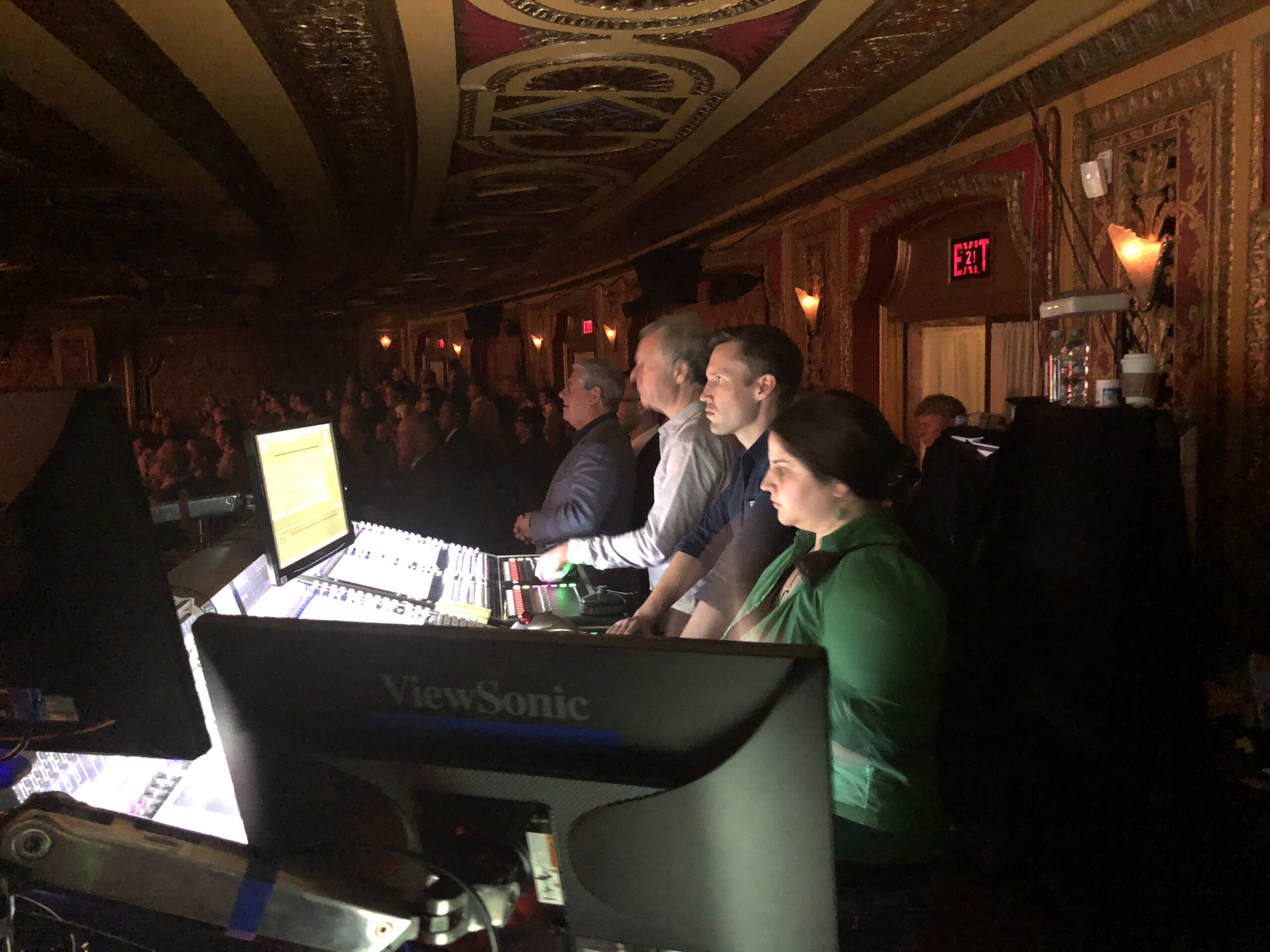
I love to show this picture when people ask what my job is like, especially in tech. It’s from one of our first previews of the Miss Saigon National Tour: I’m at front of house (FOH) with Mick Potter and Adam Fisher, the sound designer, and the UK sound associate respectively, next to me on the console. The executive producer, Sir Cameron Mackintosh, watches the show on the end of the row, keeping a sharp eye out for any aspect that might need a bit of polish. On my other side is the US sound associate, Josh Hummel, who’s taking the picture, so it’s a full house in every sense of the phrase. There’s nothing like mixing a scene for maybe the third or fourth time with multiple people — all of whom have the ability to fire you — within a five-foot radius. And while you’re mixing, the producer is making suggestions to the designer who is making adjustments and talking with the associate, who is also making adjustments while giving you notes to help you refine your mix. Oh, and please, don’t miss any pick-ups.

It doesn’t stop once you leave tech. Granted, FOH becomes less crowded once the directors, producers, and designers are gone, but there are now thousands of people in the seats and they also expect perfection. They will happily be your harshest critics if they feel like the experience isn’t up to snuff, and you don’t have much of a safety net: actors can cover when they forget something, but there’s no way to ad-lib a fader up after you’ve missed the line.

Until you’ve done a few shows and learn to trust in your abilities as a mixer, it’s easy to let your nerves get the better of you. This is a common problem in many careers; a musician has to be “on” for an audition, an athlete has one chance to break a record or win a medal, a businesswoman has one meeting to nail a presentation. However, there is one major difference. Those jobs have one thing: one project, one match, one audition. As a mixer, it’s every day, 8 shows a week, week after week that you have to spend at a level of peak performance.

Mixing has and always will be a high-pressure job, but if you’re able to accept that and work with it instead of fighting it, you and your blood pressure will thank you. Sometimes it’s as easy as finding a scene or a song in the show that you can jam out to or get carried along with the sweep of the music. Other times it’s finding some way to let go of adrenaline or calm yourself down before your start. I know people who will take a walk around the theatre if they need to work off some nerves. Personally, I like a game or an easy crossword puzzle that keeps me occupied and gets my brain going, but I can put aside at a moment’s notice.

Most of the time, the stress comes from falling into the trap of expecting perfection. Achieving a “perfect” show depends on millions of variables and is therefore close to impossible. I was listening to a podcast called “How To! with Charles Duhigg” where he had Dr. Green, a peak performance psychologist, talk about dealing with stress, specifically related to performance. Green said at one point, “There’s a difference between perfectionism and striving for excellence.” That phrase resonated with me and my approach to mixing. Mixers rely on a unique ability: they have to constantly strive and expect nothing less than complete accuracy, but if they do make a mistake, they must also have the capability to forgive themselves and move past it almost immediately, otherwise, it can derail the rest of the show. “Striving for excellence” is exactly what we do. You walk up to the board with the commitment to do you very best every single time, but allow yourself enough grace to acknowledge your mistakes if they happen and move on.

Sometimes that commitment is your best defense against nerves. If you bring that mindset of striving for excellence every time you step up to the console, it’s just another show. It doesn’t matter if a producer with a net worth of upwards of a billion is pacing around FOH, or if it’s just you left to do your thing: you always mix the same show. I’ve seen the opposite with the actors a lot. There are always a few that consistently do warm-ups, but when a creative or someone important comes to the show, suddenly the dressing room hallways are filled with a cacophony of vocal exercises. Backstage you can see the ones that have been doing the show they’re supposed to the entire time: they’re calm and collected; conditioned by weeks of practice. Those who choose to mark their singing for most shows, then decide to go all out for this show are the ones huffing and puffing; they didn’t realize that it was so much work to dance and sing like they’re supposed to. (Plus it’s an absolute treat for the mixer to have to play “Guess the Level” when actors decide to actually sing out for the part they never do, or option up an octave instead of the normal note.)

When mistakes happen—whether due to surprises or not—one of the biggest, and least productive, traps a mixer can fall into is dwelling on that mistake. Your brain only has so much bandwidth to devote to a task at hand and, as soon as you start using up processing power to berate yourself over a missed pick up, you limit what ability your brain has left to focus on the show. Believe me, you’ll have plenty of time to beat yourself up when the show is done if you want to.

The best method I’ve found is to acknowledge it. My involuntary reaction ends up being a sharp head jerk and a pissed off grunt, but then I put myself right back in the show. Take a moment, but only that, then focus on the next line, the next band move, the next scene. Don’t give yourself an opportunity to linger. It’s not easy at first, because that’s exactly what you’ll want to do, but with enough repetition, it will become a habit.

Once the show is over, then you can do a replay of what you missed. It shouldn’t be to blame yourself but to do a technical analysis and take stock of what happened in the moment. Did you grab the wrong fader? Were you focusing on something or someone else? Did you lose your place and fumbled while getting back on track? When you know what caused the mistake, you can take steps to help yourself the next time.

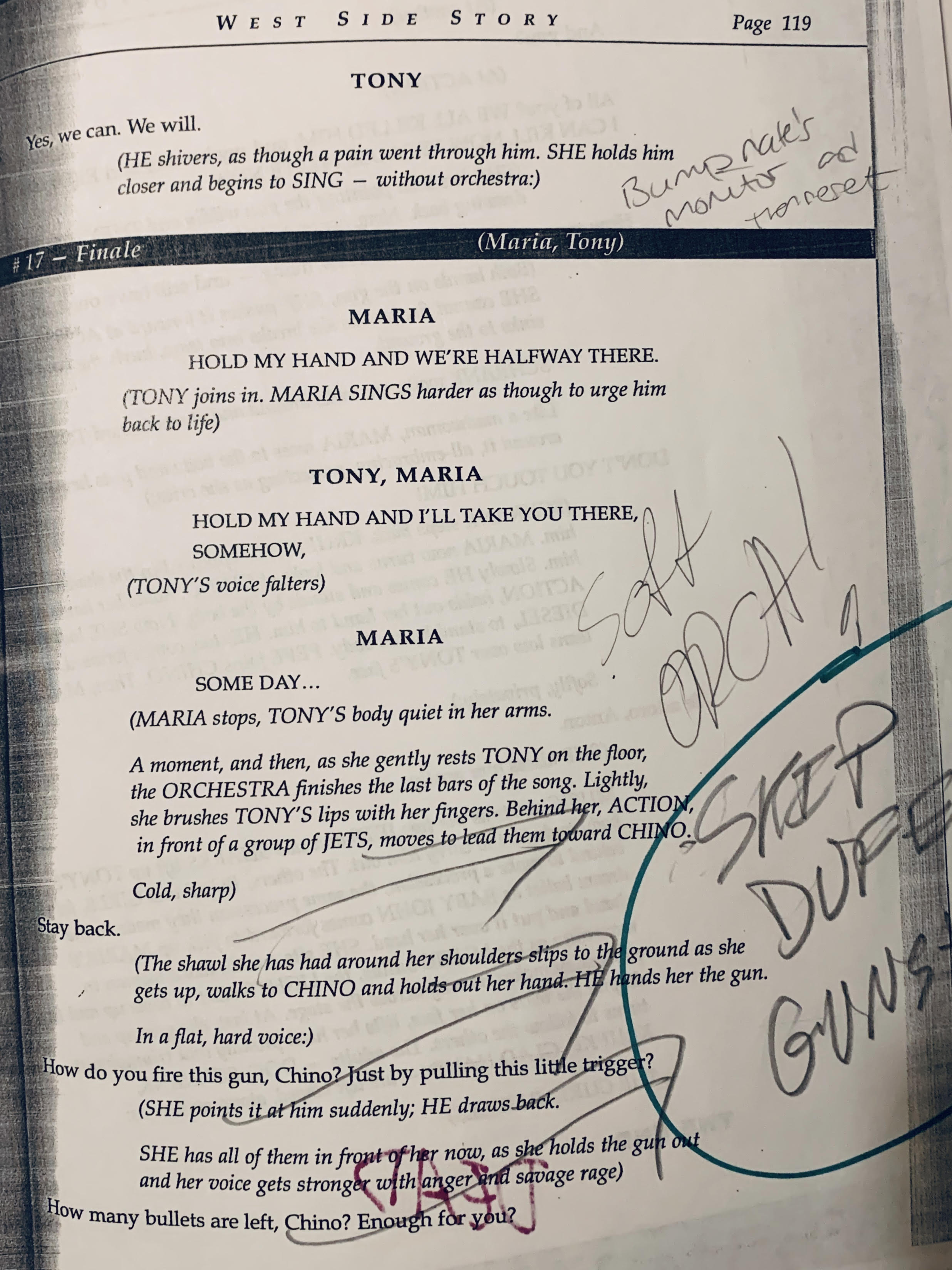
One of my more glaring mistakes was the press opening of the tour for Miss Saigon. It was a tense, quiet scene between Chris and his wife, Ellen, and I grabbed the wrong fader and, instead of Ellen comforting Chris, another woman was loud and proud talking offstage about her dress for the opening party. Again, mentally curse, and move on. After the show, I highlighted that line and made sure I absolutely could NOT miss the fader number was in my script. That served as a reminder for me every time to make sure I threw the right fader.

On a less obvious note, in Mean Girls, one of the lines changed from when I first learned the show, and “I noticed you failed your last few quizzes. Is everything okay?” became just, “I noticed you failed your last few quizzes.” For some reason that the last sentence was so ingrained in my head, that there were multiple times where I forgot it was cut and had to scramble to get the next fader up in time. To solve that, I made a concentrated effort to consciously remind myself to bring up the next fader on the word “few” and, with show after show of that constant thought, it eventually became habit.

In both cases, the mistakes (or close calls) were singular events, blips that didn’t snowball into larger catastrophes, but being able to keep your cool under pressure can help you have less of those blips in the first place. When Les Mis had the official press opening for the tour, it was just like the Saigon preview at FOH, only more people. Designers from every department, directors, production management, producers, you name it, if there was an open space, it wasn’t empty long. And despite their best efforts, they’re never completely quiet: pencils scratching on notepads, fingers tapping notes on tablets, whispers back and forth. Even with all the distractions, I focused on the job at hand and had a solid, clean show. Afterward, one of the production managers told me a few people had mentioned to him that they were impressed that I could be so calm with so many eyes peering over my shoulder. You don’t always get the feedback, but people are watching and they’ll notice how you handle yourself in a stressful situation.

The best thing you can do for yourself is to walk into every show with clean feet, or “leave your baggage at the door.” Did you miss a line or two in the last show? Were the dynamics not what you know they should have been? Did you have an absolutely flawless performance? Great. That was the last show. This is a new day and a new show. Come to it without resting on your laurels or harping on yourself for the mistakes of yesterday; each new show is another chance to get it right, another chance to feel that satisfying rush as everything comes together. It’s unfortunate, but sometimes the stress of our jobs can discourage aspiring mixers before they even have the chance to learn how to master it. Remember to be patient and show yourself some grace, especially when you’re learning. Good things take time.

 

My Take on Line-By-Line Mixing for Theatre

Theatre sound

Since I had started as a live sound engineer for theatre, I didn’t really pay attention to other mixing styles. Line-by-line mixing made sense to me and was my natural technique. It wasn’t until I started working with musical artists and bands that I realized I needed to change my approach. I was not a live sound music mixer, I am a theatrical mixer, and there was a learning curve for me. Line-by-line at the most minimal means you are opening/closing mics for each person coming on and going offstage. Mute groups, DCA/VCA, and automated scenes REALLY help when you have a ton of radio mics. Mixing for an orchestra plus 15-25+ wireless mics were the norm for me while in college (& working professionally later).

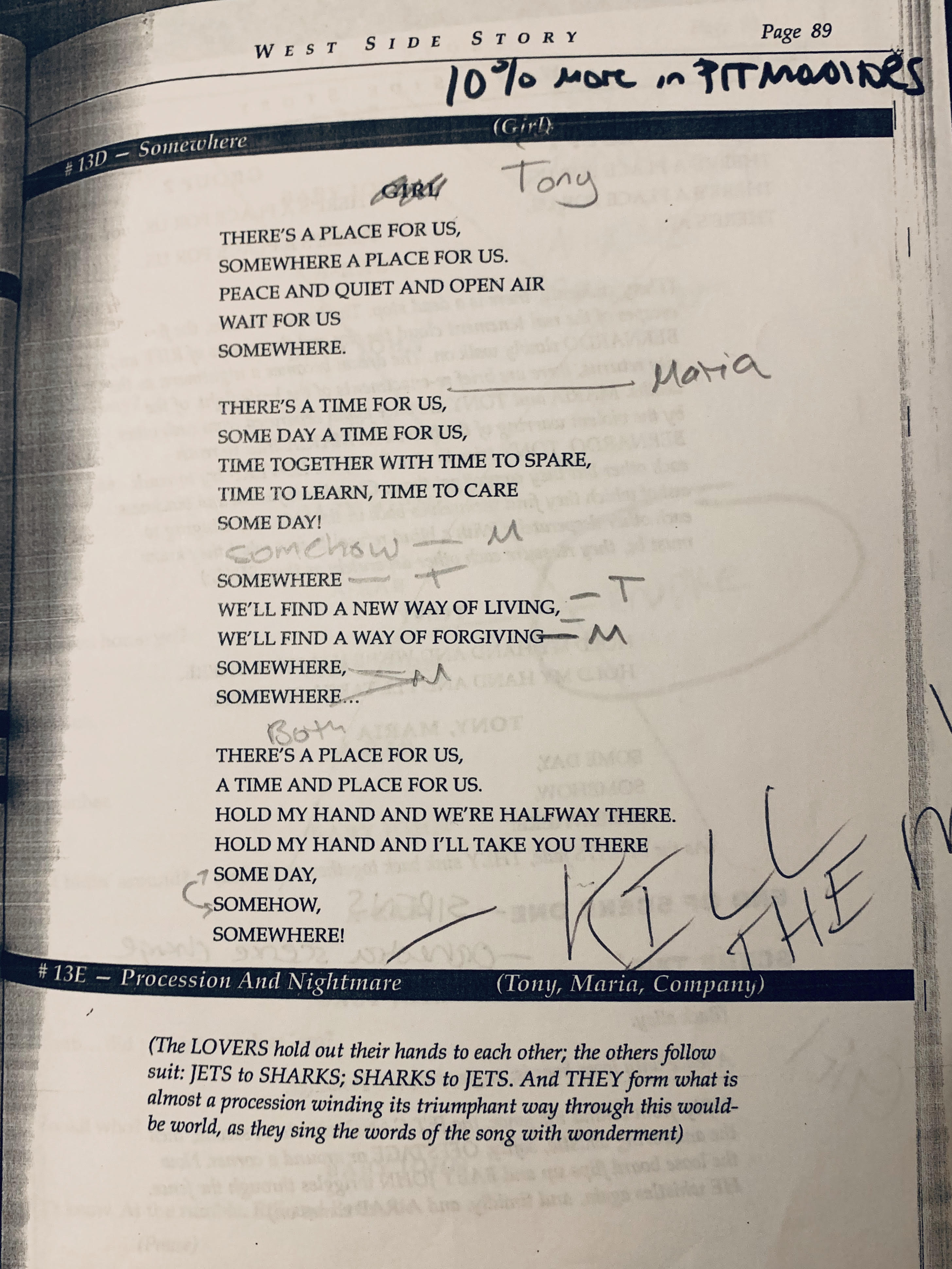
We were taught to read a script a minimum of three times. Script analysis was integral for sound design, as it forces academic research. The first time you read a script is the most important as you are forming first impressions and understanding of the story. The second read-through was sometimes done with other designers, actors, director, etc. but I felt they often left out the tech crew. The second was to solidify the understanding of the themes, subjects, and tonality. The third and subsequent read-throughs of the script are for writing SFX cues, entrances, and exits (if not in the script OR noting they will go off and immediately return), orchestral solos, and grouping of singers.


In rehearsals and the tech week process, there was always a lot of “hurry up and wait” while we all made adjustments. This was a valuable time for note-taking; if my script was thorough and accurate, I would be able to focus more on the mix rather than who the hell is onstage right now. An Audio Engineer for the theatre is a lot of things: FOH, foldback, A2, RF Tech, systems engineer, sound effects operator, comms, and so many other little things. Keeping organized was the most important because we have a lot of shit to handle.

Once you know who is doing what on stage, which solos or special parts the orchestra has (which is why attending the sitzprobe is integral for success, ( In opera and musical theatre, a sitzprobe (from the German for seated rehearsal) is a rehearsal where the singers sing with the orchestra, focusing attention on integrating the two groups, it is often the first rehearsal where the orchestra and singers rehearse together.) You can build your show file and program the console. The Stage Manager will be able to call your SFX cues (and sometimes even run them) so I make notes and place trust in my SM. I learned how to mix on an Allen & Heath ML4000 (?? TBH it was over 13 years ago), so my brain is focused on having as much as possible in front of me. Layers are where I hide things that don’t need to be actively mixed, as I do not like switching between layers quickly.

My Console Setup

Once everything is labeled and organized, I start with assigning VCAs/DCAs (Showing my experience/age). Wind, strings, rhythm, etc. will each get a DCA if it’s a larger orchestra. Orchestra overall gets a DCA. Ensemble (separated men/women), and quartet/trios should also get their own DCA. Some of these may be assigned to a group instead of processing, which will depend on the situation. Mute groups are your best friend, it takes some time to program them on older consoles, but it is worth the effort. Depending on your digital console, recording scenes or screenshots while in rehearsals would be the best option. You can always make small edits later if your timing isn’t quite perfect. From there, it’s all about the notes from rehearsal. Line-by-line was the most logical method for theatre & I still think this way during productions.


Interview Tips for the Theatre Technician


Interviewing for a new job has always been a source of anxiety for me.  I did not choose a behind-the-scenes career just so I could talk to strangers about myself, but it seems that the job interview is a necessary evil.  Over the years, I’ve learned that interviewing doesn’t have to be scary. You can prepare for an interview without feeling like you’re cramming for a final, and there is a bit of a formula that can be applied so that it doesn’t feel like you’re shooting in the dark or starting from scratch with each interview.

Admittedly, it’s been a while since I’ve had an interview.  That’s the good part of being in a residency for many years.  I am, however, in the position of interviewing several people every year, and I have definitely learned what makes me happy and what turns me off after an interview.  Even if an applicant has a good resume, it’s hard to justify moving them forward if they don’t interview well. It’s true what they say about first impressions, and the bigger the applicant pool, the more memorable an applicant needs to be.  No pressure.

Step one:  Do your research.

A very typical interview question is, “Why this company.”  You need to be able to answer that, and my pro tip here is, make the answer be about the company.  If you tell your interviewer that you’re just trying to find a job or that you apply to every job you see posted, that can be a mark against you.  They also do not want to hear that their company is a great stepping stone along the path to the job you really want. The theatre world is a very small one, and if you put some feelers out, you might find that you know someone, or have a friend of a friend who has worked with this company.  Pick their brain, and find out how their experience was. What aspects resonate with you? Also, the internet is your friend. Use it to learn everything you can about the company. They will likely have their mission statement posted and probably an “about us” section on their website. Do you have like views?  How so? These will be great talking points. If you don’t agree with their mission or don’t like how the company operates, stop right there and reconsider applying for this job.

Step two:  Know your resume.

Your interviewer will most definitely have your resume in front of them, so that is going to be a source of questions from them.  I know I have several different resumes I use depending on the job I’m applying for, and they don’t all contain all of the same information.  I don’t know how many times I have referenced something from an applicant’s resume, and they didn’t know what I was talking about, because they couldn’t remember the specific resume they sent me.  If I’m applying to several companies at once, I will immediately print out the resume I submitted and staple it to a sheet of paper with the company’s name on it. Looking at the same thing the interviewer is looking at will help keep your head clear when you’re searching for just the right answer to their questions.  Btw, that blank sheet of paper is also the thing you should use to write notes on.

Step three:  Be yourself.

Something about your application materials drew this company to you, so don’t mess it up by trying to sound more important, or professional, or what have you.  These people are very likely just looking for a human that is good at their craft. That’s you. Be a human. It’s ok to laugh or crack a joke here and there, that stuff lets the interviewer know that you can be relaxed in high-stress situations.  Be careful, though; you don’t want to push this point. Don’t go out of your way to sound extra funny, or extra cool, or just plain extra. It’s awkward and uncomfortable to listen to, and it’s also not an accurate representation of who you are. So again, just be yourself.

Step four:  Create a stress-free environment.  

Many of my interviews are conducted over the phone, and I have heard it all, so let me start by saying that a busy loading dock, the subway, your car in rush hour traffic, the airport, the bar (yes, I have called someone for an interview while they were at the bar) are not considered a stress free environment.  If it’s hard to hear you because of background noise, or if you’re driving in and out of cell service, or I guess if you’re wasted at the bar, it is going to be very frustrating for your interviewer, and they are likely going to skip some questions just to be finished with that phone call sooner, and you’re going to miss out an opportunity to show this company how awesome you are.  Also, make sure you have plenty of time available before and after the interview. Your interview could be 20 minutes, or it could be 2 hours. It’s also possible that you might get a call a little early, so be prepared, and just block out a good chunk of time. Choose a quiet, good phone service area. If you’re doing a video interview, look at the world around you. Are your interviewers looking at your dirty laundry or watching cartoons in the background of your camera?  “No” should be the answer here.

Step five:  Take notes.

Before your interview, write down some questions you have about the company or the job.  Even the question, “Do you have any questions for us” is a test. They want to know that you have standards, and you’ve done your homework.  Indifference is not a good quality to have in an interview, or in life, really, so having some opinions about how you would like to potentially be fit into this new company is a good thing.  Also, write down the questions you are asked. If you get a little rambly or need a second to think about the questions, having them written down in front of you will help you keep your thoughts collected.

Step six:  Be polite and gracious.  

Manners go a long way.  This company has gone into a lot of trouble to work you into their busy schedule, so thank them for their time at the end of the interview.  I think a follow-up email within the hour thanking them again is a really nice touch, and I definitely always take note when I get that email.  Also, remember that your interviewer works for the company for which you are applying, so it stands to reason that they probably like the company.  Don’t bash it during your interview. I know this seems like strange advice, but I wrote it because I’ve encountered it. Also, this person is also probably a department head or production manager, so keep that in mind, and don’t tell this person everything you hate about production managers.  Trust me; it won’t go over well.

Step seven:  Stay engaged, not pushy.  

You have no idea what your interviewer’s schedule is like, so don’t expect to hear from them the next day.  It’s fair to ask during your interview when they expect to get back to you and if you’ll hear back whether or not you get the job.  If the date that you were expecting a call has gone by, feel free to follow up with a friendly email, but I would suggest stopping at one email.  Not everyone gets back to applicants if they didn’t get the job, so if you haven’t heard anything even after you sent a follow-up email, you probably have your answer.

All in all, confidence, genuine personality, and organization are going to be your best lines of defense during your interview.  If you feel good about how your interview went, then remember what you did, and make it your base formula that adjusts based on the company.  If you didn’t get the job, but you truly thought your interview went well, don’t blame the interview. There are a myriad of reasons why you might not have been chosen, and you don’t want to psych yourself out before the next interview, so just know that you have done your best work, and you can do it again.


Notes on American Idiot


I knew it was a good show five minutes into the first run-through. The LSMT cast was energetic and tight, and the show itself was amazing. Great. There were some alarming moments in the run-through; the cast threw themselves around, and there was a bit of singing while lying on the floor. Then there was the fan, a huge fan blowing into the cast while they were singing. This presented some issues to solve regarding radio mics. (more…)

X