Empowering the Next Generation of Women in Audio

Join Us

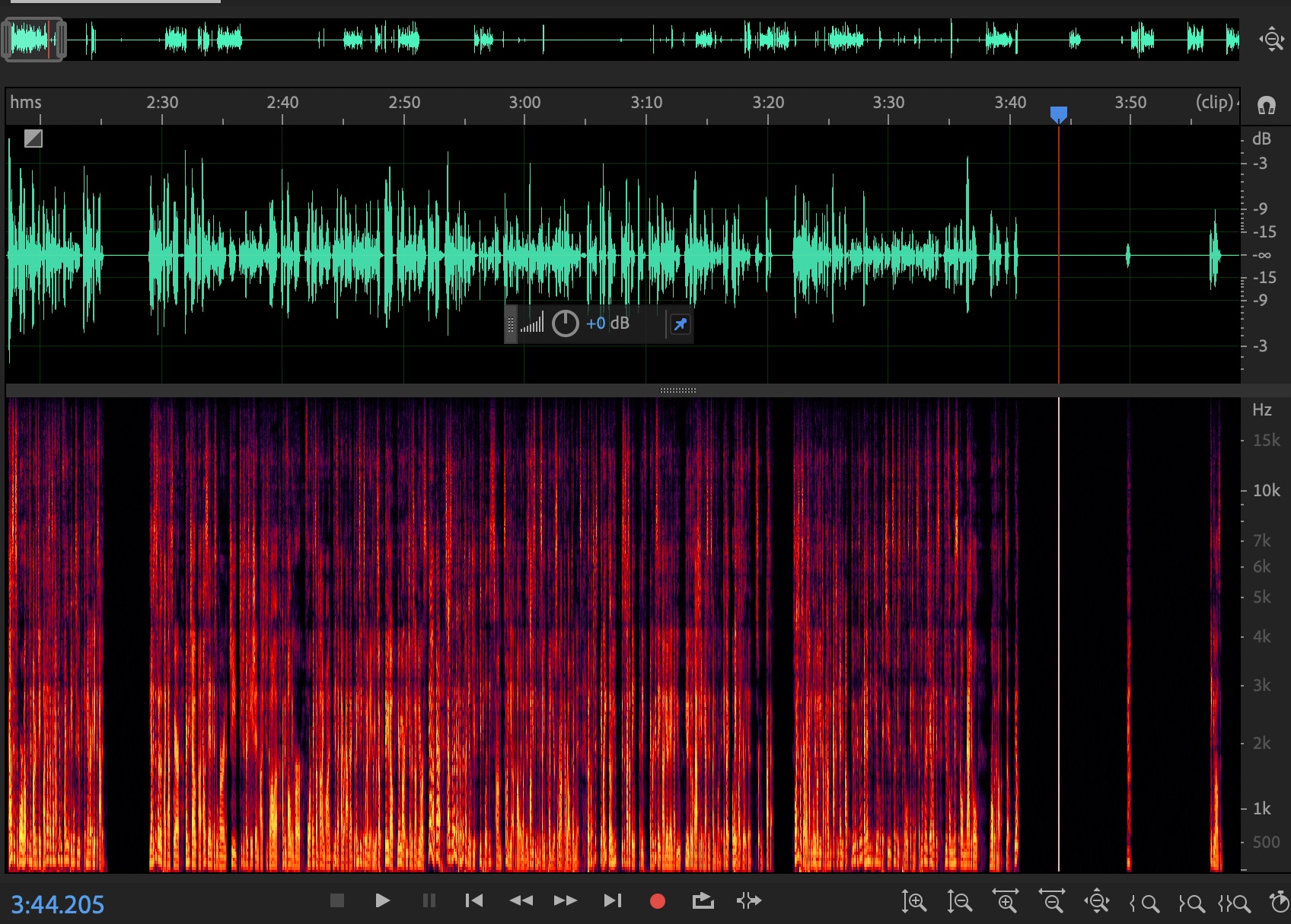
How to Avoid Over-Editing Podcasts

You may have heard the basic tips and tricks of podcast editing, or editing any kind of speech audio. Remove ‘ums’ and ‘ahhs’, breaths, mouth noises, pops and clicks, silences, etc. But sometimes we can take it too far and actually end up over-editing a podcast in pursuit of the perfect sound (tip number one: there’s no such thing as perfect). Here are three things I’ve learned which have helped me avoid doing just that.

Don’t get rid of all ‘ums’ and ‘ahhs’

Yes, they can be very distracting, particularly if there are too many of them. If they’re littered throughout a person’s speech and are of no value to what’s actually being said, go ahead and get rid of them. But I really think it’s okay to leave the occasional one in. Maybe the person in question speaks quite fast and it’s difficult to remove an ‘um’ without cutting into the next word. Maybe they’ve started an answer with an ‘um’ because they’re considering what they’re going to say, or they’re reacting in the moment to an unexpected question or statement. There can be various reasons, but if it isn’t excessive (as in every other word), there’s no harm in a couple of ‘ums’. Sometimes we have to make allowances for someone’s natural speech patterns.

Don’t get rid of all breaths

You may have heard that this is the thing to do, but I personally would argue against it. Again, if someone is a really heavy breather and it’s a very distracting sound, by all means, remove it (or at least quieten it down a bit). But for the most part, it’s perfectly natural to hear someone take a breath while speaking, so much so that we usually don’t even notice it. So if it’s not overly noticeable, there’s no need to take it out. If you are removing a breath, just make sure you do it by reducing the dB rather than deleting it, or the edit might sound too sharp. It all comes back to the idea of trying not to mess too much with people’s natural speech patterns. You want your audio to sound as clean and polished as possible, but you also want your guests to sound like human beings and not robots.

Silence can be a good thing

Everyone has different editing styles, and those styles will suit different types of podcasts. Some may be more fast-paced, others more reflective. There is a tendency for some editors to take out every pause or every bit of silence, but decisions like this should be made based on the pace and style of the podcast. One of the most valuable pieces of advice I ever got from a tutor was that silence can be an incredibly important storytelling device. If you’re editing a particularly emotive or thought-provoking conversation, leaving in pauses gives the podcast more breathing room and allows time for the listener to really process what they’re hearing. So before you take silence away, always stop to consider what it might add.

Was Your Radio Degree Worth It?

Since graduating with my Master’s in 2016, one of the questions I’ve been asked most often is: “Was it worth it?”

It’s a perfectly valid question, and it’s true that the vast majority of people I know working in radio and podcasting didn’t actually ‘study’ it at university. I did, though, and my answer is always the same, without hesitation: “Absolutely. And I’d do it all over again.”

My undergraduate degree was in multimedia, but I always knew I wanted to go down the audio path. I got involved in student radio from day one and loved it. I tried to get some industry work experience during the summer break between my second and third years and naively thought radio stations would throw open their doors to welcome me in. I thought wrong. Most were full and didn’t have space for any more interns for the foreseeable future; others never got back to me. It was then I realised it was going to be much harder to break into radio than I’d originally thought.

Around this time, I also realised there was so much more I wanted to experience. I’d been focusing exclusively on presenting music shows, but my interest in documentary was growing and I wanted to learn the ins and outs of speech radio. I began to think seriously about pursuing postgraduate study in radio and found what looked like the perfect course in the UK: a Master’s in Radio Production at Bournemouth University. What really sold it to me was the opportunity for students to run their own online radio station, which would be a platform for all work produced throughout the year. I applied, had an interview, and luckily was accepted.

My year in Bournemouth was everything I hoped it would be and more. Being an academic qualification, there was of course an element of theory, but this all contributed to my knowledge and understanding of the radio industry. On the practical side, we had 24-hour access to state-of-the-art studios and recording gear. As a small group of just seven students, we had the chance to collaborate closely on creative projects and experiment with different roles within production teams. Our lecturers had years of experience working for some of the most respected broadcasters. I was incredibly fortunate to have a BBC producer as my Master’s project supervisor, and thanks to the many industry speakers who came in to offer advice and wisdom, we made some amazing contacts. It felt like a really tight-knit, supportive community in which everyone’s interests and aspirations were nurtured.

The experience also benefitted me as a person. It gave me confidence, life skills, and friendships that endure to this day. After many years of not considering myself a ‘beach person’, I also discovered that I loved living by the seaside.

Finding a job after graduation can be a challenge no matter how well-prepared you are. It certainly was for me, but I believe my MA helped me get my foot in the door quicker than I otherwise would have. Not only that: it helped me stay there. When I started working professionally in the industry and applying the skills I’d learned at university on a daily basis, I could see just how important it had all been.

When it comes to having a career in this field, academic qualifications are definitely not a necessity, but they can be a great option. It really depends on your individual situation: whether or not you can afford it, what you think you might gain from it etc. It’s not a route that suits everyone. But for me personally, it was the best year of my life.

Audio vs Video Podcasts

Most people, when they think of the word ‘podcast’, think of audio. However, there are a growing number of podcasters who are using video as their main medium, with audio largely taking a backseat.

Is this something we need to embrace in the future? Or is it okay to be an audio traditionalist?

In recent months Spotify has branched out into video podcasting through its Anchor platform, giving creators options beyond YouTube. This has sparked further debate within the industry about whether video is going to become an essential part of podcast consumption.

Call me old-fashioned, but I don’t think it will

There are certainly a lot of successful and popular video podcasts out there, and good luck to them. If having a visual element helps people engage with the content, or is key to getting your story across, that can only be a good thing. But when it comes to a straightforward panel or interview show, does video really add anything to the experience that audio alone wouldn’t be able to offer? I may be biased, but there is something special about audio storytelling. For years, people have been predicting the demise of radio drama (especially when television first began to increase in popularity). Yet it’s still going strong in many parts of the world, and now we have fiction podcasts too. Audio-only stories have never been more popular.

That being said, the word ‘video’ is appearing in more and more podcast producer job adverts. But I can’t help thinking that, by requiring video editing skills from applicants, employers might potentially miss out on hiring a great audio producer who doesn’t necessarily have those additional skills. If video is your main area, then fine — but if you’re primarily making audio podcasts, with video as bonus content, then it could be an issue.

I recently discussed this subject with a client. She was of the opinion that audio is far more important than video when it comes to podcasting, not least because of how easy it is to listen while engaging in other activities like running, going to the gym, cooking or tidying the house. So many of us schedule our podcast listening time during such activities, not to mention morning and evening commutes or even winding down before bed (when the last thing we might want to do is stare at a screen). Sometimes we just want to close our eyes and shut out the rest of the world, relying on only our ears.

One downside of focusing on video is that — not always, but often — sound quality is compromised. I’ve seen podcasters turn what was originally a Facebook or Instagram Livestream into an audio file, and that’s where you really notice the shortcomings. As a college lecturer of mine used to say: an audience will be more likely to forgive poor video with great audio than great video with poor audio. Wherever possible, it’s always better to record remote interviews through dedicated platforms (like Riverside or Zencastr, for example) which allow you to get the best possible audio quality and take advantage of separate tracks (you can use these for video too, so there really are no excuses!).

Video podcasts look like they’re here to stay, so it’s a debate that will go on and on. But ultimately, for most audiences, I think audio will remain the go-to.

Normalising Workplace Conversations About Mental Health

I’m filling out a job application and get to the optional question about mental health. I hesitate, unsure whether to answer. I know it’s a company’s way of making sure they’re attracting a diverse range of applicants. Yet part of me is still worried about not being hired if I disclose the fact that I have an anxiety disorder.

It’s not that I’ve actively tried to hide it; I’ve simply spent most of my life “powering through” in the mistaken belief that anxiety was something I had to put up with because “that’s just the way I am”. I was incredibly high-functioning, at least on the surface. In a work setting, that translated to being very organised, always meeting deadlines (quite often earlier than expected), and juggling a lot of things at once. People never suspected anything was wrong (why would they?) and would use words like “reliable”, “efficient”, “trustworthy” and “hard-working” to describe me. Meanwhile, behind the scenes, I would spend days worrying about the tiniest mistake or the idea of a project being anything less than perfect (perfection, of course, doesn’t exist). I’d have constant bouts of impostor syndrome, or exhaust myself by taking on too much work for fear of what people might think if I turned it down. The worst part was that I knew I was in real danger of burning myself out, but I didn’t know what to do about it.

The answer was therapy, a journey I started a year ago, which coincided with my decision to go freelance. It’s taught me some invaluable strategies for managing my anxiety and helped me develop a healthier relationship with my work. Yes, people may still describe me as reliable, efficient, trustworthy, and hard-working (which is good, of course), but now I know I can be all of those things without sacrificing my mental health. If I do find myself slipping back into old habits, I remind myself of a particular time in my life when I was severely sleep-deprived and taking on way too much work. It took a heavy toll on my mind and body, and I don’t ever want to go there again.

I recently had the pleasure of appearing as a guest on the wonderful Daughters of Change podcast with Marie Sola, on which I also happen to work as an editor. We recorded an episode on anxiety (which you can listen to here) and it’s probably the most candid I’ve ever been about my own experience. It was really cathartic for me, and I also hope it helps someone else who may be going through something similar. I feel very strongly about breaking the stigma that still surrounds mental health, and having open and honest conversations about it is one of the best ways we can do that. It’s vital that these conversations also happen in the workplace.

A recent survey conducted here in Ireland by the mental health charity See Change found that  70% of workers were concerned about disclosing a mental health issue to their employer, while 40% said they had witnessed stigmatising behaviour at work. I think my own past reluctance to mention my anxiety in a professional setting stems from the fear of being seen as less competent. I’m sure there are those who feel someone with anxiety couldn’t possibly survive (or indeed thrive) in a high-pressure career like live radio, for example. When you’re in the throes of it, anxiety makes you want to retreat into your comfort zone and “play it safe”, so nothing and nobody has a chance of hurting you. I’ve been there many times. But ultimately, I chose this career path because I’m passionate about it and I know I wouldn’t be happy doing anything else. And, in spite of the nagging doubts and uncertainties, I know I’m good at it. Determination to achieve my goals is what drives me when things feel scary, and having anxiety doesn’t mean I can’t be successful in life.

Next time that question comes up on an application form, I hope I won’t be so hesitant about answering it. Maybe someday, there won’t be any reason to fear being honest about our mental health in the workplace.

Women in Audio — Recognising All Roles

March 8th marked International Women’s Day. Social media, as ever, was buzzing with details about conferences and events celebrating women’s achievements in various fields.

One such event caught my eye. It was a panel discussion about the barriers and challenges faced by women in audio (particularly radio and podcasts), and how we can make the industry more inclusive. This, of course, is a topic that’s very close to my heart. But I was dismayed to see that every woman on the panel was either a radio DJ or a podcast host. There wasn’t a single producer, editor, engineer, or sound designer. No technical or “behind the scenes” role was represented.

Of course, it’s important to hear the perspectives of on-air talent. All women in audio, regardless of their specific roles, are fighting for recognition in a male-dominated industry. But this is exactly why we need to hear those other perspectives too. In focusing exclusively on hosts/presenters, the organisers of events like these are only giving one side of the story. They’re overlooking women in other audio roles whose experiences and insight are equally valuable, which is ironic considering women in audio as a whole tend to get overlooked anyway, hence the need for conversations about inclusion in the first place.

That’s not to say women with hosting experience can’t also produce or edit. I started out presenting radio shows in college and have also narrated documentaries and hosted podcasts. However, my first love is producing/editing/mixing audio. It’s what I trained to do during my Master’s in Radio Production, and it is my job first and foremost. I know of many women in radio who juggle presenting and producing, and plenty of podcasters who edit their own content. But it would be nice if more of these panels included women who are not the voices we hear on the air, but rather the silent superheroes making sure what we do hear sounds amazing.

I see parallels with women in the music industry. As I sat down to write this blog, I had just finished reading a wonderful book by Christine Feldman-Barrett called A Women’s History of the Beatles. In one particular chapter, she writes about how, for women pursuing careers in music in the 1960s, singing was considered a more “feminine” (and therefore acceptable) occupation than playing an instrument or songwriting. To this day, I think we have a tendency to overlook women musicians (who don’t sing) in favour of women vocalists (who don’t play instruments). It’s a similar story in radio and podcasting. Those whose voices we can hear usually receive more recognition than the people working behind the scenes.

It’s a problem that also applies to the radio industry generally, regardless of gender. I’ve come across many people who believe that the presenter just turns up and does the show. They don’t seem to realise how much work goes into putting it all together, and how many other people it often takes to make that happen. The question I was asked most frequently about my work in radio was: “Do you have your own show?” When I explained what I actually did, their eyes would glaze over.

In my experience, it’s hard enough for producers, editors, sound engineers, etc. to be recognised as it is, without also being excluded from important discussions about women in the industry. We’re all doing equally important work, whether we’re behind the mic or not, so let’s celebrate that.


Making a Radio Documentary During Lockdown

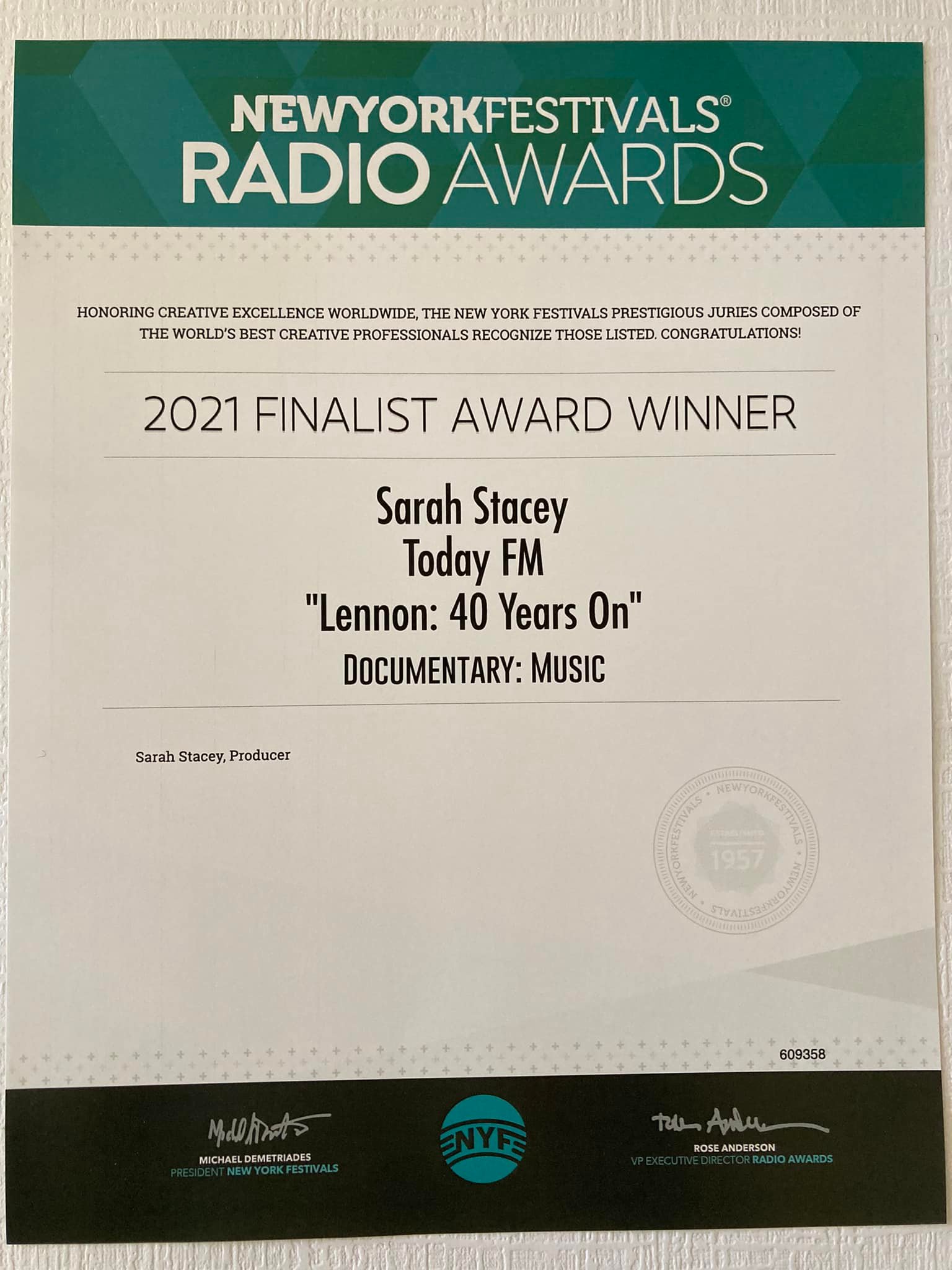
A few weeks ago I got a nice surprise in the post: my finalist certificate from the New York Festivals Radio Awards for a documentary I made called Lennon: 40 Years On

The documentary was broadcast in December 2020 to mark the 40th anniversary of John Lennon’s senseless murder in New York. It was, therefore, eligible for entry in the 2021 awards and ended up placing as a finalist in the Music Documentary category. I was absolutely thrilled. For radio makers, it doesn’t get much better than having your work recognised by some of the world’s most respected industry professionals. For me personally, it was also an incredible honour to be considered alongside some major broadcasters — especially for a programme that was made entirely remotely, by myself, during lockdown.

It wasn’t supposed to be that way. As a huge Beatles fan, I first came up with the idea for the documentary one day in 2019, while musing that next year would be John Lennon’s 40th anniversary. I already knew at that stage what I didn’t want to make: a profile of Lennon’s life and career (there are plenty of those already), or an in-depth account of the murder itself. Instead, I wanted to find a way to reflect on how that tragic event had influenced his legacy, and how fans understand him today. I decided to look particularly at how he has been remembered in his birthplace of Liverpool and his adopted city of New York. The plan was to visit both cities to record interviews on location.

But then COVID happened.

When working from home became a requirement, I had to decide whether or not to carry on with the idea. I’d done so much research that it seemed crazy to give up. I spent the next few months contacting contributors and arranging interviews, then recorded all of them remotely. Zencastr was my lifesaver. I was able to set up a free account with eight hours of recording time per month, safe in the knowledge that each audio file was being recorded locally without the pain of internet connection dropouts and poor quality. Sure, you still have to hope your guest will have a decent microphone, but this is all stuff you can talk through with them beforehand.

Then came the process of listening through to hours’ worth of audio and highlighting the parts of each interview I would potentially use. Once that was done, I scripted and recorded my narration and began editing everything together. There was quite a bit of archive audio to work with, as well as music. Mixing took several weeks. As everything had been done remotely, with no access to studios or different locations, I wanted to devote plenty of time to getting it right and making sure it was as close to broadcast standard as possible. There were times during that six-month period when I didn’t think it would all come together. But it did, and by the time the 40th anniversary arrived, it was ready to air.

Fast forward 15 months and people I don’t know are still contacting me to tell me they’ve listened and enjoyed it. I’m not normally one to pat myself on the back for a job well done (though I’m trying to get out of the habit of being too hard on myself), but in this case, I don’t mind saying I’m incredibly proud of what I achieved with this documentary in spite of the challenges. I’m also beyond grateful to everyone who contributed, or who simply offered words of encouragement along the way. In retrospect, the pandemic probably forced me to be twice as productive. Being at home all day long instead of commuting to and from work meant I had more time to focus and get things done.

It was a massive undertaking, but I’m so glad I did it.

Link to the documentary: https://www.todayfm.com/podcasts/the-paul-mcloone-show/lennon-40-years-on

Is It Ever Okay To Work For Free?

Anyone who has worked in a creative industry, including audio, has probably been asked at some point to work for free.

We’ve all seen the ads for unpaid internships that promise a wealth of experience, but with no guarantee of a permanent position at the end. Then there are the “jobs” that crop up on LinkedIn and seem perfectly fine until you get to the bottom of the listing and see the words:

“We can’t afford to pay anyone right now.”

Is it ever acceptable to expect someone to work for free?

When I was a student, I was eager to gain any bit of experience I could get my hands on. I’d spend each summer emailing radio stations and production companies, hoping for a chance to shadow for a day at the very least. At that early stage in my audio journey, I didn’t care what was involved as long as it meant getting a foot in the door. Immediately after graduating, when jobs were hard to come by, I was still open to the idea of unpaid work — within reason. There were opportunities I turned down because the cons outweighed the pros. Transport, accommodation, and the ability to feed yourself all have to be considered, and sometimes it’s just not worth the added stress.

I understand the desperation students and graduates often feel, because I’ve been there myself. I also understand that plenty of companies take on interns with a view to hiring them later. They offer people a chance to learn and grow, and to feel like a valued member of the team. But there are still too many out there who exploit graduates. They’re not interested in hiring someone; they just want free labour for as long as they can get it, before moving on to the next person. This kind of attitude usually tells you everything you need to know about the work culture at that company.

Internships are one thing; free labour masquerading as a full-time job is another. I’m not including volunteer work when I say this. People who get involved in community radio, for example, do so on the understanding that they’re volunteering, and that can be for a variety of reasons. But you should always be wary of anything that appears to be a 9-5 job with a detailed list of responsibilities, but no pay. I was browsing LinkedIn recently and came across a London-based production company looking for a podcast producer. The job looked great on the surface. Then came the kicker: “Unfortunately we have no budget right now but hope to be able to pay our employees in the future.” But are you even an employee if you’re not getting paid? I thought to myself, surely no one will apply for something that requires them to live in one of the most expensive cities in the world, with no time for other (paid) work, and therefore no means of paying rent or bills? I was wrong. The role had over 160 applications when I last checked.

The podcast world can be especially frustrating in this regard. More people than ever before are starting their own podcasts, and as many of them are hobbyists, they understandably don’t want to spend money on a professional editing service. But I am increasingly noticing professional podcasters who decide to take on an editor, yet are unwilling to pay them. Maybe it’s because they think it’s a quick and easy job — but if that were the case, they’d just do it themselves in the first place, right? No matter what the reason is, if they are earning money from it themselves, their editor should be too.

To sum up, there are circumstances where it’s okay to work for free — as long as you’re not being taken advantage of. If you’re just starting out in your career and you stand to learn something that will genuinely help you progress, that’s a good thing. So is returning the favour for a friend who may have previously helped you out, or volunteering your time and skills for an organisation or cause you care about (if you can afford to do so). But if you find yourself putting in long hours and a lot of effort for no reward, it’s probably best to reconsider your options

More on Should You Work for Free

Should You Work For Free?

Should You Work a Gig for Free for Exposure?

Going Freelance In The Middle Of A Pandemic

In May 2021, I left my radio job of four years to start freelancing full-time. I’d been editing podcasts for a couple of different clients for the past month or two, but now I was starting to pick up more work, and it felt like the right time to make the leap.

Unlike a lot of people, I was fortunate to remain in employment throughout the pandemic. I’d been working from home for over a year (an interesting experience when your job is in live radio). But I was ready to move on, for a combination of reasons. So when new opportunities presented themselves, I couldn’t say no.

I won’t lie: I was terrified. As someone who suffers from anxiety (more on that in a future blog post), I was plagued by that voice in my head telling me I was crazy to go freelance. What if the work dried up? What if I wouldn’t make enough money? And in the middle of a pandemic! What was I thinking?

My fears weren’t entirely unjustified. I did have a few quiet weeks early on. But as I soon learned, things can change very quickly, and before you know it you’re juggling two or three different projects at once. Seven months in, I still have times when I’m not very busy. But this isn’t always a bad thing, especially coming off the back of a particularly hectic period where you feel you’ve barely had time to breathe. It helps you take a moment to refresh and refocus.

I think the biggest worry for a lot of freelancers is a lack of stability. It’s true that this is a risk you take, but if you’re able to build a strong client base, it really helps. Don’t underestimate the power of a good recommendation. If you do a great job for someone, chances are they’ll work with you again (or even give you a regular gig) and will be only too happy to let someone else know about you, which in turn leads to more work.

Despite my worries about the negative side of freelancing, I’ve also found that there are a lot of positives. I really enjoy having the freedom to choose my own hours. Some people might struggle with structuring their day and resisting the temptation to procrastinate, but luckily I’ve always been pretty good at motivating myself to sit down and get things done. I will freely admit that I am not a morning person. That’s not to say I can’t or won’t get up early for work (I used to have a 5 am start on Sundays) but I certainly don’t enjoy it. So I don’t worry too much about the 9-5 thing unless a project specifically requires it. As long as I’m getting the job done to the best of my ability and communicating clearly with my clients at all times, that’s the most important thing.

The freedom to choose not only which hours you work, but which projects you work on, is another positive. But there are also challenges. I’ve had to think long and hard about my boundaries this year. When you’re just starting out in the freelance world and trying to build your client base, it can be very tempting to accept everything that comes your way. Maybe the money is really good, or it’s a chance to gain experience in a new area that will look great on your CV. But what if you’re already juggling a lot of projects and barely have any free time? You might be afraid to turn down work in case that client doesn’t offer you anything else in the future, or you might just be keen to make a good impression and show them what you can do. But sometimes it is good to say no. If you take on too much, you will simply be incapable of giving your best to each project. The work itself will suffer, and so will your mental health. We’ve all experienced burn-out, and we should try to avoid it wherever possible. Only say yes if you think you can realistically manage it.

Setting boundaries is also important when it comes to dealing with existing clients. I’ve been very lucky to work with a lot of brilliant people, but occasionally you do come across someone who thinks nothing of asking you to edit an hour’s worth of audio at a minute’s notice, or sending you WhatsApp messages about work at three in the morning and expecting you to respond. Thankfully a rare occurrence, but it does happen. Many people feel unable to switch off from work even when they’re not freelancers. They might stay late at the office or answer phone calls and emails after going home for the day. But when you’re freelance, these issues are often magnified. There are people who expect you to always be available, at all hours of the day and night, and who want everything yesterday. And there are others who set unrealistic expectations, such as consistently giving you badly recorded audio which you simply cannot fix. Being open about your boundaries and the ways you will and won’t work is important. That way, clients know exactly what they can expect from you, and what you expect from them. If they’re not willing to respect those boundaries, you can walk away and save yourself a lot of stress. If they are willing, you’ll have a healthy and harmonious working relationship.

In hindsight, I think the decision to go freelance during a pandemic was more of a blessing than a curse. This whole situation has forced businesses to consider remote working, and so many more people have also started podcasts in the last two years, which means more work for freelancers in the industry. I’ve been working with clients from around the world from the comfort of my own home, which I never would have dreamed of pre-pandemic. And it’s not just podcast editing; I’ve also recorded and sound-designed audio drama, made radio promos, and even appeared on shows myself as a contributor.

I’d only been doing this for about a week when people started asking me when I was planning to return to a “stable” job. It occurred to me that many people outside the industry still don’t really understand freelancing and just how common it actually is. Then again, I also used to get asked how much longer I was going to do “this radio thing” before having to get a “proper” job. So I guess being employed by a radio station is now considered stable after all!

I don’t know what the future holds; none of us do. But for now, I’m enjoying the diverse range of projects I get to work on and the freedom to pursue what interests me.
X