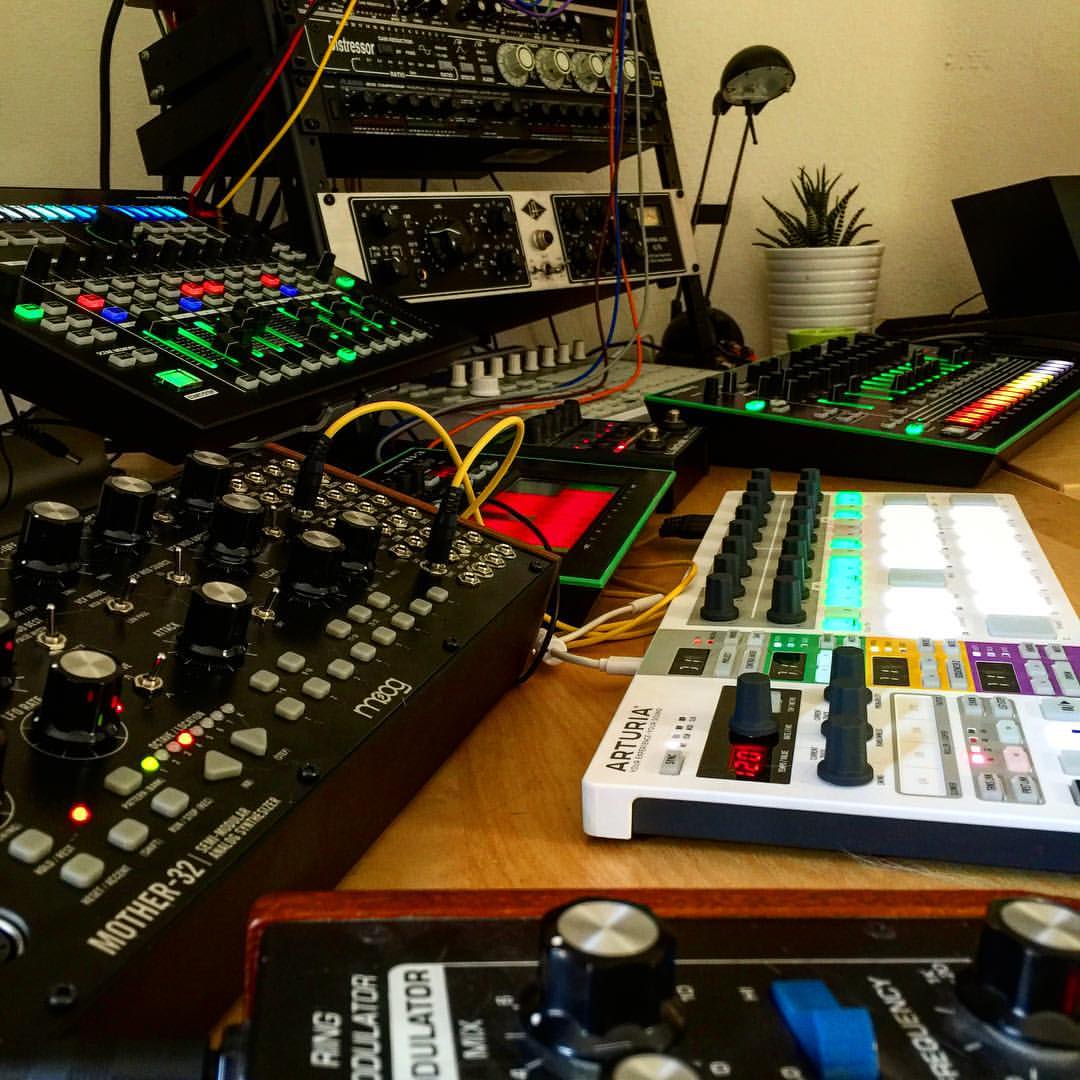
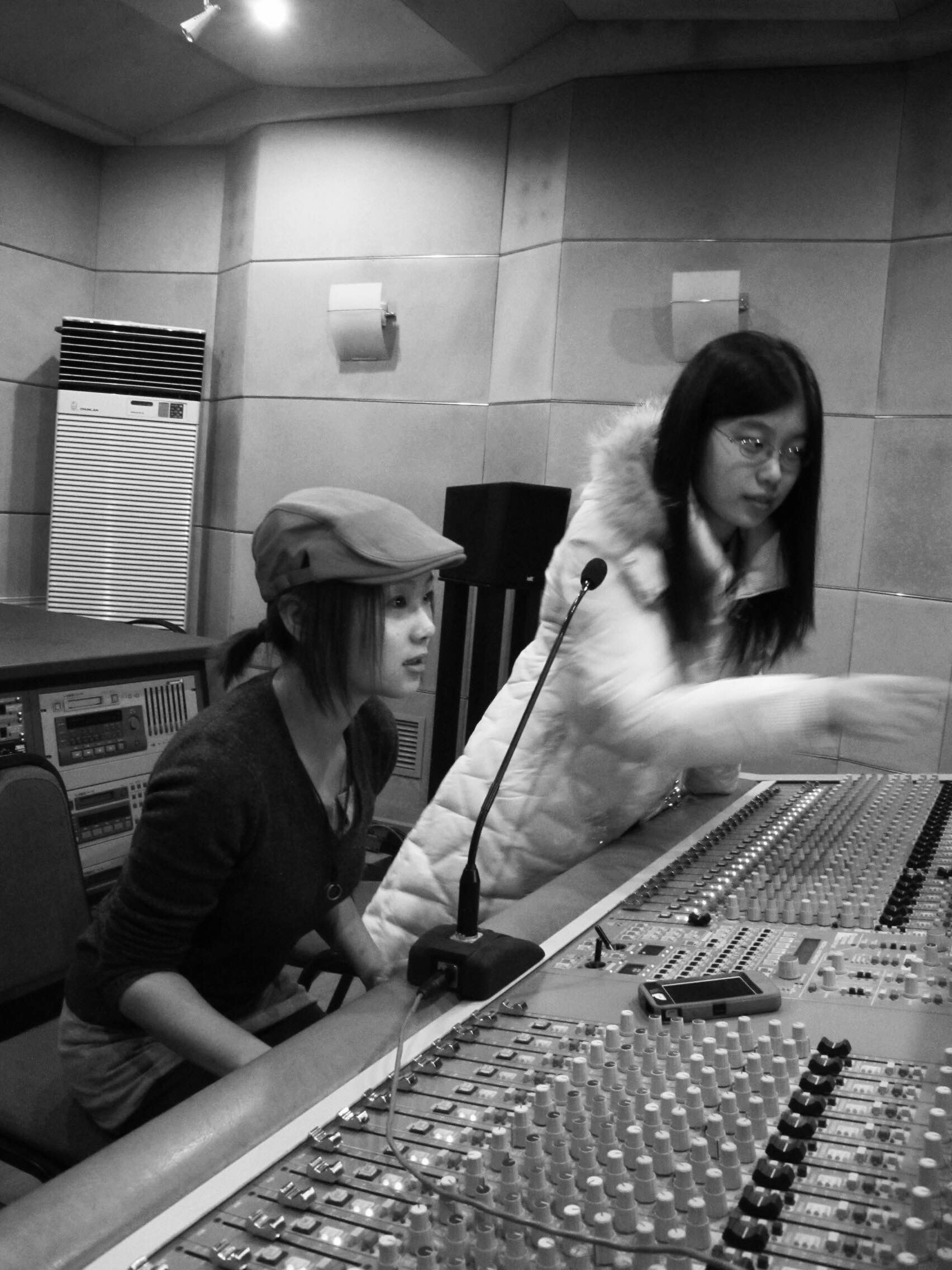
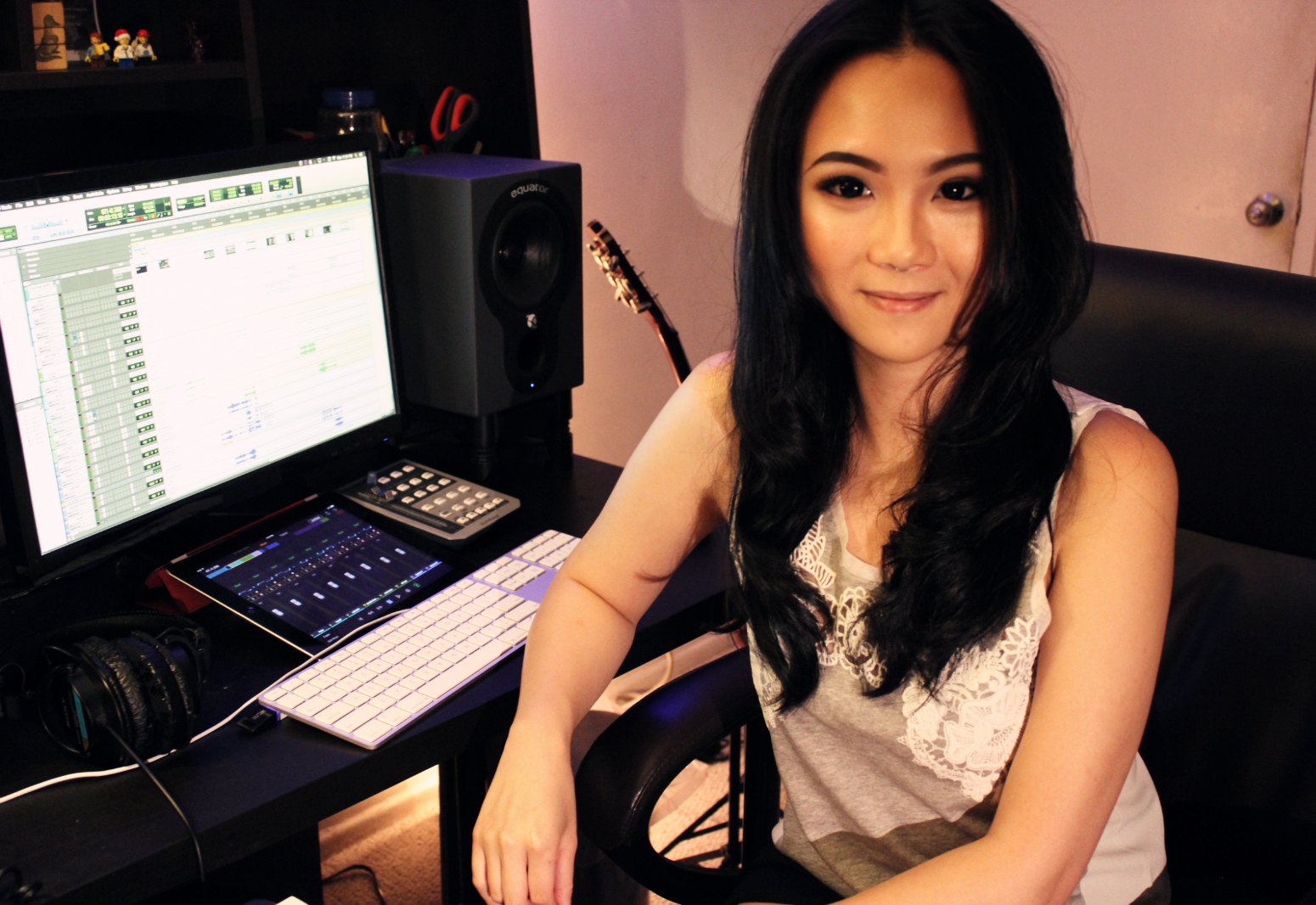
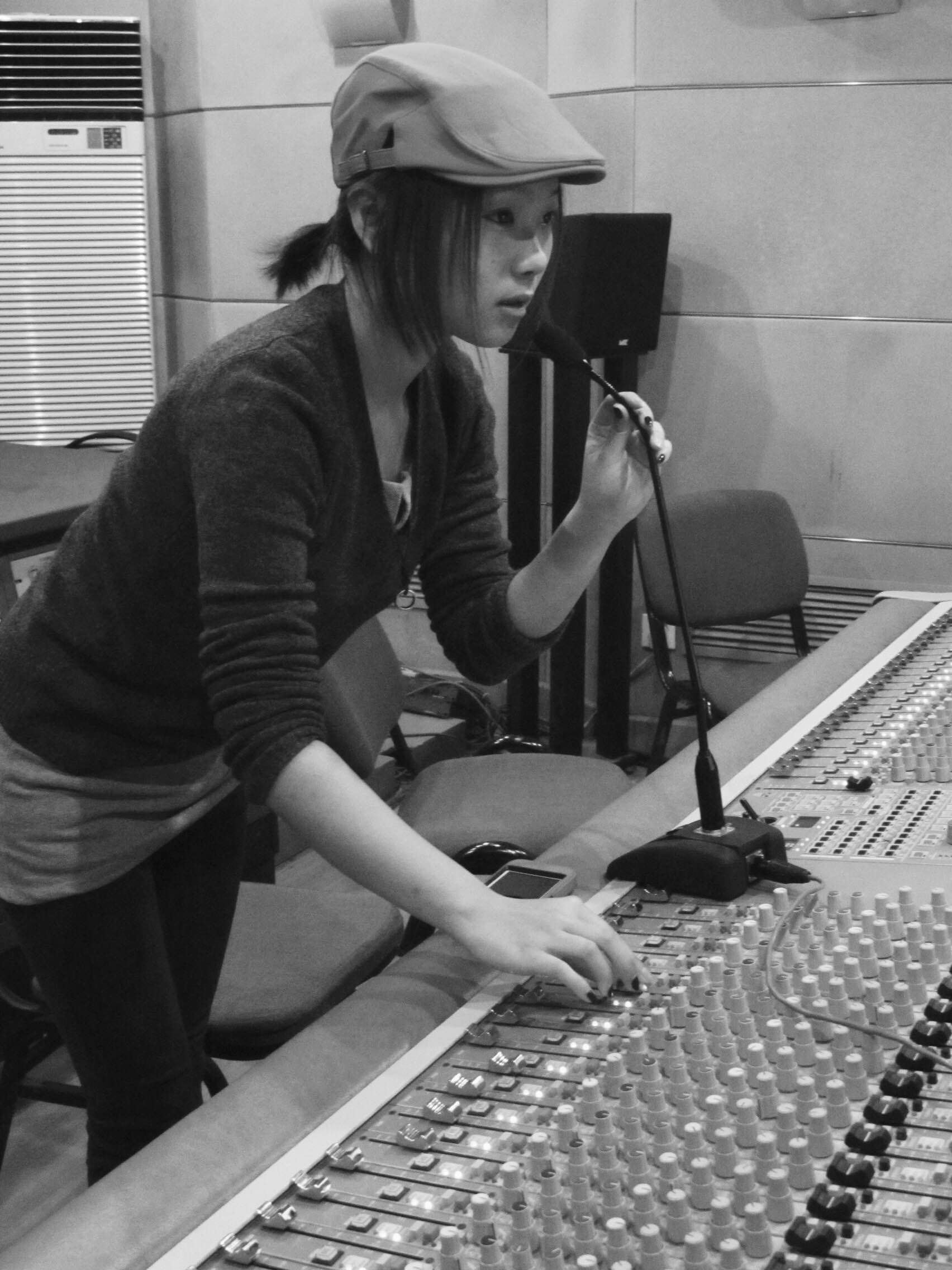
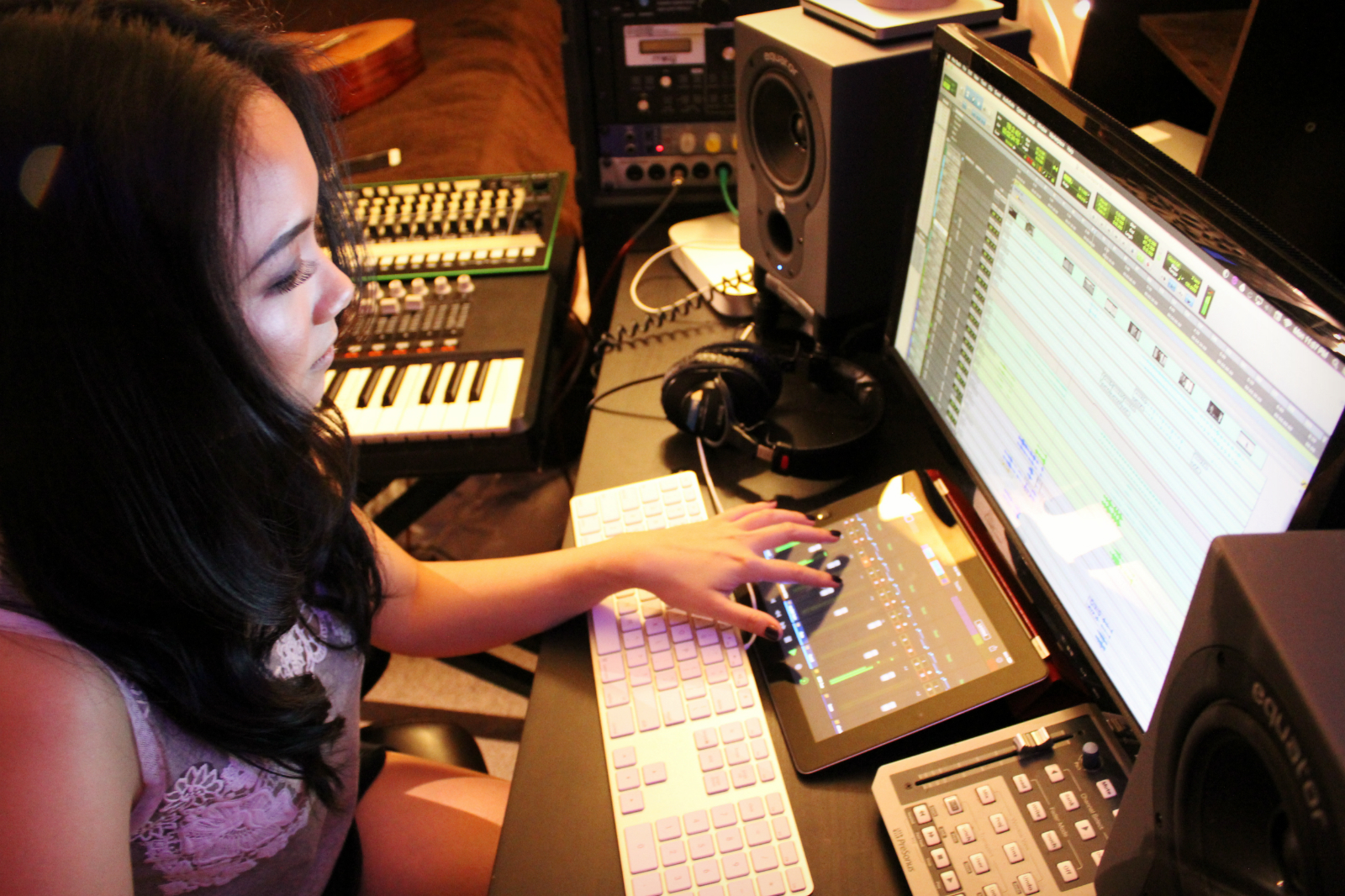
As a non-male* songwriter, performer, and producer, I am always grappling with the concept of ability and credibility. In press on artists that I admire and follow, I see unconscious sexism. Figures like Grimes base their entire brand and music around “doing it all” themselves, while powerhouses like Kendrick Lamar call their producer-artist relationships “collaborations” in spite of the fact that Lamar is decidedly unfamiliar with music technology, i.e., while he never touches a computer making a record.
Where is the line? When can non-male take ownership of what they have created? When can a non-male artist become a figure like Kendrick Lamar without being criticized for not doing everything, from writing to engineering to playing to producing to performing? It makes me angry. It makes me feel like I have a lot of teaching and showing to do. In an effort to do that, I have given some thought to what I know that I didn’t know before I was producing. Here are some of the most important things I have learned thus far that I would like to pass on to anyone who is just starting or needs a pick me up.
Your ears have to practice too
When I first started recording and producing myself, I thought that what I was making was sounding pretty good. I was always reading up on engineering and different production techniques. I even went against the wishes of my pride and would show other producers my sessions so they could give me feedback. Since I was aware of how to make something sound pretty good, I thought that I was already doing it. But there is no substitute for time and practice. Your ears will get better at their job the more that you use them. Engage with the sounds and arrangements you are working with. Ask other producers how they are hearing something. Get a perspective. Make decisions. Play. Wear earplugs for loud shows! You will find that your ears get better with practice.
Vocal production is extremely critical.
This point is related to the first one in some ways. I think that when I first started, I was so enamored with my voice just being recorded and effected that I didn’t think about all the ways to produce it even further. Eventually, I will do a whole post about vocal production, but beyond your chain (mic, preamp, compressor, etc.) being as good as your budget can afford, there is the physicality of vocal production as well. You have to ask yourself, what kind of record are we making? What kind of performance are we aiming to capture here from this vocalist? What are they capable of? Now how can I get that to come out of them and into the mic? Are they excited or turned off by the idea of being in a vocal booth?
Once the performance is done, then you get to work comping—the best bits of each take in a composite—though there are exceptions. Beyond the main vocal comp, you can also make use of doubles, harmonies, ad libs to create the perfect vocal for your record. The possibilities are endless. But it’s your job to make the decisions about how to get the best vocal audio into your DAW so you can continue to make it into an incredible record.
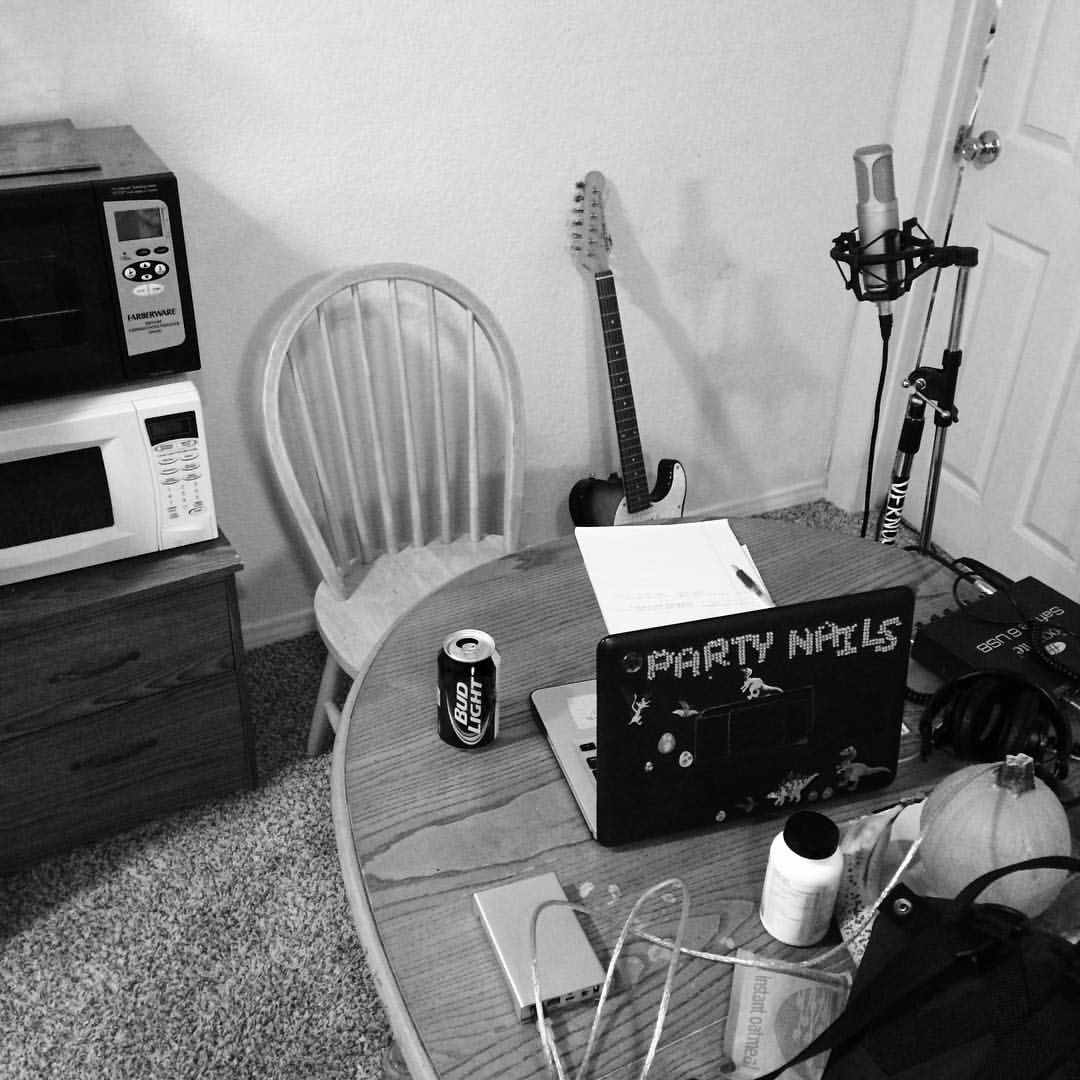
Silverlake kitchen studio – one of my many makeshift home studios
The more you make stuff, the more stuff you will make.
This one is pretty self-explanatory. If you haven’t experienced this firsthand, it may seem like an oxymoron. But it’s not. Trust me.
Working in groups can make you better, but isn’t the end all be all.
If you have the opportunity to write with other writers/producers, especially if they are more experienced than you, take it. If you don’t have that opportunity, seek it out. You will learn something, even if it doesn’t feel like it at the moment. Sometimes co-writing sessions can be tedious. Sometimes they feel like all you are learning is what you don’t like. But that’s very good to know! On the flip side, sometimes you make great new friends that blossom into much bigger relationships.
Co-writes are big in the music business right now. It’s an easy way for publishers, labels, and managers to make their clients feel like they are doing something for them, with minimal commitment and cost. At a certain point, it can start to feel like if you don’t do it a lot, then you’re doing something wrong. But that’s just the status quo that the big businesses created to have more control over their creative people. At the end of the day, YOU are the creator of the music, and it’s up to YOU to figure out how YOU make the best music YOU can make. If that means lots of co-writes and co-productions, then that’s awesome! If that means producing your friend’s bands out of your bedroom studio, alone, then that’s awesome! If that means making beats all day long in your friend’s studio that they let you use, then awesome! Your talent is your business, and you need to constantly be thinking about the things that affect your talent and business.
You are strongly affected by the company you keep.
This statement is made so often I think we have stopped listening. But try listening to yourself say this out loud: You are strongly affected by the company you keep. If you are not genuinely challenged—creatively and professionally and personally—by the people around you, then go somewhere else.
I was surrounded by lifelong friends and some great musicians when I lived in New York City a few years ago. But when I wanted to take my music to the next level, I felt like there was nowhere for me to go. My immediate circle was too comfortable for me to feel like I could take chances, and as a result, I wasn’t meeting new people or trying new things. Eventually, I met ONE professional songwriter, and I decided to move to Los Angeles when they moved out there. I left all of my closest friends and collaborators on the east coast and hoped for the best out west. I almost immediately found myself surrounded by people who were similar to me, but 10, 20, 30 years into their careers. I had found the challenge I had been missing. This new perspective motivated me to try new things and start putting together my skillset in ways I’d never imagined. I also started to take better care of my mind and body, another essential habit to have.
Everything happens for a reason.
No matter where you are on your path, there are always going to be ups and downs. Always. And sometimes your path can feel especially winding and long. But if you keep your heart and your mind open, you will see that everything happens for a reason. Every dumb day job, every bad partnership, every mistake, every ditch you dig for yourself, every delay—there is something to be learned and built upon from each of these, and that is a beautiful thing. You will never stop having ups and downs. Ever. Get used to it. Learn from it. Build on it. See the beauty in it.
Don’t stop doing what got you started in the first place.
Unless you are extremely lucky, are going to be points in your career where you are limited on time and resources. During these times you might find yourself compromising and eliminating things that you maybe shouldn’t. For me, those things were producing and guitar playing.
When I first moved to Los Angeles to pursue music professionally, at some point along the way I stopped producing and playing guitar. Mostly it was because the settings I was in just didn’t call for it. I’d go into a session with a producer and another writer, and I would be the person to write and sing the demo. I had a day job as well, so with everything going on I wasn’t playing or producing much when I got home at night. I felt like maybe I was never really going to be that good anyway, and this negativity toward things I had previously loved made me feel very disconnected from myself. At the same time, I was gaining writing and singing chops. By putting down my guitar and taking a break from the computer, I was definitely opening my mind up to new techniques and genres that I had not previously delved into.
But boy did it feel good to pick them back up again!
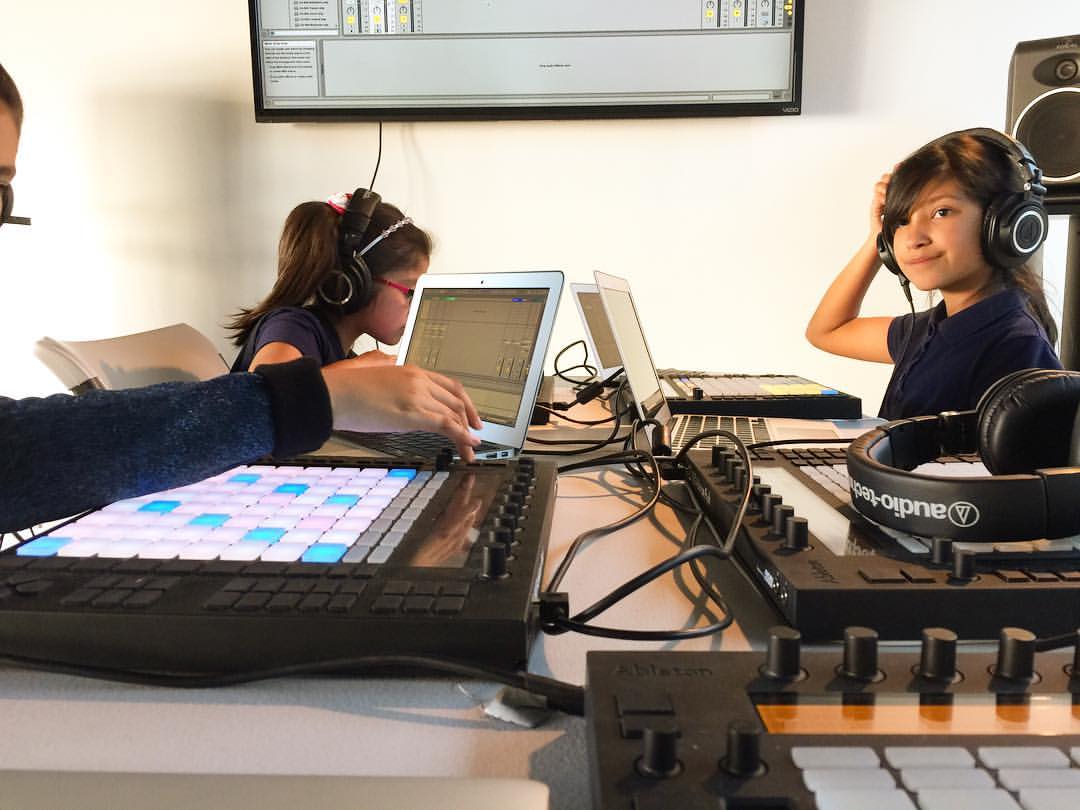
Beatz By Girlz – some students in a Beats by Girlz class I subbed last year
I encourage you to find a way to keep in touch with yourself and the things that inspire you, no matter what seems to get in the way.
In conclusion: as my good friend Rob Caldwell always says to his guitar students when they ask him how much they should practice: you get good at what you do.
So let’s go and do it.
*I use the term “non-male” to include anyone that does not identify as male. Gender is a social construct, and supported by science, and backed up in legal rulings. I believe sexism frequently oppresses people who identify as non-male, especially in tech-oriented industries.
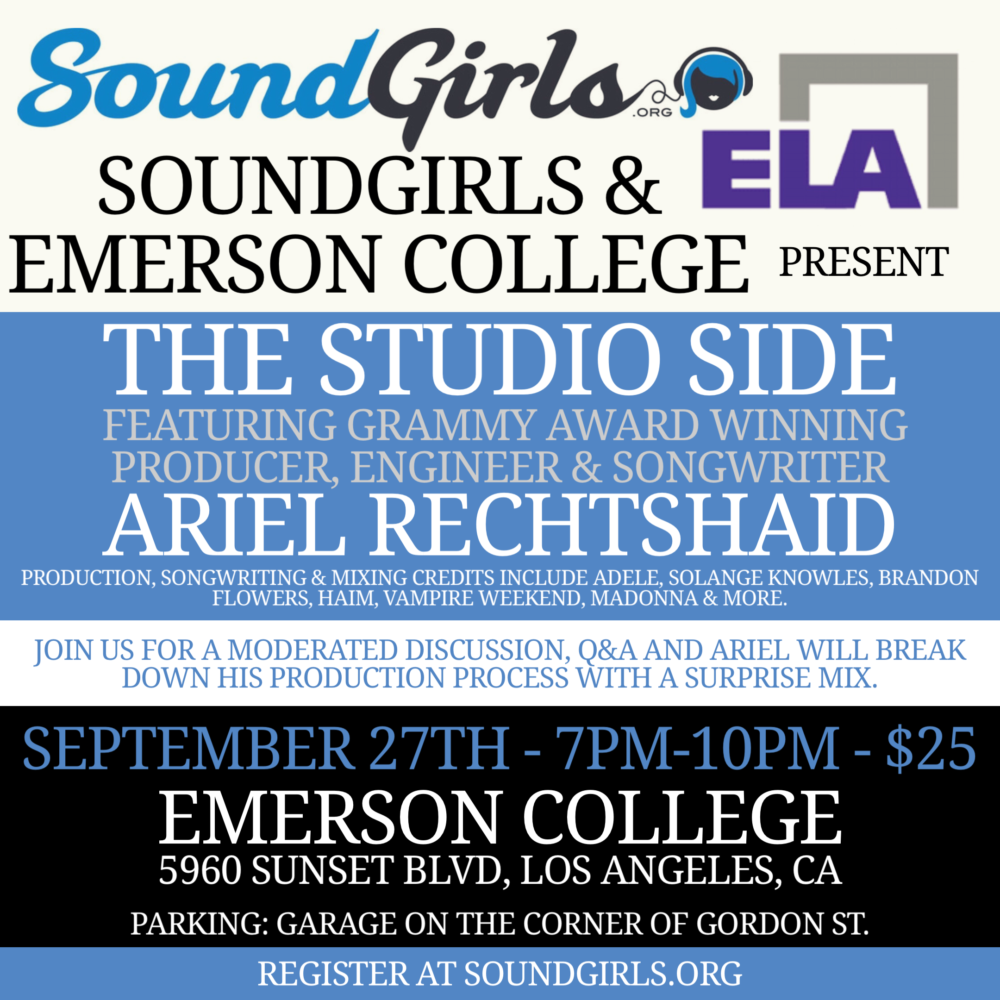
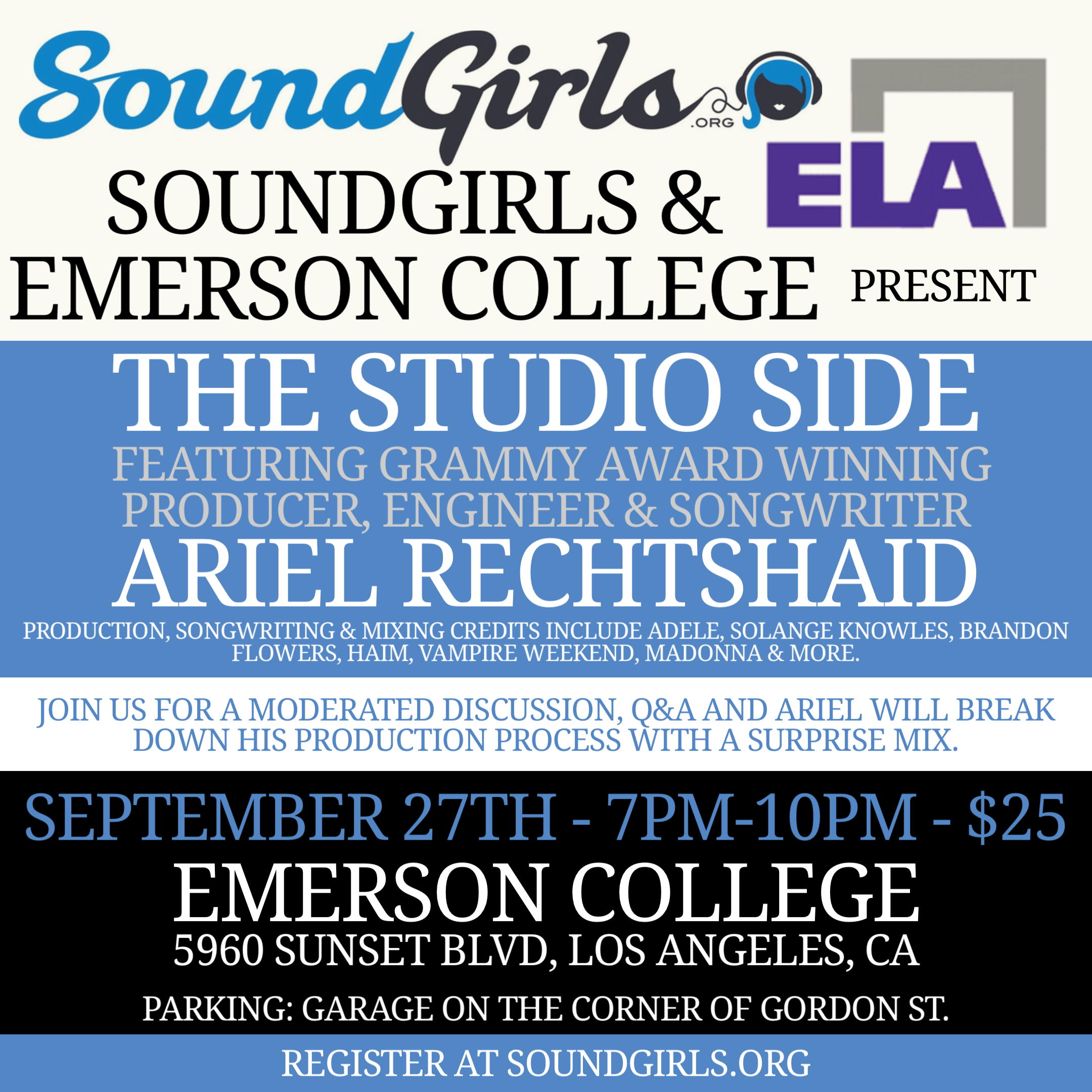
The Studio Side – Ariel Rechtshaid – Feat Grammy Award Winning Producer/ Engineer/ Songwriter
Join us for a moderated discussion, Q&A, and Ariel Rechtshaid will be breaking down his production process with a surprise mix.
Ariel Rechtshaid is a record producer, audio engineer, mixing engineer, multi-instrumentalist, and songwriter. His production, songwriting, and mixing credits include Adele, Solange Knowles, Brandon Flowers, HAIM, Vampire Weekend, Madonna, and more.
Location:
Emerson College
5960 Sunset Blvd, Los Angeles, CA 90028
Space is limited and is open to members of SoundGirls and Students of Emerson College.
The Songwriter’s Secret: The Circle of Fifths
The skills involved in producing and engineering music are different to the ones required to write and play it, but that does not say there is no overlap. Even the simplest recording job requires you to be able to capture the feel of the music, and the vision of the musicians, on record. All of the technical know-how in the world won’t matter if you have a tin-ear for the music, and so it’s helpful to make sure your knowledge of producing and engineering is backed up by an understanding of musical theory.
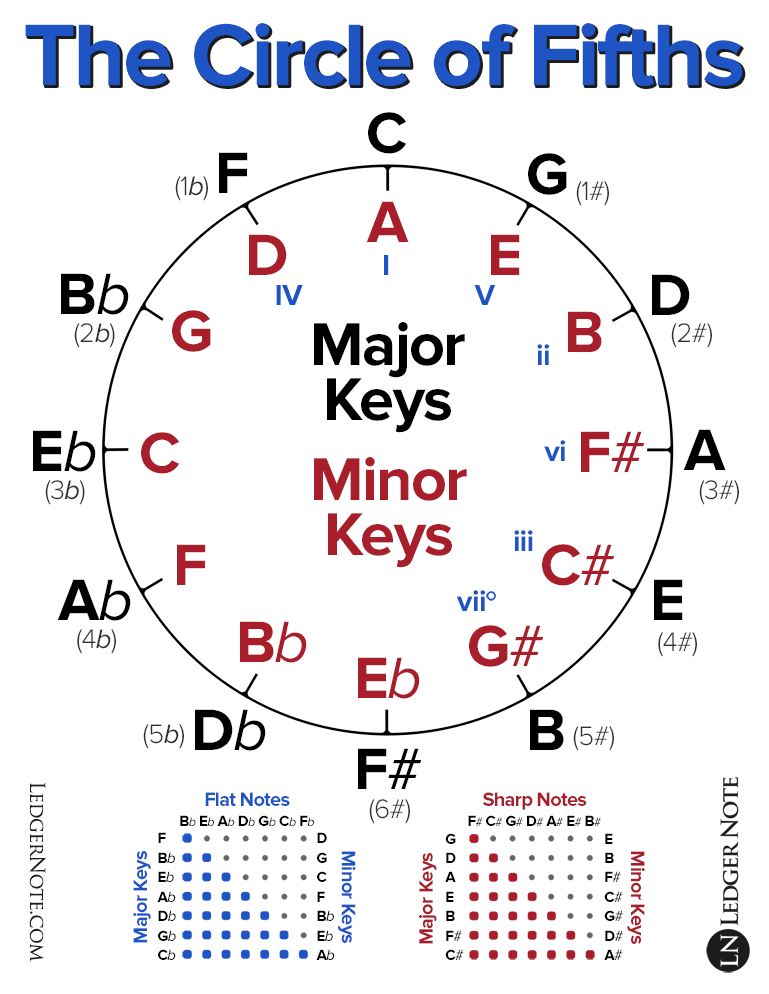
One of the most common examples of musical theory that is crucial to the creation of music is the circle of fifths. You may have read, or heard, someone say of a song: ‘It uses the classic I-IV-V-I progression.’ Unless you are already familiar with intermediate musical theory, this may well have baffled you; after all, you know that the scale runs from ‘A’ to ‘G’, and you know that between the notes are ‘sharps’ and ‘flats’, but that’s it. The answer to this is that ‘I-IV-V-I’ is a progression, not from one specific note or chord to another, but a pattern that repeats in terms of spacing, whatever the ‘root’ note or chord of the sequence. This progression can be explained by the concept of the circle of fifths, and in a recording situation, this could be vital knowledge. The reason is that music is written to evoke or elicit certain feelings and emotions, and there are methods for doing so, compositionally speaking; an engineer’s job is to ensure that the recording matches the vision, and an understanding of how the music works makes that job easier.
I-IV-V-I
Music is basically maths- that’s the first thing to remember. Notes sound pleasant, or consonant, together because of the mathematical ratios between them. A ‘fifth’ is the term for a specific interval between notes. To stay with the example of ‘I-IV-V-I’- mainly because it is the most common progression in popular western music, with literally thousands of songs based up in it- imagine that the starting chord of your song is a C-major; that is ‘I,’ your ‘root’ chord. ‘IV,’ your next chord, is F-major and ‘V’ is G-major. If however, the key of ‘C’ is not right for your voice, be it either too low or too high for you to sing comfortably, the ‘I-IV-V-I’ pattern can be easily transposed. If you want to sing in the key of E-major (I), then the next chord will be A-major (IV), followed by B-major (V). The progression will sound the same, only in a higher or lower key; this is because the intervals between the notes are the same. The same goes for other common progressions, such as I-V-VI-IV; if it is denoted by Roman numerals, then it is all about the intervals and can be transposed into any key.
The circle of fifths is so called because the nature of the musical scale, running from A to G, means that you can start on one note and run through a sequence of ‘perfect fifths’ which will take you through each note and back to the beginning, in a circular motion, without experiencing any dissonance. It is also because this relationship can place, visually, on a circle; this diagram makes it easy to locate both the relative minor chords as well as the ‘IV’ and ‘V’ of any root note or chord. A simple trick to remember is that, on the circle of fifths diagram, the ‘IV’ of any root note is one step anti-clockwise, and the ‘V’ is one step clockwise.
There’s a great deal more theory behind this, and it becomes increasingly complex and esoteric, but if you want to understand how songs have been put together,- an important part of the recording process- then a basic understanding of the circle of fifths will be beneficial. The diagram, in particular, will show you consonant choices about chord progression, whilst also showing you the relative minor chord, which is always a favorite option for a middle-8 or B-section. As you better understand how the music works, your abilities to successfully capture its spirit will also increase.
By Sally Perkins
From “Girl Engineer” to Re-Recording Mixer – Sherry Klein
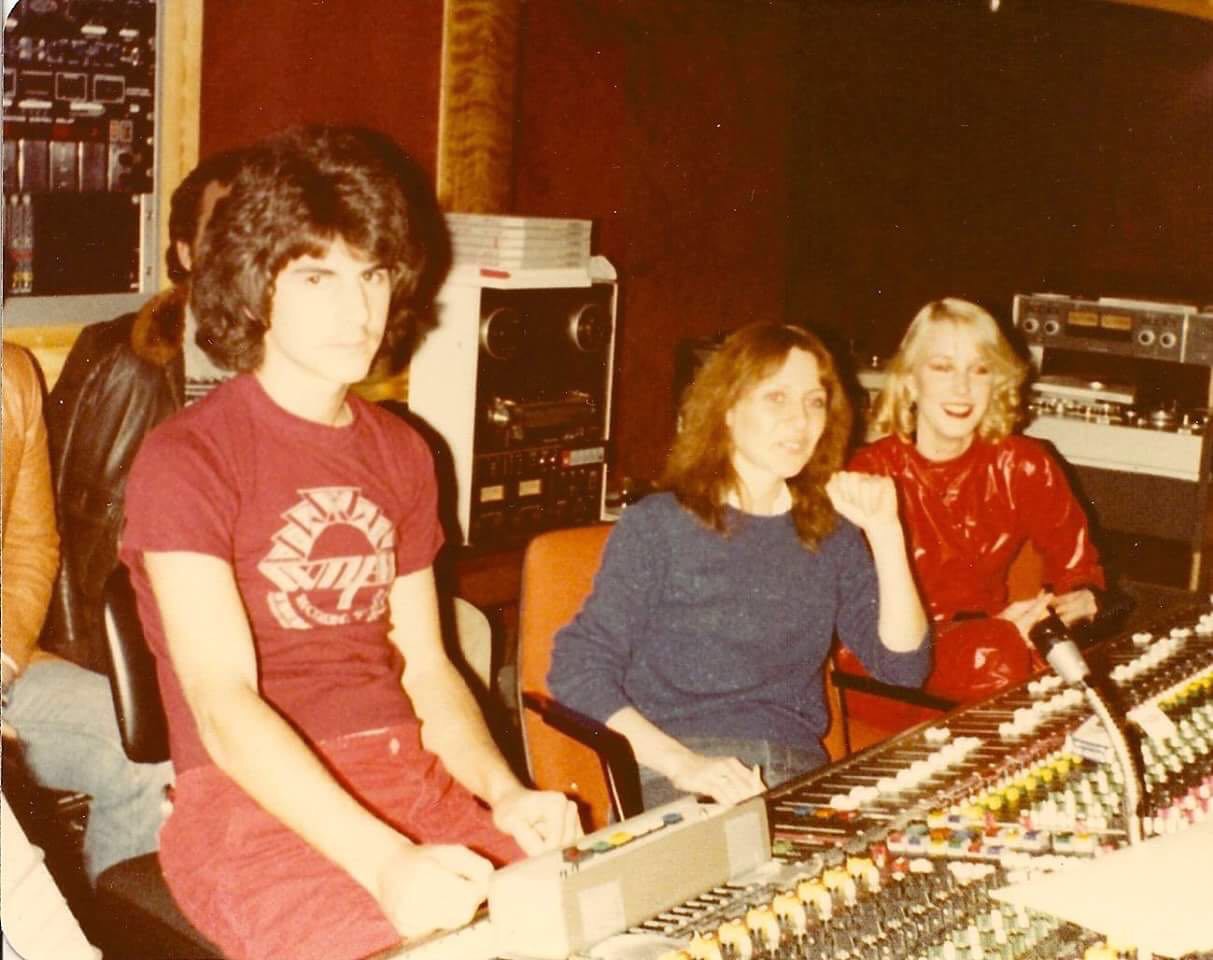
Sherry Klein is an Emmy-nominated re-recording mixer and a pioneer of women in audio in both music and television. Sherry became a recording engineer at Larrabee Studios in the late 1970s – one of a handful of female engineers in Los Angeles at the time and possibly one of the only female re-recording mixers in town when she moved into post in the early 1980s.
Sherry’s television credits include Bull, Queen of the South, Burn Notice, Sons of Anarchy, Falling Water, The Shield, and Arrested Development. She mixes dialogue and music with her partner Scott Weber, who handles sound effects and Foley.
What’s your music background?
I took all my music classes in Manhattan. Growing up all I ever wanted to do was study music and play guitar. I would travel to the city to learn blues fingerpicking style at the Folklore Center in Greenwich Village. And on weekends played small clubs and coffeehouses in the NY and Jersey area. After High school I went to College in St Louis, Missouri to major in music composition.. 6 months into mornings filled with classical counterpoint and fugue, I decided I would rather study jazz. There was only one school for me, and that was Berklee College of Music, in Boston. I got accepted and then spent the next six months hitchhiking cross-country before moving to Boston.
While attending Berklee, I was pretty much a monk to music and composition, and after a few semesters, I found that I was having difficulty writing and composing. I could analyze a Charlie Parker solo on the subway, Ace my exams .. but I just couldn’t innovate anymore. Learning the nuts and bolts of music theory seemed to limit my creativity. I went on to study independently at Boston School of Electronic Music and took various classes all over town… basically whatever interested me in the areas of sound and music. Even audited (snuck into) an acoustics class at MIT… I did crazy stuff to get a little bit of everything in.
What I realize in hindsight is that I have a very technical and organized mind. While in college I memorized all my scales and theory exercises using mathematical formulas, but in reality, I sucked at math and practically flunked it in high school … it just wasn’t presented to me in a way that I saw any use for it in my life, but as soon as I was able to make sense of it in my life, i.e., in music… math and I got along much better!
How did you get into sound?
I started hanging out downstairs at the 2-track studio at Berklee and became fascinated with sound. Soon after leaving Berklee, I got a job working for Hub Recording Studios. I was the girl in the front who handled phone calls and stuff. Eventually and begrudgingly, the boss ” allowed” me to become an assistant engineer. I also began working live sound in clubs around Boston and working for a few local bands. One night a couple of guys came over to the studio to do some wiring work. We talked for a while, and they said they were building a 16-track recording studio. They asked me if I would be interested in joining them … that was a no-brainer. I said “Hell yeah! It proved to be some of the best times I ever spent during those early years.
We wired everything in that studio. We built a shell within a shell that sank within the first year. Physically I was the smallest one, so I ended up doing much of the wiring between the ceiling and the shell. I could wire and solder anything at that point. We had to make many compromises because our funds were very limited.
For a DDL: we used our concrete basement and would put a Neumann U-87 in bidirectional mode catching the bounces off the wall and feeding it back upstairs. That was our DDL because we couldn’t afford to buy a real one.
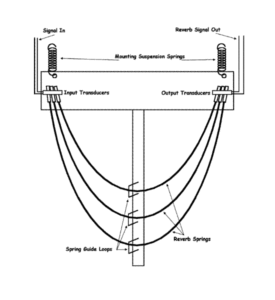
Hammond Springs
Hammond Springs
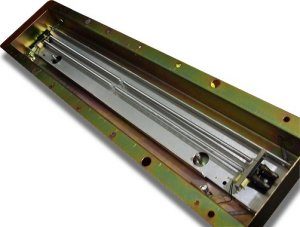
Hammond Spring Reverb
Our reverb unit was a bastardized set of Hammond springs that sat under our little homemade console; we would change the reverb time by putting small pieces of fiberglass on the springs. (Above examples of Hammond Springs, not exactly the ones used by Sherry.)
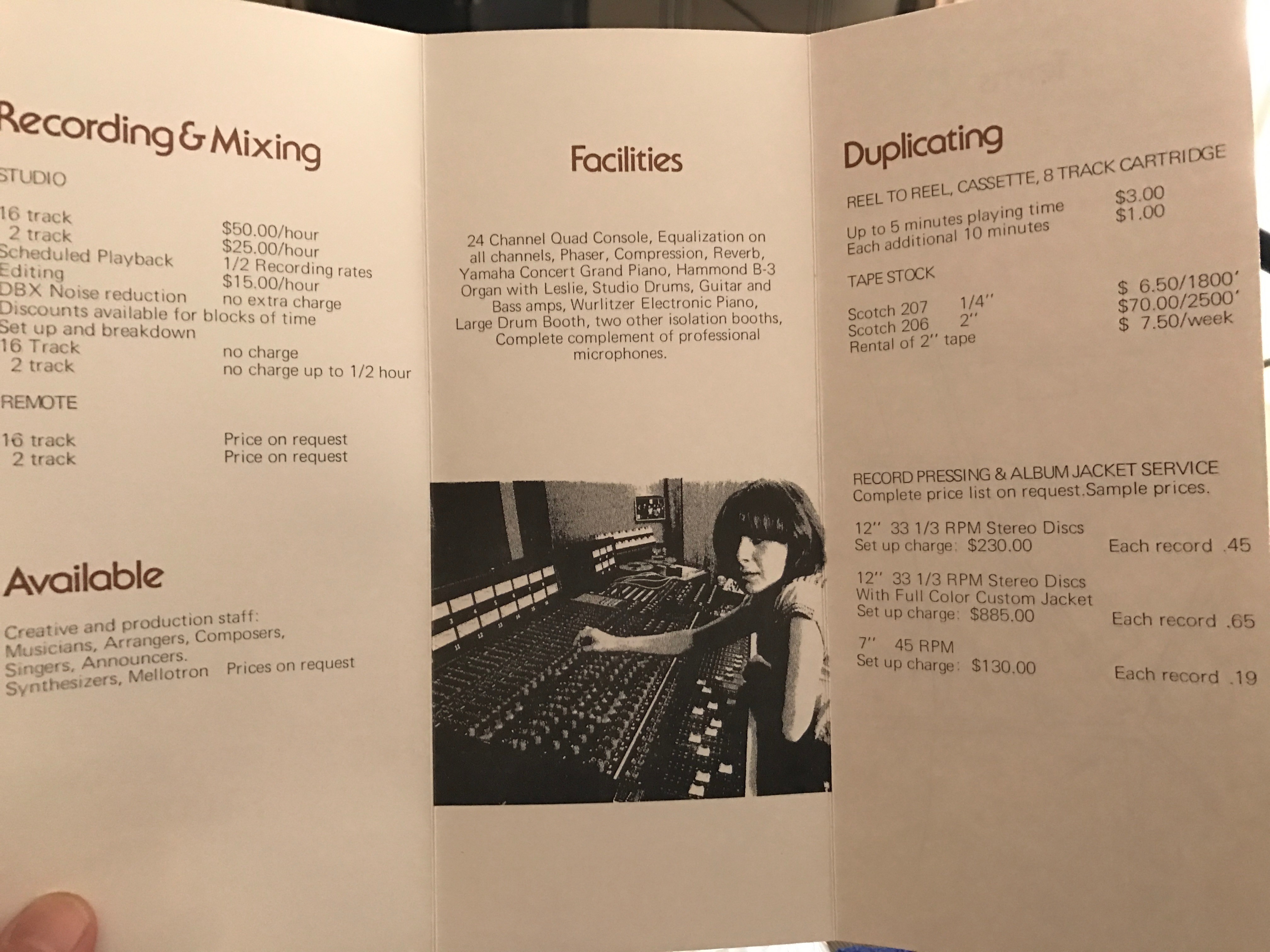
Hub Studios Rate Card
There were so many crazy things we did to emulate the real stuff that we couldn’t afford. When we positioned amps and mics just right, in that basement, we could get some great sounds! It was an amazing learning experience because we had to create sounds in the most uncanny, but organic ways! After a few years, a new partner joined us and with him came a “real” console and that helped to prepare me for the next step I was about to take.
I left Boston in 1976 to move to Los Angeles and only knew a few people in town. The record business was a big and lucrative industry at that time. There were many recording studios, and I think I circumnavigated all Hollywood looking for a job as an assistant engineer. Larrabee Studios called me back first. I also got lucky because I had a client from Boston that gotten signed and was coming to LA to do an album. They contacted me and asked if I could do their demos for the album. When Larrabee called me, I said, “I’ve got this client from Boston, they’ve got a couple thousand dollars for a demo – can I do it here?” One of Larrabee’s engineers assisted me and right after that .. I got the job as an assistant engineer. As time went on, I was given some engineering work. I did a lot of the publishing demos and got some great clients and album work from that.
Leslie Ann Jones, Sherry Klein, & Lenise Bent AES
As far as I knew there was me, and three other women engineering in Los Angeles at that time (the mid-late 70s ) – The late Terry Becker at the Record Plant, Lenise Bent at Village Recorders, Leslie Ann Jones at Capital Records.
Did people treat you differently for being a female assistant or engineer back then?
There are lots of stories I could tell, but mostly I had good experiences once the client got to know my abilities and me. Sometimes, the studio wouldn’t use my name when assigning me to a client. One time, in particular, there was a very major British engineer that I was going to work on, it was on a set of music festival recordings, Larabee’s owner, Jackie Mills, said “We’re not going to tell him your name or anything. When you come in to meet him be ready to spout every four-letter word you know” When I walked in for the meeting the engineer looked at me and said, “Oh Fu… crap, Give me a break (and a few other choice words) !” Jackie gave me his look, and I just rapped off a whole paragraph of 4 letter words… the engineer just looked at me, smiled, and said, “Ok, we can do this! Ready?”
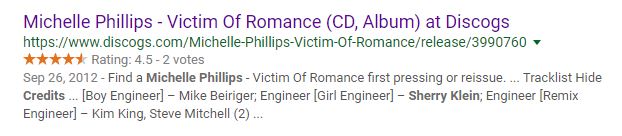
I assisted on an album for Michelle Phillips; Jack Nitzsche was producing. I was working with an engineer who had to go do another gig out of town for a week, and he told Jack “Sherry can record the vocals and do some of the overdubs.” In the end, I got my first credit. Jack listed us as “Girl Engineer” and “Boy Engineer.”
It was Kim Fowley who gave me my first solo album gig., an all-girl group “The Orchids” for MCA Records. He taught me rock and roll history, and he was my mentor. He gave me my first, second, third albums – quite a lot of projects actually. I also credit him with helping to give me my backbone in the industry, and anyone who knew him would know what I’m talking about…. he was truly an amazing person, and he remained a friend until he passed away.
Kim Fowley playback party
Why did you leave the music industry?
Those were incredible days to be working in the music business, the late 70’s, early 80’s. The years before the bottom fell out of the record industry. That’s when I moved into post-production. A bunch of record labels went under, and I was only doing a few albums here and there. A mixer I had worked with on an album was working at KTTV. He called and said needed a sub while he went on vacation he said, “You know all this stuff – you know the consoles the machines, you’re familiar with gear, and you’ve got the ears. You just need to learn about the CMX and timecode synchronization, what do you think?” I said ok, and that’s when I moved to post-production… I went over there for four weeks and stayed for the next year.
I started mixing tv shows over there as a single mixer; it was basically “audio sweetening.” From there I took a lot of little freelance jobs here wherever I could find them. I met with EFX Systems, an independent facility transitioning from music to post, and was hired as their first postproduction mixer. That’s where I started honing the postproduction side of myself. When we picked up the show “30 Something” we went to a three-person crew, and I mixed dialogue. That was a big deal for me because it was a very high-profile show. I think that’s when people started knowing about me, even though I was still fairly isolated and didn’t know many post people in town.
Were there other women re-recording mixers in post at that point?
Not that I was aware of, at least in LA. I learned of Melissa Hoffman, who I believe was at Ryder Sound a few years later. I stayed with EFX for nine years until they closed their doors. After EFX, I began looking for another post facility I knew that I wanted to be on a team and not just work as a single mixer. Strangely, I found that the doors were open, but many studio managers who were ok with having a woman mixer said they just hadn’t found one with the experience and credits. Luckily.. I had some of both!
Sony was the first to call. They needed someone to replace a popular mixer (who was retiring) on a team with three mixers, he was mixing a show called “The Young Riders, ” and they needed someone who could take over for him. They offered me the dx chair. When I first came on, I asked the head of post-production, “Do you think the guys are going to be cool about this?” He said, “If they’re not ..screw em,” you have the qualifications.” As it turned out, I had a great fx mixer, who took to me immediately. The music mixer not so much. Since I wasn’t embedded in the “studio lot” culture and was the first and only woman on a dubbing stage at Sony, I didn’t want to make waves, I kind of rode it out and took some words and (shall we say) disrespect?. Unbeknownst to me, some of the clients weren’t happy with what they were seeing and started going to management.
One day management came to me asking how long this attitude had been going on? I said pretty much since a few months after I came on (about a year). He said, “Why didn’t you say anything?” I said, “I didn’t want to be a problem, I’m hard-headed and can take a lot,..” He said, “You’re the lead mixer and the reason that clients are coming into that room. This is done!” He fired that mixer. I was really quite taken aback. I had no idea that was going to happen, but the decision had been made before he even talked to me. When my original fx mixer retired I had to put together a new crew, we were together for almost nine years and still remain close friends.
Where did you go after Sony?
One of the reasons I left Sony was because I wanted to get into Protools mixing and at that time, they weren’t ready to use it on the dubbing stage. Prior to leaving Sony, I had been working on three shows, and two got canceled in the same week. My last remaining show was the final season of Dawson’s Creek, and I wanted to see it through.. I had lots of free time, and I started looking around for Protools classes. I found Chilitos Valenzuela and his company “Audiograph Intl” in Santa Monica. It was the best thing I could have done for myself, I signed up and took his class, it was three weeks and paid for by me … Chilitos and I became fast friends, and he truly helped me to learn Pro Tools. I moved over to Larson Studios the following season. They were one of the first full Protools studios in town, and that was a great place for me to begin what I call the 2nd phase of my career. Currently, I’m with Smart Post Sound– and they’ve been my home base for the last ten years.
In my choices for leaving one facility for another, I can honestly say that I’ve only moved when I felt was the right move for my career; I never moved just to get a few extra bucks. Just wasn’t where my priorities were set.
Can you explain your role working on a two-person mix team?
The dialog mixer is the lead mixer on the team. Usually, we’re the ones who get all the shit if something goes wrong. Rarely is there a situation where I’ve had to throw (lead mixer) weight around? It’s just not in my nature. I feel that we’re both equally important to the team and therefore equal in our mixing partnership.
How much time do you get for a mix?
An hour show is typically a two or three-day mix. We work from 9 am to 7 pm with a lunch break. On day one we get through the show. By the late afternoon, we’ll do a pass playing back together. Since we work separately, this is the first time we hear everything together so we can start to fine-tune it all. By the end of the day, we’ve done one pass on the main speakers. (Many of the execs still prefer their playbacks on small speakers… it drives us crazy..but that’s what they want, and so that’s what we do:-) So, the next morning we do playback on the small speakers and a pass with our co-producer. We all take notes and do our tweaks. Then if we have another chance, we can play it down again and take more notes. Usually, after lunch is when we get the execs. If we have three days, not much changes with the schedule except there’s more time for playbacks, tweaking, and just making it more presentable.
What happens when execs love something that you hate? How do you deal with creative differences?
The executive producers are the final word. If asked my opinion? I’m very honest. I’ve been known to say “I hate it.” Sometimes they will ask, “Are you happy with it? ”my answer can be as simple as, “It sounds better than it has any right to.” and it’s true! There are times when we’ve all worked on something and mixed in circles because of getting directions from so many people in the backfield that at the end of the day we walk out saying to each other we liked our version better. But that wasn’t the way the powers that be wanted it. There are days where I’ve been pulling my hair in frustration because the dialog was so noisy – bad locations, mumbly actors, or whatever. The truth is… I’m too close to it, and I just have to take a step back to hear that it does sound fine, and better than I thought. But always, it’s the execs that have the final say!!
Does it ever bother you to work on something where the dialog is terrible, to begin with, and then your name is in the credits for it?
Sometimes what we do as dialog mixers is to make shit shine. Sometimes dialog is good, to begin with, so we can work to make it richer and fuller and just enhance it. The question for me is that when I walk out at the end of the day, do I feel creatively fulfilled? That answer would be yes, or I would have stopped doing this years ago.
What do you enjoy about being a TV dialog mixer?
I like the hustle of tv and the fact that it’s like a new mini-movie every week. Having multiple years on a show is always a treat because you have the opportunity to grow with your crew and the show, it becomes kind of a family thing!!
What skills/traits should someone have who wants to be a dialog/music mixer?
Patience – of which I have none! (I have the attention span of a 12-year-old) which is why I’m better working in television than features.
You need people skills – especially when you need to let everyone in your backfield argue (discuss) and do their thing while you wait till they’ve come to a consensus.
You need stamina and the ability to multitask. You have to be able to filter out what’s going on behind you and just do what you need to do up front. Sometimes it’s stopping and listening to what the people behind you are saying, and other times it’s continuing to work and then turning around and saying, “did I miss something?” It’s an intense balancing act. You have to move fast and move with preciseness and detail. You need to learn to gauge time and your activities within the time allotted to get something you’re happy with, and they’ll be happy with.
Favorite plugins?
Izotope RX 6 – I got hip to RX a couple of years ago, and it’s fantastic. It’s saved my ass tremendously in a lot of things. If you get to know Spectral Repair, there’s a great number of things you can do.
Cedar (noise reduction) – I like to use it gently, and these days if I want to go in deeper, I can go to the RX.
Audio Ease Speakerphone – I use it on a lot of my ADR, not with the futzes but utilizing the rooms and other parts of the plugin. From my record engineer days, I know how to use the various mics to change the characteristics of the sound. There are also lots of other features within the plugin I like – it’s sort of my audio suite channel strip.
LO-FI – I’ve always been a fan of this one. Sometimes we just have to shmutz things up
Avid ProLimiter, Fab FilterDS, SA2 – we’re always fighting sibilance, and we have to keep our levels within network specs.
Those are some of my go-to plugins.
What advice would you give to women in the field or trying to get into the field?
I think there are a lot more opportunities than ever before for women moving into mixing positions. The field is open to it. I don’t believe it’s even a question of being a woman mixer – it’s a qualified mixer. Years ago people would say “she’s one of the best chick mixers etc.…” and I would say, ‘” Umm … I’m a mixer” I just happen to be a chick. We are mixers. Nuff said!!
As far as getting into it and coming up through the channels – it’s a long road. It’s a very satisfying road. Ultimately, you do have to learn how to have your life, while still devoting the time needed to have the gig. I don’t buy tickets for anything unless it’s a Saturday night or Sunday … and even then I don’t know for sure; travel plans are always meant to be changed. You have to be willing to sacrifice the aspects of “normalcy” that most people are accustomed to. I tend to believe that it can be a bit more difficult for women…speaking personally, in my past experiences sometimes the men in my life have not always understood that I just can’t get up and leave a session that’s going into OT because we had planned together that night. Oh Well. That’s why those are in my past!
How do you find work-life balance?
What balances me is being able to go and spend a couple of weeks at my home in Mexico – or as I call it “in my other world.” I will always try to get out of town when I’m not working. When I’m in town and have time off, I try and catch up with my friends, more time with my man and then there’s my other passion which is baking bread. I was informed almost nine years ago that I had to get off gluten. After asking wtf that was, I started researching on the internet and experimenting with baking. Now, I grind all my own flours and bake whenever I have the time. It’s just all mixing! Be it flours or eq’s or levels..it’s mixing to get what you want. It’s sort of like my out of the dub stage Zen place!
Cinema Audio Society Board
Final thoughts?
I think a mixer can only mix for what they hear, and that doesn’t always please everybody all the time. I’ve left shows because I’ve felt I wasn’t the right person for the job anymore.. and sometimes it’s the clients that want to make a change… shit happens, I’ve learned that you have to just roll with it.
At this point in my career I want to continue to work with people I respect and enjoy, and with people who allow me the freedom to be creative and fulfilled in my work. As far back as I can remember I’ve always tried to be as honest as possible and give 150% of myself to all my projects. I truly don’t know how to do it half-assed! My best explanation of what I tell people I do for a living is “I get to play in a big sandbox with a bunch of crazy people, and paint pictures with sound.” Gotta love that.
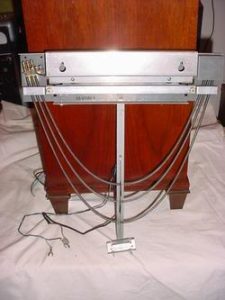
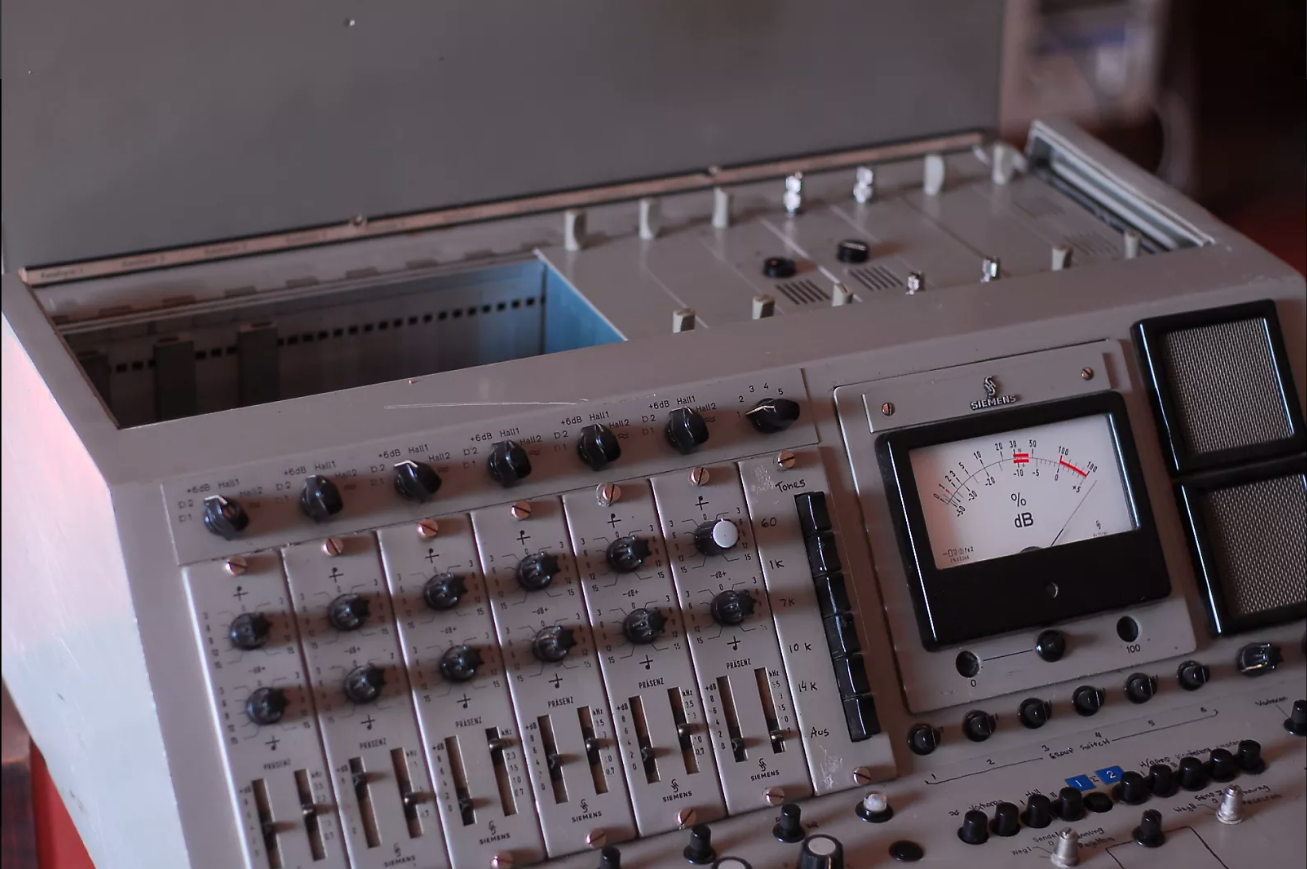
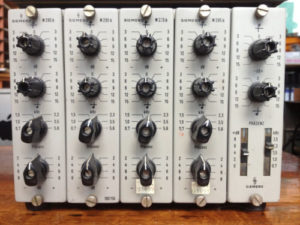
The Siemens W295 is a bridge impedance, fully discrete class-A push-pull output Equaliser designed in West Germany in the early 70s.
The cassette size unit features input and output transformers, inductor based midrange, old and hard to find BCY58, SST117, and BCY 66 transistors and it has a 600-ohm input and output impedance, hence “bridge impedance.”
It is one of the most colorful, sweet and round EQ I have ever had. The W295B has a fixed frequency High Shelf eq, and Low Shelf eq, both with +/-15dB in 3dB increments. It also has a Middle Range bell eq with fixed frequencies of 700Hz, 1kHz, 1.5kHz, 2.3kHz, 3.5kHz, and 5.6kHz with +/- 8dB in 2dB increments.Both High and Low shelf are based on the classic Resistor / Capacitor design while the midrange uses a multi-tapped inductor to create the resonance frequency of the filter.
Think of it as the NEVE / PULTEC of Germany.
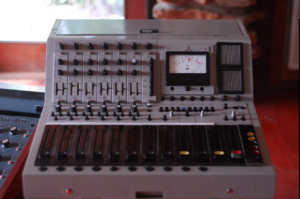
This unit, along with the all series of preamps (676) line amps (672,274,374 and so on) were part of the Siemens/sitral broadcast consoles (see pictures) and were designed for radio stations use.
Soon enough recording studios had found out that the broadcast modules had uber high specifications, sounded amazing and as radio stations started upgrading for more modern equipment these cassette modules started to find their way into the recording business.
This is an incredible tracking and mixing tool that can be used in wide variety of applications from vocals to drums to guitars and bass. I find that the frequency choices are really useful to bring out the grit and air of guitars, top end on drums and generally air on vocals. The top shelving is especially very useful when a singer needs a bit of overall presence as the filter starts at 1KHz and very very gently boosts up until 15KHz. On drums, it is very useful as both snare and overhead EQ as the midrange inductor EQ sits in that range of frequencies where most of those elements live.
I absolutely love the silk and sweet character it has and how you can boost program material without ever sounding harsh. I tend to use it for additive equalisation that happens while recording so I can paint coarse strokes to change the colour and feel of the instrument very quickly without spending too much time. The channel where this EQ is used is normally then paired in the mix with a more surgical Plugin EQ which helps to remove any extra resonances.
I think this is an excellent tool that every musician could use when recording and/or mixing as it gives a good alternative to the usual Pultec or NEVE EQ, so it can be a different flavour and yet maintain the “polished/ expensive record” sound. The SoundToys Sie Q is an incredible emulation of this. I also own the plugin, and I ended up using it extensively in quite a few classical records I have worked on lately. If you cannot get your hands on an original one, I highly recommend the SoundToys alternative.
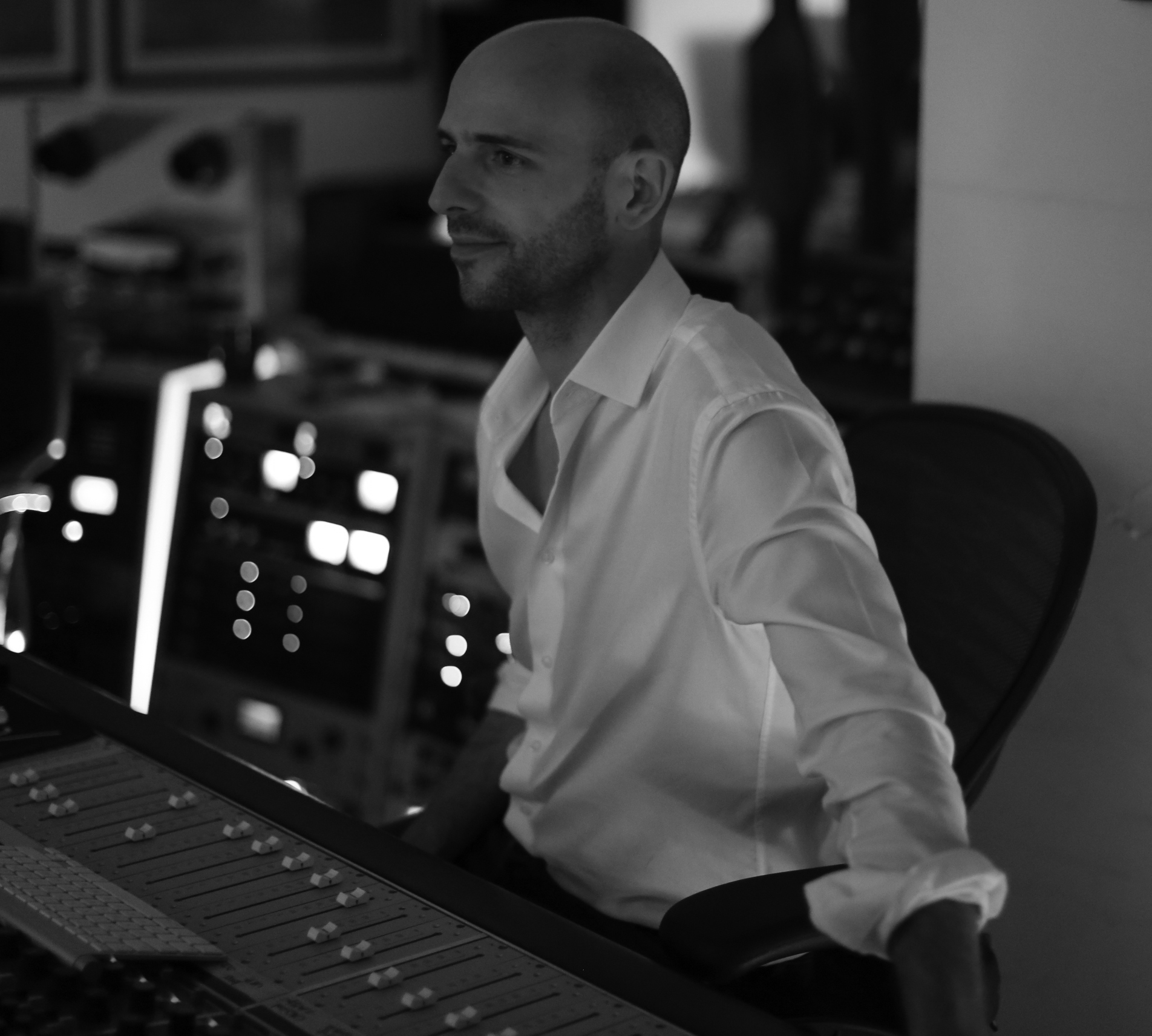
Matt Sartori of Vintage Productions
Vintage Productions is a Location / on demand recording service. We use the latest audio interfaces and multitrack recording systems along with vintage gear and some special DIY custom built tools to bring studio quality to any location that the artist chooses to work in.
Our portable system allows bands, ensembles, and producers to work in any location they choose using a discrete headphones system and high-end gear, cutting down on studio rental cost and allowing everyone to work very comfortably.
Live Recording of a DVD of Sertanejo
“Sertanejo” is a Brazilian music style that would be similar to “country music” in the USA, but entirely different in musical terms. It is the most popular type of music here in Brazil and a very competitive market for artists. Artists often will record a new studio album, tour the new songs and, at some point, record one of these concerts and release a live DVD, right?
But not in Brazil! Here we do everything differently. In Sertanejo it’s common to record a new DVD instead of a new studio album, including, artists just starting their careers. Don’t ask me why.
So our DVD production process is the same as a new studio album, with the difference, it is live. The first step is the choice of repertoire between the music producer and the artist (sometimes with the manager as well). Once the songs have been defined, the producer starts pre-production arranging with MIDI instruments, which I send out to the musicians to study and learn the songs, so they are ready when the rehearsals start, before the recording. Instruments like acoustic guitar, accordion, and part of the percussion are recorded in the studio. I create a playback session in Pro Tools with a click track and the timecode, and I’m responsible for playing live the recording session.
And here we find another peculiar thing; the band selected for recording the concert is not necessarily the band of the artist. In most cases, the band that plays live is formed by musicians chosen by the music producer himself, just as it is done on a studio CD. Also, most Sertanejos DVDs are always recorded by the same musicians, because they already have the expertise in this type of work. The sound team is also chosen by the music producer.
The day before the “big day,” we go to the venue for the soundcheck. The whole system is designed to give priority to audio and video capture. The volume of the sound for the audience is lower than normal and, sometimes, the house mix doesn’t stay in the center of the venue.
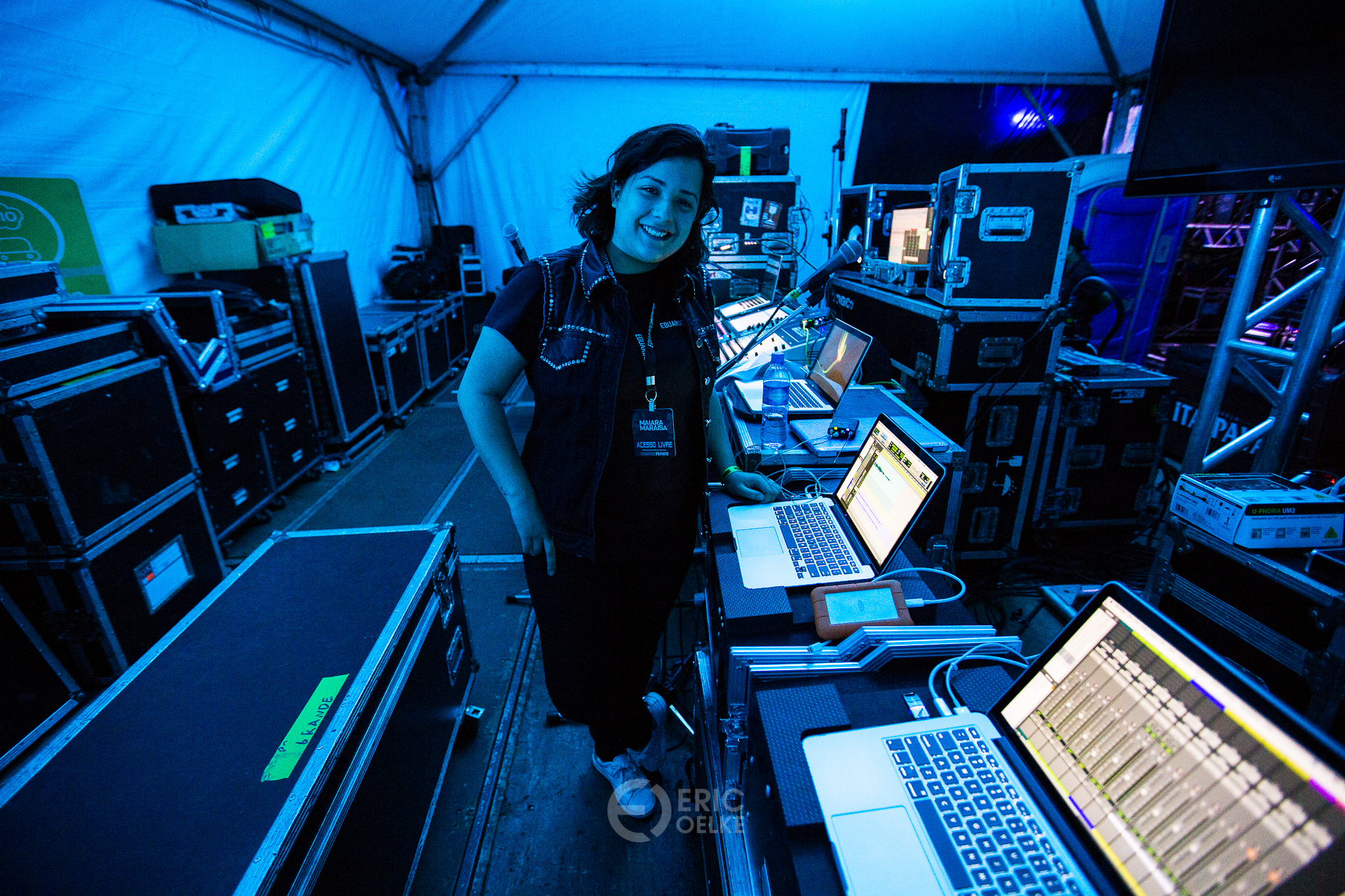
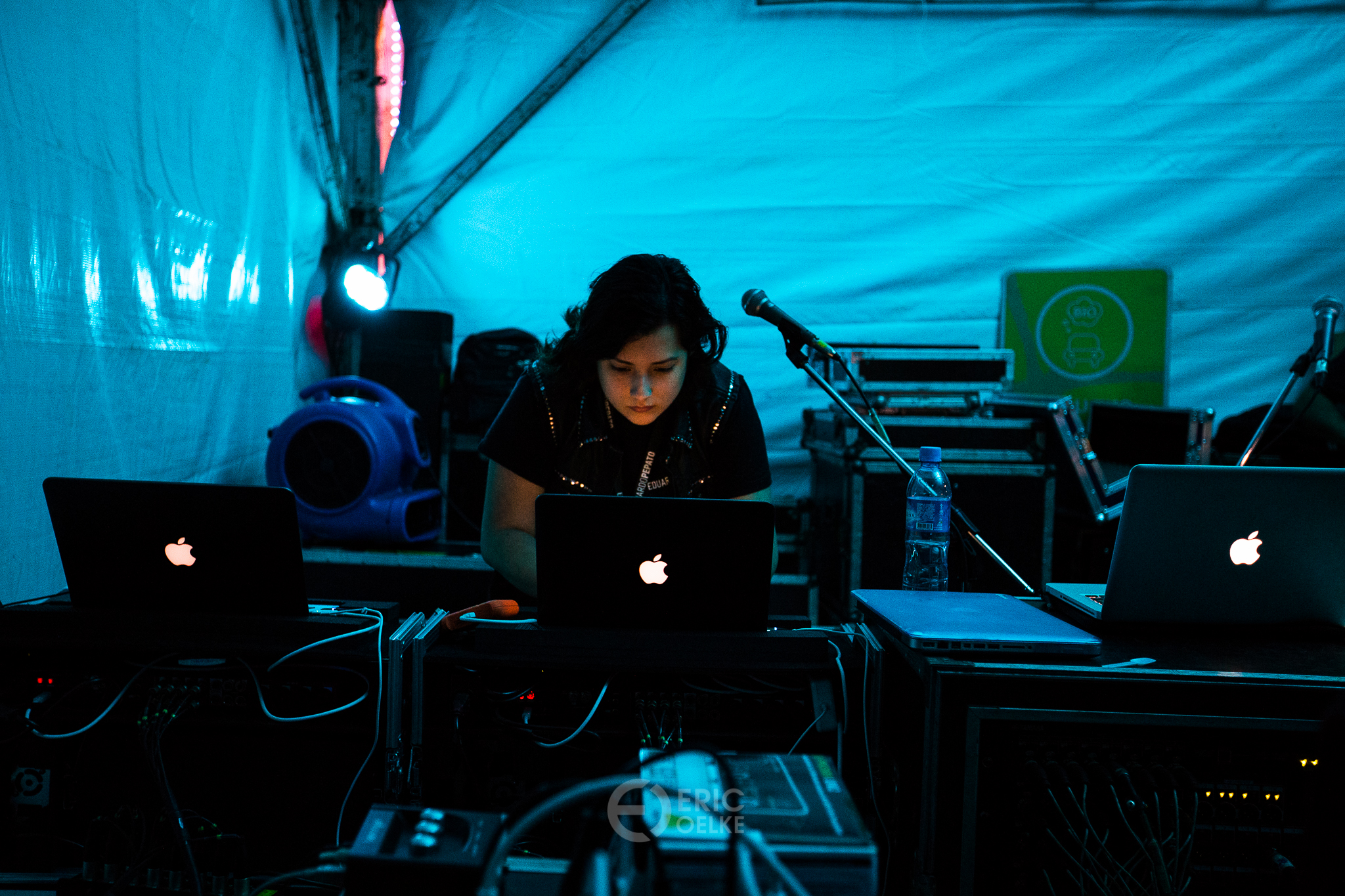
As mentioned before, I run the Pro Tools session using two systems (one is the backup) with a Macbook Pro 2016 running version 11 of the software and the interface Apollo 8 Duo, from Universal Audio, sending the pre-recorded sounds to every place needed. I’m also responsible for all the recorded files and copying them to at least three different external hard drives, for backup. Usually, the rented recording system is always from the same company, which provides us a console mixer AMEK BIG for previous equalization and filters, recording in a ProTools HD, and the backup is made in a TASCAM X48.
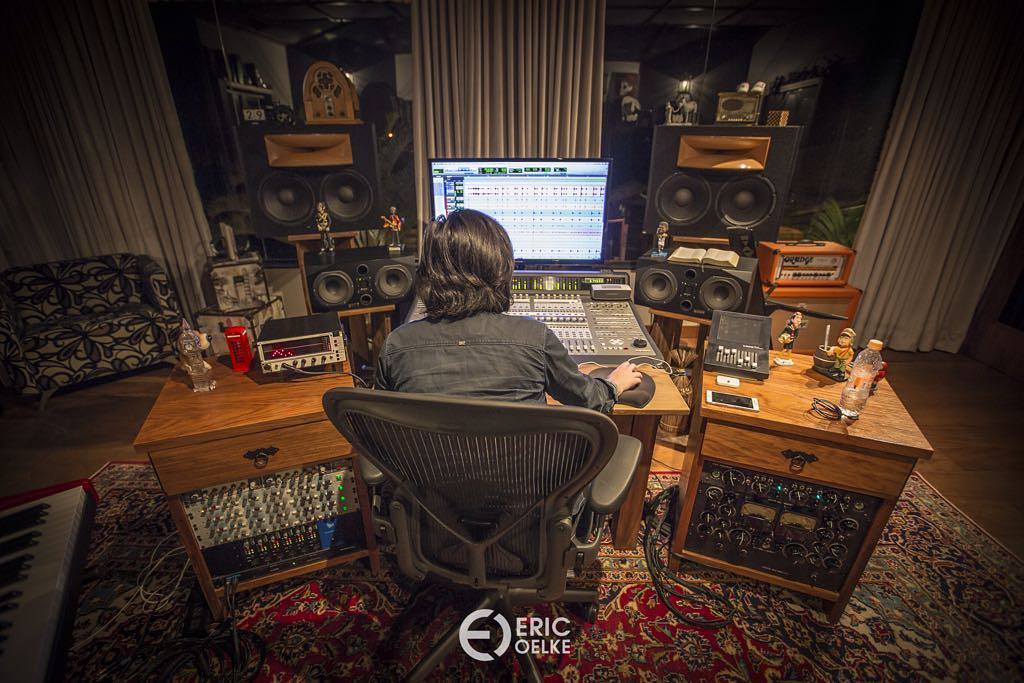
Back in the studio, along with my assistant, we separate the songs individually so that we can edit more easily. After that, I’ll contact the video director and confirm which takes are used, and then start editing. From the live recording, we usually only use the drums, bass, voices and some percussion stuff. If it is necessary, will record in the studio adding overdubs, percussion, and vocals. My favorite DAW for this step is Cubase. Using it, I quantize all the instruments, clean unwanted leaks and add drums samples if my boss (the music producer) wants to. To tune the vocals I use Melodyne.
With all the edited files, I prepare the mixing sessions in ProTools (already with video) for my boss to mix and master. When it’s over, I have to send the songs to the artists to listen and approve them, or to ask for changes they want.
Phew! This is our DVD recording process here!
I would like to say that unfortunately, for the most of the time, I am the only woman in the backstage on the DVDs I work on. Fortunately, I have never faced prejudice from my colleagues. Instead, many of them encourage me and refer me for jobs. I have started my own company, Quantize, which works in parallel with my job as an assistant in the NaHouse studio.
I hope to have more women working with me on the next jobs!
Karen Ávila graduated in Musical Production from Universidade Anhembi Morumbi and has been working with sound for six years. Currently, the assistant for Eduardo Pepato, one of the greatest music producers in Brazil. At least four of the “top 10” songs on Brazilian radio stations, were produced by him. Besides being Pepato’s assistant, she founded “Quantize” – a company specialized in audio editing that serves producers and artists.
Erika Earl – Always be yes-sing! (say it out loud)
Someone once said about Erika Earl, “the building could be on fire, and no one would know because all nine sessions would keep going.” She has made more than a few musicians, engineers, and producers feel good about broken gear or a tough situation.
Earl has been working in the professional audio industry for 15 years. She is currently the Director of Hardware Engineering at Slate Digital. She has worked in key positions in the audio industry, from being the Chief Tech at The Village Studios to running live sound at Coachella, to performing quality control and repair for leading audio manufacturers including Drawmer, Focusrite, Tube-Tech, and Daking. Her passion for audio was ignited at the age of 12 when she was introduced to the recording studio. Her mother booked time for her older sister to record a few American standards in Spanish and brought her along. Earl was captivated by the studio environment and the recording process: “Anyone who has ever walked into a professional recording session with talented artists knows she never wants to leave that room. It’s fucking cool to experience the moment of capture!” Earl knew she wanted to be a part of that process and her technical skills came from realizing she needed a reason to be in the control room beyond a simple desire to be there.
Earl’s education has been non-conventional. While she attended public school, her greatest influence came from observing her immigrant mother who in addition to having five kids, established, owned, and operated several sewing factories: “I think growing up in a factory environment informed my understanding of what ‘work’ is: long hours and sometimes under grueling conditions. I thought I better choose a job I like doing if it’s always going to be that hard.” Her audio engineering education has come from mentorships and a willingness to fail. “I have learned the most from just doing it. I have audited audio production and engineering classes at various institutions over the years. I studied math in college. I volunteer a lot, write and record as much as possible, make giant mistakes, and frequently spend late nights studying up and teaching myself. Many of my friends and mentors are serious musicians, engineers, and sound people. They encourage me to be still and listen, which I have discovered is the best way to learn more. I try and make it a point to be the dumbest and least talented person in my friend circle.”
Erika started as a studio intern working for free. Producer and engineer David Nichols gave her a key to his studio and allowed her to observe and participate as much as she was able during sessions. At night she produced live shows with friends. “My cousin and I had a club night series called Lipgloss and Cigarettes. I would book the bands and arrange the sound production while she was in charge of the venue and creative art direction.
Earl finally got a chance to mix live and get paid for it from Randy Lopez who would hire her to run FOH at a venue in Tucson, Arizona called Plush. Erika says, “I was a pest and just started showing up all the time until one day the sound guy didn’t show up, and there I was foaming at the mouth ready to go. I think Randy appreciated my enthusiasm and mentored me until I could fly on my own.” She also interned with Craig Schumacher at Wavelab, while attempting to fix guitar pedals and cables at Bevins Guitar shop. At the same time, she worked at Epic Cafe serving coffee and vegan scones before sunrise. “Sometimes I would work at every place in town on the same day. A band would be touring and buy a cup of coffee from me in the morning, visit the studio in the afternoon, and then I would run their live sound at night. It was a trip.”
Earl says that at every trade show and conference she made a point of introducing herself to as many manufacturers as possible. “I met Jonathan Little of Little Labs at a TapeOp conference, and he hired me after a working interview. I worked there during the day and then recorded at The Distillery at night. If I wasn’t recording, I was running live sound, or stalking rehearsal spaces in LA looking for bands to work with me.”
After a few years working in LA, she got pregnant and quit everything to go home to Arizona and be closer to her family. She knew she wanted to go back to work, but studio hours and a baby seemed like a miserable combination. “I just didn’t think I was ready to commit to that lifestyle again, so I cold called Tony Marra at Thermal Relief Design on a recommendation from Jay Fitzgibbons (DSPdoctor, LLC) and asked Tony for a job. Thermal Relief was the only authorized service center for many brands I respected at the time. Tony did not have a position available, but I somehow managed to impress him into meeting with me. I moved to Las Vegas and started at Thermal Relief as a tech, receptionist, shipping & receiving person and was eventually promoted to Technical Service Manager.”
Village Techs and Ed Cherney
During her time at Thermal Relief, Earl was invited by Brad Lunde (Trans Audio Group) to work as a tech for his Audio Underground Roadshow which is a traveling high-end audio showcase. At one showcase hosted at The Village Studios Earl was introduced to Studio Manager, Tina Morris. One of Earl’s goals was to work in a large classic commercial studio, and The Village was a perfect opportunity to do just that. About a year after their first meeting, Morris was interviewing Earl for the Chief Tech position. Earl accepted the job and moved back to LA. Earl was in charge of the technical staff and all of the electronics in the building at The Village, including the phone system and internet. “The place is three stories and has four commercial recording studios, eight or nine private studios, two NEVE 88Rs, one NEVE 8048, a NEVE 8068, a Digidesign Icon which we upgraded to an AVID S6, an auditorium, a ballroom, and loads and loads of gear. At one point we had an all female tech staff which was pretty radical. Outside of servicing and maintaining the gear, I was responsible for assisting engineers with any technical support they required, training, and developing new processes and systems. I also helped create the forensic archiving department, design a cam lock and distro for live concerts, build two new rooms, and completely re-wire another”.
Erika is now at Slate Digital and is the Director of Hardware Engineering, where she directs teams and engineers in the technical development of hardware products from concept to launch. She also manages manufacturing and supervises logistics and hardware support. “I sort of perform double duty as Product Manager / Director of Hardware Engineering. Prototyping is one of my favorite things to do. I also really enjoy standards testing. I find radiated emissions fascinating. Working at Slate Companies and keeping up with Steven Slate, Fabrice Gabriel (Slate Digital), Alex Simicev, and Sergey Danilov (Slate Media Technology / Steven Slate Drums) is insanely rewarding. Their ideas and skills are what I imagine X-Men are made of. Our teams are working at the edge of technology using critical, complex, and creative strategies to come up with innovative solutions and tools for everyone. Every role at our company is held by a high-level high-output individual, and that makes it so thrilling to be a part of. I love being surrounded by so many gifted and talented people.”
Erika’s long term goals are:
Circumnavigate the Earth on a sailboat.
Work on useful and creative tools and content, related to audio, and new instruments, for Virtual Reality, Augmented, and Mixed Realities.
Write a song worthy of recording.
Contribute as much as possible, as creatively as possible, in my community and through my work.
What do you like best about your job?
You know what people say “behind every great man is a great woman?” For me, that woman is, Jesse Honig. He’s my right-hand man. In fact, he answered this question for me. After having kids, I have become very selective about work. Anyone who knows me understands how much I enjoy motherhood and contributing to my community. If I am going to spend any time away from my kids, then the work better be worth it. And if I am going to spend more time with any other people than my children, they better be worth it. I feel so lucky to be working with some of the most incredible and inspiring human beings on work I believe in. They are what I like best about my job.
What do you like least?
Working across three different time zones is my least favorite thing about work. I thought after my son turned two I would get to sleep through the night. NOPE. We have engineering teams and clients all over the world.
What if any obstacles or barriers have you faced?
You’ve seen American Ninja Warrior right? You know the moment in the show where they unveil an obstacle and once the athlete gets through it they are awarded a new obstacle…yeah, I think in many ways, and very much by my own design, I have chosen paths which have led to bigger and badder goals which are inescapably riddled with bigger and harder obstacles.
How have you dealt with them?
Practice, patience, and a relentless desire to succeed. A good sense of humor has saved me on more than one occasion. I think it’s extremely important to acknowledge my feelings and then do my best to let anything that doesn’t serve me or the project go. I try and focus on the next logical move and take small steps until I have overcome or maneuvered past the barrier. I rely heavily on my support team of friends and colleagues. Therapy helps a lot. Meditation helps a lot. Exercise and diet help a lot. At the end of each day, my kids remind me of what really matters.
Advice you have for other women and young women who wish to enter the field?
Oh dear, this will be cheesy and probably echo every inspirational calendar you have ever read, but I mean it: take care of yourself. Don’t believe everything you think. Especially when that inner voice is telling you “you suck!”. Define your boundaries. Stand up for yourself even if that means you might lose the job. There will be others. Be honest. Listen more than you speak. Be thoughtful in everything you do, no matter how big or small the job or task is treat it with the same care. Look to your right, look to your left, and make friends. These are your peers and your future community. I am a big believer in you get what you give, and a goal without a plan is just a dream. Never make excuses.
What side of the glass do you prefer? The creative side or the recording side or tech side?
I feel like this is somewhat of a trick question because that’s assuming that being an artist is non-technical and being an engineer is non-artistic which is not often the case. I am a results oriented person by nature. If that means making everyone in the room feel okay about broken gear to continue the creative process, I am happy to bring relief. If that means staying up all night to fix said broken gear, I will do it. Setting up and getting tones are just as thrilling to me. Want to write a song? Come over! I also think creating intuitive interfaces which expose engaging parameters of more complex systems remains one of the most interesting types of work as far as bridging STEM to humanities and the arts. I believe artists and engineers are more alike than different.
Must have skills?
Attention to detail. A “can do” attitude. Must be kind and willing to listen. Admit your mistakes promptly and without emotion (cry later, problem solve first!)
Favorite gear? APx515, Coles 4038, Hakko 888, Flickinger console, ATR 102, Slate MTi2, VMS One, Snap-on anything, Ampex MM1200, Scully 280, RCA BA-6A, M49, Slate Control, I could go on forever!
How do you juggle being such a bad ass in the industry and being a mom?
Wow, thank you! First thing is maintaining that illusion; kids are a lot of work! I have also worked for some incredibly understanding and flexible employers. I sort of feel like kids are on a suicide mission until they are like ten. They see an outlet as a perfect target for a fork! Being a mother is my favorite job. I don’t know, we all have our lives and responsibilities. I just find ways to do the things I want to do, and I start by believing I am capable of it.
Norway – SoundGirls Presents Sound Reinforcement of Acoustic Instruments
SoundGirls Presents Sound Reinforcement of Acoustic Instruments
Asle Karstad is a well know sound designer and engineer having worked with The Oslo Philharmonic Orchestra, The Norwegian Chamber Orchestra, and the Norwegian Jazz and Folk Music. Through his work, Karstad has found different ways of micing various acoustic instruments. Karstad will demonstrate different techniques and the results that can be achieved. Karstad will be joined by well-respected musicians (providing an all women string quartet) from The Norwegian Radio Orchestra, to help demonstrate the techniques.
The workshop will be both theory and hands on.
Program:
10 am – 12 pm
Introduction to the work of Asle Karstad
Karstad will discuss resonance issues on the acoustic guitar and how to deal with these.
12:00 to 1:00 PM: Lunch (can be purchased at the venue)
1 pm – 5 pm – Run-though of reinforcement of the brass, cello, violin and the contrabass.
Yuna Qian’s journey into audio engineering started when she was given a piano by her parents at the age of five. This first instrument planted within Qian a love of music that would grow into a career eventually leading her to work on film scores for movies such as “Captain America: Civil War” along with other famous titles in Hollywood.
Qian grew up in China as an only child. Her parents wanted to give her an instrument to fill her time and help develop her skills. Qian filled her somewhat lonely childhood with playing piano, and though she didn’t play much after college, it marked the beginning of her interest in music.
“When [I was] about to go to college, I didn’t have hesitation to choose my major as Sound Design,” she said. “Since then my career has always been around music.”
This interest would drive her to study it all through college, eventually receiving a bachelor’s degree in Sound Design and Recording Arts from the Communication University of China, and continuing on to receive her master’s degree in Audio Sciences from John Hopkins University.
Since then she’s moved to Los Angeles where she has thrived in the Hollywood film industry. She now works with film score production and post production.
Qian, a member of Audio Engineering Society, works as a studio assistant engineer primarily with the film industry, working with composers in the post production studio. Since early 2016, she has worked at Sacred Tiger Music and Remote Control Productions, both out of Santa Monica, California.
Qian has assisted with movies such as “Captain America: Civil War,” “The Angry Birds Movie,” and “Jack Reacher: Never Go Back.”
Along with her background in Hollywood, Qian also has experience with mixing a range of music projects, from hip-hop and indie to classical full orchestra and jazz ensemble. She has worked as recording and mixing engineer on the “Sanctuary” EP by “Super City,” and “If Ever” EP, by “W4Y1 Collective,” along with other work at Peabody Institute of Musicians.
Though China half-a-world away from the United States, Qian said the work environments aren’t so different. It is much more difficult for women to get hired into technical jobs, citing that employers think men are more capable.
“Female sound engineers are so rare that I could barely recall any,” she said.
But she also says that the norm has already been changed a lot, and that more and more women are making an effort to be “independent” in her generation.
“I am very proud of being one of them,” she said.
She acknowledges how difficult it can be working as a woman in audio, and described her experience as “frightening,” and “overwhelming” at first because of the fast-paced workplace, and the lack of women in similar roles. In her experience Women have to put in more work just to be viewed as competent. She urges women in the industry to focus on their work and to never take no for an answer.
Her favorite console to work on is the Neve 88RS Console, and says that having an in-depth knowledge of Pro-Tools, along with various sound editing software, is necessary skill. The job of sound engineer is synonymous with problem solver, she said and troubleshooting skills are a must. Qian plans to move forward in her career, and said she looks forward to continuing her work on film score projects. She is excited to learn more from film composers by assisting in their work, she said.
“It’s all about music,” she said. “I am passionate about anything related to music and I’m excited for my music career ahead of me.”
By: Sammy Keyes-Levine
X
We use cookies on our website to give you the most relevant experience by remembering your preferences and repeat visits. By clicking “Accept All”, you consent to the use of ALL the cookies. However, you may visit "Cookie Settings" to provide a controlled consent.
This website uses cookies to improve your experience while you navigate through the website. Out of these, the cookies that are categorized as necessary are stored on your browser as they are essential for the working of basic functionalities of the website. We also use third-party cookies that help us analyze and understand how you use this website. These cookies will be stored in your browser only with your consent. You also have the option to opt-out of these cookies. But opting out of some of these cookies may affect your browsing experience.
Necessary cookies are absolutely essential for the website to function properly. These cookies ensure basic functionalities and security features of the website, anonymously.
Cookie
Duration
Description
cookielawinfo-checkbox-analytics
11 months
This cookie is set by GDPR Cookie Consent plugin. The cookie is used to store the user consent for the cookies in the category "Analytics".
cookielawinfo-checkbox-functional
11 months
The cookie is set by GDPR cookie consent to record the user consent for the cookies in the category "Functional".
cookielawinfo-checkbox-functional
11 months
The cookie is set by GDPR cookie consent to record the user consent for the cookies in the category "Functional".
cookielawinfo-checkbox-necessary
11 months
This cookie is set by GDPR Cookie Consent plugin. The cookies is used to store the user consent for the cookies in the category "Necessary".
cookielawinfo-checkbox-others
11 months
This cookie is set by GDPR Cookie Consent plugin. The cookie is used to store the user consent for the cookies in the category "Other.
cookielawinfo-checkbox-performance
11 months
This cookie is set by GDPR Cookie Consent plugin. The cookie is used to store the user consent for the cookies in the category "Performance".
viewed_cookie_policy
11 months
The cookie is set by the GDPR Cookie Consent plugin and is used to store whether or not user has consented to the use of cookies. It does not store any personal data.
Functional cookies help to perform certain functionalities like sharing the content of the website on social media platforms, collect feedbacks, and other third-party features.
Performance cookies are used to understand and analyze the key performance indexes of the website which helps in delivering a better user experience for the visitors.
Analytical cookies are used to understand how visitors interact with the website. These cookies help provide information on metrics the number of visitors, bounce rate, traffic source, etc.
Advertisement cookies are used to provide visitors with relevant ads and marketing campaigns. These cookies track visitors across websites and collect information to provide customized ads.