Empowering the Next Generation of Women in Audio

Join Us

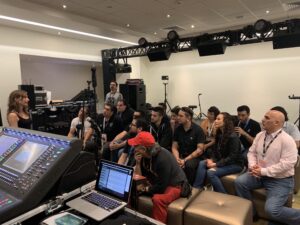
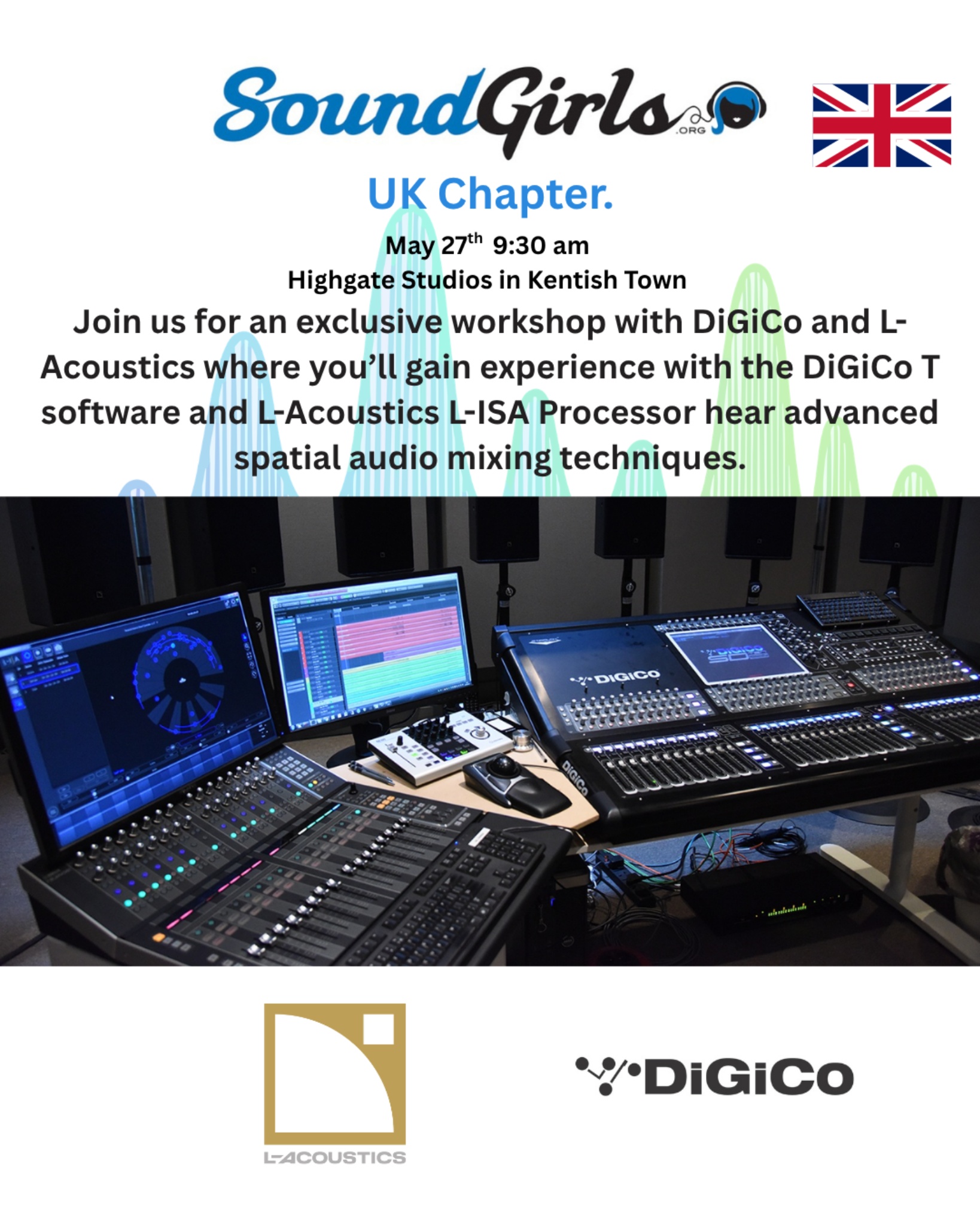
DiGiCo Training – U.K. SoundGirls

Join us for a hands-on training day covering the fundamentals of setting up and running a show on a DiGiCo SD or Quantum console.

Perfect for both first-time users and seasoned engineers looking to refresh their skills.

Explore the KLANG 3D Immersive In-Ear Monitoring system

Get hands-on with the Fourier transform engine

What you’ll learn:

Date: October 2, 2025 Time: 10 AM – 4 PM

Location: Business Park, Unit 5–6 Silverglade, Leatherhead Rd, Chessington KT9 2QL

Register Here 

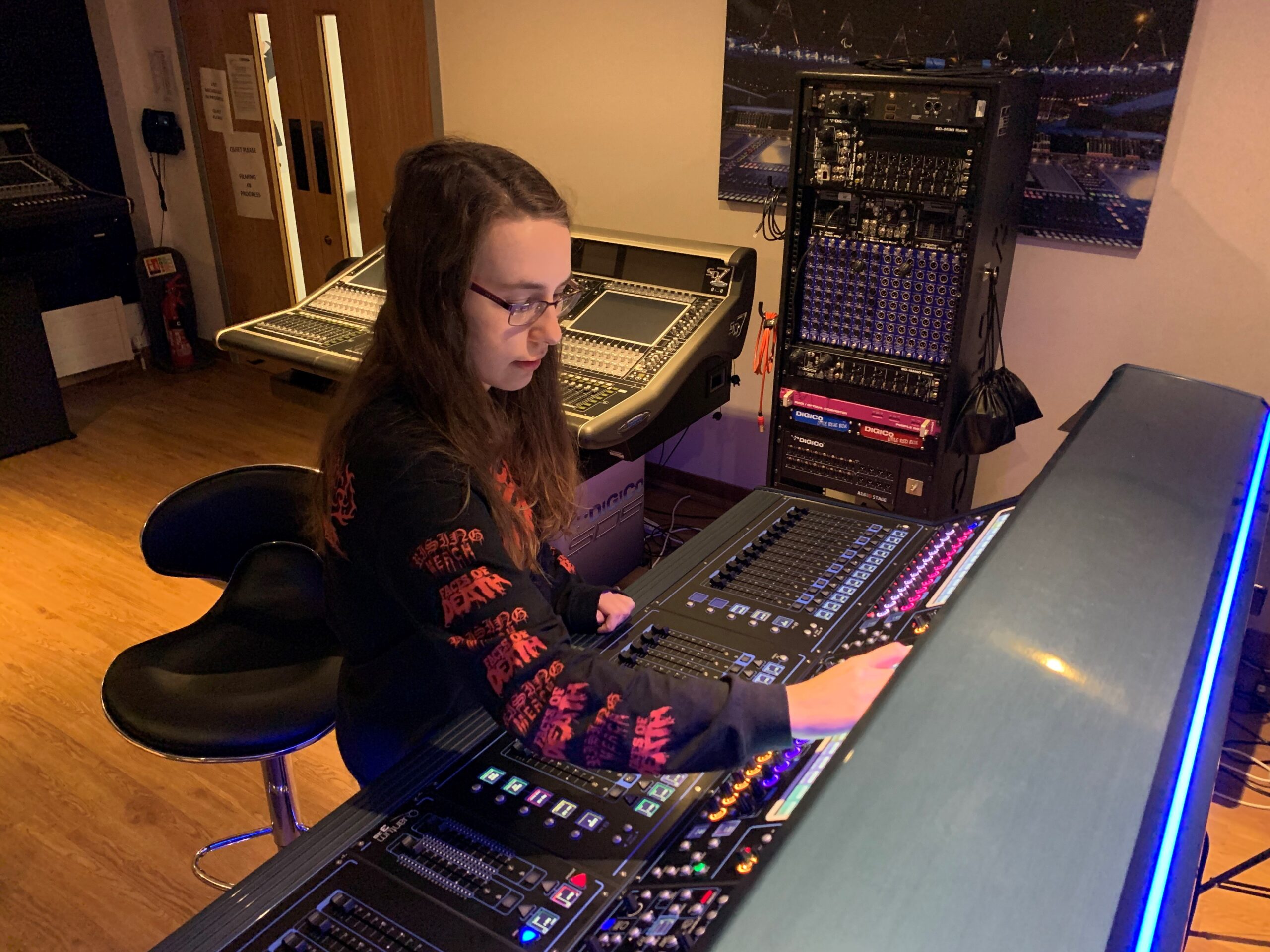
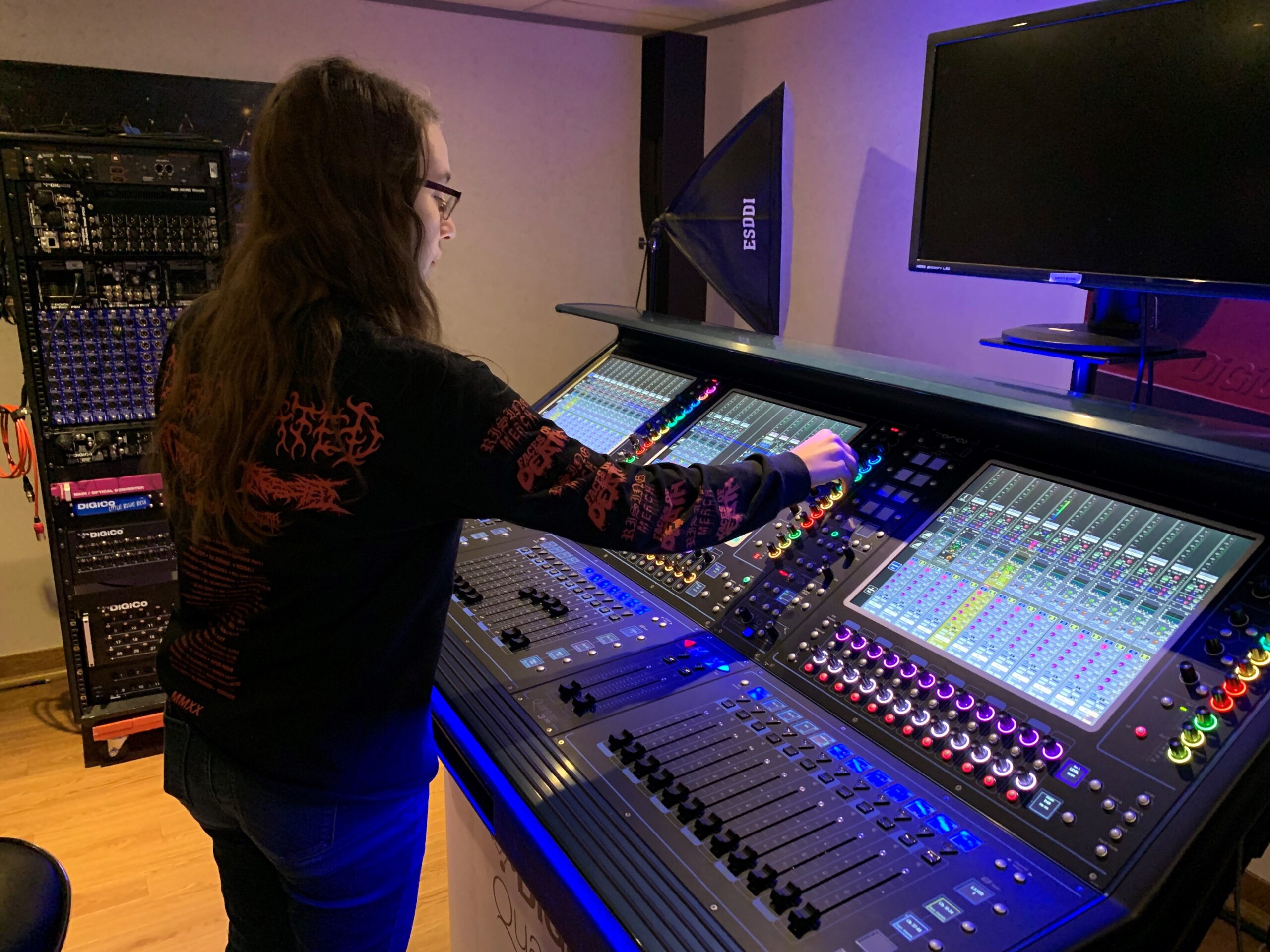
Mollie Autherson – DiGiCo Tech Specialist


Mollie started at DiGiCo on the R&D team during her placement year while attending the University of Surrey. Before finishing the year, she let DiGiCo know that she would love to come back after she finished her degree and she did when they offered her a job in the sales department. At DiGiCo she got an insight into the R&D side of the company that most of the Sales team haven’t had. Things like knowing how the different parts of the console engines work together and how the code that the software department writes works. From knowledge, she can track faults down more easily and have a better idea about which part of the console is causing it. She also understands what’s possible in the console in terms of new features, as well as what sort of system configurations are possible and more importantly why they are or aren’t possible.

Early Life

Music has been a big part of Mollie’s life, she started taking music lessons and learning to play the trumpet when she was eight. She would join different ensembles and spend most of the week in rehearsals and lessons, and she got the opportunity to tour Europe a couple of times and perform at the Royal Albert Hall.  Around the age of 12, Mollie developed a love for metal music and would teach herself how to play the guitar.

Then Mollie got a  MacBook and discovered GarageBand

“I found an app with a picture of a guitar as the logo. I thought it looked cool so I clicked on it. I’m sure that anyone who’s into audio and has used a Mac will know that this was GarageBand. After some playing around on the app I realized that I could use it to record my guitar, add drums and write my own music. I started watching YouTube tutorial videos and trying to learn about what else I could do with the software. It was this insight into audio that led me to study Music Tech in Sixth form as one of my four subjects.”

Mollie would study Maths, Further Maths, Physics, and Music Tech at Sixth form. “As part of the Music Tech course we did work in the studio and I also ran the live sound team for the Sixth form through this. It was during that time when I realized there were careers in audio, including technical ones that could incorporate with Math and Physics that I enjoyed.” She would then enroll at the University of Surrey where she would take the Tonmeister course, which included music and sound recording, and would graduate with a BSc 2.1

Career Start

I got my start with my university placement year which I did at DiGiCo. When I started University, I wanted to work in a recording studio but after doing some recording sessions at Uni, I soon realized that I didn’t enjoy them enough to want to do it as a job. I’d spent far too many nights in the studio at 4 am waiting for bands to be creative when I just wanted to go to bed. I had to start looking at other audio careers and saw a technical placement at DiGiCo. I’d never heard of them but thought that my experience in college doing live sound could make me a suitable candidate for the job. I applied, got the job, and then fell in love with the live audio industry.

How did your early internships or jobs help build a foundation for where you are now?

For my placement year at DiGiCo, I was working in the R&D team. My job was to test the consoles to find software bugs in the software updates or new consoles. As you’d imagine, after a year of using DiGiCo consoles every day, I learnt how to use them inside-out. I also got an insight into the R&D side of the company that most of the Sales team haven’t had. Things like knowing how the different parts of the console engines work together and how the code that the software department writes works. From this, I can track faults down more easily and have a better idea about which part of the console is causing it. I can also understand what’s possible in the console in terms of new features, as well as what sort of system configurations are possible and more importantly why they are or aren’t possible.

What did you learn interning or on your early gigs?

I learnt a lot of technical stuff – things like the difference between SMUX and Hi-Speed MADI, how to set up networks, how to use Dante, etc.

Did you have a mentor or someone that really helped you?

The whole team at DiGiCo was really supportive and willing to help out with any problems or questions I had. The team is like a big family and everyone made sure that I was getting on alright when I joined. They’ve also made sure to introduce me to people and help me start networking.

Career Now

What is a typical day like?

My days vary so much. Some days I’ll be writing technical data sheets for our products or adding technical bits to the website, some days I’ll be showing sound engineers how to use our consoles, or even doing some testing work for R&D. Since coronavirus hit, we’ve really increased the number of videos and webinars that we are creating to make up for the fact that we can’t visit customers or have them come into the demo room. I’ve become heavily involved in making videos so most days over the past few months I’ve been either writing scripts for videos, filming, video editing, or setting up our video kit for webinars.

How do you stay organized and focused?

I find keeping lists very useful. It helps me visualize everything that I have to do and prioritize the things that need doing more urgently.

What do you enjoy the most about your job?

I get the chance to meet all sorts of people and travel but without having to live on the road for weeks at a time. There’s also plenty of variation in my work to keep things interesting and I’m constantly learning new things. I also enjoy getting to see our consoles being used out and about. Going to gigs has been a hobby of mine since I was young, and I love going to see my favorite bands and seeing them use our stuff.

What do you like least?

Spending days on end editing videos can get a bit tedious. I enjoy doing it but I don’t like being sat at my desk for too long!

What is your favorite day off activity?

Either spending the day playing guitar or working on a guitar-building project.

What are your long-term goals?

I’d like to stay in the audio industry and continue meeting people and making lifelong friends.

What if any obstacles or barriers have you faced?

On a few occasions when talking to people at trade shows and exhibitions etc., I’ve felt like they’ve underestimated my technical knowledge because I’m a young woman. The audio industry has always been male-dominated but there are still very few women on the technical manufacturing side.

How have you dealt with them?

Just smile and prove them wrong!

Advice you have for other women and young women who wish to enter the field?

It’s said all the time, but it’s true that the only stupid questions are the ones that don’t get asked. If you’re unsure, just ask. It’s better to ask a question and get something right than to not ask and get something wrong.

I’d also recommend keeping a little notepad with you. When you learn something new and interesting/useful, write it down. That way, it solidifies it in your head but also means that you can look back on it in the future if you need a refresh. I’m forever referring back to my notepad and even getting requests from other people to have a look at it.

Must have skills?

You’ve got to be good at listening in this industry. Whether it’s listening to your mix in order to make it better or listening to other people. When I’m showing people how to use our consoles, I think the most important thing is to listen to them. Find out what they already know, what they don’t know, find out what sort of things they want to do with the console so that you can focus on features that will benefit them. There is no ‘one size fits all’ when it comes to console demos and training.

Favorite gear?

I guess I have to pick a DiGiCo console here! My favorite is the Quantum338. It’s a gorgeous-looking console, the screens are big and bright, and it has all of the great features that come with the Quantum consoles. I’m a big fan of the SD12 but miss the Mustard Processing and Spice Rack when I’m using it. The DMI-KLANG is also a personal favorite when I’m using a console like the Quantum338 or the SD12. So much power on a tiny card. After having heard the immersive mixing from a musician’s point of view, I understand why people don’t want to go back to stereo after having used it.

More on Mollie

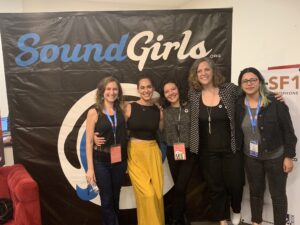
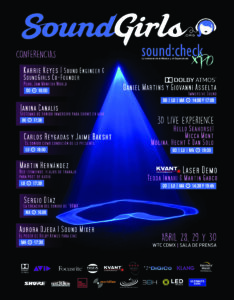
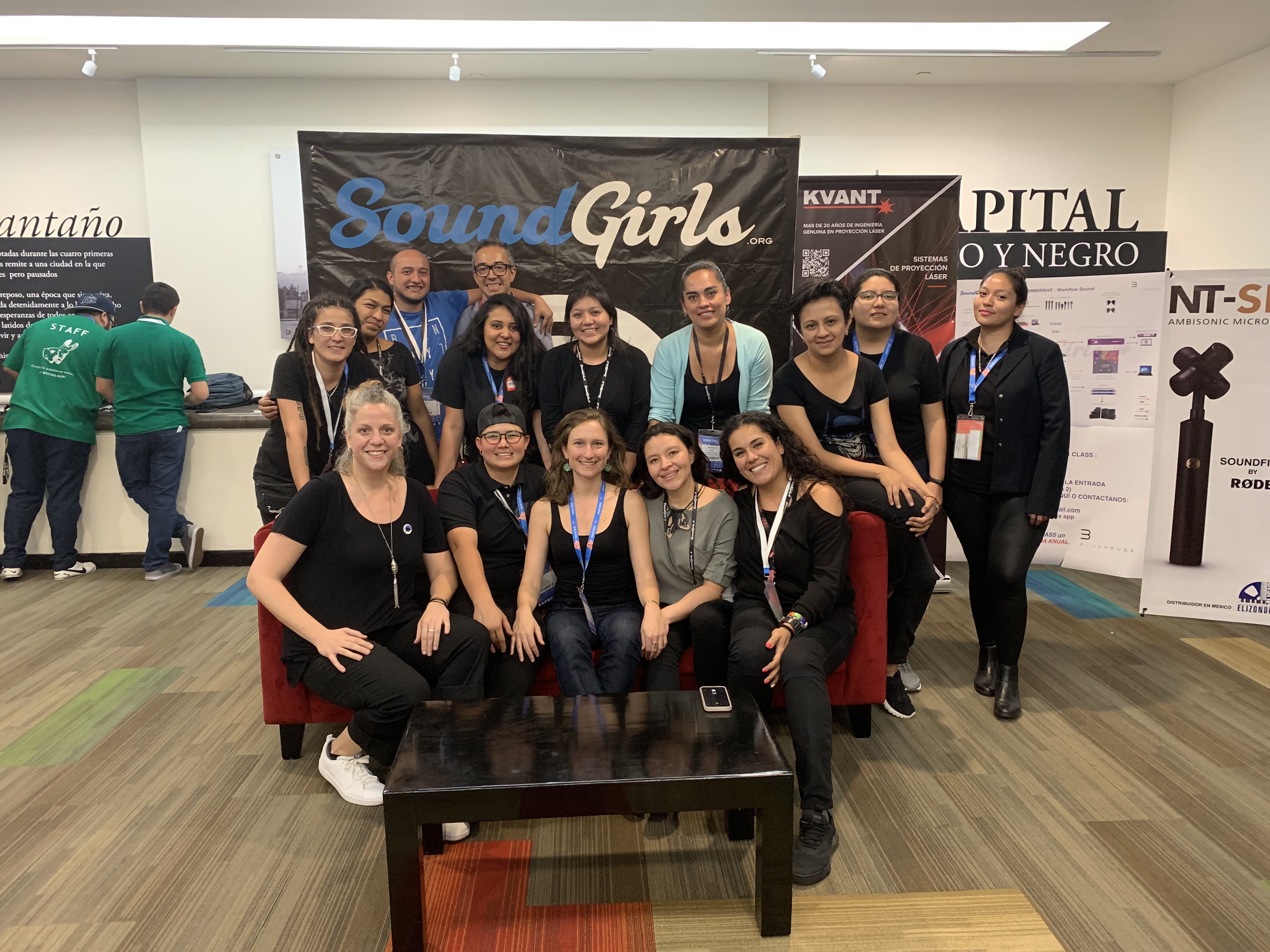
SoundGirls México en sound:check Xpo 2019

SoundGirls es una organización sin fines de lucro que busca generar una red profesional para apoyar principalmente a las mujeres, ya que estadísticamente representamos el 5 por ciento dentro de la industria de la música y producción.

Este año, SoundGirls en México rompió paradigmas y prejuicios, gracias a la unión de personas que eligieron romper fronteras mentales y apostaron por el camino del arte, la creación y la tecnología.

Como cada año desde 2015, soundgirls.org ha sido acreedor a un espacio dentro del evento más importante de la industria actualmente en Latinoamérica: sound:check Xpo. Gracias al acercamiento con su director general, Jorge Urbano, hemos sido anfitrionas y creadoras de experiencias diferentes para miembros de la organización y para el público en general, sin distinción de género.

Soundgirls.org sede México inició dentro de sound:check Xpo con un espacio muy pequeño, suficiente para comenzar la convocatoria en CDMX. Cada año nos hemos dado a la tarea de generar espacios innovadores y únicos, siendo pioneras en la implementación de la tecnología y el arte, proponiendo un tema diferente en cada una de nuestras participaciones.

Cuatro años, después con una estructura mucho más fuerte y gracias a un equipo de profesionales dentro de la industria, además del apoyo de grandes empresas como patrocinadores, logramos realizar una experiencia jamás vivida anteriormente con el tema “Sonido Inmersivo”.

Desde noviembre de 2018, dio inicio una idea poco convencional, que fue presentar nueva tecnología en el país, aunada a la implementación de protocolos poco utilizados y explorados actualmente en América Latina. Fue en enero de 2019, dentro de The NAMM Show 2019 (Anaheim, California, Estados Unidos), que se dio la  reunión con la co-fundadora de SoundGirls, Karrie Keyes, y fue entonces que comenzó el acercamiento con diferentes marcas, en busca de patrocinadores para llevar a cabo esta experiencia en México.

El primer reto fue contar con el apoyo de empresas que llevaran a cabo la importación del equipo necesario para tan ambicioso proyecto. Poco a poco se fue aterrizando la idea general, la cual fue mostrar algunos formatos de sonido inmersivo (360 grados, 3D y Atmos), aplicados en su mayoría para sonido en vivo. Gracias a mi trayectoria profesional, pude tener acercamiento con los especialistas dentro de cada área, quienes en su mayoría, al escuchar la idea, no dudaron en apoyar.

Ya que nos quisimos enfocar a sonido en vivo, el mundo inmersivo de monitores fue controlado por KLANG, para brindar monitoreo personalizado a los músicos en un formato binaural con sonido 3D. Cuando comencé a plantear cuál sería el formato de mezcla para FOH, me enfrenté con el mayor reto dentro de este proyecto, ya que desafortunadamente ninguna de las marcas reconocidas dentro del mercado del sonido inmersivo en vivo quiso participar, pero esto no fue obstáculo y seguí con la idea original sin desviar mi objetivo principal: hacer y mezclar por primera vez en México un show en vivo con sonido de estas características.

Para el mes de febrero, teníamos confirmadas la mayoría de las ponencias, pero aún no sabíamos si Karrie Keyes nos acompañaría y no teníamos forma de mezclar FOH en un formato inmersivo.

Poco después se lanzó, a través de la plataforma de SoundGirls, una petición para voluntarias dentro del booth, sin contar aún que es lo que se llevaría a cabo dentro de él. La respuesta fue maravillosa, muchas mujeres comenzaron a responder para apoyar auténticamente el evento y por primera vez, mujeres del interior de la República Mexicana y de otros países latinoamericanos viajaron a México para colaborar

Se comenzó a formar el equipo de profesionales, comenzamos juntas colaborativas y repartición de áreas de trabajo que funcionarían como guías con las voluntarias (un tipo de mentoras para los participantes). Por otro lado, aún no sabía cómo se mezclaría el FOH con sonido inmersivo.

A mediados de febrero, el equipo de Dolby.lab Brasil, encabezado por Daniel Martins, junto con Daniel Castillo, se unieron al proyecto, dando la opción de obtener un equipo muy especial y único, propiedad de Dolby, con el cual se realizan mezclas en tiempo real para broadcast, pero desafortunadamente, debido a la premura, no logramos realizar el tramite correspondiente. Fue entonces que un mes antes de dar inicio al evento, Marina Bello (ingeniera de sonido), confirmó su asistencia como guía y encargada de monitores, y al integrarse más al proyecto, me contactó con Ianina Canalis, ingeniera de sonido argentina que programó como tesis un software para mezclar FOH en formato inmersivo aplicado a sonido en vivo (ISSP).

Inmediatamente me puse en contacto con ella para saber su disposición y platicarle de SoundGirls y me sorprendió saber que ya era miembro de la organización desde hace varios años. Después de video-conferencias México-Londres, se decidió que Ianina viajara a México presentado su software (ISSP) y formara parte de un acontecimiento único: mezclar por primera vez en México y Latinoamérica sonido en vivo con un sistema inmersivo. Ianina se sumó al equipo y se incluyó dentro de las conferencias, mientras que por otro lado, Karrie Keyes confirmó su visita a México para representar a soundgirls.org.

Todo el mes de marzo estuvimos en el estudio de 3BH para realizar pruebas y pre-mezclas y platicar con los músicos intrépidos y aventureros a quienes les expliqué, en mi punto de vista, cuál es la mejor forma de presentar y mezclar en un sistema inmersivo, por lo que decidimos que para mantener un sweet spot o CLA, con mayor cobertura y mayor definición, todos los instrumentos deberían de ser digitales, exceptuando la voz y bombo para algunos músicos. Esta idea fue para evitar, el mayor sonido directo proveniente del escenario (contaminación acústica) y pudiéramos mezclar de una forma inmersiva la mayor cantidad de canales en un formato 360 grados.

Junto con este sistema de sonido, también se realizó un diseño especializado de lásers, así como luces para los shows y proyecciones, con el fin de generar dimensiones 3D para los diferentes sentidos.

El resultado que se obtuvo en todas las actividades dentro del booth de SoundGirls, fue gracias a la suma del conocimiento de todas y cada una de las personas que hicieron posible esta gran experiencia, lo que marcó un nuevo conocimiento, una nueva tecnología y una nueva forma de escuchar y mezclar el sonido.

Especialistas, ingenieros, estudiantes, técnicos, artistas y ponentes aportaron de gran forma para impulsar la industria, buscando nuevas formas de arte, nuevos retos y desafíos que compartimos todos los que hicimos esto posible.

¡A todos y cada una de las/los participantes, gracias!

Después de compartirles mi experiencia de cómo una idea se fue haciendo realidad, quiero compartirles una etapa fundamental que nos permitiría estar seguros de que realmente funcionará todo el sistema en conjunto; esto es, entender todo el flujo de señal que llevaremos a cabo. Yo sé que para muchos que me acompañan hasta aquí, sabrán que es sumamente importante. El principal desafío para todos, fue unificar lo más posible los diferentes sistemas de reproducción de sonido inmersivo.

Comenzamos con el diseño de altavoces y normas para los diferentes sistemas:

Las normas que se utilizan en formatos ATMOS (broadcast y cine),  son específicas y detalladas. Debemos seguir una ecualización especial (dependiendo del volumen de cuarto), así como dependiendo del formato (5.1,7.1 & Atmos), debemos respetar una presión sonora por formato.

Sonido en vivo de sistema inmersivo

Para tener mayor cobertura, se colocan arreglos de bocinas a la misma altura y distancia, preferentemente de 5 a 7 sistemas al frente (número impar), con un refuerzo sonoro en los costados y en la parte trasera del recinto, cubriendo un área de 360 grados. Tomando esto en cuenta, lo primero con lo que nos enfrentamos es hacer un diseño para el refuerzo sonoro inmersivo con Dolby y para hacer una mezcla de sonido en vivo.

El diseño sonoro del recinto se realizó con el software especializado DARDT ( Dolby Audio Room Design Tool) de Dolby.Lab, en donde se hizo el arreglo de altavoces en 7.1.4. Se utilizó un total de doce altavoces con salidas discretas (señal independiente), mientras que para el diseño de sonido en vivo se utilizó el software MAPP de Meyer Sound. Básicamente, la diferencia entre uno y otro fue cambiar el altavoz central, que para Dolby debe estar a la altura de escucha (1.20 metros). Para sonido en vivo se utilizó un sistema suspendido en el soporte frente al escenario, junto con los demás puntos de PA.

Para el procesamiento de la señal, usamos dos Galileos (Meyer Sound), en los cuales se programaron snapshots para llamar memorias con los diferentes formatos que se calibraron, siguiendo las normas correspondientes (antes mencionadas), en este caso, 7.1, ATMOS y sonido inmersivo 360 grados para la mezcla en vivo.

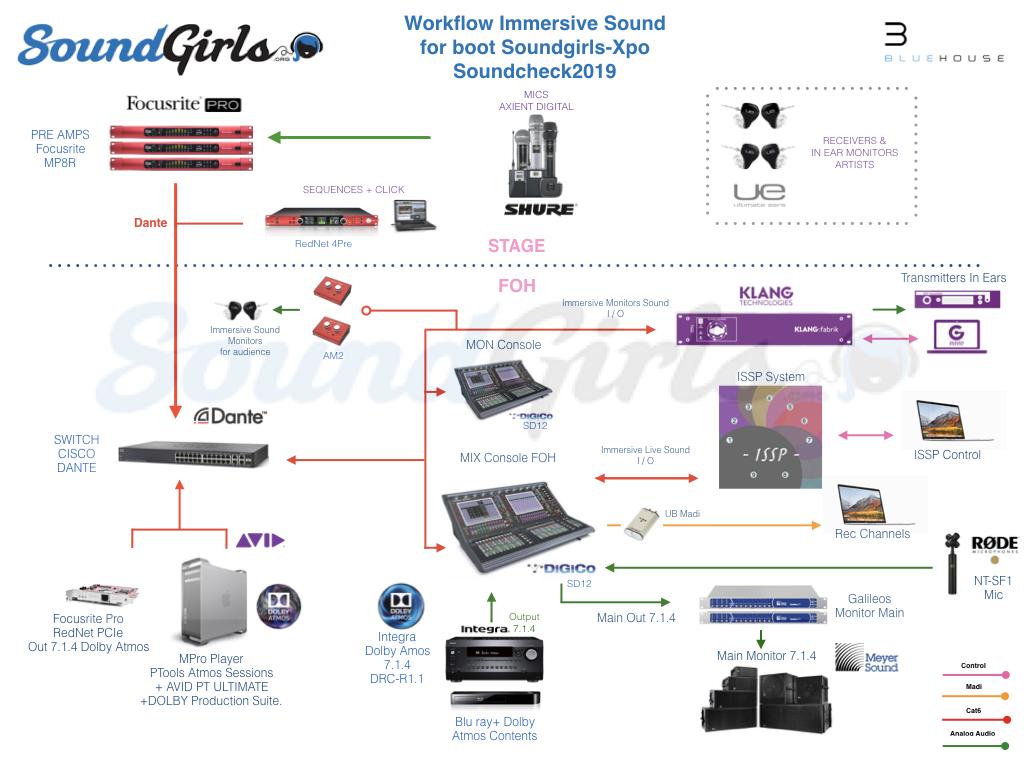
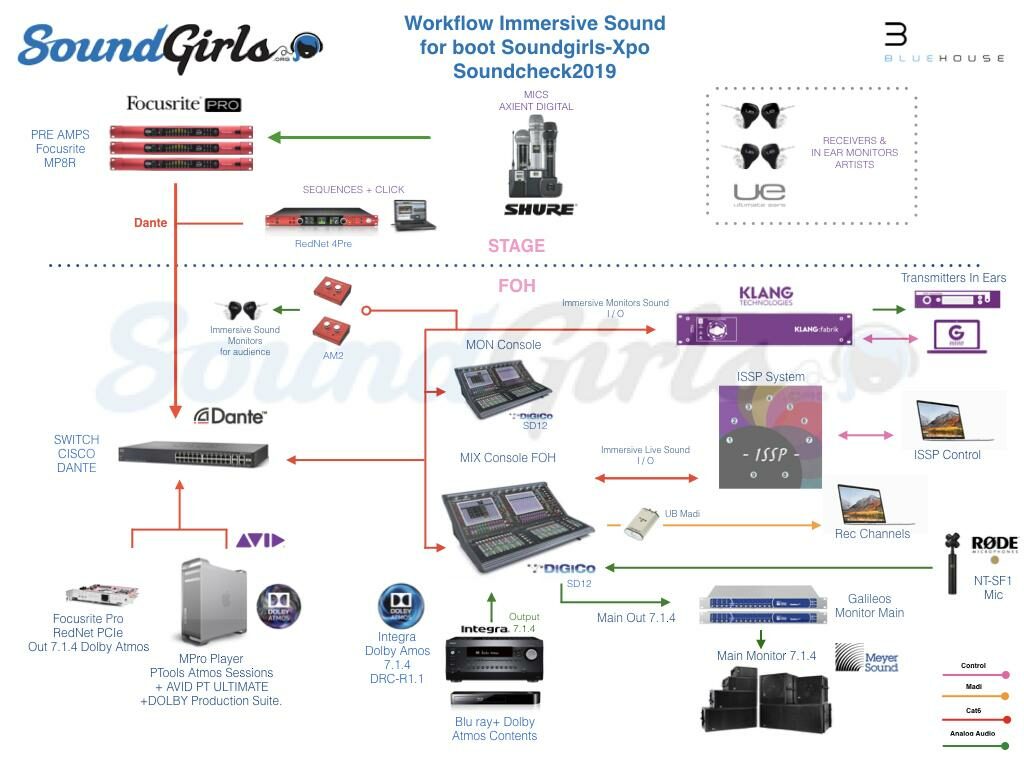
Otro gran reto fue no utilizar snake analógico y sustituirlo por cableado ethernet CAT6, usando como preamplificadores interfaces REDNET Focusrite con splitter digital, de forma que nuestro principal protocolo de transmisión fue DANTE – Audinate, evitando así múltiples conversiones AD/DA.

Todos los sistemas fueron interconectados por medio de un switch CISCO, creando una red donde usamos todos los recursos; esto es, 64 canales de entrada con 54 canales de salida digitales , para sincronizar todos los sistemas, se utilizó el reloj de la consola de FOH (Clock Master) vía DANTE.

Por otro lado, se reprodujeron sesiones en Pro Tools en formatos 7.1 y con el software para sonido inmersivo de Dolby Atmos Renderer, para mostrar el área de entretenimiento en casa, se utilizó un AV Integra para reproducir contenido ATMOS de un bluray, USB y Apple TV.

En el mundo de los monitores, se hicieron ocho mezclas estéreo con IEM Shure PSM900, utilizando audífonos Ultimate Ears y como hardware sonido 3D binaural, se utilizó el sistema KLANG. Cabe mencionar como dato importante, que no se utilizaron monitores de piso y la audiencia tenia acceso a una mezcla inmersiva utilizando interfaces AM2 de Focusrite.

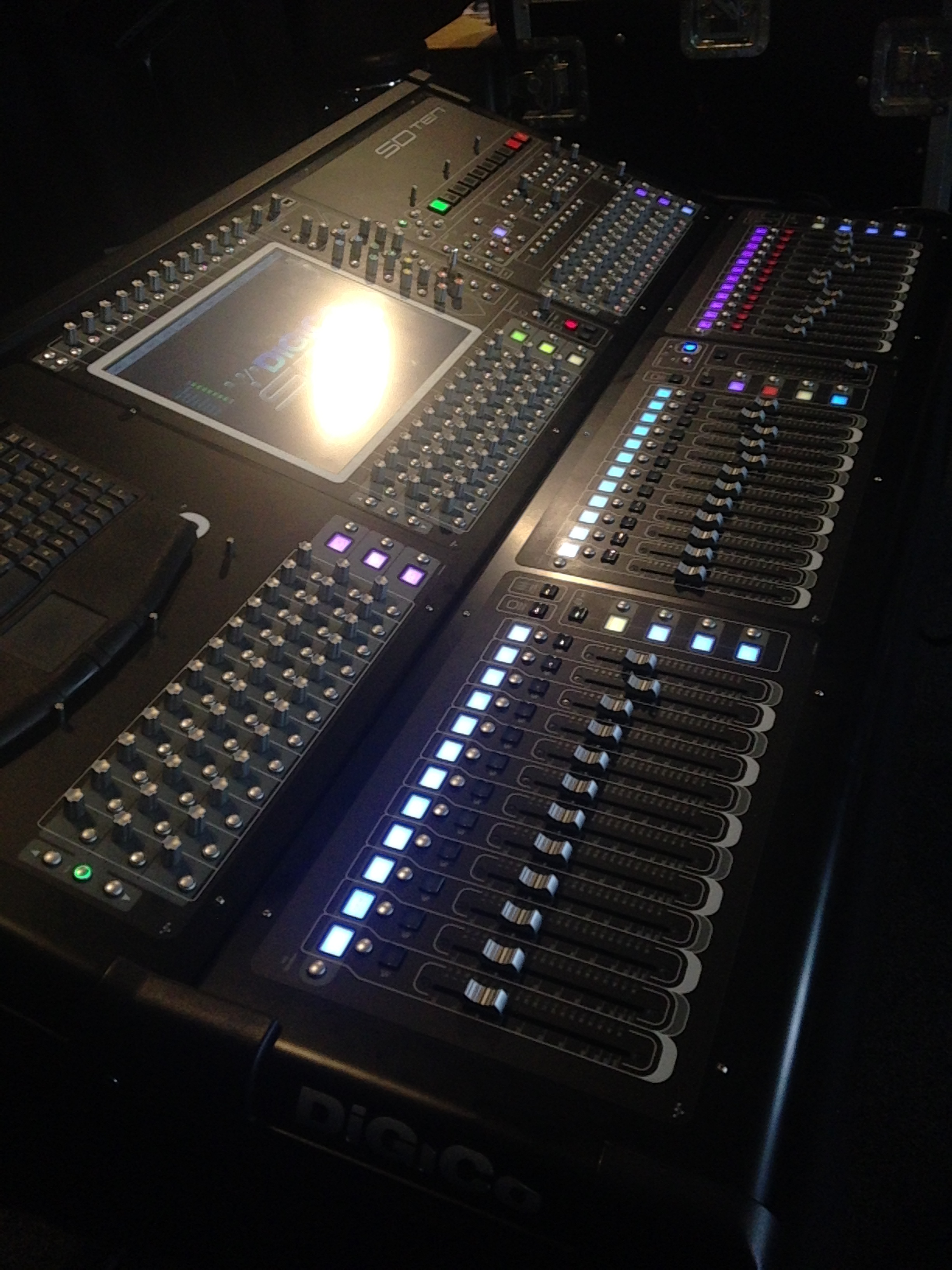
Por último, se realizó una grabación multi-track de todos los canales de entrada, junto con un micrófono Ambisonics Rode NT- SF1 por medio de UBMADI, utilizando consolas Digico SD12 con tarjeta DMI DANTE y un Rack D2. El sistema de microfonía inalámbrica fue SHURE AXIEN DIGITAL.

Diagrama del flujo de señal.
 

SoundGirls México on sound: check Xpo 2019

SoundGirls is a non-profit organization that seeks to generate a professional network to support mainly women since statistically, we represent the 5 percent of women working in professional music and production industry.

This year, SoundGirls in Mexico broke paradigms and prejudices, thanks to the union of people who chose to break mental boundaries and bet on the path of art, creation, and technology. We wish to thank our sponsors Digico, Klang, Meyer Sound, Dolby, and sound: check Xpo.

Every year since 2015, SoundGirls has been awarded a space within the most important event in the industry currently in Latin America: sound: check Xpo. Thanks to the general director, Jorge Urbano, we have been able to host creators and different experiences for members of the organization and the general public, without distinction of gender.

SoundGirls Mexico started inside sound: check Xpo with a very small space, enough to start the call in CDMX. Each year we have given ourselves the task of generating innovative and unique spaces, being pioneers in the implementation of technology and art, proposing a different theme in each of our participation.

Four years later we are a much stronger structure, and with the help of a team of professionals within the industry, and the support of professional companies as sponsors, we managed to provide an experience with the theme “Immersive Sound.”

Since November 2018, an unconventional idea began, which was to present new technology in Mexico, coupled with the implementation of protocols not used or currently explored in Latin America.

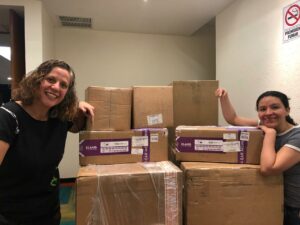
The first challenge was to have the support of companies that carried out the import of the necessary equipment for such an ambitious project. Little by little, the general idea was landed, which was to show immersive sound formats (360 degrees, 3D and Atmos), applied mostly for live sound.

Since we wanted to focus on live sound, the immersive world of monitors was controlled by KLANG, to provide personalized monitoring to the musicians in a binaural format with 3D sound. When I started to think about the mix format for FOH, I faced the biggest challenge in this project, since unfortunately none of the recognized brands within the live immersive sound market wanted to participate, but this was not an obstacle, and I followed with the original idea without diverting my main objective: to make and mix for the first time in Mexico a live show using immersive sound.

In mid-February, the team of Dolby.lab Brazil, headed by Daniel Martins, along with Daniel Castillo, joined the project, allowing us to work with a special and unique team.  Marina Bello (sound engineer), confirmed her assistance as a guide and was in charge of monitors, and as she became more involved in the project, she connected me with Ianina Canalis, an Argentinean sound engineer who  has programmed and designed software to mix FOH in an immersive format applied to live sound (ISSP).

Immediately I contacted Ianina to discuss SoundGirls, and I was surprised to know that she was already a member of the organization for several years. After the Mexico-London videoconferences, it was decided that Ianina would travel to Mexico to present her software (ISSP) and be part of a unique event: mixing for the first time in Mexico and Latin America live sound with an immersive system. Ianina joined the team and was included in the lectures. Check out ISSP here

Shortly afterward, a petition for volunteers inside the booth was launched through the SoundGirls platform, without even saying what would take place inside it. The response was wonderful, many women began to respond to support the event and for the first time, women from the interior of the Mexican Republic and other Latin American countries traveled to Mexico to collaborate

The team of professionals began to be formed, we started collaborative meetings and shared areas of work that would work as guides with the volunteers (a type of mentor for the participants).

The whole month of March, we were in the studio of 3BH to do tests and pre-mix and talk with the adventurous musicians who would play and be mixed in immersive sound.  We decided that to maintain a sweet spot or CLA, with greater coverage and greater definition, all instruments should be digital, except for the voice and bass for some musicians. This idea was to avoid the direct sound coming from the stage (noise pollution), and we could mix in an immersive way the most channels in a 360-degree format.

Along with this sound system, specialized design of lasers were showcased, as well as lights and projection, to generate 3D dimensions for the different senses.

The result that was obtained in all the workshops and seminars at the SoundGirls Venue was thanks to the sum of the knowledge of every one of the people that made this great experience possible, which provided new knowledge and technology and a new way to listen and mix live sound.

Specialists, engineers, students, technicians, artists, and speakers contributed in a great way to boost the industry, looking for new forms of art and challenges.

To each and every one of the participants, thank you!

I want to share with you the fundamental stage that would make sure the entire system would work together. The main challenge for all of us is to unify as much as possible the different immersive sound reproduction systems.

We started with the design of speakers and standards for the different systems:

The standards used in ATMOS (broadcast and cinema) formats are specific and detailed. We must follow a special equalization (depending on the volume of the room), as well as depending on the format (5.1.7.1 & Atmos), we must respect sound pressure by format.

Live Sound – The Immersive System

To have greater coverage, speaker arrays are placed at the same height and distance, preferably from 5 to 7 systems at the front (odd number), with a sound reinforcement on the sides and at the back of the enclosure, covering an area of 360 degrees. Taking this into account, the first thing was to design a system with Dolby.

The sound Design for the venue was designed with Dolby.  Using Lab’s Dolby Audio Room Design Tool (DARDT) software, the speaker arrangement was made in 7.1.4. A total of twelve loudspeakers with discrete outputs (independent signal) were used. Meyer Sound MAPP software was used for the system. Basically, the difference between one and the other was to change the center speaker, for Dolby, it must be at listening height (1.20 meters). For live sound, we used a system suspended in front of the stage, together with the other PA points.

For the processing of the signal, we use two Galileos (Meyer Sound), in which snapshots were programmed to call memories with the different formats that were calibrated, following the corresponding norms (previously mentioned), in this case, 7.1, ATMOS and sound Immersive 360 degrees for the live mix.

Another challenge was not to use an analog snake and replace it with CAT6 ethernet cabling, using REDNET Focusrite interfaces with the digital splitter as preamplifiers, so that our main transmission protocol was DANTE – Audinate, thus avoiding multiple AD / DA conversions.

All the systems were interconnected using a CISCO switch, creating a network where we use all the resources; that is, 64 input channels with 54 digital output channels, to synchronize all the systems, the clock of the FOH (Clock Master) console was used via DANTE.

Pro Tools sessions were reproduced in 7.1 formats and with Dolby Atmos Renderer immersive sound software, to show the home entertainment area, an Integra AV was used to play ATMOS content of a bluray, USB and Apple TV.

In the world of monitors, eight stereo mixes were made with IEM Shure PSM900, using Ultimate Ears IEMS and the binaural 3D KLANG system was used. It is important to mention that no floor monitors were used and the audience had access to an immersive mix using AM2 interfaces from Focusrite.

Finally, a multi-track recording of all the input channels was made, along with an Ambisonics Rode NT-SF1 microphone through UBMADI, using Digico SD12 consoles with DANTE DMI card and a D2 Rack. The wireless microphone system was SHURE AXIEN DIGITAL.

Diagram of the signal flow.


A Brief History of Theatre Sound Consoles with Autograph Sound

Last Monday the Europe Chapter of Soundgirls.org had the opportunity to learn about theatre sound from one of the top names in the business: Autograph Sound.

Autograph has been at the forefront of theatre sound in the UK, and internationally, since the early 1970s. Before this time, theatres dictated the sound of every show. Their sound equipment wasn’t designed specifically for theatre use, and as there was no consistency in the sound systems between theatres, one show could sound very different in different theatres.

In the late 1960s, the music industry started to hand over production of their live shows to other companies. Around the same time, Andrew Bruce, who was Head of Sound at the Royal Opera House in London, noticed a need for theatre shows to sound the same in each venue – for each show to have a sonic “signature.” As Peppe Mallozzi, Sales Engineer for Autograph explained, this idea formed the company’s name: once a signature becomes recognised, it becomes an autograph.

Autograph Sound Recording was founded in London, U.K. in 1972 by Andrew Bruce. Theatre sound technology of the time centred on fixed input consoles, like the Trident Fleximix, a live sound console that was used for the production of A Chorus Line in London, 1976. But the requirements for musical theatre sound differ from sound for live music shows. In a very general sense, where the driving factor for music shows is often volume, the primary consideration for theatre sound is clarity, of dialogue as well as songs.

Manufacturers caught on and started producing consoles to accommodate the new specific requirements of theatre sound. Theatre sound took a step closer to achieving the clarity that its engineers desired with consoles like the Midas TR, used for Cats in 1981. This console had an output matrix, which allowed you to split a signal to different speakers to achieve all-important high-frequency coverage, crucial for hearing dialogue and singing with absolute clarity.

By the 1980s, shows were getting bigger and designers needed more inputs, outputs, and more flexibility. In 1982 Autograph commissioned a console from British company Cadac for Little Shop of Horrors at the Comedy Theatre (now the Harold Pinter Theatre), London.

From this first console, christened “The Coffin” for its shape, Cadac’s analogue console have remained in use in theatres up until the present day – Wicked, at the Apollo Theatre in London, will be the last big show to use an analogue Cadac console.

The next step for Autograph was to develop consoles with Cadac for use with any show. This lead to the A-type, used for Les Miserables in London in 1985, which was succeeded by the J-type and E-type. These consoles included automation, using an external computer to send cues to trigger the central VCA section of a console, with VCAs and programmable control groups becoming standard. Early automation was the start of something that became important for theatre sound: being able to operate a show from a central area on a console instead of running up and down a lot of channels.

As shows became bigger, other areas of automation and being able to save settings for individual scenes became crucial, as operators found they struggled to adjust settings manually for expanding numbers of performers. Bruce and his colleagues were also under pressure from producers to find a smaller alternative for the large analogue consoles that took up valuable seat space.

In the early 1990s, Bruce was approached by Soundcraft, a console manufacturer who was exploring the development of a fully assignable digital console for theatre sound. Bruce wanted a console that could digitally save EQ settings, scene snapshots and had the option to save volume levels (or not). Their collaboration led to the Soundcraft Broadway, the first digital theatre sound console.

The Soundcraft Broadway could control analogue input and output racks and be installed for the 1996 production of  Martin Guerre at the Prince Edward theatre in London but never used. Continual bugs and repeated failures with the networking technology of the time meant it couldn’t handle the requirements of the show, and a J-type Cadac replaced it. Soundcraft abandoned its digital theatre console project soon after.

Back at Cadac, analogue consoles were still being produced with digital automation. However, there was another company with an eye on the digital console market: Soundtracs, producer of analogue consoles for studio and live sound since the 1980s. In 2002 the decision was made to launch a new brand focussed on digital consoles for live events. The new company, DiGiCo, and a new digital console, the D5 Live, were launched almost immediately.

James Gordon, the founder of DiGiCo, had already spotted the potential need in the theatre sound market and approached Andrew Bruce directly to develop theatre sound-specific software for the new DiGiCo console. Three months and a lot of research and development later, they launched the D5T: a digital DiGiCo D5 console with “T” (theatre) software, specifically designed to meet the needs of large-scale musical theatre shows. As computer automation control changed the game for theatre sound engineers twenty years earlier, theatre-specific software like T-software took it to a whole new level.

Anyone who has worked on a major West End or Broadway musical knows how complex the sound can get. Thirty-plus performers, all with radio mics, who need to be heard with perfect clarity solely or in duos, trios or choruses that change with every scene. Speaking one minute, singing the next, and wearing a hat (which completely changes the sound of a mic) one minute after that! Every line must be crystal clear for every audience member, no matter where the actors are on stage. And that’s all before you get the musicians involved.

It’s a big ask for the designer to make sure the balance of every one of hundreds of cues is perfectly calibrated. Let alone for the sound operator to set levels, EQ and FX for all actors in one scene, then change it all again with a moment’s notice for a new scene, with a new set of performers.

Theatre-sound-specific hardware and software like the DiGiCo consoles with T software were developed to meet these challenges. They allow for controlled and accurate line-by-line mixing, where each mic is only live when lines are sung or spoken, by pulling groups of channels into the central VCA section. Control of the channels is placed right under the operator’s hands, saving them from to running up and down a long console riding faders for individual channels

They also allow an operator or designer to save settings for individual channels in individual scenes (or even multiple “snapshots” in a single scene) and recall them in an instant. And going one crucial step further – to save different versions of the same channel, with varying settings (“aliases” in DiGiCo terminology), to accommodate understudies playing the same roles, and hats!

As Peppe says, “no one waits for sound.” When a director suddenly decides to jump from the big chorus dance number in Act 1 to the intimate duet between the leads in Act 3, Scene 2, or they suddenly want the lead actor to wear the hat they wore in the very first scene, they don’t want to wait for the sound operator.

Back in the 1980s and even the 1990s with the ability to save only a limited number of settings, jumping between scenes and changes to positions or costume would have meant a break for the company as the sound operator reset everything manually. Now, it’s a matter of a few clicks. What used to take weeks of technical rehearsals can be conquered in a few days.

Many thanks to Peppe at Autograph Sound for putting on a great day for our European Chapter members. We look forward to the next one!


SoundGirls.Org – NAMM – She Rocks Awards

By: Karrie Keyes
886341_10153972986368530_8984179286900045700_o
The last week has been a whirlwind of activity for SoundGirls.Org. We welcomed several members from around the globe to Anaheim and NAMM last week. It was so fantastic to meet members in person and I know everyone had a great time meeting up and hanging out with each other.

(more…)

Part Eight: How I have Changed?

By: Malle Kaas

Did the ten years I was away from the industry change me?

Well, of course, I have changed in the last ten years, things in my life also changed.  I started working as a nurse, but becoming a nurse was not really a dream of mine. At the time though, I wanted a career that I could work anywhere and becoming a nurse filled that desire.  (more…)

Analog vs Digital continues

Stupid Wonderful Digital

I have to second Michelle’s thoughts on digital consoles – “Oh digital console, how do I dislike you? Let me count the ways”. I could make a very long list and I have, every time I go to put a spec together. I prefer to use an analog console. I have gone to great lengths to use analog, specing a Midas Venice or even using a Mackie Onyx mixer. Of course these boards do not work for the majority of work I do, but they were the right tools for the shows I was working.

I choose to use an analog over a digital for several reasons – (more…)

X