Empowering the Next Generation of Women in Audio

Join Us

There’s More to Emergencies Than the Plan

In the wake of all the recent and horrible actions occurring in venues across the world, I had someone ask me what I am doing to teach my students how to be prepared for these situations. What am I doing to ensure their safety as well as the safety of the people attending events at venues under my supervision and when I am not there?

I could have told this person that we spend time talking about active shooters, running fire drills, working through emergency medical exercises, and more. This is true, we run these activities and have discussions every year. Each fall I sit with 30 students from age 18-22 to discuss and show them what to do in case this or that happens. However, just discussing and showing them isn’t enough.

We do fire drills, tornado drills, have active shooter discussions, and explain everyone’s roles in these situations, but it’s not enough. Information like this is lost over time without continuous practice.  Although these situations do occur, they are rare enough that the students may never directly experience them.  We must build a foundation of response and continually reinforce it. Yes someone could just follow a checklist and mark things off, but these situations are dynamic and rarely ever the same. Plus in an emergency – who will have time to check off the list?

In addition to the drills, discussions, and information we go through I also spend time trying to develop each person’s sense of self and work through how they might react in such a situation.  I spend time teaching them to ask questions. Ask questions about the procedure I am explaining, and how to work through it if it happens. To develop scenarios where they work through their thought processes on what should be done. I teach them to ask questions of those around them: What is the event? How many people are we expecting? Who is our point person for the night? Do I know everyone that is working? Have they all had the same training as me? Do I remember what I’m supposed to do?  Do I know where my resources are?

Next, I work toward having them become more aware of their surroundings.  Do I see the people who are entering the room? Am I able to walk through the fire lane in the dark without tripping? Do I know what the weather is like outside? Do I know what other events are happening in the building? Have I put down my phone long enough to be aware of something unusual? Am I greeting people as they walk by, so I might remember whom I’ve seen that day? download (13)

Now that they are working towards being more aware and are asking the questions they need to ask of themselves and others are they acting on what they are seeing? Did the clutter get moved from fire lane? Did I notify security of a bag that looks out of place? Have I communicated with venue management to express my concerns about a room that is getting too full?  They need to communicate what they see to help prevent escalating issues.

download (14)Finally, but no less significant they do need to know emergency plans.  They need to know what to do in inclement weather. They need to know who the point person is for every event. They need to have experience so they can think straight and have the necessary tools to keep themselves and others safe.  They need to comprehend the process and potential outcomes for Run, Hide, Fight.

There will be no perfect answer on what should be done in each situation. But we must educate ourselves, know the options, ask questions, be aware of our surroundings, communicate our concerns, and know the emergency plan.


Interview with Producer/Engineer Te’

The percentage of women continues to rise within working occupations across the globe, tech and the music industries both being included. But with women only making up 5% of music producers and engineers in the music industry, we continue to set the bar high by taking control of our own careers and using that hustle muscle to achieve success one goal at a time.

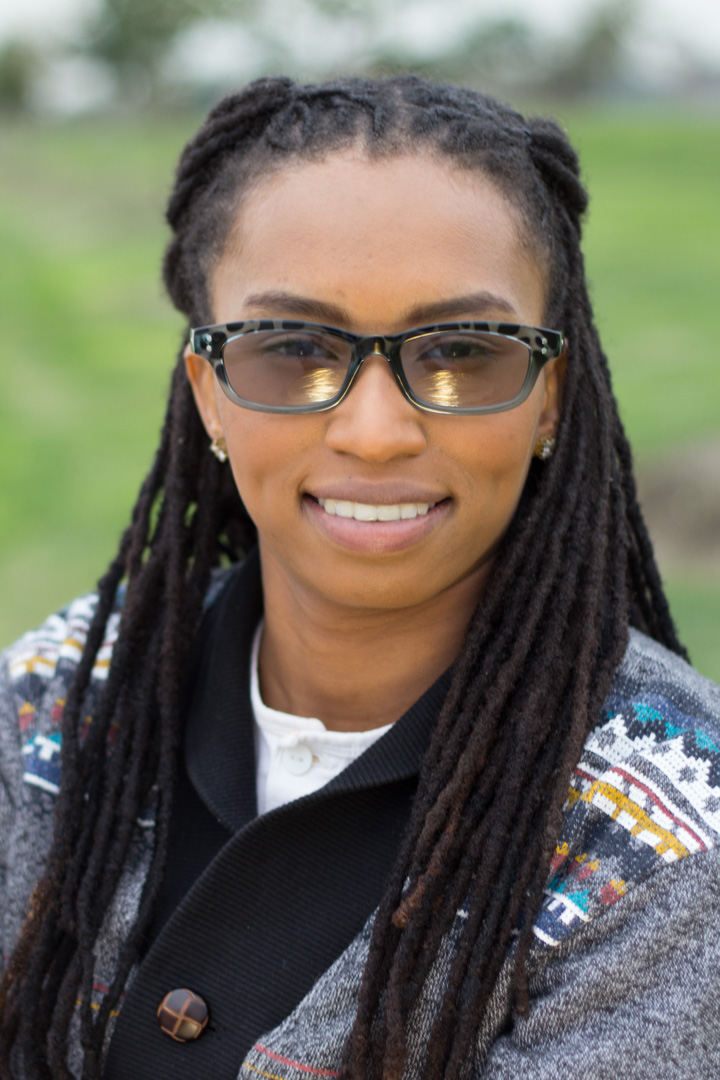
Producer Te’ is among that 5% within the music industry. A natural-born hustler who has set herself up for success. From songwriting to producing to engineering. She has done work with the likes of Anthony Hamilton, Matt Linsech, Jason Gilbert, Teddy Riley, Atlantic Records, Capitol Records, and more. Over the years Te’ has been open, honest, and willing to guide me in the right direction within my own career. I had the opportunity of interviewing Te’ touches on her journey thus far, being a woman in the music industry, favorite gear, and more.

What sparked your interest in audio technology? You have graduated with a business degree and were self-taught, something had to ignite a passion in audio.

Coming from a family of musicians and singers, music has been instilled in me since birth.  As I got older, I became intrigued by the creative process and found myself reading the liner notes and researching how the music was being made.  When I was 13 I got my first keyboard/workstation and taught myself how to compose & arrange instrumentals.  In my freshman year of high school I was introduced to composing with computers and synthesizers and began making tracks on the Cakewalk program.

Many get there break into the industry with one aspect first. Did songwriting lead to producing, producing to engineering.. vice versa or did everything kind of evolve together? What was your specific process?

I definitely started writing first.  I thought I was a rapper back in the day, so I would have notebooks full of raps, but never had any tracks to put the words to.  When I started making beats my passion for composing/arranging evolved, but now it all goes hand in hand.  I later bought Pro Tools and taught myself how to use it.  I thought I was the shit, but my mixes were horrible back then lol.  All in all, when people would come to record with me they would leave with a full record.  I would have the tracks already prepared and when the artist got there, I’d write the song or co-write it with them.  In some cases I would make the beat from scratch.

What obstacles have you faced and overcome building as a woman in Tech/Music business? 

There was only one situation that stands out.  I was applying at a major recording studio to be an engineer and I was told that they didn’t hire female engineers.  According to them, from past experiences, females were just too emotional. I knew it didn’t have anything to do with me personally, but I was definitely dealt some unfair cards in that situation.  In hindsight, it was a blessing because I wouldn’t want to work for a facility or brand who generalizes or has a stereotypical mindset. I just kept it moving to the next opportunity. Overall I am received well in my field. I am grateful.

How has technology affected the way you book and work with your clients?

Creatively, technology gives us more options and freedom to experiment until we get the sound that we need. There are no limits. From a business perspective it’s great because of social media, it allows us to expand our brands and attract new clientele.

As an engineer and producer do you take on work for hire gigs or are you employed with different labels?

If it’s an engineer gig, the producer will call me in for a session either with the artist or for a songwriting session.  If I’m writing/producing I tend to work with anyone who is working on a major project.  My management will book me a session with the artist, or the producer will call me in for a writing session to write for a specific project.

Do you own your own recording studio? If so what is your favorite piece of gear within your space?

I float around between different studios in LA, but I do have a small home set-up for when I need to work on material outside of the studio. My favorite piece of gear is probably the LA2A as far as compressors go….and I love love love the Telefunken U47 mic! From my experience, it sounds clean and clear on almost every voice.

Do you play any instruments? Or do you use more technology-based gear to create?

They say once a drummer always a drummer, although I am rusty now, that is my first instrument.  I can maneuver around the keyboard enough to get the idea out. When I am producing or co-producing I like to bring in live musicians to play on the record. Although the digital world is great, I believe music still needs to have an authentic feel and bringing in live musicians achieves that.

Analog vs. Digital? What’s your outlook?

Both. With digital, your creative aspirations are endless, but as I mentioned before, I like my music to have an authentic vibe like the music I grew up listening to in the 90s, and that’s where analog saves the day. Blending the two together is the perfect match in my opinion. You have to know both, there are still some things that can’t be imitated, so being able to go back to the original source is crucial. But definitely need both.

What are your top five best moments in your career so far?

Wow I don’t know if I have five yet, considering my career is just beginning.  

One is definitely being able to write, work and build a relationship with the legendary Teddy Riley.  I grew up listening to him and his work, especially Michael Jackson’s “Dangerous” album which is my favorite album of MJ.  It’s a huge honor to work with the man whose name was in the credits of the albums I was listening to and influenced by growing up.  His stories about the music business are not only fascinating but extremely insightful and informative.  I’m truly grateful.

Two would be meeting Trakmatik of Roc Nation; working with and watching him achieve greatness is inspiring.  It’s a beautiful thing to witness someone close to you reach higher levels of success and inspire the next generation behind us.

The third, I’m going to have to get back to you on as my career progresses. Lol

What advice would you give to upcoming engineers and producers on staying up to date with technology and entrepreneurship?

Study the people that have come before you in your field.  They’ve already laid the blueprint to success.  Learn what they did and then add your own flavor to it to make it unique.  Stay up on current trends but focus on creating what the next sound might be.  Don’t be afraid to take risks because you never know what your ideas may lead to. On a more philosophical note, don’t allow any negativity or adversity to deter you.  You were already born to be great.  Always live within your elite self.  Stay true to that and you will prosper and live the quality of life that you deserve.  You will have doubters, but you will also have supporters and admirers that you are inspiring and may not even know it, so don’t quit.  Be the example, you never know who is watching and using you for inspiration.

Te’ was one of the first people I reached out to when I had the idea of starting a blog. She motivated me when things didn’t go as planned. She always reassured me that I can obtain success, ONLY if I wanted it bad enough. Thank you, Te’ for always being a positive influence. I hope we both can inspire someone else to follow their dreams. Until next time, I encourage all of you to fight against the odds and go for what you want. No matter what career path you choose, don’t let anything hold you back #BeGreat 

 You can follow producer Te’ journey on Instagram via @officialte & on Twitter via@_itsTE_


How to Turn an Unpaid Internship into a Compensated Growth Opportunity


Ah, the unpaid, post-graduate internship. You know the one I mean: the one that has no defined time period, expects you to work an undetermined schedule (yet still be able to commit to 30+ hours per week), promises great connections, will probably have you doing nothing but “gopher” work the whole time… and yet, you can’t help but think that despite all the massive drawbacks, there may be some small chance that it will actually be a really good experience for you. Alrighty then. This is where your negotiating skills will come into play.

To turn this sad excuse of an opportunity (seriously – who offers an unpaid position with little wiggle room for the individual to have paid employment???) into something advantageous, the first thing you need is confidence. Know your worth, and be willing to back it up. Take a minute if you’d like, and reflect on everything that you’ve done. Think about your skillset, and know that you can totally do this. Toot that celebratory horn of yours!

The second step is to research the company offering the position. Oftentimes, if they are a small company such as a local studio, they really can’t afford to compensate you financially. But can they give you free mixing time in their rooms? A discounted room rental rate for clients you bring in? If they are a big company, keep your internal alarms at yellow alert.

The third is to create a time limit for the internship. What I usually propose is a 1 or 3 month-long time period (depending on the internship and my financial situation), working no more than 15-20 hours per week, which should be documented in a time log. If by the end of the time period I have not proven myself to be a good fit, then the internship is terminated, and we both go our merry ways. You can tailor this to your needs, of course.

Finally, GET ALL OF THIS IN WRITING. You never, EVER want to leave it up to chance that the person you’re negotiating with will keep their word if they don’t write it down and sign it. Type up all of your requirements, and send it to them (if everything was discussed in person or on the phone, do this in the format of a follow-up email). If they agree, fantastic! (And make sure you hang on to that email, you ever know when you might need it to remind someone of the guidelines they agreed to.) If they don’t, then you don’t want to work for them anyway. They probably suck in real life and have no business taking advantage of us youngins.

The first unpaid internship I ever worked was with a nonprofit radio organization as a digital editor, working with what I thought were good, honest people, and providing an excellent community service. At the beginning of the internship, it was proposed in an email by the company head that I would receive a small stipend of $600 at the end of the summer, which I agreed to (I then foolishly deleted that email, expecting that they would follow through with this). The internship went great, and there were multiple occasions throughout the summer where my boss told me in person (and often in private) that I was providing some of the best work that they had ever received, and that I had a guaranteed paid position starting in the fall. However, once the summer came to a close, I suddenly had no paid position, only $75 for compensation, and a request to continue to work for them without being paid. If only I had saved that email. Thankfully, the lessons I got from that experience only cost me $525; I’ve since heard many stories where the damage was much worse.

So, to recap:

Now go forth and get yourself some learning opportunities!

**DISCLAIMER: This is not to say that ALL unpaid opportunities are BS… I have worked several that were extremely rewarding. The only thing is, they made sure I had the support I needed to find paid employment elsewhere.


A Brief History of Theatre Sound Consoles with Autograph Sound

Last Monday the Europe Chapter of Soundgirls.org had the opportunity to learn about theatre sound from one of the top names in the business: Autograph Sound.

Autograph has been at the forefront of theatre sound in the UK, and internationally, since the early 1970s. Before this time, theatres dictated the sound of every show. Their sound equipment wasn’t designed specifically for theatre use, and as there was no consistency in the sound systems between theatres, one show could sound very different in different theatres.

In the late 1960s, the music industry started to hand over production of their live shows to other companies. Around the same time, Andrew Bruce, who was Head of Sound at the Royal Opera House in London, noticed a need for theatre shows to sound the same in each venue – for each show to have a sonic “signature.” As Peppe Mallozzi, Sales Engineer for Autograph explained, this idea formed the company’s name: once a signature becomes recognised, it becomes an autograph.

Autograph Sound Recording was founded in London, U.K. in 1972 by Andrew Bruce. Theatre sound technology of the time centred on fixed input consoles, like the Trident Fleximix, a live sound console that was used for the production of A Chorus Line in London, 1976. But the requirements for musical theatre sound differ from sound for live music shows. In a very general sense, where the driving factor for music shows is often volume, the primary consideration for theatre sound is clarity, of dialogue as well as songs.

Manufacturers caught on and started producing consoles to accommodate the new specific requirements of theatre sound. Theatre sound took a step closer to achieving the clarity that its engineers desired with consoles like the Midas TR, used for Cats in 1981. This console had an output matrix, which allowed you to split a signal to different speakers to achieve all-important high-frequency coverage, crucial for hearing dialogue and singing with absolute clarity.

By the 1980s, shows were getting bigger and designers needed more inputs, outputs, and more flexibility. In 1982 Autograph commissioned a console from British company Cadac for Little Shop of Horrors at the Comedy Theatre (now the Harold Pinter Theatre), London.

From this first console, christened “The Coffin” for its shape, Cadac’s analogue console have remained in use in theatres up until the present day – Wicked, at the Apollo Theatre in London, will be the last big show to use an analogue Cadac console.

The next step for Autograph was to develop consoles with Cadac for use with any show. This lead to the A-type, used for Les Miserables in London in 1985, which was succeeded by the J-type and E-type. These consoles included automation, using an external computer to send cues to trigger the central VCA section of a console, with VCAs and programmable control groups becoming standard. Early automation was the start of something that became important for theatre sound: being able to operate a show from a central area on a console instead of running up and down a lot of channels.

As shows became bigger, other areas of automation and being able to save settings for individual scenes became crucial, as operators found they struggled to adjust settings manually for expanding numbers of performers. Bruce and his colleagues were also under pressure from producers to find a smaller alternative for the large analogue consoles that took up valuable seat space.

In the early 1990s, Bruce was approached by Soundcraft, a console manufacturer who was exploring the development of a fully assignable digital console for theatre sound. Bruce wanted a console that could digitally save EQ settings, scene snapshots and had the option to save volume levels (or not). Their collaboration led to the Soundcraft Broadway, the first digital theatre sound console.

The Soundcraft Broadway could control analogue input and output racks and be installed for the 1996 production of  Martin Guerre at the Prince Edward theatre in London but never used. Continual bugs and repeated failures with the networking technology of the time meant it couldn’t handle the requirements of the show, and a J-type Cadac replaced it. Soundcraft abandoned its digital theatre console project soon after.

Back at Cadac, analogue consoles were still being produced with digital automation. However, there was another company with an eye on the digital console market: Soundtracs, producer of analogue consoles for studio and live sound since the 1980s. In 2002 the decision was made to launch a new brand focussed on digital consoles for live events. The new company, DiGiCo, and a new digital console, the D5 Live, were launched almost immediately.

James Gordon, the founder of DiGiCo, had already spotted the potential need in the theatre sound market and approached Andrew Bruce directly to develop theatre sound-specific software for the new DiGiCo console. Three months and a lot of research and development later, they launched the D5T: a digital DiGiCo D5 console with “T” (theatre) software, specifically designed to meet the needs of large-scale musical theatre shows. As computer automation control changed the game for theatre sound engineers twenty years earlier, theatre-specific software like T-software took it to a whole new level.

Anyone who has worked on a major West End or Broadway musical knows how complex the sound can get. Thirty-plus performers, all with radio mics, who need to be heard with perfect clarity solely or in duos, trios or choruses that change with every scene. Speaking one minute, singing the next, and wearing a hat (which completely changes the sound of a mic) one minute after that! Every line must be crystal clear for every audience member, no matter where the actors are on stage. And that’s all before you get the musicians involved.

It’s a big ask for the designer to make sure the balance of every one of hundreds of cues is perfectly calibrated. Let alone for the sound operator to set levels, EQ and FX for all actors in one scene, then change it all again with a moment’s notice for a new scene, with a new set of performers.

Theatre-sound-specific hardware and software like the DiGiCo consoles with T software were developed to meet these challenges. They allow for controlled and accurate line-by-line mixing, where each mic is only live when lines are sung or spoken, by pulling groups of channels into the central VCA section. Control of the channels is placed right under the operator’s hands, saving them from to running up and down a long console riding faders for individual channels

They also allow an operator or designer to save settings for individual channels in individual scenes (or even multiple “snapshots” in a single scene) and recall them in an instant. And going one crucial step further – to save different versions of the same channel, with varying settings (“aliases” in DiGiCo terminology), to accommodate understudies playing the same roles, and hats!

As Peppe says, “no one waits for sound.” When a director suddenly decides to jump from the big chorus dance number in Act 1 to the intimate duet between the leads in Act 3, Scene 2, or they suddenly want the lead actor to wear the hat they wore in the very first scene, they don’t want to wait for the sound operator.

Back in the 1980s and even the 1990s with the ability to save only a limited number of settings, jumping between scenes and changes to positions or costume would have meant a break for the company as the sound operator reset everything manually. Now, it’s a matter of a few clicks. What used to take weeks of technical rehearsals can be conquered in a few days.

Many thanks to Peppe at Autograph Sound for putting on a great day for our European Chapter members. We look forward to the next one!


‘Let’s Change the Record’: A Report on the Women in Music Business

‘Let’s Change the Record’: A Report on the Women in Music Business Workshop at Westminster University

‘We want to change the record, we don’t want to rewind it, scratch it, whatever – we want to change it completely’ Sally Gross

By Cinnamon Ducasse

On Thursday the 19 th of May, Sally Gross of Westminster University, Andy Inglis (5000 mgmt) a music manager and music business consultant working in conjunction with Daniel Nordgård from the University of Adger in Norway, invited five accomplished and experienced music business professionals to come and share their wisdom with eleven younger aspiring music business people. The difference between this workshop and almost every other event in the music industry, however, was that no men were invited, so the only men in attendance were the two who had instigated the event. As Andy stated, the rationale for the project was that since ‘people who look like him’ (middle aged men) dominate 95% of the industry and, until recently, there had been no initiatives which address the specific problems – or rather the realities – of working in the music business as a woman-identifying person as well as no special provision for those who enroll on music business courses – they thought it might be a worthy experiment to create a female-dominated environment in a university classroom for a day. So they joined forces with Sally Gross’s Westminster-based initiative, Let’s Change the Record, to make it happen – and this is how it went…

Sally Gross, who is the program director of Westminster’s MA in Music Business Management, opened the day with a short discussion of inequality in the music industry, explaining the project and its intention ‘to change the record, we don’t want to rewind it, scratch it, whatever – we want to change it completely’ to a party of eagerly nodding heads. She then opened the session with an ice-breaking game that engaged three groups in a collective, creative activity. Each wrote a poem, a song or a story together, and performed their product to the rest of the class. Afterwards Sally asked the groups how they felt working together, if they had any conflicts, and if they felt that they all contributed equally to their production. Some said they divided up parts equally, others worked spontaneously; but the whole group smiled and laughed affirmatively when Sally double-checked ‘so you all collaborated equally and peacefully?’ We couldn’t help but notice how excited, open and supportive the group seemed together, and it didn’t seem surprising that they managed to create something together without feeling dominated by each other. As one speaker said, ‘how exciting to be in a room full of so many women!’ And it seemed that sentiment was shared.

Once the ice was broken, we got to serious business with Sally Gross giving a no-nonsense lecture about one of the most notoriously complicated aspects of selling music: copyright, ‘the fundamental system of making money out of music’. She gave a history of copyright that also served as a history of the industry, linking it to the history of contracts – which, she pointed out, is of course the history of marriage. Sally’s history situated women’s long struggle for equality within the history of the music industry, as well as showing how that struggle also manifests today. We talked about how women get dominated in creative scenarios, particularly when male producers claim to have specialist technical knowledge. We acknowledged that Bjork has recently come out about this, and that other successful female artist such as Grimes has also come out about sexual abuse in studio settings. This led one participant to ask about Ke$ha’s sexual abuse case, and a long group discussion about sexual abuse and misconduct in the music industry followed. Sally commented that Ke$ha’s case was very badly handled and that bad lawyers were again taking advantage. She gave serious advice to anyone who finds themselves in a similar situation to speak out about it as soon as possible and try to create as much of an evidence trail, from as early on, as possible.

Emily Moore, founder of international management company Southern Bird, then gave a seminar on management. She began by telling us how excited she was that this was the first time she’d ever spoken to so many women and, pointing at Andy said, ‘you old men, you’re on your way out!’ She then gave us her story and talked about being intimidated at first, but just going for it and finding that ultimately ‘it’s not that hard’, and that we shouldn’t let anyone tell us we can’t do it. She gave some general advice about managing, which Sally pitched into as she herself is an experienced manager, and then Emily opened up the discussion to the floor.

There were lots of young managers in the room who shared their experiences and advice about asserting themselves in companies of older men, and asked Emily for hers. We discussed the importance of trust and intimacy in managerial relationships, and that women can get pigeonholed as better managers because of their ‘maternal’ instincts. While no one wants to be pigeonholed, Emily talked about owning those skills and the fact that a manager, whatever their gender, should be looking after their artist(s) because the record industry is a brutal landscape and artists’ mental health often suffers. However, we discussed that when working with other business people, you are also required to be assertive, even intimidating – as Sigríður, a participant from Reykjavík said ‘the older guys I work with, I think they’re all scared of me’. We all laughed, but the point stands that women in the industry have a difficult balance to strike when dealing with men’s expectations.

Our next speaker was Hannah Overton, general manager at Secretly Group for the UK and Europe, who came to give a lecture about record labels. She told her fascinating story of writing letters to record labels while studying Physiology at university, until eventually she got a secretarial job at Beggars, which eventually led to her working in A&R and ultimately where she is today. She talked about the major changes in the industry throughout her career and we discussed the effects of streaming and Daniel chipped in with some insights from his own research.

Like Emily, she wanted to stress that the skills and knowledge required to work in the industry are not mysterious or special, but easily learnt. She explained that after getting a job doing A&R for a publishing company, she bought some books about publishing and taught herself at home. She also confessed that her biggest regret for her early career was not asking enough questions, and she urged the group to keep asking questions and thinking creatively rather than being intimidated into silence, ‘because you’ll never know everything and no one does’.

We then heard from Rosie Arnold, executive producer and music programmer at Norwich Arts Centre as well as director, programmer and production manager of Norwich Sound & Vision Festival. On top of this she also runs a small label, Gravy Records and plays in the band Graceland. Rosie’s story was equally fascinating and hilarious, involving her strolling directly out of a dead-end desk job in an insurance company and into the Norwich Arts Centre, where she went from bar staff to lighting technician to executive producer and programmer. A pattern was definitely emerging of young women taking bold risks to get what they want out of life – Rosie’s best advice was ‘if you want to do something just ask if you can do it’, because that’s how she got to do what she loves doing.

Rosie told us all about the Norwich Arts Centre and running venues. She explained how arts funding can help venues take risks with new artists and experiment with new possibilities, and give them the space to take good care of artists and keep standards high. She told us that she makes a big effort to book women artists and particulary electronic ones, and when asked if it was difficult to find them she answered ‘not at all, they’re out there and they’re just being ignored’.

Our final speaker was Jess Hamilton, a songwriter with a long history working in publishing, who is very happy to have recently signed a publishing deal herself and pursue a more creative career. She was able to talk to us about being on both sides of a publishing deal, and explains how publishing deals can benefit artist but how publishers can also be hard to deal with because they look for certain generic models for success, which can also perpetuate sexism and male dominance in the industry. She gave the example of male publishers privileging bands made up of four white men, giving them massive publishing deals even though they aren’t producing interesting music and unsurprisingly they don’t actually see any success.

She also talked about women receiving less money in publishing deals, and less respect as artists in general, for example Taylor Swift having been taken more seriously as a songwriter after Ryan Adams covered her work – as Sally said, ‘it’s as if only now we can say that she can write a good album’. We also talked about how there are relatively more women working in publishing than in other areas of the industry, and Jess said she felt that it had become a kind of ‘designated area’ for women who wanted to work in music rather than a more accessible industry.


Finally Daniel asked the group for general feedback on the day. Participants said that they felt comfortable, intimate and informal, and that they felt they could ask questions. We also discussed trying to invite a more diverse group of women in future. A few participants also said that it was a lot to fit into a day, and it could have taken place over two or more days, which was echoed by a resounding ‘yeah’ from the group. Everyone was very tired by this point and more than happy to head to dinner together where they could get to know each other and swap Facebook details – in fact, a Facebook group was set up by participants who wanted to create a platform for them all to share wisdom and continue to support

Afterwards, we asked speakers and participants to comment on their experience of the event, how it fits into their careers and how it made them think about the future for women in music. We were not surprised that they had a lot of insight on this matter, and felt that in future we should give them more control and space, by opting for more of a colloquium or seminar format for example.

Jess said that she found record companies to be masculine environments with few opportunities for non-white people, who are boxed into ‘urban’ spheres, said that she was relieved to leave, but that she really hopes she can work with more women in the future of her career.

Kiera, who plays in a punk band, also said that in her experience of smaller and more DIY labels, the same structural inequalities based on class, race and gender seemed to play out, and she had felt disempowered by ‘professional’ men. She said she felt overwhelmed by learning about the realities of the industry, but was also inspired to meet so many women getting on with it and making changes.

On the other hand, Anne, a participant from a Danish record company said that she had worked in female-dominated environments, found her gender didn’t play into a lot of her day to day business interactions, and reflected that the situation may be better in Denmark, though she did find that ageism was a big factor.

Lyra, however, found that in the world of venues and promotions in Copenhagen she had to deal with a lot of overt sexism regularly. In response, she co-founded collectives which challenge this directly and work towards creating safer spaces for women, queer and non-binary people and felt that these initiatives had immense impact on those peoples lives. She also felt that racism was a big issue, which needed to be dealt with simultaneously.

The general response was excitement and optimism towards the creation of exclusive spaces for women to go through their problems together, but some, like Anne, felt that young men should also be included in these discussions and made aware of the problems that women face and how they can and should participate in solving them. So we have a lot to think about in terms of how to proceed, and know that we have a lot of enthusiasm and support from young women who are ready to change the record completely.

‘I think it’s always encouraging to meet people who share similar interests and them all being female too is just another thing in common which made it that little bit even more special! Super initiative and great speakers and really interesting discussions!’ Bettina, Westminster MA Audio Production Student.

1240


The Sound Design of Brideshead Revisited

Brideshead Revisited is a co-production between English Touring Theatre and York Theatre Royal. The play reopens York Theatre Royal after its refit and then it will tour theatres around England.

Brideshead was adapted for the stage by Bryony Lavery it’s based on a book written by Evelyn Waugh and first published in 1945. Brideshead Revisited is set around the life of an aristocratic family in England between World War I and World War II. The play is presented from the point of view of Charles Ryder, who is an army officer in World War II. When the play opens with Charles remembering the events around the countryseat of Brideshead. It is his memory of events that the play centers around.

Here are some things we worked into the sound design.

Memory is a major theme of the play; in design meetings we discussed how memories are triggered and what happens in your mind at the time. There was a discussion of the language of memory portrayal in the film, which often utilizes reverb and the sense that memories sometimes seem to approach from a distance. I knew that would mean playing with a sound heavy with reverb and then getting closer and dryer and landing a moment before the action on stage took up the dialogue or sound in real-time.

A lot of the creative team had memories from childhood that were attached to certain sounds and birds seemed to dominate this. I grew up in the East End of London, and I have memories of lying in bed in the early morning listening to seagulls. (The sound of London birds is the sound of seagulls for me. I know they don’t often make it into the collective agreement of how London sounds, but if you are within a mile of the river then there are seagulls) So I knew birds would feature in the sound design. Memory in relation to sound often revolves around phrases that we play to ourselves over and over in our heads. Doubling of dialogue was also something I thought we could work into the
sound design.

We wanted the process of storytelling to be visible to the audience; the cast handles the scene changes on stage, setting up and changing the props. They also set microphones on stage and perform some on-stage Foley.

Alcohol is a big part of the first section of the play, and we worked on amplifying the sound of wine being poured to emphasize that point.

brideshead-york-theatre-royal-last-780x520-2

We decided to amplify the sound of a projector vs. working to silence it and cover it with a sound effect.

We used radio mics, but not every cast member received a dedicated mic. Ryder, who did a lot of the narrating/ remembering of the play, wore a radio mic. His mic was used to change the tone of his narration and to put him in a different space for those bits of the play rather than for amplification. I was using it in a different way than when I would use a radio mic for `musical theatre. If you can imagine BBC radio drama announcer, that’s the kind of sound I was going for.

Some of the play took place in Venice in an old house. As this was a static talking head moment of the play, I used one of the two 414s on a stand to pick up the voices and send it to some gentle short reverb to help give the sense of being in a big stone house.

Scene changes were marked with music and soundscapes were woven together. The composer (Chris Madin) and I worked closely together to get the tone of these transitions right and to carve out or give room to the dialogue that surrounded the transitions.

The plot of Brideshead takes us to Oxford, London, to a country house in Venice, Manhattan and aboard a ship. The moments on board the ship were potentially challenging; there was a lot of dialogue in this scene as well as a big storm, and I had to make sure the storm sound effects allowed enough room for the dialogue as well.

There was a division in the way sound effects were reproduced compared to the music in the show. The SFX tended to come from onstage SFX speakers, and the FOH system was primarily reserved for music playback.

The pre-playback was a selection of pre-recorded excerpts of dialogue from the cast. They had been asked to mull over lines of dialogue that they thought were particularly representative of their character. I used these lines in the pre-show to create a repeating slowly building round of whispered memories. The pre-show builds and builds and culminates in a sudden cutoff that leaves Ryder in Brideshead at the end of World War II.

I was fortunate to work with the company during rehearsals. We were able to discover things about the play in a much more cohesive way than if I had just joined the production for technical rehearsals. It was great to be able to play sound and music in the rehearsal room. It helped the cast to build a relationship with the soundscape and for us to integrate the use of microphones into the play. There were a few moments in the play of whispered conversations that the rest of the characters in the play weren’t supposed to hear. They obviously needed to be heard by the audience, these were mostly spoken into a couple of 414’s and routed to FOH.

One of the best discussions I had in my early days as a sound designer was with a vocal coach. We use to discuss listening to the whole play rather than just the elements of the sound design. I found this useful for this production where the amplified and un-amplified voices had to be woven together and although they needed to highlight different moments in the play they all also needed to sound like they were part of the same world.


Post-Production Basics – What is an OMF or AAF, and Why Does it Matter?

Post-Production Basics Part 1

One of the technical challenges in post-production is sharing media between video and audio. Here’s a basic overview of how it works.

Audio on the Picture Side

After a production shoot, video (from each camera) and all of the audio mics (captured to a recorder or the camera) are ingested/imported to a drive or server. Audio and video are then combined so the picture editor can see all camera angles and mics together in sync (and in phase). The picture editor then edits with that combined media in a video workstation, such as Avid Media Composer, Apple Final Cut, or Adobe Premiere. Some picture editors leave every mic in their sequence and others choose certain mics (like a line mix), leaving the remaining mics to be sorted through later in the process.

While the project is in editorial, the picture team (picture editor and assistant editors) are doing their own rough mix. They’re picking what mics to listen to, adding and editing music tracks, and adding temp sound fx and temp voice over. These choices aren’t final, but their work does act as a guide for the sound team.

Sometimes the music included is final and sometimes a composer is hired to write replacement music. If there’s a composer or music editor on the project, they will likely be involved during editorial. On low budget projects, the rest of the sound team is not involved during editorial (other than animation) unless it’s necessary for consulting or creative reasons. For big budget Hollywood films, sound editors, supervisors and mixers can be involved throughout.

After rounds of picture editing (and approvals), a final version of the picture will be “locked”. This means no further timing changes will be made and the project will be turned over to audio. There’s still changes happening on the video side (adding graphics, visual effects, color correction). When it’s all married back together, the timing should still line up exactly.

What is OMF/AAF?

Since we can’t open audio and video sessions with each other’s software (yet), there’s a couple file formats used to transfer audio between programs: OMF and AAF. The file extensions are .omf or .aaf.

atjune2016-1


To explain how it works, think about trying to move an audio session between two incompatible DAWs, like Protools to Logic or Logic to Cubase. OMF/AAF can be used to do this – it retains all of the region names, placement, length, handles (so you can still edit), volume data, clip gain, cross fades, fade ins/outs, pans, markers, and some fx. You lose plugins, but overall it’s a lot better than trying to place audio files by hand and redoing all the edits from scratch.

The difference between AAF and OMF is that AAF is a newer format and has some advancements (such as larger file sizes and more metadata). Not all video software can output AAFs, though. Technically, there are two types of OMF (OMF1 and OMF2). OMF1 is an older format and is rarely used anymore, so when the term “OMF” is used it generally means OMF2.

How to open an OMF (or AAF)

The picture editorial crew (usually an assistant editor) are responsible for outputting materials for audio, which are a reference video (Quicktime) and OMFs (or AAFs) of the locked sequence. When you open (or import) an OMF file with Protools, this is what you’ll see:

atjune2016-2


Once it’s opened, we’ll get to see how the picture editor had everything organized in Final Cut. In this case, he had all of the audio elements across 10 tracks. Here’s what the example OMF looks like opened in Protools (in volume view):

atjune2016-3

There’s no standard for how picture editors lay out audio in their sequences. Sometimes they don’t have time for much organization at all. In this OMF, all of the dialog is on tracks 1-4. Music is spread across tracks 3-9. Sound fx are on tracks 6-10. There’s a lot of overlap between elements. It’s not perfect, but the editor’s priority is to cut picture.

At this point, you would normally import picture to check if the OMF is in sync and if the two match in length. In this example, we are skipping this step.

Splitting an OMF

One of the first tasks after opening an OMF/AAF is to “split it out,” which means each region needs to be moved to an appropriately labeled track. It’s a good idea to make duplicate tracks before moving anything (these can be made inactive and hidden). Splitting is important for organization and also to have each element (dialog, sound fx, music) totally isolated from each other. After splitting out this session (listening to regions to verify where each should go), you can see that all of the dialog is now on tracks labelled DIA, music on MX tracks, and sound fx on SFX:

atjune2016-4


This is a pretty simple example, but it’s the same process with a bigger project. An OMF could be split into a template that already has dozens (or hundreds) of tracks, auxes, reverbs, output tracks, etc.

It’s important to do the split accurately for a few reasons. First, the sound editor(s) need the proper materials to work with. Often the work is divided between different sound editors (dialog editor, sound fx editor, music editor), so they may miss something if it’s not included in their tracks. It’s also important so when the mix is finished, the mixer can deliver or archive individual stems that are accurate (voiceover, dialog, music, sound fx, Foley). A good split can affect the foreign version, too. The music and sound fx stems combine to create an M&E. The M&E is used to dub a film or show into another language. There can’t be any native language on the M&E track – otherwise you’d end up with English words in the Spanish version of a film (for example).

Part 2 will be about the editing and mixing process.

.

A Perspective on Success

Many people define success in different ways: A good setup, starting on time, a sold-out show, or more.  Industry success is often defined by the number of awards that someone has won, which internationally acclaimed band they are touring with, or by that bright and shiny new equipment they can afford.  Obviously, there are hundreds of ways to define success and just as many that could be used to call something failure.

Recently, when working with a student staff member they told me all they wanted was for one show to go perfectly right, exactly as planned.  That idea intrigued me, mostly because I never really thought about it that way, so I asked for them to share more with me. I learned that their desire was to never have to go back and change or fix something. They wanted to set the mics in the exact right spot, get the monitor mixes perfect during soundcheck, and have the entire system plug and play properly so nothing ever needs to be traced back for corrections. I do find value in that idea, but I think it is impossible. Now people who know me know that I don’t think of many things as impossible. There is always an option or a workaround to get something done. However, with the nature of the business and the nature of a young and learning staff team, one must realize that it is impossible to have everything go exactly right the first time around. Why is that? My guess is human nature and how communication works and the fact that people change their minds all the time.

On the other hand, as I define the success of the staff I have to keep in mind that normally 50% of this staff team has never touched an XLR cable before they joined the team while the others are learning to watch for the details, keep track of timing, and teaching the new staff; also that most staff member only gets three years in staff before they graduate. Everyone’s on a steep learning curve and to master it all in a short period of time is impossible.

This is where I challenged that staff member to change their frame of mind. Redefine what success in an event looks like. Change the impossible into something achievable and value the successes that come with each event – find the bright side. Success for a staff team like this is a moving target. Each person is working towards their individual goals, and each individual is working within the team to achieve the teams’ goals. The team goals cover the broader picture like having the PA plugged in and tuned early so soundcheck can occur when the artist is ready, packing the cases properly and checking off the pack list so they don’t have to run back for missing equipment, leading the team, and being able to make adjustments on the fly as things always change.

I define success as someone on the team learning something new or showing that they learned from their mistake by doing it right the next time.  They have grown and are able to take on larger events with more independence. They can set up and fully troubleshoot the night taking care of concerns as needed. Success is demonstrated by someone being able to think through the situation with all the variables and make the right decisions that result in a great event.

hhjune2016-2I look at success as a bigger picture. I find my success in the growth the staff has, the increase in services we can offer, and by watching each team member going from never wrapping a cable right to leading the entire team during one of our large event setups. For some, these changes may seem to be too small and take too long to see the results. For me it’s about the bigger picture. The small successes here will lead to these students’ larger successes in the future.  For me it is all about what is next for these staff members. I find my success in the education and training can I provide them so they become valuable employees for their next position.

How do you find success? Are you looking for the impossible to define your success or do you celebrate the short-term wins? You may not have a staff where you can see their successes like me, but there are many ways to see individual successes. Success can be recognized by seeing your growth from small shows to larger ones, gaining more leadership within and during the event, or by increasing your knowledge of the board you’re using that night.  There are many ways to define success, define yours by setting some goals that are achievable quickly and others that might take more time and work towards those goals. Instead of striving for perfection, strive for success. Either way, if you’re a veteran in the industry or someone just starting out, think back to when you started and where you are now. Think of all of those successes that occurred over time, define what they mean to you, and continue to strive to be more successful; not perfect.


Tiffany Hendren – Dedication, Hard Work and Emotion

By: Toni Venditti

Tiffany Hendren was one of those kids that listened to the teacher with one ear and had music playing in the other. Her hair hid the headphones of the CD player shoved into her backpack at her feet (yes, it was the 90’s). There was one CD; Aenima by Tool, that she listened to so many times that the disc stopped working!

Listening to music was (and still is) about feelings for Tiffany. She explains that music to her is like a rollercoaster of emotions elicited by a really great album and her mixes are based on these feelings that she gets to share with the audience.  As a full-time sound engineer, she is involved in making people feel the emotion in the music the way that she does, albeit a little differently. Whether it’s pushing up the fader for a particularly awesome guitar solo or dialing in the perfect vocal effect for a more intimate song, it’s hugely rewarding to watch people experience the music instead of just listening to it, and know that she has had a part to play in that.

When she was at school she was pretty set on being a performer – the kind of performer that made people feel the way she felt when she listened to a song. However, she was well aware that she had no actual talent to speak of, aside from a halfway-decent singing voice, and taking lessons of any sort was out of the question. It was her sophomore English teacher who opened up the world of sound to her by assigning her to do a report on what she wanted to be when she grew up. Tiffany still badly wanted to be involved in the industry, but her perceived lack of talent started her researching the other types of jobs available.

Her other interests were mainly in computing and electronics, so the tech side called out to her pretty loudly. At first, she thought of engineering in a studio, but then she found out that live sound engineers existed.  Growing up in a small rural-ish town, she had never been to a concert or any major experience and had only seen that type of event on TV. It never occurred to her that anything really went on behind the scenes, so to find this out was pretty exciting and the idea that she didn’t have to be on stage to be part of a live show was SO exhilarating. When she started going to concerts regularly, there was nothing more she wanted than to do live sound.

The next ten years took Tiffany in another direction. She joined the military and worked a couple of office jobs because having money was sort of a priority at the time. She also spent a fair amount of time working for a local/regional rock band, organizing the street team and doing merch and some light tour managing when they were on the road. Tiffany’s experience from the office jobs really paid off for this role when it came to paperwork, organization, and time management. At the same time she was taking classes for a degree in Public Relations – her fallback career choice was music industry PR. Looking back, Tiffany is convinced this is something she would have hated, so she is rather pleased she didn’t follow that path.

In late 2008, Tiffany was laid off from her last office job, starting a new direction in her life and leading her back to her first love. She started working in the coffee/merch shop of The Pageant in St. Louis. After a few months, an audio intern position opened up and Tiffany grabbed it with both hands. She spent the next year and a half interning in The Halo Bar, a 150 capacity venue attached to The Pageant, as well as reading and watching everything audio-related she could find.

Working in The Halo Bar involved a lot of what Tiffany refers to as “combat audio”. The gear is decently maintained, but as the gear is older things are more likely to break at the exact worst moment, which gave Tiffany the best experience in troubleshooting. The internship also offered the opportunity to learn skills in a lower-stress environment. When The Pageant’s full-time monitor engineer moved on to a new venue, Tiffany was offered his position. While not being exactly qualified, her boss had faith in her and within a few months, it was relatively smooth sailing.

unnamed

The gear at the Pageant is all analog at the moment. They have a Midas XL250 for monitors and a Heritage 1000 and two giant racks of outboard gear at FOH, and they all work!  Tiffany loves the sound of the analog Midas compared to most of the digital desks that are out there, but the venue is aware that it’s not the most convenient for visiting monitor engineers who don’t travel with a console. Eventually, they will go digital, at least in the monitor world, but Tiffany thinks they are secretly waiting for something tragically sad to happen to the XL250 first!

If you ask Tiffany what her favorite desk, PA, piece of outboard gear, etc. is, she will quickly tell you that it’s whatever is available and working properly! When touring with A Silent Film, it’s desk du jour. Some of her favorite shows have been mixed on an M32 from an iPad. Getting back to the feelings that music produces, Tiffany really enjoys mixing from the crowd instead of FOH – calling it unconventional but she personally enjoys the show a lot more and likes to hear exactly what the fans are hearing. Plus, the bar seems to be exactly where the FOH should be in a lot of smaller venues, and she thinks it’s nice to not be stuck under a stairwell or against a wall at the back of the room.  Tiffany tells us that it definitely helps that the iPad app for the M32 is surprisingly well done. If she had an endless budget, however, she would definitely prefer the DiGiCo and Midas Pro series desks.

The Pageant is currently in the process of deciding on consoles and PA for their new sister venue, the 800 capacity Delmar Hall. Tiffany will be the FOH engineer when it opens. She’s also continually learning and this year is taking a few classes that she is excited about – SMAART training and a stage electrics class.

SGcollage

Live Sound Camp for Girls 2015

Mentors played a huge part in Tiffany’s learning. The Pageant’s FOH and monitor engineers, Randy Noldge and Adrian Silverstein, really took her under their wing when she first started learning sound. Tiffany says she wouldn’t be where is today without their patience and willingness to teach. Also, Tiffany looks up to and really admires Soundgirls.Org co-founder – Karrie Keyes saying “she’s one of the most driven and productive people I’ve ever met. I have absolutely no idea how she gets so much work done every day”.  Tiffany says Karrie is a living embodiment of the DIY mindset – Karrie will say – “Don’t know how? Figure it out and then go do it.” Plus, Tiffany declares Karrie is an excellent teacher, and Tiffany really enjoys being involved in the live sound camps with Karrie.

Tiffany has experienced some discrimination working in a lot of male-dominated workplaces and industries, saying “you can always run into the odd sexist remark or behavior no matter where you go, but I’ve been mostly lucky with my jobs”. Tiffany would like to stress here that the majority of people that she has worked within this industry are awesome and treat her like a human being, however, she finds that most of the bad experiences are confined to other crew members. She has run into a person or two that “just doesn’t work with women”. One memory that remains is where one crew member even tried to have her sent home and she has definitely had a few people get a little too touchy-feely. One guy in a town wouldn’t let her mix the band who had hired her – he wouldn’t even speak to her! On tour, it takes longer than expected for some house engineers to warm up. Tiffany’s solution is to just get the job done, saying that once they see her pushing cases and setting up drums, they’re suddenly much friendlier.

Tiffany has actually lost tour work by being a woman, with excuses like “We’re just a bunch of guys, you wouldn’t fit in with us,” and “The band’s wives wouldn’t be comfortable with a woman on the bus”!!! On top of that, some guys have the idea that women are mainly interested in working in the music industry so they can date guys in bands.

The idea that being a woman is a setback is not only confined to the music industry, though. Women have to work harder and be better at their jobs, flawless even, to get the same recognition and reputation, and for less money.  The band Tiffany is working with at the moment were shocked that this attitude exists, as it had never entered their minds that working with a woman would be any different than working with a man.

Sometimes she will have a show to do that has previously had women working for them and will hear comments like, “Oh, the monitor engineer is a girl, we’re gonna have a good night!” At this point, Tiffany has just introduced herself and hasn’t lifted a finger but somehow, everything is going to be awesome. It makes her happy to think they have encountered other women out there that are awesome and kicking ass, making her job easier.

Tiffany’s message to young girls coming into the industry is “take physics, math, and music classes. Don’t put up with any nonsense and don’t let anyone tell you that you can’t”. She recalls reading an article posted by SoundGirls about how men are more willing to take a position they’re not fully qualified for and figure it out as they go, and women feel like they have to know the skills 110% before they even think about applying.  This really made her examine how she’d been approaching her career, as she had always felt that she was being judged extra hard because she was female. Whether that’s true or not, she felt she had to be perfect all the time with no mistakes, ever. That meant that she didn’t take a lot of chances on things she wasn’t sure about – her mantra being  – If you don’t know every little thing about how that piece of outboard gear works you had better not touch it until you do hours of research!

Tiffany says that when she started, there were no women around her on a regular basis until she discovered SoundGirls.Org, and she could count the number of female sound techs she’d met in the previous five years on less than two hands. Also, she had never seen a woman behind the board at any show she had attended. She states now that if she’d had a group of like-minded women as mentors, she would have been so much more comfortable asking questions, experimenting more, and generally taking more chances.unnamed (6)

Tiffany is currently the monitor engineer at The Pageant in St. Louis and tours with the band “A Silent Film” doing FOH. She has been involved in sound professionally for around seven years, full-time about five. Tiffany became the co-director of SoundGirls.Org in August 2015. She also co-produces an annual invitational motorcycle showcase in St. Louis, MO – Cycle Showcase STL. When she gets some time – her other hobbies include crocheting scarves that never get finished, cross-stitching bad words onto things, learning to actually ride her motorcycle, and finally taking guitar lessons.

X