Empowering the Next Generation of Women in Audio

Join Us

The Art of Listening

How often do you listen to music? I don’t mean throw some tunes on in the car or play the radio in the background, I mean really listen…. the kind of listening where you give the music your full attention, focusing on the qualities of individual sounds and noticing things which are not immediately obvious. That distant layered guitar chord; the faint timbale in the background; the different harmonies of the violins. The nuances of the reverbs, the tuning of the drums, the positioning of sounds within the stereo image. How often do you do that?

If you’re aspiring to be a successful professional sound engineer, I hope the answer is ‘a lot’.

This is the art of critical listening; the vital skill that every mix engineer needs, whether in the recording studio or TV suite, at front of house, or behind the monitor desk. Anywhere you find yourself with your hands on the console, you need the ability to zero in on sounds with Jedi-like focus, to discern what they add (or not!) to the overall mix. Only then can you begin to manipulate them to enhance the experience – because simply adding more and more sound sources indiscriminately can leave you with a nasty audio ‘mud’ from which it’s difficult to extract yourself. It’s a skill that is honed over time, but the good news is that can you start anywhere, with no fancy gear whatsoever.

You can start right now, by listening to lots of different styles of music on lots of different speakers and headphones. Never gotten into classical, reggae, country or samba? Give them a try!  I usually, listen to downloads in your car or on headphones? Beg or borrow a decent pair of domestic stereo speakers and play a favourite album on CD or vinyl. Clear your space of all other distractions and just listen. Prepare to be amazed at all the details you never noticed before. You can make it a game by writing down every sound you identify (if you don’t know the instrument, don’t worry, just describe the sound – it’s for your eyes only). Then try drawing a picture of the stereo image as though it’s on a movie screen. Is there a guitar sound to the left? A cello to the right? Are some things higher in the air, or nearer to the ground? Do you feel like some sounds sit further back, or closer to you? Do you perhaps start to feel that the stereo image is more 3D, than flat left and right?

Did you just blow your own mind?! I know I did, the first time I tried it – I can still remember the exact room I was in, and that was 25 years ago!

Doing plenty of listening practice puts you a step ahead when you’re eventually behind the desk. As an engineer, a smart move before working with a band is to get a copy of the proposed setlist and listen to all the songs, many times over. Obviously, if you’re mixing several bands for one day only at a festival then this isn’t practical, but if you’re doing repeat gigs then it’s really helpful to understand what the original song sounds like and what the musicians are used to hearing. You won’t necessarily try to recreate that – a monitor mix is functional as well as pleasant to listen to – but the reference point is invaluable.

There’s another sort of listening which is also vital, particularly for monitor engineers, and that’s the art of listening to what your artist is telling you. This is where we get into the realms of sound engineering as psychology!

I’ve written before about the importance of developing trust between the monitor engineer and musicians, and a great way to inspire that (after doing your pre-production homework and introducing yourself in a friendly and confident fashion) is to really listen to what they are telling you. (A wise person once said that we have two ears and one mouth for a reason!) Make eye contact, give them your full attention, and check anything you didn’t quite understand. Repeat keywords back to them, to make sure you’ve got it. This not only gives you a better shot at meeting their needs quickly but also helps them to feel heard – and believe me, that is a huge part of forming trust. Do you know those people who make you feel like you’re the only person in the room? Be one of those people!

Of course, the tricky part of monitor engineering is that you need to make every person on stage feel like that simultaneously, and if they’re all talking to you at once, that’s no mean feat! Use the ‘one at a time, but I see you’ approach – stay with the person you’re talking with, but give the interrupter a nod or say ‘I’ll be right with you John’ (or whoever). As soon as you’re free, say ‘now, John, what can I do for you?’ After a few times, they’ll generally stop jostling for position, because they come to trust that they’ll get their turn. Of course, there are often inter-band politics to deal with, and sometimes you’ll be caught in the crossfire of ego-contests. Experience teaches you how to deal with those, but if you stay calm, methodical and professional, you won’t go too far wrong.

Many artists and musicians are not good at describing what they need to hear, so you have to learn to decipher their requests, and again this comes with practice. Comments like ‘my voice feels muffled’ can often be addressed with mic technique and EQ (more about that next month), but simply being curious is the way to get clues – if you don’t understand what they’re getting at, ask open-ended questions. ‘Can you tell me more about what ‘crunchy/breathy/purple feels like?’ (Yes, people do come up with the oddest descriptions!) This has the added benefit of helping them to feel that you’re on their side and again, it builds trust. As a monitor engineer, your relationship with the band really is of prime importance – when they feel that you’ve got their back, they can relax and get on with their job of playing a great gig – and that’s what it’s all about!

Part 2 goes into detail about listening to different sounds within a mix, and how I approach EQ’ing individual inputs. In the meantime – get curious, keep listening, and have fun!

SoundGirls Sound Camps – 2019


Upcoming Camps

2019 Camps TBA

SoundGirls Sound Camp is a one-week camp for young girls & women ages 12-18 (all genders and non-binary people welcome) who want to learn about live music production. The camp curriculum was designed by industry veterans and teaches the skills and technology to run live sound. Working in small, collaborative and hands-on groups, the attendees learn:

The camp helps to empower young women in underserved communities by giving them hands-on training, access to technology, life skills, and most importantly – confidence. Over 70% of girls attending our camps receive scholarships.

Testimonials

“The week-long class allowed me to learn the basics of stage plots, setting/striking gear, navigating analog/digital consoles, and working with a live band before ultimately sharing the responsibility of mixing with a professional at an annual music festival in the area.”

“Through workshops like these I think we can change the current trends. Someday soon long gone will be the days of the lone SoundGirl.”

“I absolutely loved the Live Sound camp for girls. I was able to learn a lot in an environment where I felt comfortable. The instructors were very helpful and I gained the confidence I needed to pursue a career in Live Sound.”

“My girls, who are musicians, now have the knowledge to set up their own PA and manage their own sound. This knowledge is invaluable and will follow them throughout their music life.”

Mission

To inspire and empower the next generation of women in audio.

Our mission is to create a supportive community for women in audio and music production, providing the tools, knowledge, and support to further their careers.

“It’s a generally accepted statistic that women make up about 5 percent of the audio engineering industry. And while more girls are participating in STEAM classes at a young age, the U.S. Bureau of Labor Statistics says women are still underrepresented in many engineering fields. SoundGirls.Org‘s vision is to inspire and empower young women and girls to enter the world of professional audio and music production.

A Big Thanks to our 2017 Sponsors:

Get Involved

To donate, sponsor, volunteer, or request info please contact Karrie Keyes at soundgirls@soundgirls.org

Seizing the Opportunities – Dawn Birr of Sennheiser & Neumann

Dawn Birr is the Channel Manager of the Americas for Sennheiser’s new Business Solutions division. Dawn has spent the last 17 years with Sennheiser and worked her way up, starting out as a temporary receptionist. Dawn has held several titles within in Sennheiser & Neumann; Global Commercial Manager, Audio Recording, Product Manager, RF Product Manager of our 3/5K series, Channel Manager for Installed Sound, Vice President of Sales & Marketing for Installed Sound in the U.S., and in between Sennheiser encouraged her to obtain an MBA.  

Dawn always wanted to work in the music industry and says she “was obsessed with it growing up, but as a teenager or young adult, I really didn’t have any idea the real scope of the music/audio business.  It’s a very diverse and interesting business to be a part of, with many ways to contribute and still nurture your passion.”

Sennheiser became a good fit for Dawn as she learned about the company and the people, igniting a passion. It is not uncommon to find individuals who have been with Sennheiser for over 20 years, and they are strong mentors for people coming into the company. On top of that Sennheiser has been championing diversity within the company Dawn says that “Daniel Sennheiser and Andreas Sennheiser, have been strong supporters of diversity within our organization.” and that “Sennheiser’s culture is a positive and encouraging environment for women.  I have great support from my peers and colleagues.  Our leaders set the tone, and they firmly believe that diversity makes us a better company.”

Dawn was fortunate to have strong mentors both inside and outside Sennheiser. Dawn says that  “Leslie Ann Jones has been both a mentor and friend to me since the first time we met.  She’s been encouraging and honest with support and feedback whenever I’ve needed a check or balance”. In addition to Leslie, John Falcone was the  U.S. President of Sennheiser when Dawn started, and she learned a lot from his examples. Falcone is now the Global Director of Sales and Dawn says “ I’ve also been allowed to learn from mistakes and grow from them under his leadership, especially in my early days.  I have a lot of respect and admiration for both Leslie and John”.

Dawn and SoundGirls Interns Melissa and Victoria at AES

Even with the nurturing environment at Sennheiser Dawn has faced adversity due to her gender and age“ In my earlier days I did have a few instances where I was questioned or called out (to my face) because of my gender.  Luckily, it only happened a few times, and it helped me develop some thick skin.  As I’ve gotten more mature both personally and professionally, it’s not been an issue.”  Her advice to women in the audio industry is  “Take every opportunity you can.  You never know who you will meet now and then again meet later in your professional life.  Believe in your skills and abilities, no matter how disingenuous that may feel in the moment or how loud the negative voice is inside your head.  Find the people you admire and get to know them.  Mentors will naturally come to you, and you to them, in many cases”.

Today Dawn loves that her job is different every day; she loves being a part of one project and then seeing the results on TV, in the studio, onstage. She says she “loves being able to talk about the history of our company and the products we’ve made that have changed the industry. I really love contributing to the success of our company”. Sennheiser has a range of new products that just debuted at NAMM; Sennheiser RF systems for live sound to exciting new studio monitors from Neumann. Dawn says Sennheiser is “spending a lot of time and focus on Immersive Audio and our AMBEO line of 3D products and services.  We have two pop-up shops that will run through the end of March in NYC, and the focus is both on Consumer and Pro audio. They’ve allowed us to be present in the public space in a really interesting way, and show off our full range of products from studio to stage to personal use”.

SoundGirls.Org would like to thank Sennheiser and Neumann for their support. They are sponsors for our Live Sound Camps for Girls and recently hosted two Sound Academy RF & Wireless workshops in Los Angeles and New York, for our members. Dawn generously volunteered her time to part of our NAMM Mentoring session.  Dawn encourages our members to contact her at Dawn.birr@sennheiser.com for help and information with any Sennheiser & Neumann Products.


Andrea Bocelli at Arena Da Baixada – Curitiba

I’m not sure if everybody had, at least once in life, the same feelings I had as a teenager: “Will I ever be a professional? Will anyone pay me for my work someday? Will someone ever trust me?” I have quite a clear memory of all these feelings.

I’m not sure about when this all changed, it was a smooth transition from being a student to trainee, a “rookie” technician and 15 years later here we are: huge concerts, immense responsibilities, overnights, difficult problems to solve. Andrea Bocelli world tour comes to Brazil again, and we are in a stadium at Curitiba. Brazilian rental company Loudness was the audio contractor, providing a massive L’Acoustics system for this concert. Loudness has done several Bocelli’s concerts over the years, always providing the best equipment and human resources. Our friends from Bocelli’s audio crew are true professionals, always trying to find the best solutions for each venue, and it’s always a challenge to set up their sound systems.

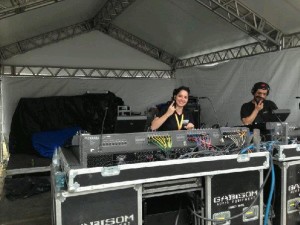
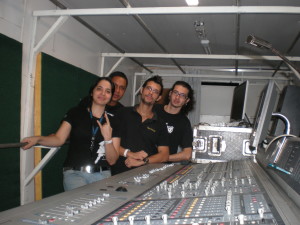
Fernanda and Marzia

This time I had the opportunity to bring a friend, hard-working girl Marzia Brini, who I met working for the Rio 2016 Olympic Games. It was the perfect event to bring her to our team, and she is Italian. It is always nice to have someone that speaks the native language of our clients; it can make a big difference. Marzia did great. It was also one of the few times I was not the only woman on the team – and it was awesome!

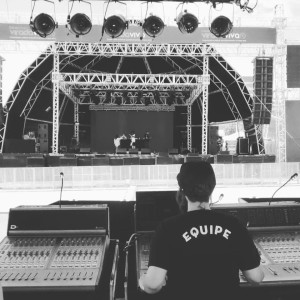
As usual, we had a massive system to set up in a very short time.  The stadium was enormous and very reflective, the sound design was about having more sources, less level and avoiding reflections as much as possible. Some numbers around this concert at Arena da Baixada / Curitiba / Brazil: (L’Acoustics) 64 K1, 48 SB28, 64 KARA, 16 V-DOSC, 50 KUDO, 24 12XT, 108 LA-8 amplifiers, plus analog boards Midas XL4 x2 and XL3.

It was not easy, but we did it! As the show started, I had these memories from my teenage years and all the doubts about my future, and suddenly I felt very proud. I felt proud about the choices I had made, some good and some not so good, but everything made up the path to get to where I am.  The feeling of being part of a team and accomplishment, to make your client happy, to make the show happen. That feeling!

End of the concert: load out was ten hours of nonstop heavy work, but again it has to be done. Thanks, Marzia and the Loudness crew, I hope to have many more successful shows and hope to see more and more women working on event production.


Fernanda Lemos is the only woman working as a sound engineer for Loudness, the second largest sound company in Brazil. Fernanda has faced obstacles and some of them are cultural, as her job in Brazil is viewed as man’s work. Some of artists automatically won’t work with her as they do not believe a woman is capable of doing the job. In the beginning, she thought this would change by showing she was capable of doing the job. She has come to realize it is going to take much more time and societal norms must change. She is proud that she is a part of making the change happen.

Help Promote Women in Audio

SoundGirls Social Media Campaign

SoundGirls will be collecting short video clips on Why I Love Being a Sound Engineer. These videos will help us promote our Live Sound Camps for Girls for Summer 2017 and our Fundraising Campaign.

Why I Love Being a Sound Engineer

Musicians welcome too – Why is important that there are more Women Sound Engineers.

We are asking members to record a short video of themselves at work

If you have a SoundGirls Shirt, Sticker, Lanyard please include it in the video

Be natural, don’t make it something that seems fake or too rehearsed

What to talk about

Why do you love being a Sound Engineer?

Guess what I did today? What gig or project are you working on?

Why women don’t even consider this as a career?

Example: “oh if only women knew about what life is like when my work is going to gigs and being sort of the boss since you are in control of the most important thing: the sound!”

Since you will most likely be filming this your phone – please consider the background and lighting. The image must be clear. Music in the background is great – but make sure your audio is clean and we can understand you.

Keep it short – one minute or less – (no more than two minutes)

Please email videos to soundgirls@soundgirls.org

Thanks for your help

Team SoundGirls

Challenges

If you’ve ever helped a child learn to read then you will understand the agony and sheer determination that is required to succeed. As adults, we often forget what is required to undergo the ‘learning process’ and place too high expectations on ourselves. Often we pick new ideas up as we go along without giving much thought to how we got there.

This month we’ve been lucky enough to welcome the Arabic megastar, Mohammed Abdou, to the Opera House.

Mohammed Abdou was born in Saudi Arabia in 1948. He had a rough start in life. Six of his siblings and his father died of smallpox, meaning that he, his mother, and two other siblings had to live in a hostel for orphaned families. At the time, Crown Prince Faisal funded schools for orphaned children and it was there that he has said that he, ‘learned how to live and depend on himself’.

At the end of his schooling, he took any work that he could find, starting by selling sweets and nuts in the local market. Eventually, he earned enough money to join a vocational institute. By the time he left, he was able to support the family and they moved into a new house. It was in this new location that Mohammed met a neighbour who was an expert ‘danat’ singer. Danat is a type of Arabic song that comes from central Saudi Arabia. During a ‘Sama’aie party’ (A classical Arabic music gathering) Mohammed sang one of the songs he had learnt from his neighbour. He was heard by a singer called Omar Kardras who took him to a recording studio in Jeddah to record his first three songs.

In his 40 year career, Mohammed Abdou has produced over 200 albums, his style influencing generations of Arabic music and reaching far across the globe.

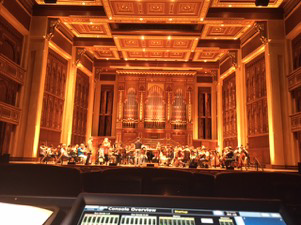
And so, the two concerts at the Opera House sold out within weeks of release. An extra night was added to help meet demand. For us as a sound and broadcast department, it was certainly one of the largest Arabic bands that we had seen. Starting with 82 inputs this was increased to 87 during rehearsals as more backing singers were added.

As with a typical Arabic concert setup, soloists including an oud, qanoon, nay, and accordion were placed center stage with a violin section to the left and a percussion section to the right. Two keyboard players also played solo sections. Behind the soloists were a typical woodwind and brass section, drummer, bass, guitar and backing vocals.

Given that we were in our ‘concert setting’  we tried to limit the number of wedges onstage and use IEM’s as much as possible. We used a combination of wireless (Shure and Sennheiser) belt packs as well as 4 Behringer Powerplay units for the percussion section and Sound Device MM-1 units for the bass, drummer, and guitar. The violin section, backing vocals, and woodwind and brass all had Meyer UPM or UPJ monitoring and Mohammed Abdou, 2 MJF’s. An additional UPM was added for the Maestro.

Rehearsal Line Check

In addition to our own built acoustic treatment of the room, we also used clear acoustic panels between the percussion and soloists. Extra attention needed to be paid to aesthetics as Oman TV filmed all three nights!

If Abdou can teach us anything, it is that no matter our beginnings, hard work and determination will eventually pay off. The battles we overcome today will become part of a much larger picture.  Once again, we are left in the wake of this concert feeling that the learning that we gathered in previous challenges produces greater knowledge and success moving forwards.

N.Y. – SoundGirls Presents Hearing Health with Musicians Hearing Solutions

Join SoundGirls for an evening learning about hearing health, live sound, noise induced loss and how to prevent it.  Learn about IEMS and ear plugs and how to use them properly. Dr. Julie Glick and Dr. Elvera Bader of Musicians Hearing Solutions will have demos of different IEMS available; Shure, Sennheiser, Ultimate Ears, JH Audio, Sensaphonics and Noble Audio. Plus we will have plenty of time to meet and network with other SoundGirls members. SoundGirls Executive Director Karrie Keyes will be on hand to meet members.

JULIE GLICK, Au.D., F-AAA

Dr. Glick was first introduced to custom in-ear monitors and musicians earplugs nineteen years ago when she started her career in a private practice in Beverly Hills, California. Her passion for music and commitment to the field of audiology led her to recognize that the optimization of the live performances of musicians and hearing conservation was a niche she wanted to be involved in from the very beginning. Over the past nineteen years, Julie has spent invaluable time with monitor / sound engineers and has been backstage and in rehearsal studios with musicians of all genres.  She has also worked as an audiologist for two years at Sensaphonics Hearing Conservation in Chicago. Through all of these experiences, she has gained great insight and appreciation for all the technical details that go into live musical performances and how important hearing and hearing conservation is to not only musicians but to the fans as well. Dr. Glick’s knowledge and technical expertise of sound, hearing and hearing conservation make her a valuable asset to the music community.

Dr. Glick received her Bachelor of Arts degree in Speech and Hearing Science from The Ohio State University, Master of Science in Communicative Disorders from California State University, Northridge and Doctor of Audiology from the Pennsylvania College of Optometry, School of Audiology. Dr. Glick is a licensed Audiologist and Hearing Instrument Dispenser in the state of New York and a Fellow of the American Academy of Audiology.

ELVERA BADER, Au.D., F-AAA

Dr. Elvera Bader’s professional experience in audiology at the leading practices in New York City combined with her background in dance and love for music made her a perfect fit as part of the team at Musicians Hearing Solutions™.  Elvera’s background includes extensive audiological evaluations, hearing conservation, tinnitus treatment and rehabilitation.  

Elvera received her Bachelor of Arts in Communication Sciences and Disorders from City University of Brooklyn College, where she graduated magna cum laude and was elected into the Phi Beta Kappa Society. She went on to complete her Doctorate of Audiology through the City University of New York Graduate Center and co-authored a study titled “College Music Faculty Views about Hearing Protection and Hearing Conservation Training”.

Dr. Bader is a licensed Audiologist and Hearing Instrument Dispenser in the state of New York and is a fellow of the American Academy of Audiology. She is also a licensed Audiologist in the state of New Jersey.

Netherlands- SoundGirls and Klang Present 3D In Ear Monitoring


SoundGirls invites you to experience 3D In-Ear Monitoring to its full extent: Klang will be presenting their 3D In Ear Monitoring system and products. Please bring your IEMs as we will have a live act to demonstrate the 3D In-Ear Monitoring. In addition Monitor Engineers, Marcel van Limbeek (Tori Amos) and Bennie Veenstra (Within Temptation) will also be there to talk about in-ear monitoring and share their secrets and Tjidde Custom in-ears will be on-site.

KLANG:fabrik, takes the incoming audio signals and places them 360° in the virtual acoustic room. It then sends an individual mix to the headphone amps and radio transmitters of up to 16 musicians.The almost invisible motion tracker measures every head movement of each musician to constantly update the mix in real-time. 3D In-Ear Monitoring would work without motion tracking as well, but you’d miss the fast adaptation of your mix to the things you see on stage. Finally you need total control over your In-Ear mixes. You can install the KLANG:app on any mobile device or computer and connect it to KLANG:fabrik via WiFi or LAN. The engineer can control all mixes with one app, or every musician can control his or her own mix with their own devices.


Los Angeles – SoundGirls – Allen & Heath – Rat Sound Systems Presents dLive Training

We invite you to attend our training event on the dLive digital mixing system from Allen & Heath. The design goal for dLive was to create the ultimate mixing system, with plenty of processing and flexibility to handle the most demanding live scenarios.

The day is built around an immersive combination of presentation and hands-on training designed to showcase the dLive’s power and flexibility across multiple applications.

We will be hosting two days of training, each day features two sessions –

Training is free but space is limited. You must register for each session you wish to attend.


X