Kira Roessler – Bass Player, Roadie, Fan, Academy Award Winner
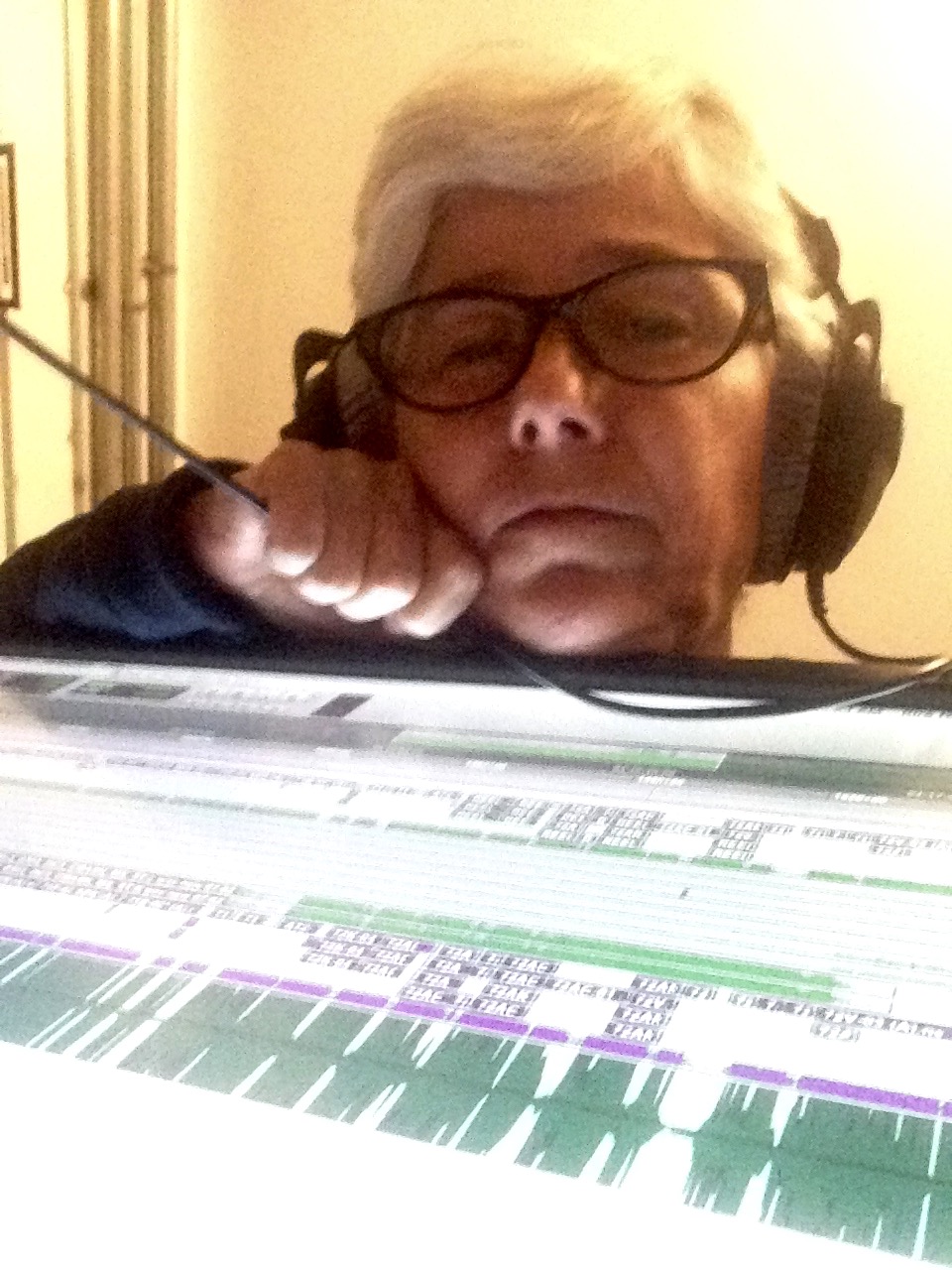 Kira Roessler might not view herself as a groundbreaker and even downplays the fact that she has been paving the way for women in male-dominated fields for most of her adult life. She is a bass player, singer, and songwriter and is best known for her work with Black Flag and Dos. During the period that she was the bass player for Black Flag, she was also attending UCLA and majoring in Economics and Engineering. She has since gone on to become an Emmy Award-winning dialogue editor and part of an Oscar-winning team.
Kira was born in Connecticut and started taking classical piano lessons at six years old. Her older brother Paul also took lessons, and being three years older than Kira was better. Kira, who is competitive, became frustrated and quit.
When Kira was 14, her brother’s progressive rock band lost their bass player, and Kira was determined to replace him. She was able to borrow a bass and practiced 6-10 hours a day (six on school days and ten on weekends). She even kept a log. She was never good enough, but when she was 15, Paul discovered punk rock through friends of his who were in a band called The Germs. So she followed Paul into the vortex.
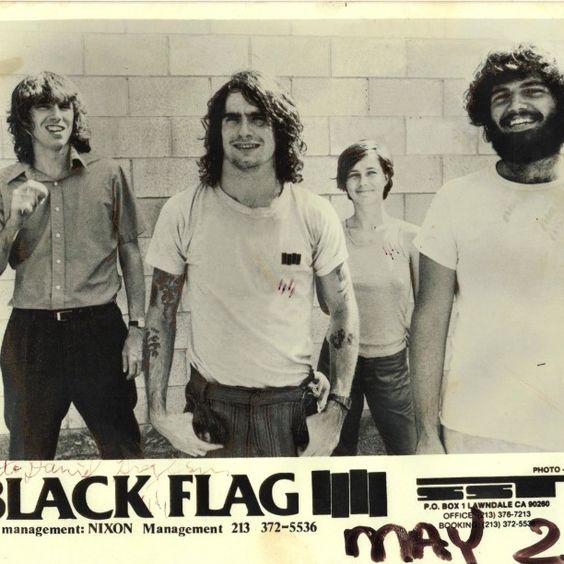
Kira and her brother moved into a house with a garage converted into a rehearsal space. They jammed with people and started their own punk rock band. They went to gigs and met other people who played. Kira’s first gig was at age 16 at the Whisky A Go-Go. By the time Kira joined Black Flag in 1983 (replacing founding member Chuck Dukowski), she had played in several bands in Los Angeles.
When Kira joined Black Flag, she had already completed three years of her BS degree at UCLA. She informed the band that she needed to finish, but that she would take quarters off school to tour. It took her two years to complete her last year at UCLA because Black Flag did four US tours and one European tour in ’84 and ’85. It was madness. Kira would literally get dropped off from the tour at UCLA for classes. It seemed like every time the band was recording; she was studying for midterms or finals. So when she would drop to the floor exhausted from playing, she would get the books out.
As with many musicians on the road, Kira faced some difficulties. The hardest part about the touring for her was her right hand. She suffered an injury a week into joining Black Flag that never really healed. When the gigs were over, you could find her backstage with her hand in an ice bucket. She never let the injury stop her, but it certainly made her grumpy at times. The second hardest part of touring for Kira was the feeling that life is going on without you back home and the lack of stability. Relationships of any sort were affected, and there was no ‘home’ when she got back. She concludes this is why she’s a relative “homebody” now.
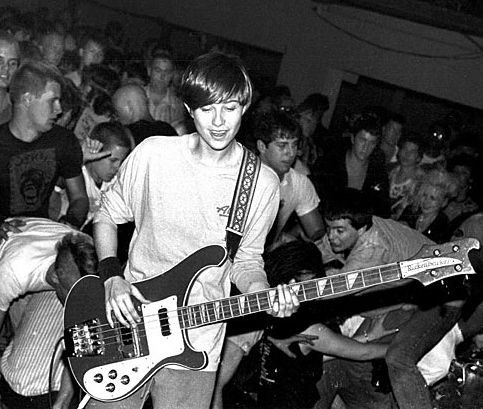 Kira’s tenure and life on the road with Black Flag ended with the 1985 tour. With only two gigs left on the tour, she called home and found out that a tour had been scheduled in the fall concurrently when she was to be attending UCLA to complete her degree. She knew at that point that she was going to be asked to leave. When the band returned home, she was indeed asked to leave.
Kira was featured on five of Black Flag’s studio albums. She left the band at the conclusion of In My Head Tour and graduated from UCLA in 1986. After Black Flag, she went on to form the two-bass duo Dos with Mike Watt, whom she was married to from ‘87 – ‘92. She contributed songs to the Minutemen’s final album and now works as a dialog editor, recently being part of an Oscar-winning sound editing team for work on Mad Max: Fury Road.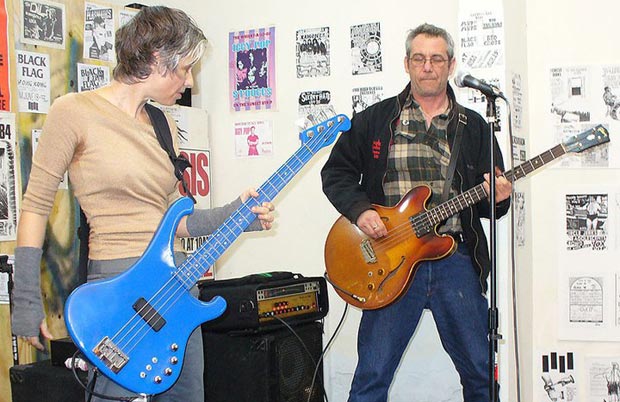
Kira credits include several films and projects: Confessions of a Dangerous Mind (2002), Under the Tuscan Sun (2003), and The Twilight Saga: New Moon (2009). She won an Emmy for her work on John Adams episode “Don’t Tread on Me” as well as one for an episode of Game of Thrones during Season Two. She has been featured in the documentaries We Jam Econo: The Story of the Minutemen and American Hardcore.
The following Q&A was conducted by Greg Cameron. He is the former drummer of a few bands on Black Flag’s label SST Records – SWA, October Faction, and Chemical People. He is a former tour-mate of Kira’s during her time with Black Flag. Currently, he is the house sound engineer for Miner’s Foundry Cultural Center in Nevada City, California as well as a QA engineer for video technology company AJA Video Systems, Inc. in Grass Valley, California. Greg is also a SoundGirls.Org Member and Supporter.
What field of engineering were you studying at UCLA? Did it have any bearing on your current field?
My major was called Economics/System Science. Basically, half economics and half computer studies. After college and being booted from Black Flag I needed to get a job, and I went into a computer job at Yale. After 11 years of computers, I met someone who was in post-production sound. It seemed the perfect marriage of my music and my computer background. In retrospect, the confidence I have in computer software is probably the only asset from my education and computer career.
Can you discuss what led you to post-production and dialog editing? Was it something you had aspired to do or was it something that you “fell into?”
Oh – I guess I kind of answered that. It was a fluke that my brother was writing music for this student film that this sound guy was doing post sound on. They asked me to come in and lay down a bass guitar track. He was using ProTools (very early days for digital sound editing by the way), and I was interested in the process for sure. I stayed in touch with him and eventually, ended up working for him.
What type of training did you receive as far as post-production audio? Were you self-taught or did you have formal training?
It was definitely trial by fire. The company was a four-person team when I joined it, and the guys seemed to lean towards the sound effects arena. That left an opening on the dialogue/ADR side of things. So I began trying to fill the void as best I could, sometimes taking a beating when I turned in reels to nasty mixers, but learning each time.
Did you have a mentor?
At first, this young man who ran the company, Bryan Franklin showed me the ropes. Eventually, I met a guy who had been doing it for years and years (he had been the dialogue/ADR supervisor on ET), and he became my mentor. His name is Curt Schulkey. I did about eight films working under him and then began getting offers (often with his recommendation) to do other projects.
What would you find to be the most satisfying aspects of your job?
Hmmm. Dialogue editing is kind of like how many problems you can solve before the mix. And there is generally a lot to be solved. ADR and group (where we go into the studio to record) are more about honing my limited people skills. Both are positive – but both can also be frustrating. When I am editing in a room, it is just me, and the sounds and my anti-social nature is soothed. But one cannot be truly successful in my field without also tackling the people stuff.
What would be some of the most challenging parts of your job?
As mentioned above, I find some people’s interactions difficult. Clients can be very demanding. Schedules can be extremely challenging. One can feel very squeezed in terms of delivering quality, and also in terms of keeping that smile on your face. Often the tightest schedule demands the highest quality somehow. ADR involves a significant amount of paperwork and phone calls which make it difficult to actually do the editing. ADR and group involve being pretty organized, and that is not necessarily natural to me.
As a woman in this field, did you encounter any issues regarding getting jobs or issues being on the job?
Of course, it’s hard to compare my experience to what it might have been like if I was not a woman. I do sometimes get the feeling that someone is reacting to me for no reason, and that may be related to my gender or the combination of my gender with my assertive personality. Learning to keep one’s mouth shut is probably useful for everyone. I do think a man may be able to get away with more.
If so, how did or do you deal with them?
In my opinion, the only way to battle any people issue is to contain reactions and propose solutions. “How can I help?” “Ok, let me try to find another way to tackle this” Phrases like that diffuse tension quickly because I am no longer pushing back. Showing emotion (of course) is the worst thing because any preconceived notion about women will be confirmed.
What advice would have for young women trying to break into your field?
It is a tough time for this industry. Budgets are tighter, and teams are smaller. Being multi-faceted is a must. I believe you will have to present yourself well, learn a great deal on your own, and then get lucky or have an “in.” I would not recommend it as a career because people are being squeezed out all the time. Mostly because they aren’t learning the new technologies and demands fast enough or are resisting working as hard as we are expected to. There have to be industries that are growing right?
Let’s talk a bit about the technology you work with. What are your preferred tools or platforms in audio post?
Well – it isn’t like I had that much of a choice. I worked at that first company on ProTools 3 when it was just starting to become a tool being used in film. And what I do is work in a continuum. I am handed material from the picture department and have to deliver to the mixing room. This puts me in an agreed-upon context, not in a vacuum.
I could do my music in whatever tool I wanted, but since Pro Tools can be used for my work (pretty much the industry standard), I may as well use it for music. If the industry shifted, so would I. The tools are the hammer – we are just trying to get the nail in the wood.
What’s your general or even specific workflow?
The picture department – where the director and editor create a version of the film selecting takes within scenes and building scenes within reels – will then generate material to send to the sound department (and the composer, and the visual effects department). For the dialogue, there is a track-by-track layout which is the little bits they selected and cobbled together for me to then work with. My job is to make that cobbled-together reel, scene by scene, line by line sound smooth and clean with as few audio issues as possible. If there are lines that are utterly unintelligible, I will recommend we re-record them in the studio. I also have to record what we call “group” or “loop group” which includes background voices and additive material for non-principal characters on the screen.
During this process (right while this is going on) we usually have to generate material for quick temp mixes so the filmmakers can preview the movie to a test audience. They will then change things (new takes, pulling out or adding in material) and send us a new version which we then have to adjust to.
At some point, the final mixing dates arrive, and we jump off the hamster wheel. That is where the final music and tracks are mixed into what you will hear in the theater.
Do you have experience with other platforms than your preferred one?
I do not. But I am confident that I can pick up whatever alternate tool I need to when the time arises.
Do you have any inclination to venture into other fields of audio production or post-production?
I am not particularly ambitious really. I find this level of insanity plenty challenging. The money is decent. If anything I would like more time to spend on my musical ventures, my dogs, or whatever which often get shoved to the side.
What advice do you have as far as dealing with technology in your field?
Do not be rattled by the tool. Concentrate on what you are trying to do. You will have to continue to adapt and adjust as you go, so don’t get attached to things working in one way. Use forums ask people who are good at it for help.
Can you share any anecdotes about your time working in post?
It can be disconcerting how much schedules change and how much we are at the bottom of the totem pole and the end of the process. Everyone wants to feel valued, and do good work, but sometimes you just gotta be fast and figure out what has to be done rather than what should be done. Your schedule is really not your own while you are on a project. And while you are off, you tend to want to be available to get on one. So it is hard to plan anything.
Oh yeah – anecdotes – “we are giving you a new version of the movie Wednesday or Thursday for a Saturday temp mix.”
“We have decided to create two versions of the movie and mix them both, then play them for two audiences and see what people like.”
“well yes we are doing the final mix, but let’s do a temp mix of this new material and also re-record all of that character’s lines” (or how to be in three places at once)
How about your time in music & Black Flag?
Being in Black Flag taught me about endurance. At the time I didn’t realize much about people politics and because of that, I wasn’t necessarily very good at that end of the business. Being in a band is like a marriage of several people and demands work, just as a marriage does. It demands acceptance of each other, supporting each other even in disagreement, and all sorts of things I did not get then. I thought it was about playing well and surviving. I guess that is important too, but not nearly enough.
Specifics are tricky. It is a blur at this point of gigs, practices, recordings, pain, exhaustion, sadness, regret, and fond memory. I gave it all I had, as I had promised myself I would. At times it did not seem enough. I was physically and emotionally ragged from it. And I behaved badly more than once. But I learned and grew musically and in other ways. I met people who would go farther at music than I knew anyone could.
I have been asked many times what it was like being a girl doing this. How would I know? Stupid stuff happened. Wake up in the night in the van with someone looking at you, whatever. But aside from that stuff, my experience was just one of fighting off the doubts within me, not from the outside. Is that because I am female or are we all like that?
Did your time in Black Flag have any influence at all on what you do now?
I don’t think so. I am not the starving artist type. I always intended to work, if not touring then at a job. I had some hard times early in terms of being broke and was pretty determined to do what I could to avoid going hungry at least.
Are you still performing?
Interesting question. I have not in a little while. I play my bass often and still record, both my own stuff and sometimes for other people. I do not know if the occasion will arise or not. I am not actively seeking it out.
And please throw in anything else you might what to impart or just share.
Greg – I remember you as one of those who fought so hard at music. You have also grown and expanded sound into a career right? There are lots of ways to skin that cat if one is in a band and wonders what is next. I find I have to be willing to let the answer be something totally unexpected (as post sound was for me).
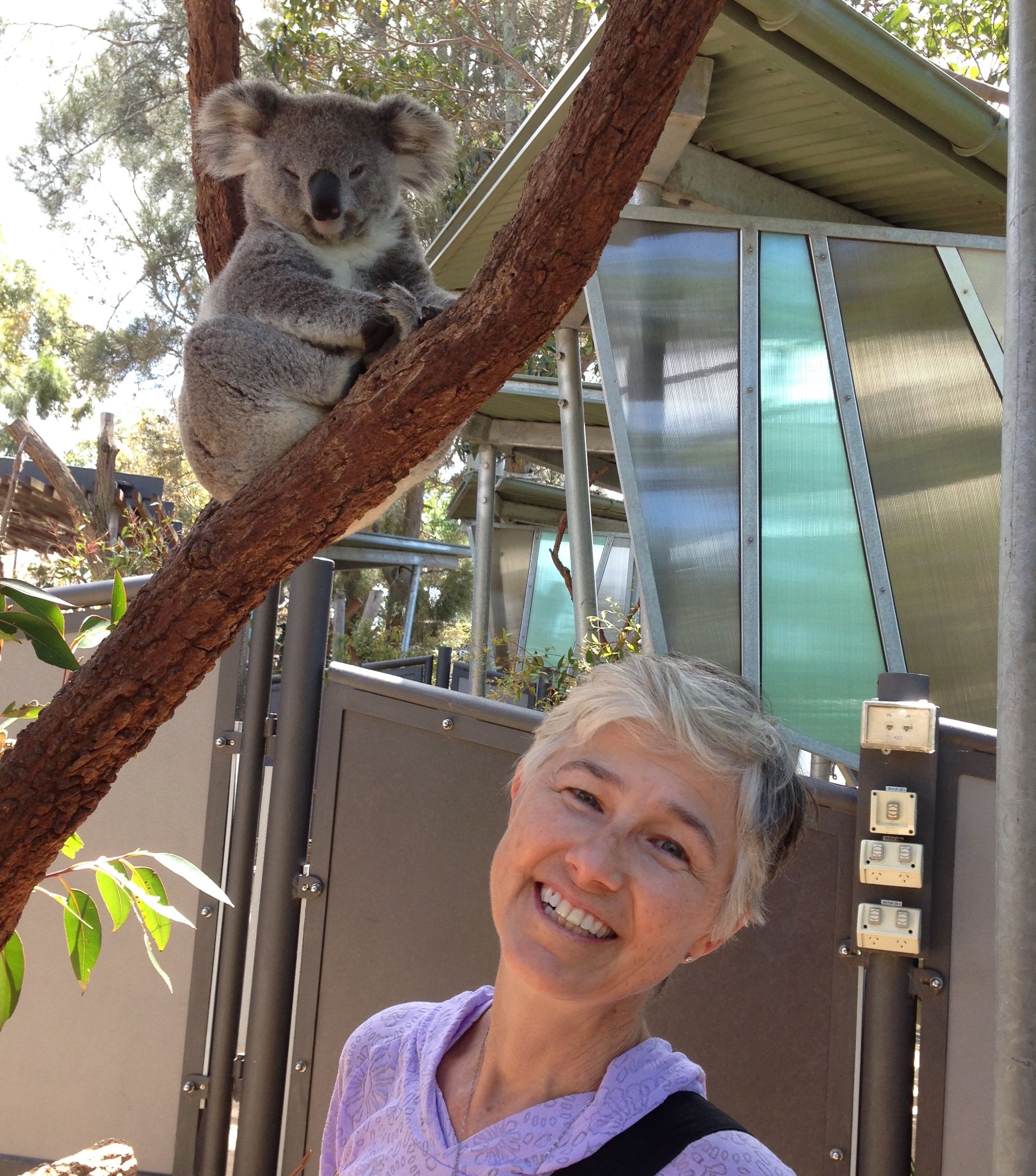 More on Kira
- For more on Kira’s contributions to the Southern California Punk Rock Scene – check out Alice Bag’s Interview with Kira.
- Kira Roessler – Wikipedia
- Bassist Kira Roessler on Her Time in Black Flag, Early LA Punk + More