Empowering the Next Generation of Women in Audio

Join Us

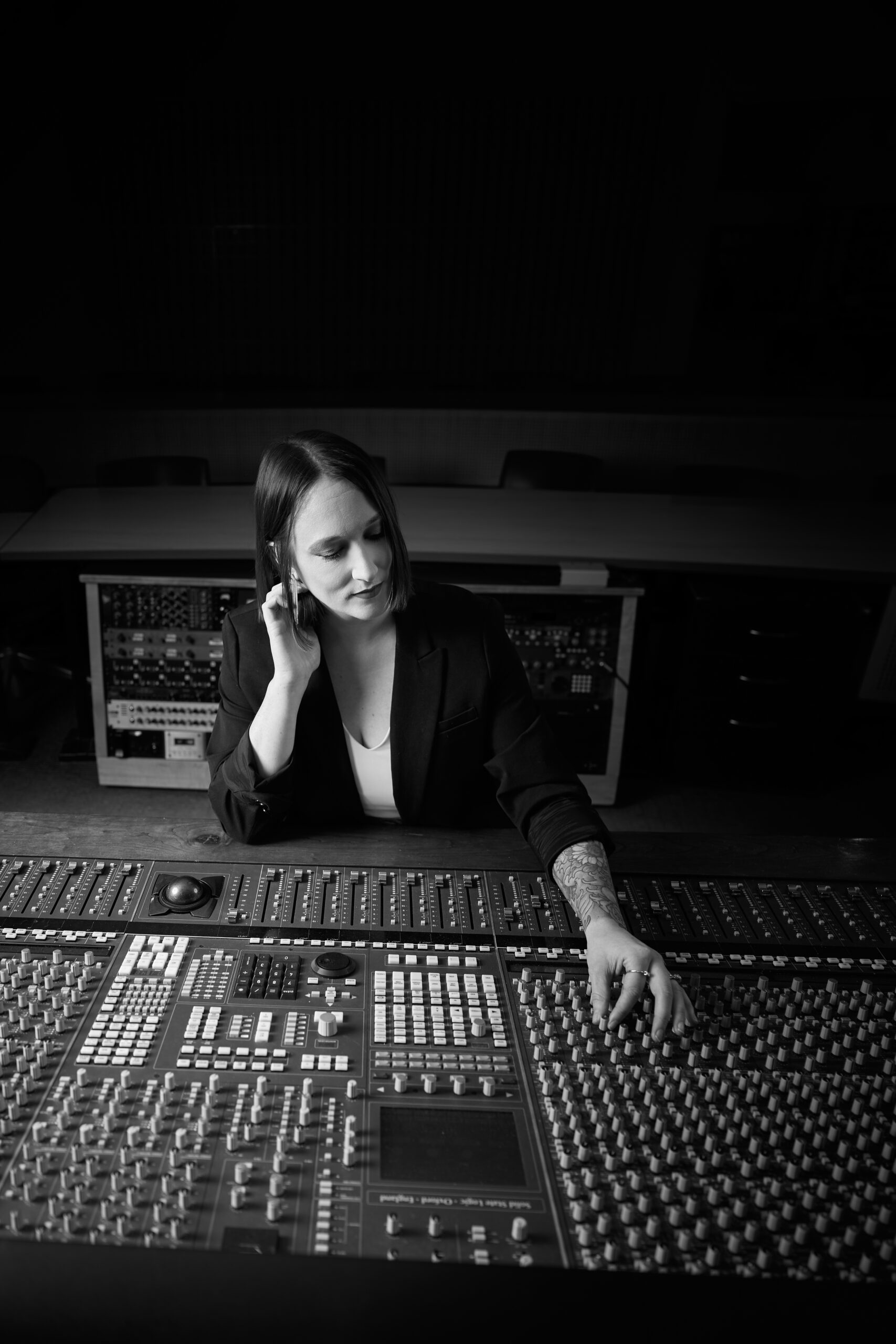
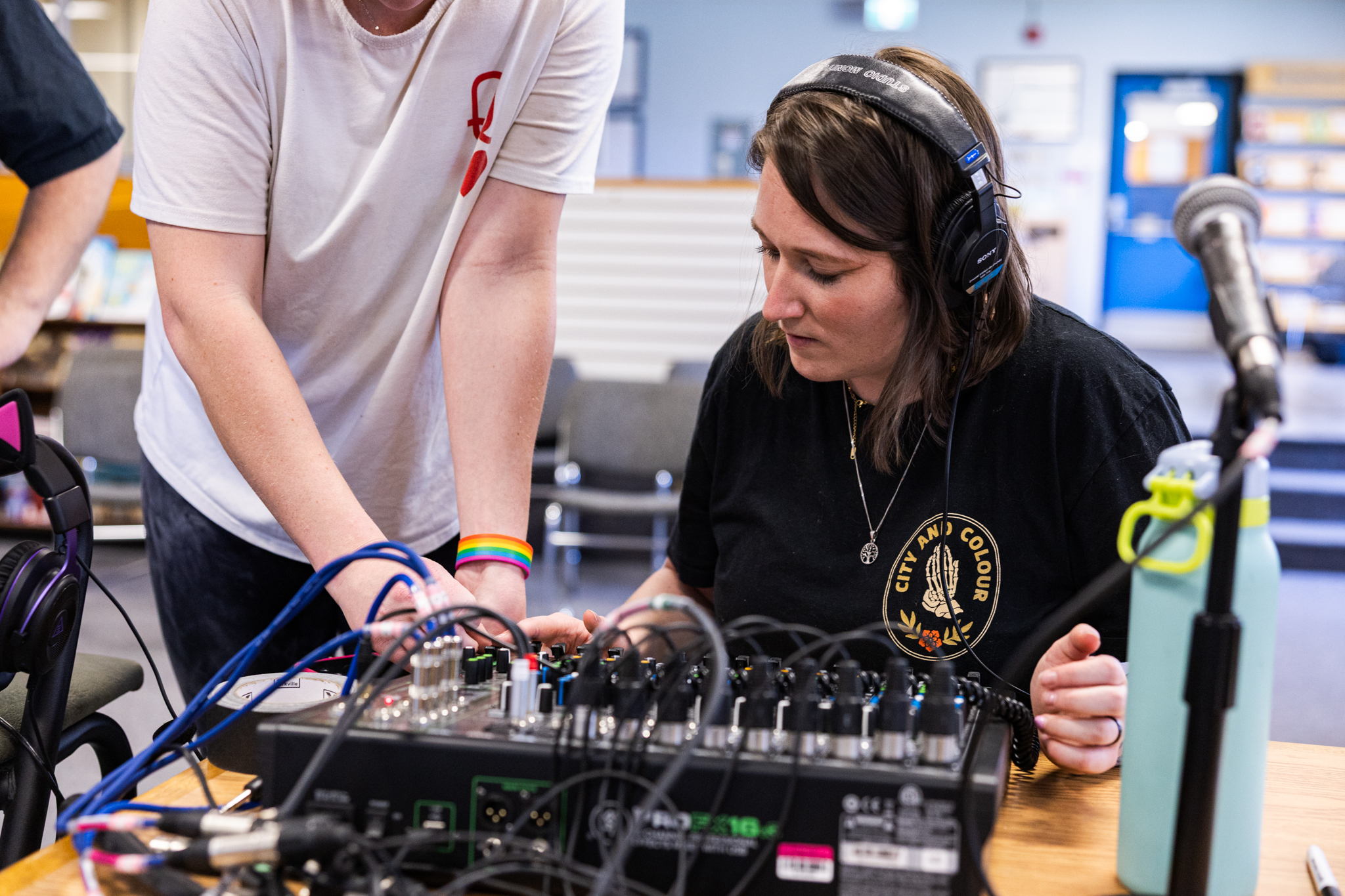
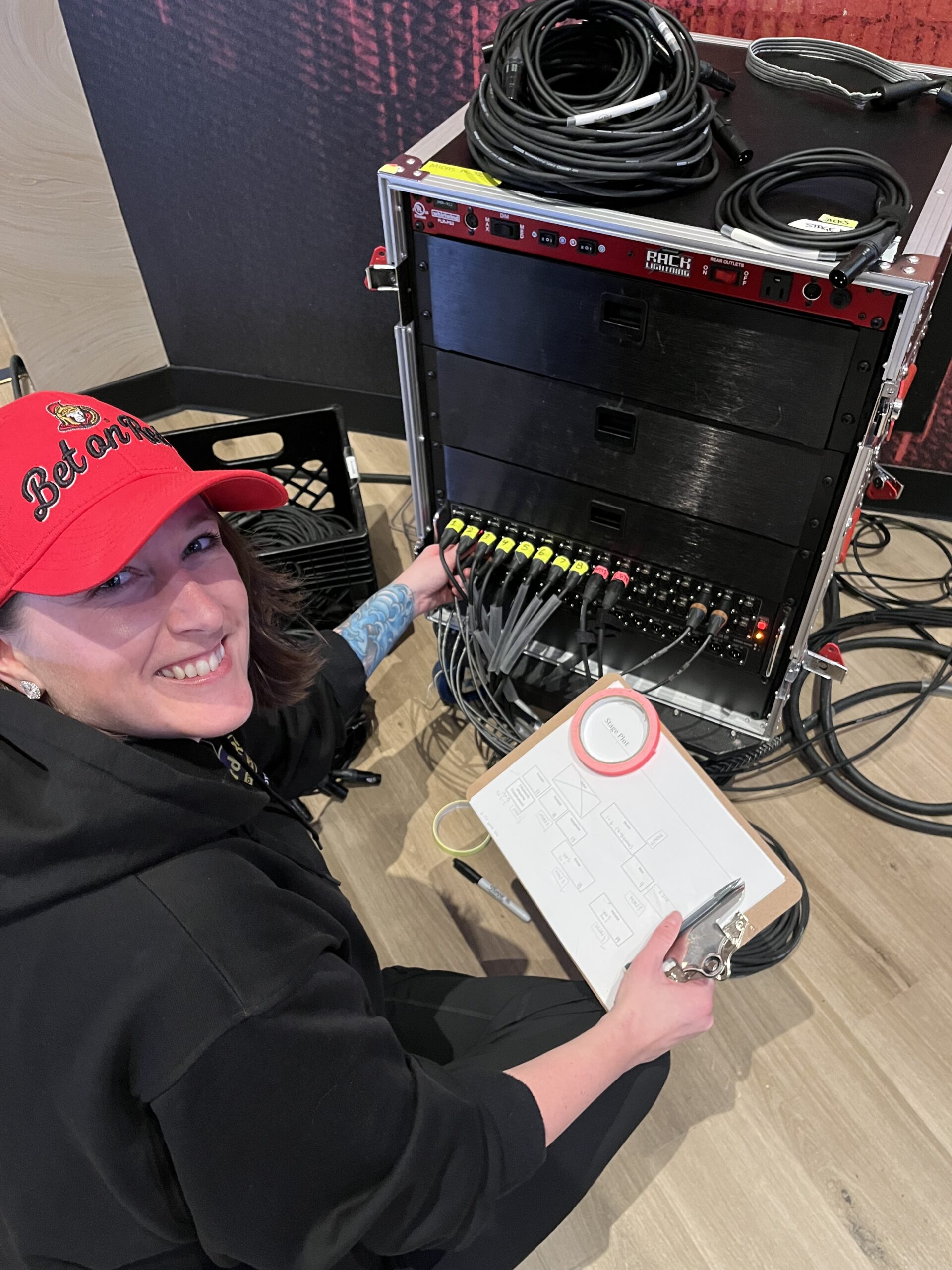
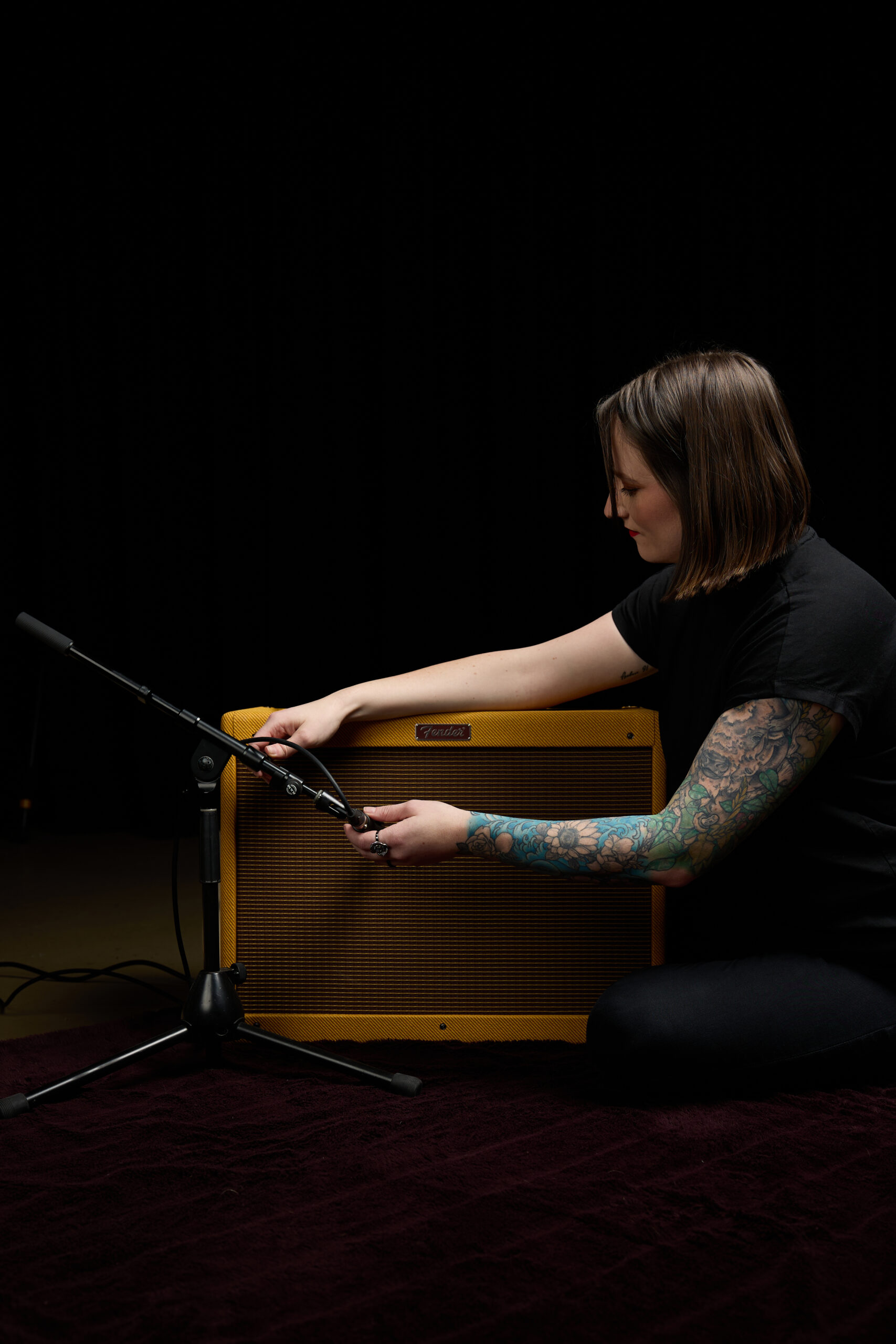
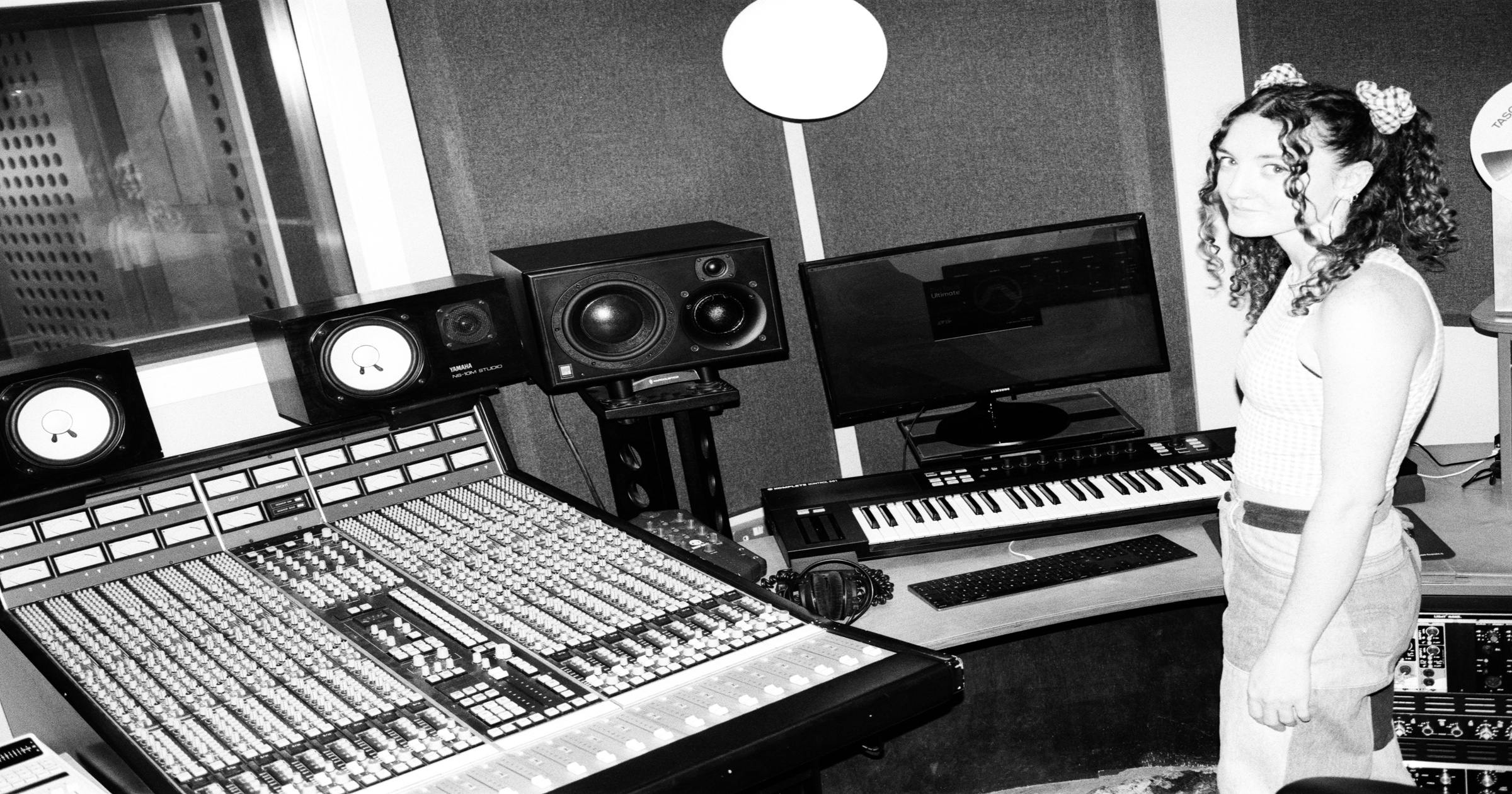
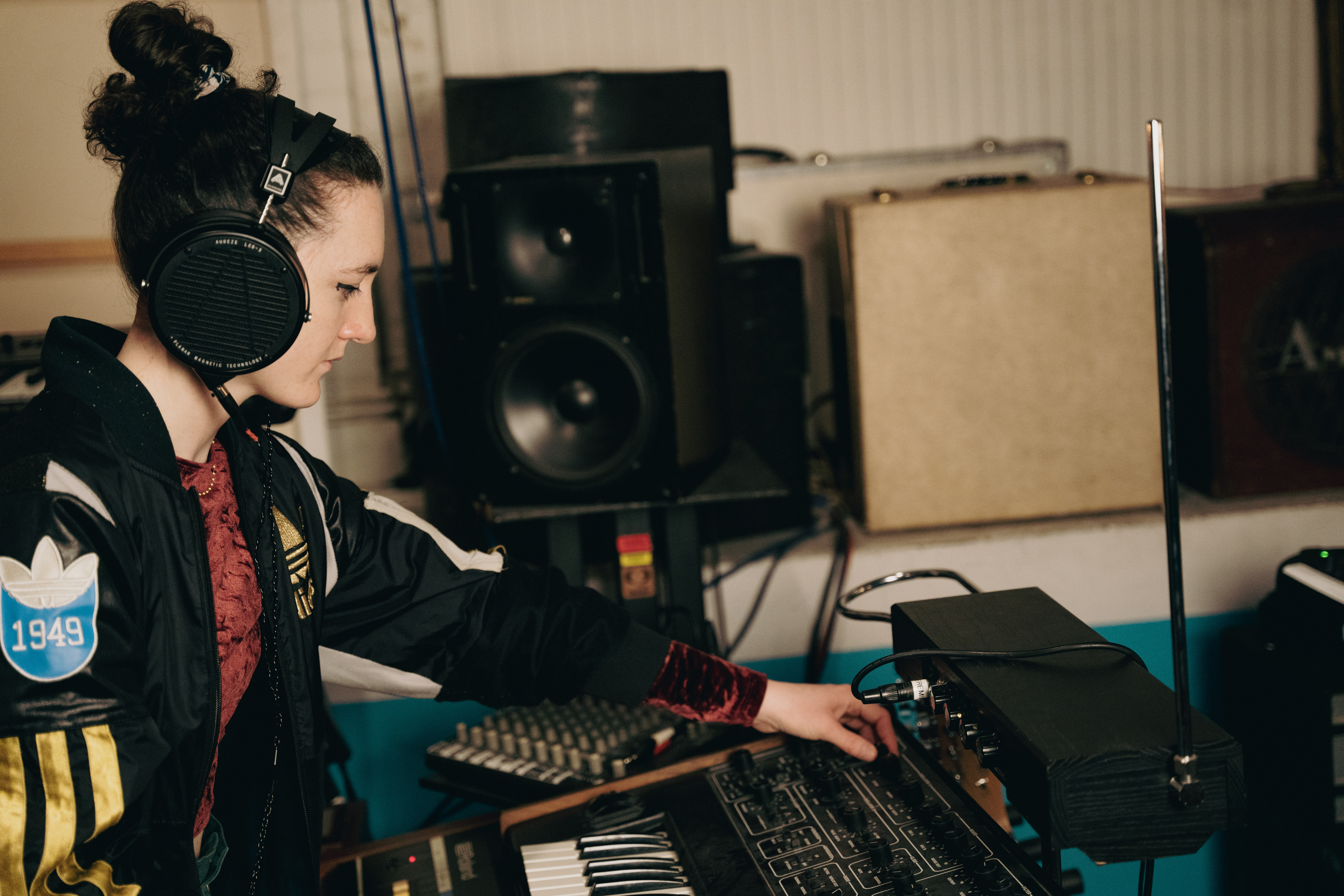
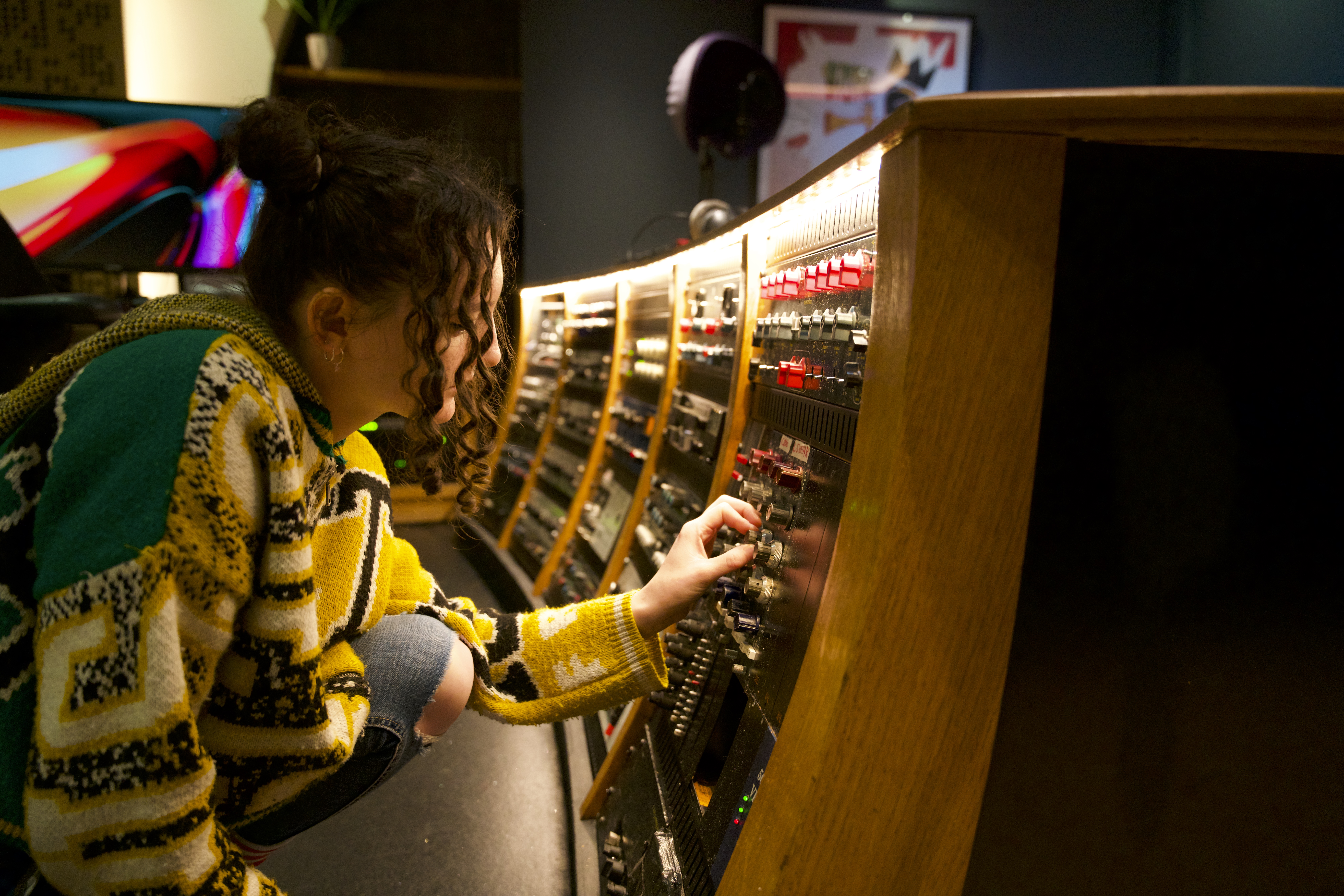
Evie Clark-Yospa (Evie) – Recording, Mixing & Production Engineer

Evie Clark-Yospa is a London-based recording, mixing, and production engineer with over a decade of experience in audio. Currently working as an Engineer at Baltic Studios, where she has been part of the team for the past three years, Evie balances her studio work with independent projects, bringing a versatile and intuitive approach to every session.

Evie’s path into audio began at just 13 years old at a festival where her parents were part of the workshop crew. Friends running the sound tent invited her to help during band soundchecks, and she immediately knew she had found something special. The experience of watching live sound come together sparked what would become a lifelong passion.

Music was woven deeply into Evie’s upbringing within the traveller community. Her mum busked professionally and played in ceilidh bands, often bringing Evie along to performances. Her sister played Celtic harp, her father produced techno, and both grandmothers were multi-instrumentalists. Though she didn’t grow up with formal music lessons, she was surrounded by creativity and encouraged to experiment freely — an influence that still shapes her production style today.

Home-educated and largely raised off-grid, Evie initially entered the industry without fully recognizing the barriers that often exist. It wasn’t until she began working in professional studios that she became more aware of representation gaps within audio. However, strong mentors and supportive educators played a key role in reinforcing her sense of belonging and capability.

At 15, Evie traveled six hours a day to attend a music technology course at Coleg Sir Gâr in Wales — a formative experience that solidified her desire to pursue audio professionally. She later earned a BA (Hons) in Music Production from BIMM, where she developed her technical foundation. An internship at Premises Studios proved especially transformative, giving her hands-on experience and a clear vision of her future in the industry.

Today, Evie brings both technical expertise and a deep-rooted musical intuition to her work. Shaped by community, independence, and a lifelong immersion in sound, she approaches each project with curiosity, care, and a commitment to helping artists fully realize their vision.

Career Beginnings

How did you get your start in audio? –

I started my career by interning at Premises Studios, and it all happened by complete chance. I met someone at a festival who knew one of the studio managers, and she offered to put me in touch. We met up, I shadowed for a day, and a year later they offered me a job working on reception at the studio.

What were your first jobs, gigs, or internships like?

I had a steep learning curve going into my internship because I had never been in a commercial studio before. However, I feel incredibly lucky to have interned at Premises. They were so encouraging, they trusted me, and they genuinely cared about my wellbeing during sessions. I know not all studios or internships would have treated me this way, and I have a great deal of respect for the entire team at Premises for giving me that opportunity.

What skills or lessons did you learn early on that still serve you today?

I learned so much during my time at Premises. All the technical knowledge I gained there was invaluable. I learned about patch bays, how to mic up drum kits, how to track vocals, Pro Tools shortcuts, everything. But I think the most important skills I developed during my internship were behavioural. I learned when to give artists space and how to support different personalities in ways that helped them perform at their best.

What barriers did you encounter early in your career, if any?

I didn’t have a mentor per se but I feel like Premises took me under their wing fully, the engineers, studio managers, the owner, everyone encouraged me. I think the barriers I faced were mostly rooted in people’s assumptions about me. I often felt overlooked when interviewing for studio roles, and even when I did secure a position, clients would frequently assume I was the singer rather than the engineer. I remember one particular interview for a studio job. As part of the process, I was given an audio tech test, but I wasn’t given the space to properly demonstrate what I could do. Instead, they assumed I didn’t know what I was doing and stepped in to complete parts of the task for me. I was later told I hadn’t been successful because I “lacked technical knowledge.”

Your Career Today

What does a typical workday look like for you now?

My days can vary a lot, but I mostly work as a tracking engineer at Baltic Studios. I record a wide range of projects, from bands to film scores. Alongside that, I freelance as a mixer and producer, so some days are spent working more independently on smaller projects, mixing and producing.

How do you stay organized and manage the demands of your work?

I stay organised by being mindful not to schedule too much too close together. When I’m working on a project, I try to fully commit to it so I can stay in the right headspace and give it my full attention.

What do you enjoy most about what you do?

What I enjoy most is the people. I thrive in a busy studio environment, constantly meeting new artists and collaborators and building connections through music. I also really enjoy the problem solving side of the work. There is always a challenge to tackle in the studio, and I love troubleshooting.

What aspects of the job are the most challenging or least enjoyable?

Although I enjoy most aspects of my work, I think the hardest part of engineering is the schedule. It can be incredibly busy, and it’s important to set boundaries and avoid overworking so you don’t burn out.

What is your favorite way to spend a day off or time away from work?

I love travelling, my favourite thing to do away from work is exploring different cultures and having new experiences.

Challenges, Growth & Perspective

What obstacles or systemic barriers have you faced in the industry?

One of the main barriers I’ve faced is frequently being the only woman in many studio sessions. In those environments, I have often felt overlooked, patronised, or underestimated. It has meant having to repeatedly prove myself in spaces where others are automatically assumed to be Competent.

How have you navigated or pushed through those challenges?

The only way I’ve been able to navigate the challenges of being overlooked and underestimated has been by working twice as hard as I should really have to, over preparing for everything, and consciously trying to maintain confidence in myself.

Have you seen the industry change during your career? If so, how?

I have seen the industry change for the better. I see far more women and people of marginalised genders in studios now, which is really encouraging. That said, I still think there is a lot more work to be done.

What still needs to change to better support women and marginalized genders in audio?

I believe we need to move beyond just talking about change and start holding people accountable for their behaviour within the industry. Instead, we need to create clearer, safer systems for reporting unacceptable behaviour.

Advice & Looking Forward

What advice would you give to women or young people interested in entering audio?

The advice I would give is always be willing to learn from others, consistently look for work and try to never doubt yourself.

What skills—technical or otherwise—do you think are essential for success?

I think the technical skills required for audio roles are a given, but the most important qualities for anyone in this industry are kindness, patience, understanding, and a willingness to troubleshoot at any moment.

What long-term goals or aspirations do you have?

In the long term, I would love to give back to the wider industry by helping studios develop forward thinking initiatives that support and progress the next generation of engineers. Creating more accessible pathways into studio work feels really important to me. I also want to continue developing my work as a producer and mixer, taking on more projects in those roles and growing that side of my career.

Is there something you wish you had known earlier in your career?

I wish I had understood more about the less glamorous side of the industry. I love working in this career, but it is often romanticised, especially when you are studying. I would have really valued a more realistic view of what the day to day actually looks like, including the long hours, the unpredictability, and the resilience it takes to build something sustainable.

Favorite or most-used gear (and why):

My favourite bit of studio kit at the moment is the Roland RE-201 Space Echo. I’ve found you can get loads of crazy effects using different tapes within the unit and it’s become a really creative tool for me.

A piece of gear you can’t live without:

The Sony C800!

A moment in your career that made you feel proud or affirmed:

I’ve had so many wonderful moments in my career, but a few recent highlights really stand out. Working on The Charlatans’ new album, We Are Love, was a special one for me. I contributed to a bunch of tracks on that record, and seeing the project come to life and be released into the world was great!

Another highlight has been Baltic Studios’ ATM Programme. Each year, we support eight emerging artists facing financial barriers with access to studios, mixing, mastering, and career mentorship. Working with these artists to pass on what I’ve learned, and building thei confidence in a professional studio environment has been incredibly rewarding.

I also played a part in building Baltic’s new studio spaces, Studio 2 and Studio 3. It was a truly collaborative effort from the whole team, and it has been exciting to see those rooms thriving in sessions, especially knowing how much care and hard work we all put into creating them.

Evie’s website

Rebecca Huston Mastering and FOH engineer, Producer and Artist

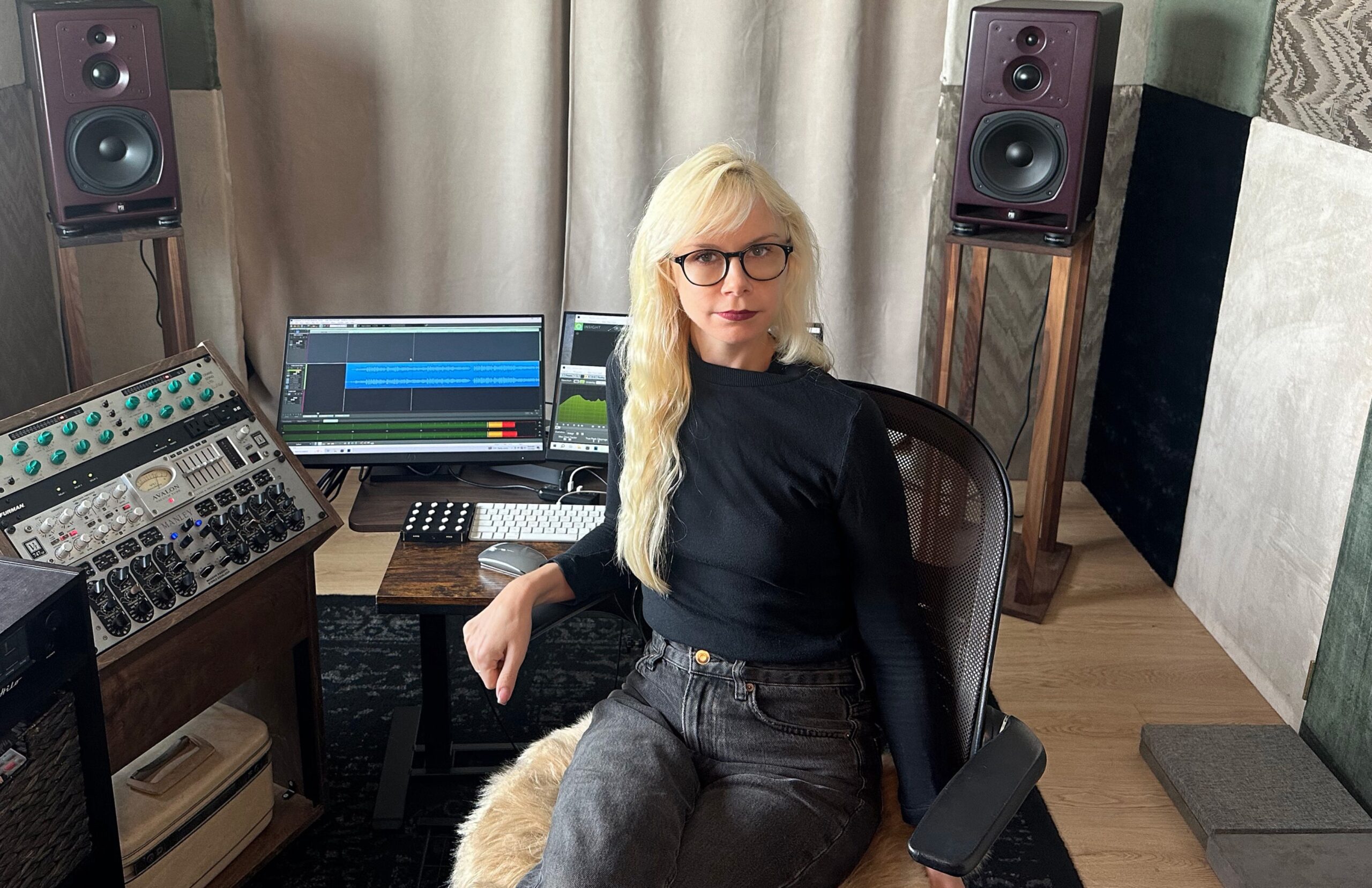
Rebecca Huston is a Los Angeles–based mastering engineer, live FOH engineer, producer, and artist with over 20 years of experience in audio. She works independently from her studio, The Forest Mastering and Restoration, where she mixes and masters music while also creating her own work under the project name Romantic Thriller.

Rebecca’s path into audio was shaped by hands-on learning and long-term apprenticeships rather than formal schooling. Her early foundation came from building and running a vintage recording studio in Philadelphia with her band in her twenties, where she immersed herself in analog recording, gear repair, and sound history—working with reel-to-reel tape machines, classic consoles, plate reverbs, tape echoes, vintage keyboards, and early synthesizers. This period became her first apprenticeship and a deep education in recording and mixing.

Her second apprenticeship began in Brooklyn at the venue Sunnyvale, where she learned live sound through one-on-one mentorship. After training, she was hired by the venue and went on to become head engineer within a year. In 2018, Rebecca completed a year-long intensive mastering apprenticeship at Timeless Mastering with Adrian Morgan and Heba Kadry. Following that experience, she was encouraged to build her own mastering studio and client base—advice that led directly to the launch of The Forest Mastering and Restoration.

In addition to her mastering work, Rebecca is an active live FOH engineer. She has spent the past three years mixing for Dart Collective’s wedding bands at events across the United States and internationally, and she also works as a FOH engineer at Lodge Room in Highland Park, Los Angeles.

Rebecca’s musical background began early, studying violin in elementary school, oboe in junior high, and singing in school chorus. As a musician, her interest in sound grew naturally from songwriting, layering, and production—long before audio became her primary career. While she did not see many women represented in audio early on, she has built her career through confidence, preparation, and steady mentorship, often navigating environments where she was underestimated and ultimately respected for her skill and professionalism.

Rebecca believes deeply in apprenticeship-based learning and community knowledge-sharing, and she continues to balance technical precision with creative expression across mastering, live sound, and music production.

Career Beginnings  

How did you get your start in audio? 

I was so fascinated with the idea of writing a song. It seemed like the hardest and most illusive thing to create. Probably because, artistically, I am mostly a visual person so imagining audio just seemed so mysterious and intangible. Not only did writing a song sound like a great challenge but also, I knew I needed to record it and hear it back. So from the minute I knew how to strum two chords I was recording and adding effects and layers. And learning to make beats. And definitely writing lyrics and narrative. For me the song is nothing if it doesn’t tell a story. So yeah, right away I needed to learn recording software and anything computers came easily to me.

What were your first jobs, gigs, or internships like? 

So much to learn! The Dunning–Kruger effect is real. Audio seems way easier until you start doing it. The more you do it, the more you realize there is much more to learn.

What skills or lessons did you learn early on that still serve you today?

 A big lesson I will always remember is that mixing is mostly subtractive. In the beginning I did the foolish thing probably everyone does which is turning UP everything I want to hear in a track. But there is a limitation on how much can fit in that box and in any frequency range. Mixing and mastering is all about making choices on what needs to be taken away not added in.

Did you have a mentor or someone who significantly supported your growth? 

Yes. All the people I have mentioned so far. Plus Jon Jurow, Alexandra Lukens and John Weingarten at Sunnyvale.

What barriers did you encounter early in your career, if any? 

Money. As we know audio gear is expensive. The studio we built in Philadelphia sent me deep into debt. We were young and foolishly confident that our band and recording studio was going to pay the bills and my band mates were difficult people to run a business with.

Your Career Today  

What does a typical workday look like for you now? 

I catch up on email correspondences with clients, discussing their vision for the tracks or changes they want me to make to their masters and then I get to work. I think mastering is a little like staring at a Magic Eye illusion. The more you listen, the more the picture starts to reveal itself to you. So there is plenty of that. Focused listening. Listening to see their artistic intent and get clarity on the needs of a track, then making the adjustments.

How do you stay organized and manage the demands of your work? 

I am naturally a pretty organized person.

What do you enjoy most about what you do? 

The more you listen to a song the more you really get into the head of the client which is super interesting and something that isn’t always easy to do with passive listening. Because I also write and produce, I love to get inspiration from other people.

What aspects of the job are the most challenging or least enjoyable? 

Sitting still! I am a fidgety, high energy person. Luckily live sound work serves that energy well so there is balance.

What do you enjoy most about touring? 

I have done a bunch of touring! Romantic Thriller did a tour to SXSW in March of 2025 and a EU tour in 2024. I love traveling to new places! And honestly, I thought I would hate living out of a suitcase but I actually love it.

What do you find most difficult? 

If the car is too packed full, that’s no fun. I’ve been walled in by suitcases and guitars inside of a minivan more than I would like.

What is your favorite way to spend a day off or time away from work? 

Going to shows or goth dance parties with friends. My mom lives nearby so I will go visit her, have lunch and go shopping.

Challenges, Growth & Perspective  

What obstacles or systemic barriers have you faced in the industry? 

I wouldn’t say I have met any systematic barriers. I would say I have mostly been lifted up and praised for entering a challenging space. I have been really lucky in that way. One obstacle that comes up and I imagine it does in a ton of other industries as well is ego. Mostly your own. But audio engineers are notoriously arrogant and ego forward. I avoid the worst of those people when I can because there are plenty of kind, friendly and helpful people in the biz as well.

How have you navigated or pushed through those challenges?

Don’t allow arrogant jerks to rule your world. Those people are just masking their insecurities anyway or upholding some sort of imaginary gate keeping they think is supposed to be part of it. I have quit venues because the prevailing energy at the place was snobby. I have no space in my universe for that attitude.

Have you seen the industry change during your career? If so, how? 

Weeeeeell, the threat of AI is looming. AI mastering has been around for a good number of years now and so I have been aware of its shadowy presence. But I will say though, I have heard a few AI mastered tracks and I even paid for a couple myself just a few weeks ago and they weren’t good. I breathe a sign of relief…for the moment… I do think there will always be space for real people mixing and mastering and I am going to continue forward while keeping an eye on my periphery for The Machine.

What still needs to change to better support women and marginalized genders in audio?

I think organizations like SoundGirls are just the thing to highlight women’s presence in the field. Young people need to see other women out there in the venues and studios, doing the work, in order to make them feel welcome in the space. Organizations that highlight and showcase this, encourage the next generation. Also! Mentorship is essential. I can’t say that enough.

Advice & Looking Forward  

What advice would you give to women or young people interested in entering audio? 

Reach out to engineers you would like to learn from and just ask them if they will train you or allow you an internship or apprenticeship. This kind of one-on-one training is everything to build skill and confidence. And make sure to take thorough notes on everything they teach you! It’s dense work and you will forget details. I was a good student and my hard work led to being hired, and just like that I was getting paid.

What long-term goals or aspirations do you have? 

I would love to continue to build Romantic Thriller into a success. The project is vast, in my mind, and includes epic music videos and a theatre production I am currently working on. I will always be most inspired by creating my own music. So that is the dream.

Is there something you wish you had known earlier in your career? 

I wish I had the confidence sooner for sure. I think women are taught, through culture and society, to be small and quiet and so confidence doesn’t come as easily to them as compared to men. I started every step of my musical and engineering journey almost 10 years later than pretty much all men I have known. This reality has me behind them in my skills. And so I have to work twice as hard to catch up.

Favorite or most-used gear (and why)

 In my mastering chain I have the Crane Song STC-8 and it’s the very best. Such clean gain and compression.

A piece of gear you can’t live without

For my own project, Romantic Thriller, I create in Ableton and I love it. Shout out to Ableton for being so good at integrating beat making, recording and mixing.

A moment in your career that made you feel proud or affirmed

This one was fresh in my mind: I was mixing a band just a few months ago called Los Wizards and they told me I was the best engineer and that their IEMs were perfect. And then they asked me if I would mix them again the next time they are in LA in January. This kind of praise is so incredible to hear.

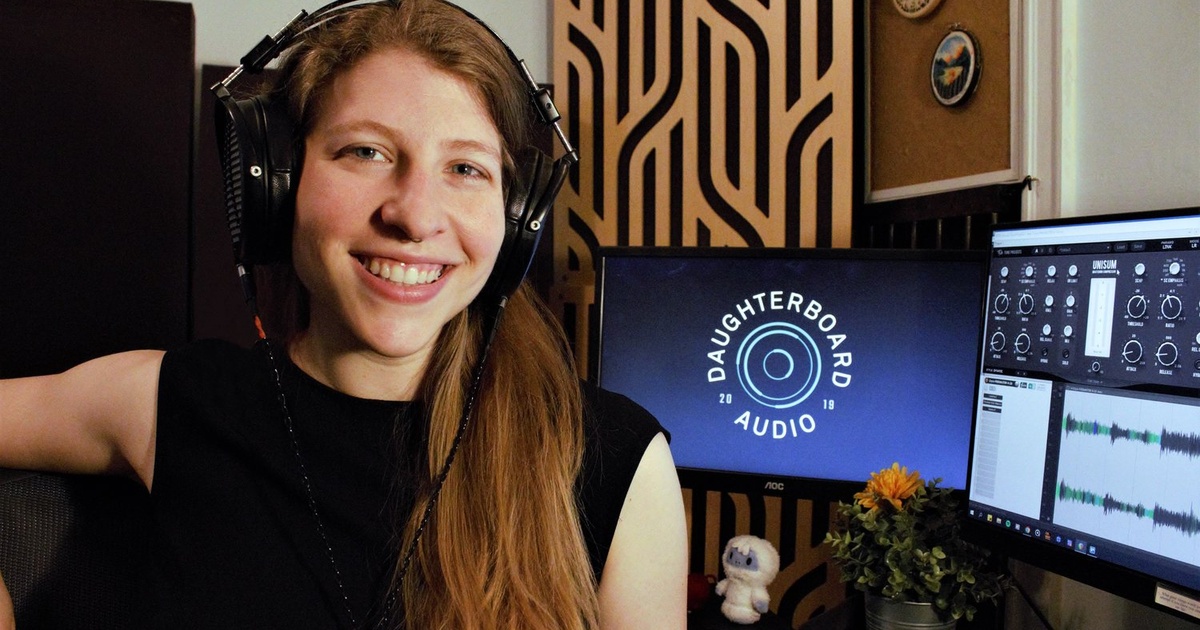
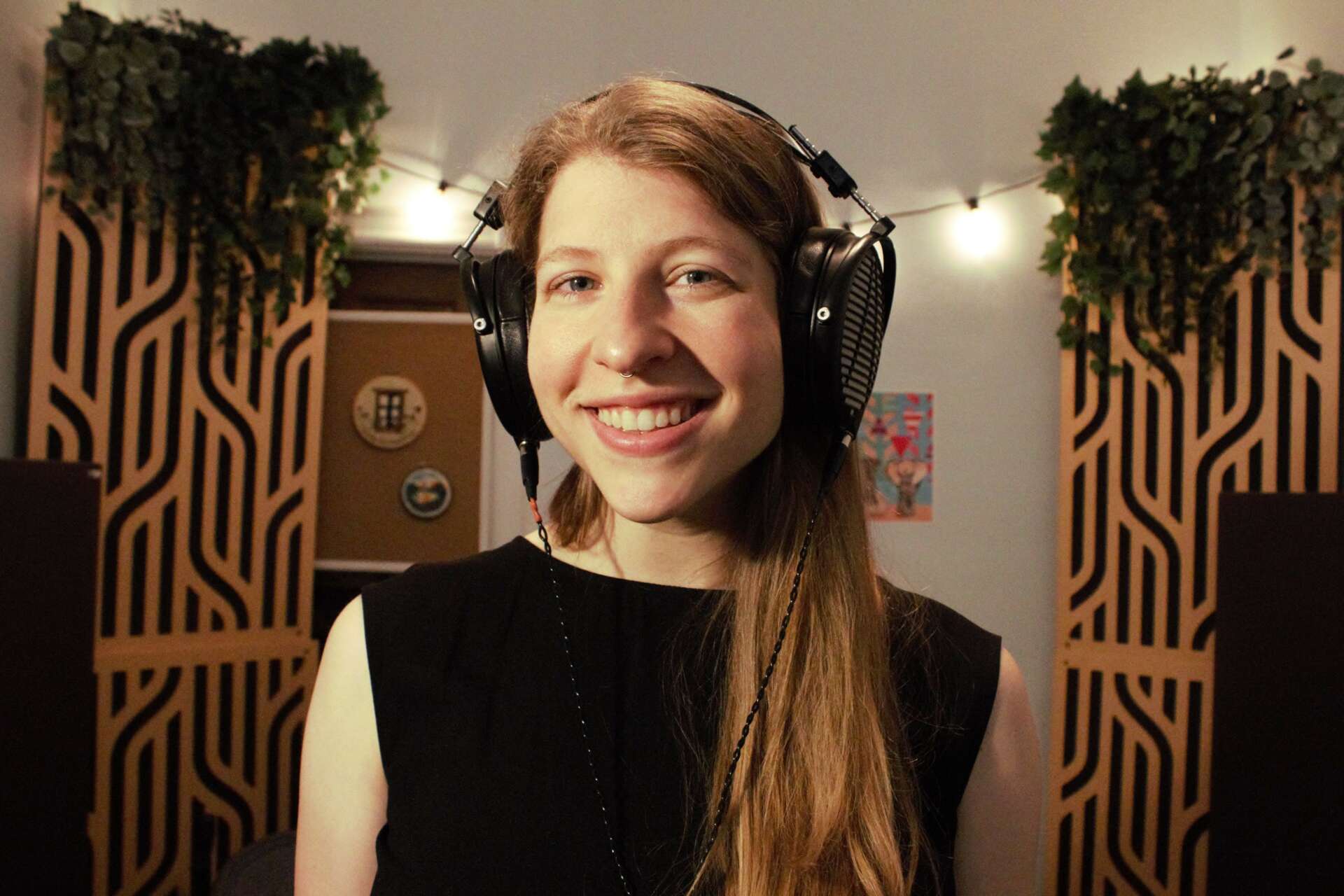
Elaine Rasnake – Mastering Engineer and Live Sound Professional – Owner of Daughterboard Audio

Elaine Rasnake (she/they) is a Philadelphia-based mastering engineer and live sound professional, and the owner of Daughterboard Audio. Since entering the audio field in 2016, Elaine has built a practice rooted in musicality, technical precision, and a deep respect for the emotional impact of sound.

Elaine’s relationship with audio began early—long before it became a career path. Growing up, music was a constant presence, from singing in choirs and performing in musicals to obsessively listening to favorite records and experimenting with recording on a family computer using an early ’90s gray microphone. An old home stereo receiver with physical EQ knobs and switches sparked a fascination with shaping sound, while writing and recording original songs for Myspace CDs laid the groundwork for what would become a lifelong pursuit.

While Elaine always knew music would be central to her life, audio engineering emerged as the most sustainable way to build a career within it. She studied Audio/Video Production and Vocal Performance at Bloomsburg University, earning a Bachelor’s degree and gaining her first exposure to formal recording techniques. As the only non-male student in the freshman audio cohort, Elaine found motivation in the challenge—proving themselves technically while helping open the door for more women to enter the program in the years that followed.

After college, Elaine gravitated toward mastering, a discipline that received only brief coverage in school but quickly became a passion. Largely self-taught in this area, Elaine developed her skills through extensive independent study, drawing from the work of mastering engineers like Bob Katz and Jonathan Wyner, alongside countless hours of critical listening, experimentation, and research. That self-directed education ultimately led to the founding of Daughterboard Audio in 2019, where Elaine now works as Owner and Lead Mastering Engineer.

Today, Elaine balances mastering work with live sound, bringing a musician’s sensibility and an engineer’s attention to detail to every project. Her work is guided by a belief in continuous learning, thoughtful collaboration, and creating sonic spaces where artists feel supported and heard.

Career Beginnings

How did you get your start in audio?

Once I graduated, I continued making my own music at home and uploaded everything to Bandcamp. I used that digital space primarily as a way to display my engineering skills for future clients as well as selling the music/touring/being an artist. Making those songs and going out and performing them was my first big solid step into

What were your first jobs, gigs, or internships like?

My first college internship was at a local radio station which was cool but I learned more about radio in general than anything new in terms of audio engineering. I’m pretty sure my 2nd internship was actually a scam that I was able to escape…but then my first solid job/gig was running live sound in my house. I had been living in a 6 person “show house” we called The Waiting Room. We would have a bunch of bands come through every month and host shows in our basement. I got the chance to work the mixing board for a lot of those shows and in the process, meet a ton of folks that I would later help record/mix/master out of my bedroom.

What skills or lessons did you learn early on that still serve you today?

Be genuine. Make friends. Be kind but set boundaries. People will enjoy and experience the music you help create, but they will always remember whether or not you were a kind, genuine person.

Did you have a mentor or someone who significantly supported your growth?

Katie Tavini was (and still is) a big mentor of mine. We met online and I was able to ask her a ton of questions when it came to the business, growth, networking, side of things. And over the years, she’s just been a great friend and cheerleader for all of my milestones and accomplishments as I move up in this industry.

What barriers did you encounter early in your career, if any?

I would say for the longest time, I was my own biggest barrier. I had a ton of anxiety about the world and life in general (still living at home solely out of fear and worry of being on my own, working the same restaurant job for 8-9 years, scared of any kind of major change). It wasn’t until after meeting my now wife and going to therapy that I was able to overcome a lot of those internal, mental barriers which helped me make even bigger strides in my career and life.

Your Career Today

What does a typical workday look like for you now?

During the day, I juggle two jobs: Mastering and taking care of my 2 year old daughter. I always have my phone on me so during any down times with her, I’m answering emails & dm’s. During her nap I do mastering/admin work in my home studio and attempt to remember to clean the house and myself. After dinner, I am either back in the studio to do more mastering work or I’m out running live sound for Warehouse3 out in Swarthmore, PA.

How do you stay organized and manage the demands of your work?

I am the kind of person that always keeps my notifications cleared and read, so that helps a ton. I use Trello a lot in tandem with Gmail and Google Calendar. When someone sends an email inquiry, it shows up in Trello as its own card. When I add a deadline to a Trello project card, it shows up in my Google Calendar. This setup has been huge in keeping things organized and knowing how my mastering work lines up with my live sound work and my child care work/home life.

What do you enjoy most about what you do?

I love getting to meet so many creative and inspiring artists and listening to new music every day. I love having that “proud parent” feeling when a project gets released and knowing that I was able to help them feel really confident and excited about something they put a lot of time, money, and energy into.

What aspects of the job are the most challenging or least enjoyable?

I am SO bad at small talk haha so as much as I love meeting new people and networking and everything, talking to people in person (as compared to email, dm’s, texting) is still very challenging for me. But I’m working on it!

What is your favorite way to spend a day off or time away from work?

It feels like it’s been years since I’ve had any proper kind of time off, especially since my daughter was born. But I always enjoy watching movies, reading books, hiking, biking, playing video games, and sleeping.

Challenges, Growth & Perspective

What obstacles or systemic barriers have you faced in the industry?

I often feel like such an outlier when it comes to this because I never felt like I was treated any differently than my male peers in the audio world. For all of my life, I just felt like one of the guys, was never really treated differently, or faced any major obstacles outside of my own brain and mental health.

Have you seen the industry change during your career? If so, how?

I’ve seen so many more women/non-cis male engineers enter the field and be recognized for their accomplishments which has been so wonderful.

What still needs to change to better support women and marginalized genders in audio?

We need to increase our visibility and representation and diversify hiring (I’m so tired of looking at a studio’s website, scrolling through the endless list of male engineers and finding that the one woman is just the manager/secretary.) When the younger generations don’t see role models that they can look up to, it’s hard for them to see a place for themselves in the audio world.

Advice & Looking Forward

What advice would you give to women or young people interested in entering audio?

Now is an incredible time to get into audio. There are so many people making music, there is always a show or event that needs sound to be amplified, etc.. And gathering the proper info and experience to do this has never been easier thanks to the internet. You can join audio engineering discords, directly message engineers on instagram, attend virtual conferences, etc. There are so many people out there rooting for you to get started and to succeed. The only thing left is for you to go out there and make the first move.

What skills—technical or otherwise—do you think are essential for success?

People skills are huge because in a big way, this is a service industry. Being able to talk to people, whether it’s a new artist you met or your co-workers at a live sound gig, could be the difference between getting the next upcoming job/project or not.

What long-term goals or aspirations do you have?

I want to keep growing my business. Maybe one day it’d be cool to have other engineers be part of Daughterboard Audio (a lot like the Weird Jungle mastering collective over in the UK).

Is there something you wish you had known earlier in your career?

I wish I had known about all of the resources out there like SoundGirls, AES, GrammyU, etc. That would have been huge.

Favorites & Personal Touch

Favorite or most-used gear (and why)

My Audeze LCD-MX4 headphones. I monitor all of my work in headphones so without these, I’ve got nothing. I also do all of my work “in the box” so my favorite plugin gear is Izotope Insight 2. I use this to meter everything I’m working on to see where things are sitting. It’s also a great way to see where modern releases are sitting, loudness-wise, these days.

A piece of gear you can’t live without:

Also the headphones for the same reason why they are my favorite.

A moment in your career that made you feel proud or affirmed:

Being asked to be on the panel for the 2025 SoundGirls conference. In the past I was a part of a couple of AES panels but I think it was mainly because I was a moderator on a mastering Facebook page and all of the mods presented a couple group panels. The recent SoundGirls conference panel was the first time I was reached out to, solely because of who I was and what I had accomplished and people wanted to know my journey, workflow, and perspective. It was one of the few times where I finally felt like I was a “pro” and had a proper place in this industry.

Anything Else

I love teaching, mentoring, guiding folks through this audio world so always feel free to send questions and reach out to me on Instagram @daughterboardaudio or send me an email at elaine@daughterboardaudio.com

Jasmine Mills – Freelance Recording Engineer


Jasmine Mills (she/her) is a freelance recording engineer and music producer based in Los Angeles, working under her brand Jasmine Mills Audio. Since 2018, Jasmine has built her career in the LA music scene, balancing freelance projects with her role as part of the staff of freelance audio engineers at 4th Street Recording in Santa Monica, owned by Kathleen Wirt. Jasmine first connected with 4th Street as a summer intern in 2018, and like many of the engineers who came before her—including head engineer Sejo Navajas—she rose through the studio’s intern system to become a trusted member of the team.

Her path into audio wasn’t always clear-cut. While Jasmine always loved music, it wasn’t until her freshman year of college that she truly understood what recording engineers do. Wanting a career that combined her passions for both music and science, she discovered audio engineering was the perfect fit. From there, her curiosity and dedication led her to the State University of New York at Fredonia, where she earned her B.S. in Sound Recording Technology through a rigorous program modeled after the German Tönmeister education philosophy.

At SUNY Fredonia, Jasmine immersed herself in both the technical and musical aspects of the program. During her first year, she joined Sound Services, a student-run live sound club, which gave her hands-on experience and prepared her for advanced coursework and studio classes. Prior to college, Jasmine nurtured her musical background as a violinist, performing in string orchestras, pit orchestras for musicals, and NYSSMA solo festivals.

Jasmine’s love for sound started young—burning mix CDs on her Dell PC, experimenting with overdubs on her iPod, and even recording the entire soundtrack of Shrek 2 on a cassette player (by placing the recorder next to the TV). Growing up, she was inspired by everything from Across the Universe and Beatles deep-dives to Broadway musicals, the Titanic score, and the timeless catalog of Queen. These eclectic influences continue to shape her approach to music production today.

With a deep appreciation for the artistry and science of sound, Jasmine brings passion, precision, and creativity to every session. Whether she’s working on rock, classical, swing, or show tunes, her goal is always the same: to help artists bring their vision to life.

Career Start

How did you get your start?

The 4th Street Recording internship definitely laid the groundwork and allowed me to plant roots in LA in terms of building a network and learning vital information on how to lay a path in the field. Kathleen Wirt (4th Street Recording’s owner) was one of the few studio owners in Los Angeles that emailed me back and we had a very large email correspondence back and forth before I arrived for my internship. She has definitely helped me make great connections out here through workshops, events, and advocacy groups.

After the summer internship was over, I still had a semester left of college left. I didn’t want to uproot the progress I’d made in LA by leaving, I didn’t want to further incur college costs on classes they were requiring me to fill up credit hours, and Fredonia was just way too small after being in LA. So, I ended up completing that semester virtually (in Fall 2018 semester – so 2 years before virtual learning was the main thing) and my internship was retroactively contributed into credit hours and the Dean of The School of Music did something magical on his end, and I got my degree. I did have to do a research paper and one senior project.

I met Lenise Bent and Ainjel Emme at an analog tape workshop held at 4th Street Recording, which is how I ended up joining Soundgirls. Ainjel is how I learned about NAMM. Lenise is how I heard about the weekly audio lunches which is how I met many many other people. There were also the weekly SoundGirls zoom meetings we had on Sundays during the pandemic lockdown. Through Soundgirls, I met Jett Galindo, who taught me more about how mastering works and is the reason I made my website, jasminemillsaudio.com.

How did your early internships or jobs help build a foundation for where you are now?

They definitely helped in making the valuable connections and networks I have to this day. I was able to find a community of like-minded audio engineers, producers, artists, musicians, and audio techies.

What did you learn interning or on your early gigs?

I definitely learned a lot about working with various personalities and the different approaches you have to take when running a session having different people wanting things from you from all sides at once. The importance of reading people and social cues was stressed in school but couldn’t prepare me enough for how vital it was during a session. I learned about the importance of the assistant engineer (budget-permitting).

Did you have a mentor or someone that really helped you?

Oh, man. I have so many people I consider a mentor. Like an awards speech. Dave Fridmann and Bernd Gottinger from SUNY Fredonia. I still seek advice from them. LA-wise, Kathleen Wirt is a great source of info and insight about the music industry. Sejo Navajas, the head engineer at 4th Street Recording and co-owner with Kathleen, has many years of experience, and given that he knows the studio, I’m able to ask about specific setups and he’ll understand what I mean (usually). Lenise Bent and Ainjel Emme are my music production mentor gurus – we also all share a fondness for analog tape recording and vintage audio gear in general. Other people that have taught me have been Tom Hilbe, Autumn Pittman, Ross Leitner, Uri Gelman, and I know there are so many others. Just go look at my Facebook.

Career Now

What is a typical day like?

It varies as a self-employed freelancer. It’s always about finding gigs. So some days I’m typing something for an article (not as much as of late), texting/emailing/bothering people, responding to posts on Facebook on LA musician-related pages (I have Instagram, but it’s mostly for business purposes).

How do you stay organized and focused?

I don’t…just kidding. I love making lists and spreadsheets for fun. I’ve gotten better about doing it on the computer so I don’t waste a ton of paper in notebooks. Sometimes I feel like my thoughts are always on the go, not so much racing, but always moving. So, sorting my thoughts by writing it out can take my mind off of things. It may come as a shock to many people, but I’m an introvert. As much as networking at events is vital to getting work in my field, I can run out of steam unless I pace myself.

What do you enjoy the most about your job?

I love figuring out how things work – the cause and effect of everything. There’s a certain beauty in it and how concrete the science is. Maybe that’s why I’m not a composer or songwriter. Conversely, I like the infinite different ways people find to sonically express themselves. What a conundrum! I like to geek out over the history of vintage gear – especially recording consoles, tape machines, analog outboard gear, and mics.

What do you like least?

Dealing with people with personalities that are not-as-desirable. A great work environment is safe, professional, and open to fun (in the strictest scenarios, even a tiny bit of fun and humanity can go a long way). When there is a person who does or says things that impede on that ideal environment and make the workflow to a slowdown, it makes the job less fun and more like a chore. I know handling these types of things and conflict resolution is part of the job – doesn’t mean I really enjoy it.

What is your favorite day off activity? 

Crosswords, puzzle books (NOT WORD SEARCHES), phone app games (Android), watching my YouTube videos (ranges from movie commentators, film analysis, outdoor survival skills, musicals, cute animals), or looking at the TikTok (celebrity gossip, cute animals again, latest movie news, movie production trivia, news in general, history, math, science), and the Pinterest (I can keep everything private and not have to interact with people online; making the boards appeals to my love of sorting).

What are your long term goals?

I do hope to one day be a recording engineer on a scoring stage that tracks orchestral music for film/TV. I’ve managed to shoehorn my way into one scoring session at Fox, one at Hollywood Scoring LA, and I’ve interned on some sessions at Evergreen Studios.

What if any obstacles or barriers have you faced?

My young age, (the Asian Persuasion™ youthful look doesn’t help) and being female. Sometimes these have prevented older, usually male, music industry workers from taking me seriously.

How have you dealt with them?

I usually just don’t work with them any further or find a way to work around them if nothing improves. I quit one gig because they wanted to a guy that I told them was, at a prior work gig, verbally abusive to me via texts and took the time to call me an “idiot” to my face during said gig (it did make me cry – and to no one’s surprise, his berating and making me trace a cable onstage during the MIDDLE OF A SONG did not make the troubleshooting go any quicker). The hiring staff told me they can’t penalize him for something he did before they met him (which is kind of the whole point of vetting candidates for a job) and they desperately needed someone experienced (even though I knew many Soundgirls in the area who were overqualified). The place had been not paying me a lot before then. My freelance gig there required me to do two simultaneous mixes (one of them with a delay), do a Pro Tools recording during the service (it was a church), hit the cue button on the lighting console, and operate the slideshow. When a different reverend took over, additional slideshows were added during the sermon. The losses started outweighing the effort and gains for that job, and after they hired the guy even after what I had disclosed about him, I quit.

Another incident involved a white male rapper making sexist and racist remarks (not overt, but still there) towards me and waxing some not so friendly philosophical views about African Americans. I resolved to just take the money and sit in the front room during the sessions. I didn’t need to be in the control room for those sessions (I was assisting).

Advice you have for women who wish to enter the field?

Find a women’s advocacy group. There are so many that cater to different niches in audio engineering around the world. You’ll find your peeps there and be able to build a support network.

Must-have skills?

Social and people skills (being a recording engineer is basically being a therapist and tech at once). Try to get a good vocabulary around expressing emotions, music, and sound. Musicianship is not necessarily a deal breaker but the job competition includes a majority of musicians. Knowing any music sheet and chart terms goes a long way in being able to relate to musicians and keep track of where you are in the session (especially in classical or scoring).  Science, math, physics – again not a deal breaker, I know a good number of audio engineers that had limited years of schooling and are super successful. Still a plus to have. Ha! Math pun!

Favorite gear?

Nooooo! It’s like asking me what my favorite song is, and I can’t choose one for that either. I can say I love vintage mics, tape machines, and outboard gear. The tape machine I was taught to use was the 24-track Otari MTR-90 2” reel-to-reel tape machine. I’ve grown fond of the Neumann U67 tube mic from using it so much at 4th Street Recording. Outboard gear: I like the Neve 1066 preamp/EQ’s we have at 4th Street, I liked this graphic EQ I used in college (White Instruments 4400 I think). And I love the Valley People Dyna-Mite dynamics effects processor. Plugins: Fabfilter, Arturia FX, and Valhalla Vintage Verb (because I can only afford one Valhalla plugin right now).

My website has more bio info, my score engineering assistant credits, my discography, samples of my work I produced (recorded, mixed, and mastered), articles I’ve written, and my social media and contact info.

Laura Moeller • Live Sound • Theatre • Education

Laura Moeller (She/Her)
Live Sound • Theatre • Education

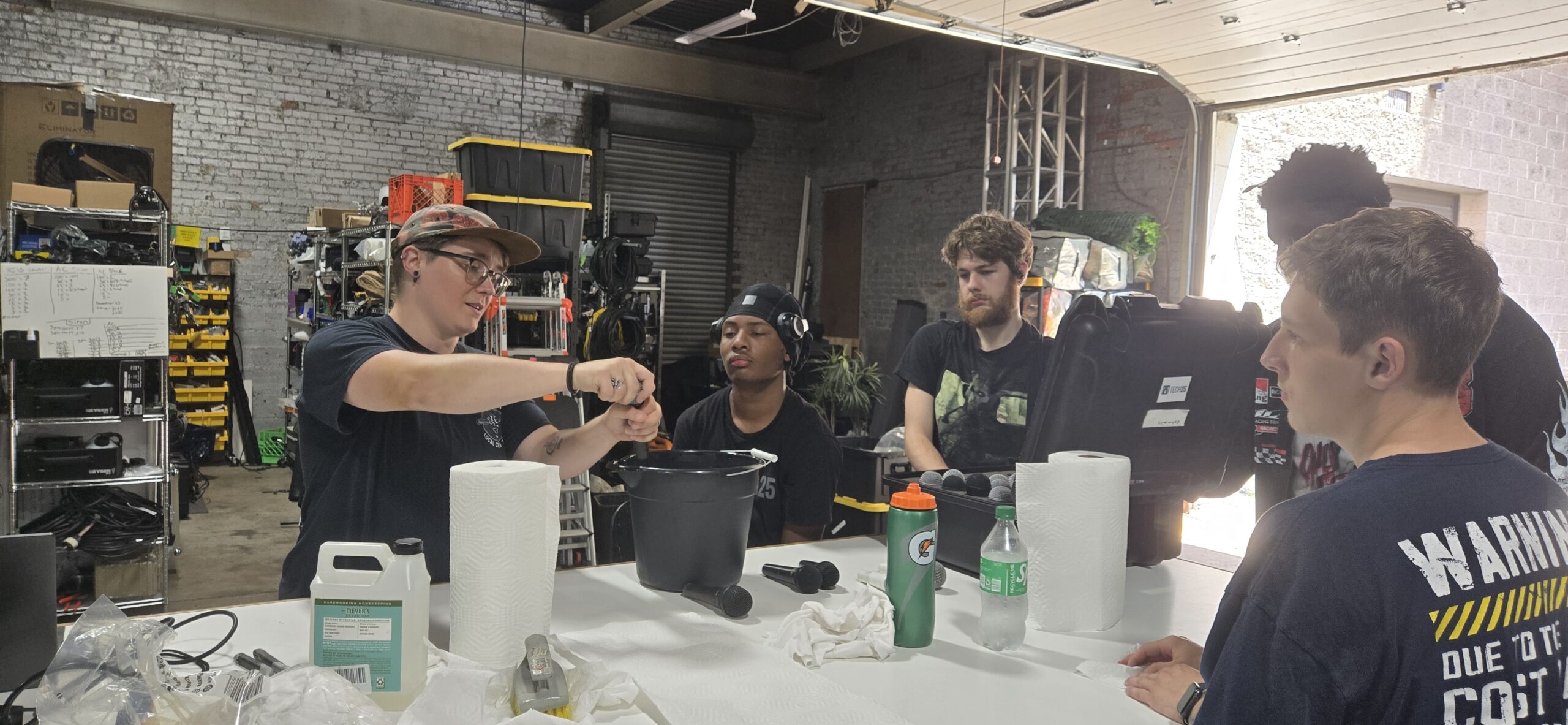
Laura Moeller is an Audio Educator and Partnership Coordinator at Tech 25, where she combines her passions for live sound, theatre, and teaching. With over a decade of experience in audio, Laura has built a career that bridges both technical expertise and community-driven education, working full-time while also taking on freelance projects.

Laura’s love of audio began in 6th grade, when a teacher introduced her class to GarageBand. That spark grew into a career path after discovering the Commercial Music Technology program at Penn West California (formerly California University of PA). She went on to earn her B.S. in Commercial Music Technology, majoring in guitar and minoring in voice.

While at university, Laura was deeply involved in music and performance. She was a four-year member of the university choir and a two-year member of the auditioned vocal ensemble, Cal Singers. She also sang in the a cappella group Isolated Incident, competing in the ICCAs, and played guitar in the folk band Buffalo Run.

Her passion for music and sound traces back even further: Laura learned to play her mother’s electric organ before she could read, picked up the guitar at age 10, and found encouragement from community members who supported her early performances. Throughout high school, she explored choir, theatre, and even violin, though she found her home in fretted instruments and vocal performance.

Today, Laura continues to build on that foundation, working at the intersection of live production, theatre, and audio education. Her work reflects not only her technical skills but also her commitment to mentoring and creating pathways for the next generation of audio professionals.

Career Start

How did you get your start? 

College helped pave the way for opportunities, but my start came by a chance meeting. I was working a summer job in between semesters, and struck up a conversation with a customer. Came to find out that he owned his own small live sound company. I ended up interning and eventually working for his company for several years. I still freelance with them on occasion too. I also started working on the overhire list for IATSE Local 3 around the same time, and got to experience huge, professional level productions.

How did your early internships or jobs help build a foundation for where you are now?

When I was in school, I really thought that I’d end up recording/mixing/mastering. I wanted to be more on the post-production side of things. The thought of doing live sound scared me, to be honest. But meeting Mike and getting an internship doing live sound made me fall in love with it. Experiencing the excitement and sheer technical complexity around stadium shows with IATSE motivated me to learn more. It changed my path toward live event production instead.

What did you learn interning or on your early gigs? 

I learned a lot about the technical side of live sound and production. I became more familiar with terminology, safety, and the general process of a show from prep to load out. However, I think the most important lessons I learned were soft skills. How to network, how to negotiate, and how to communicate effectively. Unfortunately, I also had to learn a bit about when to move on from situations and people that weren’t there to help me succeed.

Did you have a mentor or someone that really helped you? 

Quite a few! Mike Johns of Mastertrack Productions gave me my internship and helped me get on tour with my first artist. Caitlin Jones (Freelance A1) walked me through her workflow, and inspired me to be a better engineer. Tom Fury (house sound engineer for Heinz Hall), allowed me to shadow him, and recommended me for my first job with a production company. Toby Ekmann (Former Project Manager, Tech Extraordinaire), taught me so much in just a few years of working with him. And finally, Carolyn Slothour (Freelance Audio Engineer/Educator). We met while we were in college, and formed a friendship that continues to benefit our professional development. We were co-chapterheads for SoundGirls Pittsburgh for a while. We’ve worked together for a long time, and I count her as one of my greatest allies in the industry.

By far, however, I think SoundGirls was the best mentorship I had in my early career.. I found out about the organization when I was working as a stagehand on Warped Tour with a few women on the sound crew. The rest is history. I got involved, started the chapter here in Pittsburgh, met so many inspirational people, and found a huge community that was so willing to help and support me in my early career.

Career Now

What is a typical day like? 

That’s a tough question. I don’t think I really have a typical day. Some days, I’m up at the local arena doing a load in for a major tour at 6 AM. Other days, I’m helping out with a high school musical. In a few weeks I might be at a music festival in the middle of nowhere. But this week, I’m teaching classes on audio at Tech 25, planning and coordinating partnerships, and trying to catch up on my backlog of emails.

How do you stay organized and focused? 

My life is Google Calendar. Between coordinating events and classes at Tech 25, and the myriad of other work that I’m juggling, I try to keep everything on my radar. I make lots of to-do lists, and log all of my freelancing through QuickBooks.

What do you enjoy the most about your job? 

I love the challenge and variety of each day. I’m a problem solver, so I really enjoy troubleshooting and fixing issues with audio gear, computers, networks, etc. I also love seeing the impact I make as an educator. It’s really rewarding being able to watch someone learn and progress through their career; taking on new challenges and opportunities, and being excited to share that with us.

What do you like least? 

Sometimes, the hours are unpredictable and long. Often, I’m staying on a show site until every last piece is packed up on the truck and ready to roll. Getting home at 3 AM is pretty common for me.

What is your favorite day off activity?

I love to go tent camping with my wife, and my dog. We usually find a nice trail to hike, or we just chill at our campsite all day while cooking some delicious food over the fire.

What are your long term goals? 

I’d love to own and operate my own venue someday.

What if any obstacles or barriers have you faced?

Unfortunately, in my early career I encountered pretty blatant homophobia and misogyny. Also occasional gatekeepers who would laugh and try to embarrass you when you did something wrong, instead of correcting or helping you.

How have you dealt with them? 

I realized that I needed to start valuing myself more. A job/experience wasn’t worth staying in an abusive environment. There are far more good people out there that want to watch you succeed. People who value your safety and worth; folks willing to mentor you.

Advice you have for other women who wish to enter the field?

Never stop learning. Audio is a constantly evolving landscape. It’s changing just as quickly as the other technologies around us. There are so many fantastic resources out there to learn and grow.

Also, when you’re first starting out, value yourself and treat yourself with kindness. You deserve a living wage, sleep, and time to relax. You don’t have to know everything. Truth is, no one does.

Must have skills?

Networking is your best friend. Make sure you follow up and keep in contact with friends, colleagues, and your communities. All of the work I have today, I got through a professional contact or mutual friend. Also, take time to train and care for your hearing. Invest in a good set of earplugs, and make sure you always practice your critical listening.

Alexandra Fehrman – Re-Recording Mixer and Supervising Sound Editor

Alexandra Fehrman (She/Her) is a seasoned Re-Recording Mixer and Supervising Sound Editor with over two decades of experience in the audio industry. Her journey began in high school when a glimpse into a recording studio’s control room sparked a lifelong fascination with sound. That early curiosity led her to spend countless hours apprenticing in studios—learning the craft from the ground up and finding a natural affinity for the technical and creative demands of audio engineering.

Alexandra’s background is deeply rooted in music. From childhood, she was surrounded by a family that cherished sound—her grandfather a guitar player, her father a passionate music lover, and an uncle who introduced her to the engineering side of audio through his work on musical instruments and technology patents. Though she began with guitar and cello lessons, it was the process behind the music—the how and why of sound—that truly captivated her.

After attending junior college and earning a certificate in Recording Engineering from Musicians Institute, Alexandra continued her career in music recording studios before transitioning into post-production audio in 2006. Since then, she has worked with top-tier clients including Apple TV+, Amazon, A24, Sony, Netflix, CBS, Lionsgate, and Searchlight, among others. Her recent work includes frequent collaborations with Signature Post and Sony.

Known for her technical precision, creative intuition, and collaborative spirit, Alexandra brings both artistry and expertise to every project. Whether mixing complex soundscapes or overseeing editorial workflows, her passion for storytelling through sound is evident in every frame she touches.

Career Start

How did you get your start?

My start in music was well, because I asked, and I was willing to trade time for knowledge. At first I wasn’t making money at the recording studio, and I was eager to learn so I would take care of the studio by tidying up, wrapping cables, loading gear and I just kept showing up. The lead engineer was happy to share a lot of mixing theory with me, and eventually after he taught me to use the board and 2” machine, he trusted me to track bands, and then assist him mixing. After that I went to school, and then started interning and eventually working at some studios in LA. I was working tough hours at multiple jobs, and at the same time saw a couple of films that got me very interested in mixing for film, so I started to look for jobs in post-production.

It took me a long time to find an “in” to Post Production. I couldn’t find a job in sound for film right away so I took a job at a video post production house and trained to be an overnight telecine operator, which meant I would transfer film to tape while syncing the original audio from set to the picture. I was an assistant to a colorist. My shift was from 3am-11am. I had strategically gotten a job at a video post house that at the time was owned by the same company as a sound facility I had long wanted to work for, called Todd AO. I then checked the internal job postings nightly before I started my shift until I spotted a listing. I ended up training there after my overnight shift during the days for 6 months (unpaid) until something opened up, and then I became a stage technician.

How did your early internships or jobs help build a foundation for where you are now?

I learned that hard work really does pay off, people will notice and trust you if they see you show care for your work, even when it’s just organizing the sugar packets. One studio I worked at had a velvet couch that us interns were responsible for vacuuming perfect stripes onto using a small brush attachment. Some interns thought it was trivial, but it was really a way for the studio owner to measure attention to detail.

I also learned a lot about the business outside of the control room, as an intern you’re more in touch with the requests of the clients, it was good to learn what kind of expectations people had, and how important food is to any session!

What did you learn interning or on your early gigs?

One big thing I learned is that trust is earned, and it’s important to learn how to navigate that uncomfortable time while you are gaining artists, or clients’ trust. In my first job, when I was given the honor of tracking bands as a teenager, often people would be upset paying for a session being engineered by someone so young, and it was always a bit awkward assuring people I could do the job. I learned how to be comfortable and confident even during that pressure, and no matter what kind of engineering you do, that pressure is part of the job, so it was really helpful for me to learn to work through that early on.

Did you have a mentor or someone that really helped you?

There have been so many people who have shared knowledge and helped me along the way in different stages of my career.

My first mentor was Don Lithgow who was the owner of the first studio I worked at called DML Studios. He really taught me a lot about mixing, and running a room both technically, and energetically.

Another mentor that stands out is Greg Schorer, a Supervising Sound Editor. He spent a lot of time teaching me how to edit sound fx, and foley. He would give me scenes to practice cutting and spend time critiquing my work in a way that was very helpful and gave me a skillset that would help me continue to grow as a sound designer and supervising sound editor.

I also had the great pleasure of meeting and working with picture editor Darrin Navarro when I was mix teching on a film called Killer Joe. He later introduced me to some filmmakers with whom I collaborated on various short films that eventually led to mixing dialogue, music and fx on my first television show.

Career Now

What is a typical day like?

On a mix day, COFFEE, then I check the layouts on my board, I check my session set up, I take a listen to a sample of my production sound, set some start parameters, and then start digging into the mix. During the first days of a mix of either an episode, or a reel of film, we are really in the tracks sculpting our first pass of the mix. On playback days, it’s a little different, we’ve cleaned up our mix, investigated all of the tracks, balanced and made thousands of choices to present while still keeping many options open, and easy to call up should the direction of a scene change sonically.

How do you stay organized and focused?

I lay down a lot of markers, I use color coding, and region groups to leave notes for myself, and for sound editors to communicate with me. I also take a lot of notes while I watch the film or show for the first time ahead of the mix so I know what we’re about to tackle.

What do you enjoy the most about your job?

I enjoy having the ability to share feelings with an audience through sound. It’s so satisfying to know that we are creating the aural environment for how the audience is experiencing a film. I love that we can support the story invisibly.

I do sometimes mix or visit other facilities, and what I like best about that is seeing different work flows, or set ups, being able to have conversations with a new group of mixers about new plug-ins etc.

What do you like least?

Especially in the winter, it’s really tough working in a room without windows during all of the daylight hours.

When I’m working on a stage I haven’t mixed on before, it always takes a moment to adjust, learn the unique sound characteristics of the room, and calculate what it means for the translation outside of that room.

What is your favorite day off activity? 

An ideal day would include a hike, laying outside with a book maybe, and listening to some records.

What are your long term goals

My long term goals are to keep growing, and continue working with filmmakers who really like to collaborate during the sound process. I also have a dream of one day opening a sound post-production workshop allowing new filmmakers to go through the process of what to expect during sound post, and to learn how much sound can shape a film.

What if any obstacles or barriers have you faced?

Throughout my career I have faced many barriers, it’s a competitive field, and with high levels of competition, always comes barriers, especially when you show up and you weren’t exactly what they expected. I used to just go by Alex.

How have you dealt with them? 

I don’t think it was the correct way to deal with it, but I took it as a challenge, and knew I had to work that much harder for my work to be noticed.

Advice you have for other women and young women who wish to enter the field?

Don’t get discouraged if things don’t develop right away, it takes a lot of time to make connections. Get your work in front of as many people as you can. A lot of people like to work with people they have worked with before because they can trust the quality of the work, so having sessions or examples of your work ready to share is really helpful.

One other thing to note is that sometimes you have to take a step back to take one forward, these career paths are often nonlinear, and in my case, every time it seemed I was taking a step back, I learned something new that helped strengthen my skillset in the long run.

Must have skills?

Pro-tools is a must in film post-production, being proficient and able to utilize quick keys for fast navigation is expected. For mixing, familiarity with the s6, and Dolby Atmos is also expected.

Favorite gear?

Plug-ins- Love the Valhalla stuff, verbs and delays. Like so many of us, I love fabfilter eq’s and compressors, and the Saturn 2 saturator is great too.

Physical gear- Moog Sub Phatty- not specific to my job, but my favorite impulse pick-up ever.

Parting Words

I’m so excited to be interviewed by SoundGirls, it’s such an incredible organization, and I’m always inspired by the stories I’ve heard throughout the years. Thank you.

Thea Gustafsson Producer, Songwriter, and Recording Artist

Thea Gustafsson currently records emotive alt-pop as Becky and the Birds, a project which released its debut album Only Music Makes Me Cry Now on November 8th, 2024. As recent as this seems, she has a rich background in audio, from her days at Stockholm’s famed Musikmakarna Songwriters Academy to a later internship with Aviici. In 2025, Gustafsson was awarded Producer of the Year at the Swedish Grammis and in April, she released the single “Should’ve known better (choices),” on which her accordionist father contributes some accompaniment.


What excites you most as a producer?

What really excites me is when I go into sounds, or twists in the sounds that are unexpected—like changing the key abruptly, or using an effect that comes in just every now and then. I love very petite changes that make a big difference in production. Every time I hear a production where I can hear that someone has put a lot of time into it, and it’s complex, it just makes me so happy.

What are some of your favorite subtle shifts that you can accomplish in a recording?

I like to put in small, hidden messages. It could be a voice sample that only I know where it comes from—like a phone call—then I just take one word from that phone call, for example, and use it as a snare. It’s things that no one else probably would hear or notice. It makes such a difference in the process of creating it. But then I really like to play with my own voice, see how I can pitch my voice, flex time my voice, or use it in various ways. That’s probably why I love samplers so much, because you never know what you’ll get. You know what you put into the sampler, but then, from there, it just gives you so many endless possibilities. Samplers: they’re my best friends.

What is your go to sampler?

I love the Serato sampler. When I got it, it was free, which was incredible. I also use the (Teenage Engineering) OP-1 a lot. I’ve been using (Native Instruments) Maschine quite a lot to chop up stuff, but I don’t find it to be quite as easy. It’s not a standalone. I’ve tried to, like, really love it–and I used to love it–but I don’t love it as much anymore. I like Maschine for drums. It’s easy to quantize, but it’s also kind of complex. You need to really learn the Maschine, and, to be honest, I’m not much of a nerd when it comes to, like, learning the instrument. I just want them to work, or if I don’t know how they work, I want them to be easy to just figure out somehow.

Tell us about your experience producing other artists.

I’ve had sessions with people where we come from different worlds, and I think that could be good. But so far, my best experiences have been with the people who have similar taste and sound. We have similar thoughts. When you find that, it’s just fun. I think it’s good as a producer too, or as an artist, to get out of your own head. You can learn so much [from] someone saying a sound that they want you to use, and it might be a sound that you have never thought of or that you would never use, but you learn so much from just trying to find that. Then I’ve been making a lot of samples for other producers, which has been really fun. It’s easy to sit and be like, “oh, I need to make a whole production of something,” but I’ve also found a way where I’m, creating ambiences–or creating soundscapes, in a way–and then I let someone else come in to make the drums or the bass. The process of adding bass is very boring to me. I’ve been quite forceful too, in my no’s. I’ve not been afraid to say no, which has been good for me as a producer. I used to jump into projects, but it’s easy to find yourself kind of scattered if you’ve done a lot of different things that you’re not really keen on.

How did you get started as a producer?

Actually, I went to a production and songwriting school, but I went in there as a top liner. This was in Sweden, and it’s a quite good school. It’s the school that a lot of good producers and songwriters have gone to, but I didn’t even know the concept of producing, so I picked top liner, But then as I got into that school and I started to write, and I wrote for others,  ended up always finding myself nagging at the producer, like, “Oh, you should try this. You should do this.” It was always male producers. I hadn’t seen a woman produce at that point. I didn’t really have any influencers or anyone that I could look up to, besides maybe Björk back then. It kind of grew out of frustration, because I saw these men just came into the studios and took over, and I didn’t even think they were good at what they were doing. So then, after a while, I kind of locked myself in, because I was so tired of everything. And I was like, I don’t want to be a top liner; this is not for me.

I started to produce by myself, because I had learned so much, because I had seen others produce. I remember that I wanted to do my artist project, but I couldn’t find a producer for it. I was just standing in line for these male producers. I had to wait, then they would start something, but they wouldn’t finish it. So then I was like, I’ll just do it myself. I did it out of anger, but also out of pure excitement. I immediately was just so blown away, like, “oh my god, why haven’t I done this sooner?” It’s one of the few things in life where I really get caught up in it, and I can just lose myself completely. Up to that point, I hadn’t really felt that feeling. It was so much fun to not know a lot about it either, because that gave me so much freedom and space to try things out, which made me ultra creative. Then, from there, I found my own ways of doing it. I remember a guy looking through my project, and he was like, “you can’t have the compressor first and then the EQ, that’s wrong.” And I was like, “Who says that it’s wrong?”

Do you still put the compressor before the EQ?

I actually put the EQ before the compressor most of the time. I know more common rules of what sounds good and what doesn’t sound good, but it’s so easy to get caught up in the rules of producing, and just forget about the creativity and the endless possibilities that are there if you actually put the compressor before the EQ [sometimes]. And it might be a sound that is way cooler than the compressor after the EQ.

Can you say the name of the school that you went to?

Musikmakarna. It’s a really good school. They split you up in groups, you know, so you’re either a “top liner” or a producer, which makes it weird. It’s weird when that’s your first interaction with the industry. You suddenly have to put yourself into a box. I think that limits you, like, “well, if I’m a top liner, I can’t be a producer.” I do think a lot of things have changed, though. This was quite a lot of years ago. I love the word creator; I just want to be a creator. And I think that, especially as a girl and as a woman, too, it’s easy to forget that you can do everything. I think society enforces [men] to be like, “I can do whatever I want,” but as a girl, you have to make everything perfect before you can say that you’re a producer. You have to produce a hit record before you can say that you’re a producer. I’m just trying to work around that all the time, and [as] soon as I try something, I’m like, “I’m that.”

Do you have someone who really helped you, like a mentor?

I didn’t really have anyone who I can say was, like, a mentor, but I did feel a lot of encouragement from people who were in the industry–from other women producers especially. I think there’s a lot of connection there, from female creators overall. I’ve found a lot of calm in talking to other girls who are making something creative, because it takes a lot from you to put yourself out there. It’s kind of vulnerable as a woman. So to see other girls being powerful, and being nerdy, or being deeply interested in something that doesn’t have anything to do with men, is very inspiring to me. Every woman, who’s making something for their own sake, has always been very inspiring to me.

So tell us about your process for making your latest album.

I was going through a breakup, and I’ve never been a big diary writer. My way has been to record myself when I’m playing piano and singing, so I did that a lot, and I just let whatever wanted to come out, come out. It came from this very intuitive place. So I would have long recordings, like 30 minutes that I had recorded, that I then took and sampled. I let those samples kind of lead the way for the whole album. Then I would add production to it, I would add drums or whatever it needed, which was hard, because a lot of them didn’t even have BPMs or a tempo. Some of them still don’t, which I have found, very freeing in a way, because I just had to accept that. Once I let go, I was like, oh, it can be whatever it wants to be.

What are some of your long term goals?

I really want to work with people, with big people, who are interesting and inspiring. I want to get more into hip hop, and use my samples there, and also more into the alternative scene, [producing] for others. I want to produce even more for others, and then release more albums. I’m moving to the US, which will be terrifying, and so much fun. I really also want to pave the way for female producers. I just want to be inspiring, and I want to stay inspired, too.

What made you gravitate toward music to begin with?

My dad is a musician, but he’s an accordion player, and he’s been very much into klezmer music and jazz. So I always started out as a little bit of an underdog, you know, because I was just listening to his records, which were klezmer records, all day long. Then I started playing violin when I was seven. I played in a lot of orchestras, and I was also writing songs for orchestras, which was my first way of expressing creativity and making songs. I think that has had a huge impact on the way that I produce, too, because I come from an orchestra perspective, and I’ve also always been singing in choirs. From that, I’m very used to different harmonies and different sections, which I’ve had a big use for in my production. I’ve always been in music, I’ve always been around music, and I think if I would have known that it was possible to produce earlier, I definitely would have. It was just that I didn’t even know that you could do it until school.

Your choir background definitely comes across in your album.

Yeah, I love choirs. It’s so much fun singing with other people. The beautiful thing about vocals is that it’s an instrument that is closest to us, because it comes right out of us; there’s no instrument in between. It’s just straight from our soul. I find that if I’ve been in an era where I’ve been only producing a lot and I haven’t been singing so much, I can feel how I’m disconnected from myself, almost. I really think singing connects you to you somehow. It’s just beautiful.

More on Thea Gustafsson

https://beckyandthebirds.com/

New single announcement: April 30th, 2025

https://www.instagram.com/beckyandthebirds/

Selected Interviews with Thea Gustaffson:

The Luna Collective

Clash Music Interview

Georgia Snudden – Live Sound Engineer for Cirque du Soleil

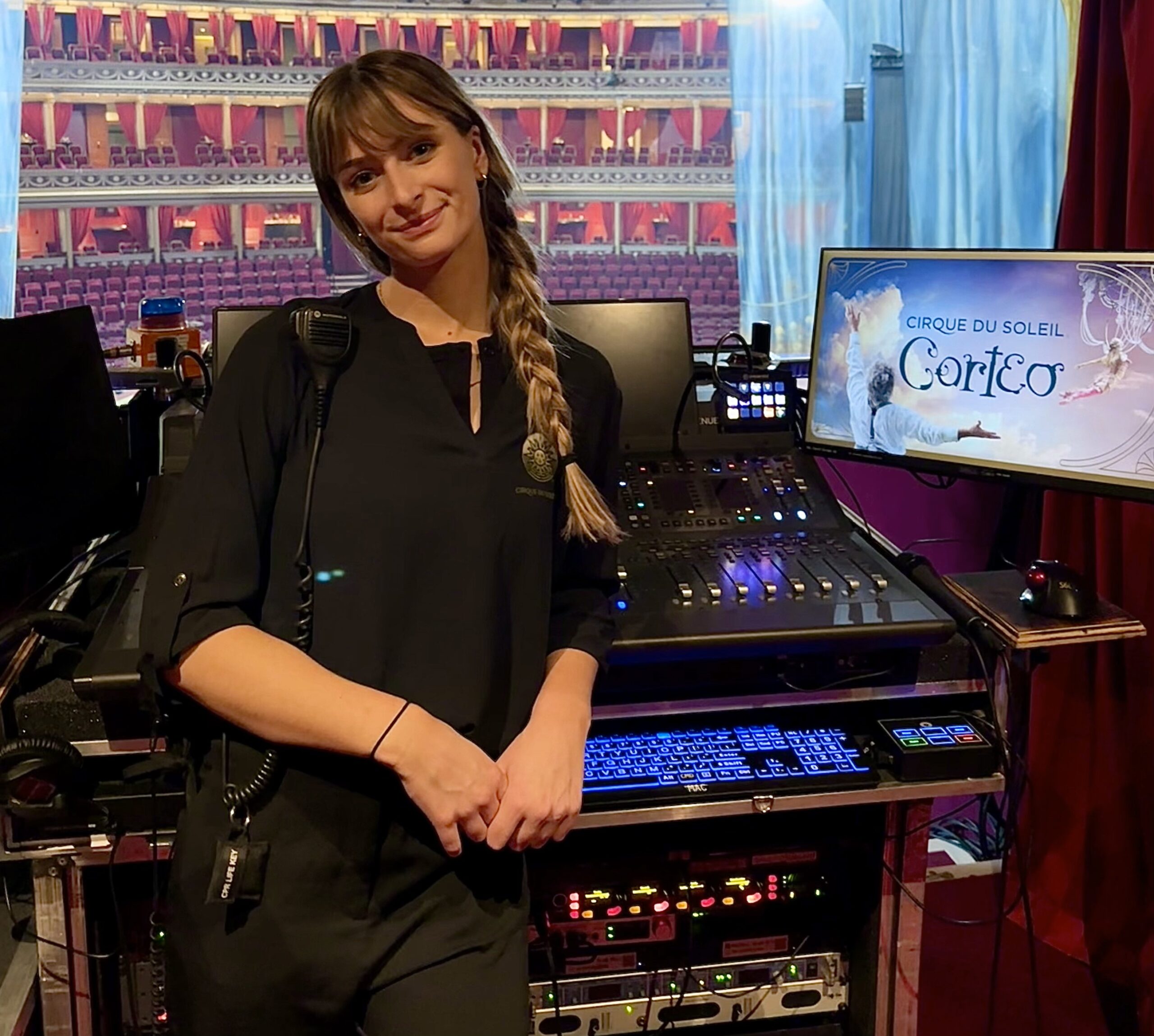
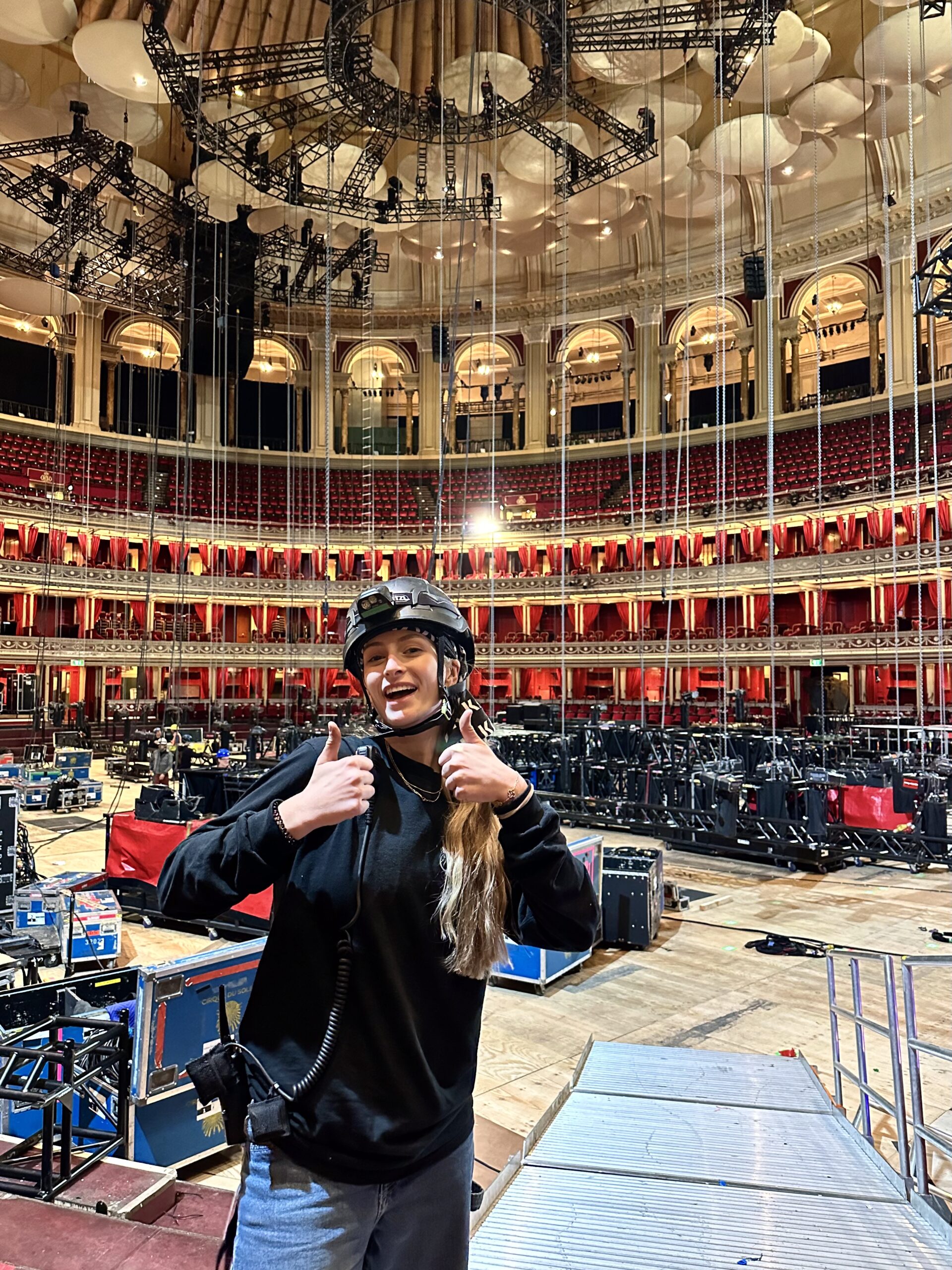
Georgia Snudden is a live sound engineer currently working with Corteo by Cirque du Soleil. With a passion for immersive audio experiences and a dedication to technical excellence, she has built a career in live sound, blending creativity with precision to deliver high-quality performances.

Her journey into audio began unexpectedly when she attended a university open day with the intention of pursuing a different path. A chance encounter with the sound course director sparked her curiosity, leading her to explore the world of audio. It was during her studies that she discovered her passion for sound, recognizing the power of music to create unforgettable moments and emotional connections.

Georgia studied at the Western Australian Academy of Performing Arts (WAAPA), where she specialized in Production and Design with a focus on Sound. She graduated with a Diploma, Advanced Diploma, and a Bachelor of Performing Arts in Production and Design (Sound Specialization). Her strong foundation in both technical and creative aspects of audio has been instrumental in shaping her career.

Beginning her professional journey in 2019, Georgia worked for audio hire companies, as an in house theatre technician as well as a freelance mixing engineer and sound designer for theatre before transitioning to a full-time role with Cirque du Soleil in 2023. On Corteo, she primarily serves as the monitor engineer but also rotates between FOH mixing and RF management, ensuring seamless audio for every performance.

Her background in music extends beyond audio engineering—she studied music throughout high school and took vocal lessons for five years. This musical foundation has given her a deep understanding of performance dynamics, allowing her to collaborate effectively with artists and musicians.

Georgia’s early love for music, cultivated through participation in choirs and school bands, shaped her career path and gave her a strong sense of community. Her commitment to excellence in live sound continues to drive her, as she contributes to creating extraordinary experiences for audiences around the world.

Career Start

How did you get your start? 

I would say that enrolling in WAAPA honestly opened a lot of doors for me. I think the lecturers, alumni and peers were so incredibly supportive and helpful in establishing industry relationships and there was a really large focus on getting practical hands-on experience which meant I felt really empowered to put myself out there when applying for jobs or internships.

How did your early internships or jobs help build a foundation for where you are now?  

I think due to most of my earlier jobs ranging between theatre, studio recording and live audio I was able to build a more diverse skill set and that putting myself in the deep end of multiple disciplines of audio really helped me gain experience quickly.

I would also say that internships played a really crucial role in building the foundation for where I am now. They allow you to learn from a much wider range of people you might not otherwise have the chance to work with. I actually completed the final practical component of my degree doing a work experience placement on Corteo!

What did you learn interning or on your early gigs?  

I feel like the most important thing I learned early on is that if you are attentive, have a positive attitude and are willing to put in the work, it really does go a long way.

Did you have a mentor or someone that really helped you?  

Over the years I’ve been lucky enough to have multiple mentors who have really helped guide me in building my skills and confidence. I’m extremely grateful for Laurie Sinagra, Ben Collins, Lee Buddle, Elliot Smith and Christian Peterson as well as the entire team over at Perth company AudioTechnik for their time and knowledge. In particular, Andy Walters, who not only taught me an incredible amount but set such a brilliant example of what it means to approach work with patience, resilience and resounding precision.

Career Now

What is a typical day like?  

Corteo is a touring arena show and we typically stay in each location for a week at a time. This means that typically a week looks something like this;

Monday: Travel / rest

Tuesday: Load In

Wednesday: Premier

Thursday: Shows

Friday: More shows

Saturday: Even more shows

Sunday: A couple more shows and then Load Out / + maybe travel

A typical day just running only one or two shows normally starts around midday. I’ll come in and see if there’s anything to troubleshoot or fix, if not I’ll keep working on whatever projects I am at the time. During some days we might have extra rehearsals, meetings, advance first aid training or show scenario sessions to attend also. Around 5pm we’ll have a sound check with the band, finish off whatever presets we might need, grab a bite to eat and get ready for the show. Once the show is done, we do whatever offsets we need to do to be ready for the following day and head back to the hotel!

How do you stay organized and focused?  

Whenever I feel myself becoming slightly overwhelmed with work or darting between tasks without a plan I like to take the time to sit down, reassess what my goals and priorities are for the day and what I want done by the end of the week / month. I like to then write out a checklist on paper, breaking up larger projects into more achievable daily tasks if need be. It’s simple but it works!

What do you enjoy the most about your job?  

I’d say that the highlight of working for Cirque du Soleil is that we each get to play a role in highlighting the immense talent and hard work the performers put in every show to help make some beautiful memories for those who come to watch. To see people staring up in awe, holding their breath or cheering being completely engaged in the show is the best feeling.

On the technical side I think what I enjoy most about working on Corteo is that although the audio department is a team of four, when we run the shows we actually rotate positions. My main position is as the primary monitor engineer, however I also mix the show out at FOH, run the RF track backstage as well as rotate responsibilities with the system tech every other week taking measurements, doing up a PA plan, tuning the PA and so on.

Another thing I really enjoy about working on Corteo is the music. Not only it is diverse in itself but the live band of 8 players perform in a manner that is both succinct and seamlessly ever changing. Guided by their bandleader, Philippe Poirier, the band accompanies the performers onstage. Tailoring their performance to every twist, turn, catch and leap as well the unpredicted, in the moment, as it happens. They deliver every performance with such consistency all whilst providing each show with its own improvised adornment of musical accents, solos and improv. It’s truly remarkable!

What do you like least?  

I feel really lucky that this question is hard to answer! I honestly don’t think I have a least favorite aspect, I really do just enjoy going to work!

If you tour, what do you like best?  

I think what I enjoy most about touring is that it’s a constantly changing environment. Being able to perform in a different venue each week means that every week we are delivered a new set of challenges to solve. It also means I’ve had the privilege of touring through some really interesting places and venues.

At the start of the year we began a residency at London’s Royal Albert Hall that runs until March 2nd. Fitting such a complex 2 sided show like Corteo into a historic venue of this nature meant that every tiny detail had to be planned and prepared for. It was incredibly logistically challenging but also so incredibly rewarding!

We are also traveling to Australia later this year which I couldn’t be more excited for. Not only do I finally get to bring my family and friends into my working world away from home, but I get to show my touring family on Corteo all the beauty Australia has to offer. Bringing Corteo to my home city of Perth will definitely be a huge full circle, pinch me moment for sure.

What do you like least? 

One thing I do find difficult whilst being on tour is definitely being able to establish a sense of routine. It takes quite a lot of self discipline to keep yourself consistent. It’s gotten easier over time but is something I’m still definitely working on!

What is your favorite day off activity? 

My perfect day off if I have enough energy normally consists of getting in some exercise, finding a good spot for brunch, a bit of relaxing or exploring and then heading out somewhere for dinner or a drink.

What are your long term goals  

One of my goals is definitely to tour more within the live music scene, to work on large scale concerts, arenas and stadiums. I’m also really focused on honing my skills as a system tech so that’s also something I’m hoping to do a lot more of in the future.

What if any obstacles or barriers have you faced?  

I would say that my largest obstacle or barrier has been navigating my own self doubt and confidence. When I reflect back on any missed opportunities they almost always coincide with hesitations caused by not really believing in myself enough.

How have you dealt with them?  

I think it became a lot easier when I realized that if I approached each situation with confidence (even if it was sometimes pretend confidence) that those feelings of self doubt would subside. Before I enter new environments, I feel it’s really important to do a self check in, so I can assure I’m approaching each new situation with confidence instead of analyzing everything through the lens of self doubt.

Advice you have for other women who wish to enter the field? 

I used to have this subconscious notion that the certain dreams or goals I had were ‘for somebody else’ or that ‘I could never do that’. So I think my advice to share with anybody hoping to enter this industry would probably be that when the only thing holding you back is a limiting idea you have of yourself, to just give it a go and be your own advocate. It can be challenging but I found that voicing my goals or areas I want to develop my skills in to those around me didn’t result in them thinking less of me, it resulted in me being placed in positions where I was pushed to learn and succeed.

Think of all the things you’ve already achieved that you weren’t even sure you could… and remember that’s only the beginning!

Must have skills?  

I honestly think the most useful skills within this industry are interpersonal. There might be a lot of people with the technical capabilities for a role but when you’re immersed in team environments in almost everything you do constantly, it can be those interpersonal skills that are truly make or break. Having a strong sense of communication and paying attention to the communication styles of those around you and being able to adapt to them can really make such a difference.

On the technical side I would probably say having a good understanding of audio networking systems is something I wish had begun studying sooner!

Favorite gear?

Besides the trusty multitool, tape and sharpie that live in my load in pants pocket I don’t really think I have any favorite gear to be honest. On Corteo we’re lucky enough to have ample toolkits at our disposal so I’ve been avoiding those ‘Oh I wish I bought this with me’ moments for a good while now!

Socials:  

https://www.instagram.com/georgieeie_/

Linkedin:

www.linkedin.com/in/georgia-snudden-3a4a93222

Amanda Uretsky General Entertainment Technician for the “Happiest Place on Earth”

From a young age, Amanda had a deep fascination with live entertainment, particularly the behind-the-scenes aspects of shows. Growing up, her curiosity about the technical side of performances began during family trips to Disney World, where she was more interested in the front-of-house booth than the shows themselves. In high school, Amanda took her first steps into the audio world by joining the tech crew and volunteering at a local music school’s recording studio. Her passion for audio blossomed as she learned the ropes, running sound for school assemblies and theater productions.

Amanda went on to study at Rowan University, earning a Bachelor of Science in Music Industry with concentrations in Music Technology and Music Business, along with a minor in entrepreneurship. Throughout college, she gained practical experience through internships, freelance gigs, and work-study programs, honing her skills in both live and recorded audio. Her dedication to learning, along with mentorship from a professor in live sound, solidified her career aspirations.

Now working at Disney, Amanda enjoys the variety and challenges that come with working across multiple disciplines, including audio, pyrotechnics, and props. Although the long hours and holidays away from family can be difficult, the rewards of bringing entertainment to life at Disney make it all worthwhile. Looking ahead, Amanda hopes to stay with Disney long-term, with aspirations of becoming an audio designer. Her advice for others, especially women in the field, is to keep learning, communicate well, and always be willing to grow.

Career Start

How did you get your start?

I was able to work backstage on our school production of Beauty and the Beast that fall 2015 and by the spring I was running sound for assemblies on my own. In my junior year, I was able to work mainly backstage as A2 on the school’s Hairspray. Senior year, I was co-A1 with another student for Rodgers and Hammerstein’s Cinderella. We switched on and off between who would A1 the vocals vs the band. I also was the A1 for our Musical Theatre Ensemble’s showcase. The two productions senior year really engraved in my head that is what I wanted to do as my profession and not just as a hobby or in my free time. During college I stepped up for as many freelance gigs as possible, worked in the work study program at Rowan, and interned with a professor in his recording studio.

How did your early internships or jobs help build a foundation for where you are now?

During my work study and classes, I got more comfortable in some of the areas of recording music and live that I never had learned prior. The internships and jobs helped me network with people, build relationships, and get confident in myself.

What did you learn interning or on your early gigs?

During my recording internship, I gained extensive knowledge of patching, how exactly to mic different instruments, and what works best for what instrument. With live sound, I was able to see what a true load in and load out looked like. There were days that were 17 hours long due to having to pick up the gear and then drive to a venue before setting up, running sound checks, performing shows, and then striking that same night. I learned some days will be worse than others but in the end, the outcome is almost always worth the pain, trouble, and long hours.

Did you have a mentor or someone that really helped you?

During my college career, I got extremely close with Barbara Adams, one of my professors in live sound. She taught me so much of what I didn’t learn in high school, such as how to run a board during a show and how to troubleshoot extensively.

Career Now

What is a typical day like?

At Disney, they like you to know multiple disciplines so you can be put into multiple places. Since starting at Disney, I have worked in audio, pyrotechnics, effects, parades, and props. Being in the Magic Kingdom, my day can vary depending on the season we are in. During my first year I was working 6:45am-2am some days and other days I was working 6:45am -5:15 pm or 5pm-2am. Days can be very long but they are also rewarding seeing the looks on guests’ faces as entertainment happens at Disney. It can be a lot of hard work, having to move set pieces, or climb flights of stairs and ladders, or even needing to mop a stage and dry the set off.

How do you stay organized and focused?

It definitely is difficult, I have a monthly and weekly calendar on my front door and refrigerator as well as a physical planner. I put all appointments, meetings, work shifts, even things I do in my free time because staying organized without a set schedule can be really hard. Staying focused is easier with the planner because I can see what I need to do and when it needs to happen or be done by.

What do you enjoy the most about your job?

I love being able to be constantly moving and never having the same day twice. It’s rare that you will have the exact same crew of techs day in and day out unless for special events. I love that if things such as weather is an issue, there’s communication.

What do you like least?

Since we are open 365 days a year, you most likely won’t have holidays off until you’ve gained seniority. It can get lonely on those holidays after work because most likely, your family is hundreds of miles away and you can’t just go over for dinner after work anymore.

What is your favorite day off activity? 

I love to read or spend time with my friends if our schedules work out

What are your long term goals

I would love to stay with Disney long term and even become an audio designer at some point

What if any obstacles or barriers have you faced?

The biggest obstacle isn’t with the job but it’s learning how to be away from the ones you love and learn to work with all kinds of people.

How have you dealt with them?

Being away from family just means you might call or Facetime them more often. As for working with others, it’s something everyone needs to do. There are many women in tech at Disney, so there isn’t a stigma around women in the field like other places.

Advice you have for other women and young women who wish to enter the field?

Keep learning, take constructive criticism, and be you. The profession is tough but with knowledge and communication, you can do it.

Must have skills?

Detail-oriented, willing to learn, communication. Dante, QLab, and Q-sys are all extremely helpful wherever you go in audio.

Favorite gear?

I’m partial to the Yamaha QL series mixing boards

X