Jessica Thompson — Mastering, Restoration, and Preservation Engineer
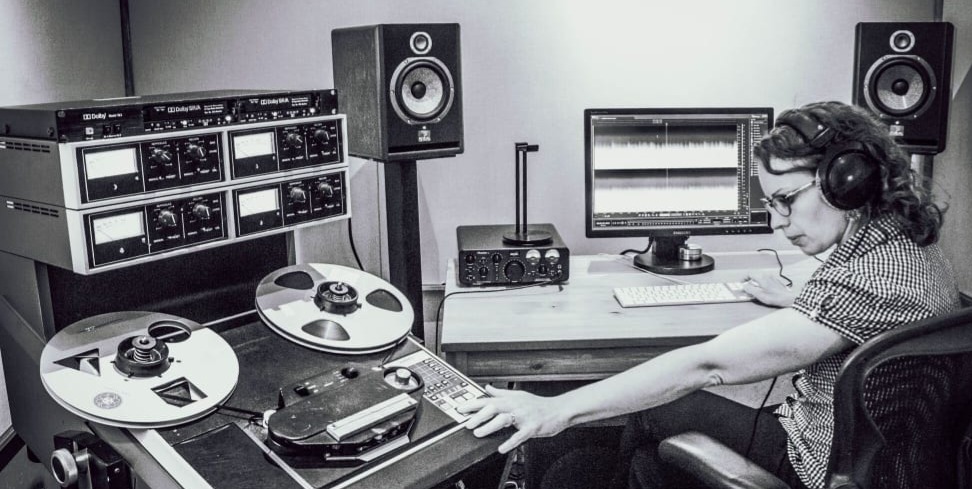
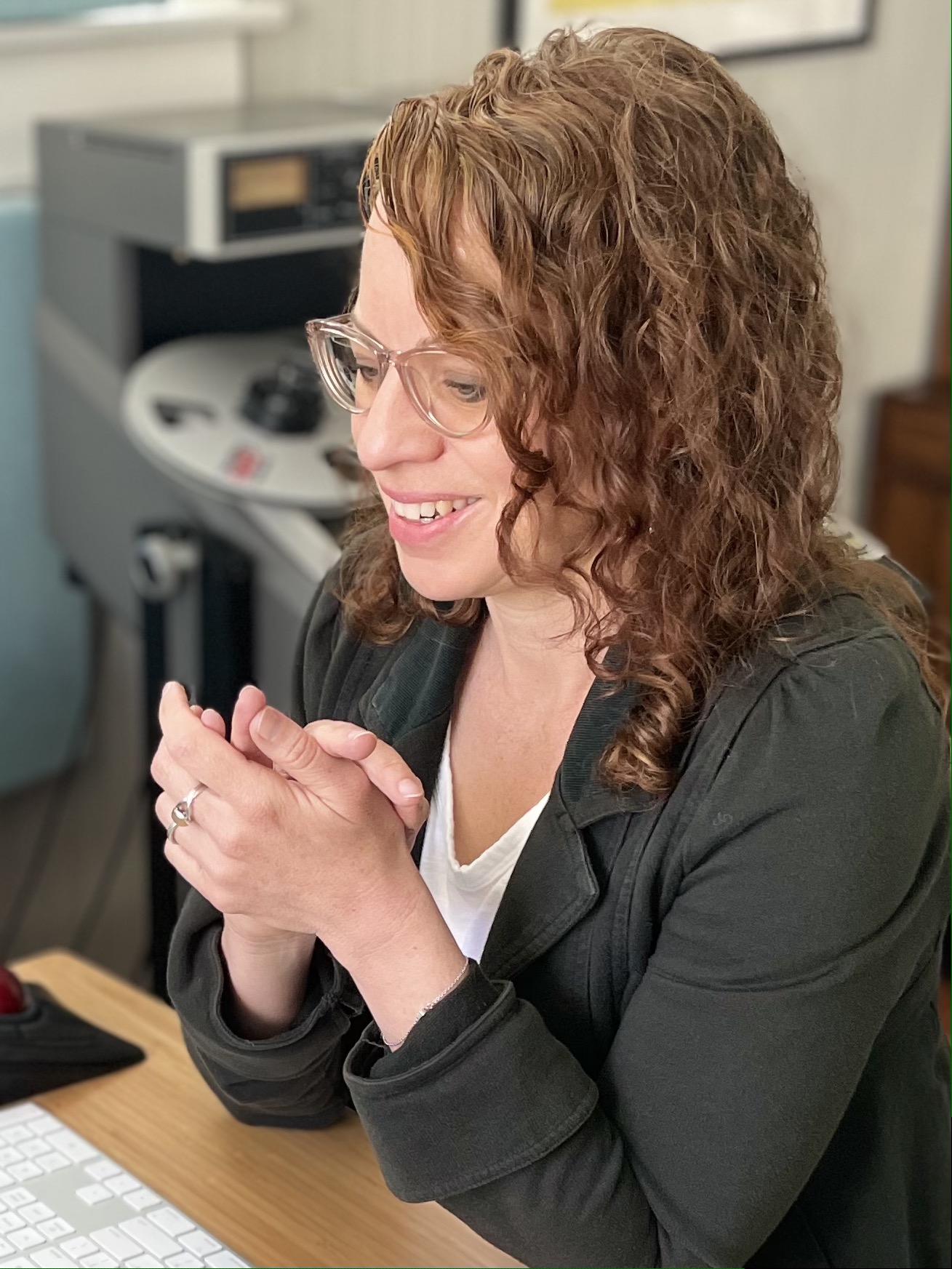
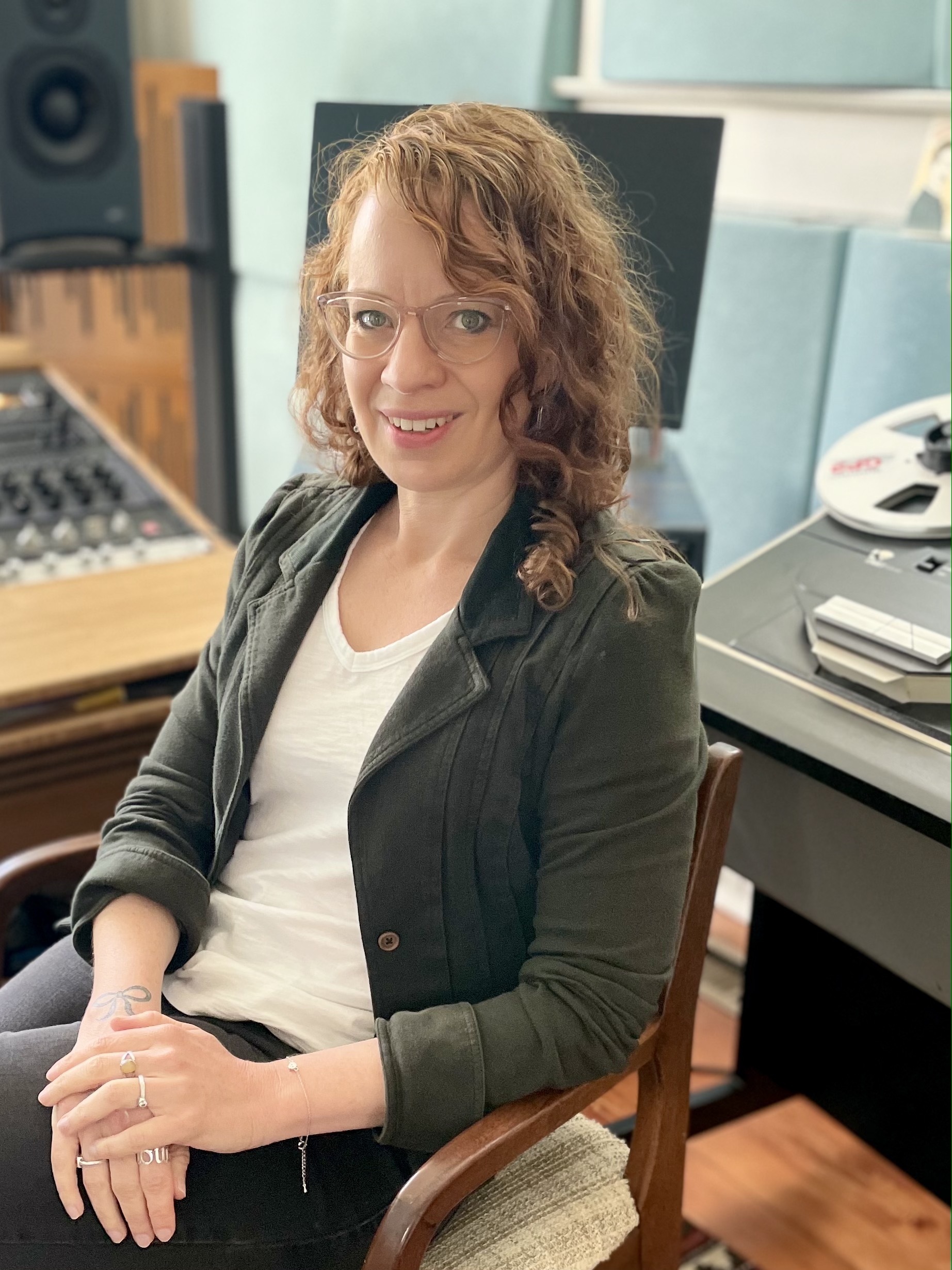
For more than two decades, Jessica Thompson has dedicated her career to the art and science of sound. As a mastering, restoration, and preservation engineer and founder of Jessica Thompson Audio, she has spent over ten years helping artists, labels, and archives bring recordings to life with precision, empathy, and deep musical understanding.
Jessica’s path to audio began not on stage, but behind the scenes. Growing up surrounded by records, cassettes, and the radio, she was drawn to music’s atmosphere and texture more than performance. It wasn’t until she discovered college radio in the 1990s—an era she calls “a real heyday”—that she found her place in sound. Immersed in the creative freedom of programming and production, Jessica learned to splice tape, run boards, and blend genres into thoughtful sonic journeys.
That early passion led her to public radio at WGBH in Boston, where she found invaluable mentors—many of them women—who modeled what a career in audio could look like. Seeing women record, edit, and produce audio content was both inspiring and transformative, solidifying her commitment to pursue sound as a lifelong profession.
Jessica holds a bachelor’s degree in Anthropology from Wesleyan University, where she developed an appreciation for how culture, art, and technology intersect. Later, she earned a master’s degree in Media Studies from The New School, focusing on sound studies. Though her academic work helped her understand the philosophical and cultural side of sound, her true technical foundation came through hands-on experience—learning by doing, listening, and refining.
For Jessica, mastering is a craft that demands both patience and curiosity. “There’s no shortcut,” she says.
Career Start
How did you get your start? How did your early internships or jobs help build a foundation for where you are now? What did you learn interning or on your early gigs? Did you have a mentor or someone that really helped you?
My first internship at a mastering studio was a crash course in working in professional audio. The hours were punishingly long and the bar was sky high. I remember being taught the importance of every detail — from the precise, musical spacing between songs to spelling the artist’s name correctly. I did massive amounts of quality control listening, and there is no better way to train your ears than listening to hours and hours of music, closely, without distraction, every day.
In 2009, I landed at the Magic Shop in NYC, working with Steve Rosenthal who, to this day, is a friend and mentor. We worked on a lot of historical, archival recordings, everything from creating inventories to digitizing old tapes and discs to restoring and remastering the music, even field trips to basements and barns to assess collections. Steve is a brilliant producer and collaborator. He would give me mastering notes that truly made the project better, sometimes subtle and sometimes calling for a wildly different direction.
Since this is SoundGirls, I think it’s relevant to share this: I became pregnant with my first child while working at the Magic Shop, and not only did Steve not fire me, he graciously offered all the flexibility I needed, and then he gave me the crib his daughter had recently outgrown. I worked part-time after my son was born, and continued to devote myself to learning the craft and hitting my deliverables deadlines. I had a daughter 3 years later and kept up my part-time mastering schedule. Don’t get me wrong, I was not sleeping much, and there was a lot to juggle. But what a gift to be able to devote yourself to your career while having the flexibility to be present as a young parent! My point is: it is possible to cultivate that balance.
Career Now
What is a typical day like?
Now that I work for myself, my days are shaped by my never-ending “to do” list and my mood.
I can’t imagine having to arrive at a set time and work on whatever project was scheduled for that day. I let my energy and my mindset influence how I spend my day, so that means sometimes I hit the ground running at 7 or 8am and am in a state of flow mastering or restoring music. Sometimes I go to the gym, make breakfast, answer emails until 11am. Some days I don’t have the right energy to work on a challenging project, so I take care of creating deliverables and doing quality control listening. Also, I have two teenagers, so some days I take time to care for them or go to a school event. It’s the ultimate in flexibility, it’s deeply humane, and it only works because I have a very strong work ethic and actually do manage to deliver masters on time.
How do you stay organized and focused?
I love a “to do” list. I have a clipboard and legal pad and I categorize and write down everything I need to do, from major mastering projects to administrative work like backing up hard drives. Sometimes I micro-manage myself and create a sticky note with hyper-detailed “to do’s” for the day. Writing tasks out by hand is grounding and helps me plan out my day. Then all of my projects are essentially triplicated in a spreadsheet and on my calendar so nothing falls through the cracks.
What do you enjoy the most about your job?
I love that each day brings new music, something I’ve never heard before, and it might be powerful, beautiful, fun, dark, delicate, pounding, aggressive, anything! Especially historic records, I mean, how did I live so long without hearing the heartbreaking, charmingly, clever, poignant songwriting of Norma Tanega or Margo Guryan, or the lightning bolt moment when Sister Irene O’Connor and fellow nun and recording engineer Sister Marimil Lobregat used synths, drum machines, and a tape recorder to create psychedelic hymns, or Woody Guthrie sitting on his couch, testing out different rhythms and lyrics on songs that are now iconic. I love taking an old recording that sounds muffled or dull and then working to pull forward some awesome musical performance. I love getting a single from an up-and-coming band and making it absolutely slam!
What do you like least?
Being my own tech support, marketer, billing department…
Advice you have for other women and young women who wish to enter the field?
You belong here. Take up space, take your time, listen, learn, be open to opportunities, show up, be on time, ask for help, work hard. Put yourself in spaces where you can be your best self. Maintain healthy boundaries but don’t be afraid to dive in deeply. Value the process as much as (maybe more than) the final product.
Also, know yourself. One key to my success and happiness is that, very early on, I figured out that I’m good at working alone, good at immersing myself in the details and being a super-specialist. Mastering suits my temperament. If you thrive managing a room full of personalities, being in the room at the moment of creation, troubleshooting in front of a live audience, maybe producing, engineering, or live sound are your sweet spot. You can try different aspects of working in audio and find pathways that feel nourishing, not draining.
Must have skills?
Desire to learn, attention to detail, flexibility, humility, kindness.
Ground Breaker Tana Douglas
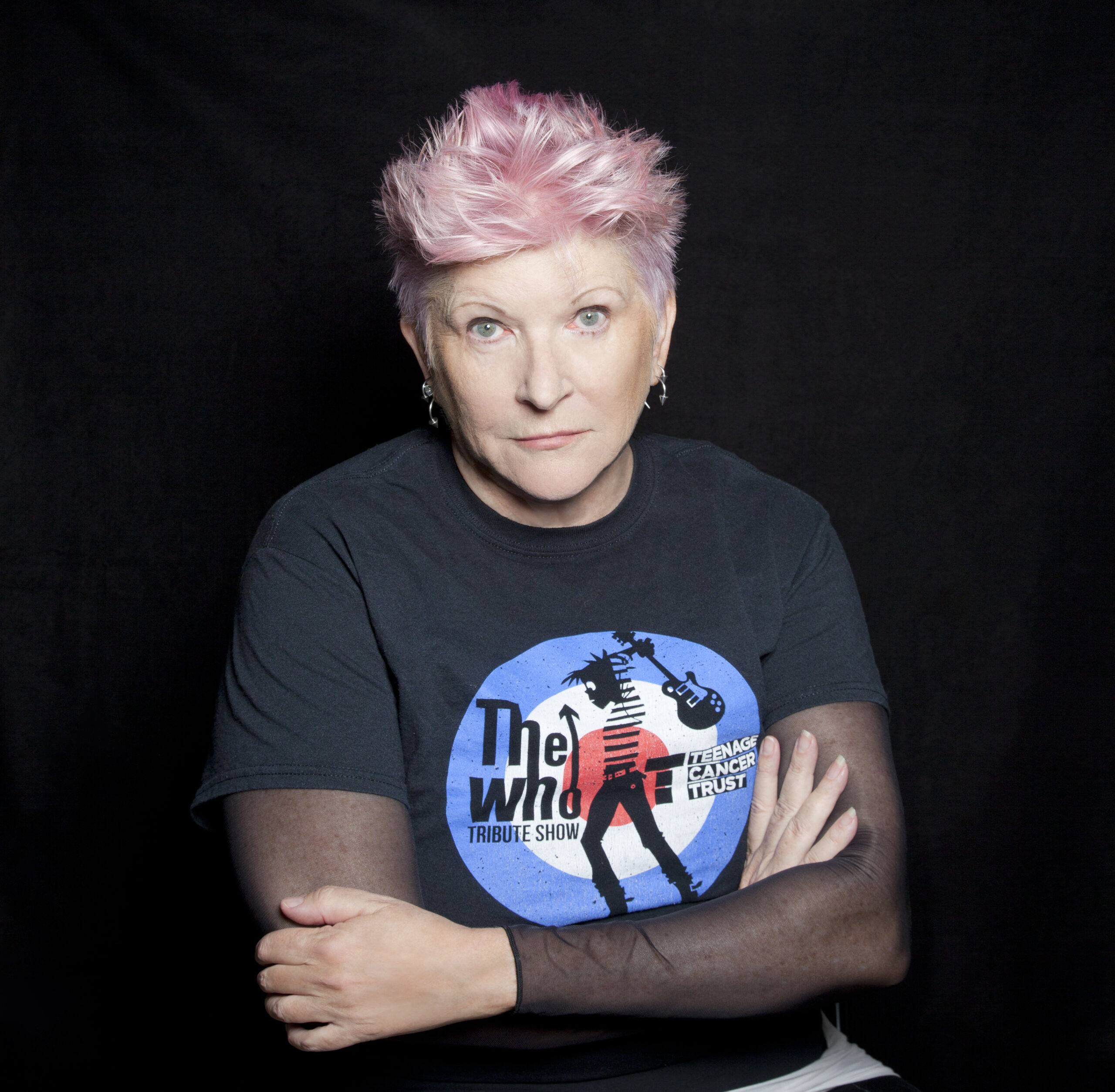
Photograph by Lisa Johnson Rock Photographer.
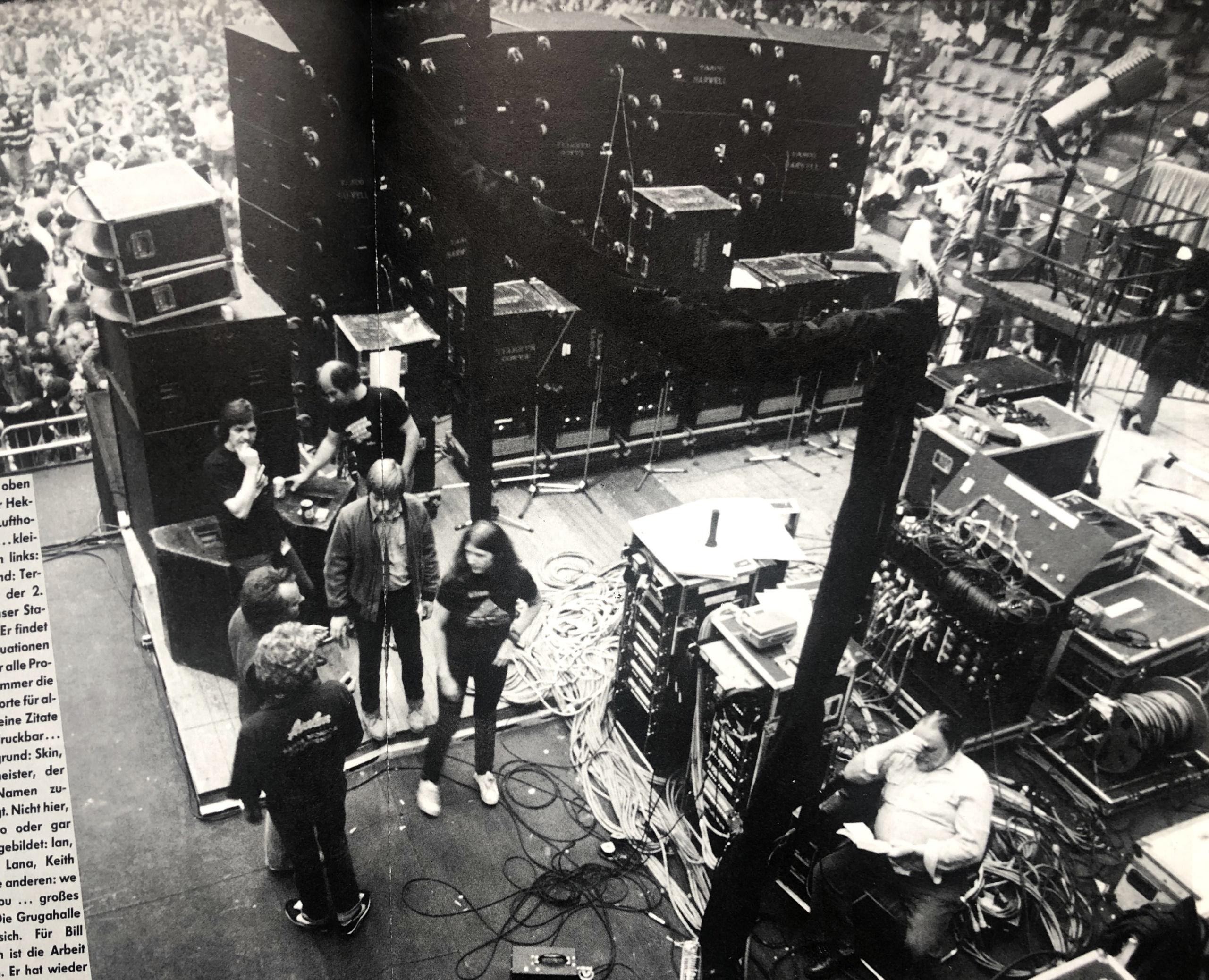
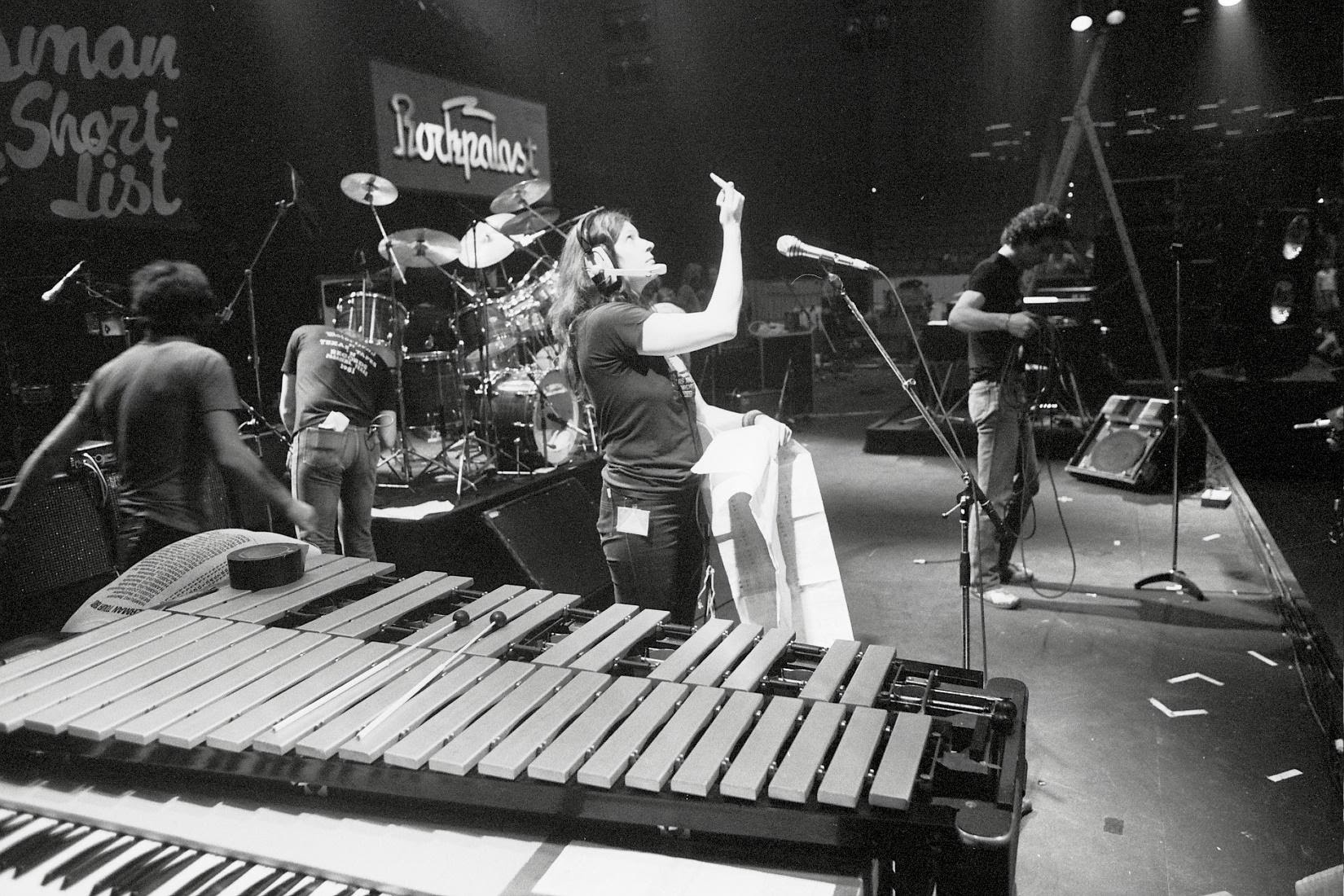
Tana Douglas is known as the first woman roadie and got her start working Production in 1973 when Philippe Petit rigged a steel cable between the towers at the northern entrance to the Sydney Harbor Bridge. (Kathy Sander another roadie got her start in 1974 touring with Elton John). Without realizing it she had just done her first gig. This was followed by a meeting with a well-known Australian Tour manager Wane “Swampy” Jarvis, who piqued her interest in the production side of the Music Industry. This led to her first paying gig with a band called Fox, setting up and looking after their stage equipment known as the backline. After taking that job and relocating to Melbourne, an offer to work for a different band came along in the middle of 1974. This band was AC/DC. Throughout Tana’s four-decade career she has worked in backline, sound, lights, logistics, production, and tour management.
At just fifteen, Tana had joined the circus that was rock ‘n’ roll and after taking the job with a young and upcoming band AC/DC, found herself on a fast track to a lifelong career. Her first job with AC/DC was to continue doing backline until she says that “it became clear that we really needed our own PA to help Bon (Scott) with his vocals. I was sent to pick it up from a local sound company called Strauss, Nova Sound. Not realizing that from that moment in time I would become their FoH Sound engineer. It wasn’t so much a matter of volunteering for the position, it was what the band wanted. They trusted me and knew that I understood what sound they were looking for, which is very important. I had zero training. In those days in Australia, it was not uncommon to do 10, 12 or even 14 shows in a week. There was no time for training. I also had the dubious pleasure of operating their monitors, at the same time; through the FoH console. Not the ideal situation for a notoriously loud band.”
The sound system Tana fetched was a 3-way system with A4 bins, JBL horns, and tweeters. Tana discovered that it was not cutting it and upgraded to a 4-way system with W Bins, A4’s as midrange, and multi-cell horns and tweeters. The monitor system consisted of five fold-back wedges with dual speakers in each. The only advice she was given to running sound, was to keep the guitar volume down and it should be good. Tana says “we would do shows with other bands on the bill as we weren’t headlining these larger shows in the beginning, so I would watch and try to learn as much as possible from people who obviously knew what they were doing and apply it to the shows where we used our PA.”
The biggest challenge she faced with mixing for AC/DC was inadequate equipment and the sheer volume coming off the stage. Tana says that “as the PA grew in size so did the number of speaker cabinets on stage, for the guitars. As I was still relatively new to this whole thing, I didn’t know enough to demand a system that would be capable of doing the job. We were restricted by the budget and size of venues to accommodate a larger PA. We also travelled with all the gear in the back of a bus. Not to mention I was only 16 years old.”
Despite all this Tana learned some important lessons. One was that the equipment must be able to handle the job, so you can do your job. ”If you are good you can get the most out of your system, but there is only so much a system can give, I made it work, but thinking back it would have been nice to have had at least twice the system. Would have made my life so much easier. Even with the restrictions both the band and the audience were happy with the sound I managed to get.”
The 18 months Tana spent working with AC/DC ignited her passion for a life on the road but she realized she needed to find an environment where she could continue to learn. She took a job with a production company called ACT that specialized in International tours coming to Australia. Their crews were considered the best in Australia and Tana toured with artists Suzi Quatro, David Essex, Leo Sayer, Carlos Santana, Neil Diamond, and Status Quo.
Tana says “leaving AC/DC was a big step, a leap of faith that it would be the best move for me to grow and learn. I also wanted a team around me that I could become a part of and if I had those two things, the job I did at that time really didn’t matter. The position they needed filled was for a lighting person, so I jumped. It was a complete change of direction which I felt was appropriate for this next phase of my life.”
For the next several months she worked her ass off, watching, learning and growing. Tours in Australia typically last about a month and Tana did seven back to back tours working with some of the best international production personnel. Tana says she utilized the time wisely “I always asked about everything. How? What? Why? When? Where? something should be done. These questions make the difference between someone who knows how to set up a system and someone who knows how to operate a system. whether it is sound or lights. I think another important thing I learnt very early on was that for me to be accepted in this industry it was all about how I fitted in as a member of a crew, not how I stood out as a woman.”
Tana would make her transition into lighting official by moving to the U.K., where she landed a job building a 360 lamp lighting rig for Status Quo and then spent the next four years touring with them. Tana would move over to TASCO and head up their lighting department working and touring with Ozzy, David Coverdale, Iggy Pop, The Who, Elton John to name a few. In 1983, Tana would move to the U.S. to work for the U.S. TASCO Division along with Delicate Productions and Light and Sound Design, continuing to work with Elton John, Men at Work, INXS, Little River Band and Johnny Halliday’s Spectacle in Paris for 7 months.
Lighting appealed to the artistic side of Tana, she loved art in school and always enjoyed creating things and experimenting with color. It was also an exciting time to be involved in lighting, everything was changing so quickly. She says “we went from a couple of hydraulic light towers with 16 steel lamps a side to suspended truss configurations with hundreds of aluminum lighting fixtures, moving motors, truss spot operators, retractable set pieces, to the piece de resistance: the Vari-Lite. There was no turning back.”
Thinking outside of the box when problems arise and need a quick resolution for live TV. TASCO Crew.
The first time Tana realized she had “made it” came when she was requested for The Who and Friends Roar In at Wembley Stadium in 1979. This was The Who’s comeback show after the loss of Keith Moon and AC/DC was on the bill as well. The second time was when she was in charge of dimmers and control of the largest lighting rig ever built consisting of 3,000 par cans, 64 Vari-Lites, a dozen 10K Fresnels and all the moving parts including a giant fist with the performer, Johnny Halliday inside.
Tana remembers her time at Tasco “I loved my time with TASCO London. It was hard work and extremely long hours, new innovations, pulling all-nighters, in a freezing cold warehouse in time for the tour to start. What made it all worthwhile is I was given a position of authority which validated that all the hard work had been worth it. I have to say I loved the other people that worked for TASCO. It was a really good bunch headed up by Terry Price and Paul Newman at the time and made me feel a part of it all. That was always important to me. Growing up without any family to speak of, I needed that feeling of belonging and I found it there.”
Focusing the rig between acts.
Tana loved Tasco, but after gaining custody of her son, Tana knew she had to make some changes in her career. She says “ the blinding difference between men touring and women touring is children. I don’t know if that will ever really change. Maybe now, there are laws in place on grounds for dismissal but when I was touring it was not something that was up for discussion. I had gained custody of my son, and that meant I needed to make changes to my career. Touring for 10 months of the year was no longer an option. So she moved into Logistics.
Working in logistics, Tana dealt with making the band’s schedule work, creating carnets, and financial bonds for customs, freight forwarding to make sure the equipment arrives on time and in working condition. Dealing with artists’ personal requests, such as when Alice Cooper forgot his snake and had to get it to London in time for his first show or when a bass player left his instrument at home in LA when the band flew to England to play Reading Festival. This was an instrument he insisted was too important to travel as cargo and required breaking into his house after warning the local police, retrieving instrument and getting on a plane to Reading in time to hand it to him on the side of the stage as the band was starting their set.
Many of her clients came from the crew people she had grown up with and had moved into Tour or Production Manager positions. At first, she was working for a company, but when the company went belly up, she started to handle the accounts on her own, starting her own company Network. During the ten years she worked in logistics, she handled accounts for Bad Religion, Tom Waites, Butthole Surfers, Billy Ray Cyrus, The Red Hot Chili Peppers, Luther Vandross, En Vogue, Tool, Jane’s Addiction, Pearl Jam, Lenny Kravitz, Ice-T, Ice Cube. Henry Rollins, Carlos Santana and many more. Sadly she closed her company due to health reasons in 1985.
After her health recovered, she went into tour managing. Tana believes these things are a “natural progression if you have worked enough different parts of production over the years, then you should really know what it takes to be a successful tour manager. It wasn’t something I had aspired to be and I only really worked with one band that was in development and while I enjoyed it, the band fell apart and I moved on to representing Bill Ward from Black Sabbath negotiating his reunion with Sabbath for their upcoming shows at the Birmingham NEC that were to be both filmed and recorded. That was fun and included flying Bill halfway around the world for a “chance” encounter with the promoter who was happy to have Bill on board and then the negotiations that ensued with Sharon Osbourne, who was not happy to have Bill on board. But that’s a whole other story.”
Tana now resides in Los Angeles, and has spent the past couple of years finishing a book called “LOUD”. It is being published through HarperCollins and will be released on April 20, 2020. Tana is also involved with organizations called Crewcare and Support Act both based in Australia. The organizations focus on health and wellbeing for road crew. They sponsor and the annual “Roady4Roadies” that raises funds to help and support both musicians and crew members in times of difficulty. Both organizations are doing cutting edge research into the effects of life on the road. She is also working with The Arts Centre in Melbourne on a new project for their Rock Vault that will entail a series of panel discussions and individual interviews to be filmed, centered on the history of Production in the Australian Music Industry.
What do you like best about touring?
The music, of course, is what draws most of us in, but then there are the bonds that form with others on tour that are special. A good crew makes all the difference. I would tend to pick a tour by the crew, not the performer, as the crew is who you’ll be living with for the next 12 months of your life, not the performer. Plus, a good crew doesn’t work for a bad performer.
What do you like least?
I dealt with a lot of solitude being the only woman on a tour. I mean, there is always a group of people around, but interaction with 20 to 100 guys on a daily basis can get tricky when you are out there alone as a female, for extended amounts of time. What is acceptable behavior for a guy can be frowned upon for women.
How did you deal with that?
Not always well, sad to say. We all make mistakes in judgment. I guess what is important is we learn from them and hopefully don’t keep making the same ones. At least, mix it up a little (laughing).
What is your favorite day off activity?
Swimming and horseback riding
What is your educational or training background
Zero
Did you find it hard to find people to train/teach you? Do you recommend a formal education or just learning on the job? or a combination?
Once I’d taken that leap of faith over to ACT way back in Australia with the likes of Wyn Milson, Peter Wilson, Curley Campbell, D’Arcy, Russell Kidner, Billy McCartney to name a few, it was like I’d found my tribe and to them, it was a bit like having a little sister (who could drink you under the table) but also keep up with them on the work front. Who doesn’t want the best for their little sister? On the international side, I had the likes of Patrick Stansfield, Paul Newman, Chris “Smoother” Smythe as an early support system. I think also while I was obviously young, thankfully nobody figured out just how young I was. That may have changed things.
There were no options for schooling as there are now. How effective that is I am sure it depends on who is teaching the class. I hear that Kevin Lyman is teaching a class at USC. I’m sure that would be worth attending. I think though with any schooling it needs to be adapted to a real-life situation. You can be taught that something is hot, but until you feel just how hot it is, you can’t appreciate what it is you are being told. In the touring world, it is different every day. You must be prepared to adapt to that, as does your equipment. Be flexible. There is no one way.
What if any obstacles or barriers have you faced?
It’s never easy when you are going against the grain. It was a wilder time when I was starting out. There were no rules, there were no other women. I literally had to give as good as I got. There was resistance from some areas, but there was also a great deal of support from others, once they realized not only was I serious about doing this as a career, but I was also capable of doing the job better than most, there was a shift in how I was perceived. For me, the biggest obstacle was a personal one. Relationships never went well for me. Maybe it was because I was mostly in a supervisory position? Or as I say, “My picker is broken”. Think long and hard before getting into a relationship, as you can’t let a relationship come before the job you have been hired to do.
How have you dealt with them?
I tried to stay away from relationships, while likewise staying away from the group that is of the opinion that you shouldn’t be there before they even meet you. Don’t even bother with them. Prove yourself by example, by doing the job better than others. Don’t complain, make it better. Choose your battles. There is no point in winning a battle if you lose the war.
Advice you have for other women and young women who wish to enter the field?
Focus on the details. Learn from every situation that arises. There will be many and they will all be different. Your success will rely on how you fit in as a crew member, not how you stand out as a woman. There is no such thing as a stupid question, as long as you learn from the answer. Embrace change, as there will be a lot of it. The friendships you make on the road will stay with you for your life, so be authentic and true to yourself.
Must have skills?
Think outside of the box. If you have done a course or some other type of schooling that is great but don’t let it tether you. Every day is different on the road and things change in a moment. Be prepared and keep up. Always listen to advice and respect your crew.
What are your future goals
At this stage, I am interested in developing talent on both the artist side and the crew side. I have also started my second book.
Favorite gear?
I got to play with a Neve desk which at the time was a big deal. I was also lucky enough to be one of the first people to tour with the new AVOlites dimmers and consoles that changed the face of lighting.
Anything else you want to add or contribute
Where you start is rarely where you finish. Just because you start in one field doesn’t mean you need to stay there. What we think we want isn’t always what we need. By being willing to accept change you will end up where you were meant to be. It will be a journey that is not an easy one, but the rewards make it all worthwhile. Enjoy the world!
We use cookies on our website to give you the most relevant experience by remembering your preferences and repeat visits. By clicking “Accept All”, you consent to the use of ALL the cookies. However, you may visit "Cookie Settings" to provide a controlled consent.
This website uses cookies to improve your experience while you navigate through the website. Out of these, the cookies that are categorized as necessary are stored on your browser as they are essential for the working of basic functionalities of the website. We also use third-party cookies that help us analyze and understand how you use this website. These cookies will be stored in your browser only with your consent. You also have the option to opt-out of these cookies. But opting out of some of these cookies may affect your browsing experience.
Necessary cookies are absolutely essential for the website to function properly. These cookies ensure basic functionalities and security features of the website, anonymously.
Cookie
Duration
Description
cookielawinfo-checkbox-analytics
11 months
This cookie is set by GDPR Cookie Consent plugin. The cookie is used to store the user consent for the cookies in the category "Analytics".
cookielawinfo-checkbox-functional
11 months
The cookie is set by GDPR cookie consent to record the user consent for the cookies in the category "Functional".
cookielawinfo-checkbox-functional
11 months
The cookie is set by GDPR cookie consent to record the user consent for the cookies in the category "Functional".
cookielawinfo-checkbox-necessary
11 months
This cookie is set by GDPR Cookie Consent plugin. The cookies is used to store the user consent for the cookies in the category "Necessary".
cookielawinfo-checkbox-others
11 months
This cookie is set by GDPR Cookie Consent plugin. The cookie is used to store the user consent for the cookies in the category "Other.
cookielawinfo-checkbox-performance
11 months
This cookie is set by GDPR Cookie Consent plugin. The cookie is used to store the user consent for the cookies in the category "Performance".
viewed_cookie_policy
11 months
The cookie is set by the GDPR Cookie Consent plugin and is used to store whether or not user has consented to the use of cookies. It does not store any personal data.
Functional cookies help to perform certain functionalities like sharing the content of the website on social media platforms, collect feedbacks, and other third-party features.
Performance cookies are used to understand and analyze the key performance indexes of the website which helps in delivering a better user experience for the visitors.
Analytical cookies are used to understand how visitors interact with the website. These cookies help provide information on metrics the number of visitors, bounce rate, traffic source, etc.
Advertisement cookies are used to provide visitors with relevant ads and marketing campaigns. These cookies track visitors across websites and collect information to provide customized ads.