Empowering the Next Generation of Women in Audio

Join Us

FabFilter Plugins

Are you aware of the story of Noah’s Ark? You know, the one about a man who builds a huge vessel to hold his family and two of each animal to save them from a great flood that would envelop the world?

Well… I’m going to assume you did! Fabfilter makes me think of this story vividly. Why? It has everything you need to fine-tune the sound you are looking for! It’s a little quirky that THIS is what comes to mind when I think of these plugin packages, but it’s 100% true! Just as Noah had all he needed in that vessel sailing the flooded lands, I have what I need for sailing my sessions in the mixing or mastering stages.

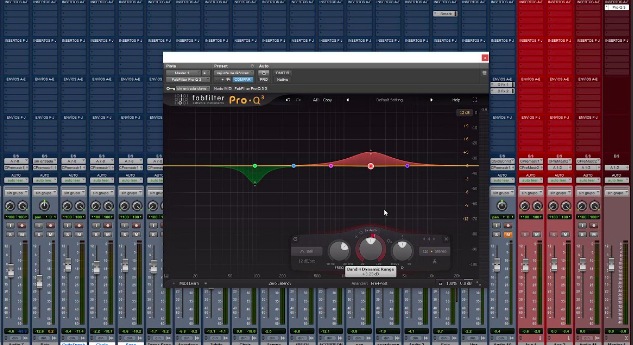
Fabfilter has gotta be my first choice for equalizing, gates, de-essing, and limiting. Let’s have a look at Fabfilter’s Pro-Q 3, Pro-G gate, Pro-DS, and Pro-L2 Limiter. While Fabfilter offers more than just these plugins such as the Saturn saturation, for example, I will be focusing just on the ones listed above. If you want to do some of your own research after this, more power to you!

Pro-Q 3

If you just started to work with Pro Tools, chances are all you would have at your disposal is built-in plugins. So your first EQ is probably going to be either the EQ 1-band or 7-band. While starting out, these EQs aren’t the worst in the world- they are limited. Compared to Logic’s Channel EQ, however, the 1-band/7-band are, frankly, not good for professional studio recordings, especially dialing in high tones in soprano vocals ( and I should know! ) or mid-tones in pianos.

Enter the Fabfilter Pro-Q 3! Equipped with a high-quality phaser, dynamic EQ, individual band mid/side processing, solo features, built-in gain, and wait for it….

The spectrum analyzer!

Why, oh why, would I need to gush about the spectrum analyzer? By sectioning out a part of my track, I can dial in low cuts, the after-effect ringing from a guitar slide, cut out the highs’ and correct the mids. All while using both my senses of sight and hearing to figure out what I’m looking for. While I would never recommend you just do visual mixing, It can be extraordinary in expediting the EQ process. The smooth response time and attention to detail added to this make it a winner all on its own.

Pro-G Gate

For the best sonic outcome while gating I would recommend the Pro-G Gate. Setting your threshold, range, and wet-to-dry ratios is a breeze. Like the Pro-Q 3, you can visual mix here as well. 7 times outta 10 I gate purely drums. Getting the snare out of the ride is somewhat possible while in the EQ process, but gating is just way more effective. Gating drums with this? A little too easy. With the Pro-G side chains, precise metering, and visual aspects are more than enough to buy what they are selling.

Pro-DS

You could shell out on the best preamps, spend thousands on that microphone you think is “the one”, certain words in vocal tracking just always seem to pop the wrong way. With post-it often becomes more apparent. The Pro-DS is transparent which is what I love about it. It comes with modes like single vocal and all-around, which can help with high-frequency limiting. Its look ahead up to 15 ms is perfect for fine detailing ahead of the current. This de-esser is great for triggering gain reduction effectively without much effort on the engineer’s part. Built-in plugins can’t touch this.

Pro-L 2

So you gated, de-essed, and EQ’ed the session. Yet, you still think that your readings are coming in a little too hot. Enter Pro-L 2 limiter. Peaks, clips, and loudness metering are standard for the Pro-L 2. While I personally wouldn’t use this in my mixing process, I would use it in mastering. Getting my levels ready for release in today’s music marketplace is key. We all are used to how a track should sound – even the crazy razor-sharp metal engineers know the sound quality is key to an optimal experience. To adhere to these loudness standards the Pro-L 2 does it well and using advanced settings to dial in only helps the customizability needed for a mastering engineer’s arsenal.

So Is Fabfilter Noah’s Ark For The Sonic World…?

To me, although some might call it silly, yes. The story reminds me that even if a storm is going on outside, as many sessions can be, my sturdy ship of plugins can help me navigate the weather.

Give Fabfilter a try, I really think it can help a lot of new engineers like students just starting out. If you are a broke high school or college student tight on cash, they do offer an educational discount of 50% off. Just fill out a form and picture of your student ID, and music teachers also qualify. So definitely check it out, 100% helped me out.


Not Everything Needs To Be Perfect


We are only four ( going on five ) months into the year, and even though Covid-19 still exists, I find myself stressed once again despite it. I want to be the one to shine a positive light whenever my stress tries to overtake me but I’ll be real here: being constantly positive isn’t easy. Yes! Yes! I can already hear someone call out that I’m a real Sherlock, nevertheless, it’s the truth. I’ve been beat-making constantly in-the-box for the last couple of weeks and sending my various hooks and verses to those that had requested them without having a moment to just stop and air out for a bit. I knew that if I wanted to avoid becoming a music zombie, I would have to step back though I hesitated a lot. I was pumping out melodies based on references emailed over to me, then I was meticulously nit-picking every little thing I could, followed by spending hours with the EQ because it just didn’t sit right.

What was I doing so wrong? Why didn’t the sounds in my head line up to what I heard from my speakers? I think, looking back at this, I clearly wasn’t on the verge of being a music zombie – I already was.

So for this month, I wanted to highlight some points and tricks to help you stay on track and avoid serious burnout.

Step One: Remember – You Are Unique

This might come as a shock to you, but surprise! You have been declared authentically yourself. That means you have thought processes, personal experiences, and a sound that can only be described as you sounding. Confused? Allow me to elaborate: if you are a cellist for argument’s sake, you might be able to fit into a classical musical genre with the way you learned to play. However, you have the dictation as to what your sound is. You can fit into any mold because you choose to. Your creative choices are born of the ability you have learned throughout lessons and experiences. This is true for the engineer, who may color rhythm sections in a session as blue and the record track as red out of either a practical or stylistic choice, and the singer may only sing songs composed in C major because they know that major key best fits their sound.

You’re not the next Rhianna, Prince, or 50 Cent. You’re you, and while these songs you love are references that can be good as inspiration and, well, references, you don’t need to mimic your favorite song or mix it identically the same. Embrace what you can bring to the table.

Step Two: Remember One Central Goal

If you find yourself stressed on where you want to start- or like me- find yourself debating if panning hard or slightly left will make the track better – take this advice: focus on one central goal! What is the impact you want to leave on the client, fans, and/or yourself? Do you want to finally pick up one song from the backlog and finish it? If so, work on that one track, and don’t go starting side projects! I guarantee the moment you do you’ll gain an “ I’ll come back to it“ mentality and WON’T come back to it. Take it by the day, something like this ( Yes! It’s time for a list within a list! ):

Day One: Writing lyrics or revising lyrics. Simply take the day to just put some words down. You don’t need to have the final product down yet – but what you will have is an idea of what you’re dealing with.

Day Two: Simple chord progression, a drum loop you like, maybe you play the piano and create something that’s just perfect. You don’t need to mold the sound of it to the lyrics – just feel the song out. Make sure you record whatever you come up with – it doesn’t need to be high-end – voice memos will do just fine.

Day Three: Time to see what’s been cooking the last two days! Place the beat in any DAW – it could even be Garageband on your phone, and bring up that beat you made. Now try mumbling total nonsense while keeping on the beat, it’s a little silly but it works! Any words pop out during mumblefest? You might have stumbled upon something you want to expand on. Experiment! Bring back in those lyrics from day one, and build it up from there. You have all the puzzle pieces. A beat, a vibe, and words. Also, don’t worry about editing – right now it’s all about the music.

There you have it. You made a goal, and instead of trying to cram it all into a couple of hours, you took it day by day- each day with fresh ears and new perspectives that only benefit the song you made. While this example might help artists heavy-handedly, it can be applied to sound designers, engineers, and FOH.

Step Three: Stop Doing

Opinion incoming! Alert! Here I go! If you love what you do, do NOT make it your job. A job is something you can like, hate, neutral, but it’s just a paycheck. A hobby is something you do as an enrichment activity, but what you love? With elbow grease – It’s a career. A lifelong commitment to your job and hobby getting hitched together. You meet like-minded people, explore depths of yourself you never knew existed! The moment you let the burnout get to you though? That’s a job, something just for a paycheck. Learning more becomes homework instead of an adventure. Make sure to do other things besides your career, you have the knack for this line of work sure! Yet you are so much more moving pieces. If you stop whatever you are doing and just take a moment to get some oxygen, read a book, watch a new show. You allow yourself the right to be and do more than one thing. It tells your fatigue that this is not a job’s obligation but a career desire.

You are not a robot, not everything needs to be perfect.


Creating Spacious Mixes with Panning

Panning in a musical context is the act of distributing the sound signal into a stereo or multi-channel sound field. Most DAW’s will have a Pan Knob that you can use to send the audio hard left, left, centre, right, hard right, and everything in between. The benefit of panning is that it can create space and width inside your mix and allow the listener to have a broader listening experience.

So how do you pan your mixes? Well here are a few top tips that will help create space and depth in your mixes.

Vocal Tracks

Music that features a voice in it, no matter the genre, typically follows this panning method. The Vocals should be panned centre, as well as any kick or snare tracks (although if you don’t want that hard-hitting sound you can always pan the snare and kick just off centre). If you have a couple of harmony vocal tracks, you can pan them hard left and hard right so that they’re not competing with the main vocal. If you have a lot of different harmonies pan the strongest hard left and right and then pan the others in opposite directions with each other. For example, if you have two of the same harmony takes pan one 90° left and the other 90° right.

Frequency Zones

If you have a few instruments or sounds that are occupying the same frequency, a nice trick can be to pan them on opposite sides of each other. This will create space and alleviate some of the muddiness.

Song Structure

Another useful trick with panning is it can allow you to diversity the sound of your song structure. For example, you could keep your intro and verses very tight, and then when the chorus begins you can open up the sound by panning certain voices and instruments out. This will create a wider sound and ultimately make it feel like a bigger chorus.

Keep it Balanced

The most important thing to remember is to keep your mix balanced! Once you start diving into panning it can become quite easy to just start panning everything. This is not recommended. The best use of panning comes from using the technique just to open up your mix. You don’t want to be left with a track that sounds too loud and muddy in the right ear and brittle in the left.

Check Your Mix

Make sure you are checking your mix on a variety of different sources. From headphones, monitors, cellphone speakers, etc. This is important as listening on only one source can give you an altered listening experience and what sounds good on your mix headphones might not sound great on a pair of cheaper in-ears. So, make sure to check check check!

Overall panning is an incredible tool to open up the sound of your music. There is no right or wrong way to do it and my advice would be to just trust your ears.


Hiring a Producer Vs Booking a Studio

So you’ve written a song or two…or five. You want to put out an EP. What’s the first thing you do? Start googling “recording studios near me”, right?

Maybe that’s not exactly how to go about it.

“So how should I go about it, Becky?”

I’m glad you asked!

The first question to ask is this; “Am I wanting to take a snapshot of my song as it is or do I want to commercially release it and have it sound like other commercial releases?”

Before we get into this, let’s define some of the terms I’ll be mentioning so you know exactly what they mean.

Production/Arranging

The orchestrating of all parts in a song or facilitating the orchestration by the musicians either hired out or created by the artist/band themselves. Selecting the sounds, designing sound effects, bringing an artist or band’s sonic vision to life.

Recording: Probably obvious

Mixing: The process of using volume levels, panning (where a sound lives in the stereo left to right spectrum), frequency equalizers, reverbs, delays and other effects to create space and separation of all the recorded/programmed elements in a song.

Mastering

The final treatment after a song has been produced and arranged, recorded and mixed and sounds well balanced. This process usually brings the overall volume up to standard, adds a shine or polish, more punch or more smoothness to the overall sound, depending on what the song is calling for.

I made up these definitions so don’t yell at me if I’m not quoting your music production textbook.

Booking a studio

Recording studios are all about capturing a “snapshot” of what you are bringing. If you have a crappy-sounding acoustic guitar, their $6000 microphones and $10,000 worth of preamps and compressors will capture that crappy sound beautifully. If your singing is mediocre, your mediocre singing will sound silky smooth. You get my point?

A commercial recording studio usually has larger acoustically treated spaces for the best quality you can get, specifically for recording instruments like drums or string ensembles, or choirs.

A recording studio usually has a “control room” which is where the engineer is sitting at the recording console, and the artist or musician is in a separate room viewed through a glass window. This separation again creates the best possible acoustic setup.

The studio usually has at least one but often several engineers who will do the recording. This engineer can range from a beginning-level intern to a genius wizard and everything in between. You may find a favorite after working with a few different engineers.

Your engineer may or may not be a producer or arranger. Don’t assume that they will be.

There’s a good chance your engineer won’t care if your song sucks. You show up with your song that says “I can’t believe you broke my heart, I should have known from the start” they won’t say a word. Remember…snapshot.

The cost of the studio and engineer are usually separate. The studio space might cost $75/hr and the engineer may cost an additional $100/hr. Be sure to double-check before booking.

You can usually get “block deals” at a studio. This means you can book the studio for a whole day, including an engineer for a discounted hourly rate. This can be great for bands who are really well-rehearsed and want to record as a band at once with very little over-dubbing. The danger in doing block deals is that bands usually try to squeeze in as much as they can in that time. By the end of a 12-hour session, your singer may have lost their voice or everyone is just flat out exhausted. What happens at the end of the block could be quite different than what happens at the beginning of the block. Another deal studios sometimes have is something like “record your song for $100!” This might actually mean “we’ll take a snapshot of what you give us (see #1) and we only have 2 hours to do it so let’s hurry”. What you’ll have in the end might be a nicely recorded demo.

The studio may include mastering but may not. Be sure to check.

Hiring a Producer

As defined above in the terms, a producer is often the person doing all of the arranging and orchestrating. What this means is that your producer needs to have an understanding of exactly who you are as an artist and what your sonic vision is for your music. This means a lot of communication, not just a “show up and record”.

A producer is like the sculptor of your sound. The importance of open, respectful and honest communication both ways is of utmost importance. A producer who gets “offended” if you don’t like something or who doesn’t seem to “get” you mean you will be compromising every little decision about your song until in the end, you don’t love it. So find a producer you can trust to listen to you.

A producer is often the one recording and mixing everything. Make sure they have a good quality sound coming from their productions. Listen to their past works and make sure it lines up with your quality standard.

A producer is usually working out of a home studio. Make sure their recording space is comfortable and has a good vibe. While home recording spaces certainly won’t be as epic as a huge recording studio, there should still be a sense of professionalism and order there. If it’s messy or uncomfortable then you won’t be comfortable recording and may not give your best performances.

Oftentimes a home studio doesn’t have a separate control room which means leave your friends at home. The more people in the room where you are recording the more chance there is that your producer will have to keep shushing your friends which isn’t much fun.

A producer should be interested in elevating the “bones” of your song (aka the lyrics and melody). A great producer will want the song to be the best it can be and they know that the greatest arrangement and production won’t “fix” a poorly written song.

If you love the producers’ arrangement but the final mix and master are not at the quality you want, it is 100% acceptable to ask them to outsource the mixing and mastering or ask them to send you the “stems” (which has become the term for individually recorded tracks in your song) so that you can find someone else to mix and master the song.

A producer may also be a mentor, not just someone who makes your music. If they have experience in the industry and they are willing to share insight and wisdom, that is worth grabbing on to! Even better if they can help guide you in the backend side of your music business, including marketing and strategies for building a fan base. (PS That’s how we do it at VoxFox Productions! 😉 )

So before doing that google search, ask yourself what you want the end result to sound like and what it is for. In a nutshell, it could be simplified to this:

Wanna take a snapshot: book a studio.

Looking for a Creative Partner: Hire a producer.

Basics of EQ for Vocals


The best thing you can do whilst mixing is cleaning up the recording so that frequencies don’t clash with one another. An EQ on the vocals can help sculpt the sound and really clean up and make a good recording sound great! Here are some basics tips to help you get started.

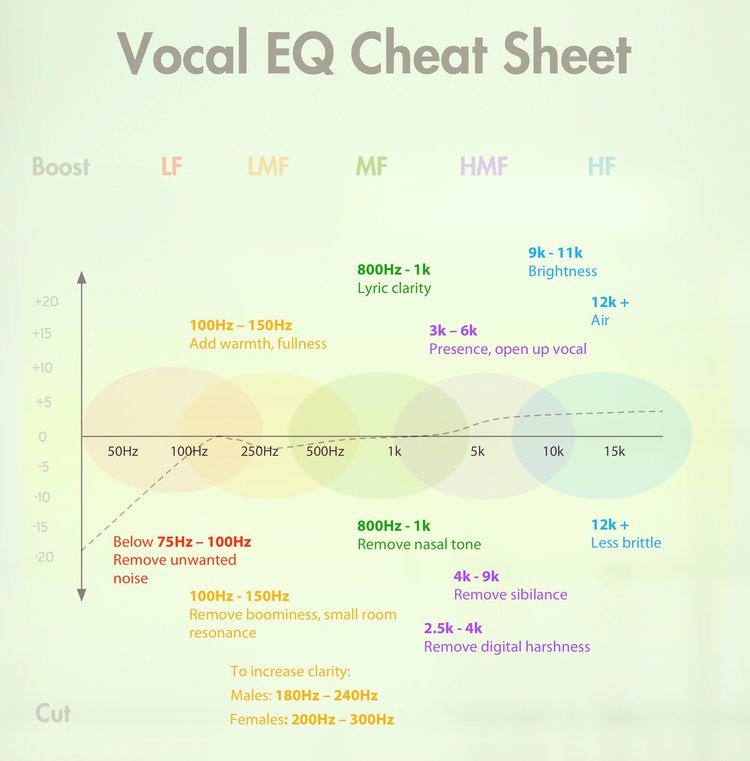
The first thing I do is roll off the low end. You can do this from around 90-100Hz depending on the persons’ vocal range. If they have a higher range, you can scoop out a bit more of the low end just make sure to use your ears and find a sweet spot so that you can still hear the tones of the voice clearly.

A slight tight boost around 800-1k HZ can boost the clarity of the lyrics. You can also reduce these frequencies to help with a nasality in the vocals.

If sibilance is a problem in your recording and you can prominently hear a lot of P and B sounds you can remove them around 4k-9k.

Boost between 1k-2k to open up the vocal.

You can then add a high shelf around 7k to brighten up the recording. Make sure to roll off the high end at around 18kHz.

It’s also important to remove any room noise so the easiest way to do that is to increase an EQ parameter by several dBs and sweep across the EQ to find any prominent frequencies. Once these have been discovered you can remove them by decreasing the dBs.

Just like most techniques in music production, just remember to use your ears to find what makes the track really sing. A good EQ can really help boost a vocal and help give it its own place in the mix.

After I EQ the vocal I then move on to compression and adding on effects like reverb, delay, etc.

I hope these quick tips helped get you started with vocal EQ but just remember every vocal is different and some singers will need their voice highlighted and altered in different places. This is completely normal and ok but these fundamental EQ points are a great way to get you started!


It’s Who You Know – But It’s Not – It’s Who Knows You.

I never really followed the “traditional” path to get to where I am today. The world of audio has led me in all kinds of different directions. And it made me a better engineer because of it.

I didn’t start out knowing I wanted to be an audio engineer. In fact, I had no clue what I wanted to do. I went to college after high school because I have Dominican parents, and as the child of immigrants, there’s tons of pressure to do better and take full advantage of the opportunities this country has to offer. All through my life, people called me a human jukebox because of my love of music and eclectic taste, so I started a music minor fairly quickly (I grew up playing piano and trumpet) and declared a major in a foreign language. By the end of my time in undergrad, I had taken enough classes to tack on a minor in mass communications (this will come in handy later).

While I was working on this degree, someone gave me a copy of Cool Edit Pro – an early DAW and editing software – you know it as Adobe Audition. I became a wiz at editing music together for dance groups and random school projects.  It was clear to me that music was going to be part of my life, but I just didn’t know-how. In the late 90s and early 2000s, audio engineering wasn’t something I saw in the media – much less a thing you saw women doing. Especially as a Latina – those aren’t jobs you do. But I had to figure out a way to work in music.

One afternoon, I was cleaning out my desk at my parent’s house and wondering what I should do with my life when I found an old brochure for the University of Miami. I considered Music Business, and when I turned to that page, I saw a degree in Music Engineering right next to it. I read the description and a light bulb went off in my head. This was it. This was obviously what I was meant to do.

To make a long story short, I went back to school to study audio (not at UM), a job my parents didn’t fully understand, but supported my decision. My ultimate goal was to work in Latin Music – to do that I would need to eventually end up in Miami. It was the music I loved and grew up with, so naturally, I wanted to hear it every day. But after my program finished, that was not the option on the table. It was also at this point where I decided I actually wanted to live in New York.

I’ll remind you here that I am the child of immigrants, so free internships were not an option for me. My parents already asked when I was going to get a real job, so working for free just wasn’t going to cut it and NYC is not exactly cheap. I met the great engineer and professor, Jim Anderson, during a student mentoring session at the AES convention. Jim told me, “Don’t go to New York; go somewhere where you can make all your mistakes. Then you can go to New York.” So, I applied for a work-study at the Banff Centre for the Arts in Canada – a program he suggested.

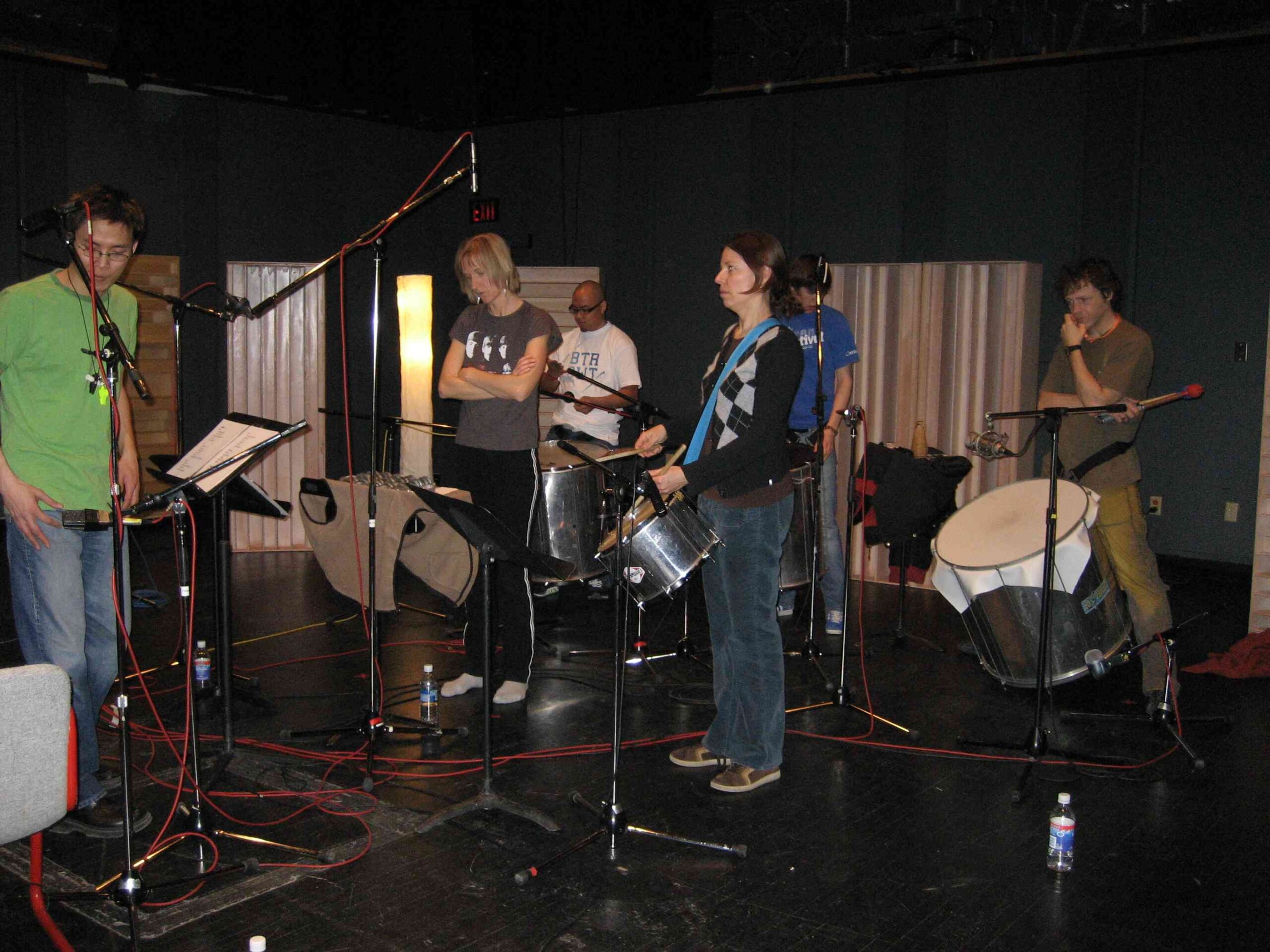
In September of 2006, I was on a plane to Canada, where I would spend six months in the most picturesque place you can imagine, recording and learning how to be an actual engineer. I messed up a lot, but I asked a million questions, and this was a place that fully supported your personal projects. While I spent most of my time learning and recording classical music and jazz – I took my off time to find a Brazilian batucada group in Calgary to see if they wanted some free studio time. Offering free studio time will become a theme with me, but we’ll come back to that.

The Banff Centre led me directly to my next gig at the Tanglewood Music Festival, the summer program for the Boston Symphony Orchestra which then led me to my first job in New York City. I worked with then LongTail Audio doing archiving and restoration for the Metropolitan Opera Project. I hated opera. When my colleague told me about the job I said no probably three or four times, but every studio I wrote to in the city offered internship after internship with no pay. I was offered a spot at one of the larger studios – 40 hours a week, for 3 months unpaid, but as I’ve mentioned before, there was no way I could find a way to live in NYC with a job that was unpaid. So, I grew to love opera. And I still do.

I took a second job as a part-time engineer at the Manhattan School of Music, and for the first few years in New York, I basically worked all the time. But these jobs had me working with some of ex-Sony Classical engineering heavyweights and taught me so much about audio that it set me up with a super-strong foundation. I learned how to listen, how to pay attention to detail, how to work with large groups, and how to be prepared for any scenario. I learned amazing mic techniques and how to use minimal mics to capture great performances. I learned how to use analog tape. And that’s what I did until I decided I wanted more stable work and not to work 24/7.


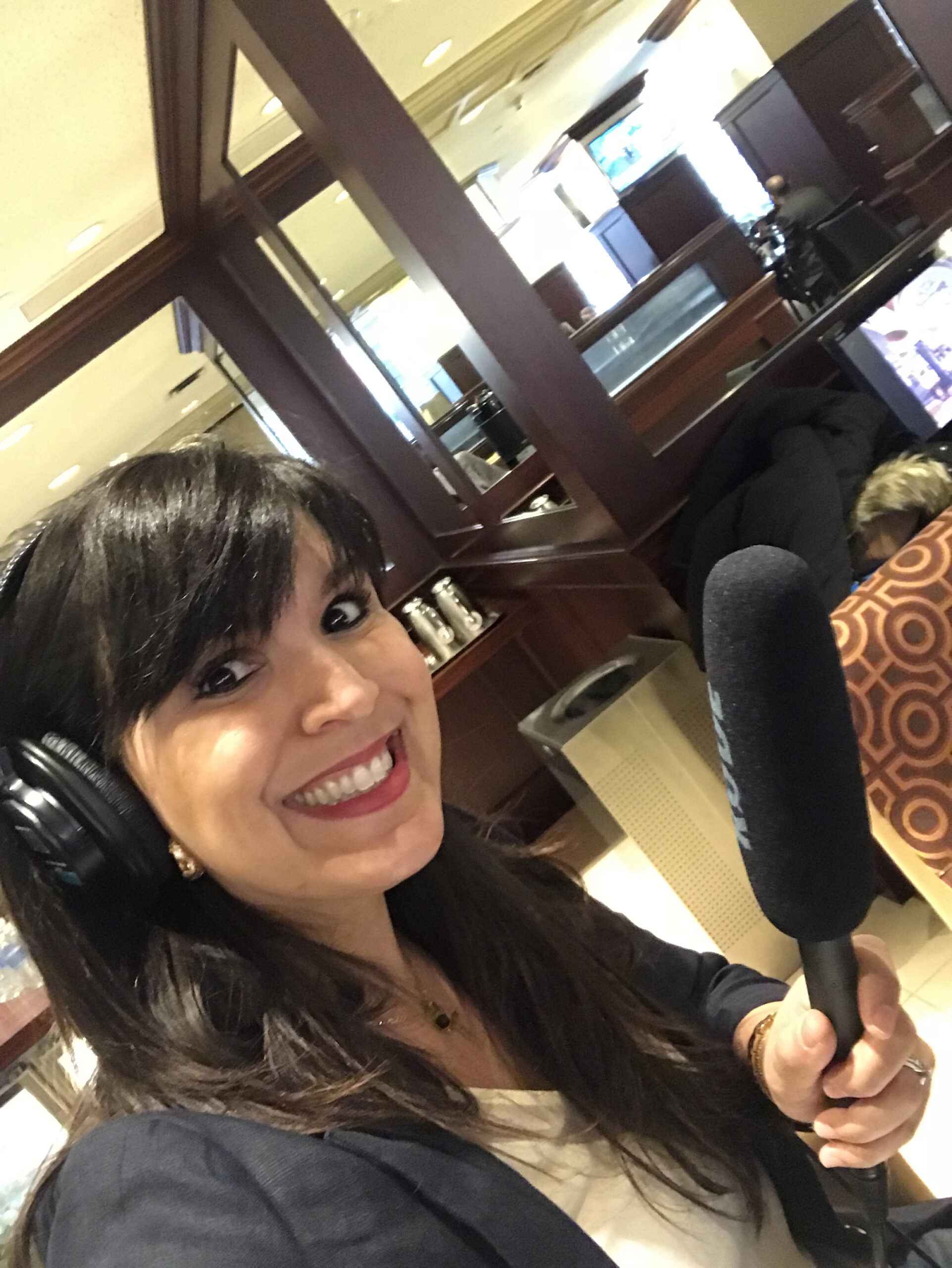
I got my foot in the door in radio after completing a Masters degree in 2012. Not just engineering – I started producing as well. Now, if you have your mindset on working in music, you may completely reject the idea of radio. And in fact, sound design is quite a different skill set, but it’s not to say that you won’t learn something through it. In radio, you learn to work with the equipment you have to make something sound great. And so many other engineers I’ve met, all have similar stories – they started out in music and transitioned or fell into radio. For me, radio taught me about storytelling and I applied this to my work in music.

I’m going to jump forward to 2018. I’m now a Senior Engineer for a podcast on NPR and racked up some really great music credits before that. On a whim, I put my resume in the running for the EQL residency thinking I wasn’t going to get it. (This is the 6-month residency Berklee University and Spotify created for women engineers). But I did get it; a paid residency, landing in the room where some of the biggest names in the business came through. I negotiated studio time on weekends, and I started offering free studio time to artists I admired within the Latin indie scene in New York.

You may wonder if I’d been working for over a decade at this point, gotten a Grammy nomination while at Swan Studios, why I would want to leave a full-time job for a residency and/or be offering free studio time. And that’s because

  1. You never stop learning
  2. This was an opportunity to work in a studio on music that was non-classical and get PAID
  3. I missed music and no one knew me in the Latin indie scene.

And this last part is important. Because everyone says “It’s who you know” but it’s not – it’s who knows you.” Who knows your work, can vouch for you, can call you for a gig, or recommend you to someone for a project. And sometimes, that takes some freebies (aside from tons of networking). Now, part of this scenario is that I’ve never been afraid to ask for something. So if I wanted studio time, the worst they were going to say was no, and I could live with a no. I couldn’t live with the ‘what if.’ And also, there was no one too big to offer studio time to. So, I emailed a lot of people and at the end of the residency I managed to record tracks for Flor de Toloache, Williamsburg Salsa Orchestra, and overdubs for Making Movies featuring none other than the GOAT Ruben Blades (this not including the sessions I assisted on for Spotify Singles).

What all came together for me here was all of the work I had done in classical and jazz was essential to what I was recording. Here I was recording some of the same instruments within a different context. I felt such an aha moment, such gratitude for the much lengthier path it took me to finally get here because at the end of the day all of these dots did in fact connect. Even radio directly influenced my work. I mentioned earlier it taught me about storytelling – the music, as well as the lyrics of a song, are in themselves part of a narrative.

At present, I’m now working part-time in radio and freelancing in music again. All of this to say that sometimes your end goal may not be reached by taking the obvious or direct path. I loved working in classical and jazz, but in the back of my mind was always the thought of how I could get to that original goal. I didn’t know where I would land, but I just trusted my gut when it came to taking on new jobs. As a woman in audio, we all know the struggles it takes to prove yourself in the industry, so sometimes that means taking the job that’s going to give you the best foundation you can have or the best job on the table at that time. It took me longer to get here, but my tool kit allows me to do a lot of different things and for that I’m grateful.


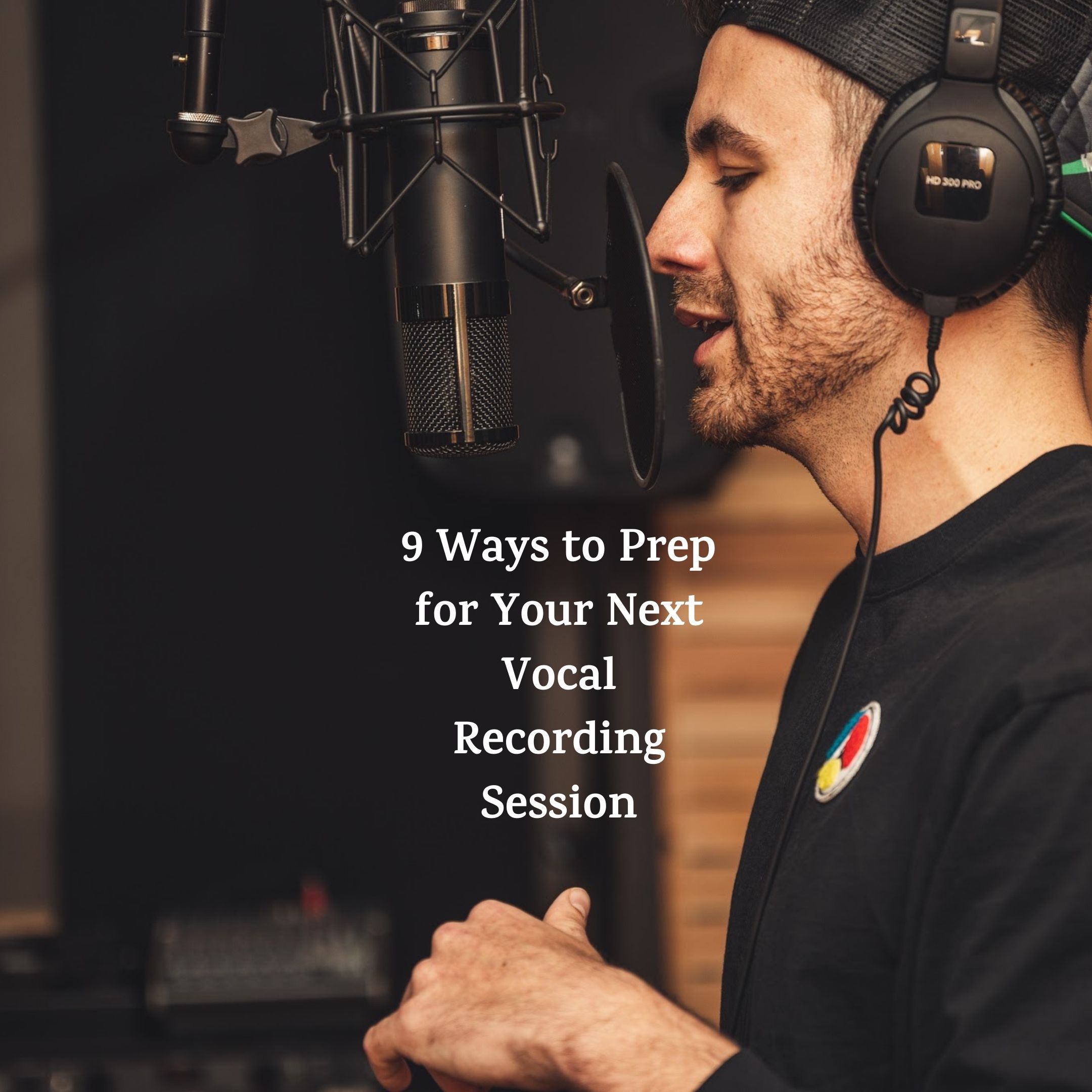
9 Ways To Prep For A Vocal Recording Session

Great vocal performance on a record does not happen by accident. Many factors contribute to making a recording session successful or not so successful. After 30 years of coaching singers and 15 years of recording them, I’ve gathered some tips that should help your next recording session go smoothly, giving you the result you are looking for; a killer record!

BEFORE SCHEDULING THE SESSION

It’s true that you can hold lyrics in front of you while recording and no one would know. But after all these years of working with singers and being a professional vocalist myself, something magical can happen once you cross over from the “on-book” to “off-book” phase. You can focus more on the emotion, the subtle use of air and vibrato, scoops, straight tone, falls, attacks and releases, articulation, riffs, runs and so much more. If you have the time, get off-book so the song is really inside of you. Which leads us to #2…

Maybe this should be an obvious one but, I’ve definitely had vocal sessions where the singer was still figuring things out; timing, phrasing, notes, etc. Now, when I record YouTubers who literally try to produce, record, film and release a song in less than a week, there is no getting around this. I actually enjoy helping these recording artists work through the songs in this way because it is like a combined coaching AND recording session (which I LOVE!) If creating content quickly is your current strategy then that is the way it has to be. Just remember, it definitely doesn’t work for every recording session or with every recording engineer. If you have the time, putting in the same effort as if you were going to be performing the song live without lyrics in front of you will elevate your performance dramatically.

Before putting in the time to rehearse the song, make sure that you are singing in a good, healthy key for your voice and a tempo that feels right. If you are using a karaoke/instrumental track then obviously, you are tied to the key and tempo of the track. While a karaoke track can be altered, the quality of the karaoke track will diminish ever so slightly the farther away from the original recording you go. So, a half step up, not too noticeable. Four half steps…noticeable. If you are creating your own instrumental with a producer (like I do for artists all the time) then take the time to find the right key and tempo before the producer starts working on it, if possible. That being said, it’s really easy to change the key and tempo of programmed instruments before anything is recorded.  Don’t just sing through it once and call it good. Sing through it a few times in a row to make sure your voice does not tire after a few run-throughs. Double check that you aren’t rushing or dragging as you sing along, which could be a sign that the tempo isn’t quite right OR that you need to work on your timing 😉 If you are rehearsing the song, prepping for the session while using the track your producer has created for you and feel like the tempo or key needs to change, let them know ASAP so they have enough time to make a new track and you have enough time to rehearse with it before the session.

Equivalent to filming yourself perform a song prior to the actual performance, the benefits of listening to yourself are enormous. Simulate the actual recording session at home, even if you are just recording into your phone using an app. Going through the process of actually recording should highlight spots that need a bit more work or help you plan your session better. Do you need to record the low, soft verses first before the big, belty choruses? Or vice versa? Do you struggle with phlegm because you ate a cheese sandwich an hour before? Did you notice the overall emotional delivery falls a little flat and could use more thought? Invite a music buddy to listen back and provide feedback on this “scratch track” version.

Even if it’s just one session with a coach prior to the recording session, this is a much safer, efficient and cost-effective way to record a song. Getting feedback after the recording session can be very discouraging. Forking out more money to re-record vocals was most likely not figured into your budget. Be sure to include funds in your budget for at least one coaching session prior to and if possible, during the session. It can relieve so much pressure to have a team member with you that is listening only to your vocal delivery, who knows your voice and what your goal for the song is. Totally worth the extra dough to have someone in your corner at the session.

DAY BEFORE/DAY OF SESSION

The next four pointers are specifically for the 24 hour period before the session:

Get a good night’s sleep the night before your session. Make sure the session isn’t scheduled for 10 am the day after a late-night gig or at the end of a long workday. Be as rested as you can.

Do your best to stay hydrated hours before the session in addition to drinking water during the session. Bring plenty of water so you can stay hydrated during the session. Adding a lemon wedge to your water can help break up phlegm if that is an issue for you. Warm or room temperature will keep your vocal folds and all other tissues involved in singing nice and pliable. See #9 for more specifics about this.

Arrange your schedule so you’re not running late or in a hurry to finish. If you got in the biggest fight of your life the night before with your SO, see if you can reschedule without a penalty (I never charge people for rescheduling because what’s the point of forcing a session to happen?) Take some time before the session to unwind, meditate, calm down, whatever you need to do to get your mind focused and clear.

There are hundreds of lists out there of what foods and beverages to avoid. For the majority of people, these lists are pretty accurate. But there are exceptions. Be sure to know your body and your voice and how it might react to certain foods, either positively or negatively. I always tell people my own story regarding typical “no-no” foods and my own voice. You will always see “caffeine”, “dairy” and “sugar” at the top of the lists of foods/beverages to avoid before singing, but I had one of my best vocal lessons ever when I was going through extreme stress in my life and was living off of Starbucks White Chocolate Mocha’s which are loaded with caffeine, dairy and sugar. I had had 2 that morning! But seriously, for me at that time, it worked. Keep a journal that connects what you eat, when you eat and when you sing with how your voice feels. You will start to see correlations between certain foods and how your voice performs.

I hope this has given you some tips that will help you rock your next record. Feel free to email or pm me on socials for specific questions!


Becky Willard is a Warm Audio featured artist, a music producer, recording engineer, songwriter, composer, vocalist and mentor. She began working with artists almost 30 years ago as a vocal and songwriting coach.  It was a natural transition from coach to producer as she guided singers searching for their sound and began recording them in her home studio.

In 2010, Becky founded Vox Fox Studios and has become the go-to producer for many Utah artists as well as artists from all over the world. These artists go to Becky to produce their music because they know they will get their best vocal performances, modern production sounds and mixes that are “radio-ready”.  As a songwriter herself and session vocalist, her songs and voice can be heard in dozens of TV shows and movies. As a woman in a male-dominated field, Becky is actively engaged in educating and inspiring young women in her community and worldwide to pursue music production and engineering.

Read Becky’s Blog

Versatile Microphones for Home Recording

I hope everyone is still staying safe & healthy. I also hope you are out there CREATING! I know I sure am. That’s why for this month’s blog I wanted to write about the best home recording microphones out there! Ones that DON’T break the bank, and some that do if you’ve got the cash! Either way, I’m really excited to write this month’s blog because this is something I am looking into myself right now with all the home recordings I’ve been doing as of late. So…here we go!

The Shure Sm7b

This microphone is SO versatile. I mean, I’ve recorded vocals on it. I’ve used it as a snare microphone. I’ve used it as a “kick in” microphone. I’ve used this baby on guitar amps and all sorts of other things. That’s why I think it’s such a great mic to have as a staple in your home recording studio. Or even if you’re like me and just looking for a better microphone to record your own vocals with- this one is a fantastic pick.

Some science behind this microphone. It is a dynamic mic. You are going to have to do a little eq-ing on the mixing side of things to get your vocals exactly where you want them, but with that being said- the raw audio this guy captures isn’t bad at all. Plus it’s only $399.99, so on the less expensive side of the microphone spectrum.

Blue Microphones “Bluebird”

I have heard so many good things about this microphone from friends who do a lot of at-home recordings. It is indeed a condenser mic, so you can expect to get some sweet top off the bat from this one. This mic has a hi-pass filter, and a 20- dB pad to help you capture the perfect tone going INTO the box. The price of this microphone is only $299.99, and they have other models that cost even less. This is just their fan favorite.

Fun Fact: Blue Microphones has an interchangeable cap series which is exactly what it sounds like. You can change the cap of the same base on a microphone giving you multiple options of sound to choose from. I’ve worked at a studio that demoed this exact cap series, and I was pleasantly surprised when some of the caps really did a pretty good job of replicating the more high-end microphones we all aspire to own one day.

Neumann TLM103

The next microphone is a large jump in price, and most of you might already be familiar, but it is a fantastic, versatile microphone that is great to have if you have the money! The Neumann TLM103. Some may say… this is an obvious choice, but I love this microphone. Like the Sm7b, I can use it on just about anything, but the range of which I can use it on is even wider because it is a large-diaphragm condenser microphone. I can use it on overheads (if I have a pair), vocals, guitars, room mics, etc. The microphone is derived from the class Neumann U 87. There are no pads or hi-pass filters on this microphone, but that’s because the capsule itself is immaculate. This microphone rings in at about $1,100.00 (which isn’t too bad if that’s in your price range especially for a Neumann).

Thanks again SoundGirls! I hope you enjoyed this blog. If you have microphone recommendations, PLEASE reach out and let me know of them! My email is virginiahaladyna@gmail.com

Minimalist Mixing Techniques 

Hi SoundGirls! Back in January, I wrote about the recording process for a 16 song album I was working on at the time. Although I promised that my next blog would be about the mixing process, that took a pause because my last blog ended up being about my friend Tangela’s new podcast, “Women in Audio”. I was lucky enough to be her first guest, so for my March blog, I broke down some essential topics we talked about in the podcast, and provided links to it at the end. If you haven’t listened to the Women in Audio podcast yet- I suggest you do. She has multiple interviews streaming now, plus the conversations are fun and intriguing! You’ll definitely enjoy them.

With all that being said, we are circling back to the album I just wrapped and today’s blog will be about the mixing process, (YAY!).

You might’ve noticed the title for this month’s blog is called “Minimalist Mixing Techniques”, so you already know what I’m about to dive into…the art of NOT using 10,000 plug-ins on ONE song! Now, there is nothing wrong with that at all! If the song is calling for production, or if you want to just be creative with plug-ins…do it. There are certain artists or bands I work with that I like to get very creative with plug-ins, but in this instance- we didn’t go that route, and I wanted to talk about the steps I used to get the band their final product.

Here is the list of steps I would take from when I would first open up the session to when I sent them their first mix of the song:

Clean up your session

What I mean by “clean up your session” is- get rid of tracks you don’t need. Not using that DI track you captured? Hide and make inactive. If you have two tracks that could become 1 (ex. two mono overhead mic tracks)- create it as a stereo track. Make your starting base simple, so you can move through it seamlessly.

Set up your effects

Now that you’ve gotten rid of things you don’t need. Start adding in things you do need to create some depth in the mix. I would recommend only 2 (maybe 3) effects tracks since we are keeping this mix minimal. A reverb, delay, and a slap delay are pretty effective for any mix.

Start with the drums

The way I mix is I start with the drums soloed and then I move through the mix adding in each instrument at a time. For the drums, I would recommend bussing together the things that are the same (kick in/kick out, snare top/ snare bottom, etc), but don’t get too “bus” happy. One of the reasons I sometimes like to mix minimally is because it’s easy to have control over your mix when you don’t have too many things bussing into one another (aka phase issues, and your mix could get muddy if you lose control of the low end).

EQ

Eq is always incredibly important in any mixing process. I think it’s usually best to eq minimally, and if you’re capturing things well in the studio you shouldn’t have to do TOO much of it on the back end anyways. With this, I would recommend practicing using pro-tools stock eq so you can focus on using your ears instead of your eyes. You’ll question the eq moves you make more than you would vice versa (which results in minimalist eq techniques). That will also help you avoid phases that you may create yourself by eq-ing too much.

Compression

When mixing minimally, compression is key. You want to keep the dynamics of the song, but you don’t want things poking out of the mix when they shouldn’t be! I think the most prevalent two things to compress in a minimal mix are the snare and the bass. Obviously, compress the kick, guitars, vocals, as need be, but I’d say the snare and the bass you will want to focus on most. Since we are keeping it simple, keep a small ratio, set your attack/release (all dependent on the instrument), and slowly add in the threshold. Keep it on the lighter side though. Remember, we want those dynamics there!

Bussing

I kind of went over this in the “drums” paragraph, but to go into more detail, I will say- bus together with the things that make sense and make the mixing process easier for you. The reason I would bus the kick in/kick out together is that I have more control over the total sound of the kick through eq AND compression. It would be the same thought process for two guitar mics on the same amp, and so on.

That’s the gist of mixing minimally. I hope this blog helps you go outside of your comfort zone, and trust your ears a bit more. That’s what mixing this way has done for me!

I hope everyone is staying safe, healthy, and creative out there! No matter what, never stop making music or doing what you love.

Until next time SoundGirls, and as always- feel free to email me at virginia@backbeat365.com.


X