Empowering the Next Generation of Women in Audio

Join Us

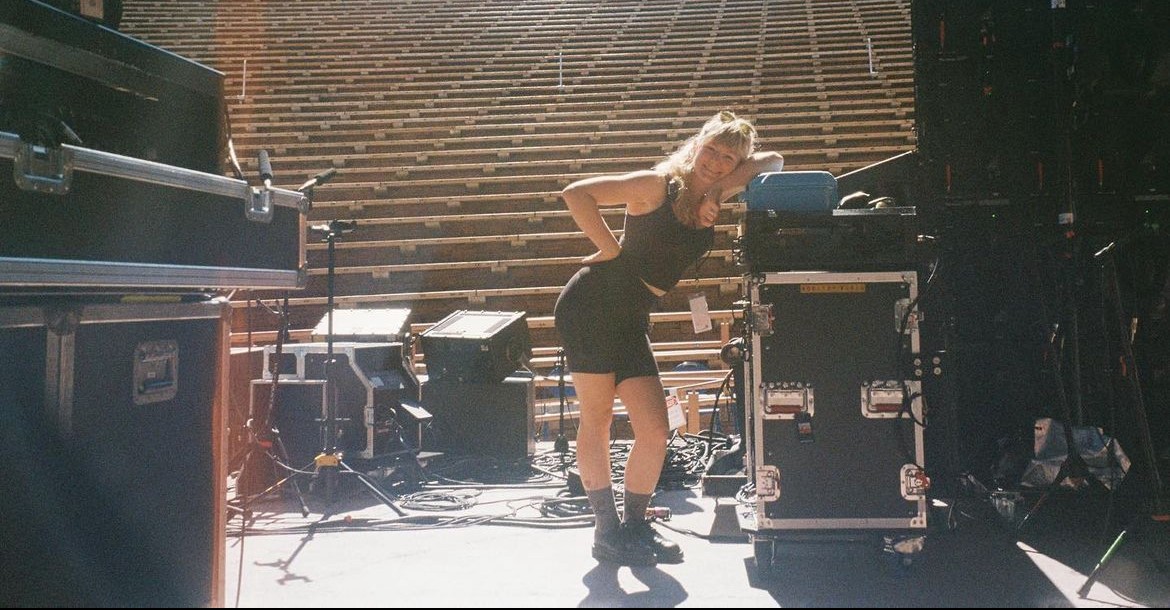
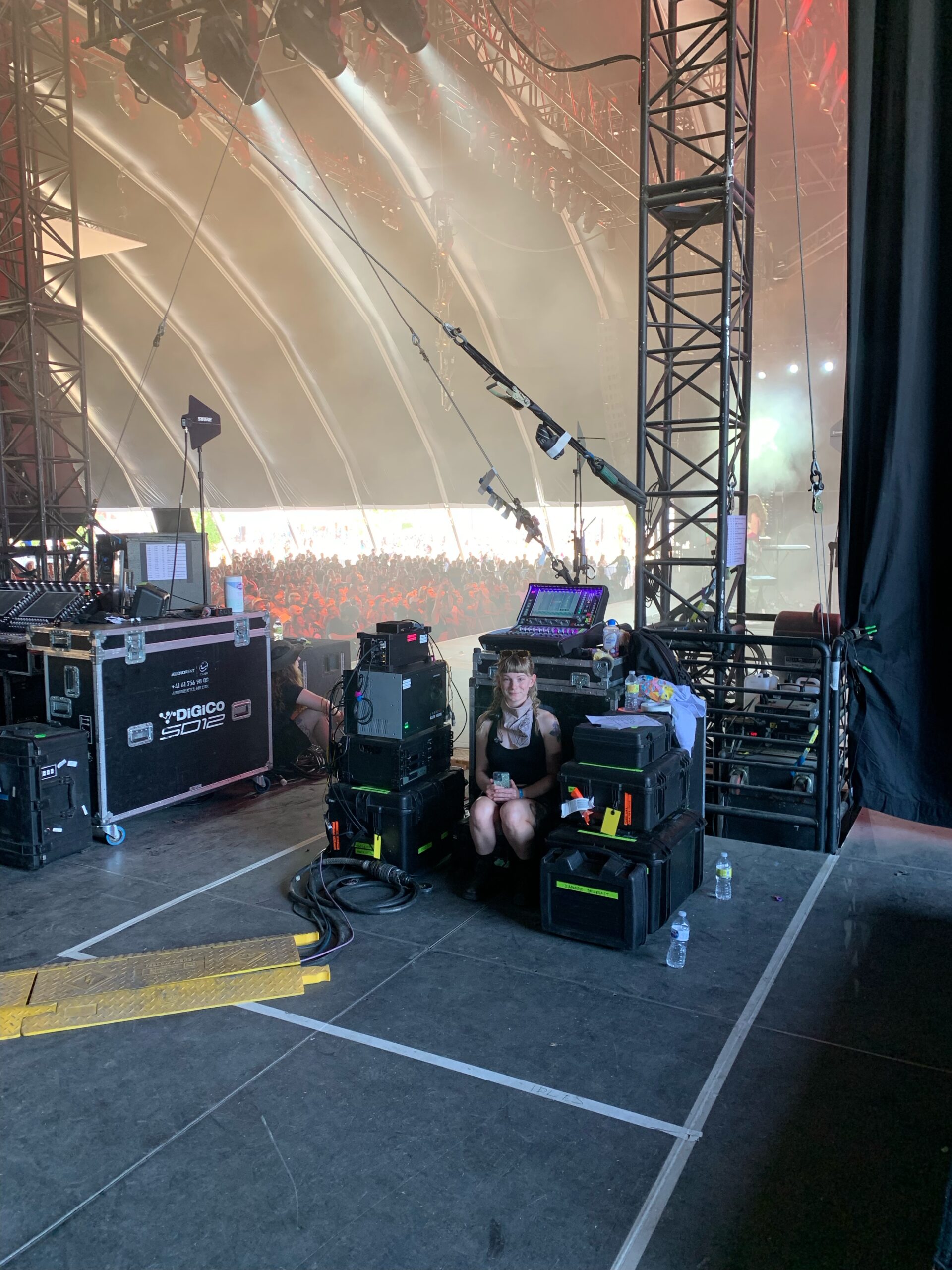
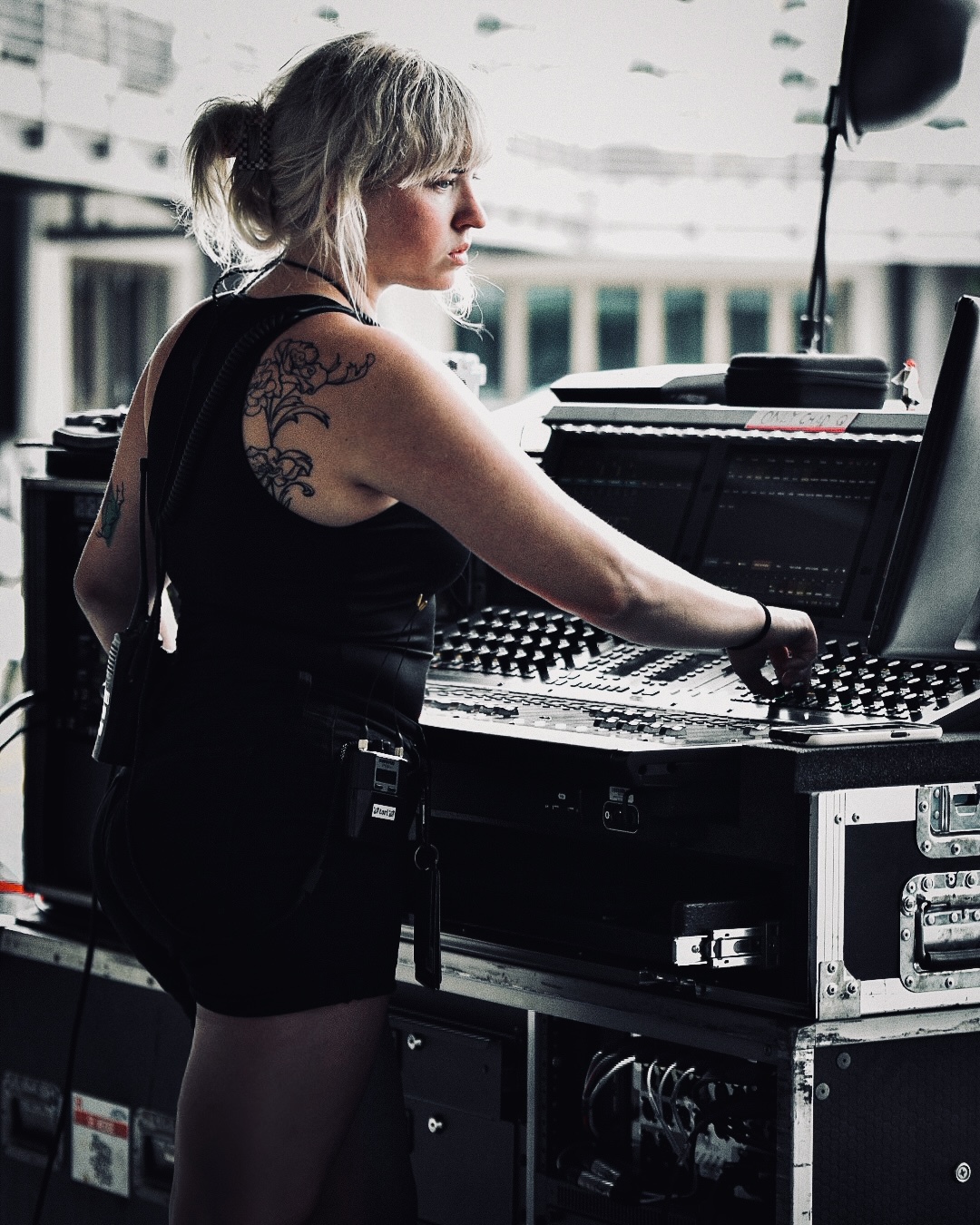
Starr McLaughlin – Monitor Engineer for Japanese Breakfast, Alex G, Jessie Murph

Starr McLaughlin is an industry gem, casting a bright light on everyone she encounters. With 10 years of experience under her belt, she’s garnered an impressive resumé that includes indie-rock sensation Japanese Breakfast, Alex G, and most recently Jessie Murph. She is also a cardholder of IATSE Local 917 and Local 8.

Starr grew up in an audio-centric household with both parents having met while working in the entertainment department of an Atlantic City casino. It was destiny: by the end of high school, she knew that she wanted to pave the way for a career in live sound. She earned her Associates in General Studies from Atlantic Cape Community College and was later accepted to the University of the Arts in Philadelphia for Music Business & Entrepreneurship, though she chose not to attend. “While I value everything I learned, my college studies had very little to do with my success today.”

Delving in, Starr shares her story, pairing it with relatable wisdom and excellent gear advice:

How did you get your start in the audio field?

I want to preface with how lucky I am to have parents already in the industry. Although I had to work hard on my own to make anything of myself, having my parents give me advice and connect me with certain people along the way was a huge help. At the age of 17, I started volunteering at a local Performing Arts Center and a church. I got on the overhire list with my local union when I was 18, took calls as a stagehand, and eventually got into doing part-time audio visual (AV) work in the Atlantic City casinos. I got a full-time job at the Hard Rock Casino in Atlantic City, and this is where I sunk my teeth into mixing.

What inspired you to pursue audio as a career path? Were there any significant life events that led you to it?

I can pinpoint the exact moment when I decided this was what I wanted to do. I was running sound for my high school’s spring musical, Hairspray. The teacher who was in charge of the tech club had a gig, so I was left alone to, y’know, ruin the show. I had no clue what I was doing. Signal flow was a brand-new concept, I didn’t know what a high pass filter was or that I could have stacked a list of snapshots. Also, side note, the high school had an Avid Venue SC48 (it was an Avid-sponsored school, weird right?) Anyway, here I am, with 22 wireless Lavalier mics and near-zero knowledge of how wireless works (Disney magic, maybe?). The show, from what I remember, was rough tech-wise. Like a lot of feedback, late cues, etc. But there was this one moment, during ‘I Know Where I’ve Been’ where everything sounded great. I remember getting chills and thinking “This is it, this is what I want to do.”

How did your early experiences/internships/jobs help build a foundation for where you are now?

Working as a stagehand for the casinos made me quite versatile. I can be a decent helper in any area, especially if it’s throwing up a fast fold or lining a ballroom with pipe & drape. Being willing to jump in on any crew kept the calls coming in. It also taught me the correct terminology for various things outside of audio, as well as all the colloquialisms we love to use.

When I started doing more AV calls, I met my friend Scott, who did part-time AV at the casino but was a full-time AV installer. I began working for him in 2016. Doing installations was a whirlwind of knowledge. You have to learn all the different avenues of signal flow for building racks. It was also helpful to learn the theory behind designing systems such as Q-Sys, Audio Architect, Media Matrix, or Crestron. Your design has to make sense to the end user – who could be anyone. I found that philosophy very helpful later on doing monitors. Working installs afforded me the luxury of taking my time. Even under deadlines, it’s typically a longer timetable than a standard live gig which is: get in, do a show, get out. It was nice to sit in an office, take my time building racks correctly and to code, and having Scott to ask any questions too.

When I got a full-time job at a casino, I started on the AV crew. I was on the Hard Rock’s opening crew, so we were the first people on the floor fixing problems that the installers left for us. We had stages that had no power, and venues that had no stages in which they wanted 15-piece bands to play. During my first few months there I worked 70-100 hours a week. It was insane, and while I don’t think anyone should have to overwork themselves, I got a boatload of experience. There were many trials by fire and I managed to keep landing on my feet. Eventually, I was moved over to the audio crew and got to start working in the bigger rooms as opposed to just mixing in lounges.

What were some important lessons you learned early on in your career?

Always, always, always ask questions! SO important! People respond so much better to you admitting when you don’t know or are unsure about something, than doing it wrong.

Ask if someone is ok to lose power. This applies to unplugging anyone’s gear, even if it’s someone’s pedalboard, ask first please!

Silence is golden. I love to talk to people when working, but my gig is my number one focus. I always try to make sure I am attentive and ready to break off a conversation and focus on the gig.

Stay off the phone. If an artist, manager, or anyone looks over to someone for something and they’re buried in their phone, it is a bad look. At the gig, the number one focus should be the gig. Break time is for phones.

Be neat! I am a stickler for tidiness, especially on stage. Keep your cables neat, keep the patch bay neat, and tape down tripping hazards (typically after line check). Cables are your lifeline. You need to be able to see where everything is going and be able to unpatch, repatch, and replace in record time.

With velcro cable wraps, the felt side of the velcro should be facing out. If the pointy side is out, everything will stick to it and that is disgusting.

Touring wise: Don’t take long showers if people are waiting to shower. Literally, no one will ever let you live it down. Time yourself on your showers and get it down to like, at most 10 minutes in the shower, MAYBE another 10 to moisturize, dry off, and stuff. If you absolutely cannot cut down on time, offer to shower last. Learn from my mistakes!

Try to remember people’s names. Keep a note somewhere (physical or on your phone) of who you are working with. Calling someone by name shows so much respect, and they will want to work harder with you if you treat them with respect.

Learn to swallow your pride. This is a service industry, and the musician is always right (even when they’re wrong). A band that is paying you to help them, wants you to help them, they don’t care to hear all the technical jargon of why you can’t help them. Some days, the only acceptable response is “I will work on fixing that right now.”

You’re never going to stop learning new things. No one knows everything, and that’s ok! Take everything as a learning experience.

Did you have a mentor or someone that helped you?

Johnny Modugno at the Hard Rock in Atlantic City. I got to be Johnny’s A3 numerous times while I was full-time. Johnny taught me many skills, but most importantly he taught me his philosophy behind being a “monitor engineer.” He would always say “Personality is 95% of our job” and “always act like you’re into the music. When a band member looks over for something, you want them to see that you’re into what they’re creating.” While patching in the split he would say “Starr, these are your lifelines. When you get a tangled mass of whips, take the time to clean it up. It’ll save you later.” He is the epitome of an UN-grumpy soundman and brings zen, happiness, and badassery to stage left. Johnny is also just an absolute pleasure to be around, he is so passionate about the work he does. I aspire to be like him, he’s my top role model and I hold his philosophy with me and push it forward wherever I go.

Scott Coumbe, of M. Cramer & Associates, is a very notable mentor, critic, cheerleader, and friend of mine. Scott was one of the first people I met on my very first day doing AV at Harrah’s in AC. Our first interaction was kinda tempestuous, honestly. His very first words to me were, verbatim: “I wish you were better at your job.” (Yes, that made me cry). Soon after we met though, I began accompanying him to his installs. He taught me how to build racks, make cables, and program and integrate systems. He’s someone I can call upon at a moment’s notice to help troubleshoot, get advice from, or simply chat with to pass the time. I can quite literally say I would not be where I am today if it were not for all the time Scott invested in me.

MJ Snelsire, of Hard Rock in AC. We affectionately call her “the den mother” because she takes such good care of everyone on and off the stage. MJ is one of the most bad*ss, kindest people I’ve ever met. She’s been mixing for over 40 years, starting at the age of 15. She had toured with acts such as Donna Summer before coming to start a career in Atlantic City. I’m pretty convinced she knows every colloquial audio term and piece of nomenclature that exists in the world. MJ walked into this industry, so we could run (she’s a runner, she even ran with the Olympic torch before). She’s faced numerous trials of adversity and has gone through hell and back because her passion shines brighter. MJ is smart as a whip and tough as a bull. She has always looked out for me. She helped guide the way and taught me how to cope with being the odd one out on the crew. I’m extremely lucky to have her to learn from, and I relish every chance I get to work on her crew.

Harrison Fore, FOH for Japanese Breakfast, Alex G and Alvvays, is also my husband. He is one of my biggest supporters, and I would have never started touring if it wasn’t for him. He trusted in my skills and brought me on as an A2 even though I never toured before. I love getting to learn from him and grow as engineers together. Even if he steals my shiny new gear and replaces it with his old raggedy stuff while my back is turned.
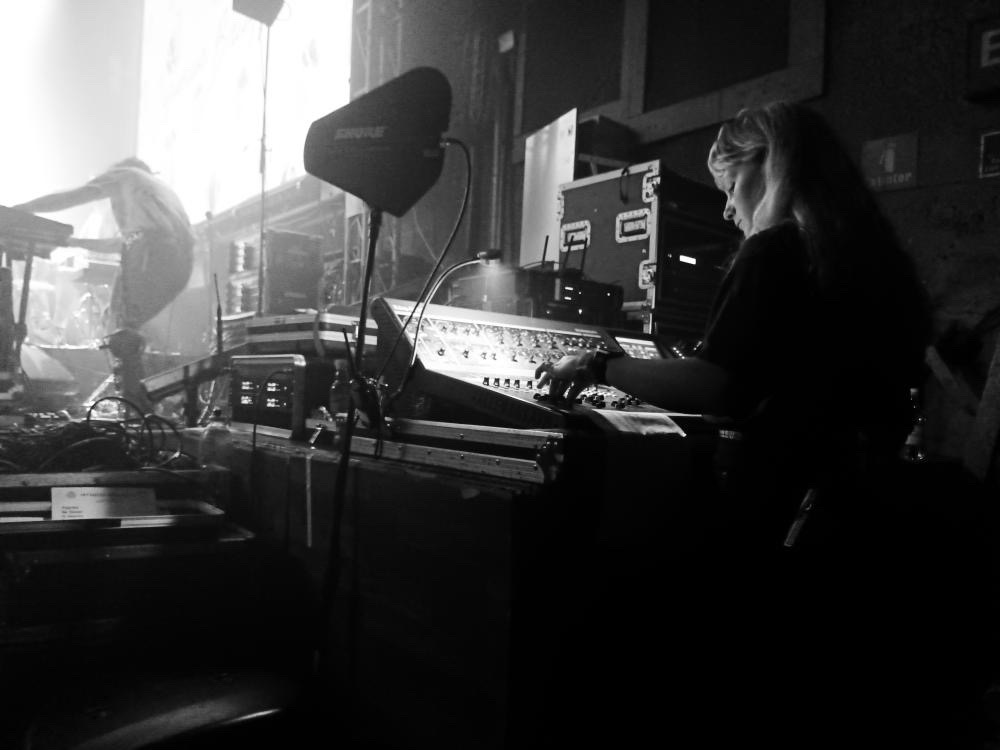
I know that you have experience in multiple environments, but tell me about a typical day on tour for you:

The following is a typical show day on tour for me with no funny stuff (no disco load out, bus call is 4 am, zero clownery). I’ll be honest, I usually sleep as long as I can. I try to wake up at least an hour before load in, earlier if I’m trying to shower. I always do a skin routine when I wake up, get dressed, brush my teeth, and go find the closest coffee shop. Next, I’ll head into the venue and scope it out. I’ll try to do some reconnaissance. Like finding the green room and seeing if the hospitality rider has arrived yet. After that, I head to the stage. I first scope out all the emergency exits, then I check if anyone is lurking in monitor world that I can bother. If I find anyone from the local audio crew, I will hand them a hard copy of our stage plot & input list.

During load-in, I help push until the audio is in. First, I try to get my world in position and powered on. Depending on who I’m with, I will either set mic stands and mics or if the FOH is doing that, I’ll move onto wireless. I pull up Shure Wireless Workbench on my laptop and start a scan (Disney magic). So now I’m like, in a holding pattern for at least 45 seconds. Perfect time to go back to the green room and scope out the snack situation.

Now that I’ve refueled, I get back to work. Sync up wireless, and walk them around. If everything checks out and the monitor world is feeling good, then I’ll start patching the stage. Depending on who I am out with the patching responsibilities vary. I do prefer to be the primary patcher because I hate a messy patch job. If it’s not up to par I will redo it. I know some people prefer to have their cable slack all piled up at the stage box, I am not one of those people. In the event of a miss-patch or bad cable, it seems like a setup for failure. I am also anti-loom if it’s more than like… three cables (sorry everyone who has a drum loom). The time I will spend untangling the leads would be better spent patching. Are you still reading? Hello?? Come back!! Alright, alright, I’ll move on. After a patch is complete, if we have the luxury of time, we shall perform a tap-through – which is a line check without the musicians present.

Time for soundcheck. Soundcheck is a good way to gauge a room’s acoustics and pray it changes when the bodies hit the floor for the show. It’s amazing how much a room can affect your iem mix. Sometimes your vocalist will like the natural reverberance of a room and it’ll add to their mix. More times than not, however, the reflection of an empty room will be too much and drown out the clarity of a vocal, causing a very muddy mix. Too much low-end can have a similar effect. There are some stages where the low end will be delayed every so slightly that it’s off-time, which is super disorienting.

Post soundcheck has 4 musts: 1) re-battery 2) eat dinner 3) step outside, even if it’s for a minute 4) Grab a setlist and mark down important notes.

Pre-show and changeover happen. Gotta do any pre-show rituals, they are a MUST!!! The show starts and once the first song is over, usually I feel a lot better. That’s when I lock in and just… Well, do it!

Immediately after the show, we rolled into load out. The first thing I do is pass out set lists. I believe they are a tangible memento. Also, “reduce, reuse, recycle”! Load out is always a fun event. I am trying to get better at delegating. It’s a learning process to decide what will help you load out faster, and what are some things you ought to do yourself. For certain acts, I’m responsible for the trailer pack. I like to think packing the trailer is one of my strong suits. Delegating to the hands what I want done? Am improving.

After the trailer door is closed, I say THANK YOU (always a big thank you!!!!) to the local hands and house people. I will go collect my things from the greenroom or grab toiletries from the bus to wash my face, brush my teeth, FLOSS! (don’t forget to floss!) and put comfy clothes on. If I decide I want to shower, I try to shower last (because I notoriously take long showers). I’ll put dirty clothes away in a suitcase and take out the clothes I will wear tomorrow. As the night winds down, this is the perfect time to talk with everyone. With Japanese Breakfast, we would watch shows together (like Squid Games, or Great British Bake Off), or play games. After a little socializing, I’m usually ready for bed. So I climb in my bunk and read a bit of a book or play my switch and fall asleep.

What do you enjoy the most about your job(s)? What do you like least?

I love the people I meet and the friendships I’ve fostered thanks to this career. I have met some of my closest friends through touring and gigging. I love that my work (especially touring) has helped me to come out of my shell, gain confidence, and be more independent.

This industry has a beautiful community of knowledge and connections within it. I love meeting someone I follow on Instagram in real life. I enjoy that most of the time if I ask someone to show me something or ask for advice, people are more than willing to help and share their experience with me, as I am with them.

As for what I like least, I guess it would be that everything takes a lot of time. With Touring, you are gone for weeks at a time. Seasons change, people have weddings, you miss holidays and warm moments with your loved ones. With local gigs, they are demanding of your ability to say yes. So if you are offered 10 days straight of gigs, with 6 of them doubles, you usually have to take them. It’s a feast-or-famine lifestyle, and your off days are spent recovering instead of doing things you want to. You’re also working weekends and holidays… You miss out on a lot with this job. All that to say, I get a lot of joy and fulfillment from what I do. Even the hard days are worth it for me.

What obstacles or barriers have you faced? How did you deal with those adversities or issues?

I have struggled with extreme anxiety since I was a child. I’ve always been incredibly shy, easily overwhelmed, and had an extreme lack of confidence. I was officially diagnosed with an anxiety disorder when I was a teenager, and then as an adult in college was diagnosed with Attention Deficit Hyperactive Disorder (ADHD). Having the ADHD diagnosis helped me identify why I had such debilitating anxiety.

I surprised myself (and my therapist) when I started taking stagehand calls and didn’t curl up in a ball and panic. I wanted to be an engineer so badly. My desire and passion for audio drove me to conquer what I never thought possible for myself. I was able to push through my fears and make it in this industry – and I won’t lie, this is a tough, high-stress, difficult-personality kind of business. Constantly putting myself out of my comfort zone was extremely challenging, but it gave me daily breakthroughs. Like being a monitor engineer, you can’t be scared to talk to people. Musicians need you to communicate with them. I can still be a little awkward, but I don’t fear speaking like I used to. Exposure therapy, I guess.

Having those disorders affects me presently. More often than not I feel anxious, disorganized, and overwhelmed. That won’t go away, I just deal with it better. I believe cognitive behavioral therapy (CBT) has helped me the most along the way. It taught me healthier ways to cope with my mental illness and improved my outlook on life in general. If you are struggling with your mental health, 10/10 recommend seeking therapy. I know it’s hard to find time, and healthcare situations vary, but there are many resources out there to assist you. Such as the Roadie Clinic and Musicares.

Having a good support system is also necessary for coping with any kind of adversity or obstacle. I’m very grateful to have the community I do. Being around the right kind of supportive people will do wonders. Toxic people will hold you down, but the right kind of people uplift you.
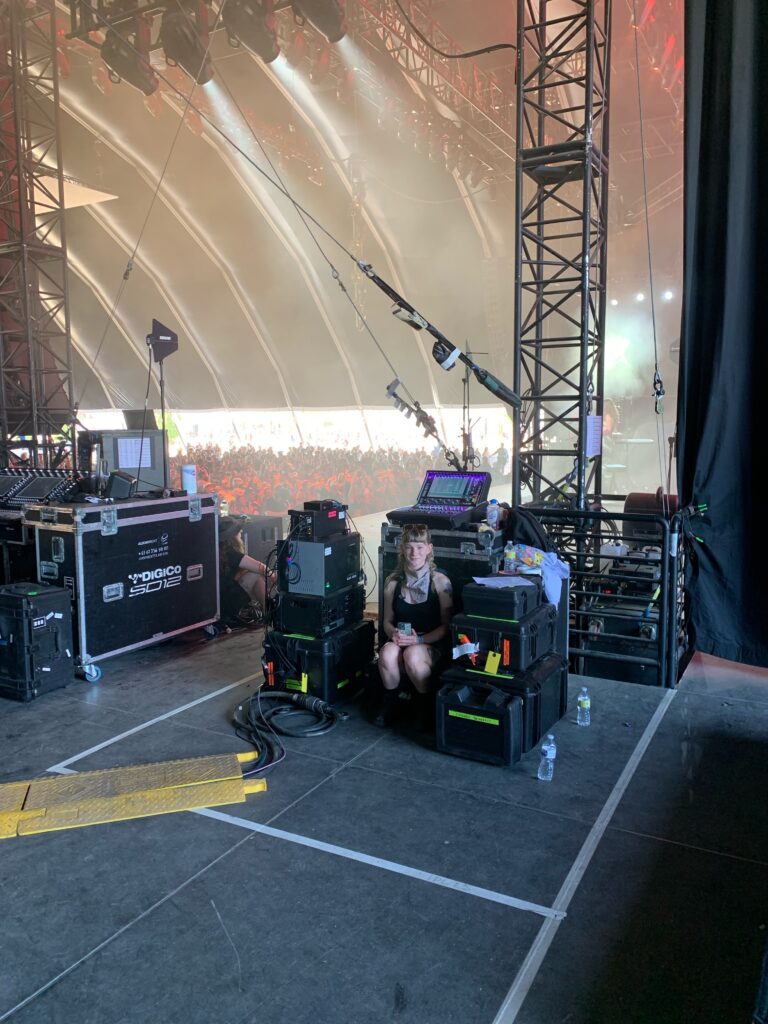
What are some ways in which you stay organized and focused?

I label everything! I try to streamline wherever I can by labeling or looming. I also try to exclusively use velcro cable wraps to keep cables organized. Smart devices are modern marvels. I use my Apple Watch to set reminders and timers for myself. I also wouldn’t survive without Google Calendar. On my iPhone, I will set one of my dock’s apps to Master Tour, which I check more than any social media app at this point. I also constantly write notes to myself to document things I need to remember and create lists. As for personal organization, I try to take a few minutes every day to clean up my areas. I will make my bed every morning on the bus and try to make sure my space is tidy and my dirty laundry is put into a laundry bag. Either post soundcheck, or during load out (if I have a second) I’ll try to make sure everything is neat & organized. My goal with my spaces is that anyone looking for something can either look in a drawer and see it or ask me and I can tell them exactly where it is.

What are some of your favorite day-off activities?

I love going on hikes, exploring museums, thrifting, and doing group activities. A day hanging out with friends is a day well spent. Doing anything together with my buds on the road is extremely refreshing and fulfilling to me. I also love to just sit in a hotel room and watch Netflix, do a proper self-care routine, and have a long shower.

Do you have short- or long-term goals that you’d like to share?

A short-term goal of mine would be to keep a healthy workout habit while out on tour. This next one is a little intimate, but a long-term goal of mine is to figure out how to start a family in the coming years and maintain my career. It’s something I’m actively seeking advice on, so if any industry moms are reading, please hit me up.

Follow SoundGirls Audio Moms on Facebook

Do you have any advice for women/non-binary folks entering the audio industry?

First and foremost; treat every woman and non-binary person you meet as if y’all are in some secret club. Don’t fall into the trap of viewing them as competition, we have enough of that. We are on the same team. Work together, learn together, help each other out. They are the only people who can understand what adversities you are facing. Second, always be mindful that we as non-men are going to be held to a different standard, so always bring your best. A lot of men automatically find us intimidating, even if they don’t mean to. People can be unkind when they feel threatened, so they’ll grab at straws to try and bring others down. Third, choose your battles. “Mansplaining” for example, is extremely annoying. Instant headache. It’s tiring to deal with, but in many cases, you have to be the bigger person and not let it get to you. I believe in saving energy, and only calling out those that are asking for it. However, this goes without saying, but don’t let anyone be mean or disrespectful to you, and never tolerate sexual harassment. Lastly, never forget why you are doing the job. Audio is an art form, and it’s a labor of love. This industry (especially anything live) is a tough one to be in. We do this because we love it.

What are some of your favorite “must-have” skills?

I love this question! I think the ultimate skill is being NICE and knowing how to ask questions. I wouldn’t mind at all if I never worked with another grumpy sound person again, and I’m glad that archetype seems to be dying out a little. Coming into a venue, I would rather have my house person know little, but be inquisitive and pleasant, than having someone who seems bitter about being paid to be there, or someone who means well, but doesn’t know when to say “I’m not sure what you’re asking for” or “Could you show me how you want this done.” The other more literal “must haves” would be to have some knowledge of frequency recognition. Not that anyone has to be like “oh that 2.5 khz in the guitar is driving me crazy”, but like knowing if something sounds “muddy” or too “sibilant”, and where to search for that. Rational Acoustics has a great bumper sticker/t-shirt logo called “The Seven Bad System Dwarves” which is a great visual representation of naming what you are hearing. Getting good at it can make it much easier to ring out stage monitors too. The biggest baseline “must-have” skill is undoubtedly knowing signal flow and being able to (calmly) troubleshoot. That is where the signal starts (microphone), where it ends up (speaker), and the path it is going in between (XLR, stage box, split, mixer). Knowledge of signal flow is essential to troubleshooting a system.

Any gear/gadget favorites?

I love my Sound Bullet, it’s so handy for troubleshooting, or going through and testing cables – and it’s smaller than a Q-box. My P-Touch Cube labeler was a life-changing investment. I love that you can connect to it via Bluetooth & the app saves all your recent labels. My Leatherman Wave (I don’t like the spring of a Gerber) is my most reliable tool, but I wish I had it in pink. I have this little duster guy (Hin from Howl’s Moving Castle) that makes me smile when I see it. Dusters are very helpful, especially during a very dusty festival and the days after. The Hoto 4-in-1 rechargeable compressed air capsule (it blows and sucks!) is a new addition, but I’m excited to take it out. I got it for my husband, but it worked so well that I stole it for a tour. I have a Ryobi drill that is small and USB-C rechargeable – I like that it’s light and doesn’t take up much room in my pelican. There are lots of mics I like, so I’m gonna tell you the one I don’t like. I don’t like the Beta 52 on its own, I mean, as an out it’s fine, but to use it by itself without an in? Mid. I will shout out Se, their mics are gaining a lot of popularity and for good reason. I love their stuff, especially the V7 vocal mic & V-Kick. Shure is also always a solid brand (even if I beef with the B-52 on its own). We got a pair of Shure 313s (pretty ribbons with a red grill), which we use on guitar amps with JBrekkie and Alex G. We paired them with SM57’s and it’s just phenomenal. The 313 adds such warmth – it even managed to get a compliment from a guitarist using IEMs once. Now that’s saying something! As for consoles, I like the Allen & Heath D-Live, especially the CTi1500. It’s small, but a powerhouse. It has my favorite workflow, it’s very intuitive. It feels like it has combined many good features of other digital desks. I appreciate that A&H listens to their consumer base and tries to improve based on their end user’s experience. Onboard-wise, the Point Source Enhancer (PSE) as an option for gates is a game changer on a noisy stage. Also, I use the heck out of the Dyn-8 multiband comp/dynamic eq.

What’s in your backpack/pelican? Any fun clothing items that you can’t live without at work?

In my backpack: laptop, folder for stage plots/input lists, an organizer for chargers/essential cables, Pinecil Soldering Iron, my Sound Bullet (TSA will always think it’s a vape and I should probably put it in my pelican), Nintendo Switch, Analogue GameBoy, my IEMs (JH16v2), ear protection, foldable tote bag, tiny cosmetics pouch (inside is hand cream, facial mist, lip balm, perfume, dental floss).

Pelican: RF Explorer, talkback (SeV7 Switch), hot pink 6ft XLR with black Neutrik connectors, assortment of audio adapters, turnarounds, Y’s, and cables, Sharpies, several USB sticks, headlamp, flashlight, hearing aid vacuum, alcohol wipes, assortment of tapes, headlamp, spare IEM’s, 4-in-1 air compressor (doubles as a vacuum), small drill, soldering iron, small vice grip, solder, extra iron tips, fanny pack with gloves, wire strippers, flush cuts, microdriver (for cable creation, microdriver is essential for phoenix connectors & also straightening out the wires inside a CAT cable). I also keep a “self-care” kit: body wipes, sunscreen, hand cream, body spray, spf lip balm, tide sticks, lint roller, ointments, bandaids, Listerine (doubles as mic cleaner in a pinch), Advil, tampons, hair ties. Everything in my pelican is inside a bag or case. I use Klein tool bags to hold different collections of things, as well as Pelican micro cases to hold adapters and small things that I want extra protected. I like the quality of the microcases, but they are a tad heavy. Also, I have three pelicans: mic pelican (this one is waiting for the day I pick up a Foh tour), a small pelican for short-term gigs, and the Green Monster. Green Monster is a Pelican 1615 Air. I love her, but she gets above flyweight a little too fast. Oh! Small stature person hack: grip tape on the face of your pelican! Gives you a sturdier ego riser 🙂

As for fun clothing items (or general tour items), I cannot live without: I want to be buried in my Patagonia rain jacket and Tilley hat. Lifesavers for outdoor gigs! I like Bombas socks, Lulu Align Leggings, big oversized sweatshirts, and Brooks sneakers. Saving your feet is very important. Buy socks that are comfortable on your feet, and bring two pairs of comfortable, well-fitting shoes to alternate between. I always bring a heating pad, a foldable yoga mat, and resistance bands for working out. I also keep a lacrosse ball handy to roll out any knots or sore muscles.

Also, wanna take a second to shout out Amy Truong (@amytrng on instagram), they share so much information in terms of well-priced gear/clothing, audio info, label creations, RF workflow, and Costco finds. I live for their reviews, recommendations, Disney thrift finds, and their entire audio journey. Go follow them!!!

Do you have any certifications/memberships you’d like to spotlight?

I just took the Rational Acoustics Smaart Essentials course. Although I’m not a certified user because I haven’t taken the test (I wanna practice first), the class itself was extremely informative.

Tell me about something you wish you could change about the touring industry?

I wish there was a union or something for freelance engineers. It would be nice if we could earn healthcare and vacation time or something.

Any shout-outs or thank-yous you’d like to include?

Shoutout to my folks, One F Jef and Dawn McLaughlin – thanks for always supporting me and being the fantastic people you are. Huge shoutout to my Local 917 family in Atlantic City! Love y’all. Shoutout to the Brooklyn Bowl in Fishtown crew, and Local 8. Giant shoutout to Rachel Dispenza, you are a gem and I love us learning together and being able to tour with you. I am so appreciative of you my friend <3 A big thank you to Michelle: thanks for giving this small-town AC girl a chance to tour with the big dogs awoooo. Thank you to Deven, Katie, Kat, Collen, and Tim. Thank you TORI!!!!! Shoutout to all my wonderful audio leads in AC: Chris Carll, Timmy Antolini, and Dan Curley! Thanks to everyone in JBrekkie, Alex G, and Jessie Murph.
Starr’s Instagram: @good.on.mons


Profile by Victoria Butash

Victoria has worked in Live Sound for over eleven years and is currently on tour as a monitor engineer with Jason Isbell & the 400 Unit and works with Sylvan Esso as a monitor engineer. In addition, she works for Big House Sound, Inc. and Sound Image.
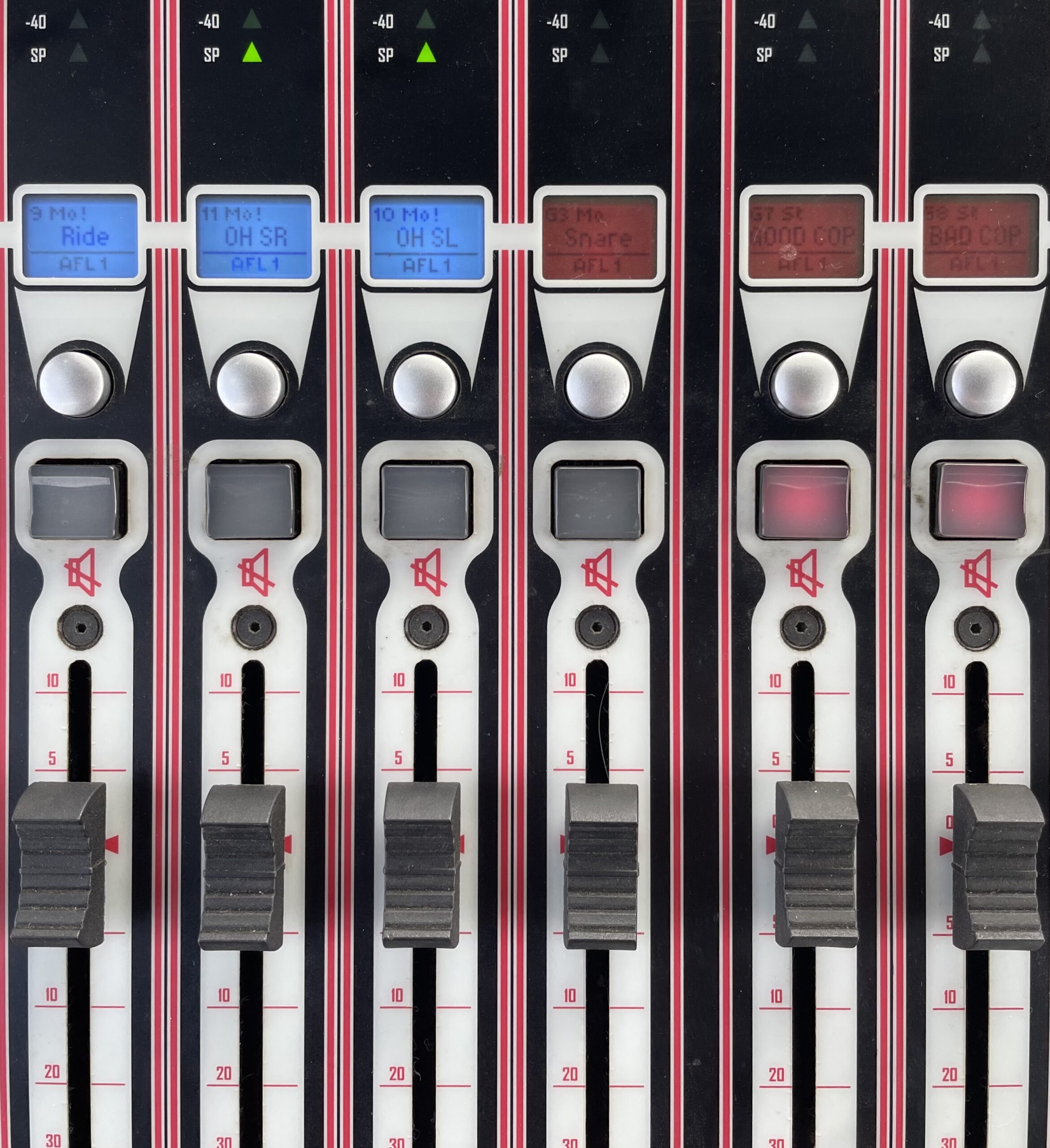
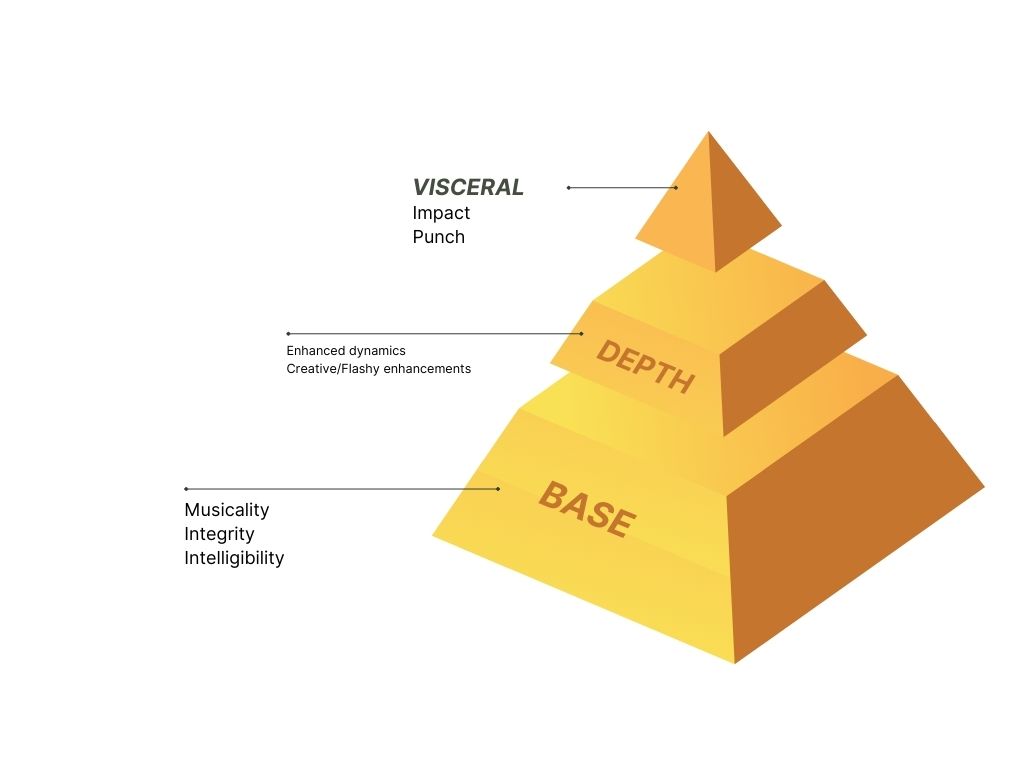
 

Maintaining Sonic Expectations From Clubs to Stadiums: Part 1


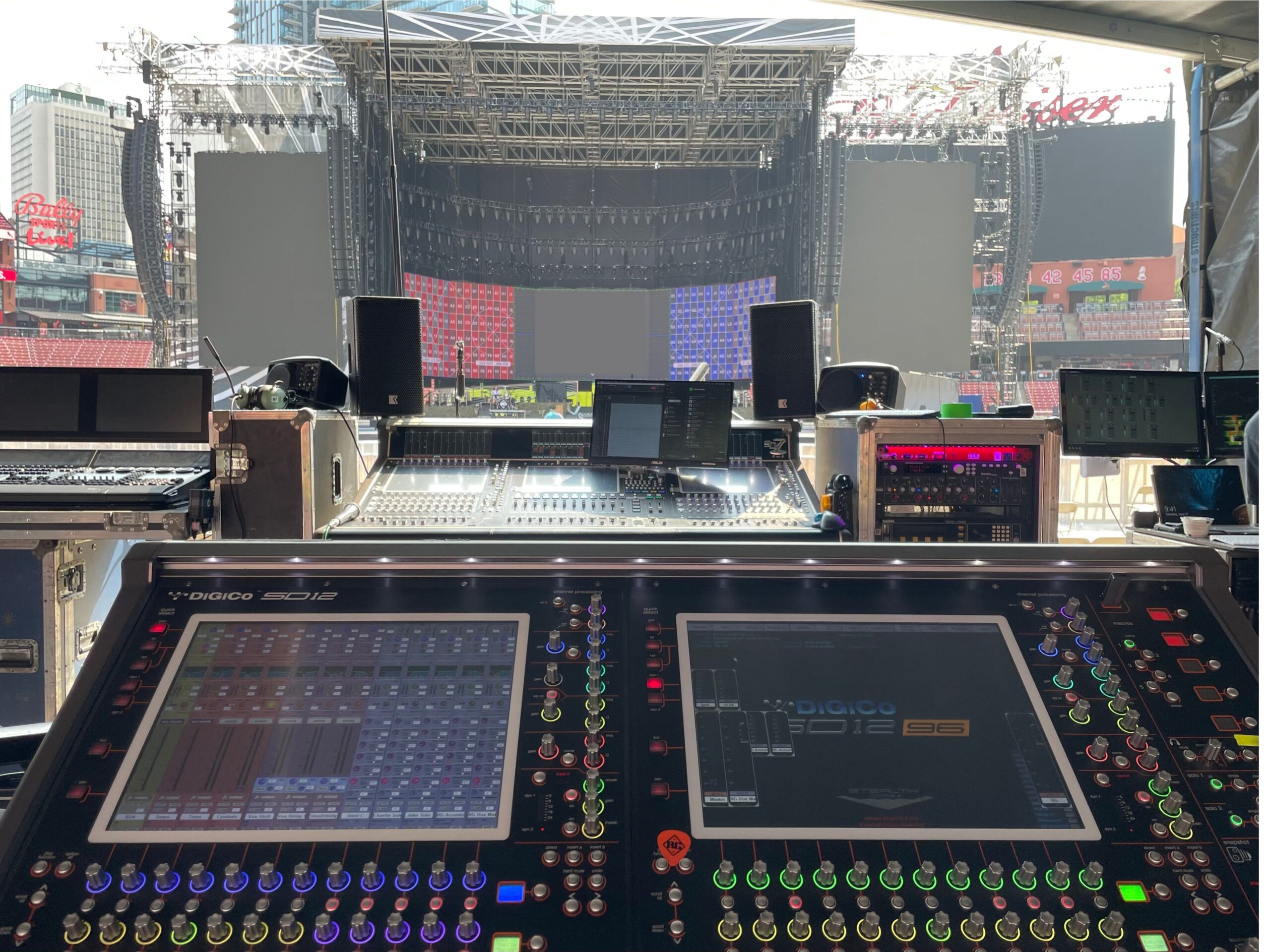
With each tour I’ve been a part of, a few checklist items help me be successful at FOH regardless of the size of the show.

A friend last year asked what it was like mixing such a vast mixture of venues, and how I maintained consistency while still searching for the last 1%.  For context, we were jumping between Soldier’s Field, The Eagles Room, and outdoor venues. It was tough to paint the same sonic image every day, so I had to quickly employ a variety of organizational techniques and become pretty analytical of many elements to achieve that goal.

That experience has come in handy since, giving me tools to tackle both acoustically challenging venues and shows where every variable in my control hasn’t been consistent.

This spring I’ve been mixing on consoles of the day in small clubs, which offers a new set of challenges. Oftentimes I’m battling heavy stage volume, and dealing with consoles of the day and PA of the day makes it challenging to create the same auditory experience for the audience.

This is a glance at how I tackle the change in environments, first from a procedural and organizational perspective.

Spend time with show files

When using the venue’s house console, I familiarize myself before show day with YouTube, manuals, and other resources. Offline editors are also helpful for building a baseline so I can maximize time making noise.

On this tour, I’ve been lucky enough to use the same console two or three times. In these cases, I make sure I reset the output EQs and matrices so I can start fresh for the space.

If you’re touring on a dedicated show file, don’t be afraid to make adjustments as you progress. For the tour I was a part of last year, I had a stadium show file, my baseline show file, and something else to provide a starting point for clubs and weird venues. I also occasionally altered master bus processing depending on the line array being used, to maintain an expected depth of field among instrumentation and vocal clarity. This of course took time to organize, and I had notes to keep myself accountable. Also, changes between files were never big but were just enough to make sure I could deliver the same sonic experience.

Lastly, proper file organization goes a long way. Label your files with date, location, and other pertinent info so you have the most up-to-date changes available to you. I usually have a “start” and “end” to refer to.

My show files also generally follow a template I’ve created for myself. I have specific ways I prefer to use groups, VCAs, FX, and parallel busses that let me quickly set up an impactful and transparent mix.


Making noise

Listen to your PA as much as possible. Walk around the room and get a feel for what’s happening outside of FOH. Play your reference tracks, play a variety of them if you have time. Use Smaart and then your ears to tune the system to your target curve and adjust for tonality. Ask the local tech or SE for their input on the system and room, but also listen to the behavior of the equipment and the acoustics for yourself.

Another favorite, resources permitting, is to use multi tracks for virtual soundcheck if possible. If this is not a viable option, spending ample time with each input during line check can also go a long way.

These starting points are like a compass for tackling a myriad of situations at FOH. They let me stay flexible and also quickly build a mix or give me time to ensure my mix sounds the way I intend.

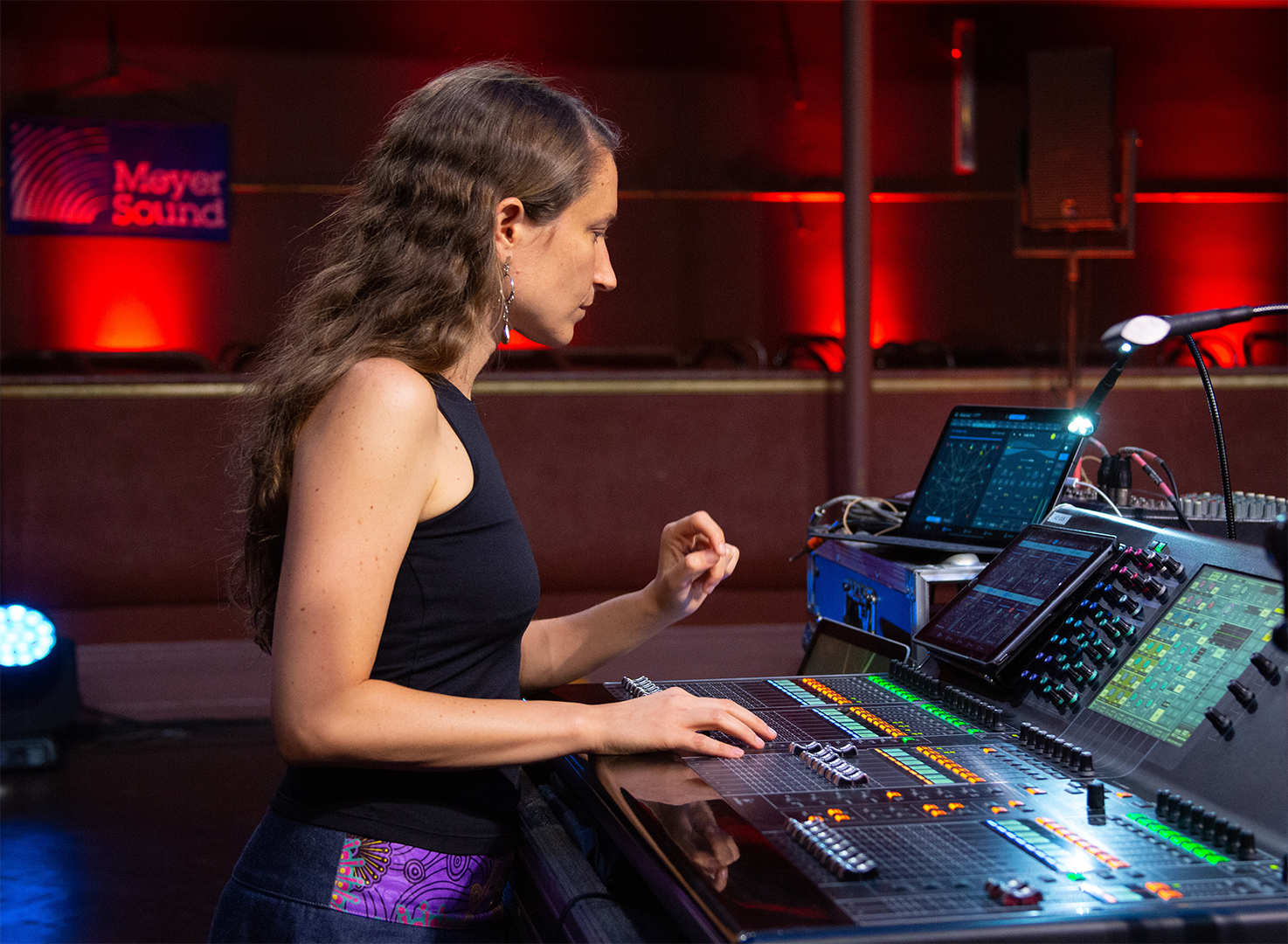
Ianina Canalis Specialist in Live Sound – Spatial Audio – Software Development – Education 

Ianina has been working for Meyer Sound for the last four years and has been working in audio for over 20 years.

Early Life

Did music and audio interest you while you were growing up? 

I started studying music when I was 10 and I finished with a Teaching degree in music when I was 18 years old.

Musical Background?

I used to play guitar and saxophone and sang when I was a teenager. I loved playing classical music in small groups, and I also participated in playing in orchestra and choirs for several years.

When did you discover audio as a career path? 

When I was a teenager.

How did you get interested in audio? 

I studied music and I frequently went to listen to play to my friends but the sound was not good at all and I felt bad because concerts with my friends and the sound didn’t like me at all. I had the feeling that all the effort they made during the rehearsals was not reflected in the live show because it was almost impossible to listen to all the instruments or melodies.

Educational Background

Did you attend a University/College/Trade School? 

I got a degree in teaching music at the College of Music Juan Pedro Esnaola in Buenos Aires, Argentina where I come from. Then I got a double degree in Sound and Recording and Audiovisual Technology at the Universidad Nacional de Lanus in Argentina. Some years later, I went to the UK and studied for an MSc in Audio Engineering at Leeds Beckett University. And finally, I got a PhD in Science and Technology at Universidad Nacional de Quilmes in Argentina

Career Start

How did you get your start?

When I started studying at the University, I felt that I needed another challenge, so I walked through the main avenue in Buenos Aires, where most of the theatres are and I knocked on all the doors saying “I want to participate as a Sound Engineer” but I didn’t have any technical skill at that time. In several places, they invited me to see some rehearsals and event setups.

In the Centro Cultural General San Martin, they told me that they needed people but there was no money. With great happiness, I began to participate in all the shows. I was so happy that I went six days a week because every day there was a different band and they had events of various musical styles; jazz, rock, folklore, music for kids, etc. After a few months, they hired me! I worked there for three years while I continued my studies and one day, they offered me a tour as a PA mixing engineer with Jairo (a well-known Argentine folklore singer). With a lot of enthusiasm, I quit and jumped into the touring lifestyle with different bands in Argentina and Latin America. Over 15 years on tour I worked with Jairo, Los Pericos, Virus, J. C. Baglietto, Jairo, Soledad Villamil, Lisandro Aristimuño, Duratierra, and more.

On the other hand, Gustavo Basso, an Acoustical Engineer, offered me to be his assistant at the Universidad Nacional de Lanús for the subject of Acoustics when I was 20 and that was the beginning of my path as a teacher-researcher. For some years, I assisted different Professors who taught audio subjects until I became the Live Sound teacher. In those years, with Jorge Petrosino, we created the Acoustics laboratory where research work is carried out. We published some investigations related to different topics like the Photoliptophone (Fotoliptófono), and human hearing perception over 20 kHz.

What did you learn interning or on your early gigs?

In every part of my career, I learned different things. Everything was equally important, the beginning, the university, the tours, the teaching, the research, all that experience contributed to who I am today.

Did you have a mentor or someone that helped you?

During all these years I developed my career working on tours as a monitor, PA, or System Engineer and at the university as a teacher and researcher. I didn’t have a mentor, however, over the years I met wonderful people who were passionate about audio from whom I learned a lot and with whom we shared talks, experiments, research, and a lot of music, so the list is huge!

Career Now

What is a typical day like?

There is no typical day. At Meyer Sound I am the product owner of some software so, basically, I coordinate the design and implementation of them. Then, I can use the software we create like Spacemap Go and Nebra in shows and demos, which is great! And finally, we meet with customers, and they share their experiences so we can collect feedback to improve our software.

How do you stay organized and focused?

I am very passionate about everything I do, so I work for goals, I focus my job on small things we need to solve every day and also think of the big picture and plans for future challenges.

What do you enjoy the most about your job?

There is a very creative part of my job that I enjoy. When we create software from the beginning there are no limits other than our imagination to produce a new concept, idea, workflow, etc. That creative freedom in a work team is very nice.

I also give some seminars or trainings, as I love teaching, I enjoy wonderfully these activities. And when I work on Spacemap Go demos I mix musical content keeping my passion for spatial audio and music.

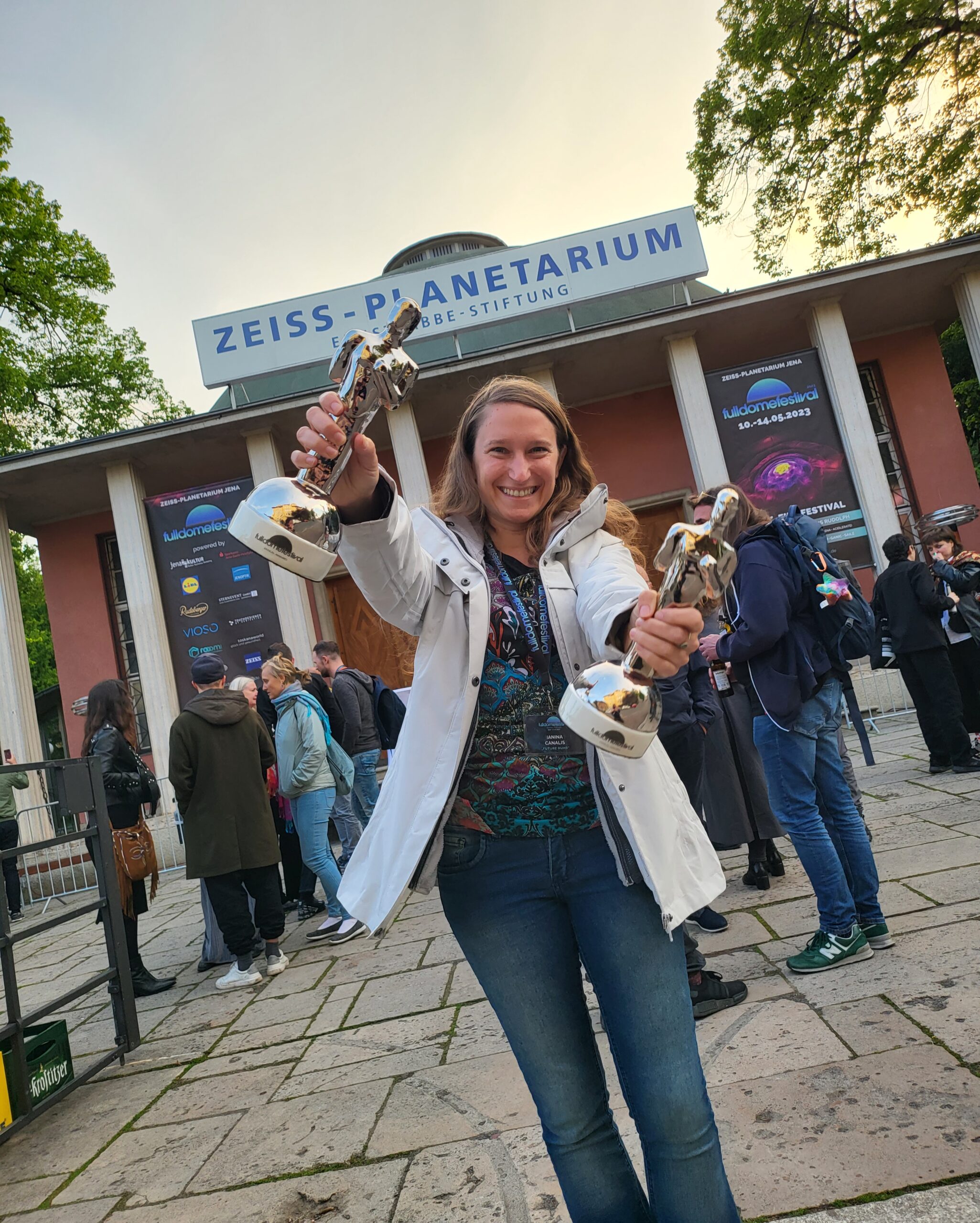
I also have some side projects where I mix content for spatial configurations like Future Ruhr: A full dome film that won two Janus Awards at the Fulldome Festival in Jena, Germany in 2023. We won 2 categories: Best Spatial Audio Award & Best Full Dome Innovation & Creativity Film.

What do you like least?

I don’t like spending too many hours on the computer.

If you tour what do you like best?

I enjoy mixing music and spending time with people on the stage, at the hotel, on the bus, etc. In January 2024 I was in Argentina and worked on a short tour and I enjoyed every moment.

What is your favorite day off activity? 

I love to spend time in nature doing some sport. I love meeting friends and spending hours and hours talking and playing music. I also love dancing, so when I can, I go to dance salsa or tango.

What are your long-term goals?

I’d love to spend more time mixing.

What if any obstacles or barriers have you faced?

At various times being a woman was a challenge. I had the strength to overcome many situations, comments, and attitudes that would not have happened to me if I had been a man. From harassment to questions like which member of the band I had sex with to be the sound engineer. Some guys, couldn’t believe I worked with famous bands because I am good at mixing.

How have you dealt with them?

In a job, after much persecution and psychological harassment, I quit, and I didn’t say anything about the real reason why I was leaving. I was very young. A few years later, I learned how to answer and face uncomfortable situations. As I strengthened my career and my personality, these situations faded away. I think that many of the women who started in this profession 20 or more years ago, suffered many uncomfortable moments. Some of them could not endure such a hostile environment. And that is one of the reasons why we are still a minority. However, I believe that we paved the way for younger generations, and today, at least in Argentina, many more women and minorities are Audio Engineers, Sound Technicians, Lighting Engineers, Stage, etc. than 20 or 15 years ago.

Advice you have for other women and young women who wish to enter the field?

The first thing I can suggest is that they pursue their dreams. If complex, stressful, and distressing situations appear they do not isolate themselves. There are a lot of SoundGirls and we support each other so it is important to talk and learn from our experiences. We are building communities and that is what helps us strengthen ourselves and overcome unfair situations. So don’t stay alone, look for more SoundGirls!

Favorite gear?

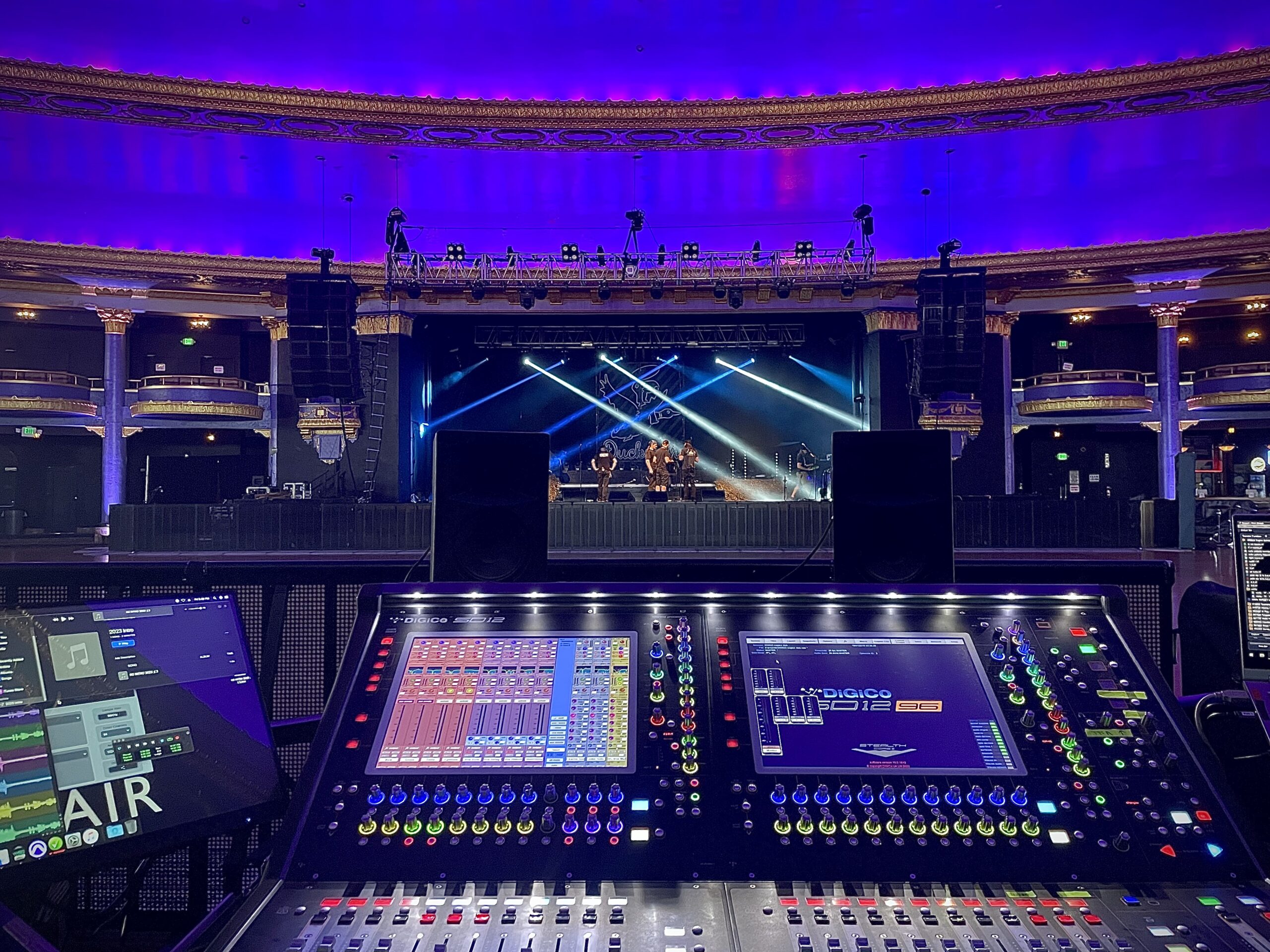
I love mixing with DiGiCo and Meyer Sound!

You can check out some Ianina’s work here

https://www.youtube.com/watch?v=BZ0yzt_-gtM&ab_channel=IaninaCanalis
https://www.youtube.com/watch?v=vzBkQWXif8w&ab_channel=IaninaCanalis

Prepping With Intention

Last month I took a brief look into some routines I’ve developed that help me feel centered to better reach my full potential as a mix engineer. In it, I mentioned the importance of solidifying your understanding of the music to achieve the most impactful, distraction-free mix. Here we highlight how I approach learning music before a show or tour to achieve this goal.

When I ask my mentors what I should do to improve my mixes, this is usually their number one comment: proactive, intentional listening. But how do you listen, and how do you commit that to memory? When it comes to tour prep, it helps me if I create playlists based on the setlist or discography of the artist, and refer to it several times a day. Outside of sitting down to actively listen, I also will let it run in the background while I’m doing other activities. I find ways to quiz myself on the arrangements, becoming aware of a few key elements throughout the song and other fundamental elements of the mix.

For me, being proactive has translated into a two-fold process. I have duality as a musician, growing up both in the bluegrass community and developing retention for pitches and rhythm from a young age and later learning how to correlate that to sheet music through classical studies. The second kind of musicianship taught me so much about how to notate musical information, long before ever becoming a tech. I’ve bridged my career as a musician and as a tech by learning how to transcribe what I hear to sheets of paper. If you have a musical background, visualization in this manner can be powerful. This can look like simply being able to learn how to notate the chord progressions, keys, and tempo, or just identifying what stands out throughout the listening process and subsequently writing it down. Even shorthand can be impactful. Make any and every attempt to understand the entirety of the arrangement and understand each tiny piece of it like the back of your hand.

I also find it helpful to find meaningful associations of the song. Other than the black-and-white analysis of the music, you must be able to bridge the gap between what you’re hearing to the pieces of the sound that resonate with your human experience. Research the music or artist to understand their intention and ask the musicians for information regarding the show. What is one player’s role? When are their solos, or when do they play something that they deem show critical? Maybe your steel guitar has a tiny little lick in the verse that parallels the emotions the singer is trying to convey. You should emphasize that. Show that you have a comprehension of what they’re creating. And if you have access to multitracks, you can use these to help you dissect each element and invite the players into the conversation as you prepare to help them deliver their show.

In conclusion, take time for yourself before having your hands on faders to learn the music. Doing research like this can help provide you with a toolset to make decisions quickly and with intention. After all, we have so many resources available at our fingertips and within our community that can help us achieve the goal of a distraction-free, artistic mix. Make sure you keep listening and find a method that works for you so that you can continue excelling and delivering top-tier mixes.

In the Zone

Mental health has become a significant topic of discussion among peers in the years following the pandemic. As we gear up for new shows and tours, we must continue these conversations. It matters for getting us through long tours, and for navigating our time off the road as well. Aside from these obvious benefits, taking care of myself and developing professional routines helps me with my creative endeavors as an engineer, and ensuring I’m in prime condition gives me notable advantages to help deliver a quality show every night. I’m going to take time in this next article to highlight some actionable steps I take to feel like I’m able to achieve focus and be in the zone during a show.

Just like an athlete has to visualize their success and optimize themselves for a big game, we should also take into consideration routines and activities that help us achieve peak performance. The goal is to not necessarily think about the music, but rather to feel it and jive with it, so what steps can we take to help us achieve this?

Routines

Developing personal practices to improve your physical and mental well-being can help maximize the outcome of the show.

You can start exploring what works for you by talking with your friends and family on the road and back home, and by visiting the plethora of wellness resources available to us in these communities.  It takes time to develop this skill, especially if you’re not already pre-dispositioned for the lifestyle or if you struggle with mental health.

Personal care is important. Figure out sleep routines, food, and proper care for your feet. You don’t want to feel physically or mentally unwell when they call “Go for show.” Take care of your coworkers, also. You all operate as a unit, after all.

Technical Considerations

Prep and rehearsal time should be used wisely to help you optimize your day. I work closely with the audio provider and audio team to make sure we have all the necessary tools to have the rig well-suited to what I need, accommodating for potential lack of space in some venues and maximizing efficiency. I find it best to prep my control package myself so I know each detail is at its full potential and I can roll into show day and set up with little hesitation. My workbox is sorted and my cases are well labeled. My world is also set up comfortably in a way that allows me to have access to necessary personnel during the show.

I’ve spent considerable time making sure I take time to elevate my system tuning skills and understand the jargon fluently. I include as many tools in my FOH package as possible so I can quickly tune a system; wireless units such as Lectrosonics have been immensely beneficial in letting me tune quickly in theaters and arenas alike. I’ve developed a target curve that’s appropriate for the show I mix and for my ear, and have an expectation for an SPL target every day. We’ll explore this in depth later in a future article.

Mixing can be similar to a performance. If you’re a musician, you understand how critical it is to internalize the details. If you’re in the creative hot seat, you need to know the music inside and out so you can relax and enjoy yourself, and start thinking about the music rather than the sound. We have a unique role and it’s vital for us to help deliver a seamless, distraction-free show. Learning how to master the catalog is different for everyone; I’ll also dive into this in greater detail later.

The Bigger Picture

Making sure you’ve taken steps to minimize errors is crucial. Personally, my least favorite shows are usually subjective and stem from a lack of comfort. The show always goes on, but the nightly responsibility is to always try and exceed my expectations and help deliver a stellar show as often as possible. Being timid or apprehensive during the show reflects in the mix when you miss solos or fader pushes, or are slow to resolve issues. Proper personal and technical preparation before the show can address many of these challenges.

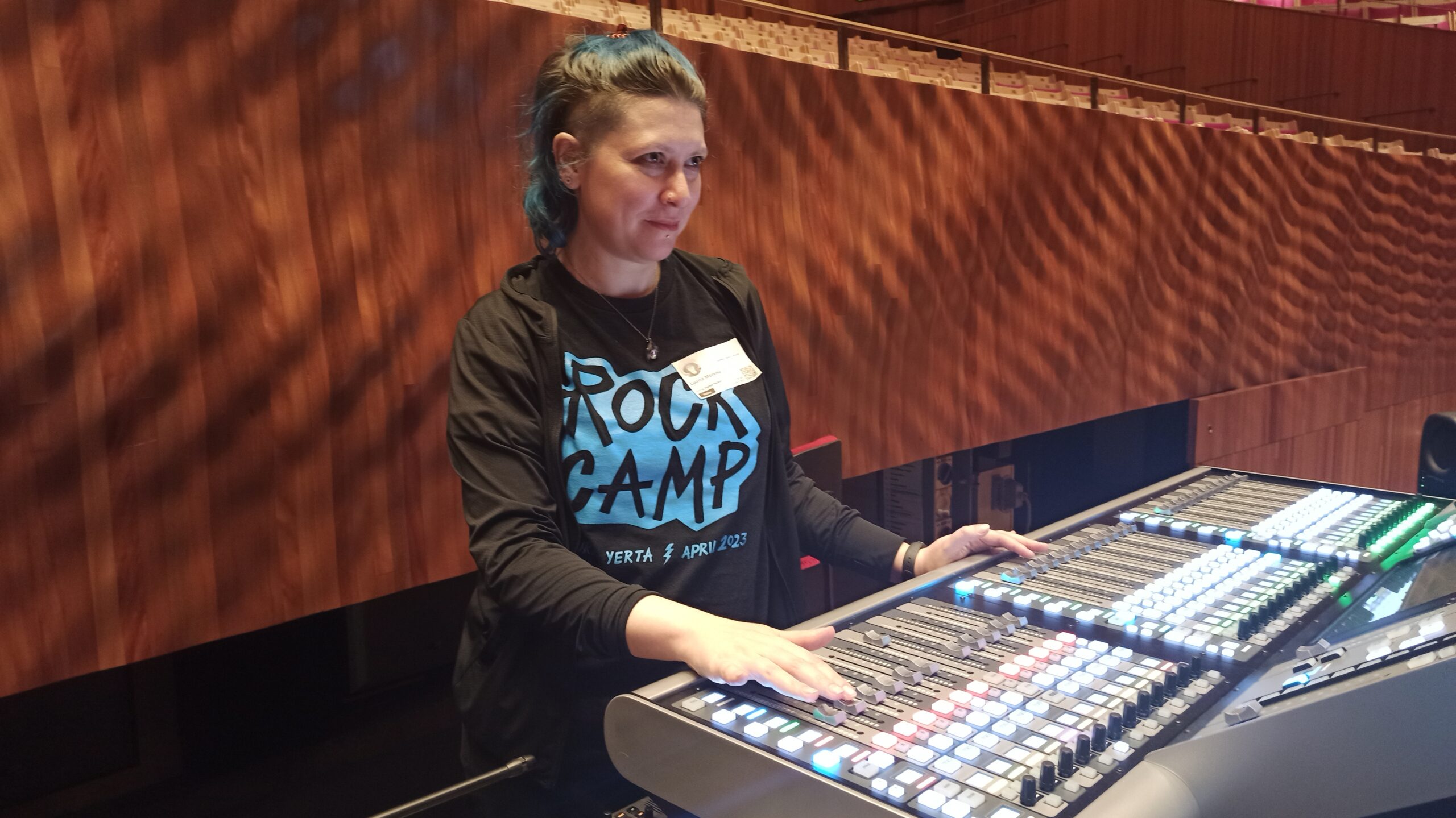
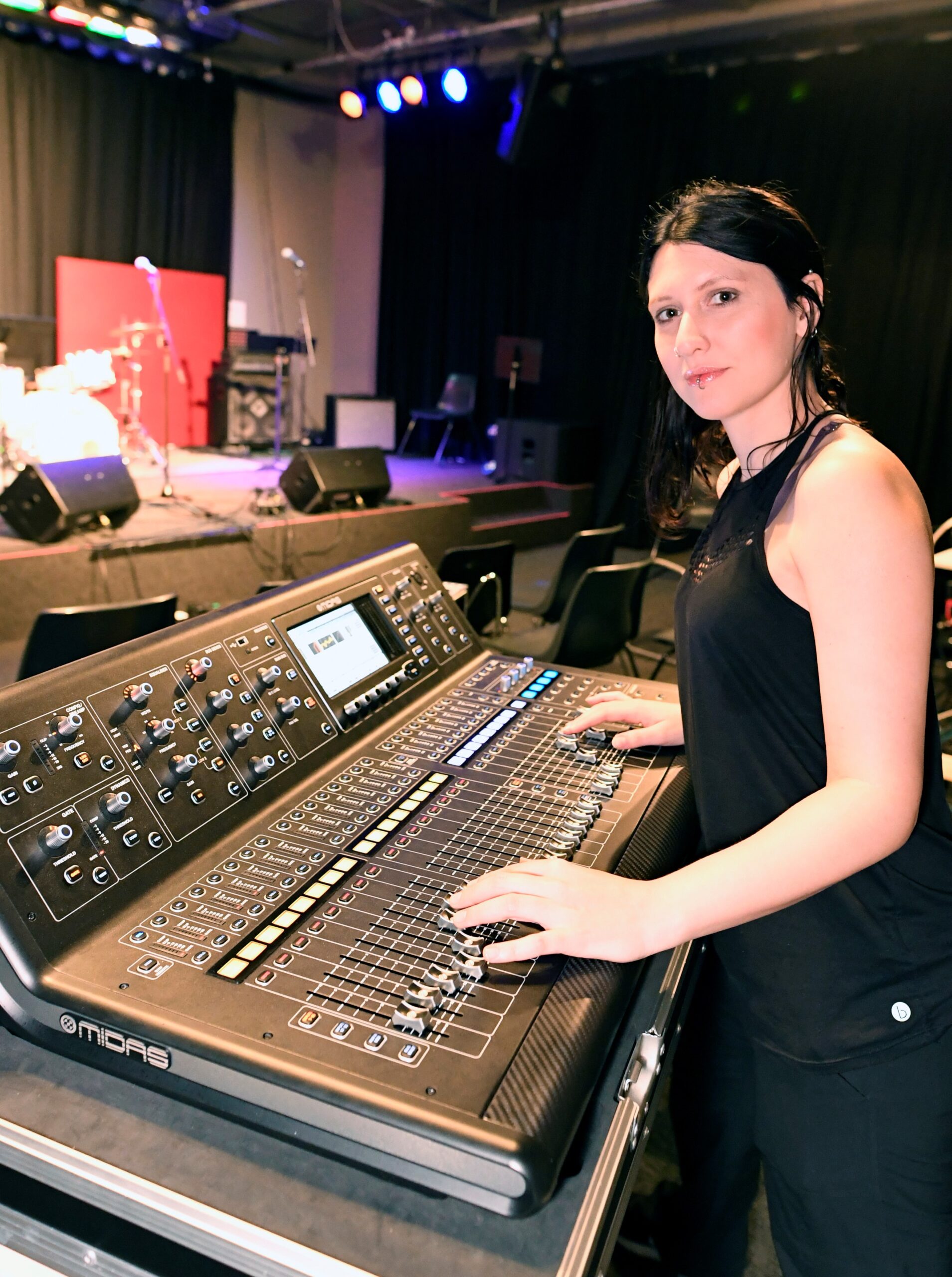
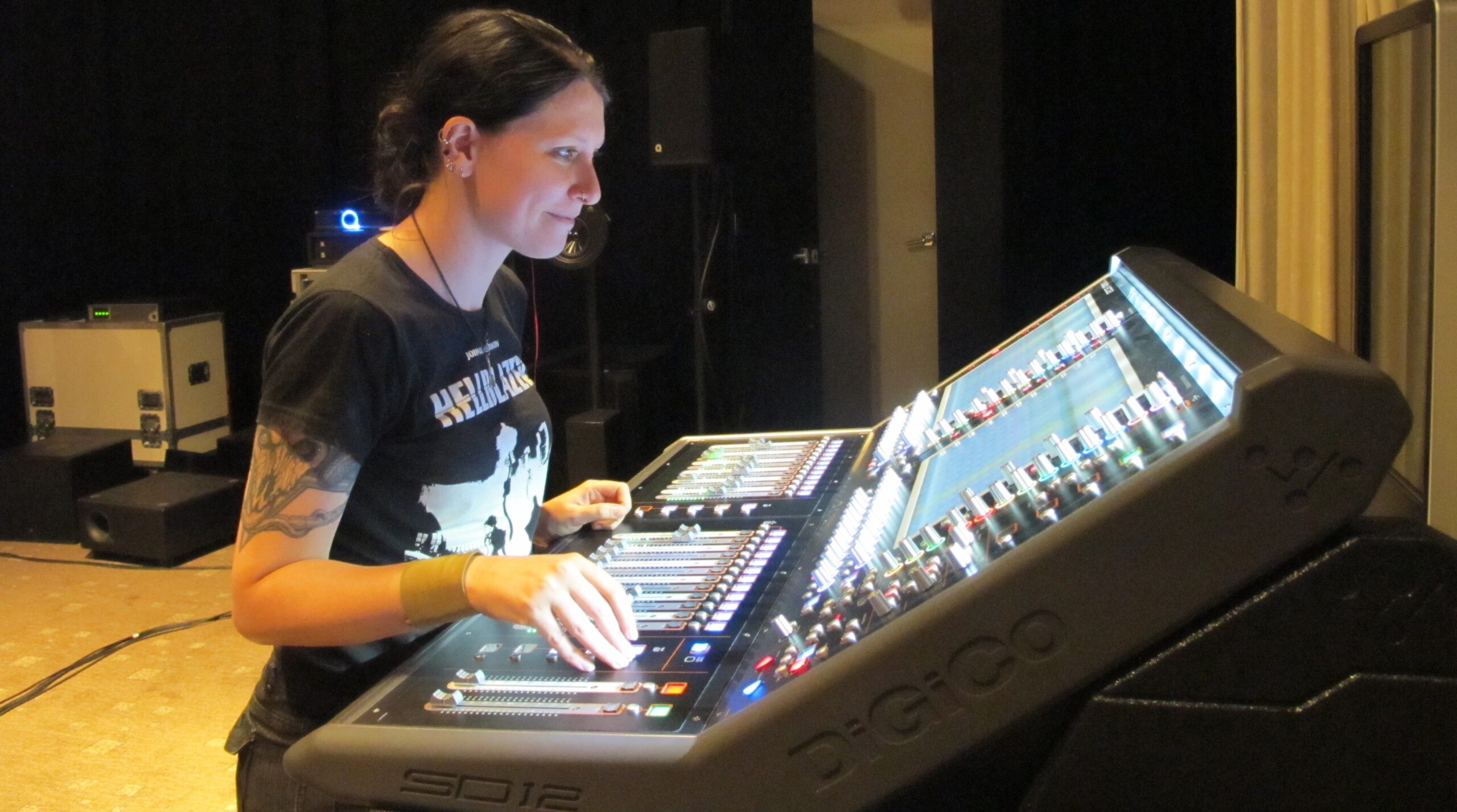
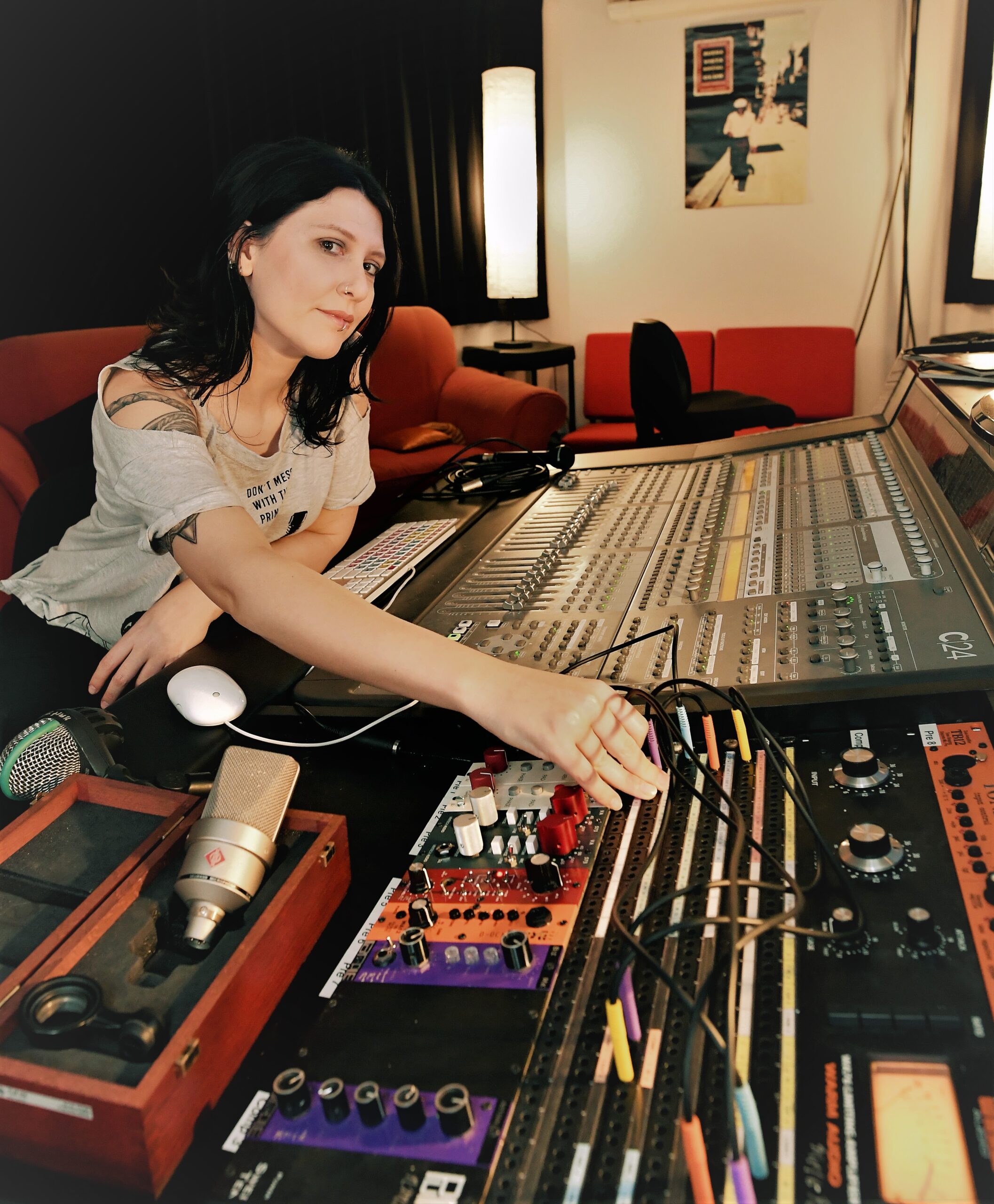
Luana Moreno – Live Sound and Recording Engineer

Luana works as a freelance engineer working with venues, rental companies, musicians, and event organizers. She currently is in the process of setting up a small commercial studio. She has been working in audio for over 15 years. Luana is originally from Brazil and now resides in Adelaide, Australia.

Luana fell in love with music when MTV came to Brazil. “I still remember watching Slayer’s “Seasons in the Abyss” and my mind was completely blown away. I bought my first CDs, Smashing Pumpkins, The Cure, Sepultura, and Hole, and became a total aficionado. I bought an electric guitar with the first payment from my first job. I have her to this day.”

Luana was introduced to audio after a recording session with her band and became interested in the recording process. She began to research courses and programs for audio engineering and also met a producer and engineer Paul Anhaia who worked at Midas Studio. She would take a short course on Audio Fundamentals where she learned the basics and then learned on the job from there. All the while Luana attended workshops and training opportunities. In 2013 Luana enrolled at Melbourne Polytechnic and received an Advanced Diploma in Sound Production in 2019.  Luana says this “doesn’t mean that I have stopped learning though, as I am always looking to learn and keep up with the industry innovations”.

Career Start

How did you get your start?

My first job was at a studio/mobile recording facility called Audiomobile. They had two mobile recording units at the time, a bus and a truck. They did a lot of recordings for music DVDs. I would rarely be on-site recording, but in the studio helping them organize the hard drives and doing general maintenance. I would often sit through mixing sessions with the other techs too.

From there I started mixing live sound at nightclubs and other venues and working for rental companies and artists in Brazil. There I also had the opportunity to do location recording and post for film for a considerable time at MeuSucesso.com and to do mixing and mastering for a few bands.  Moving to Australia I was able to get into the Live entertainment quite quickly and have only run out of work during the first six months of Covid.

How did your early internships or jobs help build a foundation for where you are now?

I think Audiomobile had the most impact because that’s where I learned how the industry worked and was able to sit in on sessions with talented and skilled technicians who didn’t mind sharing their process. Mixing in pubs and nightclubs was a great school as well because we would often be quite limited in terms of what the equipment was capable of, and that’s where I learned to work with whatever I had available.

What did you learn interning or on your early gigs?

Shadowing the other techs at Audiomobile was a great opportunity to train my ear and get up to speed with the basics, and at the pubs and rental companies I’ve learned how to set up a system, troubleshoot it, and make things work. It was also where I learned how to mix.

Did you have a mentor or someone that helped you?

Paulo Anhaia, whom I dated at the start of my career, was more of a supporter and role model than a mentor. The techs at Audiomobile who taught me in my early days: Egidio Conde, Fernando Ferrari, Luiz Leme, Eduardo Garcia.

The group of people who helped me for the longest time in my professional life were my colleagues from Mulheres do Audio( Audio Women), a group that started when I created a Facebook group after working at an AES conference as a Product Specialist and being confused for a “booth model” by the male attendees, who’d ask me, surprised: “You’re a Sound Tech? How many more women in sound are out there?”

That question got me thinking and one night I created a Facebook group and invited some of my mates: Adriana Viana, Lilla Stipp, among others. That group started regular gatherings, where I met many other incredible women who have supported me in my journey, such as Florencia Saravia-Akamin, who played that mentorship role being the most experienced of us; Roberta Siviero, who if I recall correctly introduced us to SoundGirls and organized our meeting with Karrie Keyes when she toured Brazil with Pearl Jam; Regiane Alves, Allyne Cassini, among others.  All of these women became a network, exchanging information at the meetings, organizing workshops, and referring each other for jobs.

Moving to Australia I had to start from scratch, so Toni Venditti’s help was instrumental as she offered me insights and contacts. Other people worth mentioning would be my teachers at Melbourne Poly, Shane Simmonds, Tamara Weaver, and David Rodger, and my mates Erica D’Angelo and Candace Parham. All of these people were in one way or another instrumental in opening a door, answering a question, or giving me advice when I needed it. It might sound like an Oscar acceptance speech, but it truly takes a village!

Career Now

What is a typical day like?

I have no such thing. Working for three different companies as an employee and several other clients, some days I’ll start at 5 am and some I’ll finish at 2 am. So I try to organize my calendar in advance.

On days I’m not working out of the home, I will normally take the morning off and get things done in the afternoon or early evening. I also make sure to schedule days off, where I’ll do only leisure things or nothing at all, depending on how I feel.

How do you stay organized and focused?

I do my best! Sometimes I can’t be as organised as I’d like, but I have learned to not beat myself up about it. After all, managing your schedule as a freelancer is a challenge.

Some items that help me be as organized and focused as I can be are:

Besides these, plenty of water, coffee, chewing gum, regularly exercising/ stretching, and taking breaks when I can afford to, are the main strategies that I use. Taking time to plan for the gig whenever possible. But I think the most important thing is to manage your workload the best you can because, without enough rest, all of that is irrelevant.

What do you enjoy the most about your job?

The variety. Being a casual/freelancer allows me to work in different places with different people doing varied things. I enjoy wearing several hats, even if it’s challenging at times.

What do you like least?

Heavy lifting, defective gear, and difficult clients.

If you tour what do you like best?

I did tour a bit but it wasn’t for me, so I never really pursued it. I found that it’s quite stressful and you go to great places but don’t get time off to enjoy yourself.

What is your favorite day off activity? 

If I’m tired, reading in bed, playing casual games, and watching sci-fi and horror series. If I’m not too tired playing music, gardening, or going out with my partner, be it a museum, concert, movie, or dinner.

What are your long-term goals?

Grow and diversify my business, by opening my mixing studio to offer music production, mixing, mastering, and sound for film more consistently, and do more event production management. Help musicians and other creatives achieve their vision and release my projects as an artist. Continue to support the next generation of sound engineers and musicians with education and mentoring, through workshops, courses, and being involved in initiatives like Girls Rock Camp and The Tech Sisters.

What if any obstacles or barriers have you faced?

I have faced sexism for sure, especially when I was starting out. Bands would arrive at the venue and ask “Are YOU mixing?” and I’d be like “ Well if you don’t want me to you can do it yourself!” and that has always been my stance. Of course, in many situations, nobody says those things to your face, so all you can do is do your best and not worry about it. I think it acts as a filter, a place that won’t hire me because I’m a queer migrant woman is not a place where I want to be.

The other big one is toxic work environments, of which I have tasted many flavors: the ‘we are family”, the abusive manager, and the threatened colleague. It can be hard to spot at first, but once you start seeing the red flags, you can’t unsee them.

How have you dealt with them?

I have learned early on to stand up for myself and to find out whether a gig is worth the trouble or not. But the thing that has made the biggest difference for me was seeking community. Having the support of other women/GNC people who understand your struggles and where you’re coming from. Who can relate and offer advice based on their lived experience. Not to downplay the support of some awesome guys I’ve met, but groups like Mulheres do Audio, and SoundGirls have been instrumental in helping me overcome these issues.

Advice you have for other women who wish to enter the field?

Do it! There are more of us than ever and we are stronger together! Connecting with other women and gender-diverse people, SoundGirls is a great place to start. Find your local community and chances are they’ll have your back.

Must have skills?

Broad musical taste, decent hearing, curiosity, interest in lifelong learning, and the ability to learn by yourself, because changes in the industry are constant and often you need the knowledge before you can consult with someone else. I believe that basic musical knowledge is a great advantage for audio technicians. No need to study Schoenberg but knowing rhythmic figures, harmony, and scales can help you a lot, both live and in the studio.

Favorite gear?

For live, any modern digital console with enough graphic eqs is fine. I’m partial to dB Technologies systems as they normally sound quite good just out of the box, and Allen & Heath consoles. The most useful items in my toolkit, besides tape and Sharpie, is undoubtedly my iPad and a router. That was the best investment I made because it helps immensely with line checks, tuning, and naming channels.

In the studio, I love Genelecs, Tannoy, Reaper, and plugins from FabFilter, Plugin Alliance, UAD, and iZotope.

Anything else you want to add?

The entertainment industry is a hard one and many toxic narratives in it need to go! Being proud of doing 80-hour weeks, the boys club, abusive behavior, and the glamorization of booze and drugs as things that are tolerable and even desirable in workplaces are unfortunately still quite common and anyone within it will likely have to deal with these issues from time to time. Still, there is a pushback against these things, especially by younger people, and I’m fully in support. Particularly in regards to long hours, yes sometimes they are inevitable due to specific circumstances, but if they are always the rule, that’s a management issue. Don’t let anyone tell you that you need to subject yourself to these things if you want to succeed in this business. There are alternatives and many opportunities to do what you love without sacrificing your mental and physical health. Boundaries are good in any relationship, professional or personal, and those who don’t respect them don’t deserve you!

Yi Hsuan Lee – Independent Live Sound Tech

Yi Hsuan Lee aka Kate Lee has been working in audio for the last 12 years, getting her start in 2012. Kate growing up was a music fan, saving her money to see as many concerts and festivals as possible. Kate was also a drummer and discovered early on, she did not like being onstage. Then she met the singer from her drum teacher’s band who was a production manager for a local venue. This is when Kate discovered a behind-the-scenes career path. She interned at the venue working in both lighting and audio, and fell in love. Eight months later Kate would take the plunge, moving to Los Angeles to attend the Musician’s Institute for Audio Engineering. Kate has recently toured with LCD Soundsystem and Pearl Jam as part of the monitor team.

Career Start

How did you get your start?

Right before I graduated from MI, my instructor invited us to shadow him when he did gigs at night or on the weekend.  I tried to go to every gig to help out, ask questions, and maybe get to mix a couple of songs. Eventually, he started to pass me some small gigs, and, then after six months, he asked if I was interested in a part-time job at MI as a production team member which was sound, lights, and camera for classes, concerts, and workshops. Eventually, it turned into a full-time job shortly after that.

How did your early internships or jobs help build a foundation for where you are now?

There is meaning for every gig, job, and opportunity. When I worked at MI, I got to experience many different sounds, different vocals,  guitars, and tones every day.  I was able to play with and try different equipment and FX, just to see how it sounded and learn from it. You don’t need fancy gear to learn, use what you have and be creative. Because it’s a school, I was able to sit in some classes and clinics that I was interested in. I would stay late at work just to get some studio time or get my hands on a console. I was really lucky to start in MI where mistakes are ok and there were plenty of resources for me to continue to learn and grow.

What did you learn interning or on your early gigs?

I learned to listen more and speak less. Especially when you are just starting out. Absorb everything, good or bad. Be teachable, be humble.

Did you have a mentor or someone that helped you?

Joe Fiorillo who was the instructor that took me under his wing when I first started. He took a chance on me. He loves to teach, share knowledge, and of course great stories. More importantly, he is always willing to help students and the next generation to succeed. He passed many gigs and opportunities to many of us. He helps me build my confidence and lets me grow in a safe place. I can say that without him I wouldn’t be where I am today.

Another person will be Ivan Ortis from Rat Sound System. After working at MI for six years, I was desperately looking for change. I knew a bigger world existed for me to learn and explore. Then Ivan hired me at Rat Shop. I was able to learn in a big production setting and develop all my stage tech skills while working in the shop.


Career Now

What is a typical day like?

As a stage tech/monitor tech, before unloading the truck, I’ll meet with the house stage manager, if I’m going in with the band, I’ll check with house audio people as well. I‘ll ask several questions, where is my monitor world going to be? How much space do I need and what I can have? Where can I store my dead case? Where to tie in my power? How many stagehands do I have? What’s the path for my snake? I prefer to have a big picture of how I want things to lay out before I start pushing cases so I’m not doing things twice. After talking to the stage manager and house audio, I should have a pretty good idea of how my stuff is going to lay out. I’ll direct stagehands to unload the truck, help the monitor engineer, then tie in the power, run the snake, and start the patch stage. Once the stage is patched, we will do a line check, fix any issues, and get ready for soundcheck and show.

How do you stay organized and focused?

As a tech, staying organized is everything. Keep documenting everything. The way I stay focused is I’m always thinking about what I can do better. What can we do differently to make our life easier? When I work I always think ahead and adjust my workflow accordingly.

What do you enjoy the most about your job?

When the show starts, the audience is having a good time. I enjoyed every show I worked on, no matter how exhausted I am. It is always touching to see the show come together and knowing that I’m a little part of it, we are creating memorable experiences for people.

What do you like least?

Long hours and pulling feeder.

If you tour, what do you like best?

Travel between different cities, trying good restaurants and local coffee shops.

What do you like least?

Sleeping on a tour bus. jet lag, canceled flights, and missing bags.

What is your favorite day off activity? 

Catch up with friends and family. Relaxing. Have a walk in nature.

What are your long-term goals?

Keep doing what I love and keep learning new things.

What if any obstacles or barriers have you faced?

The language barrier and being a 5-foot-tall Asian woman in this male-dominated field.

How have you dealt with them?

I’m just focusing on my job and making sure I do a good job on every gig. I believe people recognize good work. I’ll let my work speak for me. A lot of time I’ll be in charge of leading stagehands and I need to give them clear instructions and direction. I’ve learned to be confident with what I do and own it.

Advice you have for other women and young women who wish to enter the field?

You have to love what you do because this job is not easy.  If you want it, you have to work hard and ignore any negative comments. It’s never too late to start.

Must have skills?

Signal flow and troubleshooting.

Seizing the Opportunity By Becoming A Constant Learner


My first show as a touring engineer, I was thrown into an audience of 15,000+ people; vastly different from the whatever-cap rooms of lower Broadway and other small Nashville venues, churches, and rehearsals I had come up in. I had never touched a DiGiCo outside of the one time at the Clair shop, thanks to some dear friends of mine. I had also never mixed on a large format line array.

Amid the chaos of being in an intimidating environment, I had to choose to lean into the discomfort of these new challenges. It’s daunting, but it may be the only way to effectively achieve success in this career. When the opportunity presents itself, have some grace for yourself and others, but focus on being a constant student. Nothing I mention here is rocket science, and everyone will develop their own variation – mostly this is a reflection on some of the foundations that have helped me feel grounded, stay inspired, and most importantly have fun at the beginning of my career.

The night before that first gigantic show, I stayed up studying console manuals and whatever articles on gear I could find and listened to every single song of the artist I was being hired to mix. I learned the arrangement and intention of the setlist, simultaneously referencing the multitrack I was provided to learn how the band and artist had developed the thrill of the live show. Weekend warrior-style touring allowed me to diligently study board tapes upon returning home and it equally provided time to intently review and research the notes I had gathered from the weekend.

Developing a routine came down to a few key actions. As I mentioned previously, I committed to a physical notebook. For me, every mistake and any thoughts from the day made it onto these pages, as did more technical questions regarding my mix or gear. I was also able to gather information and opinions from peers and the headliner crews, who took the time to share their mixing or system engineering techniques. Tour managers and production managers also encouraged dialogue between myself and members of the crew/band. These conversations all turned into actionable data to later provide an educational framework.

Reading was also an important part of this journey. Before touring, I consumed articles and videos regarding studio and live mixing, and Bob McCarthy’s System Design and Optimization book was visited frequently, as well as various other audio fundamental books and manufacturer’s websites. Today there are so many resources for discovering new technical blogs, videos, and plenty of resources have emerged even in the last two years to support this kind of study. You could probably ask your nearest friendly audio nerd to share their favorite with you.

Today my structure is more detailed and systematic than it initially was on that first show, although much of the routine looks the same. It has been important to take risks and push technical and creative boundaries. I am reiterating classic advice, but I challenged myself by making mistakes and asking questions (yes, even those trivial, “wrong” ones). Reading and writing have been huge for my comprehension, and I’m sure many others can emphasize this.

Being studious in these ways helps me to push my limits. I eventually leaped outside of country music to pursue another genre, for the sake of curiosity and an eagerness to learn. The fun part of our industry is that these shows can always be pushed farther; the creative and technical journey certainly never ends, and what I shared here is a small part of what has helped me achieve everything so far. I encourage you to take a moment to discover what works for you, and enjoy the process as you do!

Live Sound Engineer Sana Romanos


Sana grew up in Lebanon, Beirut, a region that is hostile to women and their advancement, yet Sana prevailed as a native Arab woman, running mixing consoles and leading teams. Something that had never been seen before. Sana says  “I come from a third-world country that most people have never heard of unless it made the news for wars and bombings but I am now working for one of the top international companies in our industry. All of this to say – there was a lot of betting against me going into the live sound field, but none of that mattered in the long run- so the lesson to learn: aim, focus, work and you will find a place for yourself in this industry.”Sana currently works as a specialist for Meyer Sound and is a freelance live sound engineer.

Early Life

When did you discover audio as a career path?

My parents took me to my first large-scale concert when I was 15 here in Beirut. I was fascinated that sound can be “spread” into such a big space, beyond just headphones or car radio systems. During that same concert, I saw a person behind a big board full of knobs and thought well this must be a cool job to have! That concert I believe was the trigger of my interest in audio and in a career in this field.

Did music and audio interest you while you were growing up?

I always loved listening to music and had a very varied taste while growing up but I never was able to learn to play any instruments. I was more into the sciences – math and physics. – and I entered this field not from the musician’s side like most but more from the scientific side.

Educational Background

Did you attend a University/College/Trade School?

Yes, I graduated with a Bachelor of Science in Physics from the American University of Beirut (2012) and a Master of Science in Audio Engineering from Université Blaise-Pascal in France (2014)


Career Start

How did you get your start? 

I did an internship in the summer of my first year of master’s back home in Beirut in one of the largest rental companies there. I then went back to France finished my masters and then returned home to Beirut to be hired by that same rental company. I worked there for the next 3 years (2014- 2017)

How did your early internships or jobs help build a foundation for where you are now? 

That internship led to my first job offer. I consider the 3 years spent at that rental company as the years that really formed and shaped my career. I was doing all sorts of work with them from managing teams to running set-ups and beginning to mix at large-scale events and festivals in the region.

What did you learn interning or on your early gigs? 

Speed in troubleshooting and working under pressure. Mainly the internship and then first job exposed me to a variety of sub-fields so that later on I was able to choose and be more selective in the jobs that I wanted to take on as a freelancer.

Did you have a mentor or someone that really helped you?  

A few worth mentioning along the way. The owner of the rental company I worked for, Fida Zalloum, was the one who gave me my first shot at mixing and managing projects. Then along the way very few local engineers were helpful except for one, Wissam Jarrah, who I still consider as my mentor and who I go back to for questions and support when needed. Then after I joined Meyer Sound I can honestly say that the entire technical team at Meyer has been beyond supportive and helpful, it has been great being part of this team.

Career Now

What is a typical day like?

I am mostly traveling for my work with Meyer Sound – which I love because not a week is like the other. If I am not on the road then I am working remotely from my apartment in Beirut doing system design, technical support, and education work for the company. I am also still taking on selective projects as a MON or FOH engineer and technical concert/festival management locally.

How do you stay organized and focused?

I am not great at working ahead of time I am more of a work-under-pressure type of person but what helps me stay on time is being organized and sorted in my to-do list and priorities.

What do you enjoy the most about your job?

That there is no overwhelming routine. It is always varied- always on the move in different settings especially when traveling and being in different countries, witnessing and working with different cultures and people.

What do you like least?

Sometimes the extensive traveling takes a toll on me physically but I am learning to take breaks when that happens – still a work in progress!

What is your favorite day off activity? 

Relaxing, reading books, catching up with my loved ones.

What are your long-term goals?

To keep doing what I love and keep learning and exploring new things in this field,

What if any obstacles or barriers have you faced?

The obvious thing about being a woman in this male-dominated field especially in the Middle-East where I come from.

How have you dealt with them?

I just focused on what I wanted – it was clear to me from the beginning that this is what I wanted to be this is what I wanted to work in – and that is the only thing that at the core mattered as long as I was convicted and motivated all the obstacles were obsolete.

Advice you have for other women and young women who wish to enter the field?

Be sure this is what you want because it is not easy – but if it is truly what you want then the difficulties won’t matter in the big picture.

Must have skills?

Emotional intelligence – especially when doing monitors. It is important to know how to read people and how to react and support them in the high-pressure environment that is the stage and performance time.


X