Empowering the Next Generation of Women in Audio

Join Us

Tour Tribe

‘Human beings are social animals. Biological evolution equipped men and women for a communal existence, hunting and foraging in tribes of between twenty and forty people. We could never have survived this ecological niche by ourselves. We don’t have the strength, speed or agility of other animals. But we do have language. We can communicate with others, and we are bright enough to collaborate for purposes of hunting, collecting food, defense, and building shelters. A tribal group would work as a team, assigning to each member a role according to their character and skills.’

This an extract from a book called ‘Sick and Tired – Healing The Illnesses Doctors Cannot Cure’ by Nick Read. It’s a fascinating investigation of ‘functional illnesses’ which doctors are unable to pin down with a cure, such as IBS, chronic fatigue, depression, fibromyalgia, eating disorders and so on. Dr. Read explores the idea that, despite the fact that as a society we’ve ‘never had it so good,’ we’re sicker and unhappier than we’ve ever been, and the stressful pace of modern life and disconnection from our simple humanity is to blame.

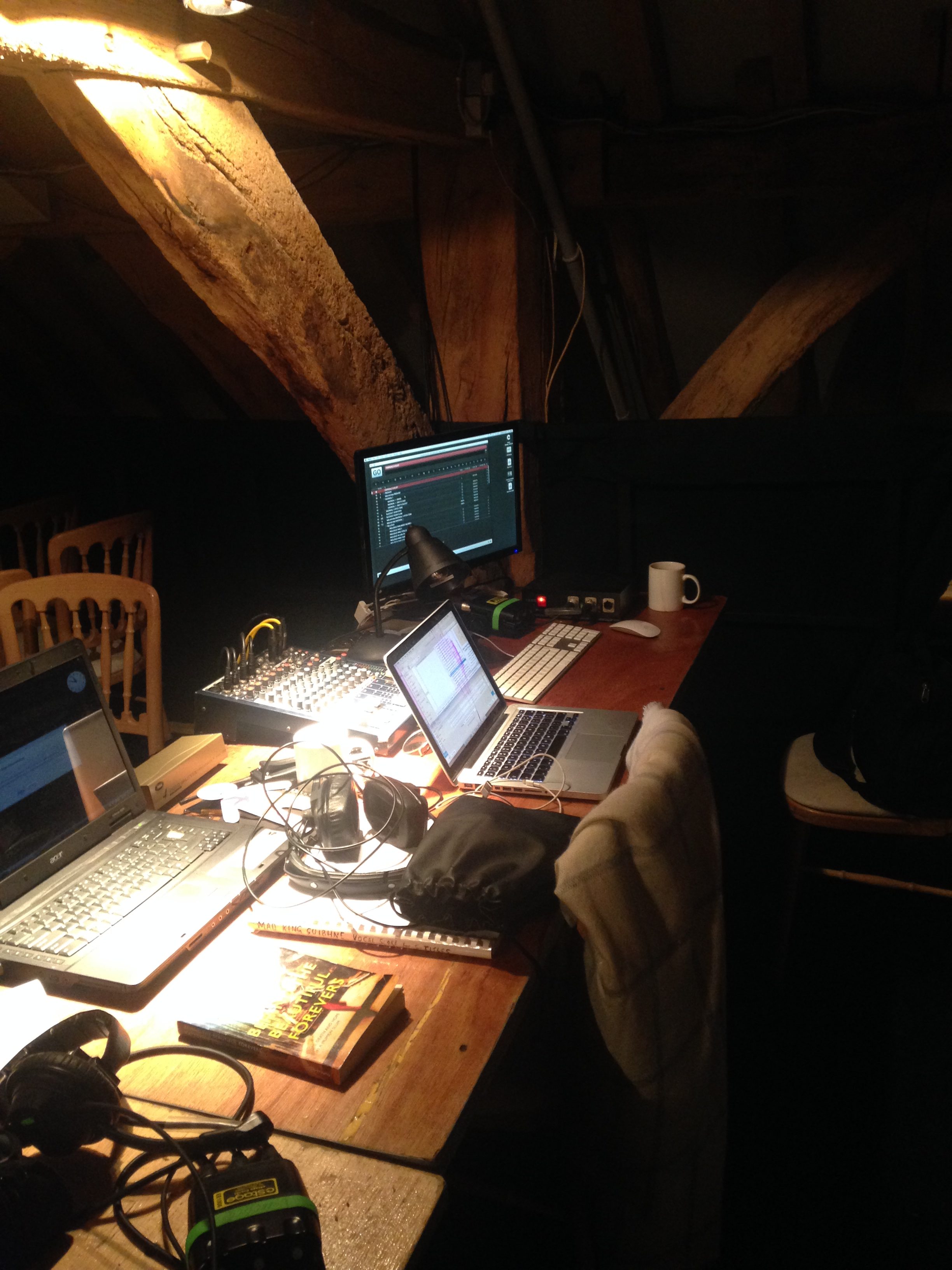
His description of how we lived back in our caveman days struck a very loud chord with me. Twenty to forty people, living a nomadic existence and working as a team within roles according to their character and skills. Remind you of anything? No wonder we like touring – we’re basically channeling our inner caveman! I’m making light of it, but life on the road really does offer a sense of community that’s increasingly rare in modern life. We each have our roles to fulfill, which offers the opportunity for creative expression, problem-solving, and collaboration with others, and we have to do it within a timeframe, which means tangible satisfaction rather than never-ending procrastination. And our work may involve mind-boggling amounts of technology, but it also involves a lot of physical activity – pushing, pulling, climbing, lifting, standing up and walking around for most of the day – all of which means we use our bodies as evolution intended. Being away from home also provides a chance for genuine rest and downtime on days off, rather than racing around. I certainly find being on tour more relaxing than juggling different tasks back home, and suddenly I understand why that is, despite long hours and the potentially pressured environment.

This is not to say that roadies never suffer any kind of functional illness; of course, we do. There are ample temptations and opportunities to break yourself on tour as well as all this good stuff. But I think it’s interesting that studies increasingly suggest that it’s living out of sync with our caveman roots which has made us so sickly as a society. The rate of lifestyle change has dramatically accelerated since the industrial revolution, and the incidence of illnesses which have no obvious cure – despite immense, marvelous leaps in treating pathology – has accelerated alongside it.

When you think about it, it’s the least surprising thing. Take a being who has evolved for a nomadic, active, communal existence roaming in nature; who thrives on practical problem-solving, eating food hunted and gathered from the land; who derives satisfaction from doing the skills they’re suited for and not comparing themselves with others; whose body responds to threat by fighting or running for their life, and who rises with the sun and sleeps for as long as they need. Now, airdrop them into a situation where they spend most of their time static, unable to roam freely because of overcrowding; where their practical abilities and simple satisfactions have been outsourced to machines; where they eat processed chemical foodstuffs with precious little connection to the land; where they are encouraged to constantly compare themselves with others and measure their self-worth by their appearances and possessions; where they are vulnerable to artificial alerts and stimulation 24 hours a day and where, because of all of this, they’re in a constant state of stress from which they cannot run. Would we really be shocked if this being got sick? Of COURSE not!

We may not have been airdropped, but the few thousand years in which we have made these changes, in evolutionary terms, is the blink of an eye. Our physiology and psychology haven’t been able to keep up, and we’re now very bewildered space-age cavemen. So it feels good to have a taste of that more natural way of life, as we roam the world with our tour tribe. Touring doesn’t make modern life go away – heck, touring as we know it couldn’t have happened 100 years ago. But we do have some precious, crucial elements in there which I believe are a large part of the pleasure – even the romance – of touring.

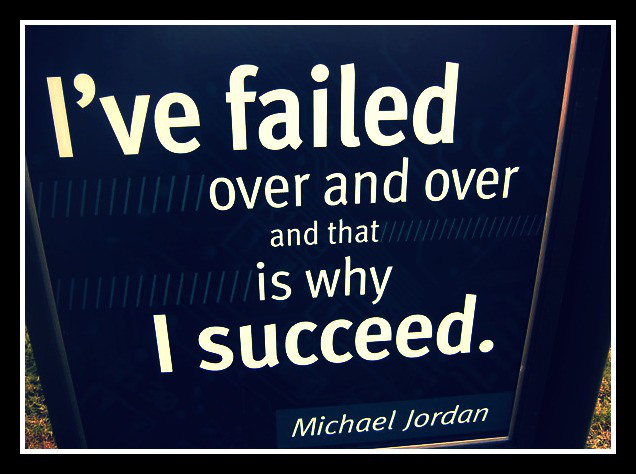
Failing Smart

Recently, I have been super excited to see many women sharing their stories and joining us as part of SoundGirls. Many of the recent posts on our Facebook page have been new members of our organization in school, about to graduate, or just starting their first position in this amazing field.  It reminds me of conversations about what’s next as student staff members and student event organizers around me begin their last steps toward graduation and their next steps toward their desired careers.

Working within an educational system, we frequently discuss with graduating students what they have learned if they feel prepared, and how to find support once out in their field. Outside of the educational system, I hope everyone can learn something through all of their life experiences. I would like to share some things that I have learned over time through failure in hopes you can learn from them.

How to Fail Smart

There are many things outside of our control that can lead to failure. Those we are rarely able to change, but there are things as an individual we can do to prevent our failures.  The first being, always blaming others.  It’s a fact, mistakes will be made, things will go wrong, and sometimes it is our fault. Something was missed, forgotten about, or we just simply misunderstood something. When this happens, and you know that you could have prevented it or you messed it up – take ownership of it. Own the mistake, apologize for it, and work toward fixing it.  It can be as simple as, “I’m sorry, I messed up on this – I am going to fix it by…..”

I had a situation just like this happen the other day.  I was making a room reservation for a client when I was pulled away for something else, and by the time I got back to my desk, I completely forgot about it. Then the next day I was reminded that I needed to finish the reservation. When I did so, I found that the hotel was sold out. I had messed up for not completing the reservation when I should have – but I owned it. I went to my team, let them know what had happened, and asked for help. I asked if there was any way we could fix the problem. We worked together, and we were able to solve the issue quickly.

A second way to avoid failure is to not complain about everything all the time. Yes, there can be negative times, but if all that comes from you as an employee, team member, and leader is negative, you have failed.  To get out of this rut, look at what went well and what didn’t and fix it. Take steps to turn the negative into positive outcomes. I grew up with an ideology of – if you don’t like it, then you fix it. Now that can sound a bit intense, but when you break it down this way take ownership, change what you don’t like, and if you can’t change it make decisions to make it better. As individuals within the sound world we will end up working with negative people, and if we continuously act the same as those negative people as well we will all live miserable lives – so let’s not do that, because life is too short to be negative all the time.

Finally, it will always be important, no matter if you are a rookie or a veteran to learn from your mistakes. As I mentioned above, we have all made mistakes. Taking ownership of those mistakes is important; learning from them is even more important.  They say the definition of insanity is doing the same thing over and over again and expecting a different result.  The same goes for mistakes.  If you are making the same mistakes over and over again, you are failing. Learn from those mistakes, and adjust your game plan from show to show. In the long run, this will make you a productive and valuable employee and leader, plus you may not have to spend so much time troubleshooting.

At the end of the day, no one is perfect when it comes to failing, but owning and learning from mistakes will help you succeed in your career path and remaining active will help you move through failure one step at a time by failing smart.


Dedication and Perseverance – Meegan Holmes

Meegan Holmes has worked in live sound for over 25 years doing everything from system teching to mixing monitors and FOH. She is now in Global Sales for one of the largest sound system providers in the world, 8th Day Sound – Los Angeles. At 8th Day Sound Meegan can utilize her years of experience in sales and account/project management, as she held a similar position at Delicate Productions for over 18 years.

With a mother who is an artist and a father who is a musician, chances were high that Meegan would end up working in the arts. Meegan says her parents “were always supportive of whatever I wanted to do and they never discouraged me from pursuing my goals. In many ways, it made me both fearless and a bit stubborn.” At age 13, Meegan was exposed to live sound and event production when she volunteered at a summer stock theater. She would spend many evenings through several summers, painting sets, hanging lights and speakers. It was there Meegan learned all about theatrical mic technique and live mixing from the FOH engineer. From there Meegan would go on to attend California Institute of The Arts, where she studied Sound Design and Music Composition.

After about 18 months at CalArts, Meegan realized that she was not going to make it as a musician and started to think about how she could still be involved in music and not have to perform. It was evident to her that bands would always need crew and if she chose a path on the tech side, she would always have a job. ”I loved the experience that I had with the technical aspect of live production when I was younger, so it was an easy transition for me to make and one that I do not regret.” During her junior year, she started working as a stagehand with LA Stagecall. While working for Stagecall, she would make friends with the guys at Delicate Productions, which eventually led to Delicate hiring her as a stage tech for a tour.

While Meegan does not believe that attending an audio program or obtaining a degree is necessary, it will most likely benefit you. “CalArts gave me a chance to try varying aspects of audio, not just live production. I tried designing and mixing for film, television, and animation. I spent time in the recording studio on campus; I used the first version of Protools. None of that excited me, but a live rock show did. I don’t think a four-year private university is mandatory. Where I grew up in Connecticut, we weren’t given an option to ‘not go to college. I had to apply to at least four and pick one. I chose an art school. Honestly, going to college gave me the hunger to learn, the networking skills to get a job and the discipline to keep it. Keep in mind; there are many successful people in our industry that do not have any continuing education at all. If you already know someone that can help you get involved in the industry, great but if you don’t, attending some education program might be the only way to get some contacts to help launch your career.”

Meegan’s first tour was Lollapalooza 1997, (back when it was still a tour), as the stage/patch tech. “The tour was a lot of hard work; I started my day with flying/ground stacking PA. Once the band risers were up, I would start mic’ing up the seven bands. I’d re-patch between each and only get sporadic breaks to eat lunch and dinner. After the show was over, I took down the PA I had installed in the morning. My trouble-shooting skills improved by 100%. I learned how to be a strong member of a team (not only the audio crew but the other departments as well), we all worked together to execute the show.”

From there she would go on to mix FOH and monitors for various smaller acts, such as Soul Coughing, Tenacious D, The Melvins and God Lives Underwater. The majority of her road experience has been as a monitor or system tech on tours with Natalie Merchant, Natalie Cole, TOOL, Queens Of The Stone Age, Linkin Park, Basia, and Gorillaz. She even had a brief stint working as a production assistant on Limp Bizkit “I just wanted to try something different, I loved working with the PM on that tour, but I missed being on the audio crew.” Her favorite thing about touring was being paid to see the world, but the disconnect from her life at home was taxing.

Touring would no longer become an option prompting Meegan to seek local full-time work with Delicate. Over time she would start to assist in crewing shows, eventually leading to working as an onsite Project Manager for the more complex shows. Meegan says she “developed a knack for dealing with some of their more challenging clients. After learning the onsite leadership skills and all about dealing with personnel, I just had one last piece to learn, the money. I was promoted to account management in 2013 where I learned pricing and client management on an entirely different level. It was not a difficult transition to make. I spent a lot of time on-site with Delicate’s clients, building relationships with them. Also being on-site, I developed stronger relationships with the crew, bands and event producers. Creating these relationships gave me the opportunity to represent the company beyond email and phone calls. I learned a valuable lesson about how relationships drive our industry. Clients liked dealing with me; they did not care where the equipment came from, they wanted the service, attention, and dedication that I had to offer.”

After 18 years, Meegan felt it was time to move on as she says “Account Management showed me a lot. It also showed me the limitations at Delicate as well. I knew I needed to move on to take my career to the next level. I needed something slightly different and challenging. I interviewed with several different companies. Initially, I was interviewing with 8th Day to take on some of the 30+ festivals they do in the U.S. each year. After my interview, the plan changed, and I was asked if I was interested in starting the west coast operation of the company.

So start she did, with a small pile of gear stored in a warehouse owned by one of 8th Day’s clients. Meegan worked alone with the support of the Cleveland office and freelancers that she knew in Los Angeles. “At the time, I did much of everything, sales, crew, trucking, prep, loading and unloading the gear. I don’t think anyone (including myself) knew how quickly we’d grow here. We hired more full-time personnel and moved into our own warehouse last August. I spend most of my days, now that we have more personnel, doing quotes for shows and tours, conference calls and attending site visits and meetings, hiring crew for our shows here in LA and keeping up with the warehouse maintenance and needs. I spend time on show site, I still feel like nurturing personal relationships is a crucial part of my job.”

When hiring crew Meegan says she looks for “someone that is willing to do any aspect of audio, patching the stage, FOH/monitor tech, RF tech, and mixing. This versatility is beneficial if you plan to work for sound companies. If someone specializes in something, we have less work for them of course but sometimes being the best RF technician brings you more work. Keeping a positive attitude, being reliable, honest and having a good sense of humor are all necessary traits. We can teach you the technical side of the things you don’t know, but we cannot teach you to have integrity. Spending time as a stagehand, working in a warehouse or working in a venue learning how everything goes together is beneficial, especially if you are starting out.”

Meegan’s long-term goals are to help build the 8th Day’s business here in Los Angeles and to use her position to help others achieve their goals in the industry.

What if any obstacles or barriers have you faced?

I contacted two audio companies when I graduated from college; the first told me “we don’t hire women for touring positions.” The second told me “we don’t hire women because we find we have to pick up their slack.” These were literally the only two tangible barriers I experienced, and both happened in 1993.

How have you dealt with them?

I never stopped wanting to work in the industry and have always worked hard. I never made a big deal out of gender or my education; I let my work speak for itself. Either people wanted to work with me, or they didn’t. I kept a positive attitude and tried to have fun regardless of what I was doing. I never said ‘no’ when I was asked to do something like pull feeder or load or unload a truck.

Advice you have for women who wish to enter the field?

Get ready to work and prove yourself. Nothing comes easily to anyone, and there will always be someone smarter, stronger, and more experienced than you. Stay humble and open to learning from anyone and everyone you are around regardless of age, gender, race, or experience level. This applies to both technical and interpersonal skills.

Must have skills?

Patience. Drive. The willingness to learn. A strong knowledge of signal flow and troubleshooting.

Favorite gear?

Equipment that can handle the wear and tear of road life.

Parting Advice.

Don’t limit yourself! If you tell someone that you only mix FOH, then you’ve just limited yourself, and you’ve made it harder for someone like myself, to hire you or recommend you for a tour. Do not be afraid to fail; it means you tried. If you are not happy with your job, do everything you can to change that. We spend much of our lives working, and if you don’t love your job 90% of the time, it will affect your entire life. Have fun, be safe and do not give up on your goals, sometimes they might take a little longer to achieve than you want but the wait will be worth it.

More on Meegan

The SoundGirls Podcast Interview Meegan Holmes

Getting What You Give: Inside The Career Of Veteran Audio Professional Meegan Holmes

NAMM – Meegan Holmes

Meegan Holmes on Roadie Free Radio

Wrong End of the Snake – Meegan Holmes

The Pandemic Series THE ROLE OF AUDIO COMPANIES IN TOURING — PT.6 — 4/21/20

Showmakers – Meegan Holmes

Find More Profiles on The Five Percent

Profiles of Women in Audio

Asle Karstad – Mic Tips for Acoustic Instruments

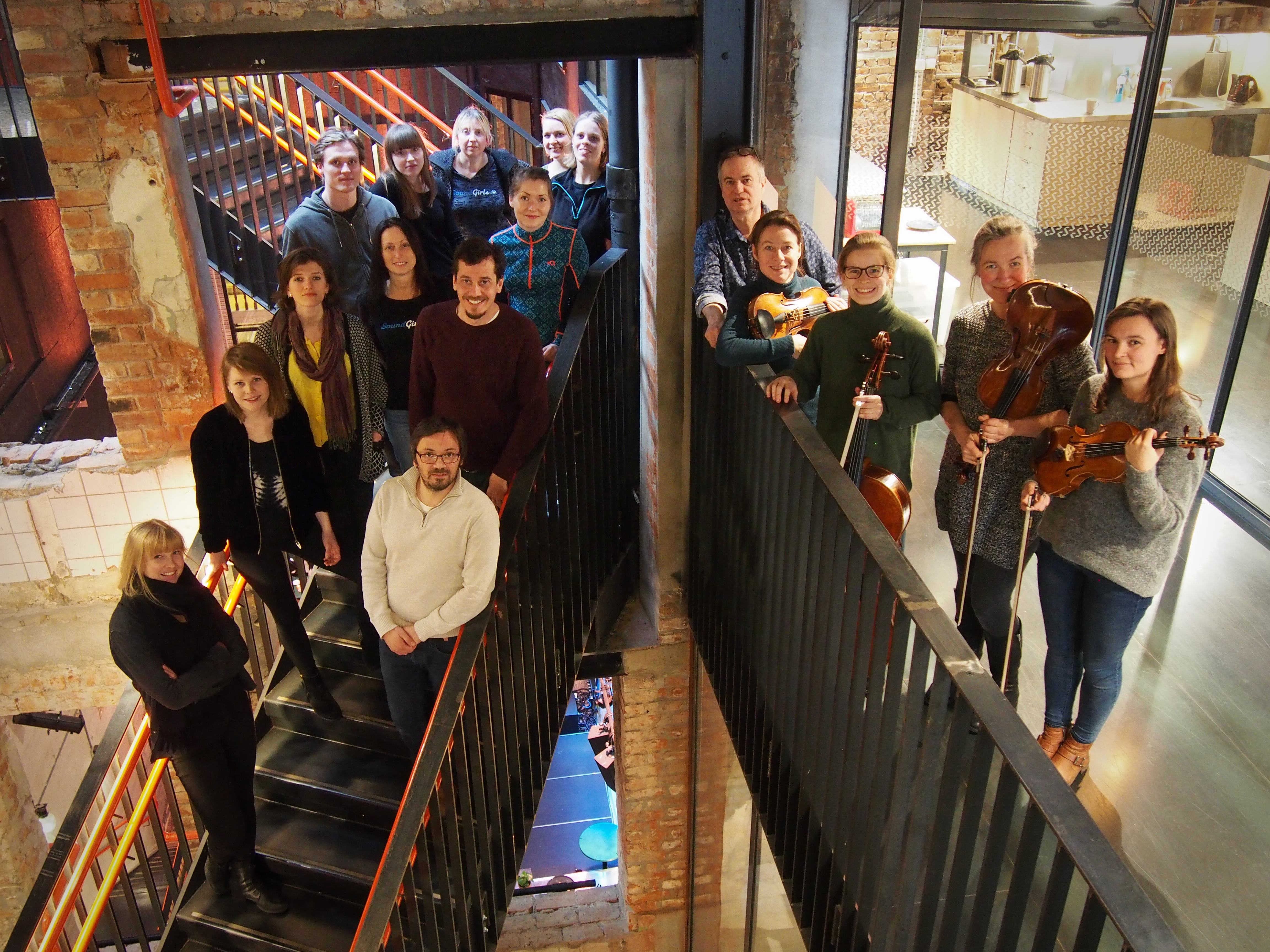
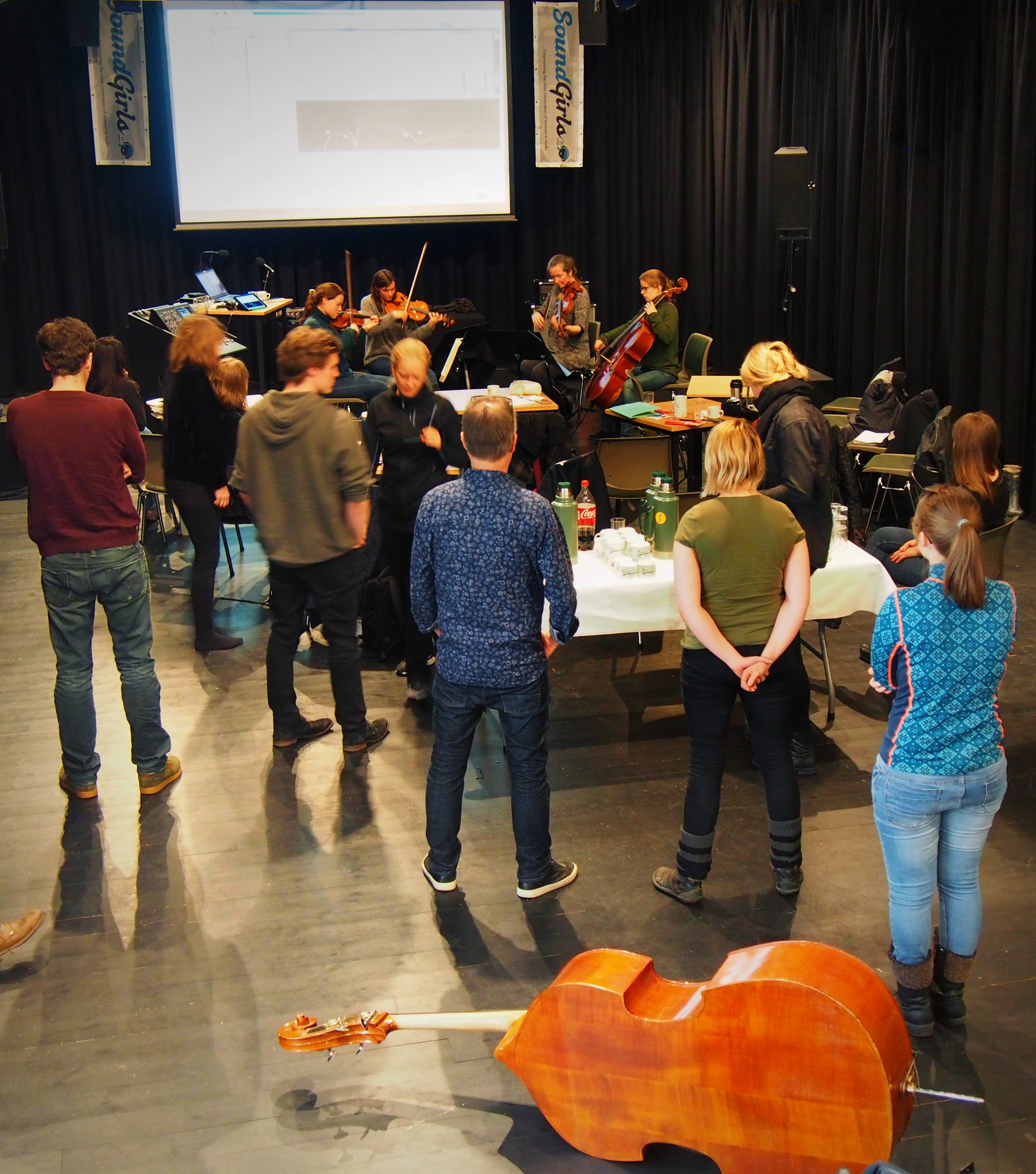
On the last day in February, Soundgirls.org – in cooperation with KRETS (Norway) – arranged a day with Asle Karstad, who gave a lecture on the reinforcement of acoustic instruments.

Asle Karstad has worked for over 35 years in sound, and and refers to himself as a ‘sound producer’ – the person who guides the sound so the listener will get the most optimal experience. He has spent most of his time working with the Oslo Symphonic Orchestra, but is also very well known by Norwegian Jazz and folk musicians.

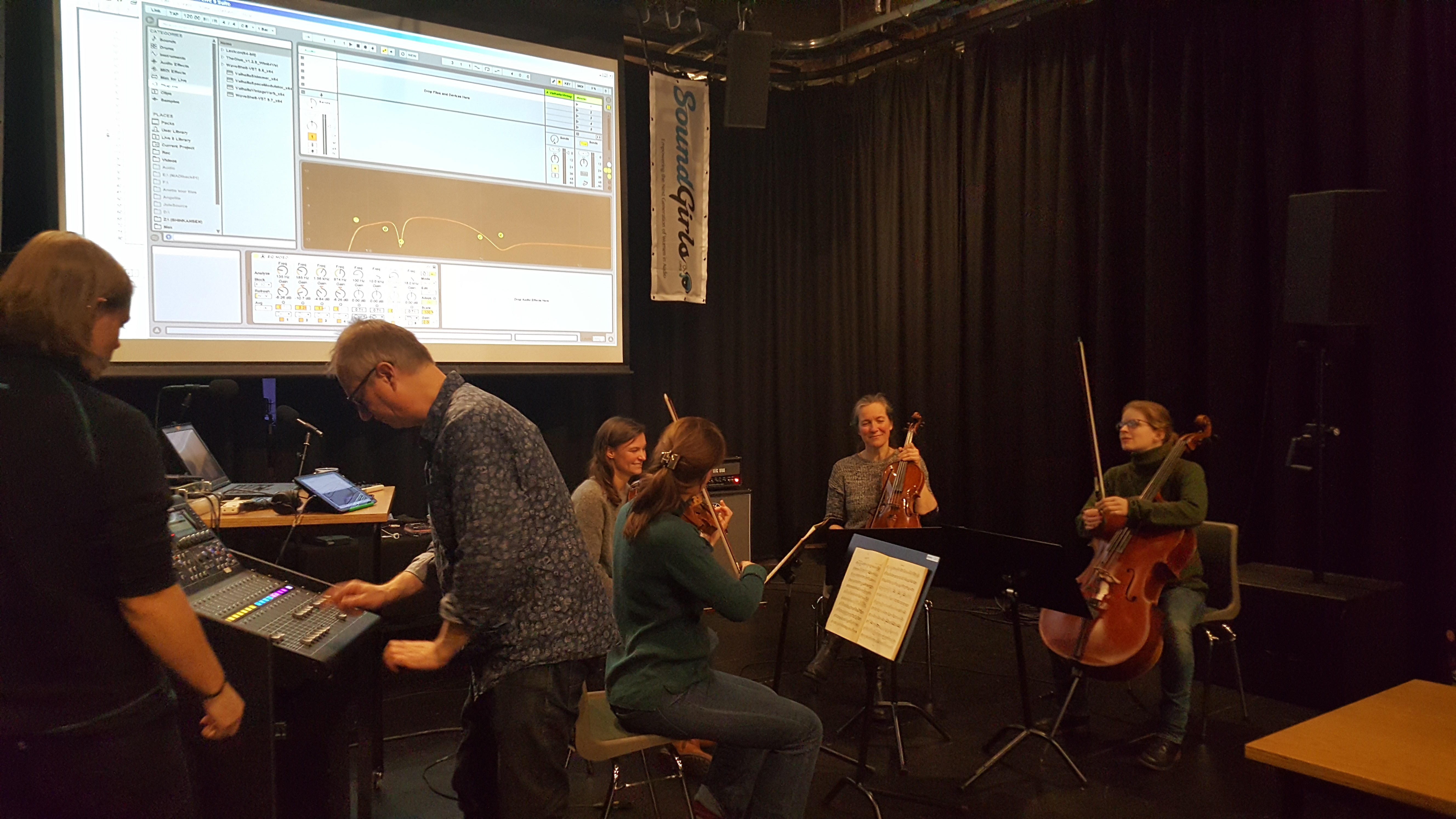
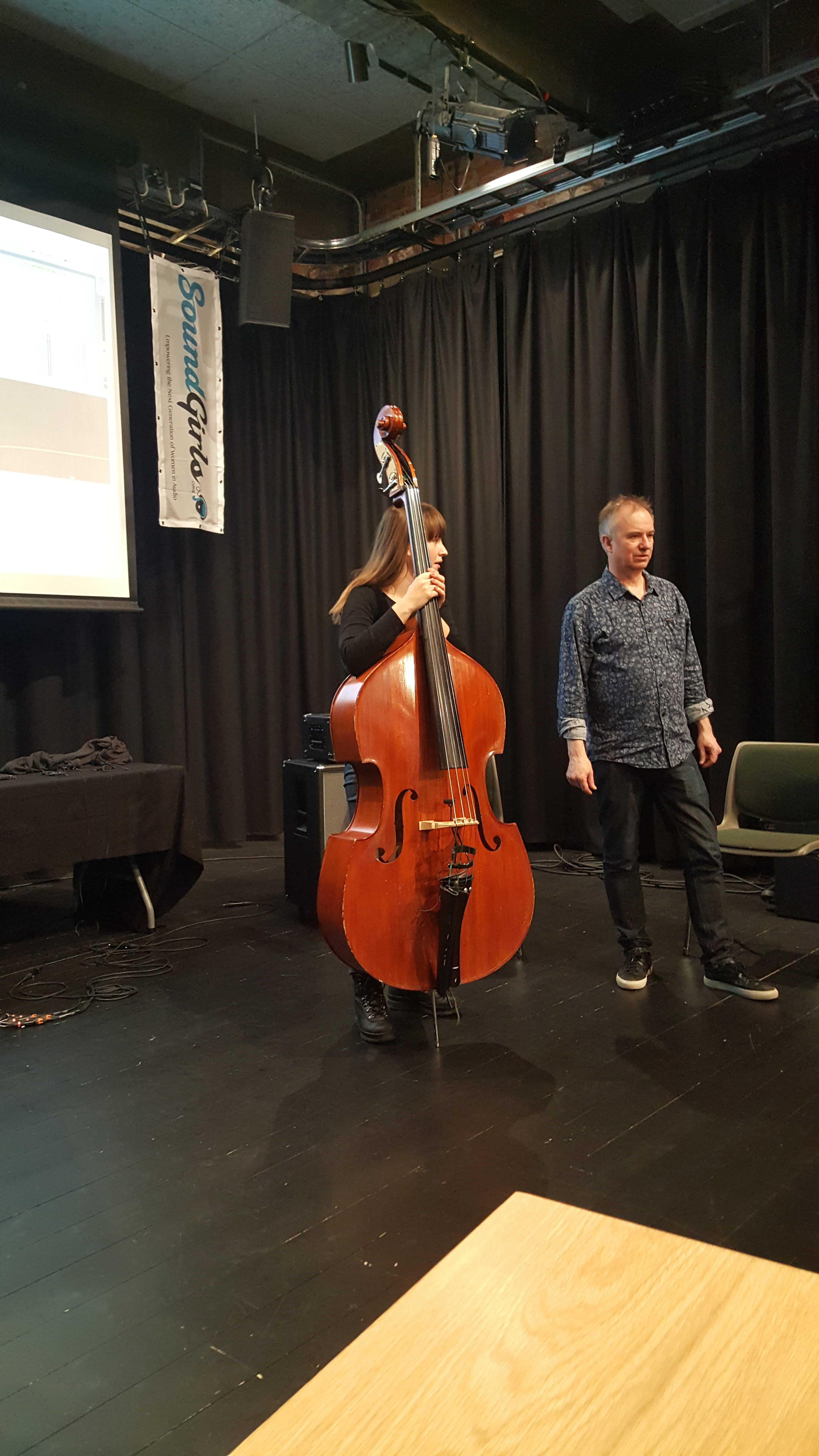
On this particular day Asle had been kind enough to invite some friends to join him – an acoustic guitar player, a quartet from Norwegian Radio Orchestra and a well known contrabass player by the name Ellen Andrea Wang.

We were very excited to meet Asle in this relatively new venue in Oslo.
Sentralen is only a year old and contains five separate and diverse concert rooms. (If you happen to visit Oslo, don’t miss out on visiting this very special venue.)

Asle’s first mission was to show us how you find the resonant frequency of an acoustic string instrument – or the ‘Crazy Note’ as he refers to it. (The resonant frequency is the natural ‘note’ that the instrument will create on it’s own as soon as you ‘put’ some energy into it, for example by tapping on it.) The reason Asle places importance on finding the ‘Crazy Note’ – is because he discovered that when six violin players put down their instrument at the same time, the little bump on the floor creates the resonant frequency, which could lead to feedback from the six violins in close proximity with each other. The resonant frequency of a violin will be around 275 Hz – 280 Hz. Their fundamental note is 94 Hz.

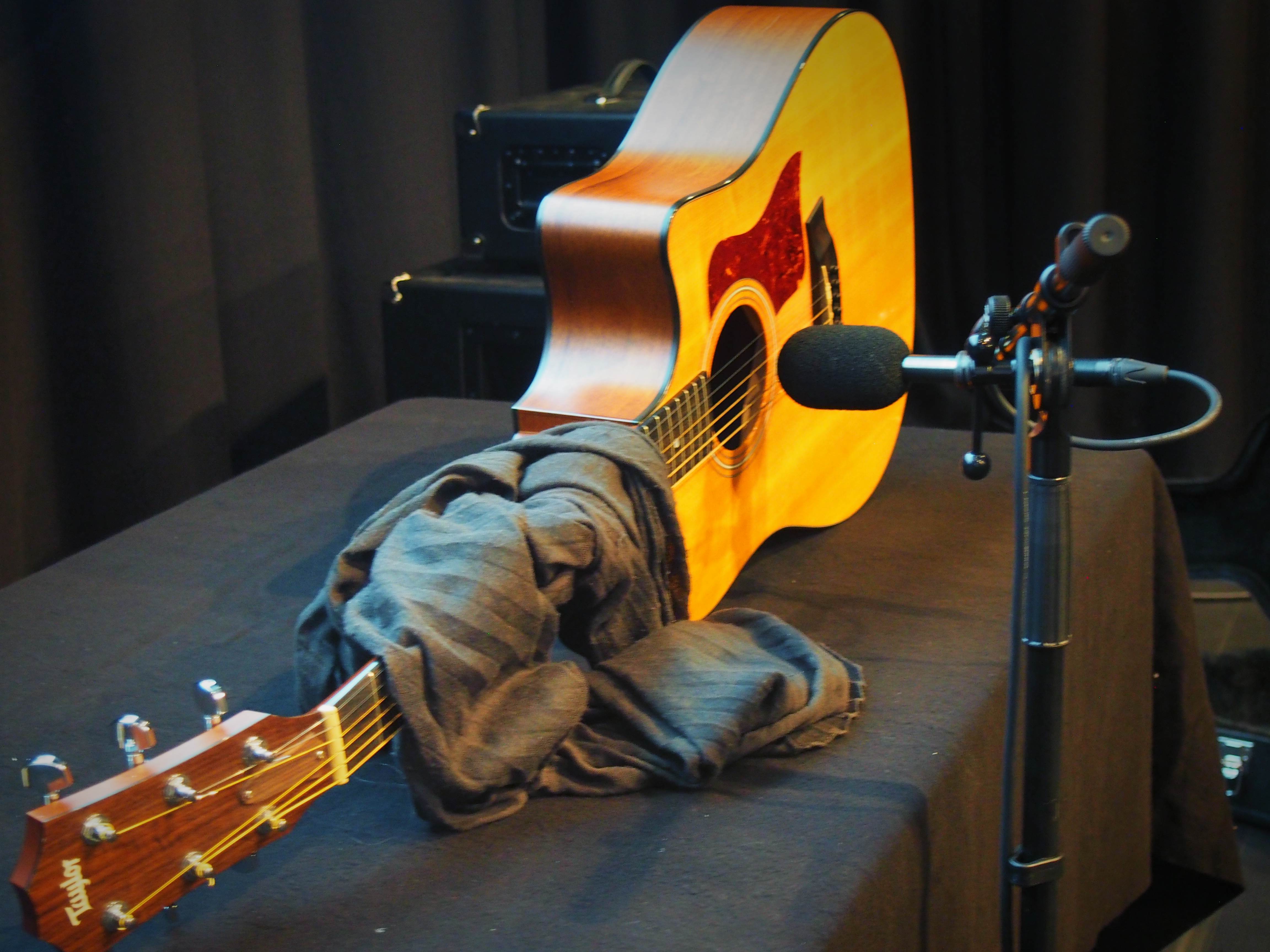
The method he used to find the ‘Crazy Note’ was to place the instrument on a table and close mic it where the resonant frequency was assumed to be found (Asle was using a DPA 4011 as microphone). He would then tap around the body of the instrument, and take a ‘snapshot’ of the frequency response.

By using this method we discovered that the instrument has one spectacular note in the lower range that stands out- the crazy note! (If you try this yourself, remember to dampen the strings so they don’t resonate – a towel works well)

It’s important to find this frequency because you may have to deal with other issues in the low end, like for example the low hum that likes to ‘sneak’ around your PA and end up in your mic’s on stage. If that ‘hum’ happens to be the same frequency as the ‘Crazy Note’ on one or more of the acoustic instruments in the orchestra, you could quite quickly end up with a problem.

Asle reminded us that it is always good to consider that the low end has a tendency to travel around the speakers and up on the stage, higher frequencies, as we know are more directional and therefore don’t have the same problem. This is also why we like to close mic, to eliminate ‘sneaky’ low end frequencies from PA and the room itself.

Whilst we are thinking about resonance – we also have to remember that any kind of resonant shell acts like an amplifier. You will do yourself a favor knowing the resonant frequencies of your acoustic instruments in advance to deal with any issues. For example the resonant frequency or ‘crazy note’ of an acoustic guitar will most likely be around 200 Hz. Asle suggested, when you pull that frequency out of your acoustic guitar that you add a little decay to it around 1,85 – 3,25 seconds to keep the natural sound to it.

Here are some other resonant notes to remember: Cello 80 – 90 Hz, Contra Bass 105 Hz (105 Hz goes for electric bass too). Asle suggest to ‘work’ a little around 65 – 105 Hz, since you will have the low end energy from the PA in this area as well.

Some other interesting tips from Asle are to put a compressor on the reverb send for your acoustic strings. And if you do not want ‘things right up in your face’ as he puts it, delay the whole mix 6 – 9 ms. We tried this and it made a huge difference, it somehow also made the mix sounds bigger and brighter.

Also to make your mix sound more natural you might want to put a high shelf cut on your strings from 1500 Hz and up – it sounds crazy, but if you think about it, higher frequencies die quickly over a distance. We felt this method worked.

Regarding string instruments – aim the capsule at the wood when you mic up – not for the strings!

KRETS is a part of the Norwegian music organization that was founded in 2013, as a tribute to the 100 year anniversary for the Women’s Right to Vote in Norway. The group is trying to connect female technicians across Norway by supporting events like this one with Asle Karstad. Soundgirls.org would like to thank KRETS for their co-operation and support.


The Important Art of Documentation in Theatre Sound Design

When you work on a production, you never really know what sort of life it’s going to have after that initial run or tour. A production you designed two years ago may suddenly get another run, and you realise you need to dig out all your sounds and designs and make them work in a different venue. Or, you need to hand it over to an associate to do the same. It’s at times like these that you discover the value of two things: accurate, detailed documentation and an organised filing system.

I know that documentation and filing are the least exciting aspects of a creative sound role, but I cannot overemphasize how much they will save your bacon when you need to recreate the sound design for a show. In the time-sensitive, pressured environment of theatre and theatrical productions, it’s very easy to let documentation lapse, so you need to either delegate the task or make time for it. You don’t want to be tearing your hair out the night before tech week kicks off because you have no idea where you put that crucial sound effects file you recorded four years ago.

Here’s a starter list of what you should be captured during the production of a show.

Rehearsals and production weeks before tech week

  1. Make sure you have copies of all your design drawings, whether you created them in CAD software or hand-drew them. If they’re hand-drawn, scan them so you have an electronic copy as well. Ask for model box photos as well (or take your own), so you have a visual reference point for this production.
  2. Make sure you have an electronic copy of the script, score, or both, and any additional material e.g. song lyrics, prologue/epilogue, as well as paper copies.
  3. Take photos of any pictures, sketches, diagrams, props, or anything else that were used in the rehearsal process or in your own creative time that directly influenced your sound designs. They may come in handy if you need to create any new files for subsequent runs.
  4. Label each sound file accurately as you create it, including documenting the recording process if you recorded it from scratch.
  5. Label and save all venue tech specs and sound hire quotes
  6. Label and save all photos taken during venue visits, including any notes about potential speaker/equipment positions

Tech week to press night

  1. Once speaker positions are set, take photos from multiple angles to accurately capture positions. If you have to hand a show over to an associate further down the line, it’s far easier to show them a picture of how you positioned a particular speaker in a venue than explaining it.
  2. Note positions of racks, microphones, processors, desks, screens, comms, cue lights, everything that’s specific to that show.
  3. If there’s anything particularly unique about this production that you may need to remember at a future date, write it down.
  4. Keep sound cue sheets and update them as necessary, including a record of deleted cues. They may be reinstated for future productions.
  5. Make sure you have an accurate list of hired sound equipment, including the hire company, any existing venue equipment used in the show, and any equipment purchased by the production
  6. Save all show and desk files

After press night

  1. Save copies of the final show files and desk files with copies of all final sound files.
  2. Save any sound files not used in the show to a separate folder. You may need them for subsequent productions
  3. Save all documentation, including sound design plans, final cue sheets, radio mic plans, scene maps, etc.
  4. Confirm where any sound equipment purchased by the production company will be stored following the end of the show’s run and save that information in a document
  5. Label everything clearly and put in a single folder so you can quickly find everything for that show
  6. Back up everything!

Managing your documentation should be an integral part of your sound design work, not an addition to it. Do it once and thoroughly for each production, and you’ll save yourself a lot of potential headaches in the future

The Art of Listening Part Two

The Art of Listening Part One

Mixing sound is both an art and a science – a collaboration between the feeling, intuitive right-brain, and the analytical, logical left-brain. Last month I talked about critical listening and how, as a monitor engineer, to interpret a musician’s requests. This month we’ll examine how to separate different audio elements within a mix, and I’ll describe how I EQ individual inputs. It’s by no means the only way, but in 20-plus years of trial and error, I have found this method to be the most efficient and effective for me.

Monitor mixes need to be easy to play an instrument to / sing to as well as sounding good. They particularly need to provide clear, functional information about pitch and timing, so it’s worth considering what is supplying useful information to a monitor mix, and what is unnecessary filler. For example, some sounds are useful for an artist to pitch to or time to, or they carry a signature riff within the song; other sounds might create a pleasing fullness for FOH but reduce the clarity of a monitor mix and make it hard to play along to. This is especially true when it comes to hard-drive tracks – some elements are more useful than others. Sounds like strings and percussion are typically pretty helpful; effects might be less so. PFL is your friend when it comes to identifying different sounds, particularly when multi-tracks are involved because the sounds are likely to change from song to song. Frequent PFL’ing of your inputs will familiarise you with what’s coming in, and helps you to identify useful audio information.

Judicious use of the most basic of EQs – a high pass filter – goes a long way to eliminating unnecessary frequencies that can muddy a mix, and it’s my first port of call in the EQ process. Consider the range of frequencies that each sound exists within and where the defining characteristics of that sound lie in the audio spectrum. Let’s take a hi-hat as an example – there’s not much useful information in the lower frequency ranges, in fact, the mic is picking up spill from the rest of the kit – so it’s good to clean up and get rid of the extraneous low stuff. Personally, I set a HPF at around 600Hz for cymbals, but try it for yourself – solo the mic, use your ears and see what you think. Follow the same process with your other inputs, and tidy up anything that isn’t providing useful audio information – play around and consider where you might set hi-passes for different drums, vocals and so on. You can do the same thing with lo-pass filters, but be very careful with these. A bass guitar for example is primarily low frequencies, but if you set a LPF too low, you’ll lose a lot of the ‘attack’ – the finger-on-string sound which gives a bass its definition – because that attack sound is actually quite high up in the frequency spectrum. (Try boosting a bass guitar in the 5kHz region and see what you notice.) Likewise vocals – most of the action is in the 300Hz to 3KHz range, but set your filters there and you’ll lose low ‘body’, as well the ‘super-Ks’ – the very high harmonics which give a sound its ‘air’. So listen, listen, listen and experiment!

Identifying frequencies is obviously a vital tool for a sound engineer, and learning this skill really is just practice and repetition. I spent many hours in a PA company warehouse with a mic and a graphic EQ, making a wedge feedback and gradually learning what different frequencies sounded like. Once you’ve got a decent idea of that, you can start to refine your skills using the parametric EQ on the channel strip of the desk, and this is the next EQ tool after the HPF for your inputs. My preferred way to precisely locate a frequency is to solo the (muted) input on cans/IEMs, set a filter with a tight bandwidth or ‘Q’ around the frequency I’m looking for, and boost it quite hard – say by 10dB. Then I sweep the filter up and down slightly until the frequency I’m listening for me pops out (you can close your eyes as you do this if you like, to make sure you really are using your ears and not letting your assumptions fool you!) and with that identified I can then reduce or boost it as appropriate. You might want to keep the Q really tight if it’s just one frequency that’s over or under-represented (which is what I’d usually do with toms), or you might choose to do a big old scoop – my typical kick drum EQ has a wide low boost for ‘boom’, a wide high boost for ‘thwack’, and a wide gap in the mids where there’s nothing useful or sonically pleasing going on.

Approaching EQ like this means that you start to carve an audio landscape, with different instruments occupying different areas of the frequency spectrum. In my experience that gives a nice clarity and ‘separation’ to your mix – the opposite of audio ‘muddiness’. It’s all about trial and error, so grab every opportunity you can to play around – the advent of virtual soundcheck playback systems has made it easier than ever to refine your skills, so if you’re lucky enough to have access to such a system, make use of it. Tip – most high-end desk manufacturers have demo rooms set up with exactly that, and are usually very amenable to potential end-users coming to try out their equipment, so don’t be shy about calling them up and arranging a session! It’s a great way to hone your craft, learn different desks, and make contacts.

Until next month, SoundGirls – happy listening!

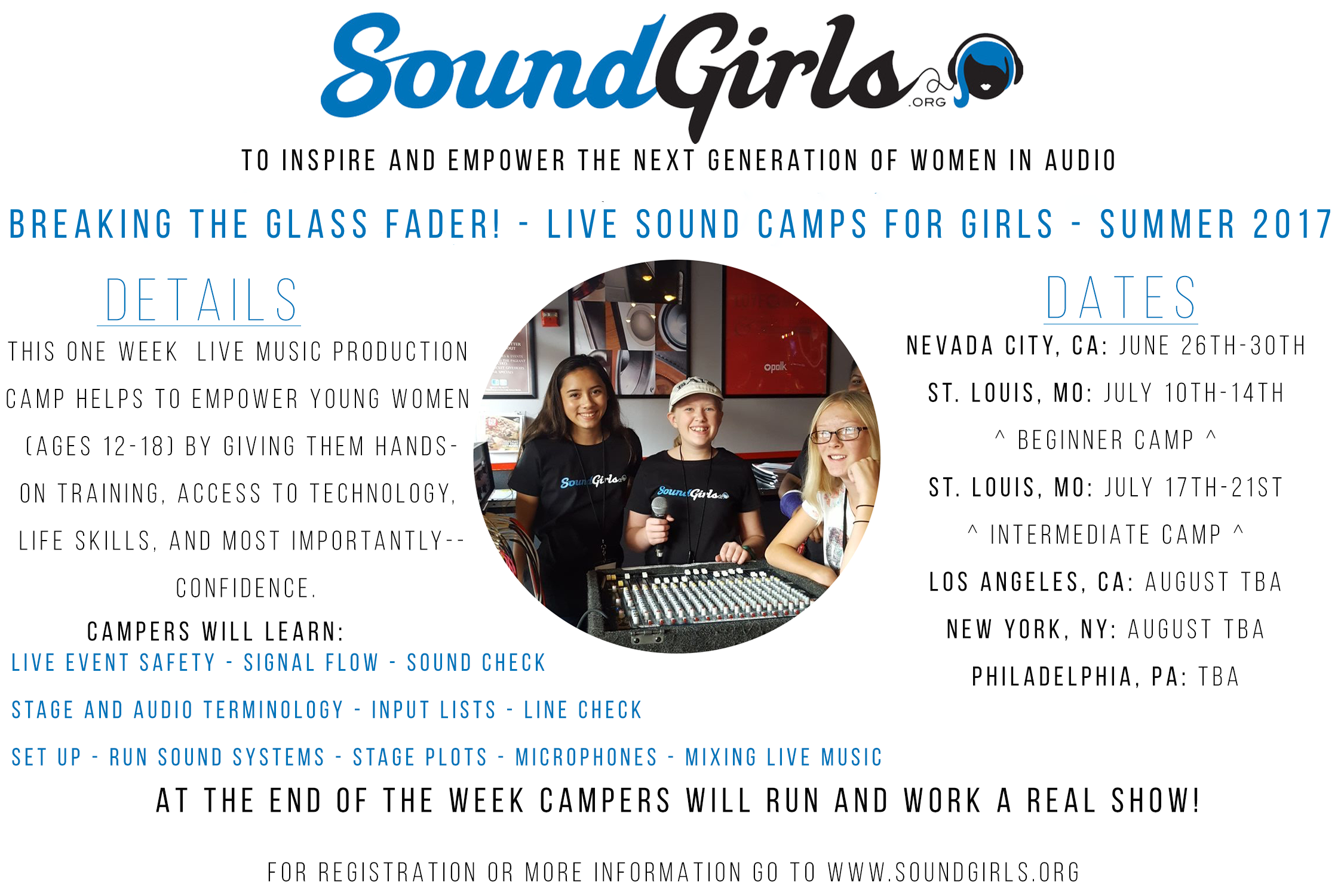
Registration for the 2017 Live Sound Camps for Girls is now open!

We are excited to announce that registration is available for the 2017 SoundGirls.Org Live Sound Camps for Girls!

Register here: 2017 Camp Registration

Registration is open for the following cities:

Camp dates and registration for Los Angeles coming soon!

Support our camps by contributing to our Generosity Campaign! Rewards for donating are tax-deductible and include perks from companies like Pro Tools, Ableton, Slate Digital, Sennheiser, Ultimate Ears, Audix, and many, many more!

For questions, please e-mail soundgirls@soundgirls.org with the subject line “2017 Live Sound Camp”.

Preconceptions in Human Hearing

As sound designers, we often have to fight against what something actually sounds like, and what audiences expect things to sound like. For example, an authentic phone ring might not necessarily fit the tone of the piece, and actually, a phone from a different era would suffice in creating urgency and tonality.

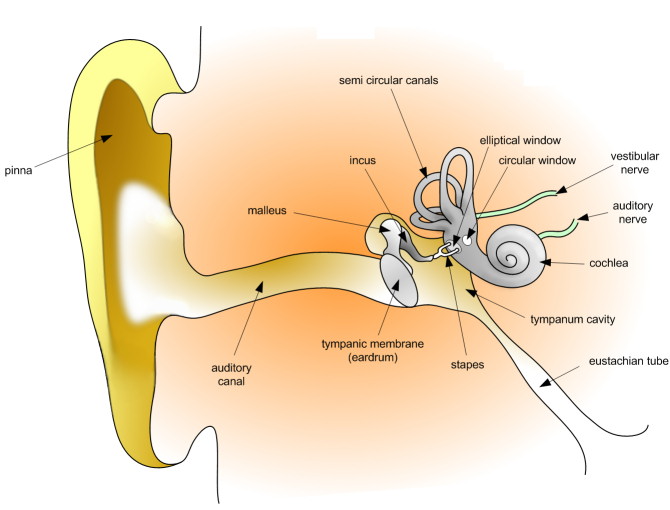
As a starter for ten, human hearing is fairly straightforward. Sound waves are transmitted through the cochlea which then eventually reach the Primary Auditory Cortex and the syntax processing areas of the brain. We can say that these processing areas of the brain share the sound waves and do their best to find some rhythm and harmony in what we are hearing. This is because of the linguistic processing tendencies we have, and our innate need for understanding and communication.

Our perception of sounds stems from our memories, and the human memory is typically untrustworthy. How many times have you shared a story and had someone remember a completely different version? We could argue that it’s the same premise for sound.

While it’s true that our echoic (hearing/auditory related) memory lasts longer and has a quicker processing time than our iconic memory (visual related), and could therefore be described as more reliable; our echoic memory can only hear things once, and things once heard cannot be unheard.

This is also where our short and long-term memories come into play. If you were sitting in a packed auditorium at front of house and heard an announcement (the quarter call, for instance), nine times out of ten we would hear the call, process it, and then completely forget about it. Should somebody then ask you, five minutes later, what that call was, you may just be at a loss as to what it was, but could probably remember the tone, the clarity, and more about the speaker’s voice than the actual message. There are a number of factors to blame here.

Upon recognising that there was no immediate danger, you would blend out the rest of the call, and continue your own conversation. This is our basic selective hearing, but what of the rest of the call? We attenuate the rest of the information and store it in case it becomes useful, but it’s not always remembered accurately. This is further because our memories store a lot of information, whether it be in the long-term or short-term, and intrinsically we link memories to other memories to aid said storage. Of course when talking about sound, and sound effects, it entirely depends on the context of how/when/where a listener has heard them before – no two natural sound effects will ever be the same, and nor will their memory recalls within individual human beings.

But what does all of this mean for sound design? And particularly sound design for theatre? If we are playing on audience perceptions of what sounds, atmospheres, or even conversations between actors should sound like, then it depends on the effect being sought. If we’re talking a straight play, then a doorbell from 1911 should probably be true to the text – this means a bell on a pull.

On the other hand, I have absolutely used a recorded shop doorbell because it fitted the tone of the piece better. The bell was, due to pitch, smaller than any of the real house bells we tried, which meant it was a slightly lighter sound, and therefore more whimsical. Of course, this steers us into the territory of scenes in a play, and their overall tones (not to be confused with musical tones). A big old rusty house doorbell would often seem too clanky and boisterous for the entrance of the next-door neighbour (unless, of course, this is the exact effect that you’re heading for).

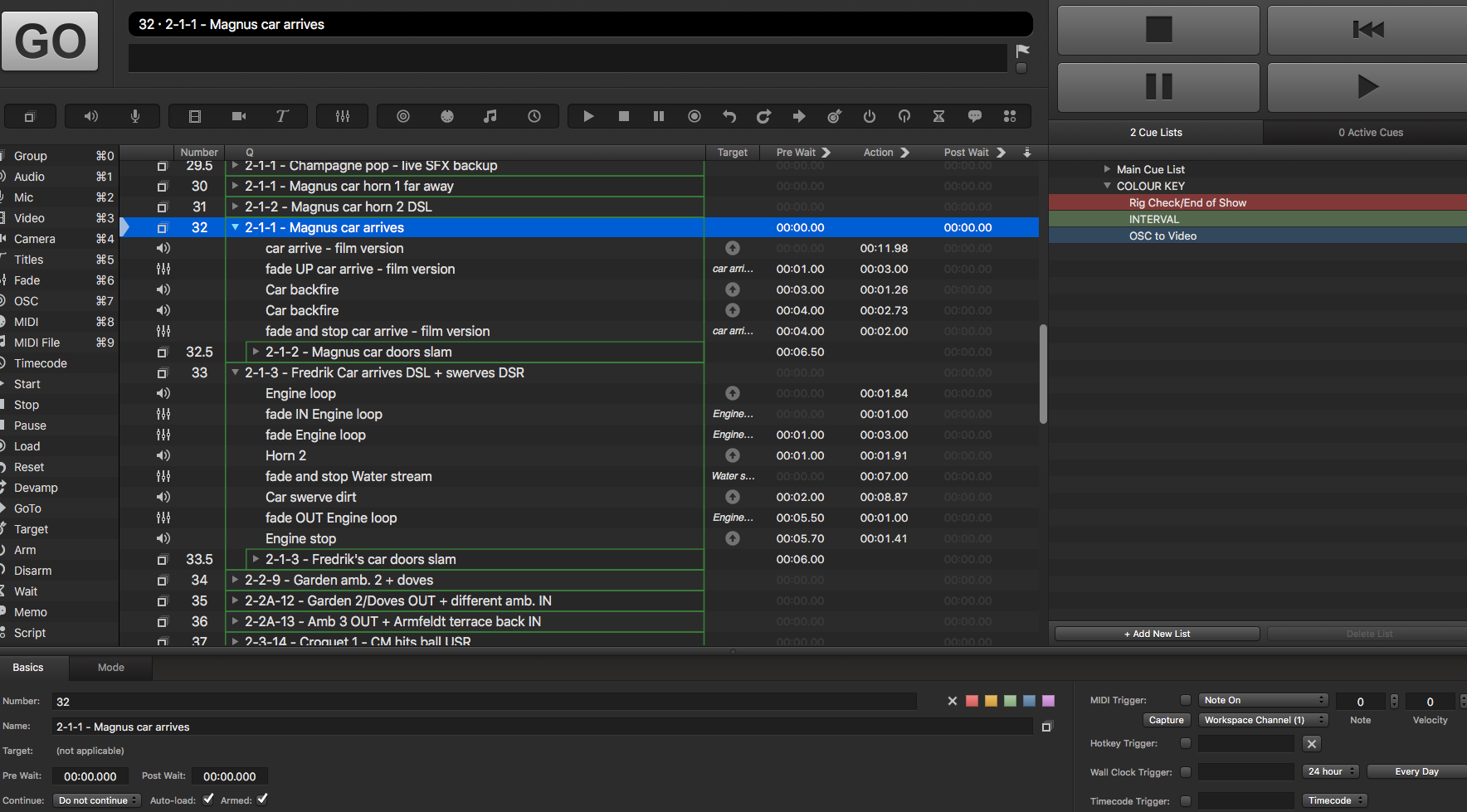
Sound designers will often never use just one sound effect to attain the overall effect that they are seeking; this may be as part of a sequence or even underscore/atmosphere. As we can see below from my recent show A Little Night Music, I used multiple tracks to create two car arrivals:

It’s often the textures of the sounds that I aim to create when sound designing, and often they do end up being true to what authentic/real-life things sound like, but more often they do not. This can often be for the reasons stated above. It can also end up being that, again, they do not fit the set, tone, or overall direction of the piece.

This is where the overall direction, sound design, and artistic licensing come into play. We can, with our best intentions, want something to sound authentic, however realistically, as designers and artists, we will borrow from different genres and times to make happen what we want to happen. This again, however, can come back to our own personal memories and experiences of sound and effects, and the ideas that they give us in terms of what we want to create.

Ideas fuel other ideas, as do our memories and creative minds, so the more that we feed into said ideas and the ethos of our creations, the more we contribute to the expectations of what things should, or could, sound like.

Connections

During the time I spent teaching, one of the biggest areas I missed about the sound industry was the opportunity to network. It seemed to me that the drawing together of like-minded souls was one of life’s joys and I was missing out whilst in the classroom. Any chance for a course or extra CPD and I was there like a shot! It has to be said, we as sound engineers are particularly good at creating opportunities to get together and share experiences. And of course, this is the best way to pick up new ideas and expand our horizons.

Last week our Opera House received a touring production of West Side Story. The sound department had a UK touring background and our team took great pleasure in exchanging stories and experiences. For some of us this reflection reminded us where we had come from and how lucky we are to be involved in such a diverse career.

With this in mind, the Soundgirls Chapter of Muscat has started preparing for a workshop to promote the mission statement and to introduce the audio profession to a new, keen, and eager audience. It will be run at a local music school- The Classical Music and Arts Institute in area of Muscat called Qurum. General Manager, Thanae Pachiyanakis, a seasoned singer and teacher herself is keen to encourage young girls (particularly musicians) to take an interest in sound for performance.

Thanae and I first met last year during one of the Opera House’s ‘Open days’. These days are incredibly popular and involve local bands, handicraft and art exhibitions, and local school children. It all takes place in the spectacular front-of-house area. Several porches lend themselves to small staged areas for performers and tables are set up for artwork. We set up PA systems for the bands, projectors, and playback in each area as required.

It wasn’t until another chance meeting at an ‘Internations’ event that Thanae and I got chatting. We realised that although from totally different backgrounds and different experiences of the industry we were passionate about very similar causes. Hence the start of the Soundgirls chapter in Oman!

Despite a relatively small arena for audio networking Thanae and I have proved that no matter how remote you are feeling, there is always someone who will share your enthusiasm and passion. The support and encouragement we are able to offer each other is immeasurable. So next time you feel alone, know you are not. If you look hard enough there is always someone to lean on.


X