Empowering the Next Generation of Women in Audio

Join Us

Freelancing – Scheduling Your Gigs


As a freelancer, have you ever worried about your schedule or saying no to a gig for fear they may never call you again? When you are new to the business, it can be hard or scary to say no to any gig. Your budget and career depend on these calls. Learning to say no can be hard, but learning to say no well will help you in the long run.

It is essential to balance your gigs and obligations. If you are on a 14-hour show until 2 am and someone calls to hire you for a show that same day at 6 am that’s just as long, it is likely in everyone’s best interest for you to decline the second show. You are probably already tired and already have been working many hours. You likely won’t be able to put your best into the second call, and the company would be relying on you to be fully present to complete the tasks at hand. Here is an example of where you should say no.

There is nothing wrong with saying no and you don’t need to justify to anyone why you are not available, but there are a couple of things you can do to make sure you stay in good standing with companies and stay on their call list for the future.

When scheduling yourself, the most important thing is to stay organized. Make sure you are promptly tracking when you are scheduled and where (especially if you travel for work regularly.)  The quickest way to burn bridges with companies is by overbooking yourself and not catching it until the last minute leaving someone without the staffing they need. The second way to quickly burn the bridge is to arrive at gigs tired and unfocused because you’ve overworked yourself.  Make sure you are balancing your schedule so you can be at your best for every show.

Once you are called for your availability, make sure to respond promptly. Don’t wait 3-4 days before getting back to the call. The company or client won’t wait for you to call back. They will move on to the next person on the list, and once the spot is filled it likely won’t be open again. If you get the reputation of never calling back, they will stop calling.  I recommend that you respond within 24 hours of a request, faster if you can. If you need a little more time, let them know. They will likely be more than willing to give you more time as long as they hear from you.

Call, text, or email them back letting them know you’re on a show or away from your schedule, and will try to let them know as soon as you can. Ask follow-up questions if the information hasn’t already been provided. Collect as much information as you can regarding the gig, such as what position you will be filling and an estimated timeline. This will provide all the information before you accept the gig.

After you’ve been able to determine if you’re available to work or not, it is imperative to respond to the hiring party.  Here again, if you do not reply, they will stop calling. Hearing sorry, no I am not available is better for your reputation than not responding at all.

As you learn, mistakes will happen, and the best thing to do is to address them quickly. If you happen to overbook yourself, pick which show you will work and let the other group know immediately.  Apologize for your mistake and if you’re willing or know of anyone, offer suggestions for your replacement. These situations can be difficult, but we’ve all done it at some point in our careers, and as long as you address it immediately, you should be ok for future calls.  Over time you will get better at scheduling as well as understanding how much you can take on at a time as well as when it’s the right time to say no.


Networking on Social Networks

In my last blog, I wrote about how thinking of artists and project managers as clients rather than bosses can really change your perspective for the better. An essential part of being your own boss is selling yourself to other potential clients, and social media is becoming an even more significant part of that. The way you present yourself online can have a substantial effect on how people perceive you and your approach to work, whether you’re consciously image crafting or not. Everyone’s situation and goals are different, but there are a few guidelines it is wise to follow when starting to navigate online self-promotion.

Social media can be a low-cost and effective way of getting your name out there and quickly showing people what you’re about. However, it can be a double-edged sword. Whether you agree with it or not, it is common practice to perform internet searches on people before inviting them for an interview. Plus, in an industry as tight-knit as ours, it’s inevitable that you’ll see the same names popping up on discussion threads and groups, so we often form impressions of each other before we ever meet or think to be on our best behaviour to land a job. It’s worth reviewing your privacy settings regularly, and perhaps making a separate list or entire account for work-related posts (this also saves your poor family and friends from being bored by tech talk!). Even if none of your posts are public, discussion groups can have many more people watching than you might realise, and anything you put in writing can be screenshotted and forwarded, so think carefully before posting. Make sure you’re happy to stand by what you say if challenged and avoid posting when angry or under the influence. Getting drawn into an argument online rarely achieves anything but time-wasting, and tends to show all parties in a bad light.

If you want to post about a gig, especially sharing photos, ask whoever is in charge first. Bear in mind that a non-disclosure agreement might have been buried in the small print of your contract if you have one, or someone might have signed an NDA on behalf of everyone in the department without your knowledge (these may not be legally binding, but it will not help your professional relationships if you break them). The rule of thumb is it’s okay to post photos of things the audience can see after the gig has finished, but always check before taking the photo. Don’t take photos of celebrities backstage! Ever! It is rude and unprofessional, and you may end up answering some very angry security guards. Never post pictures of your pass until after the gig or tour, and alter the image and make it clear it’s an out-of-date one if you must post it at all. Even if you don’t think it matters for your little gig, posting photos of passes encourages others to do it. Not everyone forging a pass is simply trying to see a show for free. Contributing to a culture of pass posting compromises everyone’s safety throughout the industry. Just don’t do it.

So what do you post then? This blog post from Wait but Why breaks down what makes a good or bad post. In short, if you’re trying to build your brand for work, your posts should be informative, entertaining and/or engaging. Everyone is human, and we all have bad days, but constant moaning about work does not show your best side. It is better to get stuff off your chest with close friends, ideally in person, when you can instead. Simply posting that you are in X venue doing Y gig is frankly boring. Add a bit of feeling or humour, like you’re so excited to finally work for a band you’ve admired for years, or how you totally deserve your afternoon cupcake after checking the coverage in a venue with so many stairs. It doesn’t have to be groundbreaking, but personalising your posts will help people warm to you and remember you instead of just scanning past, along with all the other utilitarian “look at me, I’m at work” stuff.

How often should you post? Most people I know would only post once roughly every 5-10 gigs on average. Of course, that varies. Some people never share anything, and others can’t do a day’s work without telling the world about it. There is also a time and a place for social media. If you have a phone in your hand, you can’t lift a flight case or coil a cable. Potential clients might be impressed by your stage selfies, but your current colleagues and clients will notice your lack of focus on the job at hand.

The other side of all this is how you perceive what other people share. It’s often said that social media makes us compare our every day with everyone else’s highlights. If you have a lot of friends in the industry, it can seem like everyone’s having the best time touring the world but you. Remember that most people can’t resist posting a photo of themselves drinking cocktails on their day off, but they’re much less likely to publicly admit that they had a terrible soundcheck, or that they’ve been suffering from crippling diarrhea ever since the second show. Take everything with a pinch of salt and know that you’re only seeing people at their best, or even better than that, if they see telling the whole truth as optional.

The thing is those people who post all the time appear 5-10 times as busy as their peers by comparison. It is also common for prolific posters to embellish the truth or present things in an ambiguous way. Saying you’re working at a festival, accompanied by a photo of the main stage taken from front of house when you’re actually a stagehand on the fourth stage isn’t a lie, but it isn’t honest. There’s a trend of posting photos of nice desks and outboard gear when the person posting is not the one using it. They never say they are the engineer, but it’s heavily implied, and it’s dishonest. It can feel like these people are putting themselves at an unfair advantage and it can be tempting to sink to their level and play that game too. There’s nothing stopping you, but when everyone knows everyone else, it’s very likely you’ll get caught out sooner or later. Even if you delete those posts, screengrabs can come back to haunt you years down the line.

At the end of the day, it’s up to you to judge what is appropriate to share, and with whom. However, no amount of bragging online will make you good at your job in real life. I’m far from perfect, but I try to remain positive and professional online and take the high road as much as possible so I can sleep at night. I find I do my best work when I’m well rested.

Editors Note More on Social Media Tips and Career Development.

Knowing your Limitations

As we are still at the beginning of the new year, it is now we should look at those new year’s resolutions that we made, our dreams that we want to become real and the goals we would like to achieve.

It is the time to evaluate what we need to get on with, to achieve our dreams and our goals. It is time to take a good hard look at yourself and your knowledge, time management, and work-life to see what can be improved.

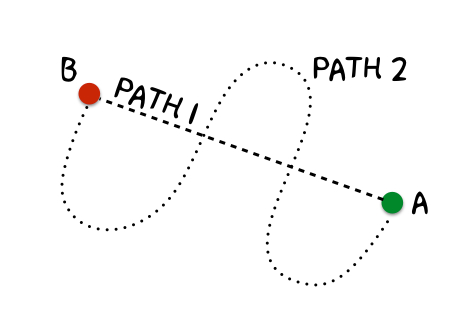
Knowing your limitations is a good start for example; what is limiting your chances to achieve your goals? What does it take to get from point A to point B?

What do you lack to get to where you want to be?

Say you want to become the most celebrated pianist in the world, what does it take to get there? Take a look at your practising routine, are you putting in enough hours to become the greatest pianist in the world? Are you utilising your own time in the best way possible to be the most effective when practising? Are you already the greatest pianist in the world but no one knows it? Well perhaps then less time needs to be spent in front of the piano and more time in front of people networking.

This applies to any industry; if we want to improve we need to face the hard fact that we have limitations and flaws. We will always have weaknesses but that does not mean that we can not work on them and improve.

Give yourself some honest and constructive feedback, but do not talk down to yourself. Do not be upset with yourself because you are not getting something straight away. It is hard to admit your weaknesses to yourself, but we have to do it if we want to improve.

Do you know where point B is?

It is easier to follow a route if you know your destination. It is easy to get sidetracked if you do not have a north star to guide you and to keep you motivated. Want to work on a big festival stage? Absolutely, but maybe that big festival is point C.

So you start working at your local one-day festival. You can not get to point C if you have not been going through point A and B first.

The ability to achieve something is only limited by a lack of knowledge. You need to study to improve your understanding, but then you need to put that study into practice.

There is only so much you can learn in a safe and comfortable environment. You have to put yourself outside your comfort zone to improve and to learn from real life experiences. It is so important to be able to work under pressure and to find opportunities to fine-tune your skills.

As well as knowing your limitations, you will need to learn and respect your strengths. For some, not acknowledging your strengths is a weakness. You have got to be confident in your knowledge, you have to tell yourself ‘You know what, this is what I am good at’ and use that to your advantage and balance it out with your weaknesses.

If you struggle to see your weaknesses and strengths then ask a good friend; what are my strengths? In what areas do I need to improve? Be open to feedback from others as they see you in a different light than you do. Being open to critique can be incredibly difficult for some, but it will help you to be able to improve your skills.

Now is the perfect time to sit down and write it all down. Aim high but be realistic, some goals might not happen this year, but that does not mean it will not happen in the future. However, getting to know your limitations will put you on the right path towards your dreams and goals.


Should I Stay or Should I Go?

I think we all reach a point in our lives where we might feel a little lost on our path. All of us who are in the entertainment industry, know how lucky we are to have the opportunity to work in a creative field. The few of us who actually followed our dreams or perhaps just happened to stumble upon them.

However, like anyone else we can also feel a bit lost and unmotivated, feeling like there is no purpose in what we do. I recently felt like this, craving something new and learning new things.  I felt like I wanted to move on from where I am currently at.

Writing this I felt a struggle, as I felt like I’ve been on autopilot the last two months, and therefore have nothing to say or write about, feeling generally unmotivated. Not because I had little to do, but because the festive season is approaching and having learned from last year, I wanted to get a head start on all the craziness that is waiting around the corner.

Looking back at these past two months, contrary to my feeling of lack of motivation, I have been very productive and done plenty! Is that perhaps why I felt like I wanted to move on as I know what to expect and the excitement (and stress) is not what it used to be? The adrenaline you get from the excitement of not knowing what is ahead of you? Maybe.

I guess that though we might feel stuck, unmotivated or lost, it does not mean that we actually are. Perhaps there are small changes we can do to change our circumstances, make things more exciting or possibly it is time to go, to move on in life and seek a new adventure?

Step back and evaluate

Look at where you are, what is going on around you? Are there things that could run better, smoother & more efficient? Is your workplace in order, do you have everything you need to do your job properly?

Sometimes you need to take a step back to take two steps forward. Identify what is causing you to feel unmotivated. Will moving on solve your problems or will it actually just make you feel more lost? Are you prepared to move on?

Can you change your situation?   

Are you able to change things at work to make things more/less challenging? It is important to feel challenged and to learn new things, but if it is too challenging it can result in stress.

Challenge yourself, set goals in your work- and personal life. There is always room for improvement even if you are already doing a great job.

If things are too challenging and stressful, ask for help and maybe take a step back. Troubleshoot and take one thing at the time.

What is your purpose?

We all need a purpose to feel fulfilled in life. What are you working towards, do you have a plan?

Sometimes you need to walk away from situations that are not fulfilling. Sometimes it is about saying no and establishing boundaries. Sometimes it is not your job that is unfulfilling, but your personal life and that affects your work life. Sometimes you need to stay to grow.

What do you need to reach your goal? Are you in the right place, right scene, right city or even in the right country?

Deal with it

It took me a good couple of months to shake away the lack of motivation and decided to make a few changes in my personal life rather than in my work life.  I felt like I wanted to leave and to move on just because I did not want to deal with things in my personal life. I took a step back, evaluated and changed my situation, and this is something we need to do regularly in life.

So the not so simple question is; will you stay or will you go?


It’s Time to Get that Job

Hiring and maintaining staff is an important part of running a venue.  Venues need their regular full-time employees as well as the staff they keep in their ‘back pocket‘ for larger events.  Working at the university, I often get to be the first person to introduce potential future staff of these venues to the wonderful world of sound.  (Stage and lighting too, but that’s for a different group of people). Throughout the hiring process, I have noticed a trend with job candidates, in particular with their applications. So I thought I would highlight a few tips for people about to hit the job market and get those coveted interviews.

First, take a look at what SoundGirls and their contributors have already provided you with information regarding your resume. This resource provides excellent knowledge and tips to build or update your resume as well as your cover letter and social media tips.

Second, a lot of organizations will ask you to fill out an application to submit with your resume. My advice, fill out the application completely and follow all of the directions provided. This may sound simple, but out of all the applications, I receive every year at least half have a question or two left blank, or they didn’t follow the directions. Sometimes they are simple things like filling in their contact information.  Other times it’s completely missing the skills/experience questions on the second page.  As for following directions, if it says something like please type your answers, don’t turn it in handwritten in pencil or if it says attach a resume, make sure you do that too. Incomplete applications won’t make it far, and you certainly won’t make it to the interview phase if people don’t know how to get in touch with you. Help yourself out and carefully read through and complete the application.  Also, make sure to turn your application in by the deadline, doing so will reflect that you are a person committed to getting things done on time.  Keep in mind that applications are often pre-scanned, either by recruiters, HR departments, or automated processes.  Attention to the details is critical.

Third, assuming you’ve made it onto the interview process (we all know you will because you have filled out the application completely and you have a great resume!) prepare for the interview. Research the organization you have applied to, better yet do that before you even apply. Make sure the culture of the organization will work for you just as much as you will work for them. Prepare questions to ask, as interviewers we know you have them, but if you don’t ask them it makes us nervous that perhaps you will never ask questions on the job, and we are aware you don’t know everything. Asking those questions now will also allow you to gain more clarity for the position you are going to spend hours of your life working in and believe it or not it also helps the interviewer get to know you better as well.  A well-asked question lets the employer gain insight into how you think and how you process information.

As an interviewer, I’m always impressed by someone who has done their homework and asks a question that isn’t found in a Google search of the top 20 questions to ask during an interview.  Outside of preparing questions to ask, be prepared to answer the questions that may come your way too.  There are three questions that you always want to be ready to answer; they have typically phrased something like the following:

Tell us about yourself –  When you are asked to share a bit about yourself, it is usually the first chance you have to speak for yourself outside of the application and resume you have submitted. Take advantage of that and make a lasting impact. Introduce yourself, say your full name, so the interviewer knows how it’s pronounced, provide them with your preferred name too. Share something that will make you stand out, but also remember to remain professional. Share a bit about your educational and work background too.  Think of it this way, if you had to tell someone the most relevant things about yourself in one minute, what would that be?

What interests you in this position –  In advance of the interview, review in detail the information provided in the job description and application process.  Find one or more areas that you can focus on when answering this question. The more specific your answers, the better.  Share your interests in the position; like what specifically in the job description made you think – I have to apply for this job! Share what you think you can contribute to the organization and share how you hope the organization will help you.

Be prepared to answer situational questions such as tell us about a time when you did “X,” how did it go, what was the outcome –  Interviewers often ask for examples of how you handled certain situations in the workplace.  While your resume may say that you have experience with certain tasks and responsibilities, interviewers like to see how you handle situations. It is important to give specific examples, don’t just tell the interviewer what you think they want to hear. You will impress them more by being yourself and specifically relating your experiences to the questions they are asking.  Tell them what you have learned through your experiences and how learning those things have shaped you to become the professional you are. To be prepared with answers to these kinds of questions it is important to think about examples before you’re in the hot seat. That way you can have many different examples to use which will also show the interviewer that you have had many relevant experiences and make you stand out amongst other applicants.

While these are all words to the wise, it can be hard to remember all of this advice during an interview.  Practice interviews can help you be on your game when it’s time for the real thing.   Practice with friends, mentors, or even employment services in your local community.  You can get feedback regarding your answers as well as your demeanor during these practice sessions. This can help you make sure you are representing yourself in the best way possible.  Practice could also help you be less nervous when you are in a real interview.

Passion – Drive – Success

Starting Out

So, you’ve discovered your love of music, technology, and production. That’s the first step! Being passionate about this work is an absolute must, or, frankly, it’ll suck you dry. (more…)

Happy New Year! Goals, anyone?


January is a great time to set goals, but statistically, only 8% are successful in meeting their New Year’s resolutions. However, people who explicitly write down their resolutions are ten times more likely to attain their goals than those who don’t. (more…)

Fake it Until You Make it – Or Not


I’ve recently seen some websites for sound professionals that made me cringe. Something didn’t add up, and some quick research showed exaggerated accomplishments, job titles, or experience level. There’s an industry saying that you should say yes to everything and then figure it out later (“fake it til you make it”), but when you only have one shot to make a first impression, is it worth the risk to inflate what you’ve actually done? (more…)

Getting a Start in the Field While You’re Still in School


I recently met up with fellow SoundGirl Member Ameeta ,who’s in her last semester of college and looking to move to Los Angeles after to pursue sound design. She asked a lot of great questions about how to get a jumpstart on her career while in school, so I wanted to share some of what we talked about. (more…)

X