Empowering the Next Generation of Women in Audio

Join Us

The Coffee Chat

Last summer, a student asked my former audio instructor for references for “coffee chats with audio engineers to discuss how they achieved their success and the advice they have for up-and-coming audio engineers and producers.” My instructor referred her to me. When I got the email, I laughed out loud. I’m lucky enough to be an intern at two world-class studios, but that’s all I am – an intern. At the time, I felt I could use a coffee chat myself for advice to get into the recording part of the studio experience.

“I’m not sure how much help I can be to you, as I’ve been feeling a bit at a crossroads, myself,” I  wrote back. “I know it looks like I have some cool jobs, and I kind of do, but it would be cooler if they paid a living wage!  But I am totally down to tell you what I’ve seen so far in my journey.”

We met up at Hyde Street Studios in San Francisco and the conversation really helped clarify things for me and gifted me the acquaintance of a smart, funny, motivated, Black woman who works with me to this day. I don’t remember her exact questions, but I thought I’d put down some of the things we talked about.

I had met her before at an event called Bay Area Audio Nerds, which is an informal meetup of audio engineers that sometimes takes place at local studios. 2200 Studios, formerly known as The Record Plant Sausalito, was hosting, and I was there as one of the studio interns. “When I saw you walk into the control room,” she said at our meeting, “I thought, ‘oh, thank goodness.’”

Now, I’m Chinese-American; both my parents immigrated from China in the 1950s. But how bad does racial disparity in an industry have to be to be that a Black woman sees me and says, “Oh, thank goodness?” There are essays that can be written about the differences in racism against different demographics, and this is not one of them. I’ll just say that I felt uncomfortable in the unspoken proximity to any comparison between Black and Asian experiences in the US, but glad if I could be of any help.

“I’m not an engineer yet,” I told her. “All I can tell you is what I’ve seen.”

“Well, from what you’ve seen,” she said, “What is the path to becoming a recording engineer?”

As far as I’ve seen, there is no path. You make your own path. And that’s both freeing and confusing for people who come right out of the structure of educational institutions or hierarchical jobs. There’s no showing up for work every day and doing a good job and getting promoted. Nobody makes you an engineer, you have to make yourself an engineer.

The important thing is access, and that’s what an internship gives you. You can’t learn to use gear if you have no gear. You can’t learn to run a recording session by imagining it; you have to do it. There are so many moving parts, the musicians, the instruments, the microphone choice and placement, the routing. Troubleshooting noise, line of sight, isolation, software glitches, pivoting with sudden changes of plan. It’s lunchtime, is everyone going to take a break, or will they get really hangry? In the middle of the orchestrated chaos, you’re also responsible for the vibe. You have to be everywhere but not in the way.  It’s amazing any music ever comes out the other end, but it does, and it’s glorious, a miracle.

I’m filled with gratitude every day that I get to swim in that soup. And that’s important, too, because you have to love it to do it. Even for engineers that have been recording for decades, there are months when clients don’t call, when they start thinking that they need to find another job. A lot of recording engineers do have other jobs: stagehand, live sound, corporate A/V tech. The pay is not great, the hours are long and inconsistent, schedules change at a moment’s notice. “I can only be friends with other people in audio,” another friend once joked. “Nobody else understands why I have to cancel plans all the time.”

Most internships will have some kind of arrangement that allows the interns to access the studios. It’s usually some kind of work trade agreement, or maybe a discounted house rate. This is where you make yourself an engineer. Book a session, just with some friends jamming, and try recording them. Fail. Kick yourself. Tear your hair and curse. I told an engineer about my first attempt at recording, saying, “It didn’t go perfectly, but lessons were learned.”

He laughed. “You just gotta throw yourself on the fire, “ he said.

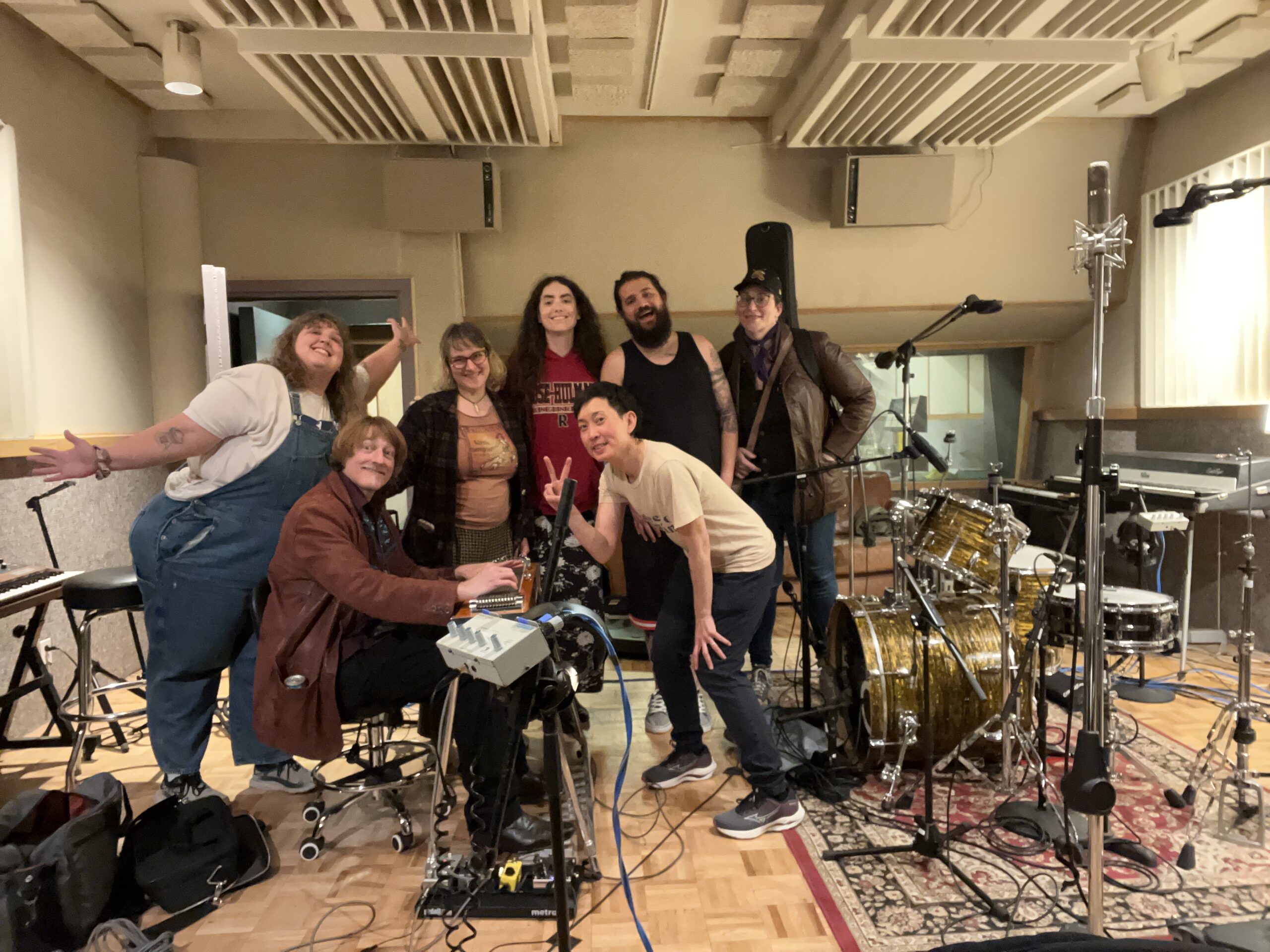
After a few sessions with friends, I approached a local band I liked and asked if they’d want to have a free session with a novice engineer, and they said yes. I hadn’t seen the full band, because they played with various configurations of bandmates and even as a duo sometimes, and it turned out to be a six-piece band, including fiddle and pedal steel guitar. They invited a seventh, a professional Americana guitarist and vocalist who had been signed to a label. To say that I was nervous doesn’t even come close. I was sick with apprehension.

Did it go perfectly? No. Did they have a good time and leave happy? Yes. It was a 15-hour day for me, no breaks. There were things I realized afterwards that I didn’t do or that I should have done differently. But two engineers listened to the rough mix and both commented, “This was well recorded.”

Totally worth it.
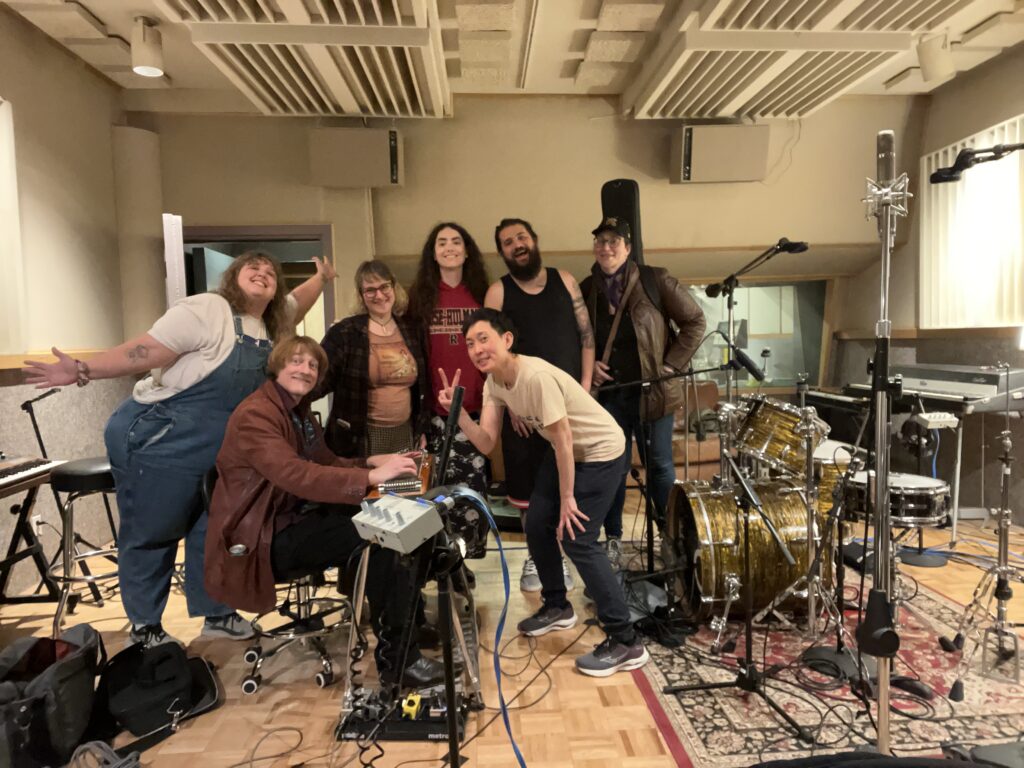
Squeakie, with guest musician Mya Byrne.


I hate making mistakes. It feels really dark, like I’ve broken some kind of moral rule. But I can honestly say that every mistake has turned into a skill, because there comes a time when I don’t make that mistake anymore. So don’t let the fear of mistakes keep you from trying things. Spoiler alert: you will make mistakes. They are the seeds of who you will become.

As we were wrapping up our coffee chat, the student said to me, “What advice do you have for a woman of color trying to get into this industry?”

Maybe here it turned out to be a good thing that I had been having a bit of an existential career crisis, because I’d been feeling like I should give up, and had given my situation a lot of thought. There’s both camaraderie and competition among recording engineers, and being an intern can feel a little bit Lord of the Flies at times.

“Two things,” I said. “Remember why you got into this. If you love recording, do it for the love. I got into this because I wanted to help people be heard that don’t always have access to or feel comfortable in a recording studio. I want to record those people so they can get their voices out there. I don’t need to be the best, or the top, or win any awards, so I can’t waste my energy thinking about that.

“The second thing is something that someone in an online group told me, when I had to go in and have a difficult meeting with HR at my old job. They said, ‘Go in clear on who you are.’ People are always going to try and tell you who you are, and act like they know who you are better than you do. You’re the one that knows. You’re you. You’re the only one who knows.

“Remember why you’re doing it, and go in clear on who you are. Take those two things and hold them in front of you and then just move forward.” I laughed, holding my hands in front of me in a wedge shape. “Like a ship parting the waves.”

As I walked to the station afterwards, I felt lighter and clearer, myself, on who I am and why I’m doing what I do; I felt those two things in front of me, ready to part the waves. So one more piece of advice: don’t be afraid to talk to people and ask them questions. Who knows, you might be helping them figure things out.
Dolby Atmos Intro with John Scanlon

Dolby Atmos Intro with John Scanlon
March 18 | 3:00–4:30 PM GMT
Online Event – Link will be sent after registration

Join us for an in-depth Dolby Atmos demonstration with John Scanlon, designed for audio practitioners interested in post-production and immersive sound workflows.

This session will introduce Dolby Atmos technology, explore its core features, and highlight creative applications within post-production environments. John will walk through practical approaches, workflow considerations, and creative possibilities when working in Atmos.

The webinar is geared toward beginner to intermediate levels, but is absolutely open to more experienced professionals who would like to deepen their understanding or ask detailed technical and creative questions.

Whether you’re new to Atmos or looking to refine your approach, this session will provide valuable insights into immersive audio production.

Join us online – link will be sent upon registration.
Sign up here

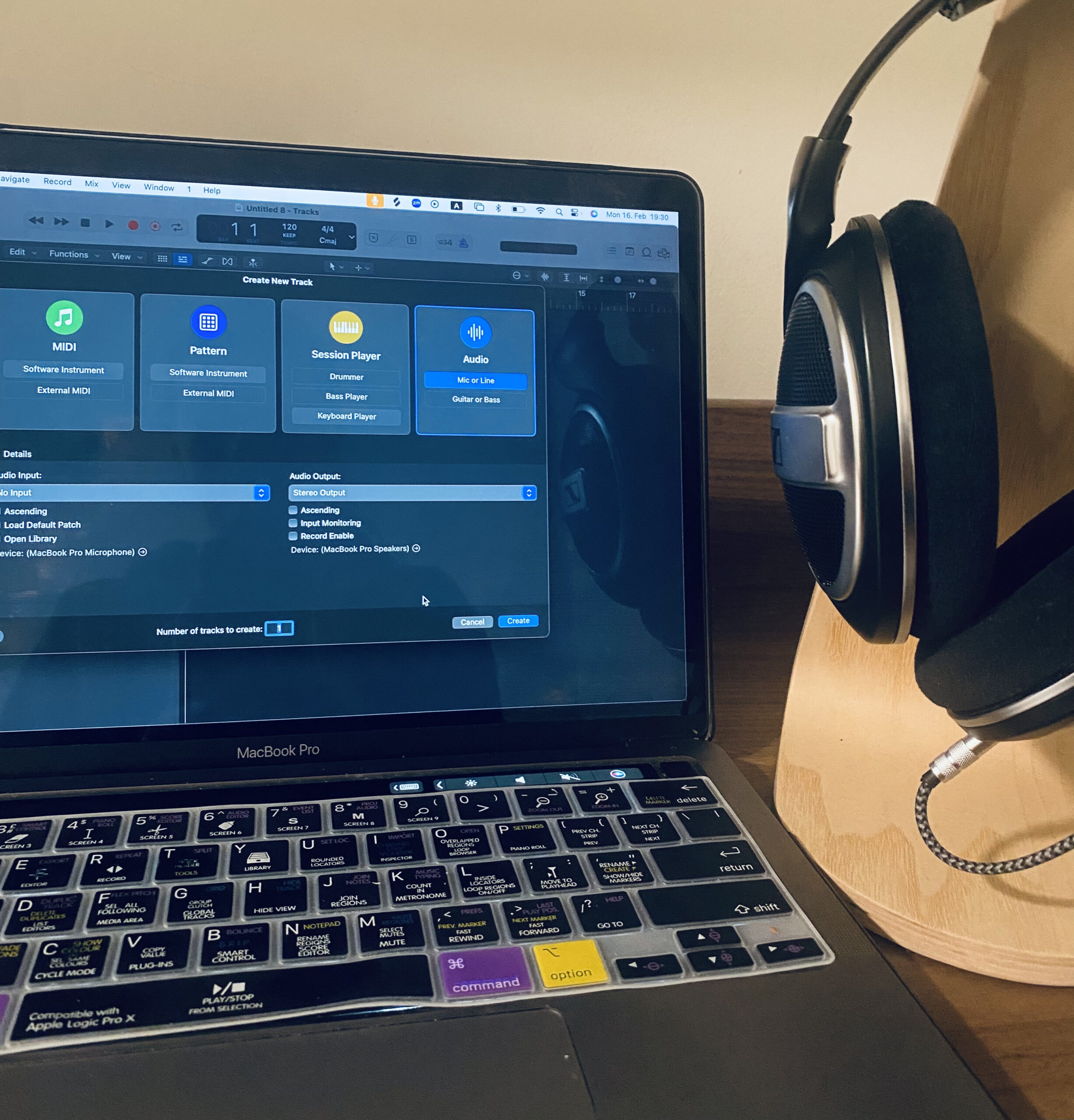
From Intimidation to Identity: My First Year Inside a DAW

Most of us remember the first time we used our DAW. That moment when your journey as a producer is entirely in front of you, and you have no idea what to expect or what’s coming. It’s a moment full of uncertainty, but also expectation. While at first, our beloved workstations can feel super overwhelming, it’s important to understand, as a beginner, that almost every successful producer you know and look up to faced this exact dilemma as well. While I am still in the early stages of my own personal development, I feel it’s important to share that this feeling of intimidation is completely normal at the beginning of really anything new that you’re trying. And it’s certainly nothing to be ashamed of.

The First Climb

Like most of you, when I first opened my DAW, which is Logic, I felt like closing it again after five seconds. Suddenly, all the anticipation and enthusiasm I had evaporated into thin air. It felt like sitting in a crowded room with strangers that are talking about things you don’t understand, in a language that you don’t understand. I was humiliated. I was convinced that I had overestimated my technical abilities, and initially, I had. There were too many buttons, too many menus, and too many windows asking for decisions that I couldn’t even make. Every click seemed to open three more options, none of which I knew how to make sense of. I was completely lost, but thankfully, I was far from giving up.

The Noise before the Signal 

Once I got past the initial shock of simply opening the program, I did what most beginners do: I went straight to YouTube. And immediately got overwhelmed all over again. There were endless tutorials promising to teach “everything you need to know about Logic” in ten minutes. One video said to always mix this way, another said to never do that. Some producers swore by certain techniques, while others insisted the exact opposite. I didn’t just feel confused, I felt buried under new information. I had no idea what actually mattered and what was just advanced advice meant for people far beyond my level. I was trying to learn everything at once instead of learning the right things first. Looking back, this stage was just as difficult as opening the DAW for the first time: learning how to filter the noise from the signal.

Flattening the Curve

OK – slowly but surely, things started making a bit of sense. Instead of trying to master everything, I began focusing on the essentials. I learned what the basic stock plugins actually did, not just how they worked, but how they affected sound in real, practical ways. I

started understanding EQ: how to cut mud, tame harsh frequencies, and make space for different elements. I learned about de-essing vocals – the simple stuff. I discovered compression: at first by overusing it, then by finally realizing less is often more. And, of course, I went through the classic beginner phase of putting way too much reverb on absolutely everything (and wondering why oh why mix sounds so muddy).

One of the most helpful things I did was create templates in Logic: personalized settings that meant I didn’t have to rebuild my workflow from scratch every time I opened a project. Having a familiar starting point made the whole process feel far less intimidating. I finally had some points of reference.

Small Peaks Along the Way 

Once the basics stopped feeling so unfamiliar, I could finally focus on what I’d wanted to do from the start: creating. For the first time, I was able to translate abstract ideas—melodies, rhythms, little sparks of inspiration—into something real and tangible. Of course, the results were far from perfect. My early mixes wouldn’t have been allowed anywhere near a radio station. But it felt incredibly liberating to know my way around the essentials well enough to experiment with the sounds and tools my beautiful DAW has to offer. I obviously wasn’t making masterpieces after two months, not even close. But I had unlocked a concrete way to capture my ideas beyond the simplicity of a voice note (although I’ll obviously always be grateful for voice memos). Nevertheless, that realization alone felt like a small peak worth celebrating. From that point on, I realised I wasn’t as scared anymore. I finally felt like I could actually do this.

The First Real Milestone 

The harder I worked on improving my techniques, the more of these “small peaks” I encountered. Whether it was finishing my first few songs, remaking projects from other artists, or finally trusting my ears enough to mix without constant doubt, I realized that the more time I invested in my DAW, the more progress I saw. After about a year, I felt genuinely confident in my skills. Could I compete with professional producers? Of course not. But I had time—and so do you. Looking back, I wish someone had told me sooner to stop comparing myself to others. The moment I did, I finally felt free to make mistakes and actually learn from them.

Even with a few mixes I was proud of, I was still nervous to share them. That changed when I moved to a new city and met a producer while looking for a room to rent. We ended up talking late into the night, and when I mentioned that I made music too, he asked if he could hear it. I hesitated at first, terrified of being judged, but eventually I left him alone in his studio to listen. When he came back out half an hour later, he was emotional, telling me how beautiful he thought my work was and how much I was underselling myself.

That was my first real milestone. Since then, even though I’m just a 19 year old university student, when people ask me what I do, I say “I am a producer”, instead of “I want to be”.

NorthWest SoundGirls – Carlson Learning Session!

Northwest SoundGirls — You’re Invited!

We’re excited to share that Carlson Audio Systems has invited Northwest SoundGirls to attend their upcoming Carlson Learning Session!

This is a fantastic opportunity to get hands-on with multiple console platforms and RF setups in a supportive, exploratory environment. Whether you want to build show files, refine workflows, explore Workbench, or just spend focused time on a desk you don’t normally get access to — this is your chance.

Location: Carlson Shop 2250 1st Ave S Seattle WA 98134
Session 1:
February 25-26
Time: 9am-5pm Lunch break 12-1
Session 2:
March 11-12
Time: 9am-5pm Lunch break 12-1
Bring: A way to take notes. Wear clothes you would gig in. Be ready to learn and ask questions.
These classes will be covering the skill sets, tools and general expectations that we like all our technicians have.
Finally there will be coffee provided in the mornings and you will have an hour lunch break with several options food  nearby if you don’t want to bring a lunch.

We are incredibly grateful to Carlson for opening their shop and creating space for our community to learn, experiment, and grow.

If you’ve been wanting more console time, more RF confidence, or just more time to ask questions and try things without show pressure — this is it.

Please RSVP directly to Jesse @ jesset@carlson-audio.com so we can plan accordingly.

Huge thank you to Carlson Audio Systems for supporting Northwest SoundGirls. 💙

Northwest SoundGirls – Carlson Learning Session

Northwest SoundGirls – Please RSVP!

We’re excited to announce that Carlson Audio has invited us to attend the first-ever  Carlson Learning Session

This is a hands-on, open learning environment where you’ll have the opportunity to dig into consoles, build and tweak show files, experiment, compare workflows, and ask questions in a low-pressure setting.

The plan is to set up pairs of each console style Carlson has available so everyone gets real time to explore. Whether you want to build files from scratch, refine your workflow, or just get more comfortable navigating different platforms — this is your chance.

We’ll also have several RF setups connected to consoles, including:

Axient

ULX-D

PSM 1000

Axient PSM

You’ll be able to build Workbench files, compare settings, and learn RF workflow in a practical, hands-on way.

These setups will be available over both days. When you arrive, there will be a sign-up sheet with hourly blocks so everyone gets time on the gear they want. The time blocks are meant to be a rough guide — some may need more time, some less — we’ll adjust as needed to make sure everyone gets access.

Location:
Carlson Shop
2250 1st Ave S

Dates: March 4 & 5
Time: 9:00 AM – 5:00 PM each day (or until the last session is booked on the 5th)

Console Gear:

2x SD12 (with Waves)

2x S6L

2x Allen & Heath S5000

2x Yamaha DM7

RF:

Axient PSM

PSM1000

Axient RF

ULX-D RF

This is the first time we’re hosting something like this, and we’re excited to create more hands-on learning opportunities for our community.

Please RSVP so we can plan accordingly. 

SoundGirls Online Mentoring Program – Mentee Applications Now Open

SoundGirls is launching a new online mentoring program beginning March–April 2026, and we’re excited to invite mentees from across the audio community to participate.

We’re welcoming mentees working in (or interested in exploring) a wide range of disciplines, including live sound (FOH, monitors, systems, touring), recording and studio engineering, post production, film and TV/broadcast audio, sound design and game audio, music technology and engineering, mastering, production management and technical leadership, and theatre.

Program Format

This will be a small-group mentoring model, with one mentor paired with 4–6 mentees. The program runs for three months, with one 75–90 minute Zoom session per month. Conversations will focus on career development, sustainability, problem-solving, and real-world insight rather than direct job placement.

What Mentees Can Expect

Mentees will have the opportunity to engage in guided discussions, ask questions, gain perspective from experienced professionals, and connect with peers navigating similar paths. We’ll provide optional prompts and structure to help make conversations productive and meaningful.

Who Should Apply

This program is open to early-career and mid-career audio professionals, students preparing to enter the field, and those looking to pivot or grow within their discipline. We especially encourage women and gender-diverse individuals working in audio to apply.

SoundGirls is a largely volunteer-run organization, and this program is designed to be intentional, supportive, and respectful of everyone’s time.

If you’re interested in participating as a mentee, please fill out the mentee interest form below.

Mentee Application

Thank you for being part of building a more connected, supportive, and inclusive audio community 💙

If you would like to be a mentor learn more here

Limited Free Passes for SoundGirls Members to Attend USITT

We’re excited to share that USITT 2026 will take place March 18–21, 2026 in Long Beach, California, at the Long Beach Convention Center.

USITT is one of the leading gatherings for professionals and students in theatre design and technology, covering live sound, lighting, stage management, scenic design, production, and emerging technologies. It’s a great opportunity to connect, learn, and build community across disciplines.

Thanks to the generous support of JBL, we’ve received a limited number of passes for SoundGirls members to attend USITT free of charge. This is a wonderful opportunity to explore the expo floor, attend panels and workshops, connect with industry professionals, and represent SoundGirls within the theatre and live production community.

If you’re interested in attending using one of the member passes, please apply here. Quantities are limited and will be distributed on a first-come, first-served basis.

A huge thank you again to JBL for making this possible. We hope to see many of you in Long Beach.

SoundGirls Online Mentoring for Live Sound

Now Offering Online Mentoring with Rebecca Huston

SoundGirls is excited to offer three online mentoring sessions with Rebecca Huston, to be held via Zoom as part of our mentoring program. These sessions will take place once per month over three months and will focus on recording arts with space for questions, discussion, and career guidance in a small-group setting.

How it works: This first mentoring session will include six participants. If space fills quickly, please don’t hesitate to sign up — this is an ongoing program, and as mentors and availability increase, we’ll continue adding new sessions.

Apply Here


Rebecca Huston is a Los Angeles–based mastering engineer, live FOH engineer, producer, and artist with over 20 years of experience in audio. She works independently from her studio, The Forest Mastering and Restoration, where she mixes and masters music while also creating her own work under the project name Romantic Thriller.

SoundGirls Online Mentoring for Recording Arts

Now Offering Online Mentoring with Jasmine Mills

SoundGirls is excited to offer three online mentoring sessions with Jasmine Mills, to be held via Zoom as part of our mentoring program. These sessions will take place once per month over three months and will focus on recording arts with space for questions, discussion, and career guidance in a small-group setting.

How it works: This first mentoring session will include six participants. If space fills quickly, please don’t hesitate to sign up — this is an ongoing program, and as mentors and availability increase, we’ll continue adding new sessions.

Apply Here


Mentor Spotlight: Jasmine Mills

Originally from Western New York State, Jasmine Mills has been based in Los Angeles since May 2018, building a career that bridges music, technology, and storytelling across recording, broadcast, and film & television.

Knowing early on that she wanted a career combining music and science, Jasmine enrolled in the Sound Recording Technology program at SUNY Fredonia’s School of Music, earning a Bachelor of Science degree in December 2018. Prior to college, her musical foundation included violin performance in school orchestras, solo festivals, recitals, private lessons, pit orchestras for musicals, and summers at Chautauqua Institution music camp.

While at SUNY Fredonia, Jasmine was deeply involved in hands-on audio work. She was a member of the Tönmeisters Association, the student- and faculty-run Sound Recording Technology organization, as well as Fredonia Sound Services, the student-run live sound organization. Her projects ranged from recording full bands to analog tape to engineering live streams of concerts and recitals.

Before her senior year, Jasmine interned at 4th Street Recording in Los Angeles, owned by industry veteran Kathleen Wirt. Through that experience, she built strong professional relationships and ultimately chose to remain in LA, completing her degree virtually while continuing to work in the industry.

Her studio engineering credits include assistant engineering on High Road (2020) by Kesha, the John Lennon Songwriting Contest 2020 Grand Prize song Alindahaw by Alfa Garcia, and Van Weezer (2021) by Weezer, produced by Suzy Shinn. She is also serving as a recording engineer on the upcoming album by Experiment (feat. Eddie Wass).

In film and television scoring, Jasmine has worked extensively as a score mixing assistant with Eva Reistad, contributing to projects including The Devil Conspiracy (2022), Netflix’s Afterlife of the Party (2021) and The Independent (2022), BBC’s Planet Earth III (2023), and Amazon Prime’s Canary Black (2024). She has also collaborated with scoring engineer Forest Christenson on projects such as The Blue Angels (2024), The Tattooist of Auschwitz (2024), Ghosts of Ruin: The Animated Series (2024), and BBC & NBC’s The Americas (2025).

Alongside her engineering work, Jasmine is the assistant to company president Tom Hilbe at T.H.E. Company (Tom Hilbe Equipment Company), where she works closely with vintage audio equipment while wearing many hats — including secretary, audio engineer, and salesperson. Previously, she served as Head Engineer at Beets & Produce, Inc., owned by Black Eyed Peas producer Printz Board.

Jasmine is an active member of the audio community and currently participates in Women in Music LA, SoundGirls, Women’s Audio Mission LA, We Are Moving the Needle, and serves on the Executive Committee of the Audio Engineering Society’s Los Angeles Section. She also became a member of the Hollywood Sapphire Group in November 2024.

When she’s not in the studio or on a session, Jasmine takes on occasional live sound gigs, connects with fellow engineers and musicians, and enjoys reading vintage audio equipment manuals. Outside of work, she loves learning fun facts, watching film video essays, listening to music, finding movies and series guaranteed to make her cry, doing crossword and jigsaw puzzles, and singing — exclusively in her car.

Jasmine Mills
Audio Engineer
🌐 jasminemillsaudio.com

X