
Empowering the Next Generation of Women in Audio

Join Us

Try to Make the Best of Every Situation


We start 2021 with most crew wondering if they remember how to do their jobs. Isn’t that crazy!? I didn’t work a single show during 2020. I was coming off a Christmas break, as is usual in our industry when COVID hit. And because I live in the USA on a visa, I couldn’t pick up any other job. This meant that if I wanted to keep my life as I know it, I have to buckle up and dip into those savings. There have been sacrifices and most definitely a dwindling of my financial safety net. However, I have made sure over the years to be financially savvy so that if I was ever faced with a situation like this (or simply breaking a wrist and not being able to do my job), that I would be able to survive and not have to completely pivot out of my career and potentially risk everything I’ve worked to get to where I am.

I guess the point of this post is that we never know what is coming ahead so we need to make sure we set ourselves up for success. We are a culture that wants everything now. We find it hard to see the bigger picture. We lack patience. These all apply to trying to break into the industry as well. It can be a long, hard road but with patience, you will get there, whatever “there” is for you personally.

There is light at the end of the tunnel and I am grateful that I am in a position to be able to step back on tour when the machine starts back up again. Remember your greatest tool to being successful is the ability to say yes to an opportunity when it arises. Make sure you position yourself to be able to do that and now is the best time to get set up for that!

Here are some actionable items for you to do right now

Do you have a mentor?

Finding a mentor is one of the greatest things you can do for yourself. And you know what else? It’s free! There are plenty of people who would be happy to mentor you. Find someone doing what you want to do and reach out to them with a polite email or DM asking if they would mind answering some questions or having a chat over zoom.

Do you have a job?

Whilst it may not be necessary or possible for you personally to take a job right now, if you are able and willing, this is a great time to save up money so you can be ready to jump on any opportunity that arises when touring starts again.

Skills

Are you using this time to brush up on your skills and knowledge? There are tons of free resources online to learn the basics of almost anything!

If this starts to feel overwhelming, refer back to the first action point; find a mentor. They will be able to steer you in the right direction when it comes to all aspects of getting on tour or getting a job in the industry. This is especially crucial post-COVID. There is no better time than now to find a mentor as people have a lot of time on their hands!

Whilst 2020 was a bit of a blowout, hopefully, you can turn it to your advantage. Here’s to the roaring 20’s!

Over the coming months, I will touch on a topic I have gone into more detail on in my handbook “Girl On The Road: How to Break into Touring From a Female Perspective”.

As always, anyone can reach out to me to chat about their journey into touring or if you have any other questions: claire@trash-tours.com


Ask the Experts – Teching for Live Sound Engineers


The role of FOH or Monitor Tech differs from the role of system and stage techs, system engineers and crew chiefs. They work alongside FOH and Monitor Engineers and responsible for setting up and maintaining the FOH/Mon equipment. (consoles and processing). The FOH Tech is responsible for running walk in and out music, announcements, media feeds. FOH techs often fill the role of the system engineer and are responsible for or assist in the EQ and time alignment of the system and setting the rigging points. FOH Techs can be called on to record the performance through digital technology such as Pro Tools. FOH Techs often mix the opening artists. FOH Techs should have solid experience with different consoles and outboard processing.

At the other end of the snake, Monitor Techs are often responsible for In-Ear Monitoring Systems (IEMs) and RF coordination. The Monitor Tech will most likely be responsible for mixing monitors for the opening artists. The Monitor Tech should have solid experience with different consoles and outboard processing, as well as different types of monitor and IEM systems.

Both of these positions are often filled by well-established engineers. FOH and Monitor Techs often work with Artist Engineers on a regular basis and are an important part of a touring production.

This is your opportunity to have your questions answered by Rachael Moser, Krysten Dean, Trevor Waite, and Ivan Ortiz.

Feb. 20, 2021, at 11 AM PST

Register Here and Post Your Questions

Moderated by Beth O’Leary

Beth is a freelance live sound engineer and tech-based in Sheffield, England. While studying for her degree in zoology, she got distracted working for her university’s volunteer entertainment society and ended up in the music industry instead of wildlife conservation. Over the last ten years, she has done everything from pushing boxes in tiny clubs to touring arenas and spends a lot of her life in muddy fields working on most of the major festivals in the UK. She has a particular passion for flying PA, the black magic that is RF, travel, and good coffee. Read Beth’s Blog

Panelists
Kyrsten Dean

Krysten is a touring Sound System Engineer and Crew Chief working for Eighth Day Sound Systems, but if you said Krysten on the road, most people would not know who you were talking about because everyone calls her “KD.” She has been working in professional audio for the last 17 years after quitting her corporate engineering job. She has toured with JayZ, Beyonce, Lady Gaga, Rihanna, Earth, Wind and Fire, Drake, and Madonna to name a few. She is also an entrepreneur working to introduce more women and people of color to the technical side of the touring industry, through what she likes to call S.T.E.M.M. – Science, Technology, Engineering, Math and Music.

Trevor Waite 

Trevor works for Group One Limited as a technical support engineer. The company is the US distributor for Digico, Calrec, Klang: technologies and Avolites, among other professional audio and lighting brands. Prior to this Trevor was an audio technician for Firehouse Productions and Eighth Day Sound. Trevor has worked as technician, engineer and crew chief for multiple tours, festivals, and one-offs. Over the years, as both an independent and staff engineer, he has mixed monitors for countless well-known artists, including Harry Belafonte, Roger Daltrey, Pete Townshend, Thirty Seconds to Mars, The Black Keys and many others.

Trevor worked for The Who  (from 2007 – 2019) as a monitor tech for their two monitor engineers Bob Pridden and Simon Higgs. Trevor would take over mixing for Pete Townshend when Bob retired.

Rachael Moser

Rachael has worked for Clair Global in Nashville for over ten years as a PA Tech, Monitor Systems Tech, RF Tech, Monitor Mixer, and most recently System Engineer/Crew Chief. She has worked in audio for over 15 years and attended Belmont University, graduating from their Audio Engineering Technology program with a BS and minor in business

Ivan Ortiz

Ivan is an audio veteran, with over 18 years of experience in professional audio – gaining his education working for a small sound company that specialized in Latin acts while attending Full Sail. After he graduated he headed to the west coast – taking an internship at Rat Sound Systems and his “can-do attitude” led to weekend work with several Los Angeles-based sound companies. Ivan would go on to tour as a system tech for Blink 182, Jimmy Eat World, Pepe Aguilar and toured for several years as a monitor engineer for My Chemical Romance, Gavin DeGraw, and multiple fill-in gigs for other bands as FOH or MON Engineer.

Ivan would go on to work for LD Systems in Houston Texas working the Houston Rodeo as Monitors Engineer for the event for five consecutive years. While working for LD Systems Ivan also had the opportunity to work on nationally televised events as the A1 for NCAA Final Four, NCAA Sweet Sixteen, Houston’s Thanksgiving Day Parade, before returning to Rat as shop manager and all-around Tech Master.  Ivan is now the Technical Resources and Account Manager at Rat Sound Systems.


My New Years Resolutions for Broadway/NYC Theatre

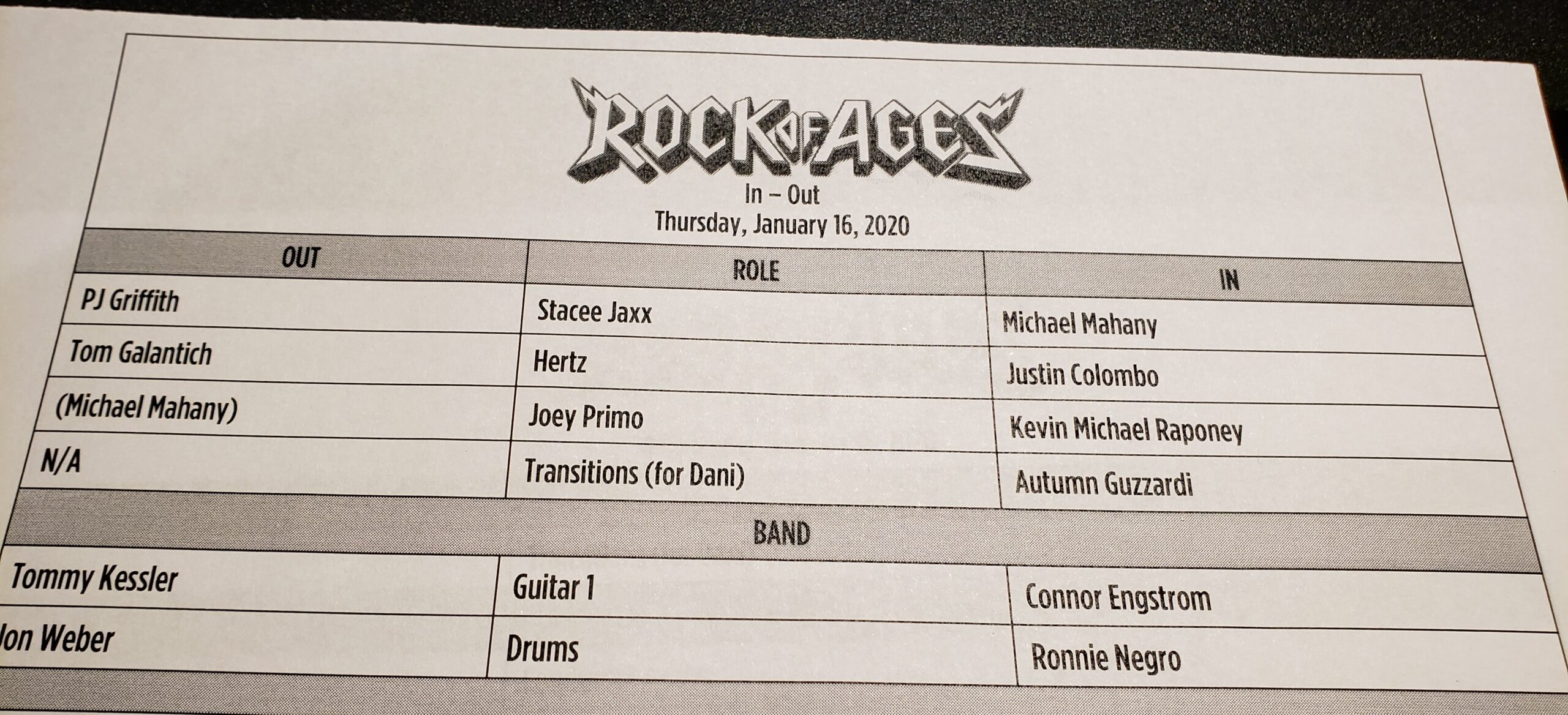
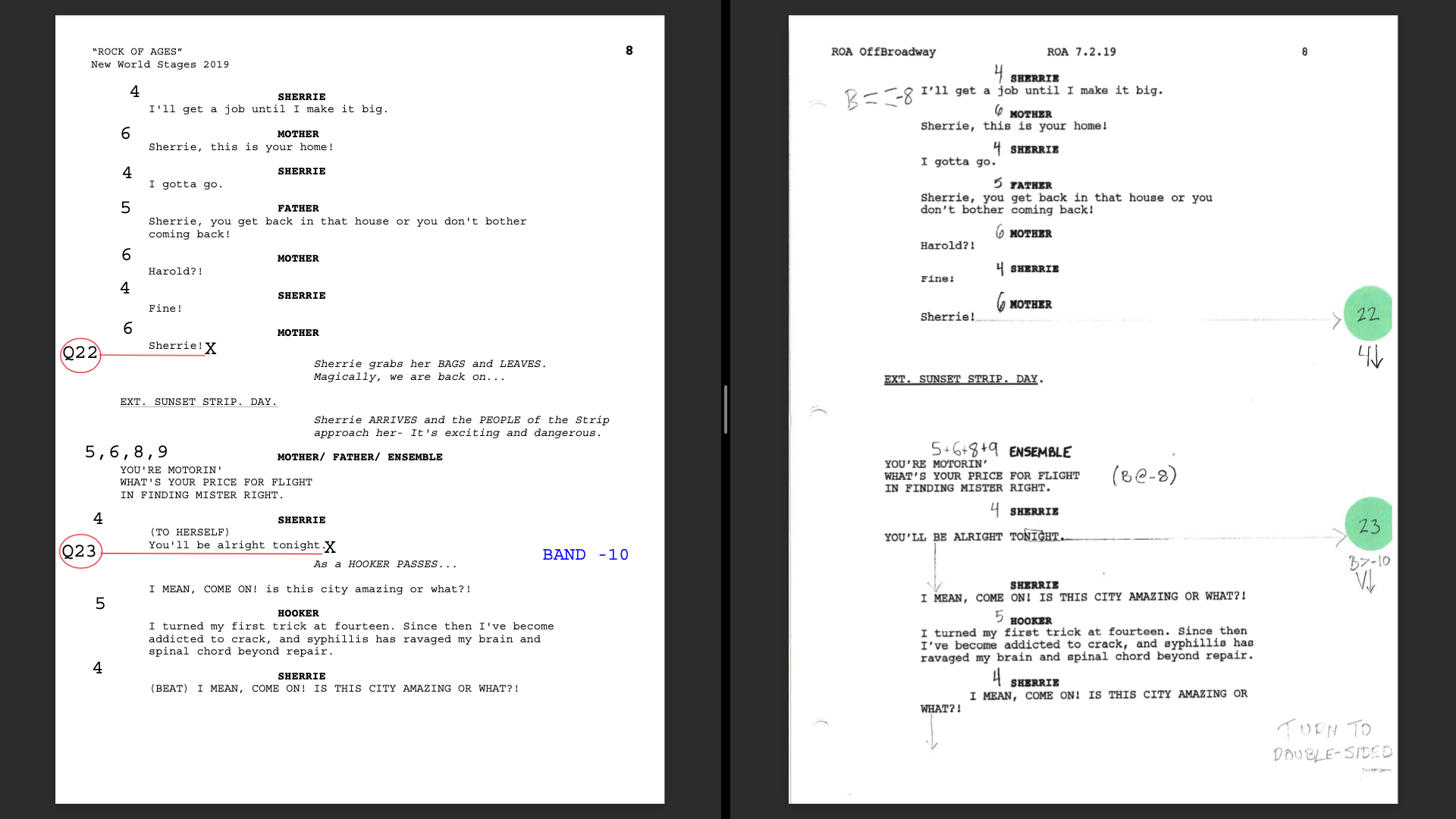
Hello all, and thanks for reading and supporting SoundGirls! A quick intro to give context to my first post here. My name is Becca, I use she/her pronouns, and until March 12th 2020, I was a freelance sound engineer working primarily on Off-Broadway shows in New York. My main gig was as the Head of Audio for the 80s hair metal jukebox musical “Rock of Ages” where on March 11th I mixed my 175th show, a personal record for me! I often supplemented that work by doing shop preps and load-ins/load-outs on other shows during the day. I’ll talk more about my specific trajectory in some future posts.

The subject of my first post is my particular wing of the live sound industry: NYC Theatre. Including but definitely not limited to Broadway, Off-Broadway, Off-Off-Broadway, etc. I’m going to refer to it as “Broadway” just for clarity of writing. It’s an industry I love, and I can’t wait to get back to it BUT…like any relationship, it’s important to step back now and then and reevaluate the terms. So, with a new year upon us, and at least six months to go before anyone is likely to be working on a show with an audience in New York again, here are my New Year’s Resolutions for Broadway.

If we’re going to be a “family,” support families!

The pandemic has had a disproportionate effect on folks who raise children. Lack of access to childcare with schools closed has pulled a lot of parents out of the workforce and forced a lot of people to choose between keeping their job or supporting their families. Of course, everyone in theater, parent or no, has been out of work for some time now, but when we come back, we can’t simply go back to the way things were. New York State’s Paid Family Leave law is a good start, but the way that sound jobs work means you are usually juggling multiple employers and can’t always pool your benefits, or use time off when you need it most. I have a friend whose partner gave birth to their child during the run of a show he was engineering, and all he was able to get was 1 week off unpaid.

The Broadway Community takes pride in the fact that we have each other’s backs, and that has to extend father. Make childcare at work more accessible. Make Paid Family Leave the law of the land nationwide for all workers, not just for the parent who is pregnant (if applicable). Provide places for breastfeeding folks to pump. Don’t just put pregnant people on disability and call it a day. The realities of workplace sexism and the “motherhood penalty” should already be things of the past, let’s not bring them back into the room with us.

“Women have to see it to be it.” So show it!

Jeanine Tesori spoke those amazing words when she and Lisa Kron accepted the Tony Award for Best Score for their musical “Fun Home”. They were the first all-women team to win the award. Jessica Paz took that one step further in 2019 when she became the first woman to win the Tony Award for Sound Design (as co-designer of “Hadestown” with Nevin Steinberg), having been only the second woman ever to be nominated in either the play or musical categories. Jeanine, Lisa, Jess, and so many other women have punched enormous holes in the glass ceiling of Broadway, but the work is not done.

The nominees for the 2020 Tony Awards were announced this fall, and the voters are only judging a small number of shows that opened prior to the March 12th shutdown. This year, there are zero women nominees for Best Sound Design or Best Score. But here is the even more key point: had the Broadway season gone on interrupted, there would still not have been any women eligible to be nominated for Best Sound Design (play or musical), and only two women would have been eligible for Best Score nominations. The Tony Awards may be a single New-York-Centric event, and they certainly don’t represent all of the amazing theatre being made in the US, but they are one of the few theatre-themed live TV broadcasts that reach the entire nation in a non-pandemic year. Representation matters, and we need a whole lot more of it

Open the gates to “The Room Where It Happens”

There are enormous access barriers to working one’s way up in New York. The few schools with theatre sound programs are exclusive and expensive. The pay starts low and the rent is high. If you’re freelancing you often need to work multiple shows at once to cover your costs, which stretches you thin and also takes opportunities away from other people who might benefit from them. Working on Broadway specifically requires a union card, and getting one can take years if you don’t have a connection or the “right” experience. People hire people they already know or people their friends already know, and the cycle perpetuates. For my part, I know I will be challenging myself to cast a wider net the next time I am in a position to hire or recommend someone for a gig. I’ll be looking at it as a chance to open a door, not help someone already on the inside.

Support the people you serve

So many New Yorkers have no connection to the theater, despite the fact that the unofficial world headquarters is in their city. Tickets are expensive, arts programs in public schools were already in bad shape, and local budgets are reeling from the costs of the shutdowns. Multitudes of research have shown the positive effects that arts education has on students, even if they don’t end up pursuing a career in the arts. But let’s expand the definition of what “arts” is. When a student group has a post-show talkback, make sure it’s not just actors and directors on stage taking questions. Broadway shows should partner with schools to give workshops not just on singing and dancing, but on songwriting, producing, stage managing, and of course sound. Getting kids interested while they are young will not only grow and diversify our future workforce, it will make sure we have a future audience to come and support that work.

We have to get serious about sustainability

Climate change is real, and it’s not going away without serious action from the top down. Broadway, with its high profile and wide reach, can be a trailblazer on the path to make our everyday lives less destructive to the planet. Specifically, to sound, the Broadway Green Alliance recommends that at a bare minimum, we make the switch to rechargeable batteries and start to limit the amount of single-use products we use to handle wireless microphones. Buy personal belts with sweat-proof packs for each actor to eliminate single-use sheaths/plastic wrap/condoms. Switch to Green Seal Certified cleaners to cut down on alcohol swabs and abrasives. Encourage paperless schedules and scripts, and make them easy to update/reconcile. Use LED light bulbs in EVERYTHING. All this is barely a drop in the bucket, but if we begin to lead by example, we can inspire change in others and make green thinking the norm.

So, with all that in mind, Happy New Year to you all, and let’s work on building the Broadway we want to work in when we come back!

Ask the Experts – Mixing for Broadway and Theatre

What is the role of the Sound Mixer in theatre productions?

The Sound Mixer/Engineer develops or sources music and sound effects according to the Sound Designers specifications. The sound crew sets up the sound system for a production and runs it during the course of each performance. The Sound Mixer/Engineer takes all of the sound in a show – Actors’ voices, environmental noise, sound effects, the orchestra – and balances them to create a rich and exciting sound for the audience to experience.

Ask the Experts – Mixing for Broadway and Theatre. This is your chance to ask professional sound mixers/engineers working on Broadway questions.

Feb. 3 at 3 PM PST

Register here and post your questions

Moderated by

Elisabeth Weidner

Elisabeth is a Sound Designer and Composer for theatre. She served as the Sound Director/ Resident Sound Designer/Composer for 10 years at PCPA-Pacific Conservatory Theatre,  before going full freelance in 2019. Elisabeth is also an adjunct professor at California  Polytechnic State University SLO where she teaches Sound Design and Engineering for  Theatre, and she sits on the USITT Sound Commission jury for the Current Practices and  Research in Sound papers submissions. In 2020 she was elected to serve as Co-Vice Chair of the TSDCA )Theatrical Sound Designers and Composers Association). She is also the producer of the podcast: No One Likes Us. www.elisabethanneweidner.com Read Elisabeth’s Blog

Sound Mixers/Engineers

Heather Augustine

Heather is an audio engineer currently touring around the US with Broadway-style shows. She graduated from Penn State University with a BFA in Theatrical Design and Technology, with an emphasis on Sound Design, and has been on the road for the past 7 years. During her touring career, she has worked on a variety of shows including Billy Elliot, Dirty Dancing, Phantom of the Opera, Les Misérables, and Miss Saigon. Currently, she is the A1 for the first national tour of Mean Girls. Read Heather’s Blog

Becca Stoll

Becca is a theatrical audio engineer.  She specializes in mixing musicals and is especially passionate about mixing new works.  Pre-pandemic, her main gig was Head of Audio on Rock of Ages (Off-Broadway at New World Stages). Other New York credits include: Two’s A Crowd (59E59), A Strange Loop (Playwrights Horizons), Antigone in Ferguson (St. Ann’s Church); We Are The Tigers (Theatre 80).  Tours: Million Dollar Quartet (A2).  Selected Regional: The Donkey Show (OBERON), Caucasian Chalk Circle (A2, Yale Rep), 3 seasons as Production Audio Engineer for the Goodspeed Opera House.  Education: Carnegie Mellon School of Drama, NHSI “Theatre Cherubs”.  Member: TSDCA, USITT, SoundGirls

Cassy Givens

Cassy is a New York City-based theatrical audio engineer. Her mix credits include the Broadway productions of Frozen, Something Rotten, Newsies, Memphis, and The Scottsboro Boys. She has also mixed various theatrical shows and events on tour, Off-Broadway, and regionally at venues including Huntington Theatre Company, Williamstown Theatre Festival, The Old Globe, Glimmerglass Opera, and The Public Theatre in NYC. When she isn’t mixing musicals she works as a sound designer, system technician, as well as a wireless microphone technician. Proud member of IATSE.

Julie M. Sloan

Julie was, before the world shut down, the production sound mixer for Tina: The Tina Turner Musical on Broadway. Previous Broadway musical credits include Ain’t Too Proud, SpongeBob Squarepants, Charlie and the Chocolate Factory, On Your Feet, Jesus Christ Superstar (2012 revival), Guys and Dolls (2009 revival), and over ten years of Jersey Boys. Tours: Hairspray, Jesus Christ Superstar, Aida, Annie Get Your Gun.

She holds a degree in Audio Technology from the Indiana University School of Music, where she once mixed a tree-planting ceremony with the Dalai Llama and monitors for GWAR on the same day.


The SoundGirls Podcast and Living History Project is Seeking Volunteer Editors

The SoundGirls Podcast and Living History Project are volunteer-run and features interviews with audio professionals (from all walks of life) to learn how we can better support one another towards a more diversified industry. We are seeking podcast and living history editors to assist with post-production.

Editors will be responsible for:

Required skills:

Preferred skills:

If you are interested in volunteering you can apply here

The deadline is Feb. 1st

SoundGirls Podcast Producer and Host Volunteers

Want to learn how to produce and host a podcast? This opportunity might be for you

We are looking for some passionate, dynamic hosts and co-hosts volunteers that would be interested in taking the reins of the SoundGirls Podcast this coming May.

Our vision with the SoundGirls Podcast is to pass it on to inspire and empower young women and girls in our field. SoundGirls that have a desire to build the best SG podcasts possible.

Do you love to talk to people about their lives and our industry? Do you have creative ideas you would love to do with a podcast? Do you desire to interview others and find out more about them? Do you have a passion to build the SoundGirls network, through discussions about diversity, inclusion, and sharing the tools to help the next generation of women in audio? Do you have interviewing experience and abilities?

What is expected

You will be scheduling your guests (we have a growing list), interviewing guests, producing a graphic for social media, and uploading each episode (after it is edited) to our podbean account. You may possibly do some light editing of the podcast too.

Time Commitment

Each interview takes about an hour to record. Editing can take up to three hours per episode, scheduling, posting, and graphic content can take up to three hours a week. Your time commitment is approx. 10 hours a week.

Gear needed

A great audio interface like (Focusrite, M-audio air, or SSL2+), a great vocal microphone (Shure Sm7B, Rode NT1, or whatever makes your voice sound amazing), a quiet room, good pair of headphones, pop filter, and squadcast recording software (we use squadcast to separately multitrack record interviews and each other). A DAW (ProTools, Audacity, Audition) for editing.

What you can expect

We will help you: We have streamlined a process that has helped keep us on track. We have systems in place and won’t throw you to the wolves. An ongoing schedule of guests, a google drive account, an SG Pod email, and templates for graphics, as well as a squadcast account and a podbean account. We will train you on how to make all these things work for you.

Training dates: March 1st, 2021 through May 1st, 2021 via Zoom

Your Start date: May 1st, 2021

This is a volunteer position and you will be working with two or three other podcast hosts, under the supervision and guidance of Beckie Campbell and Susan Williams, our current podcast hosts. This volunteer position is a year-long commitment and you will train 2022 volunteers. The application deadline is Feb. 1, 2021.

Apply here

You can listen to the SoundGirls Podcast here


Waiting for Better Days


So, the holidays are over, New Years’ has just been and the past year is gone. A year of great challenges but also a year of incredible personal achievements.

I step into the new year as a 30-year-old cis woman and I made some great things happen this past year. I joined the women’s network Her Hustle, got engaged on a Swedish mountain, and adopted the cutest puppy.

As I sit down to write this, my adorable pup is trying to get the treats out of his toy, but I can’t seem to shake this thing my now-fiance said to me. I was sitting on the kitchen floor on New Year’s Eve; no, not a drunk floor moment, I was having an anxiety attack. I cried for my unhappiness/failure and hyperventilated into a panic. Almost a year has gone by without work.

So there I sit, crying over what I’ve lost when my dearest asks me: was I happy a year ago? When I was working, but terrified of asking for a raise, struggling to talk about money and equality with those who paid me. Those who paid me to live, eat and sleep. Those who paid me for doing something I loved. Was I happy then? No, I was anxious, worried, and stressed. I remember not getting the NYE shift and that it went to one of the extra male engineers and that I wasn’t even considered. No matter how hard I worked or how much I worked, I felt that I was valued less. I still didn’t have enough money to become a citizen in a country I lived and worked in for over 11 years. I still didn’t have enough to save for my future nor to get a driving license. Which in retrospect could’ve been useful now, I could’ve been a delivery driver… because right now I’m not useful, I’m not working. I’m just waiting…

Human rights activist Mohamed Ali talks about “waithood” in his TedX seminar The Link Between Unemployment and Terrorism. He talks about Somalia where poverty and unemployment are common. He tells a story about a young man that is one of many poor young people in his country. One day he’s approached by a gentleman who feeds him, houses him, gives him purpose and a community. A few years later he blew himself up in Mogadishu, the capital of Somalia. The gentleman belonged to a terrorist group Al Shabaab which has links to Al Qaeda. (The reason why I know this is because of my podcast that I started this summer. It’s called And It Went Like This Podcast, so please have a listen and share.) Now I’m not saying that all unemployed will resort to terrorism, but the story shows what desperation to occupy ourselves can lead us to. What Mohamed calls “waithood”, can change us for the worse.

We are right now all in this “waithood”. We don’t know what the lineup is nor the curfew of this disease or if there’s a support act coming to soundcheck… But if there’s anything we sound engineers are good at. It’s winging it!

So stay safe and resilient.

Love, Linnea


Revenge on the Nerds


Democratising education to diversify the workplace

Part 1: Formal Education

I’m sure I’m not the only one who has spent time learning during the pandemic. Even if you didn’t attempt to fit all of humankind’s knowledge into your brain just because you had a few months of downtime, you’ve probably attended at least a couple of the seemingly never-ending webinars that audio manufacturers and groups have kindly made available to us. I chose to learn how to code and found there are so many parallels with audio, both in the nature of the subject and how it’s taught. It keeps reminding me of the tiresome debates about why our workplace isn’t more diverse: for whatever underrepresented group is being discussed, it gets suggested that they just aren’t interested, they aren’t cut out for it, or the people who do well in the industry are there because they’re naturally suited to the role. The solution, if it’s seen as a problem at all, is to encourage more of that underrepresented group to study STEM (science, technology, engineering and mathematics) subjects at school. Everyone breathes a sigh of relief that it’s the next generation’s problem and they’ve narrowly avoided having to examine or change their own behaviour or the processes they participate in, and they go back to the status quo.

The people on the left are computer programmers, the people on the right are actors. Credit (left): NASA

Unfortunately, “more education” is not the panacea it’s touted to be and actually presents its own set of problems. One coding lecturer explained that he had named his course “Python for Everybody” (which I highly recommend, available for free from http://www.dr-chuck.com/) because he wanted to make computer programming truly accessible for everyone and stop it being the reserve of nerdy gatekeepers who hoarde the knowledge for themselves (I may be paraphrasing slightly). That really resonated with me, because I’ve seen it time and again in audio too.

We’ve been raised by movies and sitcoms to see ‘nerds’ as mostly harmless goofballs, born with huge analytical brains and zero social skills, who deserve to succeed because they got bullied by ‘jocks’ in school. It’s apparently inevitable that most computer programmers, physicists, mathematicians and even audio engineers are straight, white or Asian, middle-class men because the nerd stereotype teaches us they are the ones who are born to fit those roles. This simply isn’t the case and teaching in a way that only appeals to people who think like them is a self-fulfilling prophecy that they’re the only ones who can do that work. If we want to encourage and retain a more diverse workforce in every sense, we need to change how we participate in education, both as teachers and pupils.

Case study: Women computer programmers

[I apologise for the length of this example, but I found it so fascinating and it had so many echoes of audio that I had to share. There’s a tl, dr: at the end.]

Women programming the first digital computer, “ENIAC”, for the US military c. 1946. They were given no credit for their work at the time and it was later presumed they were simply models. Credit: U.S. Army photo from Getty Images.

Women have been involved in computer programming from the very beginning. Ada Lovelace, while probably not the first programmer as is often claimed (1), had a thorough and profound understanding of the potential of computing machines, even beyond their inventor Charles Babbage’s. When the first “digital computer” was built for the U.S. military during the second world war, six women were the ones who programmed it, because they were already working as ‘computers’: humans who did calculations (2). As far back as 1943, women of colour were performing calculations for NACA (which became NASA), as immortalised in the film Hidden Figures (3). They proved to any doubters that women and people of colour were perfectly capable of handling mathematical and engineering problems, efficiently and under pressure.

For the first few decades of modern computing, hardware production was seen as important, ‘manly’ work and software programming, like manual computing, was seen as menial administrative work, so was commonly done by women. There are countless instances from the time of people using traditional gender stereotypes to explain why women were naturally suited to coding, because they were meticulous and good at repetitive tasks like knitting or typing. Even Dr. Grace Hopper, a behemoth in the world of coding, said in a Cosmopolitan article from 1967 that it was “just like planning a dinner… …Programming requires patience and the ability to handle detail. Women are ‘naturals’ at computer programming.” (4).

The first women programmers didn’t have manuals to learn from, and had to figure out what to do from first principles, using paper diagrams at first because they didn’t have security clearance to enter the room that housed the computer. I defy anyone in audio to look at these banks of circuits and not see patch boards. Credit: U.S. Army photo from the ARL Technical Library.

The boom in computing was so great that there were far more jobs than candidates, even after men came back from the war. This opened up opportunities to people who might otherwise have been excluded. The New York Times Magazine cites a time when a young woman of colour called Arlene Gwendolyn Lee applied for a systems analytics job in Toronto in the 1960s. “Lee persuaded the employers, who were all white, to let her take the coding aptitude test. When she placed in the 99th percentile, the supervisors grilled her with questions before hiring her. “I had it easy,” she later told her son. “The computer didn’t care that I was a woman or that I was black. Most women had it much harder.” (5).

Unfortunately, those tests that allowed everyone’s aptitude to shine through regardless of appearance or background gradually came to be accompanied by personality tests, which selected for ‘detached’ people who were less likely to have home or social commitments and could therefore dedicate longer hours to the job. “The primary selection mechanism used by the industry selected for antisocial, mathematically inclined males, and therefore antisocial, mathematically inclined males were overrepresented in the programmer population; this, in turn, reinforced the popular perception that programmers ought to be antisocial and mathematically inclined (and therefore male), and so on ad infinitum.”(6). This, combined with the marketing of personal computers in the 1980s as boys’ toys, slowly eroded women’s position in the field. It paved the way for middle-class white boys, whose families could afford personal computers and would usually keep them in the son’s room, to arrive at college having had years of experience experimenting and learning to code in their spare time. Anyone else who joined computer science courses was made to feel inferior or not suited to the subject because they lacked that exposure. However, when the gender disparity in university courses was examined, “It turned out that having prior experience is not a great predictor, even of academic success”, “the pace of learning at college was so much more intense that by the end of the degree, everyone eventually wound up graduating at roughly the same levels of programming mastery.” (5).

So women, including women of colour, had been showing up and doing the work from the outset, and the research found they were just as capable as men, and yet even now biology and gender stereotypes are used to support men’s dominance in the field. A Google engineer’s 2017 memo against their affirmative action policies (7) caused quite a lot of hyperbole on each side of the argument, but it exemplified this attitude to women in tech. Despite the engineer’s bachelor’s and master’s degrees in biology from Ivy League universities, his arguments made clear that he didn’t understand the field’s nuances or consensus on humans’ innate abilities (8) or, in fact, what it takes to be an engineer (9). Judging by the ensuing internet meltdown, and conversations I see again and again in our own field, he’s far from alone in holding those views.

Tl, dr: People have been using gender stereotypes to explain women’s involvement in computer programming from the beginning. First to justify their aptitude for it, then to justify their absence from it. Starting a course with prior experience of the topic might make a student seem more promising than others, but by the end, even students with no prior experience will have caught up.

What’s holding us back?

The case of women in computer programming covers some major points of what limits women and minorities’ participation in STEM, especially PECS (physics, engineering and computer science). A very useful Physics Today article (10) outlines worries students may have that can lead to them dropping out or underperforming, and how they can be addressed effectively. There are concerns about belonging, about being able to improve, and being respected by classmates and teachers alike. These often stem from harmful stereotypes about nerds, and opinions about innate ability. I have previously discussed how ‘fetishising brilliance’: i.e., believing that natural talent is the main requirement for success in a given field, enables discrimination and reduces diversity (11). It is particularly damaging in an education setting because it can discourage students from even trying, and educators are less likely to put the effort in to teach pupils who don’t take to a subject immediately (10).

What can we do?

The good news is there are ways to counteract these effects. For example, it is true that, on average, women perform less well on spatial reasoning tests than men. Whatever the reasons for this, potentially because boys more than girls are raised to play with toys that improve that skill, the gap in ability can be narrowed significantly with one 15 hour course (12) or even just 10 hours of playing spatially rich video games (13). This is a huge deal because many PECS courses start with activities that emphasise spatial reasoning, alienating people who are less skilled in it from the start, even though they may be perfectly competent in other areas of the subject. This can have a ripple effect on their feelings of fitting in and competence, and they are more likely to drop out of the class altogether.

Fostering a ‘growth’ mindset (“I can improve”), rather than a ‘fixed’ mindset (“I was born with a certain set of abilities”), is massively beneficial too: ‘Students with a fixed mindset who encounter a difficult problem or concept see that difficulty as evidence that they lack ability. Across many different research studies, such students tend to seek out easy problems (to prove their ability) and avoid challenging ones that would help them learn. They avoid speaking up in class or in group discussions so they don’t seem stupid. When they face setbacks, they lose motivation and turn their attention to subjects for which they feel more “natural” ability.

In contrast, students who have a growth mindset see difficulties as opportunities to learn—“I love a good challenge!” So they work harder and ask more questions, which naturally improves their learning.’ (10). A key way educators can encourage this way of thinking is to explicitly state in their feedback that they are giving it precisely because they believe the student is capable of improving, rather than trying to comfort them for their lack of ability (10).

Don’t make it awkward

Perhaps counterintuitively, these measures work best to improve diversity when they’re offered to everyone (10). Singling underrepresented groups out for special treatment can make them feel less able and like they don’t belong. It can also cause friction with other classmates who think they’re being offered an unfair advantage. Interventions like playing video games can help all students, but they tend to have the biggest effect on the people who have the biggest improvements to make, thus levelling the playing field without explicitly helping one group over another (10, 13).

It may seem strange for an advocate of Soundgirls, which is aimed mainly at an underrepresented group in audio, to recommend against targeted initiatives. Of course, I feel that organisations and fora specifically for underrepresented groups can be very beneficial. They can counteract the feeling of not belonging, and provide an understanding and supportive environment that they may not have access to elsewhere. However, it’s essential that people seek these organisations out and partake in them because they choose to, not because their school or teacher tells them they need to.

Key takeaways

Next time I’ll discuss more detailed examples of how we can help to attract a wider variety of people to our industry through teaching. Until then, the key points to remember, whether you’re learning or teaching, are:

Not knowing something doesn’t make you stupid: We all come from different backgrounds and have different life experiences. The whole point of learning is to fill gaps in your knowledge. Mocking a student for not knowing something is about as impressive and helpful as yelling from the sidelines of a Peewee game that they suck.

We’re all different, but we have the same potential to learn: Don’t rely on lazy stereotypes and cherry-picked biological research to justify prejudices.

A growth mindset is a key to learning: Viewing learning demanding topics as a fun challenge rather than evidence of unsuitability to a field results in the best and longest-lasting improvements.

Movies and sitcoms lied to you: Wearing glasses and a pocket protector doesn’t make you smart. Who knew?

References:

  1. https://www.bbvaopenmind.com/en/technology/visionaries/ada-lovelace-original-and-visionary-but-no-programmer/
  2. https://www.history.com/news/coding-used-to-be-a-womans-job-so-it-was-paid-less-and-undervalued
  3. https://en.wikipedia.org/wiki/West_Area_Computers
  4. http://thecomputerboys.com/wp-content/uploads/2011/06/cosmopolitan-april-1967-1-large.jpg
  5. https://www.nytimes.com/2019/02/13/magazine/women-coding-computer-programming.html
  6. The Computer Boys Take Over by Nathan Ensmerger https://books.google.co.uk/books?id=VCcsTPQ738oC&q=infinitum&redir_esc=y#v=onepage&q=antisocial&f=false
  7. https://en.wikipedia.org/wiki/Google%27s_Ideological_Echo_Chamber
  8. https://www.wired.com/story/the-pernicious-science-of-james-damores-google-memo/
  9. https://medium.com/@yonatanzunger/so-about-this-googlers-manifesto-1e3773ed1788
  10. https://physicstoday.scitation.org/doi/10.1063/PT.3.2383
  11. https://soundgirls.org/how-to-find-the-best-candidate-for-the-job/
  12. https://www.kqed.org/mindshift/43802/can-teaching-spatial-skills-help-bridge-the-stem-gender-gap
  13. https://journals.sagepub.com/doi/full/10.1111/j.1467-9280.2007.01990.x

8 Habits that Help Me Keep My Sanity as a Freelance Entrepreneur

In the spirit of New Years Resolutions and all of that, I thought I would share with you some of the tips I’ve gathered as a freelance entrepreneur. If you are an “indie artist” or a songwriter, a producer or engineer, running a music teaching studio, or operating your own business in any way, this is for you.

The thought of not having a boss or working for a corporate entity sounds pretty sweet, right? Well, it is. But it’s also really REALLY hard sometimes. I worked for financial institutions for 18 years while I built my music business part-time so I fully understand both worlds. As a matter of fact, I still have days when the security of the day job lures me into pulling up the “careers” page of my local credit union. These tips and habits are things I’ve figured out over the 12 years I’ve been a full-time freelancer, all based on my own experience. I can’t say for sure that I have it all figured out yet. I’m still a work in progress  However, I hope some of this will be helpful to someone. If you have other pointers or a different perspective, I’d love to hear about it.

Set a work schedule

It would be easy to sleep in, stay up late, wear PJ’s all day, show up at your computer whenever the heck you want, not take a lunch break, etc. Based on your current situation, set a time that is your “go to work” time, a “punch out for lunch” time and “leave work” time. For me, since I have a family and a husband who is a crazy morning person, I really had to adjust my work schedule to fit his (more on that in number 2).

So, I have my morning routine that includes a dog walk, meditation and scripture study and the gym (which I’ve learned in 2020 that those last two have to be a priority or my brain doesn’t function). After all of that, the soonest I can get to my computer for “work” realistically is 9:15-9:30 a.m. Then I have to take my dog on another walk in the afternoon (she is spoiled), which forces me to take a little breather and get some fresh air (very good for freelancers who are on a computer most of the time). Then I like to stop working when my husband gets home so I can make dinner and he can play the drums. My schedule follows that flow Monday through Friday with only an occasional exception. I also take the weekends off so I have time to clean my house, grocery shop, spend time with family and keep my life feeling balanced.

When we are not in a pandemic, my Sundays and Thursdays (and sometimes more) are busy with the Tabernacle Choir rehearsals and performances. It’s a volunteer part-time job and if I don’t properly balance it all, I start to feel overwhelmed very quickly.

Create boundaries

When I started my business I was single and basically had no life. I had also just moved to a new town and had to build my business and brand awareness from scratch. It felt like I had no choice but to work constantly, as late as I had to, on weekends (when I wasn’t out of town on a gig with the band No Limits) and holidays in order to turn projects over quickly. I also accepted every project that came my way at whatever budget the artist could afford. I was working constantly and barely making enough to stay afloat. Not a good strategy but at the time, it felt like the only way.

When I got married to my J-Dub in 2013, just a few months into our marriage, his teenagers started moving in with us. Quite suddenly I became a full-time mom with demands on my schedule I wasn’t used to. Driving kids places, parent-teacher conferences, dinner every freaking night (?!) Not only could I not handle the same work schedule but I needed to create a home that felt like a “home”. Family meals at a set time at the dinner table, being available to help with homework or just conversation with the kids, cleaning the house (OMG cleaning the house). I had to make changes. I had to create boundaries. It. Was. Hard.  I had to learn to say “I’m sorry, I don’t record after 6 pm.” Or, “I’m sorry, I don’t work on the weekends.” I was sure all of my business would leave and I would have to start applying for jobs at neighborhood financial institutions. But, alas…my clients respected that and worked with my new schedule. Thankfully!!

Planner

Create a schedule for yourself; daily, weekly, monthly and annual. An exercise I have started doing and am now having my artists do is create a daily and weekly schedule. First, determine your priorities in each of these categories:

Mental health – What needs to be part of your daily routine to keep you sane? Meditation in the morning? Turn your phone off an hour before bed?

Spiritual health – Set aside a day to turn it all off and connect with whatever it is you connect within the universe. Nature, family, God, whatever. Disconnect from technology at least one day a week if you can and be sure to schedule it so that it will happen.

Physical health – If you need to adjust your schedule to fit in 30 minutes at the gym or a walk with the dog or whatever, do it. Getting the blood pumping, eating right and taking care of your body will spill into every other category. Remember, as a vocalist your body is your instrument. Just like you wouldn’t leave your acoustic guitar in the trunk of your car overnight, you should feel protective of your health in the same way. And if you smoke, I strongly suggest trying to quit.

Creative health – As an artist, developing the necessary skills won’t just happen. Be sure to carve out the time you need for vocal work, songwriting/creative writing exercises, collaborating and co-writing sessions with other artists, work on your instrument, practicing your setlist, etc.

Now create a daily and weekly schedule that you will follow. Adjust as needed!

Here’s a free printable to An Artist’s Weekly Schedule for you.

Create goals as projects

It’s easy to write those goals down on January 1st but I found a “project worksheet” and started to use it for all of my goals this year and I actually love it. It helps me keep track of the steps needed to accomplish the goals and create checkpoints along the way. I extracted what I loved from that worksheet and made my own. Here’s another free printable for you! Project Worksheet

One “bold” action a week/month This is a new action for me that I started taking in 2020. Business was good but the vision I had in my mind wasn’t quite there yet. It began to feel that if I didn’t make a drastic move once in a while, things would stay the same. Was it ok if things stayed the same? Yes, but that was the problem. The safe zone wasn’t the goal aka the dream I had in my mind, but it was safe. Even as unpredictable as it feels as a freelance creative, I had found my groove and was scared to disrupt that groove. Therefore it was tempting to stay there. So I set the goal of making one bold action once a month. I picked once a month to start, but you can try once a week or even once a quarter.

Whatever feels right for you.  A bold action for me might be messaging an artist that I’ve always wanted to work with but has never reached out to me (Big time limiting belief voices in my head are always telling me that I’m not good enough so why would so and so artist reach out to me, right? So this is also a way for me to battle against those limiting beliefs.) Another big move I made this year was doing a total rebrand so that my business actually looked like what I wanted it to be rather than waiting for it to gradually happen. This included hiring TEA Creative on a continual basis to handle graphic design, website design and some social media work instead of trying to just do it all myself (and not very well, I might add).

That big move includes actual money going out the door to pay professionals to do something that will elevate what my business looks like online. I don’t know why that one was scary for me, but it was. It’s as if the statement “yes, I have a graphic designer” felt like I thought I was thinking I was a bigger deal than I actually was. ANOTHER LIMITING BELIEF WHAT THE HECK??? Another reason why this step is such a good one.

What is a BOLD action for you? Could that be finally finishing that song you’ve been sitting on that’s half done? Or actually, jumping in with both feet and working with a mentor (like me!) to help you build your business? Reaching out to an artist you admire to see about a collab writing session? Taking a mixing course or a songwriting course? DO IT!

Expand your network

Freelance generally means working with a variety of people but also working very much alone. It can feel isolating and overwhelming. Networking is often thought of when we’re trying to “build our business” or “make connections” to climb up our own entrepreneurial ladder. But what I am talking about here is expanding your network so that you can work with others who can do some of what you do, maybe even better. What if you outsourced one element of the project? If you are a producer, what if you had someone else mix it? What if you regularly hired musicians instead of trying to shoulder the load all yourself project after project?

This leads us to the next one…

Create processes

If you have been in your “freelance groove” for a year or two, think about what some of your tasks are that you do regularly, especially tasks that feel mundane or like an interruption to your “real” work. Is it something you can take 30 minutes to explain to someone with basic computer skills? Then it might be something you can train someone on and outsource. There are high school students or even virtual assistants who can do this work for you. It might mean taking an hour to type up a step-by-step guide or an afternoon to put together a tutorial video. But if it removes a task that someone else can do for you so that you can do the “meat and potatoes” work, then it’s worth that small investment.

Set financial goals and boundaries

One of the downsides of being a freelancer can definitely be the fluctuating income. Not to mention, an annual tax bill if you aren’t careful, more expensive healthcare, etc. It definitely took me a while to wrangle all of the craziness into something that didn’t feel like a wild roller coaster ride financially. It requires saving a percentage each month for taxes, medical expenses, unexpected expenses and regular savings. If you aren’t disciplined with money, then find an accountability partner (perhaps an accountant) that will hold you to these goals.

Creative brains at times have a difficult time staying on course. So for me, putting bumper pads on the lane of my life has helped me stay focused. Then knowing when to move them, expand them, or completely obliterate them has taken years of trial and error. I hope these guidelines can be helpful to you.

X