Discount for Mix Music Production – Nashville
use code SoundGirlsNash20 for 20% off.

Soldering is an essential skill for audio engineers and technicians. Being able to build and repair your own cables can save you money and get you out of a tight spot when it matters most.
In this hands-on workshop, you’ll learn proper soldering techniques applicable to live sound, studio work, and beyond. Participants will build XLR and TRS or TS cables to take home for continued practice.
The class will cover the fundamentals of creating high-quality solder joints, an overview of basic soldering tools, and important safety practices.
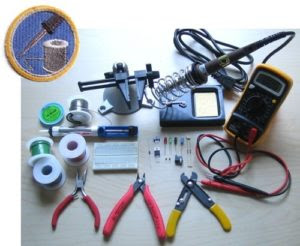
Please bring your own soldering kit—see below for suggested options. If you’re unable to bring a soldering iron, contact us at soundgirls@soundgirls.org and we will do our best to provide a loaner.
Required Tools to Bring to Class
In the last decade, a new role has cemented itself into almost every international pop tour: the playback engineer. Although playback has been around since artists were lip syncing on CRT televisions, the field has undergone a lot of innovation in the live event industry, and continues to grow as productions increasingly rely on automated, fail-safe systems.
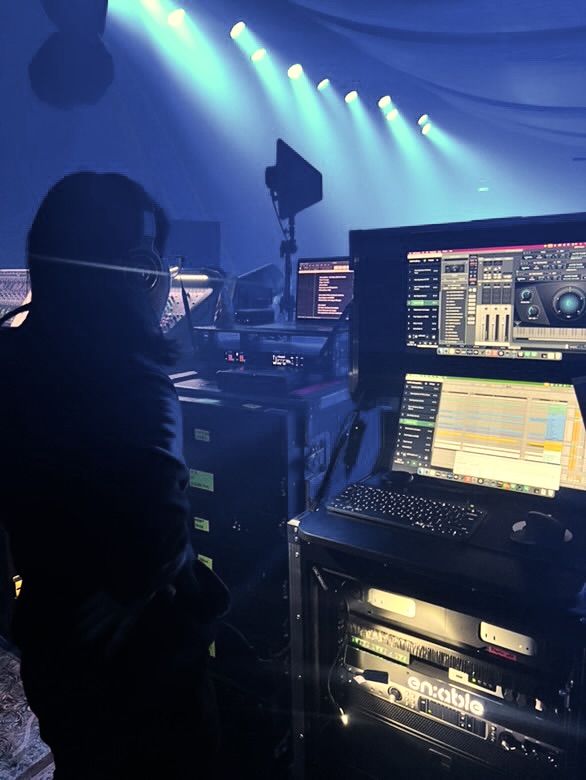
Playback generally refers to running pre-recorded material in sync with other events. This material can involve backing tracks, click tracks, timecode, and other content that drives a show. It can also play different roles depending on the context: from synchronizing audio/light/video/FX cues, to feeding references into in-ear monitoring, to fattening up musical arrangements. The playback engineer can build and supervise a hardware setup fitting the production, and ensure that this additional point of failure is, well, not failing.
The bulk of playback engineering work takes place during pre-production. In live music contexts, programming a show depends on the arrangement, and its complexity decides what tools are necessary. For example, the number of backing tracks influences hardware input/output requirements, and a jam band that improvises will require different cuing workflows than a musical that runs on rails.
While playback can be as barebones as an Ableton Live set running on a laptop, the possibilities (and budget) are truly limitless for integration. The wide range of responsibilities that comes with playback, along with its show-critical role, is why companies offering show programming services, apps, and hardware are thriving. Playback apps, like setlist management tools, are increasingly marketed to be user-friendly. Small businesses construct bespoke rigs, ready to plug and play. Engineers exchange templates, Max devices, and program presets.
Of course, costs mount quickly in this realm — budgets literally double for a redundant system that falls back on a second machine if the primary computer drops out. Jess Jacobs, DJ Tech and Synth Tech for Linkin Park’s Joe Hahn, wants to see affordable options when it comes to automation and communication on-stage. “Being able to control the stage the way Linkin Park does is great, but sometimes out of reach for club-level artists,” Jess says. “If indie artists could harness the power of these tools, they’d be really happy with the level of production even in small venues. The price point is not crazy, but it’s not cheap.” Money can certainly buy flexibility and stability.
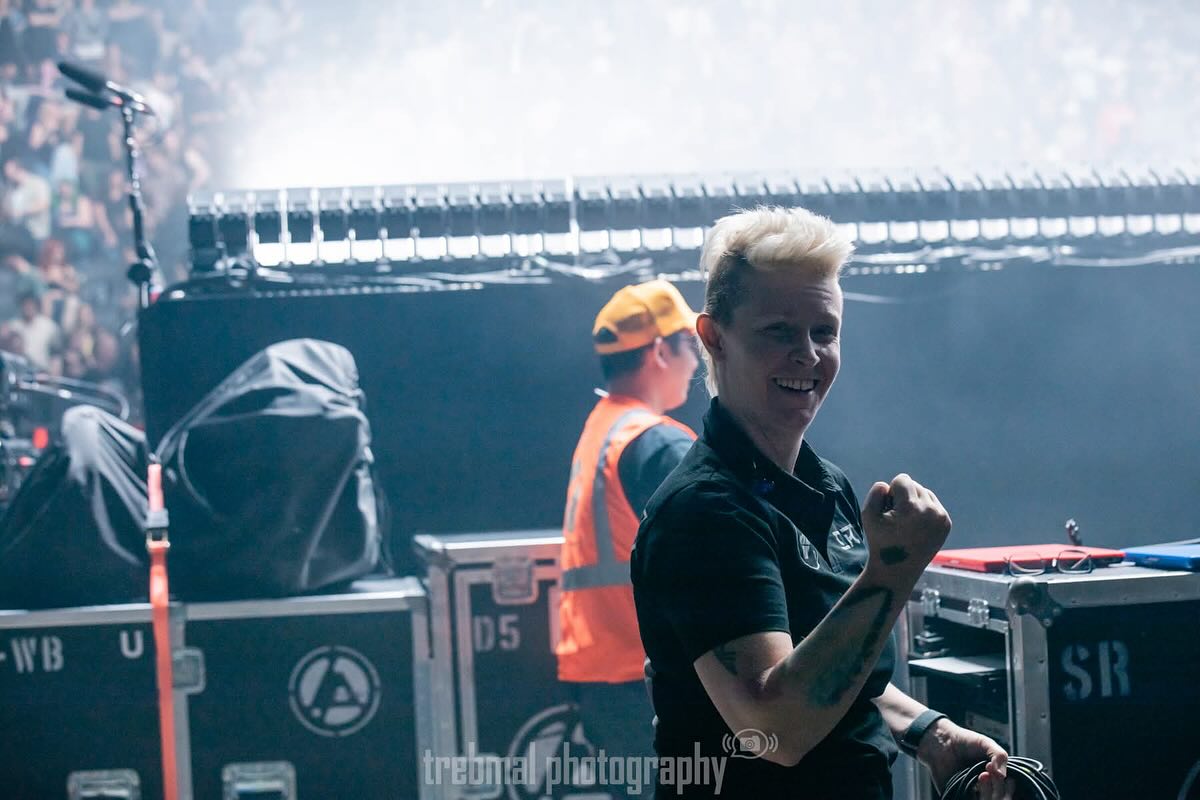
Jess Jacobs behind the scenes at TD Gardens
Even more valuable than the systems are the experts operating playback in live events that have only grown in scope and size. Many, like Jess and Laura Escudé, live show programmer who founded Electronic Creatives, landed in the playback role due to their Ableton Live skills. They act as a bridge between performers and technology, enabling performers’ creative expression within technical limitations. For Keana Peery, playback engineer and show programmer whose credits include The Recording Academy and BET, “Playback techs sit in a grey area. You’re not part of the band and not strictly part of the crew. You’re often working closely with the artist and the music director, so you need to understand musical intent while executing it technically.”
The creative impact that playback can have on the content and flow of a show is unlike other roles in the audio team. Often, it’s also combined into other roles such as monitors, backline, or even run directly by a musician on stage. “I first discovered playback from being a drummer and having to run tracks,” says Georgia Challinor, drum & playback technician for The Last Dinner Party. “Sometimes one takes priority over the other, but playback usually wins if you’re programming on the fly.”
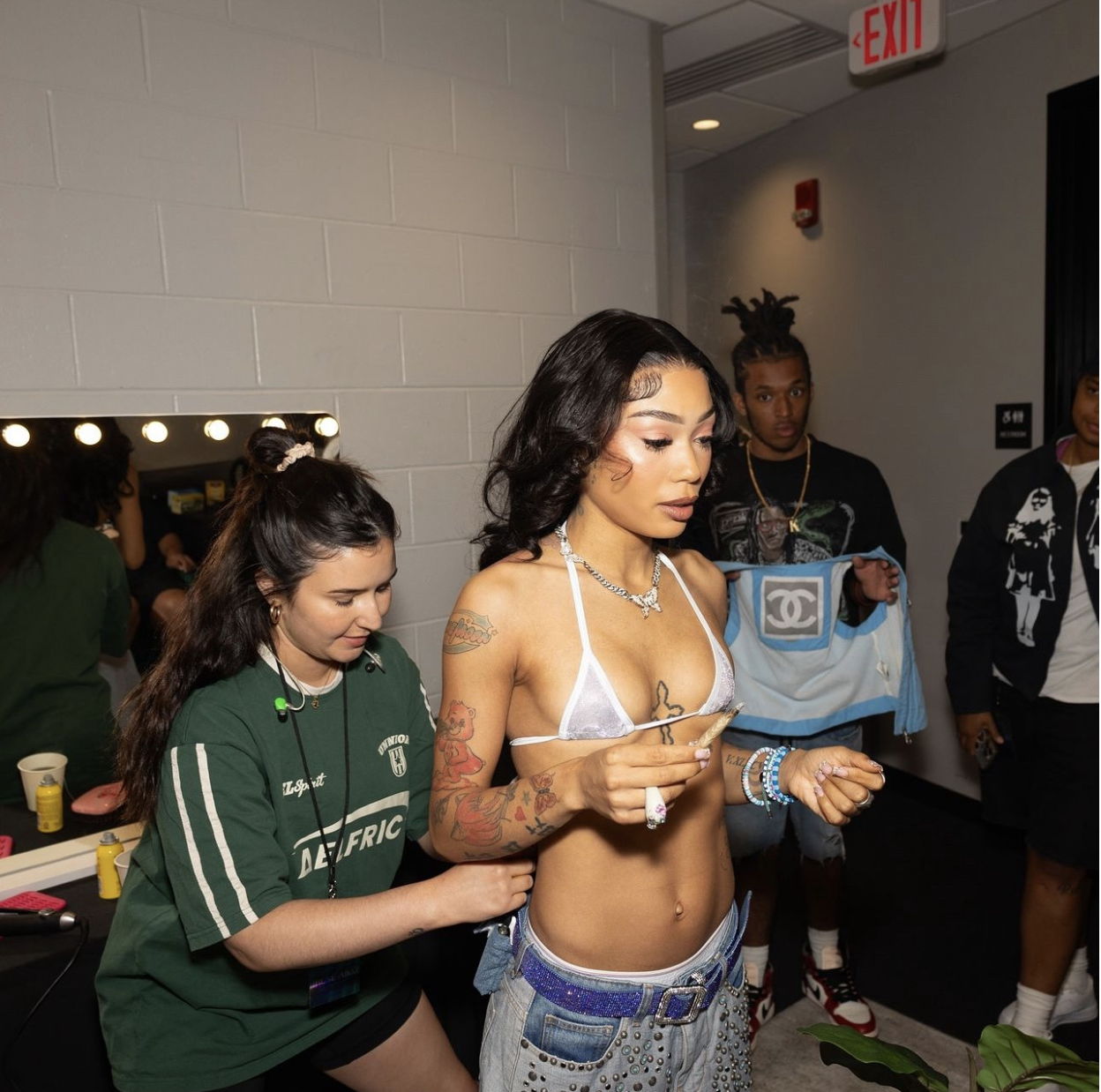
Keana Peery preparing an artist backstage
Auto-Tune operation tends to be corralled into playback, with the plug-in interface running on playback computers. This gives the playback engineer another artistic responsibility, directly manipulating main vocals and changing parameters on the fly. It even has its own role on productions, as Keana reports, “Sometimes an artist will have their DJ running playback while I focus solely on vocal production and Auto-Tune operation. As a vocalist, I really enjoy that because I get to adjust parameters live depending on how the vocalist is performing in the moment.” The role morphs from production to production.
When a show goes on the road, the playback tech’s priorities change. Attention shifts from developing the creative content to making sure everything runs consistently. Playback must be prepared for anything- set changes, guest performers, and of course, technical issues. “A recent problem was when a USB hub on the DJ table was damaged and caused a short, which flowed back to a central communication point on a device chain,” Jess recalls. “I had to swap out every single piece along the way in order to ensure that it was fully functional.” The stakes in playback are certainly not for the faint of heart. A jack of all trades overview of audio, networking, OS/software and hardware can prevent showstoppers. For Karma Catena, Ableton operator and producer, “that’s the best part of playback: when you find the hiccup in the system and get to fix it. It’s always satisfying.”
The Wild West of playback, there are no laws for playback workflows and no cut and dried role descriptions for what playback engineers. From Tate McRae, to Cirque du Soleil, to megachurch worship services, you’ll be hard-pressed to find the same playback setup. Playback techs are finally gaining recognition for their versatility, which encourages further innovation. I think we’re just seeing the dawn of what’s possible in playback.
Huge thanks to the following contributors:
Georgia Challinor, drum & playback tech for The Last Dinner Party and playback for A Work In Progress
Jess Jacobs, DJ tech & synth tech for Joe Hahn of Linkin Park
Karma Catena, Ableton operator, songwriter, producer
Keana Peery, playback engineer & show programmer previously for The Recording Academy, BET, Saturday Night Live, Yeat, Heidi Montag, Gunna, Lil Uzi Vert, Flo Mili, Coi Leray
Further reading: Laura Escudé: Show Designer & Playback Engineer
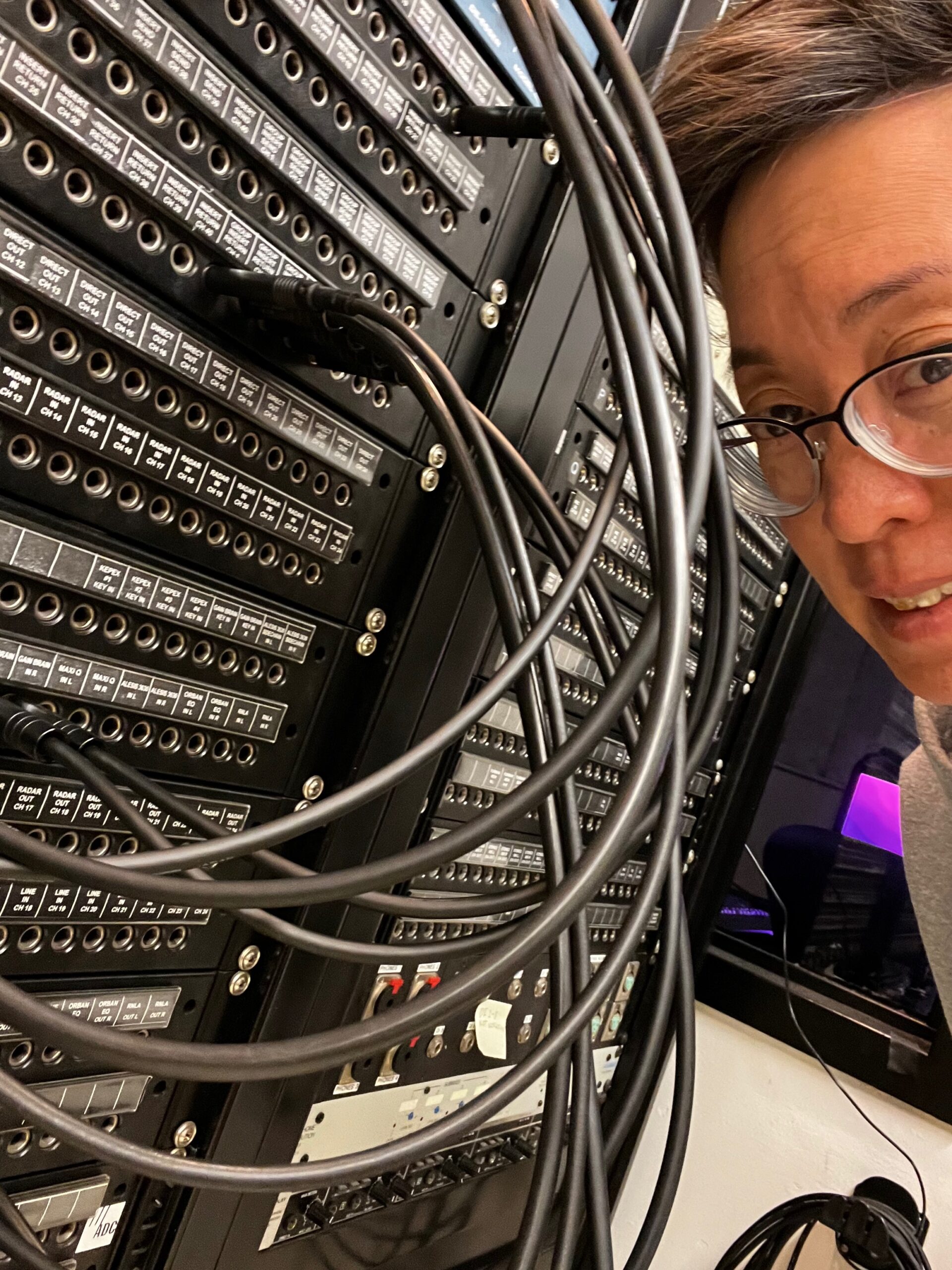
Last year, at a studio event, I was tasked with monitoring sound in the control room for the overflow audience. The event was being video-recorded by a team of community college students from the media department where I took audio classes, so I knew some of the video team members.
One of them, a young woman who was taking the audio recording class, was talking to me afterwards, looking at the patch bay and telling me how intimidating she found it.
I told her, “The first time I went in to work with the patch bay at school, I almost cried.”
She gasped. “I did cry!” she said.
I’m assisting with a live sound class this semester, and my job is to identify students who need support to succeed. One young woman had taken audio classes at another community college, but those classes didn’t include any hands-on training, and she was feeling out of her depth with signal flow and using a mixer.
I spent some time with her in a separate room with an old analog Allen & Heath mixer, talking about how the different controls corresponded with the outputs, and getting her to turn the pots and move the faders. Even with the mixer completely powered off and disconnected, she still hesitated to touch the controls.
That’s real fear. I completely identified with her, because I have that, too. It’s a feeling that a mistake will lead to annihilation. Combined with whatever upbringing or experiences one might have had, it can take the shape of anxiety or techphobia that shunts a person’s whole system into survival mode and blunts understanding.
Everyone has a story. Trigger alert: this paragraph describes an act of domestic violence. Part of my story is that I grew up in a strict household ruled by adults with war trauma, where I studied to get the grade necessary to avoid punishment, but not to understand the material. I was discouraged from trying new things or taking risks. As a teen, I dated an abuser my age who brainwashed me in classic style, in one instance telling me to do a math problem he knew I didn’t know how to do, and then slapping my face and screaming about how stupid I was. Decades later, I know he was lying, but my nerves still remember.
It took me most of my life so far to navigate the fallout from that experience. Now that I’m moving forward with an audio career and have the lens of my past to look through, I’ve identified, viscerally, times that the culture of audio engineering has pushed me back. Often, everyone in the room is well-meaning (though perhaps a bit oblivious). For instance, an overzealous engineer once attempted to frame me as a rising star and gave me my first ever session at that studio (and my second session ever) but didn’t give me the information I needed to prepare. It wasn’t a paying client, but a young band that one of the studio owners knew. At one point, the studio owner, his wife, his daughter, the band, and a team of high school videographers were all in the control room watching me set up the session. The engineer came in and asked if I’d measured the position of the overheads (which I knew to do, but had gotten overwhelmed and had forgotten), and if I’d patched in any hardware processing (I hadn’t). He gave me a look and pushed me aside, undoing what I’d done and setting up the session the way he’d do it.
When I thought about this session afterwards, I could see all the ways it could have been a great opportunity for someone else, but was ill-suited for me. It helped me identify the things I needed in order to gain productive experience: time to prepare, less pressure, and fewer observers. I needed the freedom to make mistakes, and I needed to replace, not relive, lessons learned from belittling experiences.
I realized that, if I was ever going to become a recording engineer, I would need to take control of the circumstances under which I worked. I needed to be honest with myself about how I reacted to certain situations, to analyze those reactions without judgement, and to choose the most effective path forward. Most importantly, I had to let go of the opinions and expectations of others. I can’t go around explaining my whole self to everyone, so they are just going to have to learn to deal with me without knowing.
Sometimes the people in the room are other gender minorities caught in their own form of survival mode. This is possibly the trickiest situation to navigate. I’ve been in “women in audio” groups that stress beating men at their game. This involves maintaining a flawless mask of competency and holding oneself to an impossible standard of professional and emotional perfection in order to force a powerful majority (men) to acknowledge the abilities of gender minorities. But playing the game under these terms is playing a power-imbalanced game, and those in power still declare the winners and losers, even if they themselves are flawed. It also leaves behind questions of race and marginalized identity. It’s ultimately an outdated game with skewed and arbitrary rules that a person could die trying to win.
What happened to me wasn’t my fault, but that’s not the point. There’s no reason to be ashamed of a weakness. We are entitled to our imperfections. We are human beings, and it takes human beings to make art. We can turn to computers for flawlessness, and they will always do “perfect” better than we can. Every deeply flawed moment of our lives is our art. What a pity, to be ashamed of being alive.
In the classroom, packing up the old Allen & Heath mixer, I told the student how I bonded with someone about crying in front of the patch bay. “I’ve had people teaching me, where I’m so anxious that I can’t understand, and then they look at me like, ‘What, are you stupid?’” I’m not sure if I was speaking to her or to myself at this point; it was a little of both. “I know I’m not stupid. This is just hard. And if you learn slow, so what? Take the time, make yourself comfortable. Honor the shape of your journey, I’m serious. Because I think you can do it.”
There are a lot of things to think about on the day of recording vocals – It’s important to dial in the “hygiene” of this process as much as possible in order to avoid any frustrating setbacks or snags along the way. I can’t tell you how many times I’ve made silly mistakes while recording, wasted time, slowed my momentum, and in some cases, had to start completely over. We’ll get into those soon, but before we do, I want to point out that most recording problems fall into two categories:
I hope to help you avoid pulling your hair out over lost studio time by capturing some of the typical ones, and in this post we’ll start with the technical side.
These are the sorts of callouts that are probably quick fixes but can be big headaches if not considered properly. I recommend checking all of these in your tracking session every time right before you or your producer starts recording:
Recording Environment: It’s easy to focus on gear when recording vocals, but your recording environment matters just as much. It doesn’t matter how great your microphone is if your recording space isn’t controlled and picking up background noise.
Here are some common culprits:
You don’t have to spend a lot of money to treat your room, but addressing the items above will help a ton!
Sample Rate: A suggestion is to choose the standard sample rate of 48kHz for your session. This will optimize for video/film opportunities, and why not keep that door open? That said, 44.1kHz can also be fine for a standard music release. Either way, it’s good to stick to one of those and ensure your producer/collaborators are setting the same sample rate in their project. If you don’t commit to the same sample rate and share files for the production you will run into issues with pitch shifting, playback speed, or strange artifacts.
So again, pick one sample rate from the options below:
Set Proper Pre-Amp Gain: Clipping happens when your signal level is too hot and the audio distorts. Once recorded, this distortion is permanent. This is why you have to test and set your levels of your pre-amp gain on your interface at the beginning of your session.
Aim for peaks around -12 dB to -6 dB.
The best way to set levels is to record a short test of the loudest part of your song and make sure the gain knob is adjusted enough to not result in clipped, recorded audio. If your audio is clipping, you need to bring the gain knob on your interface down…ideally you set it so there is a little bit of “head room” in your louder sections (just in case you have a really great take that is louder than your test and also in general).
Ensure a Good Headphone Mix: This is super important and often overlooked, especially if you’re a singer recording at home. There are a few things to consider to make sure that you’re comfortably hearing the track while recording final vocals:
Instrumental Track Volume: Ensure that the instrumental track is not too loud. You don’t want to compete with the instrumental while recording — this can strain your voice and lead to a forced sounding performance. An easy fix is to simply lower the instrumental track in your session. Sometimes instrumentals are already mastered, which is part of why everything sounds too loud, and in that case they may need to be lowered significantly.
Vocal Monitoring: Take time to make sure your vocal monitoring is comfortable and that you can clearly hear your voice through the headphones
Cluttered Mix: Make sure the headphone mix is not too cluttered. A cluttered mix means the singer is hearing too many instruments at once, which can make it harder to hear their voice clearly and stay in tune. Simplifying the mix often leads to a better vocal performance. You can create a simpler headphone mix by temporarily removing layers of the production if you find them distracting.
Record to Polished Instrumental: It’s really important that the vocalist is singing to an instrumental that is polished and in tune. If there is anything unfinished or off about the instrumental it might affect the way the singer performs.
Whenever possible, record vocals to a version of the track that is as close to the final arrangement as possible.
Taking a few minutes to check these technical details before recording can save you hours of frustration later.
→ In Part 2, I’ll cover the other side of vocal recording hygiene — the performance mistakes that can make or break a vocal take. Stay tuned and Happy Recording,
Dani
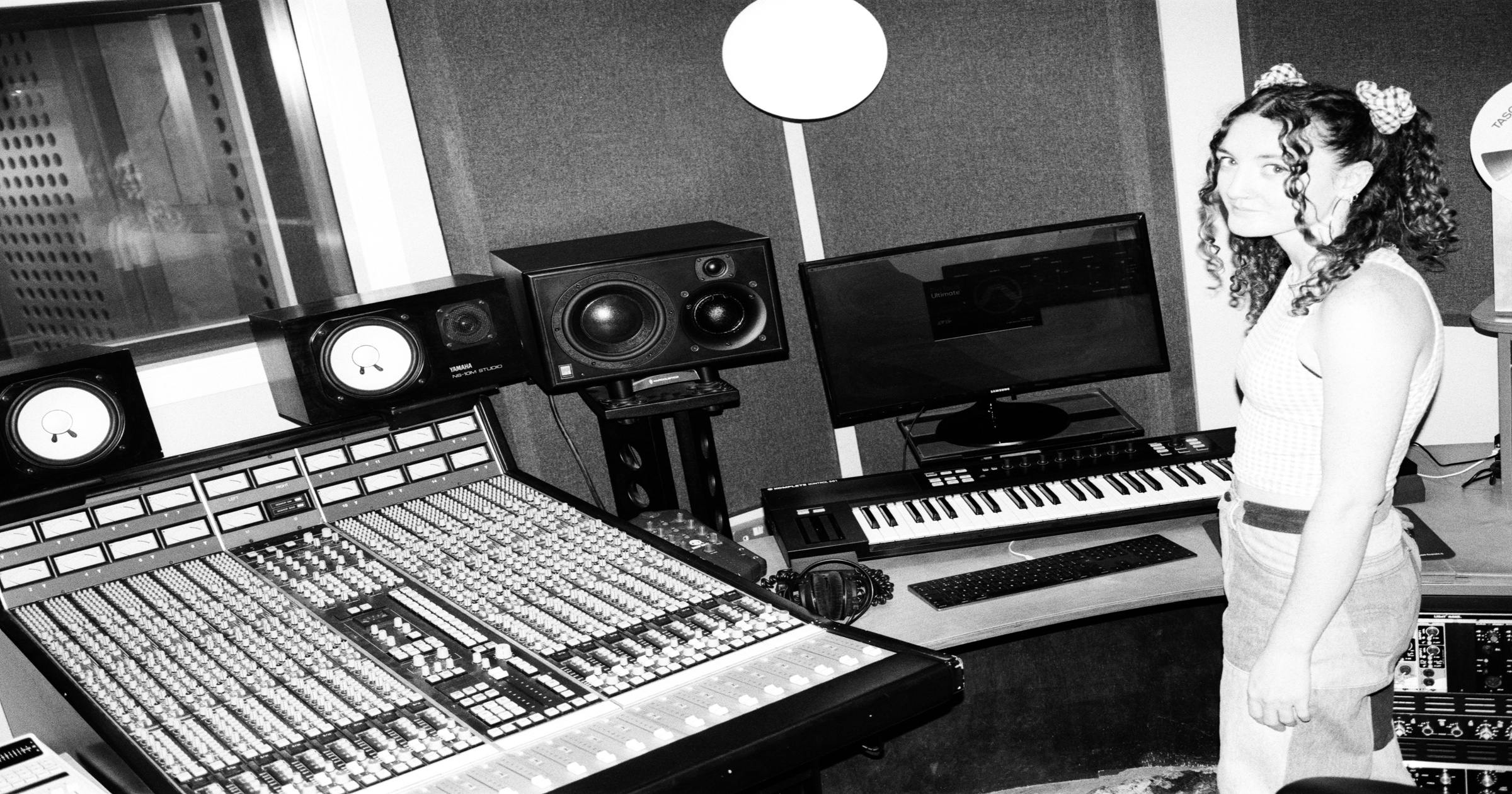
Evie Clark-Yospa is a London-based recording, mixing, and production engineer with over a decade of experience in audio. Currently working as an Engineer at Baltic Studios, where she has been part of the team for the past three years, Evie balances her studio work with independent projects, bringing a versatile and intuitive approach to every session.
Evie’s path into audio began at just 13 years old at a festival where her parents were part of the workshop crew. Friends running the sound tent invited her to help during band soundchecks, and she immediately knew she had found something special. The experience of watching live sound come together sparked what would become a lifelong passion.
Music was woven deeply into Evie’s upbringing within the traveller community. Her mum busked professionally and played in ceilidh bands, often bringing Evie along to performances. Her sister played Celtic harp, her father produced techno, and both grandmothers were multi-instrumentalists. Though she didn’t grow up with formal music lessons, she was surrounded by creativity and encouraged to experiment freely — an influence that still shapes her production style today.
Home-educated and largely raised off-grid, Evie initially entered the industry without fully recognizing the barriers that often exist. It wasn’t until she began working in professional studios that she became more aware of representation gaps within audio. However, strong mentors and supportive educators played a key role in reinforcing her sense of belonging and capability.
At 15, Evie traveled six hours a day to attend a music technology course at Coleg Sir Gâr in Wales — a formative experience that solidified her desire to pursue audio professionally. She later earned a BA (Hons) in Music Production from BIMM, where she developed her technical foundation. An internship at Premises Studios proved especially transformative, giving her hands-on experience and a clear vision of her future in the industry.
Today, Evie brings both technical expertise and a deep-rooted musical intuition to her work. Shaped by community, independence, and a lifelong immersion in sound, she approaches each project with curiosity, care, and a commitment to helping artists fully realize their vision.
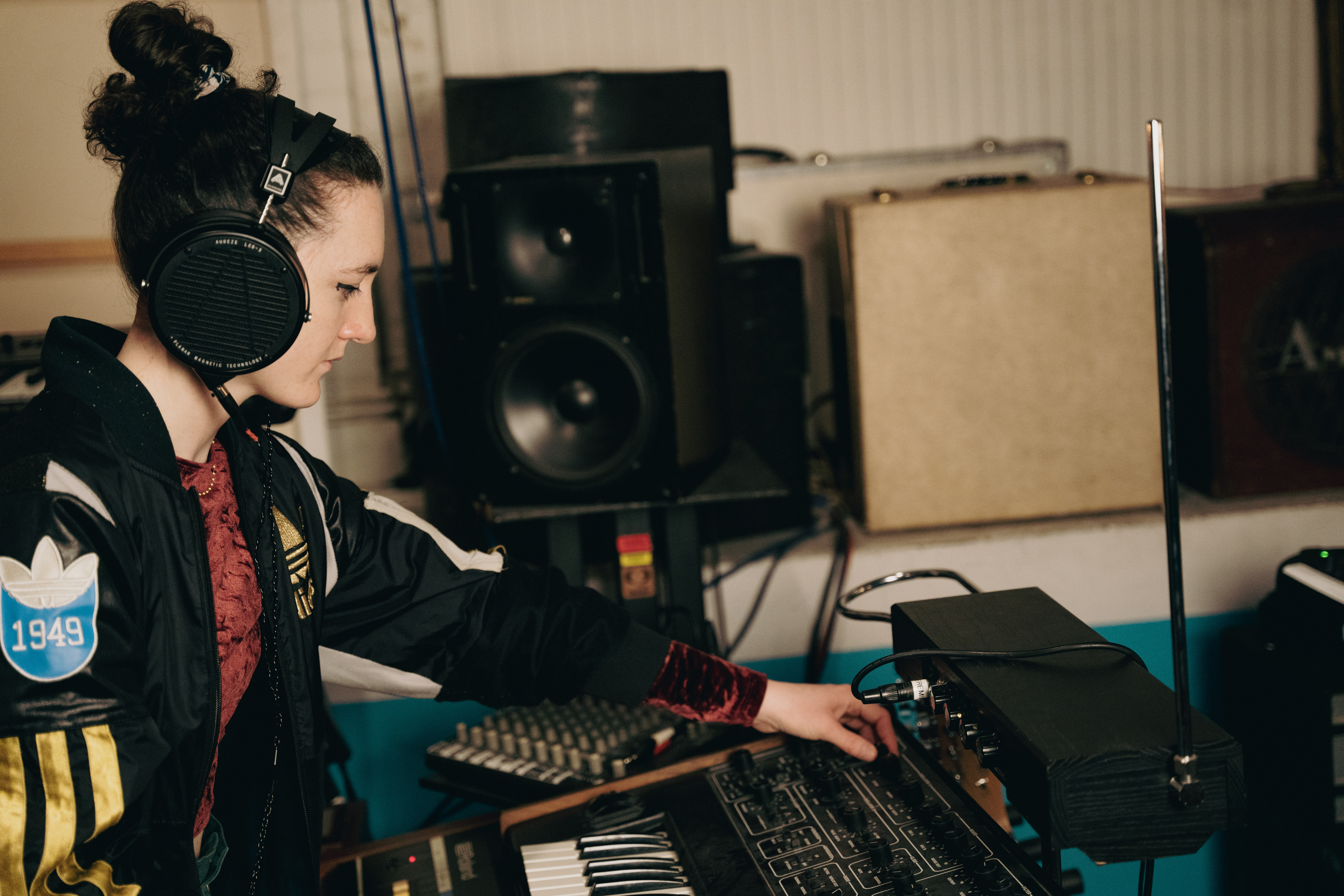
How did you get your start in audio? –
I started my career by interning at Premises Studios, and it all happened by complete chance. I met someone at a festival who knew one of the studio managers, and she offered to put me in touch. We met up, I shadowed for a day, and a year later they offered me a job working on reception at the studio.
What were your first jobs, gigs, or internships like?
I had a steep learning curve going into my internship because I had never been in a commercial studio before. However, I feel incredibly lucky to have interned at Premises. They were so encouraging, they trusted me, and they genuinely cared about my wellbeing during sessions. I know not all studios or internships would have treated me this way, and I have a great deal of respect for the entire team at Premises for giving me that opportunity.
What skills or lessons did you learn early on that still serve you today?
I learned so much during my time at Premises. All the technical knowledge I gained there was invaluable. I learned about patch bays, how to mic up drum kits, how to track vocals, Pro Tools shortcuts, everything. But I think the most important skills I developed during my internship were behavioural. I learned when to give artists space and how to support different personalities in ways that helped them perform at their best.
What barriers did you encounter early in your career, if any?
I didn’t have a mentor per se but I feel like Premises took me under their wing fully, the engineers, studio managers, the owner, everyone encouraged me. I think the barriers I faced were mostly rooted in people’s assumptions about me. I often felt overlooked when interviewing for studio roles, and even when I did secure a position, clients would frequently assume I was the singer rather than the engineer. I remember one particular interview for a studio job. As part of the process, I was given an audio tech test, but I wasn’t given the space to properly demonstrate what I could do. Instead, they assumed I didn’t know what I was doing and stepped in to complete parts of the task for me. I was later told I hadn’t been successful because I “lacked technical knowledge.”
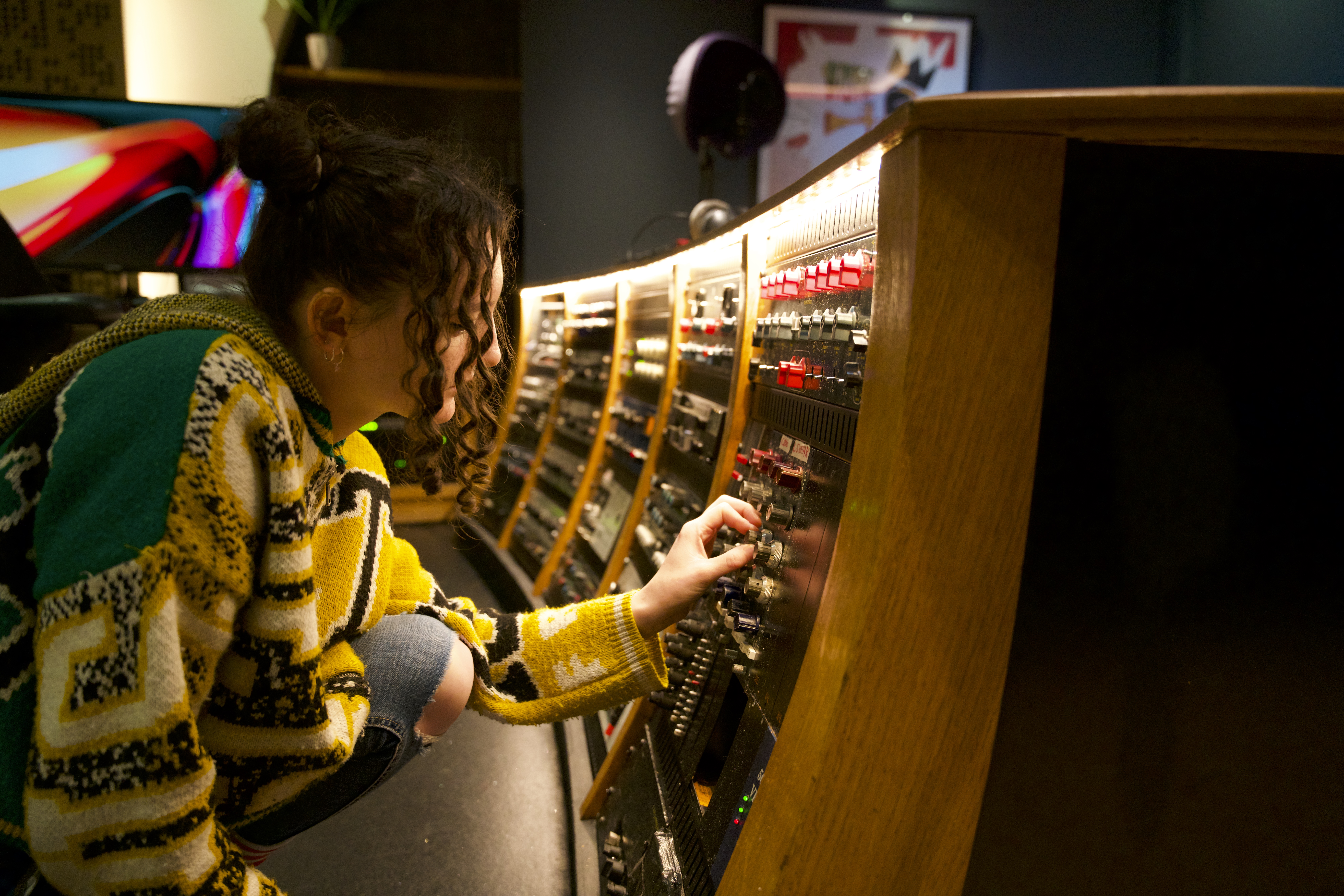
What does a typical workday look like for you now?
My days can vary a lot, but I mostly work as a tracking engineer at Baltic Studios. I record a wide range of projects, from bands to film scores. Alongside that, I freelance as a mixer and producer, so some days are spent working more independently on smaller projects, mixing and producing.
How do you stay organized and manage the demands of your work?
I stay organised by being mindful not to schedule too much too close together. When I’m working on a project, I try to fully commit to it so I can stay in the right headspace and give it my full attention.
What do you enjoy most about what you do?
What I enjoy most is the people. I thrive in a busy studio environment, constantly meeting new artists and collaborators and building connections through music. I also really enjoy the problem solving side of the work. There is always a challenge to tackle in the studio, and I love troubleshooting.
What aspects of the job are the most challenging or least enjoyable?
Although I enjoy most aspects of my work, I think the hardest part of engineering is the schedule. It can be incredibly busy, and it’s important to set boundaries and avoid overworking so you don’t burn out.
What is your favorite way to spend a day off or time away from work?
I love travelling, my favourite thing to do away from work is exploring different cultures and having new experiences.
What obstacles or systemic barriers have you faced in the industry?
One of the main barriers I’ve faced is frequently being the only woman in many studio sessions. In those environments, I have often felt overlooked, patronised, or underestimated. It has meant having to repeatedly prove myself in spaces where others are automatically assumed to be Competent.
How have you navigated or pushed through those challenges?
The only way I’ve been able to navigate the challenges of being overlooked and underestimated has been by working twice as hard as I should really have to, over preparing for everything, and consciously trying to maintain confidence in myself.
Have you seen the industry change during your career? If so, how?
I have seen the industry change for the better. I see far more women and people of marginalised genders in studios now, which is really encouraging. That said, I still think there is a lot more work to be done.
What still needs to change to better support women and marginalized genders in audio?
I believe we need to move beyond just talking about change and start holding people accountable for their behaviour within the industry. Instead, we need to create clearer, safer systems for reporting unacceptable behaviour.
What advice would you give to women or young people interested in entering audio?
The advice I would give is always be willing to learn from others, consistently look for work and try to never doubt yourself.
What skills—technical or otherwise—do you think are essential for success?
I think the technical skills required for audio roles are a given, but the most important qualities for anyone in this industry are kindness, patience, understanding, and a willingness to troubleshoot at any moment.
What long-term goals or aspirations do you have?
In the long term, I would love to give back to the wider industry by helping studios develop forward thinking initiatives that support and progress the next generation of engineers. Creating more accessible pathways into studio work feels really important to me. I also want to continue developing my work as a producer and mixer, taking on more projects in those roles and growing that side of my career.
Is there something you wish you had known earlier in your career?
I wish I had understood more about the less glamorous side of the industry. I love working in this career, but it is often romanticised, especially when you are studying. I would have really valued a more realistic view of what the day to day actually looks like, including the long hours, the unpredictability, and the resilience it takes to build something sustainable.
Favorite or most-used gear (and why):
My favourite bit of studio kit at the moment is the Roland RE-201 Space Echo. I’ve found you can get loads of crazy effects using different tapes within the unit and it’s become a really creative tool for me.
A piece of gear you can’t live without:
The Sony C800!
A moment in your career that made you feel proud or affirmed:
I’ve had so many wonderful moments in my career, but a few recent highlights really stand out. Working on The Charlatans’ new album, We Are Love, was a special one for me. I contributed to a bunch of tracks on that record, and seeing the project come to life and be released into the world was great!
Another highlight has been Baltic Studios’ ATM Programme. Each year, we support eight emerging artists facing financial barriers with access to studios, mixing, mastering, and career mentorship. Working with these artists to pass on what I’ve learned, and building thei confidence in a professional studio environment has been incredibly rewarding.
I also played a part in building Baltic’s new studio spaces, Studio 2 and Studio 3. It was a truly collaborative effort from the whole team, and it has been exciting to see those rooms thriving in sessions, especially knowing how much care and hard work we all put into creating them.
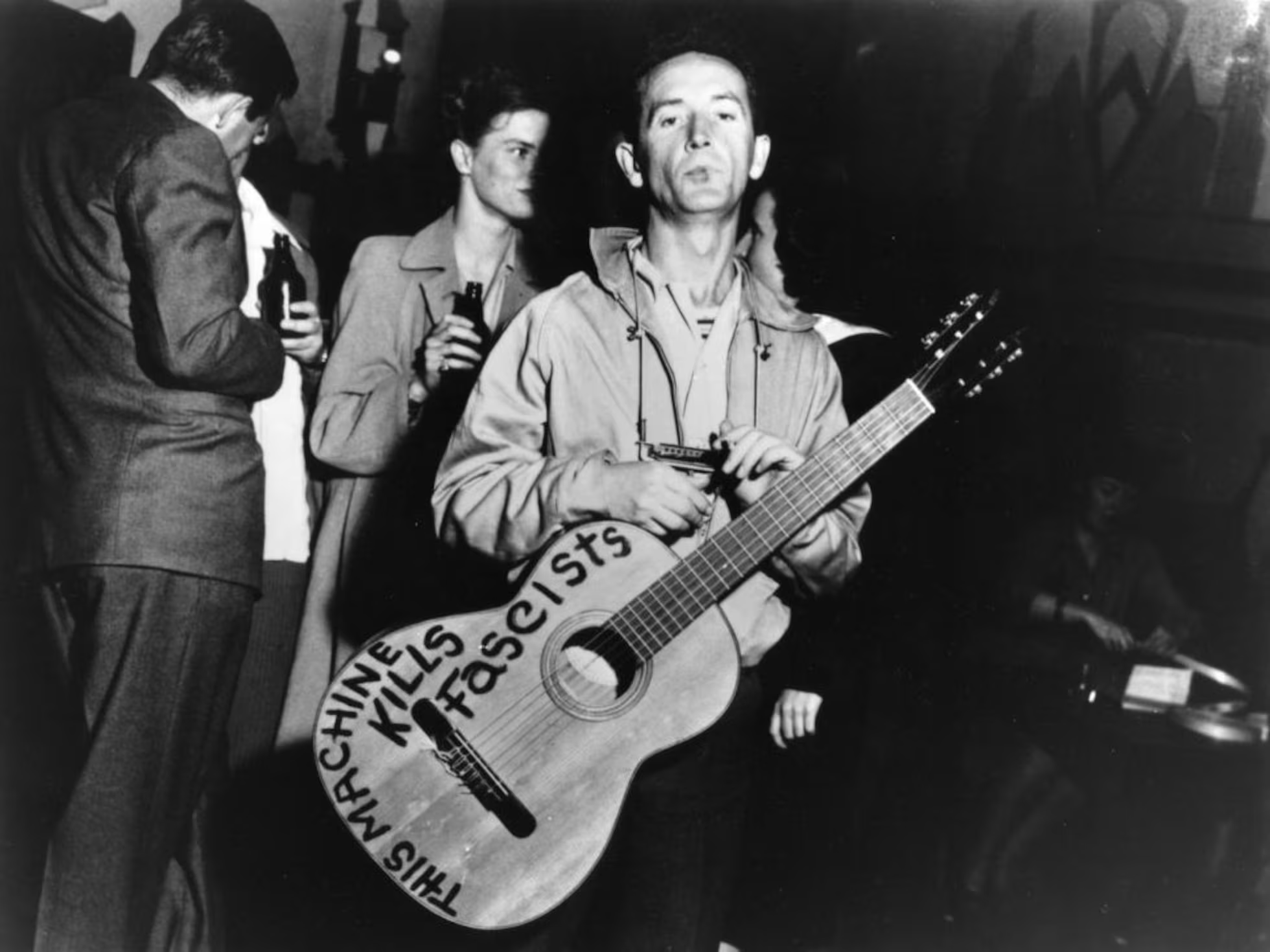
The other day I caught up with my friend Lenise Bent over Zoom. We started with a simple catch-up—talking about plans for mentoring with SoundGirls and what we’ve both been working on lately. It turned into a wonderful and inspiring conversation, but one of the key things we discussed was the power of music and how it truly is the universal language.
Music does not recognize borders or language barriers. It reaches people emotionally before it ever reaches them intellectually.
In the United States, many citizens are denied meaningful opportunities to learn a second or third language. In much of the world, people grow up speaking two, three, sometimes four or five languages. While many people in the U.S. eventually learn additional languages, the opportunity for most students often isn’t presented until middle school—far later than it should be.
And evidently history education is lacking as well.
That might explain some of the uproar around Bad Bunny—a United States citizen—performing in Spanish during the Super Bowl halftime show.
Let me say this clearly: language was not a barrier to understanding his performance. Anyone watching could see that it was a celebration of Puerto Rican roots and culture. It was pure joy and happiness. Everyone I watched it with felt the same way—we simply smiled and took it in. It was magic, and it was beautiful.
Lenise also told me about a year-long project she worked on with an artist named Miist and a song called “Lend Me a Smile.”
Miist’s’s goal is to spark human connection through music, empathy, and intentional kindness—things that feel increasingly absent in a society built around constant streaming and digital consumption.
The project was inspired by a tragic story: a 20-year-old Japanese man who was found months after he had died alone in his apartment. This type of lonely death has been increasing across Asia and around the world. In Japan it is even referred to as kodokushi, or “lonely death.”
Here in the United States, the U.S. Surgeon General has warned about a growing loneliness epidemic, reporting that roughly half of adults say they experience loneliness at some point in their lives.
Miist was so moved by that story that she wrote “Lend Me a Smile.” The song has now been recorded in 15 languages across five continents, involving Grammy-winning artists, engineers, and producers. The goal is simple but powerful: help humans remember how to be human.
Imagine if someone had simply taken the time to acknowledge that young man. To smile. To say hello. To ask if he needed help—or even just a hug.
I sometimes use the line “Do you need a hug?” or “Someone needs a hug.”
I use it when dealing with crew members who are being prickly on any given day. Instead of engaging with whatever slight they’re upset about, it often stops people in their tracks. They take a breath. Sometimes they actually take the hug. Sometimes they laugh.
More often than not it diffuses the situation completely. It allows people to regulate, apologize, or simply reset.
Connection matters.
Society has become increasingly isolating—especially after the pandemic. Our lives are now dominated by streaming services, social media feeds, and devices that keep us connected digitally while separating us physically.
We’ve also lost many of the affordable public spaces where people used to gather and build community.
Humans are social creatures. We need connection. We need to touch, laugh, bond, and share experiences with one another.
Yet modern American culture increasingly pushes us toward isolation
We’re taught that success means having your own apartment, your own house, your own nuclear family. Two kids. Two cars. A house that looks like all the other houses. A vacation to Disneyland.
Our elders are placed in nursing homes, or—if they are fortunate enough to retire comfortably—they disappear onto cruise ships.
Generational households are rare in white middle-class America. The working class often maintains them out of necessity. The wealthy maintain isolation by protecting their mansions with gates and private security.
The middle class runs a treadmill: paying off one debt only to accumulate another, spending weekends catching up on errands and chores. Maybe there’s time for a movie night once in a while.
But that is not community
Our common spaces are disappearing. Property values and investor profits outweigh the value of shared cultural spaces.
When was the last time you could enjoy a free play or concert in a park or on a beach?
When was the last time you could easily afford to attend a concert?
Last weekend I went to see Flipper. I used to see them for $6. I know that was a long time ago, but even a $40 ticket today adds up quickly.
Parking: $40.
Dinner: about $80.
Drinks: another $60.
Suddenly you’ve spent nearly $200 to sit in a hot club. In this case, I say watching the band rather than hearing them—the sound was so terrible it was basically just noise.
Do I regret it?
No.
Because for a few hours I was part of a community.
Being an introvert, it’s easy for me to isolate. In fact, isolation is sometimes necessary just to function. An outing or event – even one I want to attend – can drain my energy for days.
But I still need connection.
As an introverted, awkward, easily bored kid, music and books literally saved my life.
I never really connected with the kids at school. I was relentlessly bullied in elementary school. Middle School friendships were fleeting. High School included a toxic romantic relationship.
Eventually I landed at a continuation school where I could finish my school work in four-hour days, without all the drama. That environment became a community.
We were basically the The Breakfast Club every day.
And we could afford to go to shows.
Los Angeles had a vibrant and welcoming punk scene, and I saw an incredible range of bands—from clubs to arenas:
X
Black Flag
Redd Kross
Joe Walsh
David Lindley
KISS
Scorpions
Iron Maiden
the legendary US Festival
and even Mötley Crüe when they were still playing 2,000-seat venues.
And I always had a Kurt Vonnegut book in my bag.
Never leave the house without a book.
Some days you’re going to sit around all day doing nothing. A book will save you.
All of those shows created release and connection—connection between the band and the audience, and between everyone in the room.
I have been fortunate enough to spend my entire adult life working in live sound. That career exposed me to countless artists, bands, and genres. And every night when the doors open at 6 PM, something special happens.
For a few hours, a community forms.
Sadly, many people today can only afford to attend one concert a year. Some opt for massive festivals like Coachella to get the biggest spectacle for their money. Ticket prices have skyrocketed. Sometimes it’s corporate greed—companies like Live Nation Entertainment certainly play a role – but audiences also expect spectacle now. Modern shows often resemble Broadway productions. Spectacle costs money.
Two of the most incredible shows I’ve seen represent opposite ends of that spectrum:
The Formation World Tour by Beyoncé – a stunning spectacle.
And Fugazi, whom I was fortunate enough to tour with: three work lights, no theatrics, just pure musical muscle.
Both were intense. Both created community.
Both were powerful.
Music has the power to heal.
It provides the soundtrack to our lives.
It can be used as a force for good, like the Miist project.
It can combat loneliness.
Help us heal emotionally.
Regulate our nervous systems.
Create safety and connection.
Research has even shown that music can reconnect memory in people living with Alzheimer’s disease.
That’s powerful.
Now let’s talk about one of the most isolated groups of people in our society: people who are incarcerated.
They are isolated from society, communication, movement, and community. Some endure the most extreme form of isolation imaginable—solitary confinement—for months, years, even decades.
These individuals are cut off not only from other people but often from meaningful sensory experience.
For those living in isolation, music can become a lifeline. It offers connection, emotional release, and mental escape. It can help alleviate trauma, reduce aggression, and maintain sanity. Solitary confinement is widely recognized as one of the most severe forms of psychological torture.
Ironically, music has also been used as a tool of torture. The United States has used loud music played continuously—sometimes 24 hours a day—against prisoners and detainees. I remember once laughing when I heard that some band I didn’t like was used in those interrogations. But it’s not funny. It’s cruel.
Artists including Tom Morello and Skinny Puppy have publicly condemned the practice, while others including James Hetfield—have spoken out and embraced it.
That contrast shows just how powerful music really is.
Personally, I strongly oppose the use of music as torture, the use of solitary confinement, and the entire structure of the Prison Industrial Complex. I became an activist because of the power of music. In the late 1980s I worked a protest benefit concert opposing U.S. support for the Contras in Nicaragua. The final performer of the day was Jackson Browne. He walked on stage with nothing but an acoustic guitar and sang a song in Spanish. I didn’t understand a single word.
But I was reduced to tears
That four-minute performance touched me so deeply that I could never again turn my back on people suffering – whether from war, poverty, nuclear threats, genocide, militarism, or the Prison Industrial Complex.
That is the power of music.
Use it for good.
Side note: I volunteer with Critical Resistance and participate in a program called Circle of Solidarity.
Recently we visited San Quentin Rehabilitation Center, where I met two musicians and aspiring sound engineers named Tan and Brian. Tan’s wife immediately sent me music he recorded while incarcerated there.
SoundGirls is also working with The Last Mile, which runs programs in video and audio editing inside prisons. Last year I visited California Institute for Women and met with some of students, it was an amazing experience.
We’re excited that students inside will soon be editing episodes of the SoundGirls Podcast.

The music industry is built on a high octane rush. There is absolutely nothing that compares to the surge of a flawless production or the electric energy of a world class performance. But let’s be direct: the pressure is relentless. Whether you’re steering the ship in production or keeping the gears turning on the local crew, the volatility… the travel, the erratic hours, the high stakes… demands a tax that most people aren’t prepared to pay.
The standard industry move? Put yourself last. Run on caffeine and adrenaline. Tell yourself you’ll deal with the fallout when the tour wraps. Toughen up, buttercup.
But hope is not a strategy. Pushing through isn’t a badge of honor; it’s a liability.
If you want a career that is sustainable, profitable, and elite, you have to treat your health and wellness as a high level business investment. Here is how mastering your internal mechanics protects your health, your reputation, and your bottom line.
In this business, “the show must go on” often leads to professionals ignoring the very body that allows them to work. Chronic overwork sends your system into a permanent state of “fight or flight,” weakening your immune response, wrecking your digestion, and inviting inflammation.
I’ve spent over two decades backstage. I know the cost of a missed gig or a physical collapse. When you move from reactive survival to staying cool, calm, and competent, you aren’t just “feeling better.” You are ensuring your body can recover faster and perform at a high level without the frequent “engine failures” of illness or injury.
That hollow, disconnected feeling when the adrenaline stops? That’s not just fatigue. It’s a dysregulated nervous system struggling to find a baseline. When you live in a state of overstimulation, emotional regulation becomes nearly impossible.
Through Neuroscience based mentoring, we bridge the gap between the chaos of the road and the stillness of home. You’ll learn to shift states with precision, ensuring the industry doesn’t own your mental well-being long after the trucks are loaded.
Let’s be real: this industry has a long history of self-medicating the pressure. Whether it’s substances, burnout induced spending, or total numbing, these are just survival tactics for an unregulated system.
I’m not here to preach or judge… I’ve seen it all from the side stage. My goal is to give you a more sophisticated toolkit. When you have the power to regulate your own biology, the need for external “quick fixes” naturally fades. You regain control. You will still live your lifestyle, it will just grow into being BETTER.
In the music world, your reputation is your currency. Stress induced decision fatigue makes you lose focus, miss details, and develop a short fuse. If you become difficult to work with or unreliable, the calls stop.
By integrating MicroMoments Unplugged, practical, science backed resets that work in real time and match your lifestyle, you stay sharp, grounded, and composed under chaos. You become the person the heavy hitters want on their team because you remain the calmest person in the room.
When you are drowning in stress, you can’t think long term. You take random gigs out of fear rather than making moves that scale your career.
Mastering your stress allows you to operate from the prefrontal cortex, the seat of strategy and creativity. This is how you stop working harder and start working smarter. It’s how you move from being a “worker” to being an industry leader who sets boundaries and prioritizes high value opportunities.
This industry rewards those who can last. The icons and the top-tier production masters aren’t the ones who burned out the fastest; they’re the ones who learned how to manage their energy.
Through my Mentoring, Consultations, Workshops, and the Where You Belong Retreat, I provide the roadmap for high achieving professionals to master their internal environment.
You’ve spent years mastering your craft. Now, it’s time to master the biology that powers it.
The industry is demanding. Be the one who stays regulated.
Curious how a tailored stress management strategy fits into your touring schedule? Let’s set up a Meet n Greet to discuss how to build your elite edge.