Empowering the Next Generation of Women in Audio

Join Us

Music and Sound. Part 2

Find Part One Here

Do professionals in audio need to be musicians too?

My straight answer will be no, some of the best sound engineers in the industry are not musicians. But if you want my advice as a musician and as a sound engineer, learning some basics about music won’t hurt you.

Being a sound engineer working on projects that involve music treatment such as, recording, editing, mixing, etc., will require you to have and develop some aptitudes and basic knowledge about music that will allow you to have a better performance at your job. This means, even if you are not a musician you will need to have a good ear for music: recognize pitch and tone, recognize which musical instruments are playing, recognize if musical instruments are out of tune, recognize harmonic patterns and form of a piece of music, recognize and follow beats and rhythmic patterns, be sensible to dynamics.

Let’s go deeper into each topic

Recognize and follow beats and rhythmic patterns

The Click:

Every piece of music has a heartbeat called tempo that follows a metronome marking measured in beats per minute (bpm). If a music sheet is available, this metronome marking will be indicated at the top left of the music sheet. It could be indicated by numbers or by musical terms in Italian that give you a hint about the tempo. Most of the time, It will be necessary for recordings and/or live performances to set up the click on your DAW or music software. Depending on the musician’s request, the click can be set to follow the tempo or subdivided, make sure you are familiar with setting up a click on your software before you run your session.

Bars and time signatures:

Beats are grouped into bars, and they can vary depending on the music, bars can also change within the same piece of music. The number of beats on a bar can be 1, 2, 3, 4, 5, etc. Bars can also be set up in your software, it will appear as a number with two digits: one number at the top that indicates how many beats there are inside the bar, and the bottom number that will indicate the type of notes used inside the bar ( half, quarter, eight, etc.). Knowing the time signature will help you with bar counting and following rhythm patterns, it will also help you to locate specific parts in a piece of music. But it will also allow the musician to identify bar counts and pulses.

Strong beat:

Each bar has strong and weak beats that give music memorable rhythmic patterns. Usually, the first beat is the strong beat of the bar (known as downbeat), this feature can be set up on the software so bars can have different accents, levels, and sounds for each beat, helping musicians during their performance. Knowing all these settings when configuring the click and timeline of your session are essential.

Pickup:

Understanding the pickup term or anacrusis is handy when you need to anticipate music recordings or performances. If you hear this term, it will mean that the music will start with a note or a group of notes preceding the first downbeat. Its main characteristic is that the pickup is a partial bar before the first bar of the music starts.

Recognize patterns and forms of a piece of music

Form:

The structure of a piece of music is known as musical form. Familiarizing yourself with the different types of forms can help you organize your session in an efficient way. You will find musical phrases, harmonic structures, chord progressions, modulations, and rhythmic patterns within the music that will help you when it comes to recognizing different forms. A good way to familiarize yourself with it is to hear and read about diverse styles of music so you can identify which form is present in the piece of music. For popular music, forms elements like chorus, and bridge can be more familiar to identify, however, for other types of music training your ear is the best way to go.

One terrific example of a very distinguished type of form is basic blues: Blues form is 12 bars and its chord progression are very distinctive because the I chord is a dominant chord as well as the IV chord and the musicians have taken the Basic I7-IV7-V chord to be used in it. Other forms like Binary (AB), Ternary (ABA) , Rondo (ABACA) or (ABACABA), Arch (ABCBA), Sonata (Exposition, Development, Recapitulation), Theme, And Variations can be studied so you can identify them better for your sessions.

Chord progression:

Most music written is based on scales and keys. Each note of a scale is identified as a grade. The sequence and order of the chords based on these grades of the scale is called a chord progression. The primary chords are I, IV, V, and some popular music genres have distinctive chord progressions that can be identified easily, like the progression I-IV-V-I used in most pop songs. Because of the variety of grades and scales that can be present in a song, chord progressions can help you identify the form of a song and the genre, recognize phrases and themes easily, and locate musical parts to help you get very creative.

Cadence:

As part of the chord progressions, the way a musical theme, phrase, or idea ends will be harmonically accompanied by at least two chords that are recognized as a cadence. This cadence gives a sense of resolution and can be classified into many types. One of the easiest to recognize will be the perfect cadence that goes from V chord to I chord where the bass note is the main note (tonic) of each chord. Being able to recognize cadences during large pieces of music can help you. With your creative process while mixing, etc.

There are some other musical elements used that will help you understand what’s happening in a song

A riff is a pattern of notes that are repeated throughout a piece of music. Riffs do not repeat immediately and are usually found at the end of the verse in a song or in the chorus.

Groove, a term borrowed from jazz musicians, often refers to a rhythmic sense of cohesion employed in a routine or musical practice style.

Solo is an improvisation section where each instrumentalist performs, the order can be predetermined, or not. Solos are performed in the form of the theme and the number of turns are called choruses.

Fill are improvised melodic or rhythmic phrases, played between phrases of the theme.

A vamp is a repeating musical figure, section, or accompaniment until the cue for the next section is given.

An interlude is a pre-written arrangement that serves as a transition between sections or solos.

Breaks are momentary interruption of musical discourse while time is maintained. Sometimes, a soloist could play during the break (solo break).

Training your ear to identify instruments and pitch

If you have never heard an instrument you are about to record, just ask the musician to explain to you how is it played and any other details you might be interested in knowing, ask the musician to play the instrument in front of you so you can hear it, walk around it and find the best place to place a microphone for recordings or amplifications.

Tunning:

Identifying instruments out of tune can be tricky and it takes a lot of training so the best way to proceed is to remind the musician before recordings and every once in a while during long sessions, to check their tuning every time possible.

Pitch is how the human ear understands the frequency at which a sound wave is being produced by any source. The higher the frequency the higher the pitch and vice versa. Musical instruments can produce different pitch ranges depending on its construction. Each musical note produced by any instrument has a related frequency measured in (Hz) that will then be interpreted as a specific pitch or note (c, d, e, f, g, etc.)

Many resources can be found online to help you train your ear and learn about musical instruments and music theory. If you are interested in going deeper into these concepts check out:

Learn about orchestration, listen to every musical instrument in an orchestra, their construction, pitch range, tips, tricks, and more :

https://andrewhugill.com/OrchestraManual/

Learn music theory:

https://www.musictheory.net/lessons

Improve core listening skills like frequency detection (Soundgym offers SoundGirls Members Subscriptions to the service):

https://www.soundgym.co/


Mental Health – Let’s Get Open

I remember when I was young, playing “Barbie Idols” with my best friend after school. We would dress the dolls up as our favourite artists and sing our hearts out while playing our CDs as loud as our parents would allow. We always imagined we were Britney Spears or Christina Aguilera. These women were our idols, and we couldn’t get enough. Fast track a few years ahead and you had the tabloids freaking out about Britney’s public mental breakdown in 2008 when she shaved her head.

I remember it being the most absurd thing I had ever heard a celebrity do – granted, I was still a kid! It just didn’t make any sense to me. I think at the time, the notion of talking openly about mental health was so out of reach for the majority of the world – and even more so for women celebrities. At the time I had no idea that the outbreak Britney was experiencing was because she was really struggling. People joked about her breakdown. They judged her, made memes, and called her crazy. And this showed me one thing…

A broken system

Women in our industry are under so much pressure. Celebrities must face their entire lives being publicized. The whole world judges their every move. They are expected to keep up a certain look to sustain their sexual appeal to the masses (because apparently, this is a valid form of identity – belch!) and when they buckle under the pressure, they are not held. They are not given grace. They are not supported.

I mean if you have watched Amy Winehouse’s documentary “Amy”, you witness a beautifully talented human being go from following a dream to being torn apart. Drugs, addiction, pressure from producers and fans, and her father refusing to support her decision to go to rehab because he claimed she was fine. She was a woman struggling in an environment where the extent to which she was seen and heard, was only at the level of how much she could make the men around her rich.

Now I don’t want to throw feminism down your throat, but what I do want to say is that the more we as women (whether we are in the music industry or not) get open about our mental health struggles, the more we can inspire others to do the same before they reach breaking point. In this way, we can collectively move toward creating an environment that is conducive to healing from, coping with, and managing mental health issues. I am inspired by the number of women musicians in the industry who are beginning to talk more openly about their mental health issues and see this as steps toward a healthier and more “normal” approach to mental health struggles.

Just to name a few, we have Selena Gomez opening up about her bipolar, Lady Gaga getting honest about her PTSD, rape, and anxiety, Demi Levato speaking about an eating disorder.

What women like this show me is this

Even if the world says you need to look, be, or feel a certain way, you do not have to conform to those expectations. It also shows that being honest and open about your struggles humanizes you and allows others to feel more confident in speaking about their issues. Personally – my very open discussion is around the fact that I had bulimia for 15 years. I still manage my eating disorder recovery daily. I also struggle with severe anxiety and ADHD. I experience insecurity and have problems with expressing my anger without internalizing it. I was date raped in my early twenties, abused drugs and alcohol heavily, attempted suicide, and even went to rehab.

But these days, if you were to meet me, you wouldn’t ever think that these things have happened in my life. I have some people call me the “happiest person they’ve ever met”. A colleague once said to me “Your life was probably handed to you on a silver platter because of how optimistic you are about everything.” (haha if only they knew!)

The reason I reached this space was that I got open. I started talking about my struggles and became willing to do something about them without shame. I started reaching out to people who had walked the same path. I sought support, put it into action, and radically changed my life. These days I work as a coach for people who struggle with eating disorders, mental health issues, and addiction and it’s all because I let my fear of being judged aside and said: “Hey, I’m not okay”.

So, I encourage you to think – are you getting open about where you’re at? Are you seeking transformation in your life? Are you willing to put your fears aside and reach out? If not, what are you resisting? What is the underlying fear of speaking up?

No matter how afraid you are, there are ALWAYS people who are willing to listen, guide, and support your journey.

So, speak up. Not only for yourself but to inspire others around you to do the same. Feel free to contact me if you are ever struggling and need direction in your mental health journey.

April is Sexual Assault Awareness Month

Calling All Crows and #HereForTheMusic has launched Sexual Violence Prevention online training.

A 90-minute training geared toward music industry professionals, but open to all, as well as a shorter, 75-minute music fan-oriented training for live music experiences. Purchasing access gives you 30 days to complete any course.

Stories of sexual violence in the music industry have been coming to the surface at an alarming rate, even during this pandemic. We’ve received requests for help coming up with new policies, codes of conduct, and language to share in solidarity.

In response, we created a Here for the Music pledge so that music industry professionals can make a public commitment to taking an active role in making the music industry safer. From this pledge to our Sexual Violence Prevention and Response online training, we’re building resources so that as touring and festivals return, we can rebuild our industry in a way that is safer and more inclusive.

Share the pledge and our Here for the Music campaign with your favorite artists, venues, and festivals using our digital toolkit.


Objective-Based Mixing

Guide the Viewer’s Attention

This is my guiding objective in every stage of the mix process and is arguably the most basic and important creative goal in the sound mix.  By manipulating the levels of the dialogue, sound effects, and music of each moment you can highlight or bury the most important things happening on screen.

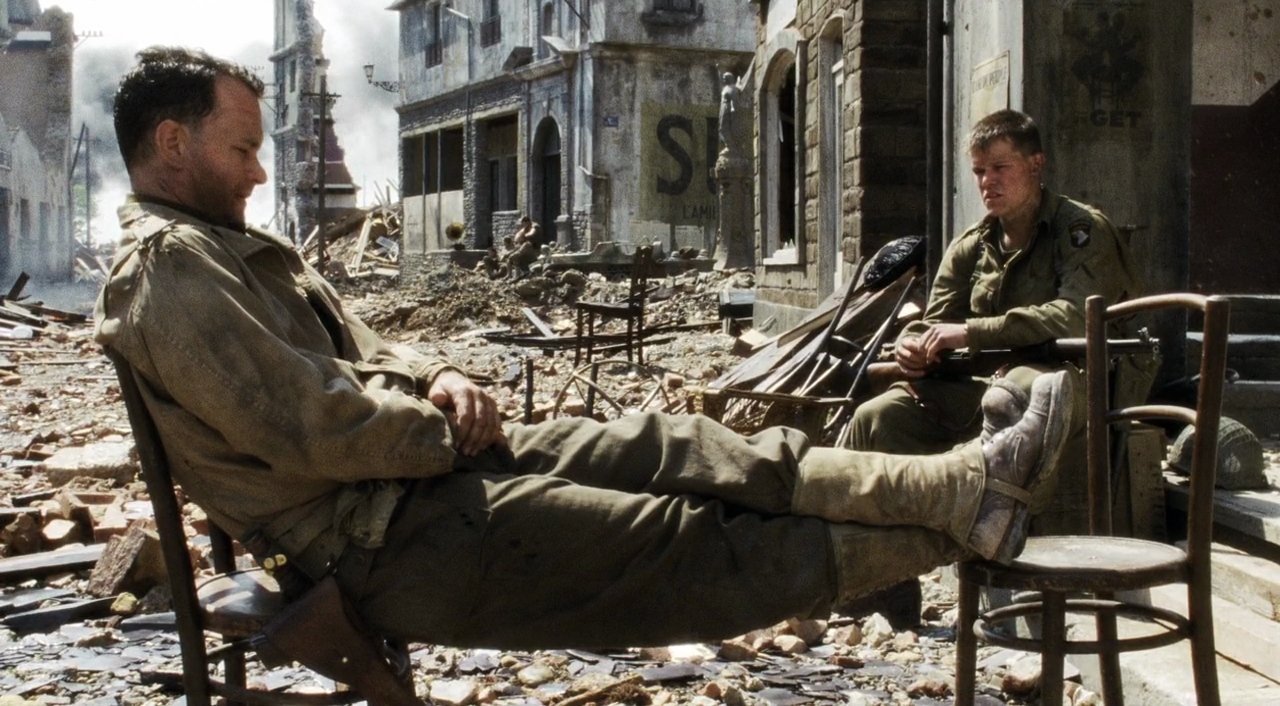
Here’s an example:  Imagine two characters are having a conversation on screen.  They are standing in a ruined city block after a big battle or disaster.  The characters are positioned in the foreground of the shot, and in the background maybe there’s a fire burning and a couple of other people digging through some rubble.

In order to guide the viewer, we want to place the character dialogue in the foreground of the mix.  It should be one of the loudest elements, so the viewer can focus on it without distraction. The fire crackling or sounds of people walking through the rubble in the background can be played very low or left out if needed.

If we mix the scene so that we can hear every sound element equally, the viewer may become distracted or confused. The footsteps, rubble, and fire sound effects of the background will compete with the dialogue of the on-screen characters delivering the exposition. By keeping the dialogue clear and present we are telling the audience “this is an important piece of the story, pay attention to this.”


Depiction of a conversation in a distracting scene.

You can achieve the same guidance with sound effects and music if they are delivering important story information to the audience. Perhaps you need to showcase the rattling wheeze of an airplane engine as it begins to stall, causing the heroes to panic. Or maybe a wide sweeping shot of an ancient city needs the somber melody on the violin to help the audience understand that the city isn’t the vibrant, thriving place it once was.

Get the Mix in Spec

This is not a very exciting or fun goal for most, but it may be the most important one on this list.  Every network or streaming service has a document of specifications they require for deliverables, and as a mixer, it is very important that you understand and conduct your mix to achieve these specs.  If you breach these requirements, you will likely have to correct your mix and redeliver, not ideal.

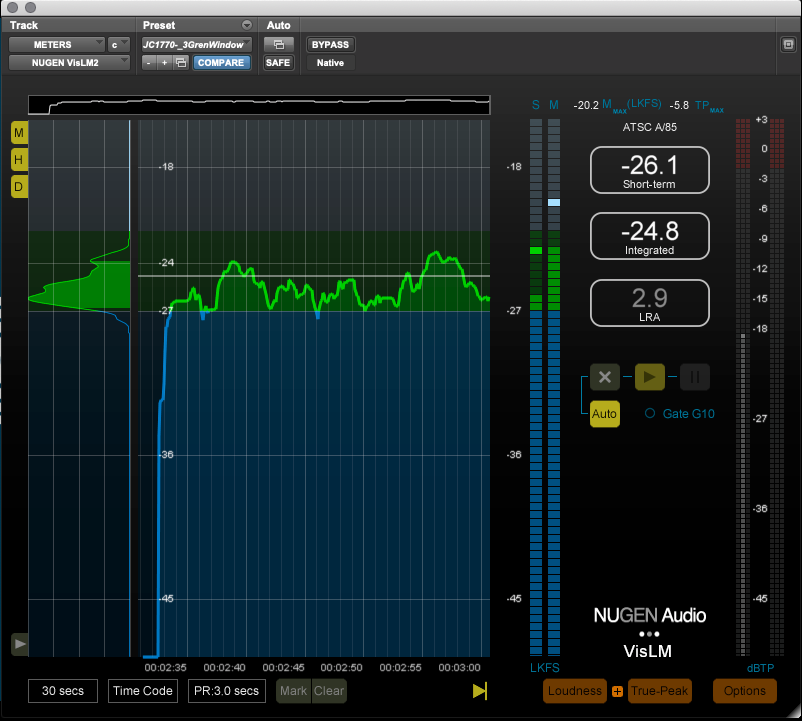
The important requirements I like to keep in mind during the creative mixing process are the loudness specs.  These can vary depending on the distribution, but usually, they explain an overall LUFS measurement and a true peak limit, and in most cases, you will have about 4 dB of range you can land in (-22 to -26 for example).

Depiction of LUFS measurement.

The key is to set yourself up for success from the start. I always start my mix by getting my dialogue levels set and overall reverbs applied. For a show that requires a mix in the -24db +/-2 range, I usually try to land my overall dialogue level around -25.  The dialogue is the anchor of the mix.  If I land the dialogue safely in the spec, in most cases the rest of the mix will slot in nice and clean, and my final loudness measurements will be right in the pocket.

I also try to keep in mind my peak limit, especially when mixing sound effects. In action-heavy scenes, it’s easy to crank up the sound elements you want to highlight, but if you aren’t careful you can run up against your limiters and in some cases breach the true peak limit requirement.

When In Doubt, Make it Sound Cool

It may seem like this goes without saying, but if I ever question how to approach a decision or process during my mix, I like to remember this mantra: “Make it sound cool!”  Sometimes this means adding that extra bit of reverb on the villainous laugh, or kicking the music up a bit louder than usual for a montage.  Other times it means digging in and spending that extra few minutes to really make a scene shine.

One “coolness” opportunity I run into often when mixing is a scene where music and sound effects both have impactful sounds happening. One straightforward way to enhance the coolness is to adjust the sync of the sound effects so they hit right on the beat of the music.  It may seem like a subtle change to knock each sound effect out of sync by a few frames, but when the moment hits just right the result makes the whole product feel so much more cohesive and cool.

Another fun opportunity is what I think of as “trippy freak-out scenes.”  Examples are a character having a nightmare where they are surrounded by floating, laughing heads, or a scene where a character takes powerful drugs which kick in and alter their reality.  It’s always worth it to go the extra mile in these moments to really pull the audience into the characters’ wacky world.  My favorite tricks in these times are reverse reverbs and lower octave doubles.

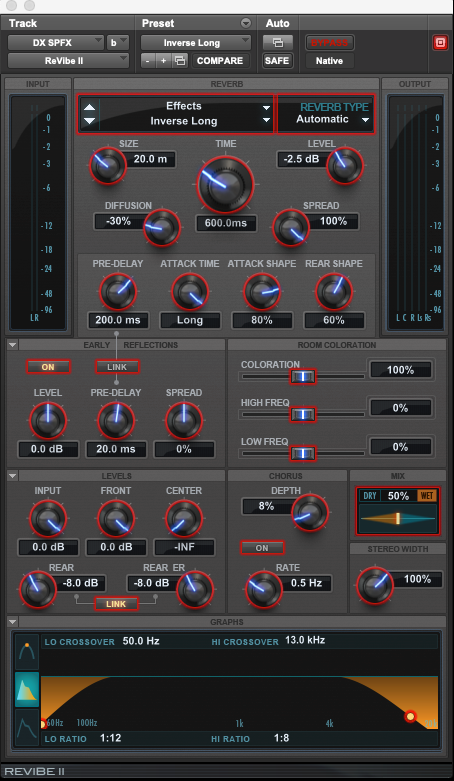
Depiction of ReVibe II plug-in set up for inverted reverb.

I could write a list with many, many items I consider as objectives when mixing.  There are so many competing goals and ideas bouncing around in each episode, but I always come back to these three.  Working with objectives in my mixing allows me to stay focused on the big picture rather than get sucked into the monotony of following a step-by-step process.  For me, it is the key to being creative on demand and ensuring that each mix has a personal touch.

This blog was originally featured on Boom Box Post

How TikTok Makes A Grammy Nominee

While social media has already been a fruitful avenue for music promotion, the app TikTok has brought new methods of music promotion to the music scene. On TikTok, artists can release one-minute-long clips of their music on the app, in a format that users can attach to their videos. The ability for the public to have easy access to edited sound files has created a social media space where songs can be shared quickly and widely through mass amounts of people.

This new development of music spread has led artists to market their songs into TikTok trends, as a way of expanding the use of their songs as a TikTok sound file. While there are multiple ways for these sound bites to turn into trends, there are two standout ways that songs turn into trends, to further explore how these trends work, I have laid examples of these two trends through a few of this year’s Grammy-nominated “Album of the Year” artist’s songs files on TikTok.

Dance Trend

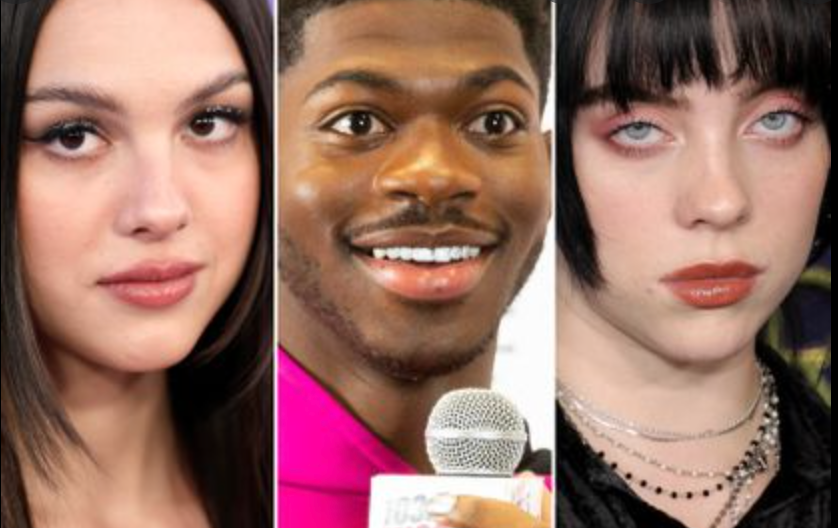
Doja Cat is a prime example of how a dance trend led to her streaming numbers being boosted. In early 2020 her song “Say So” became a popular TikTok sound as it had a dance attached to it. As more people engaged with the mass amount of dance videos using the 30 second sound clip of her song, more people added the song to their playlist. Due to this her “Pink” album jumped on the charts. She continued to use her popularity of dance trends with her songs by creating dances for songs on her next album. On her 2022 Grammy-nominated album, four of the songs have TikTok dance trends. While the Grammy’s are not nominating dance trends, the dance trends are boosting the songs to the Recording Academy’s attention.

Lil Nas X also was able to gain mass attention with his songs by creating a dance trend. For his song, “THAT’S WHAT I WANT”, a dance trend became popularized. This pushed his song to be popular on TikTok. UT is not surprising that his most popular song on Spotify is this song, seeing its popularity and placement on top trends on TikTok.

By using dance trends, clips of songs can gain mass viewership and interest. Doja Cat and Lil Nas X are just two examples of how a good sound clip and dance can make a song successful on the popular charts.

Personal Story Trend

Olivia Rodrigo has taken the world by storm with her debut album “SOUR”. Over half the songs on the album have over 20k videos with the song. However, her song “Traitor” has 20k videos. The main use for the song is to be the background to a personal story. The song adds the element of betrayal to stories of failed relationships or friendships that a user is trying to explain. The use of the song in the videos functions as if it is a part of a movie soundtrack of someone’s life. Through the carefully curated choice of the part of the song to clip for TikTok, Rodrigo was able to connect her song to people in an intimate and personal way. The use of this storytelling in TikTok videos allowed for mass groups of people to connect to the song, thus adding the song to their playlist. Through this chart-topping success, much of which came from her TikTok video popularity, Rodrigo was able to have her debut album nominated for album of the year at the Grammy.

Billie Eilish also had one of her songs be used to tell a story on TikTok. Many users have used “getting Older” to talk about various ways they have grown up, and experiences they went through. The sound has over 500k views. She also has “Happier than Ever”, which was used for the user’s storytelling. In this case, it was for recount breakups that had happened.

Both of these show how songs can become popular on TikTok if they help a user tell a story. Music is meant to tell a story, one that often is intended to connect with the masses. TikTok shows that if the music does a good job of connecting with other stories, then it can become a viral TikTok sound, thus leading to rising to the top of music charts.

The convenience of any user being able to use a sound snippet without having to do their sound editing leads to the easier ability for a sound to become viral, and thus boost an artist’s reach. By simply pressing a button, any user can play an artist’s sound and clip all their followers. Artists and their teams are recognizing how their song trending on TikTok can boost a song to chart-topping status. As we continue to have more social media music marketing avenues emerge, it is important to understand the power they have on an artist’s chart success.


Prepare your Track for Mastering

Getting a track mastered can be a daunting experience if you’ve never done it before. You may be asking yourself, what file type should I send? How much headroom should I leave? How will I know when the mix is done? You will be your mastering engineer’s best friend if you spend a little time making sure your track is properly prepared for mastering – and this guide is here to help!

Be Happy with the Mix

Now, this may seem like an obvious one. But being happy with a mix doesn’t necessarily mean that you like the way it sounds. It needs to meet certain criteria so that your mastering engineer can work their magic. This could mean checking your mix in Mono and crossfading track edits if you hear any pops or artifacts. Also, check the levels on each individual channel and make sure they’re not too hot.

Label, Label, Label

It’s good practice to label your tracks correctly and to keep your mix organised. One example of doing it is TrackName_Artist Name_MixVersion.wav

How much Headroom?

This can sometimes depend on your engineer and what they would like. Some prefer working with no peaks over -3dB or -6dB and some ask for peaks to be below -1dB. The best thing to do is ask. If you can’t find the answer on their website, shoot them an email and ask what their preference for headroom would be.

It Will Sound Good In the Master.

Never subscribe to this way of thinking. Make sure you are as happy as can be with your mix, as mastering isn’t a quick fix to solve a bad-sounding mix. My general rule is if the mix is bad – the master will be also.

Metadata

Make sure you send your mastering engineer all of your Metadata that you would like embedded in the track. This can include correct spellings of your Artist Name, Track Name, Album Title, ISRC code (if you know it).

What to send

Send a .wav file with a sample rate of 44.1 or higher and the ideal bit rate of 24bit.

Notes are Your Friend

It’s good to give notes early in the process of what you want. I would also include some examples of songs that are similar to your track to give the engineer a clearer idea of what you want.

At the end of the day, it will make the mastering process a lot smoother if you have done the preparation work beforehand. This will lead to fewer issues and hopefully a wonderful experience for both engineer and artist.

Rachel Field—Studio Owner and Mastering Engineer


If underrepresented people trying to get into any industry—or neighborhood, or anything else for that matter—allow that type of [discriminatory] environment, it’s going to be an unwelcoming environment. If you allow it to push you out and not pursue it, the representation will never improve…I stayed until this point, a year from now I might be like, ‘F*** that, it’s too hard.’ On that note, I can’t fault anybody for not sticking it out. It can be really brutal, but it’s also super rewarding.”
-Rachel Field

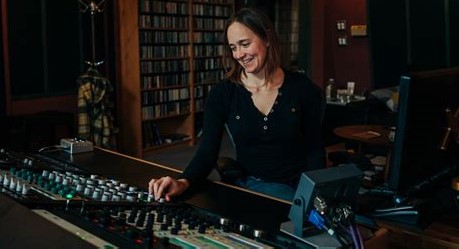
Rachel Field is a co-owner and mastering engineer at Resonant Mastering in Seattle, Washington. In addition to her expertise in mastering, Rachel also has experience (over her 11 years in the industry) working as a recording, mix, and live sound engineer. Rachel’s credits include acts such as Eddie Vedder, Brandi Carlile, Pearl Jam, Thunderpussy, Whitney Mongé, and more.

Career Beginnings

Growing up in a musical family, Rachel was immersed in music from a young age. Until 2009, however, she had not realized that pursuing a career in audio technology was a possibility for her. This changed one day due to an important conversation with a friend. As she puts it:

“I had been waitressing most of my adult life and was looking for something else to do but was pretty uninspired by other options. Over breakfast, I was having a conversation with a friend of mine who had just come from a recording session. They were describing the techniques the engineer used to mic up the drum kit and at that moment I was like… that’s what I want to do. That sounds amazing. It hadn’t even occurred to me that audio could be a career until that moment.”

Having found her new passion, Rachel began asking her musician friends how one could get into the industry. After some research, she decided to enroll in the audio program at The Art Institute of Seattle (a private, for-profit school that closed in 2019). Still working as a waitress to support herself, Rachel decided to go to school part-time so that she could manage work and classes.

Once in school, Rachel quickly began pursuing professional audio work. She was able to break into the industry by partnering up with a friend, saying yes to as many opportunities as she could, and networking. She explains this in detail below.

How did you break into the professional side of the industry?

“I would tag along [to sessions] with my friends as a fly on the wall for a while, but after I got into school I networked and teamed up with another student there. He was more experienced than I was, so together we were able to team up and start working around town in studios and taking on whatever we could get our hands-on.

“We did live remote recording a couple different ways: we pieced equipment together and reached out to live club sound engineers that were doing shows for some of the bands we were friends with and started working that angle a little bit.

“The other thing to is if anybody had come around from the industry—this is where the networking comes in… you know, people come around looking for fresh engineers to help out, so being around and saying yes to those things was something that kept me pretty busy.

“I also took on internships wherever I could. I interned at a studio called Fastback Studios [in north Seattle]. That was a really great internship—I learned a lot there about session flow, different approaches to recording albums, and different ways studios could be configured as far as gear goes.”

How did you manage your time? It sounds like between school and work you were pretty busy.

“I was working a waitressing job, going to school part-time, and then had sometimes two internships going and freelance work. It really was a grind for a couple years straight. There was probably a solid two or three years where I didn’t do anything social or anything just for fun. I had to be really on it with my calendar. This is not an exaggeration… I had to put showering on my calendar, that’s how packed everything was.

“It was hard. I really wanted to be in this industry and not waitressing, and I think that reflected in how hard I worked to get there.”

Gender-Related Barriers

Regardless of how hard Rachel worked and how dedicated she was to her craft, she (like many people coming up in audio) faced gender-based discrimination.

What gender-related obstacles or barriers have you faced? How have you dealt with them?

“I came into this industry pretty naïve—I had no idea that it was so male-dominated and at times outright misogynistic, but I learned that pretty quickly. There are examples at every turn and on every level of running into gender bias and unnecessary disrespect. Running from the assumption that I can’t do a very basic thing or I couldn’t possibly know things that are technical. Being presumed to be the engineer’s girlfriend…

“On one of the earlier projects I was part of, I got plenty of personal remarks about my body constantly, all day, day in and day out. I almost walked away. I still, to this day—over a decade later, now as the owner of my own studio—am often presumed to be the secretary or the assistant to my male business partner. It happens enough and never the other way around.

“You walk into anything having to prove yourself [when you’re a woman], whereas when you’re a dude and you walk into something, there’s this presumption that you’re an expert already.”

You mentioned that you considered walking away. What made you stay?

“I did almost walk away. I almost walked away completely, multiple times. In some of my frustrating moments, one conversation I had with somebody in particular really sticks out. I called an old friend of mine who I’ve known for a long time, and I think I was venting to her and talking about how I just wanted to leave and walk away from this project and this career path altogether. She told me, ‘No, stay. Just stay. Whatever you have to do to stay, if you need to laugh it off or you need to yell at them about it, just figure out how you can stay.’

“Her words really stuck with me because if underrepresented people trying to get into any industry—or neighborhood, or anything else for that matter—allow that type of environment, it’s going to be an unwelcoming environment. If you allow it to push you out and not pursue it, the representation will never improve. I guess that’s one of the things that helped me stick it out and keep going in the face of it. I thought, ‘Well OK, today I’m going to tell you to f*** off, tomorrow I might laugh about it with you.’ Whatever I had to do to be able to tolerate it and see another day in the studio, that’s what I did.”

Have you noticed progress on gender equity since you began your career? If so, what has changed?

“It’s gotten so much better just in the last 10 years, so much better.

“Women coming up in the industry are proving they can be just as capable as men (duh!). Also, I think there is more awareness among people in the industry that there needs to be a concerted effort to fix the imbalance and allow an opportunity for women.

“When I say there’s been a lot of change and it’s a lot better, I do mean that, but it’s still nowhere near balanced. This is a hard industry for anybody to break into and then add in all those other [gender-based] challenges and labor on top of it, it can be pretty discouraging.

“I stayed until this point, a year from now I might be like, ‘F*** that, it’s too hard.’ On that note I can’t fault anybody for not sticking it out. It can be really brutal, but it’s also super rewarding.”

Advice for Up-and-Coming Engineers

Because of the barriers, she has faced, Rachel always tries to stay available for people (especially women and gender-expansive folks) coming up in the industry. She loves sharing the lessons she has learned with the next generation of audio engineers.

Do you have any advice for people looking to break into the industry?

“I have a couple key pieces. First of all, networking is very important. Also, make sure that when a door of opportunity opens, you’re ready to walk through it. Always be preparing, always be upping your skills, always be honing and working on whatever you can.

“I would say that what worked for me really well was to stay honest about where I was at with my skill level…Don’t be overly humble, stay confident in what you do know and what you can do, but it’s best not to be dishonest about things you cannot do. For example, if an engineer invites you to be an assistant, do all the things you can do and be confident, but if there’s something you can’t do, don’t pretend you can and not do it or do it incorrectly—that can just be a bigger problem.

“I’d also say it’s really huge to stay open-minded about what path your audio career will take you down: explore live sound, explore recording and studio work, explore field recording or foley or post-production and all those things. Diversify your skillset so that you can be ready to walk through those opportunity doors.

“I didn’t really have mastering as a goal, it’s just that I was ready to walk through the door when there was an opening at a mastering studio…It turned out to be my favorite thing.”

In your opinion, are there any must-have skills for people working in audio?

“In situations where you’re working directly with artists and clients, people skills and communication skills are huge. Something I learned pretty quickly was that all of my restaurant experience, all that customer service experience, was going to be hugely beneficial. Being able to organize and keep a running to-do list at all times and making sure my communication with people was clear and diplomatic—being able to communicate things without ruffling feathers and making everybody feel all groovy was really huge.

“Even more basic than that, just remembering that it’s somebody’s art and your job is to help them make it.”

Career Now

Rachel and many others like her do indeed make a living helping artists make art. This is definitely Rachel’s favorite part of her job. Like any job, however, there are some aspects that are not so rewarding.

Have you experienced burnout with your work or is it something you’ve always kept the love for?

“I think for me the burnout comes more with all the other stuff that has to be done outside of the actual engineering work—the administrative work. The emailing to me is the big albatross… it’s a lot more than I ever imagined it would be. Especially as people start working on smaller projects: there’s more projects and more people, which makes it more administrative work per studio hour.

“That’s where I get my burnout, but if you don’t email you can’t book new work!

“That’s why a lot of engineers if they’re busy enough to warrant it, will get management. That way, future bookings can continue without impeding the current work process… I haven’t gotten to that quite yet.”

Speaking of getting to things, are there any long-term goals you have for your career?

“I have a really amazing, great client base of independent artists, a lot of whom are local to the Seattle area. I absolutely love that and what I would like to add to that are some more major label projects.”

Impact of COVID-19 on Business

One thing that has recently been getting in the way of many people’s goals is COVID-19. Rachel was candid about the impacts of the pandemic on her business and the music industry in general.

If you don’t mind sharing, how has your business been impacted by COVID-19? Have you been able to keep working throughout the pandemic?

“A lot of our work was already done remotely so yes, definitely, we were able to continue working. One of the things that did happen though was that as tours and live music got cancelled, a lot of our clients’ income stream dried up. They had valid concerns of whether they could afford to go through with their sessions, so we lost a lot of booking from that. We also master live, sort of bootleg shows as well. A lot of dates were on the calendar for that kind of work that also disappeared when tours disappeared.

“So we did make it through… we did OK but we suffered a pretty big hit to our workload and income.”

How have you seen the industry as a whole change because of COVID-19?

“When gigs first started getting canceled I was working on ‘Art Zone’ with Nancy Guppy [a TV show that airs on the Seattle Channel and is dedicated to showcasing local artists]. I was working on set training to be the audio person for that show, and the audio engineer that was training me did that work regularly and was crew for live touring work. They got the notification that their next 3 months of income evaporated [because tours were cancelled] while I was there, and it was just a really sobering moment. There isn’t a lot of money flow from other sources in the music industry besides live shows.

“I think, for what I do, my day-to-day is pretty much the same, only it’s just alone and there’s a lot more email. Otherwise, I have observed a lot of people really questioning how hard they want to work to stay in an industry in which it’s so tough to make it…[Asking themselves,] ‘is it really worth it?’ and where’s the threshold of ‘this is an expression of my art’ versus ‘this is my business, this is my living.’ I think people have sort of had to step back and reexamine that for themselves.”

Final Thoughts

One closing question: what is your favorite piece of gear?

“Right now I’m super into my newest piece of gear which is an Undertone Audio UnFairchild—I love its tone and versatility.”

Thank you to Rachel for generously sharing her experiences and insights! To find out more about her, please visit the links below:

https://www.rachelfieldaudio.com/

http://www.resonantmastering.com/
 

Women in Audio — Recognising All Roles

March 8th marked International Women’s Day. Social media, as ever, was buzzing with details about conferences and events celebrating women’s achievements in various fields.

One such event caught my eye. It was a panel discussion about the barriers and challenges faced by women in audio (particularly radio and podcasts), and how we can make the industry more inclusive. This, of course, is a topic that’s very close to my heart. But I was dismayed to see that every woman on the panel was either a radio DJ or a podcast host. There wasn’t a single producer, editor, engineer, or sound designer. No technical or “behind the scenes” role was represented.

Of course, it’s important to hear the perspectives of on-air talent. All women in audio, regardless of their specific roles, are fighting for recognition in a male-dominated industry. But this is exactly why we need to hear those other perspectives too. In focusing exclusively on hosts/presenters, the organisers of events like these are only giving one side of the story. They’re overlooking women in other audio roles whose experiences and insight are equally valuable, which is ironic considering women in audio as a whole tend to get overlooked anyway, hence the need for conversations about inclusion in the first place.

That’s not to say women with hosting experience can’t also produce or edit. I started out presenting radio shows in college and have also narrated documentaries and hosted podcasts. However, my first love is producing/editing/mixing audio. It’s what I trained to do during my Master’s in Radio Production, and it is my job first and foremost. I know of many women in radio who juggle presenting and producing, and plenty of podcasters who edit their own content. But it would be nice if more of these panels included women who are not the voices we hear on the air, but rather the silent superheroes making sure what we do hear sounds amazing.

I see parallels with women in the music industry. As I sat down to write this blog, I had just finished reading a wonderful book by Christine Feldman-Barrett called A Women’s History of the Beatles. In one particular chapter, she writes about how, for women pursuing careers in music in the 1960s, singing was considered a more “feminine” (and therefore acceptable) occupation than playing an instrument or songwriting. To this day, I think we have a tendency to overlook women musicians (who don’t sing) in favour of women vocalists (who don’t play instruments). It’s a similar story in radio and podcasting. Those whose voices we can hear usually receive more recognition than the people working behind the scenes.

It’s a problem that also applies to the radio industry generally, regardless of gender. I’ve come across many people who believe that the presenter just turns up and does the show. They don’t seem to realise how much work goes into putting it all together, and how many other people it often takes to make that happen. The question I was asked most frequently about my work in radio was: “Do you have your own show?” When I explained what I actually did, their eyes would glaze over.

In my experience, it’s hard enough for producers, editors, sound engineers, etc. to be recognised as it is, without also being excluded from important discussions about women in the industry. We’re all doing equally important work, whether we’re behind the mic or not, so let’s celebrate that.


Pop Music Production as a Post Sound Edit 


Since I’ve started to produce my own music again, I’ve been investigating ways to break out of some of my existing producer habits. As a visual learner, I tend to get lost in how MIDI events graphs look, and how different instrument regions or clips are placed next to each other and layered. I often end up with instrumental tracks that sound really flat and lack dynamic, movement, or any exciting moments.

While working at Boom Box Post, however, I’ve experienced the workflow of post-production sound edits that really contrasts with the workflow I’ve developed for music production. It’s an organized and serial process that is more efficient than the abstract and intuitive approach I take in producing. In looking to progress my production skills without falling back into the same habits, I thought it would be interesting to fabricate a method of producing music as a post-production sound edit. This could offer a more linear perspective on producing my songs since music in its most basic form is sound over time. This is how I would break it down.

In order to imagine my song as a post-production edit for a film or TV show, I need a story source that functions as the “picture” so I can spot it and reference my “editorial” against the narrative. For me, this material clearly comes from the lyrics which offer visual imagery and tell the story in each song. In fact, when I started approaching a new song in the works, I used markers in ProTools to spot lyrics that seemed particularly important and should be matched by a valuable moment in the sound.

One part of a sound edit that I’m very familiar with and that offers strong foundations is the background edit, which involves room tones for indoor spaces or wind and birds for outdoor spaces, for example. While backgrounds can be a very quick and painless part of the editing process, they offer valuable sonic information on the setting and location of a show. When I think about what would function as the “setting” of a song, the first element that comes to mind is the harmonic arrangement or chord structure. Harmonies in a Pop song support the melody and the emotional tensions of the lyrical story. One habit I have is loading my session up with multiple layers of synthesizer pads or comping instruments that provide similar harmonic information. However, when I look at these tracks through the lens of a background edit, I remember what happens to many background tracks during the mixing stage of a show: they get automated very low in the mix and often many layers get muted. In reality, there is so much going on in a mix that only essential backgrounds are needed, and the rest are just taking up space. I often find that when I get to the mixing stage of a song, the layers of harmonic information I have in the song will load up the mid-range and leave no space for the vocals that share the same frequency range.

The lesson I can learn from background edits as it translates to my producing is this: just take the essentials.

Since I’m thinking about what is essential to the song, I can’t ignore the vocals, which are the meat and cheese of most of my recordings. This post-production analogy is pretty straightforward, as dialogue holds a vital role in the sound edit. Dialogue and vocals drive the story and typically call for crystal clear recording and editing. It’s important in both cases that sound effects or other instrumentation is not overshadowing them. While this may seem obvious, one thing I noticed while spotting my song lyrics was the moments when the words said something that a certain instrument or sweetener couldn’t. This happens in visual media too, and sometimes the way that something is spoken or the choice of words hold strong on their own without support. The dialogue edit teaches me to stay aware of the most irreplaceable spoken or, in this case, sung, moments in a song.

To continue, in a post-production sound edit, Foley quite literally gives more information about the movement happening in an episode and offers a little bit of insight on the characters too. A large monster might have a heavy footstep while a small child would have a softer one, for example. While Foley is generally mixed at lower levels than dialogue and sound effects, there are moments in a show or film where the camera might change perspective to show foot movement, and then Foley has the chance to shine. I imagine the Foley of a song to be the sweeteners that drive a song from one part of the arrangement to the other. I tend to lack support from sweeteners in my production, yet I notice it constantly in current Pop songs that I reference. When I mapped out some of the lyrics and the arrangement in ProTools, I took notes of where a sweetener could come in to prepare the listener for the next part of the song and shift the perspective a little. In music, this could be a reverse cymbal or a massive bass drop that cuts into the rest of the instrumental track. These moments can provide a good chunk of the dynamic that I am missing in my production.

The last part of a sound edit I want to explore in music production is the sound effects edit. If dialogue is the meat and cheese of a show’s sound, then sound effects are the bread and butter. Impactful or detailed effects builds can give viewers clear insight into what is happening at each moment in a show. In Pop music especially, the rhythm, particularly the drum and bass parts are similarly the bread and butter of a song, providing detail and sonic experiences from moment to moment. Something I notice from my drum and bass creations which tend to be the most robotic and repetitive element of my production is that I am not considering what each part of the rhythm is doing at any specific point in time. I tend to see rhythm as MIDI notes along with a graph, which results in instrumentation that is sturdy but not taking care of the music or the song as it moves through time and space. I think that seeing each collection of drum parts and bass as its own “sound effects build” in each measure or group of measures would offer a more linear image and encourage patience as I’m making my tracks. The beat can loop at certain points, but how is it helping the song if two sets of four measures are expressing different emotions in the lyrics? If there were two explosions on screen, for example, and one was right next to the characters and destroyed buildings, it wouldn’t sound like the explosion off in the distance on a rural hill. Drum and bass deserve the same kind of awareness.

Ultimately now that I’ve mapped out this explorative connection between two departments of sound that I love, I’m excited to see how each one can influence the other. In this instance, I’m observing the development of a song in a new format that can yield the results I always want but struggle to achieve.


X