Empowering the Next Generation of Women in Audio

Join Us

Review of ‘The Come Apart’

Set in the late 2000’s and the start of streaming, The Come Apart by Susannah Felts covers the cusp of a new era of music media.  Indie bands, faced with the stress of touring with limited venues, are cautiously optimistic of new ways to reach potential fans.  We follow main character Maggie, a singer-songwriter to a new band of an indie darling.  The Spinning Birds have just released their first album and are at the tail end of the promotional tour.  With the initial rush over, Maggie has to figure out her next steps, with the band, and herself.

Chapters switch between Chicago and Nashville at two points in Maggie’s life.  It reflects in a back and forth between the Midwest and the South.  Two cultures playing a tug-o-war with Maggie at its center.  We feel the tension burst through the pages of this emotive read.  Maggie seems to self-sabotage, she is almost uncomfortable without drama as we step into her shoes without the whole picture.  Her relationships overlap, even circling back and enveloping Maggie with emotional turmoil.

The writing is raw and visceral.  It sets you not only in Maggie’s world, but inside her.  We are looking through a point of view of a lone woman in an indie touring band.  We see glimpses into the touring process, and that of music writing and criticism.  The story is presented as Maggie experiences the world:  through song verse, texts, interviews, and thought.  Felts makes sure the reader uses all five of their senses.  I wonder if there is an official playlist to accompany the book.  There certainly is a menu.  Beyond the tactile, spirituality also permeates Maggie’s narration.  Maggie sees a mysticism hiding in the alleys between buildings and flowers blooming in spring.  That magic is captured through the bits of lyrics peppered through every observation.  It gives a stream of consciousness style to The Come Apart that makes it feel more alive.

In the acknowledgements, Felts divulges the journey The Come Apart took to becoming realized.  And reading it feels similarly cathartic.  Her own journey from Chicago to Nashville surfaces in Maggie’s life.  If I had to guess who this story was written for, it would be for the lone woman in a band, but more importantly it would be for her band mates and family to walk in her shoes.  Additionally the character of Matt Turkish feels like an amalgamation of the “male frontman.”  He travels through the world like another story’s main character, and treats those around him as supporting players.  It is his turn to play second fiddle in Maggie’s story.  We see Felts appear in a different portion of the book as well.  Maggie is interviewed by a graduate student in journalism from University of Chicago, Felt’s alma mater.  The student is creating a music publication to support women in music.  This is the only other character that we see their point of view, without Maggie.  Instead of being a jolt out the story, it clarifies what Felts is building towards.

The Come Apart is available for pre-order and will release in June 2026.  Just in time for beach reading season or in the case of SoundGirls:  tour season for those long hours on the tour bus.  Just make sure to grab a plate of chocolate chip cookies, and maybe a mint julep.

A Yes Is A No

I just worked an intense month. Financially and professionally, it was the best month I’ve ever had. I worked with an engineer that had won a Grammy for Best Engineered Album, I recorded students on a field trip. I worked in a famous church in San Francisco, I cleaned up after engineers and clients, over and over, and I mentored students in an audio class. Then I worked with a friend and a team of volunteers for two theatrical productions where we unflinchingly shot down a gallery of problems. It was exhilarating, exhausting, eye-opening, and also left me feeling oddly jaded and annoyed.

Today, I listened to some audio art by my friend. In fact, it was the winner of the Judges Award for the Columbia School of Journalism’s 2026 Radio Race. I met my friend through an event that they originated called Audio Potluck, where people just showed up and played an audio piece and everyone listened to it.

That was it. What did you make? I want to hear it. 

Let that echo in your heart. I want to hear you.

Getting started in studio recording has been a wild ride. It’s highly individualistic right now, because the days of big studios with staff engineers are largely over. It’s all about hustling for your own clients and building a reputation, and it’s a kind of life that doesn’t preclude building community, but does hamper it a bit. I tend to thrive as an ensemble player in most scenarios, and although the studio experience has, one day at a time, made me stronger in myself, it has also eroded my focus down to surviving, shields up and striding forward with glowing red laser eyes on the prize.

Listening to audio art felt like dropping into warm water and opening up like a tea flower. Like there was a part of me that had withered until I had forgotten what shape it was, and suddenly my gaze became soft and expansive, and I put out swimming, translucent petals of gratitude for the whole world.

For the first time I wondered: Is what I’m doing worth it?

I said yes to everything when I was first starting out. As a student, I volunteered, interned, and shadowed. Kind people referred jobs to me and I took them, no matter what they were. I worked for an outdoor theater company that performed in a different location almost every time. I worked with an engineer who had a hair-raising temper. I loaded gear, ran up and down streets from stage to stage at community events, wrangled with accounting and budgets, emailed endlessly with bands and organizers. I worked 12-14 hour days for minimum wage, or for nothing, and sometimes paid for the privilege.

All that experience made me grow, as a person and as an engineer. Any thought of quitting ran straight into the brick wall of I can’t imagine doing anything else. I love my life.

Now, I hear my friend’s art and the loveliness of the world stings, like a sleeping limb coming back to life. It comes at a time when I’m already considering my next steps. I’m remembering that I got into this because I want to hear people and I want to hear what people make.

One of the many things that I’ve learned over the past few years is that, every time you say yes to something, you’re saying no to something else. If I say yes to a live sound job, I’m saying no to the possibility of working in the studio that day. If I say yes to a well-paid job that makes me feel bad about myself, I’m saying no to feeling good about myself. If I say yes to that sixth and seventh workday of the week, I’m saying no to walking to the store in the sunshine with a boba, listening to the same birdsong that I used to hear in my mother’s backyard as a child.

It’s been worth it, at times, to say no to those things, because I was also saying yes to challenging my limits. In hindsight, some of those things may not have been worth what I gave up. In all cases, I gained strength and judgement, anyway, and that was the point.

Maybe the right question is: Is how I’m doing this worth it? I am realizing that I always want to say yes to meeting life with an open heart, and I never want to give up the roots, stems, and blossoms of community. I want to say yes to challenges, hard work, and of course, survival, and also to the space in between, where life just breathes.

I’m not sure I’ll be able to have all those things, but hopefully, I should be able to know them when I see them, and with luck, to say yes. I wish the same for you, whatever matters to you.

The Sonic Blueprint

Building confidence in the studio

one young woman, one session, and one song at a time


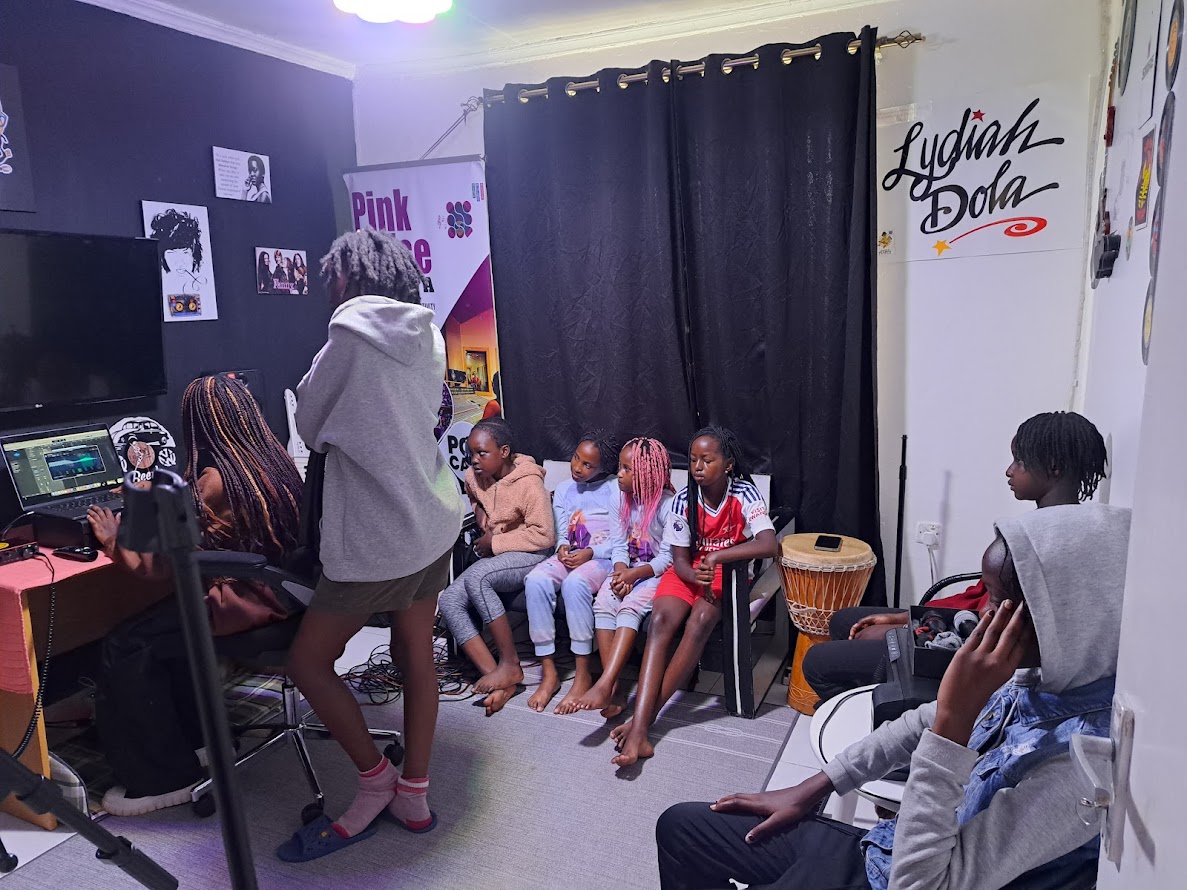
Imagine we are sitting together again by that fire. The Kenyan night is still cool, the crickets are still handling percussion duties, and tonight… the sparks aren’t just floating into the sky. They’re trying to draw a map.

Not a perfect map. More like the kind you sketch on a napkin and hope for the best.

In my last post, I told you how I almost let the music sleep because the “gatekeepers” made the studio feel smaller than it should have been. I eventually found my way around those walls—sometimes by climbing, sometimes by squeezing through. But along the way, I kept asking myself one question:

Why do we wait until we are adults to start fighting for space in the control room?

Because by the time you’re fighting, you’re already tired.

The Missing Piece of the Map

I spent some time at the Institute for the Musical Arts (IMA) in the United States, and it shifted something in me.

Over there, many girls are introduced to music and technology early. Not just singing into a hairbrush (which, to be clear, is a valid starting point), but actually touching the equipment, learning signal flow, and understanding what all those mysterious knobs do.

By the time they say they want to be an engineer, producer, or technician, it doesn’t sound like a wild dream. It sounds… normal.

Back home in Africa, we don’t lack rhythm. Rhythm is part of who we are. But access to technical spaces? That’s where the gap has been.

Somewhere along the way, the story became: the stage is for girls, the studio is for boys.

I don’t know who wrote that story, but honestly, the studio didn’t agree to it.

The booth doesn’t care who you are. It only cares if you know where to place the microphone.

The SWAN Moment

At the Support Women Artists Now (SWAN) event, I spoke about my upcoming April launch: The Sonic Blueprint: Teen Music & Tech Boot Camp.

I was excited—talking a little too fast, hoping my passion was making sense.

Then I looked at the girls in the room.

Curious eyes. Sharp minds. That quiet kind of hunger that says, “I just need a chance.”

And then, the reality we all know too well showed up.

Even with a small fee, for some of them, the camp might as well have been on the moon.

That part never gets easier to see.

So I made a decision on the spot. Pink Pulse Institute (a program of Pink Pulse Media) will sponsor two girls for the camp.

Two is not enough. I know that.

If it were up to my heart, we would remove the fee entirely and just say, “Come, bring your dreams—and maybe a notebook.”

But for now, we start with two. Because sometimes change doesn’t begin as a flood—it begins as a crack in the wall.

From Blank Page to First Record

This April, these girls won’t just be learning theory.

They will be in it.

They will write. They will record. They will sit in front of software that may look confusing at first (and yes, we will all pretend we understand it immediately… then figure it out together).

By the end of the camp, each of them will have a solo track they created—from idea to final output—guided by us.

Not just as artists, but as engineers, producers, and technicians.

That part matters.

Because there is something powerful about pressing record on your own story.

Still a Student, Always

Even as I prepare to teach, I am still learning.

I’ll be returning to the Institute for the Musical Arts in the United States for a residency this year, and I’m excited in the way that only someone who genuinely loves sound can understand. New techniques, new perspectives, new questions.

Every skill I gain is something I carry back home.

Because this isn’t just about access—it’s about building excellence.

Building the Future Studio

The goal of the Sonic Blueprint is simple.

I don’t want the next generation of engineers in East Africa to have to be “brave” just to walk into a studio.

Bravery is overrated when it’s required for basic access.

I want them to be prepared.

I want them to walk in and think:
“Okay… where should I place this mic?”

Not:
“Do I even belong here?”

That shift—that’s everything.

The fire is still burning.

But this time, we’re not just sitting around it.

This April, we start building something around it.

Something that lasts.


Dolby Atmos Intro with John Scanlon

Dolby Atmos Intro with John Scanlon
May 14, 2026 | 4:00–5:30 PM GMT (Note this U.K. time)
Online Event – Link will be sent after registration

Join us for an in-depth Dolby Atmos demonstration with John Scanlon, designed for audio practitioners interested in post-production and immersive sound workflows.

This session will introduce Dolby Atmos technology, explore its core features, and highlight creative applications within post-production environments. John will walk through practical approaches, workflow considerations, and creative possibilities when working in Atmos.

The webinar is geared toward beginner to intermediate levels, but is absolutely open to more experienced professionals who would like to deepen their understanding or ask detailed technical and creative questions.

Whether you’re new to Atmos or looking to refine your approach, this session will provide valuable insights into immersive audio production.

Join us online – link will be sent upon registration.
Sign up here

Sass – Victoria, BC–based Hip-Hop Artist, Producer, and Engineer

Sass (She/Her) is a Victoria, BC–based hip-hop artist, producer, and engineer whose work lives at the intersection of emotion, storytelling, and sound. With a foundation in poetry, Sass discovered audio not just as a career path, but as a lifeline, an outlet to transform internal experiences into immersive sonic realities.

Working independently, Sass is the co-founder and operator of Aberrant Avenue Agency Inc., an independent publishing company and label launched in January 2025. In just a few years, she has developed a multifaceted practice spanning hip-hop artistry, production, vocal engineering, and mixing, taking a hands-on approach to fully shape her sound from concept to completion.

Her journey into audio began with a deep curiosity about music and sound—wanting to understand not just what moved her, but how it was built. That curiosity, combined with hands-on studio experience and mentorship, became the foundation of her self-directed training in audio engineering and music business.

Coming from a background where women in hip-hop were often overlooked for their creative authority, Sass is intentional about carving out space defined by skill, leadership, and authenticity. Her work challenges those limitations while contributing to a broader, more inclusive landscape in audio.

Now 2.5 years into her career, Sass continues to build, create, and connect—using sound as a tool for expression, empowerment, and community.

Career Beginnings

How did you get your start in audio?

I started in 2023 as the visual media person for K-Blitz. I learned audio through observation first. Once it was clear I was serious, that shifted into mentorship and hands-on learning.

What were your first jobs, gigs, or internships like?

They required versatility and attention. Being present in creative spaces taught me how sessions actually function.

What skills or lessons did you learn early on that still serve you today?

Listening before acting, adaptability, and understanding the artist’s perspective.

Did you have a mentor or someone who significantly supported your growth?

Yes. K-Blitz. The mentorship came after consistent observation and commitment.

What barriers did you encounter early in your career?

Being offered opportunities that weren’t rooted in respect for my work. Also being underestimated, with opportunities going to less skilled people because I’m a woman in hip-hop.

Your Career Today

What does a typical workday look like for you now?

Mornings are business and planning. Evenings are music. That separation protects the creative process.

How do you stay organized and manage the demands of your work?

Clear systems, planning, and boundaries between creative and administrative work.

What do you enjoy most about what you do?

Turning feeling into sound. Connecting with people through music.

What aspects of the job are the most challenging or least enjoyable?

Navigating spaces where my credibility has to be proven before my work is heard, and the administrative load of being independent.

What do you find most difficult? 

Fatigue and time away from home.

What is your favorite way to spend a day off?

Making music.

Challenges, Growth & Perspective

What obstacles or systemic barriers have you faced in the industry?

Gender bias, lack of representation, and persistent gatekeeping.

How have you navigated or pushed through those challenges?

By staying consistent, building my own infrastructure, and creating my own lanes.

Have you seen the industry change during your career?

There’s more conversation around inclusion, but access and power remain uneven.

What still needs to change?

Access to decision-making roles, funding, mentorship, and long-term opportunity.

Advice & Looking Forward

What advice would you give?

Trust your ears, learn the craft, protect your boundaries, and don’t wait for permission.

What skills are essential?

Critical listening, emotional intelligence, adaptability, and business literacy.

What long-term goals do you have?

To grow as a hip-hop artist, build sustainable independence, and create space for others.

Is there something you wish you had known earlier?

That not everyone offering access is offering opportunity.

Favorites & Personal Touch

Favorite or most-used gear:

I’m still experimenting, but I prefer Reaper as my DAW because it gives me flexibility without getting in the way of creating.

A piece of gear you can’t live without:

My pop filter, audio interface, and laptop.

A proud moment:

When people began trusting me not just as an artist, but as someone they could rely on creatively and professionally.

Anything Else

Music isn’t something I do. It’s how I understand myself and the world.

The Sound of Self-Doubt 


Introduction

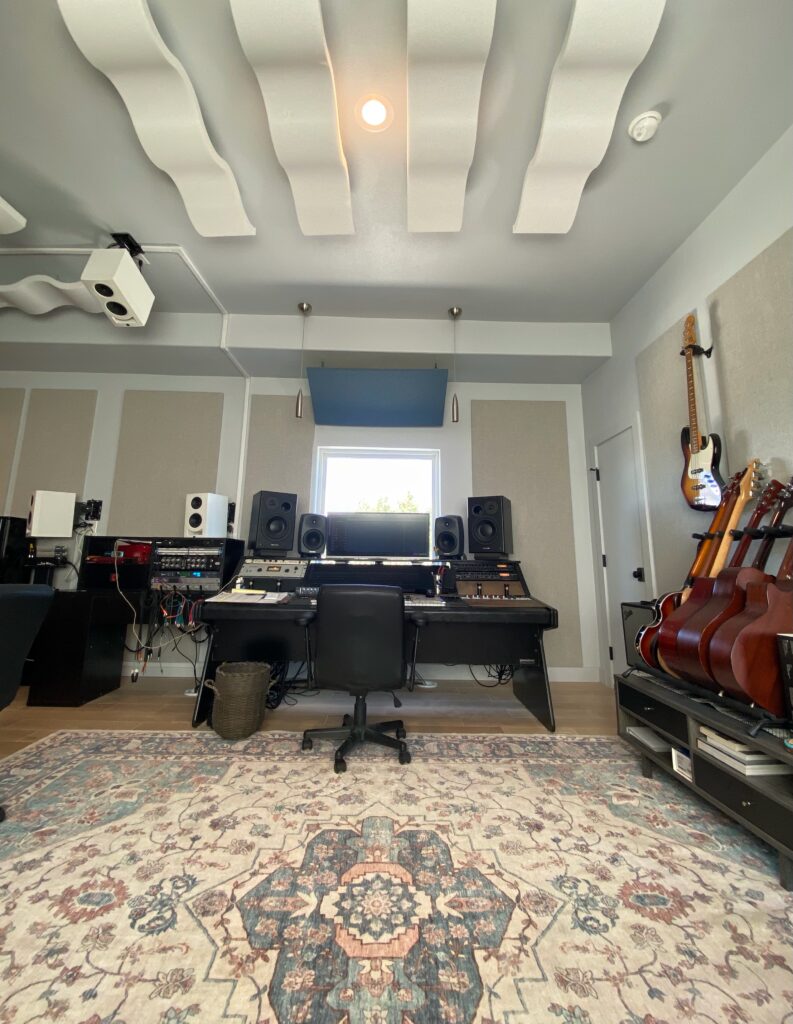
In the last month, I did something that, for the past two years, I had never done before from an artist’s point of view: I booked a recording session outside of my bedroom. For a long time, my bedroom has been my safe space creatively — the place where I write, produce, and record without anyone watching, judging, or interfering. But after my mid-budget dynamic microphone broke and I spent a couple of months recording vocals on a cheap replacement, I started wondering whether my sound was missing something that I couldn’t give it on my own. Maybe what I needed was better gear, better recording techniques, or simply another set of hands.

So, after weighing a few deliberate pros and cons, I booked a half-day session with a local recording engineer and producer in my neighbourhood. I went into it expecting to think mostly about microphones, vocals, acoustics, and whether working with someone else would improve my music.

Instead, the thing that stayed with me most had nothing to do with recording at all. The monster that is Imposter syndrome.

The Monster 

I am unsure about what I will say next will be comforting or terrifying to hear for you readers. Whether you’re a producer making a living off of your work, or a struggling artist who just set up your first monitors on the old maple-wood desk in your bedroom, every person in this world has experienced, at one point in their life, the phenomenon that is imposter syndrome. At its core, imposter syndrome can be defined as a psychological condition characterised by constant doubt of one’s abilities or accomplishments, often accompanied by the fear of being exposed as a fraud – or an “imposter” – despite evidence of ongoing success (Webster). While some people argue this syndrome has led them into unhealthy spirals of exponentially growing self-doubt and despair, others say it has motivated, or even forced them to refine their craft to perfection, achieving no levels of satisfaction until reaching an objectively recognised goal or outcome. While the latter observation may ring true in many other industries, it gets more twisted in the creative world. Because how do you measure what mix is objectively the best? What lyrics will be the catchiest hook? What type of piano will make this record sound grammy-worthy? You can’t. The painful beauty of making music is that there is not one true formula for creating what is best. There are lots of records that have been and still are criticised for their mixes, but I defy you to find an average listener that rejects a song because “the low-end on the snare should be cut by 0.2dB”. It sounds silly. Because it is.

The Art of Preemptive Apologies 

So anyway, the reason that I’ve realised this imposter syndrome is a very shared experience, is partly due to the recording session I had with this producer I mentioned earlier. Before we started any work, he wanted to show me a couple of mixes he did for other clients so I could get an idea of his approach. Before he pressed play, he was already apologising for like 5-10 things that he thinks he did a bad job on. I was caught a bit off guard. Mixing-wise, I was certainly nowhere near his level. I’m an artist and a producer, not a

mixer. Still, he apologised in advance for what seemed to me like a protective coat to shield from any criticism I had locked and loaded after listening to his mixes. I must say, from an artist point of view, it was a bit unsettling to see this certainly human insecurity revealing itself from someone who is a professional at their craft. I thought to myself: Half of the reason I’m paying you is for you to take the weight off my back and confidently carry it to the finish line. And he was a good mixer as well, so I think him criticising himself right at the get-go helped neither of our confidence heading into this collaboration. But alas, everyone has their demons to fight.

A Glass half full 

A glass is half full take-away that I had from this situation though, is the comforting fact that producers at higher levels experience the same self-doubt that we as beginners do. Is it scary that it’s omnipresent through all levels? Yes. But is it reassuring that this imposter syndrome is not an unstoppable force on your way to success? Certainly. Another producer I’ve met recently – one who mixes A-listers of the likes of Billie Eilish and Raye – also shared his experiences of the discouraging cycle of self-doubt. One that he couldn’t escape until a couple of years ago, where he was already mixing grammy-nominated projects. I will talk more about the experience of meeting him in my next blog, but I couldn’t bring myself to not mention this at all, since it’s so relevant to what is being discussed for today.

Closing Thoughts 

Once more, this anecdote reinforces the idea that whether you’re just starting out in the industry, or you are the industry, everyone is told by their own voice, at one point, that they’re not good enough. It’s important you don’t listen to it too much.

Raffle for Mix Music Production – Nashville

IMMERSIVE AUDIO MEETS STRAIGHT AHEAD STEREO RECORDING

For the past three years, Mix Music Production Nashville has brought the magic of music production to life with a dynamic, all-day event in the heart of Music City.

Join us on Music Row for a fresh lineup of expert panels, cutting-edge technology, and exclusive sessions inside some of Nashville’s most iconic recording studios.

Music Row, Nashville
Saturday, May 16, 2026

We’re excited to share that SoundGirls will be raffling off 2 free passes to attend Mix Music Production Nashville!

Enter here – Winners will be notified by May 2, 2026

Why does this sound so good?: Jill Scott – To Whom This May Concern 

It is incredibly interesting how we are often inspired by sound— an intangible vibration of airwaves that can resonate with the deepest corners of our souls. Personally, I have always been moved by music. Getting my hands on a saxophone, then learning to sing, then finally learning about music production have all helped to deepen my appreciation for music over the years. When I was younger, I would sit listening to music and often ask myself, “Why does this song sound so good?” Now, with many years of music production experience and a sound engineering degree under my belt, I have a clearer sense of the elements that make a record resonate with the deepest corners of our souls. And oftentimes it is when the lyrics, music production, and sound engineering of a song create a synergy together. As my time as a SoundGirls blogger commences, I will continually analyze different records and projects to answer that exact question — why does this song sound so good?

Like many R&B fans, I have long awaited Jill Scott’s new music. I love that this newest project, To Whom This May Concern, sounds incredibly true to her and her artistry. She delves into themes of love: for self, community, ancestors, romantic interests, and music, amongst many other experiences. Frequently, these themes are expressed with her Black womanhood at the forefront, and it is displayed not just in the lyrics but also in her delivery, the production, and the engineering of the songs.  Her newest project, To Whom This May Concern, is unequivocally Black in its lyrics’ themes, and the way its production and sound engineering collaborate with the lyrics to deepen that message. Some standout songs that will be analyzed for their intersection of lyrics and engineering are Be Great, Pay U On Tuesday, and Right Here, Right Now.

Be Great

Everything about this project is intentional. It is no mistake that she released it during Black History Month. In a similar vein, it is no mistake that one of the first songs on the album is Be Great. It sets the tone for themes that will unfold throughout the project. This song is written and produced by Jill Scott, Troy Andrews (aka Trombone Shorty), Adam Blackstone, and Donovan Knight (aka DK the Punisher). The first thing that stood out to me was the horn production of this record. With Trombone Shorty as one of the writers and producers, it is clear to see how he contributed to the song; the horn parts are a mix of his classic New Orleans style with clear influence from Historically Black Colleges and Universities (HBCU) marching bands. HBCUs are home to a special type of marching band that goes beyond sideline entertainment at football games, but expands to represent Black history and culture. The spirit and legacy of that is heard on Be Great through the low-end support of tubas, bright interjections of trumpets, and countermelodies of saxophones and baritones.

Jill Scott’s delivery of the lyrics highlights the message of the song that is already heard in the production. In the verses, she has a word in each phrase that she sings with more emphasis, and the notes she chooses on those words are sung higher in her voice; she intentionally wants to make us feel the meaning of each phrase she sings. Furthermore, she utilizes a common vocal production technique in the choruses called vocal stacking. It is the layering of multiple vocal tracks to add density, texture, and emphasis to what is being sung. I love that she chose to keep it unison and leaves space for the horn parts at the end of each phrase. It comes across more impactful that way due to the horns serving as a response to her call, an affirmation to her deciding to “be great” regardless of the “history that made [her] cry.” Even the lyrics embody the spirit of the production. HBCU marching bands are one of many instances in Black history where something meant to harm Black folks (segregated schools) was used by Black folks to instill confidence and pride in our abilities and culture. What better tool to utilize in a song about rising from circumstances meant to make you fall than production that highlights that resilience?

The song reaches a climax around 2:15, when a hallmark of HBCU marching bands comes to fruition— the battery breakdown section. Scott’s lyrics bounce effortlessly on top of the knocks of the snares, claps of the cymbals, and marching quads playing fills as the vamp repeats and builds. Resilience is not only heard in her lyrics; it is felt from the song’s production as well.

Pay U On Tuesday

As someone whose first musical influence was jazz, I was quite pleased to hear this blues on the project. Whether you are a sound engineer, a classically trained musician, commercially trained, or you are hailing from musical theater spaces in the United States, it is likely that any of these musical contexts has made you encounter the blues. For more history on the blues and its meaning, see here.

The song was produced by Jill Scott, Adam Blackstone, Charles Harmon, and Claude Kelly.  The space and panning of this record so clearly mimics 1920s and 30s jazz; it makes me wonder what recordings Jeremy Hunter and Eduardo Ghigo might have been using for reference mixes. One of the first things I noticed in this song is the panning. The rhythm section is panned piano right, upright bass in the center, guitar left, and the drum set is panned throughout the width of the entire mix. It leaves space in the mix for the response of the horn section.  It’s natural that Scott utilizes call and response; it’s a hallmark of this genre. And of course, as blues typically does, Scott sings of her woes. In this case, an unreliable nuisance of a man. I’m sure we, unfortunately, all relate to a thing or two in those lyrics!

Right Here Right Now

Scott takes us on a journey with Right Here, Right Now, answering the question posed in the lyrics, “Does love still exist?” It is produced by Jill Scott, Lamar Andrews, Carvin Haggins, Yountie Sticklin, Keith, and Malek Isreal. Aside from this being my personal favorite song on the album, this song’s lyrics highlight how love is truly in everything if we pay enough attention to the present. This record is a House track — a music known for its ability to curate a sonic experience that keeps you present in the moment. House music hails from Chicago and is influenced by underground Disco music, queer culture, and Black culture. Its sounds often bellowed from the walls of The Warehouse in Chicago. Jill Scott’s mere use of the genre as a vehicle for this lyrical poem underscores how her identity as a Black woman is present in every section of this album.

The lyrics are affirmations of love. It is in the flowers, the trees, the rainfall, in me, in we. The poem Scott crafts over this house beat is one that highlights not only her own personal feelings but also the importance of the present moment, “right here, right now.”

The journey begins low, thin in texture. There are only a few layers — wide synth pads, Roland TR808 drum machine echoing rhythms sparsely yet with a pace, and Scott’s voice with heavy reverb and pan automation, placing it hard left then hard right. As the journey continues, claps on two and four link up with the synth bass to deepen the rhythm. When the peak is approaching, vocal stacking is utilized  in the pre-chorus and is fully exposed as the song ascends into the chorus. “In you is me, I am here” is heard solo for the last measure before the beat drops at the beginning of the chorus. The beat hits on “here” because it is the first beat of the chorus. The message of presence, the importance of just being here, is emphasized in production and lyrics.

And that is just the first build of the song. This song possesses a few peaks and valleys, as house music typically does. Yet, even this first ascension teaches us to be present, to feel and hear love in this song, in nature, and beyond.

Outro – Àṣẹ

Though my analysis of this project stops here, Scott invites us to continually revisit it and listen again. She highlights this and more in an interview where she speaks on the meaning of Àṣẹ as a song and as a spiritual concept. In short, it is a life energy. To Whom This May Concern invites us into Jill Scott’s unapologetic Black womanhood that intertwines with the sonic energy found in its production, giving us life energy. Listen and listen again. And when you do, let me know what production elements and engineering techniques you notice that enhance the lyrical content in the comments!

Discount for Mix Music Production – Nashville

IMMERSIVE AUDIO MEETS STRAIGHT AHEAD STEREO RECORDING

For the past three years, Mix Nashville has brought the magic of music production to life with a dynamic all-day event in the heart of Music City. Meet us on Music Row for a fresh lineup of expert panels, cutting-edge tech, and exclusive sessions inside iconic recording studios.

Music Row, Nashville
Saturday May 16, 2026

Mix Music Production has generously offered SoundGirls Members 20% off registration.

You can register here

use code SoundGirlsNash20 for 20% off.
X