Empowering the Next Generation of Women in Audio

Join Us

Tools Of The Trade


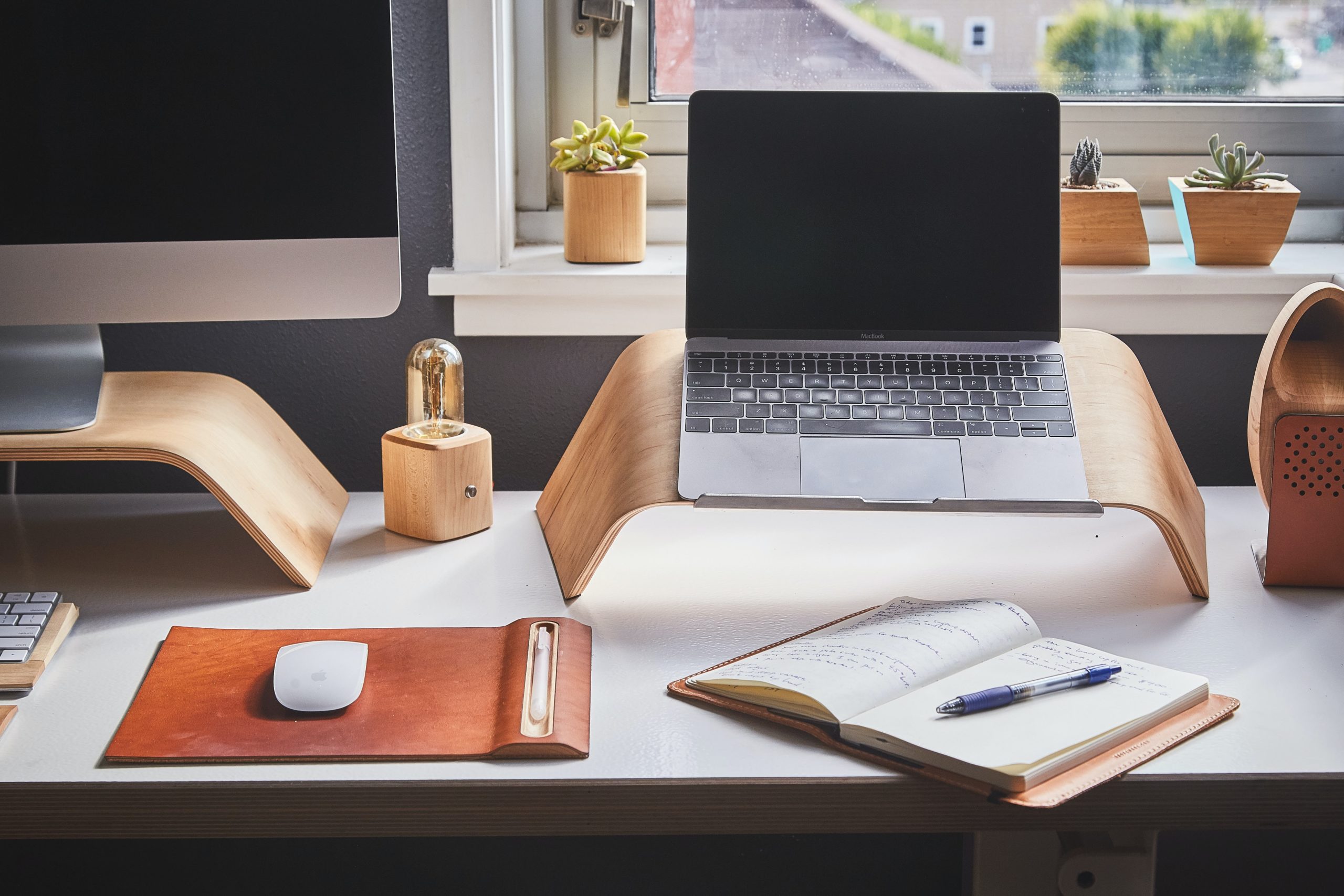
You’re talking shop with the guys over a few drinks in the bar across from the venue. Everyone is listing off what they wish the higher-ups would approve so they can finally put in the order and check off things on their wish list. You’re mentally going through your own wish list and what ideally every venue would have so you can stop hauling all the different things you need for each venue. Our own personal “working wish list.” Like most other wishlists, ours in the audio world is ever-evolving with each announcement of the soon-to-be-on-the-market gear and the newest toys. There are some essentials that are on everyone’s wish list though. For instance, we can never get enough electrical tape, it’s simply something we are constantly running out of and always find ourselves in need of. When you are touring or travelling for work, these tools can sometimes be difficult to get a hold of so it’s always nice to have your own. Hopefully, this wish list will help you both pack your own gear bag and maybe even add more to your growing tools.

What’s In My Gear Bag?

As I briefly touched on the subject in the article “Travelling” back in January, you can’t easily travel with everything you need for this career. However, if you need to travel and bring your own gear, it’s good to have as much of your gear in one bag so you’re not stuck juggling multiple bags with a little bit of everything you need. For the most part, unless you are bringing your own mixing console and sound system, these tools are fairly easy to keep in one or two bags.

So what is in my everyday use gear bag?

This is a bag that I instinctively reach for as I am heading out the door on any given day for work.

On the outside of my bag, I have various types and sizes of carabiners along with multiple colours of electrical tape. These items are ones that are replaced on a regular basis and needed without having to search through my bag to get them.

There is also an ever-growing monkey-fisted knot of tie line, also commonly referred to as a trick line. Tieline is used more commonly in theatres, but contrary to what some people think, it’s not just used for our lighting friends. I have used tie lines to keep cables in place on balconies, and risers, and even sometimes securing them below the stage.

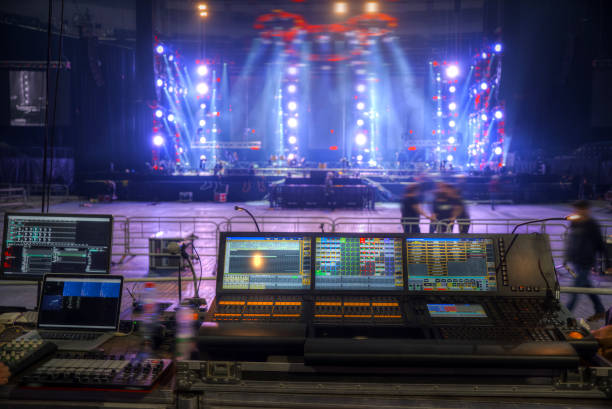
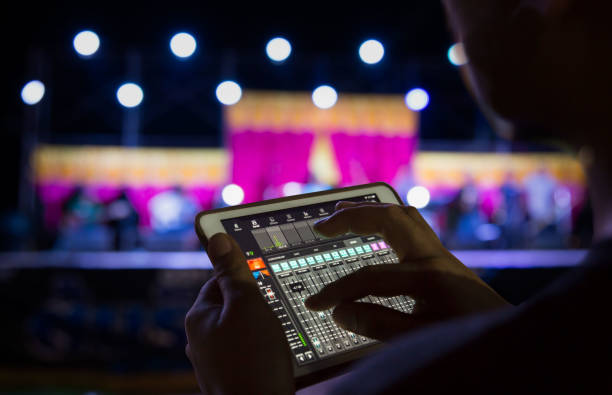
Proceeding to open the first layer of the gear bag, therein lies a shock dispersion space for my work laptop and tablet that I can remotely mix from. I have rarely if ever, found myself in a situation where I didn’t need my tablet in some form. Yes, it’s definitely handy to mix remotely, especially if your mixing location is not ideal, but it’s also a way for you to see notifications and important updates from the rest of the team.


Closing that first layer and moving on to the next, you’ll easily find spare aux cables, cable adapters, and papers with my Sound Notes notebook. While many of my colleagues have asked why I write a lot of notes about the show or carry spare blank channel strip sheets, this is mostly to keep improving on what we’ve already done for the show. Each performance is going to be different and I like to keep track of where we constantly are on the sliding scale of “How good was that performance?” Some nights, it really does feel like the best performance and you’re listening to it for the first time. Some nights, everything goes wrong. By trying to keep track of where you are on that sliding scale you can see what worked and consistently had good reactions from the crowd, and what needs to be gone over and looked through for next time.

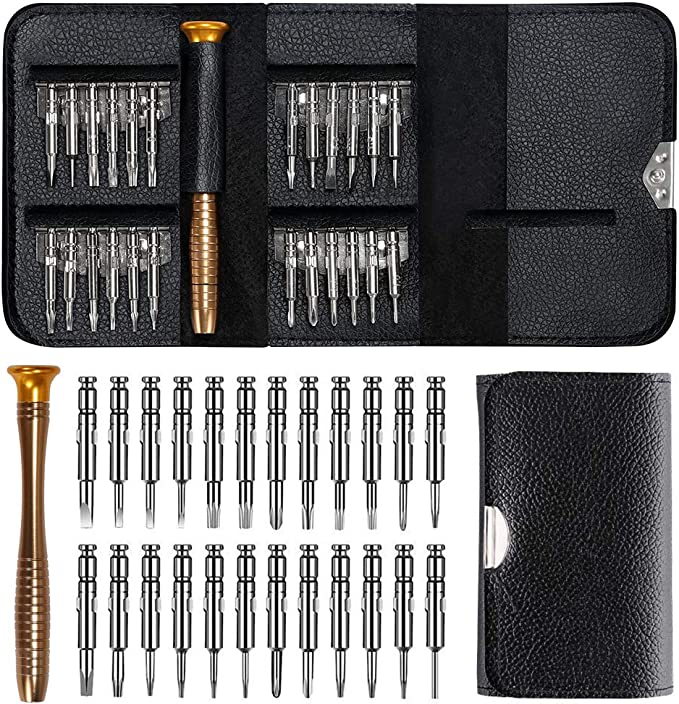
Moving on, therein gets the slightly messy storage of the actual tools one might find in a regular toolbox. A small glow-in-the-dark flashlight, a magnetic flashlight, spare batteries, a portable battery, rigging gloves, different coloured gaff tape, the mini screwdriver kit because something is always needing maintenance, a small hammer, and so many sharpies that have just been randomly collecting at the bottom.


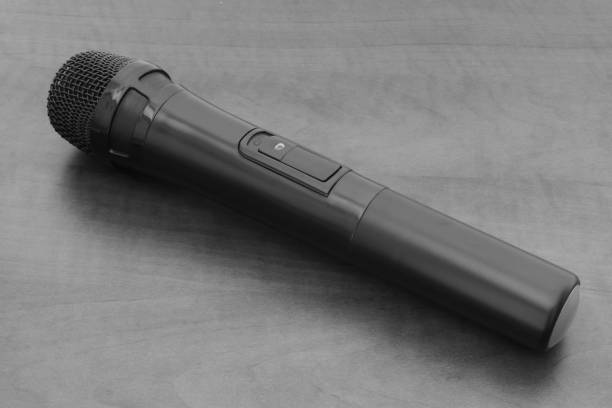
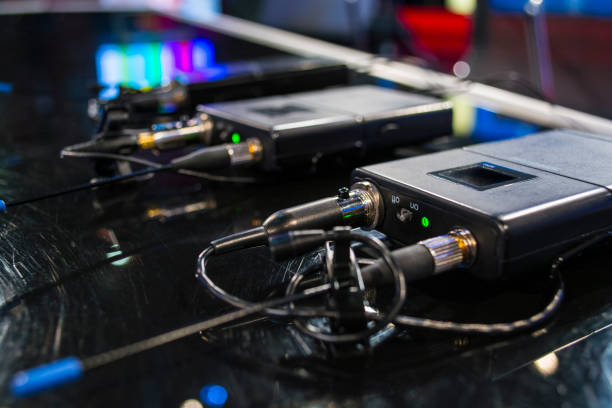
Finally, the last storage space in this gear bag. This is the space where I keep my mixing headphones, a dynamic vocal mic, a Lavalier mic, and a wireless vocal mic with a receiver. These have been some of the latest additions to my gear bag.
 

What’s On My Ultimate Wish List?

I don’t think most of what I would ask for is completely unreasonable.

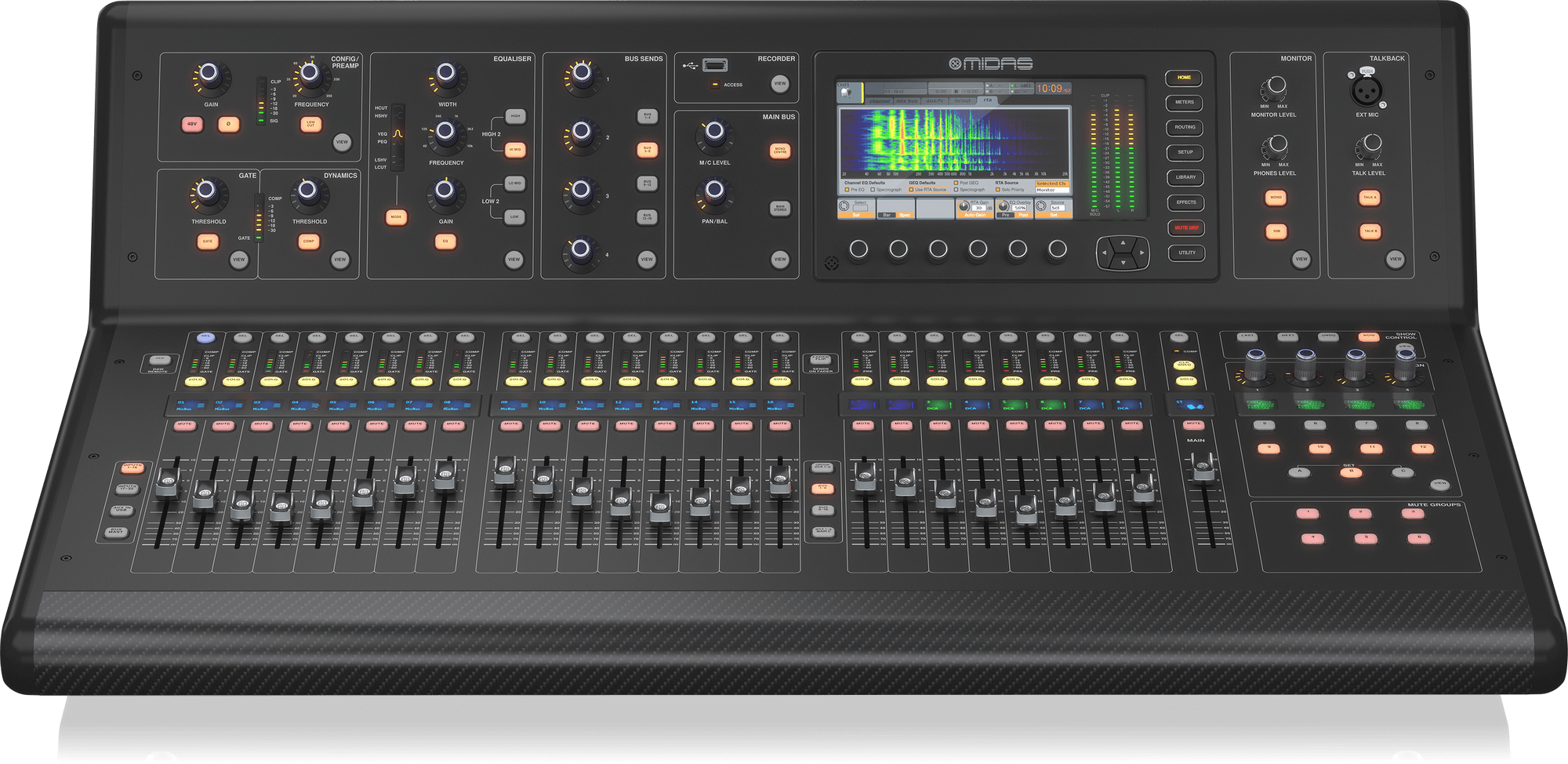
For the FOH mixing position, I want a wide enough space to actually be able to load in equipment without breaking our backs or constantly being pushed into walls, or having flight cases run over our feet. This would allow us to actually be able to move and lift these heavy consoles hopefully without breaking anything, including ourselves. Plus a Midas 32 would be fantastic.


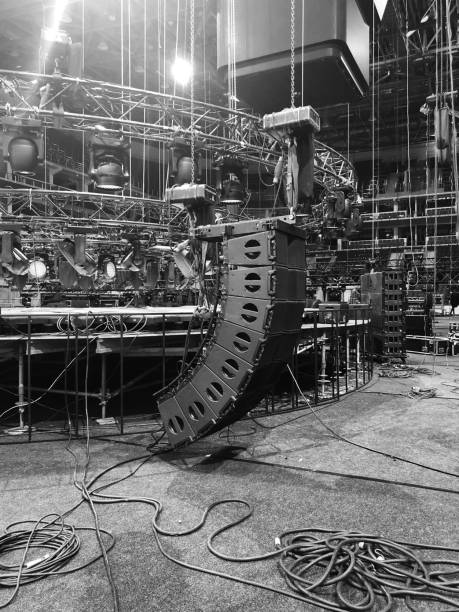
For the PA system, I just want a flying line array, I would settle for a stackable system but we’re going for big dreams here. L-Acoustics recently developed and marketed some amazing ones. Some fill-in loudspeakers to prevent drop-off with distance and sub-bass as well would be amazing! There doesn’t have to be a lot of them for my wish list, but at least something.


Having copious amounts of radio mics and the spare batteries to go with them shouldn’t have to be on the wish list, but you would be surprised how many places run out of spares for both mics and batteries. It is absolutely not the venue’s job to have spares for all the shows that come to them, but it’s always nice to know if something breaks and you can’t immediately repair or replace it, you have something on standby. Most venues will also provide this in their technical specifications and will be talked about during the advancement process.

A Dante audio network is luckily becoming more common, especially in theatre from what I have seen, but is still not standard. If you make the effort to become certified in something, like Dante, wouldn’t you also want to use that knowledge? Thus, it is on my list.

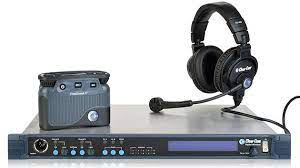
What current comms system the venue is using is also always nice to know. There have been a few times while on tour that we have rocked up to the venue and found out we needed to use our own instead of being allowed to use the ones at the venue.


This is not uncommon to get things that are antiquated and we don’t always find out they are out of date until we arrive at the venue. During the year 2020, or since soon after, multiple venues globally have undergone restaffing, updates, and reconstruction. This can mean that several of their technical specifications and contact information sheets are also obsolete thus making the advancement process problematic and questionable.

So for the advancement process, I would like to add these things to my working wish list:

Up-to-date power specifications.

An up-to-date contact sheet of people you may need to get a hold of at the venue including the audio crew chief, production manager, technical manager, and venue manager (basically everyone in charge).

Stage specifications, including mixing positions, in advance of the show (not just waiting until the last minute the night before).

Health and safety specifications so you’re not caught off guard if they have something a little uncommon to most venues. A good example of this is some venues requiring Risk Assessors (not always provided by the venues) to be part of the load-ins and load-outs for shows across Europe and the UK. This is likely to also gain ground in North America soon with its growing popularity.

Another thing that I would like to add to my working wish list that would be assumed as common knowledge but somehow isn’t is literally buckets of consumables like tape, cables, tie lines, etc. Every time that I have put in a request for more of these consumables the initial response is something along the lines of “You need more? We just bought some!” Yes, we need more because it’s consumable and we go through comically large amounts of these items.

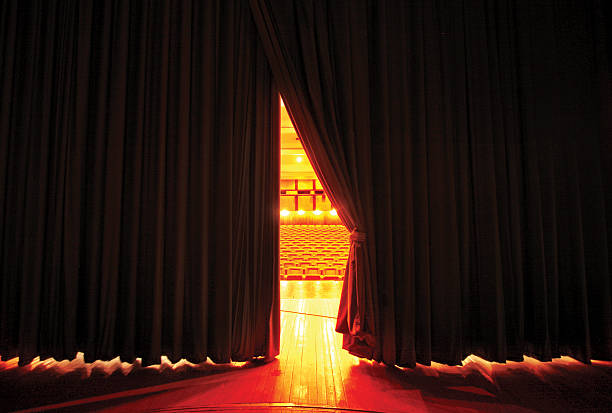
And of course, the final item on my wish list, who wouldn’t want the classic red curtains?
 

.

 

Is Music The Language Of Connection?

Scientific studies have shown that many effects of music can be seen in the brain. Multiple observations have demonstrated some interesting findings on the bodies and minds of listeners and performers alike, leading to the question: “Is music the language of connection?” 

Group Singing and Emotional State

Group singing is one such area that has been studied; results showed that participants benefited from feeling calm, experienced an elevated mood, and the release of bonding hormones, with effects that could be likened to the results of meditation. Additionally, scientists from Berkeley found that on top of the mental benefits we already know music can bring, there are social and physical effects on singers, such as feeling emotionally close to others, and a reduction in physical pain:

“Results showed that feelings of inclusion, connectivity, positive affect, and measures of endorphin release all increased across singing rehearsals and that the influence of group singing was comparable for pain thresholds in the large versus small group context.”

As far back as the Hippocratic philosophy in Ancient Greece, art therapy was used in the treatment of illness and in “the improvement of human behaviour”. The use of art therapy does seem to be experiencing something of a resurgence in some areas today in the treatment of children, notably in adults with dementia. In the UK, there have been initiatives gaining popularity in this field, such as the Alzheimer’s Society’s ‘Singing for the Brain’ campaign, whose community choir brings people together to participate in music. They explain:

“Evidence shows that music can help improve and support mood, alertness, and engagement of people with dementia, with research* showing that musical memory is often retained when other memories are lost; music can help people to recall memories due to the nature of preserved memory for song and music in the brain.”

Understanding that singing is a universal tool that can be beneficial to memory, mood, breathing, posture, and muscle tension, and creates a sense of well-being and connection, surely we have to question why we are not placing more importance on this relatively simple activity. And while using music therapy for the sick is commendable, why are we waiting until someone is unwell to implement it, rather than using it as prevention and sustenance?

In UK schools, the opportunity to study music history and participate in performances, creative compositional activities, and learn an instrument, are becoming increasingly elite pursuits. The denial of access to music for every child in state school seems to be the ongoing initiative of the current government. Some private schools are even taking it upon themselves to share their resources, opening the doors of their concert halls to the local state sector. Warwick School in England is one such institution that has kindly offered education support to local schools through Warwickshire Music Hub. The reporting in The Big Issue explained:

“The facilities in Warwick are exceptional: there are many music teachers beavering away with nothing but a bunch of ukuleles. The contrast in music resources can be stark. The recently updated National Plan for Music Education (NPME) places much of the responsibility for delivery on individual organisations through the hub system that was created when the NPME was unfurled in 2011. Luckily, there are those who are taking the initiative, despite government indifference.”

It bears repeating that if we know there are such huge benefits to the brain, body, and spirit from music, and we use it as an actual treatment for the sick, it feels unethical to consciously withhold this from some select members of our society.

Enjoyment and Synchronization

A 2020 study in the journal NeuroImage observed that when audiences listened to a musical performance and enjoyed it, the brain activity of the performer and the perceiver synchronized together. Additionally, I found it interesting that the paper referenced several studies that had come before:

“Previous neuroimaging studies also found that brain-to-brain synchronization is involved in behavioral synchrony, emotional contagion, and verbal/nonverbal communication. In general, interpersonal neural synchronization might be the neural basis of synchronized movement, emotional resonance, and shared understanding (Shamay-Tsoory et al., 2019).”

This took me back to watching a pub gig in a country where I’m proficient in around ten words of the language. As the singer worked the crowd, getting every one of us to clap and sing along, taking a line here, and a hook there on the mic, it soon became very apparent that not only was I, not a native speaker, but there was also a deaf lady in the audience.

What happened next was a rallying of forging connections through the music; the singer adapted what he could to include everybody, not only pulling out an Elvis number in English for me to join in, but by “signing” with gestures to describe the lyrics, employing the deaf lady’s partner to interpret here and there, and by taking her hand to feel the vibrations as he sang to her.

As we applauded her, (in sign language, this is like the “jazz hands” motion, with the arms up at a 90-degree angle) she looked around at us and fought back tears of happiness. After the show, we couldn’t address each other with words, but shared a knowing smile, and a moment to acknowledge and appreciate the connection created by the language of music.

The Brains of Co-Creators

After skimming the surface of the studies and pondering the many emotional ramifications of musical connection, I began to wonder what happens to the brain when we create music together. Band and musical working relationships are often emotionally charged, but is the creative relationship measurably different scientifically?

If we know that ‘trauma bonding’ exists, then what happens when we experience something intense, but mostly positive with another, where we make something tangible together out of nothing but our feelings? It is my suspicion that while we can feel everything on the spectrum from happy and free, to cold indifference, to hoping karma rains down on some past relationships, the connection between co-creators is a unique one, unlike any bond we have with an old friend, lover, or colleague.

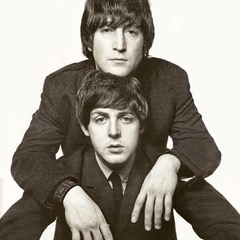
The day he died, John Lennon gave an interview speaking fondly of Paul McCartney. The pair had actually reconciled by 1976, despite their explosive disbanding six years earlier. John had said:

“He’s like a brother. I love him. Families … certainly have our ups and downs and our quarrels. But at the end of the day when it’s all said and done, I would do anything for him. I think he would do anything for me.” — 8 December 1980 interview with Dave Sholin

It was clear there was still a great connection between the two, and the last time the pair met in person, Lennon’s parting words to McCartney were, “Think about me every now and then, old friend.”

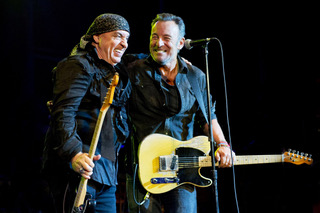
It’s a pattern that can be seen throughout the music world – Stevie Van Zandt speaks of his brotherly friendship with Bruce Springsteen in his autobiography, stating that despite separating and uniting musically several times over the years, they only had three real arguments. With a lack of bitterness, and more of a “Eh, what you gonna do?” laissez-faire attitude in the book’s tone, Van Zandt’s affection for Springsteen shines through.

It’s funny how when the music stops and time rolls on, it doesn’t matter whether life took you in different directions, you simply grew up or had the mother of all disbanding experiences – the bonds run deep. We can be separate from our music friends for years and still cheer for them from afar when they meet a nice partner and find happiness, and it can feel like a punch to the gut when we hear hard times have befallen them.

If our brains literally synchronize, and we feel a measurable connection in a musical environment, and these memories will be the last to go, then perhaps the supposition that there’s more to it isn’t completely un-scientific. The often-quoted man of science Carl Sagan once said, “For small creatures such as we, the vastness is bearable only through love.” It’s something I think about every now and then.

8 Reasons To Work In Audio


Look around the audio industry and you’ll find an abundant number of people who are passionate, motivated, inspired, dedicated, hardworking, and often obsessed with their craft! What are some of the reasons that make working in audio so great, and worth dedicating a career and a substantial amount of your life’s hours to?

For the love of music

Most people love music of some kind, and working in recording or live sound gives you the opportunity to work with it every day. Some sound engineers begin as musicians but don’t want to pursue a performing career, and others find that audio may offer a more stable income working in music than working as a musician – though many people are able to do both. Being paid to listen to music is a dream for many people!

Flexing your creative muscles

Getting to sculpt sound, making creative decisions on musical arrangements or sound design, deciding where elements should sit in a mix, develop new audio software and hardware – audio engineering can be an endlessly creative field. An advantage for many people is developing the skills to be able to produce their own music or creative content.

Creating content or experiences that move people

Sound is a powerful tool for telling a story or creating a mood or atmosphere – a film without sound wouldn’t have half the emotional impact. There’s a great satisfaction to be felt when a client is thrilled with their finished song and it goes out into the world to be enjoyed by many listeners, or you’ve perfected a live mix and everyone in the audience is jumping euphorically to the beat!

Working with interesting and inspiring people

Working in this creative industry, you may get the opportunity to do sound for musicians you greatly admire or work closely with a variety of film industry professionals, or people innovating in the field of audio. You’ll likely often meet a variety of different people on projects or events, and be able to share your knowledge as well as learn from them.

Variety in the job

In many roles in the audio industry, no two days are the same: you might be working in different venues or locations, working with a variety of music or film genres, solving diverse problems, or working with varied equipment and people. There are continuous advancements being made in audio technology which will motivate you to keep learning… you’ll probably never be bored!

Combining art and science

Audio is a fantastic avenue to explore artistic and creative aspects alongside technological and scientific elements. You can develop a unique skill set that allows you to bridge those two sides, and facilitate communication between people in the artistic and scientific fields.

Diverse career paths

There are many career paths to explore within audio – recording studios, live sound, film, broadcasting, podcasting, theater, research and development, education… the list is endless. There’s always a possibility to train further, transfer your skills and try working in a different field of audio if you need a change.

Travel and work in different locations

The possibility to travel and explore new places is an exciting drawcard for several roles in the audio industry. Whether you’re an audio engineer on a cruise ship, touring with a band or show, or filming on location, you may have the opportunity to see places you wouldn’t have otherwise visited, and get to know a variety of exciting locations and people.

A huge thank you to members of the excellent Soundgirls and Hey Audio Student Facebook groups for sharing what they love about working in audio. I highly recommend joining these groups for terrific audio tips, interesting discussions, and inclusive community support from fellow audio professionals and students.

Image attribution: Image by storyset on Freepik

Creating Your Mission Statement as a Creative Entrepreneur

As a creative person, it can be a pretty big shift to think like a business owner. Entrepreneurial instincts aren’t exactly natural for all of us, just as musicality isn’t as natural for some as others. As I’ve worked with artists, songwriters, musicians and creatives of all kinds, I’ve found that creating a “mission statement” of sorts can get the ball rolling into a disciplined music business that is an authentic reflection of who you are.

“Authentic” is a word that’s a bit overused these days, however finding and embracing your authentic self as a creative entrepreneur in today’s world is perhaps the most important part of your journey to finding success. As an artist, it is what will draw fans to you and keep them there. As a music producer or audio engineer, authenticity builds trust and loyalty with your clients. As a songwriter, telling stories from a place of authenticity will keep your music fresh and relatable.

In the “authentic only” environment we have today, posers or fakers are relentlessly called out, and then inevitably, virtually crucified. That being said, the driving force behind finding your authenticity shouldn’t be fear, but a desire to find your place in this musical landscape and to find the people who feel they belong there with you; to create your own world and invite your “people” to join you. This is the very foundation of being a successful creative today.

Yes, there is still room for showmanship and even gimmicks, as long as it’s an extension of who you really are. I just had an interesting conversation with an artist about this. I was convinced he was making a choice with his branding that was confusing and off-putting. By the end of our conversation, I “got it”. I could clearly see that what wouldn’t work for most artists was perfect for him, as it reflected his rebellious spirit and a virtual finger to the establishment. He sold me on it because his feet were so solidly planted in his “authentic” self that I could see without a doubt that he wasn’t simply being stubborn, but was completely confident in who he is and has a clear vision of how he wanted people to experience his brand.

Finding who we are can be a process of digging, questioning, discovering, and peeling back layers. It should always start with these four questions:

Take about 20 or 30 minutes to sit with these questions without distraction. Brain dump your answers with no filter on a piece of paper or note app.

Now, shape the answers to these questions into your official mission statement. Your mission statement should only be a paragraph long, not a full-page essay. If writing isn’t your skill set, ask for some help. Also bear in mind that it doesn’t have to be perfectly written, only that we the reader should have no questions about who you are, what you stand for, and what your “mission” with your music is.

Going forward, every move you make (on social media, in your fan newsletter, in your youtube engagement, or wherever) as a creative should align with your mission statement. If you contradict yourself one too many times, your fans will detect this lack of authenticity and lose interest. They may even question why they liked you in the first place. This should make it easy for you! You never have to worry about what someone else is doing or what the current trends are. Just Be YOU!


Review of The First Collection of Criticism by a Living Female Rock Critic

Jessica Hopper wanted me personally to read  The First Collection of Criticism by a Living Female Rock Critic, and you, too.  In the afterword of the 2021 edition, she notes how essential it is to create and consume media outside the culturally accepted norm.  Female critics like Hopper provide a much-needed perspective on artists that would otherwise go undervalued.  It is empowering to read reviews from a feminist view, and the reader uses their purchasing power to uplift the author.

Hopper puts pieces of herself in the reviews.  We see her growth from fangirl to respected writer and her journey from Midwest suburbia to Chicago to Los Angeles and beyond.  We see the music that shapes her worldview and the music that breaks its boundaries.  Her path is both similar to her peers and uniquely her own.  Hopper’s story could be yours, and that is what makes this collection powerful.  She is a mentor through text.

Not every review is written with a feminist focal point.  However, when her sharpened pen targets the masculine majority opinion, there is no mercy.  No genre is safe: punk, country, rap, and rock.  Hopper champions women forgotten and maligned.  Her piece on Rolling Stone‘s editorial department highlighted those who blazed the path that Hopper would later trek.  There’s enough meat for a Hidden Figures treatment of their story.

In both the afterword and throughout the collection, Hopper reaches out to women in all parts of the music industry.  From fan to artist she says thank you, I hear you, keep being you.  We need each other to build a better industry.  If there’s no space for you in the pit, elbow your way in and stay there, and bring your squad.

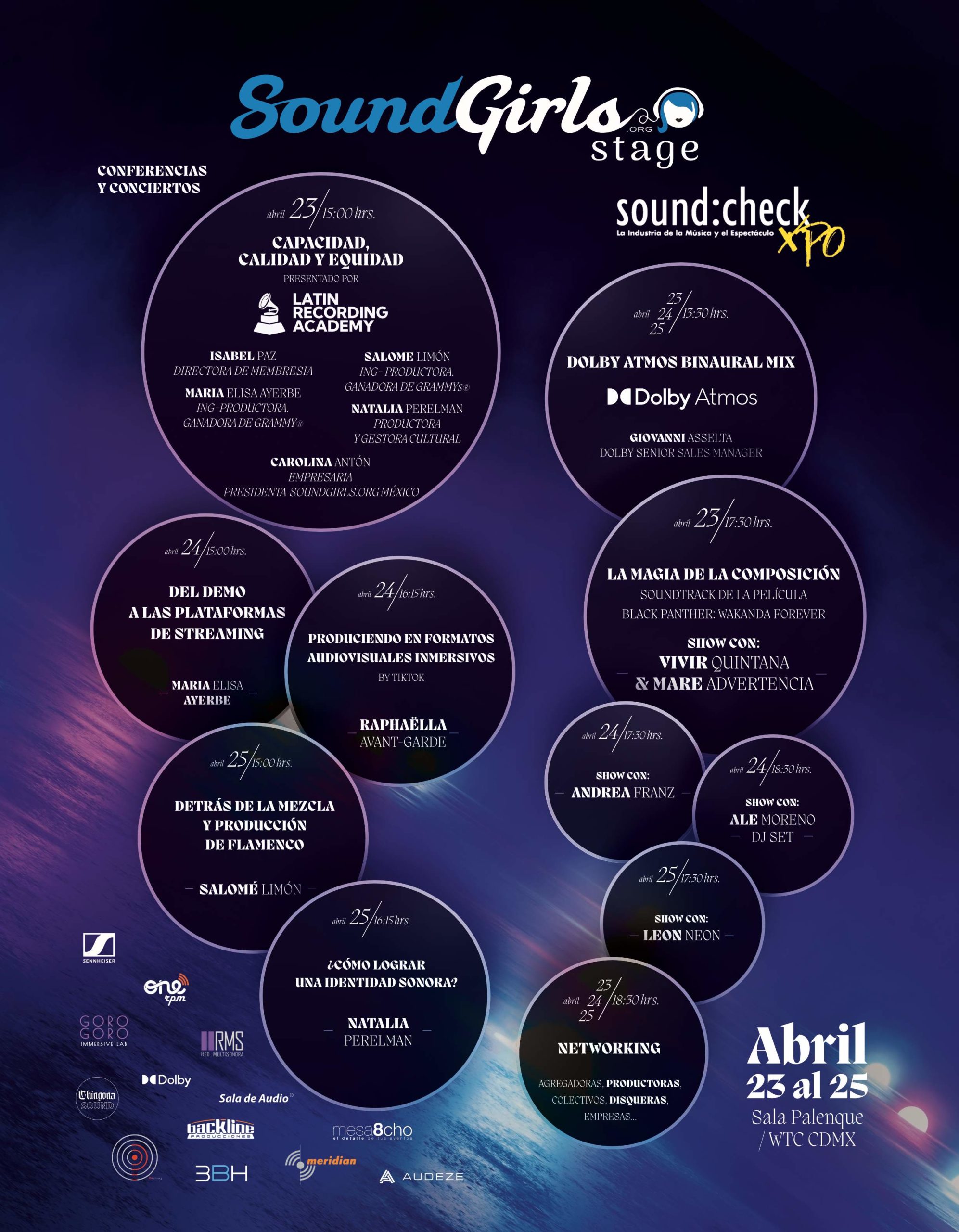
ExpoSoundcheck – SoundGirls

The Fight for the Baton and Gender Equality


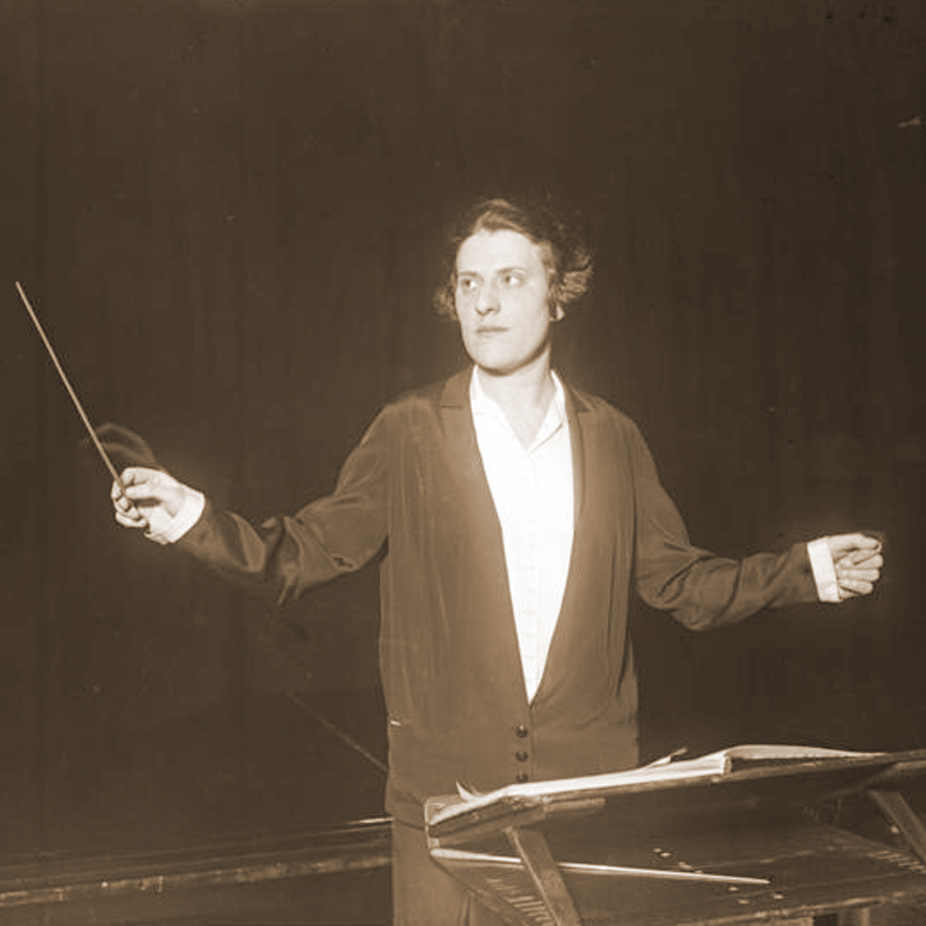
The iconic scene of a woman bringing a chair in the middle of a concert to watch and learn the conducting of an orchestra by a famous male conductor, and then being expelled from the place, showed me how bravely this woman tried to pursue her dream. This scene could be from a movie today, but it happened almost 100 years ago, in 1926, in New York, and the woman portrayed was Antonia Brico in her biographical film “The Conductor” (2018), which I highly recommend.

Antonia Brico was one of the world’s first female conductors, and throughout her career, she faced significant discrimination and obstacles because of her gender. Born in the Netherlands in 1902, she immigrated to California with her foster parents in 1908, where she showed an early talent for music and began studying piano at an early age.

A Remarkable Contribution

One of her greatest contributions to the fight for gender equality was the founding of the Women’s Symphony Orchestra in New York in 1934 to demonstrate that women could play in any category. The orchestra’s success attracted the support of Eleanor Roosevelt, the First Lady of the United States at the time.


Antonia Brico at Alte Philharmonie in Berlin, 1930


She conducted several prestigious orchestras in the United States and Europe, but despite all her efforts and recognition by other means, she was never the principal conductor of any of them, one of the greatest disappointments of her life.

Breaking the Baton

Decades after Brico’s breakthrough in gender equality, women are still underrepresented in conducting and composing roles and often face barriers and discrimination in their careers.

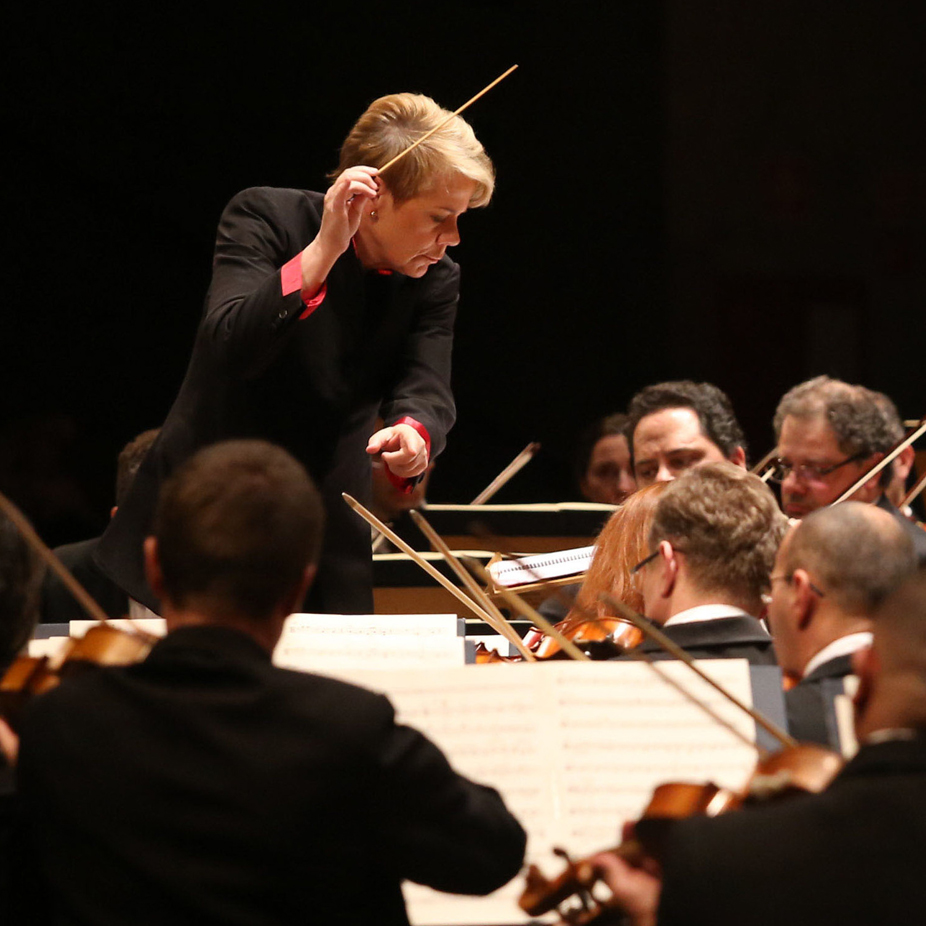
In recent years, organizations and initiatives have been established to support and promote female conductors, such as the Women’s Philharmonic. Women still make up less than 10% of conductors worldwide. One such renowned conductor is Marin Alsop, who in 2013 became the first woman to conduct the Last Night of the Proms in the United Kingdom. It was after attending one of the famous Leonard Bernstein concerts, Young People’s Concerts, with her father, that she began to develop her interest in conducting. Alsop has spoken about the challenges she has faced as a female conductor, including the need to prove herself more than her male counterparts. In 2021 her story was told in a documentary also called  “The Conductor” (2021).

Marin Alsop at São Paulo State Symphony Orchestra in Brazil, 2017


The legacies of Antonia Brico and Marin Alsop, along with other pioneering women in classical music, serve as a source of inspiration and motivation for those who seek to break down barriers and promote greater diversity and inclusion in the music industry.

Through their talent, dedication, and perseverance, non-male conductors are changing the face of classical music and paving the way for future generations of anyone following their dreams.

So, if you want to make a difference in the music or audio industry, remember to get your chair and find your place in the crowd so you can be heard.

With love,
Lydia Guía

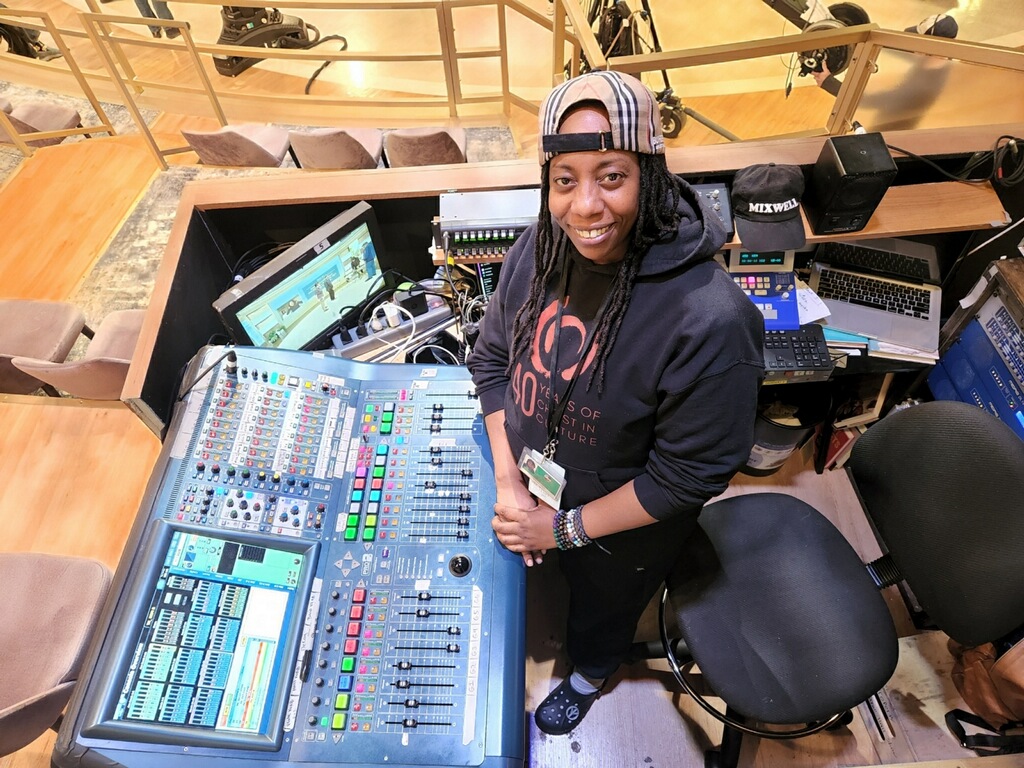
Daychia Sledge – Sound Engineer and Designer


Daychia is an Audio Engineer mixing  Front of-House & Monitors for various artists and television networks including ABC DISNEY, NBC UNIVERSAL, and VIACOM.  She has been working in audio since 1995. She works as a freelance sound engineer in both live and recording arts. At ABC Tamron Hall Talk Show she is the current  FOH engineer and Floor Audio Lead and at NBC she works on the Late Night show mixing Monitors, or the Amber Ruffin Show Mixing FOH/ Monitors.

Daychia discovered audio after graduating from high school and was looking for a career path in the music business as a rapper. Her mom wouldn’t let Daychia pay the local studio unless she learned to operate the equipment first, so she would enroll in school for audio engineering (Audio Recording Technology Institute in Hauppauge, LI New York) and learned this was a viable career path. “Eventually I didn’t care too much about rapping anymore,  I was head into the books and learning audio, studying frequencies to train my ear so I could ring out a stage like I saw other engineers doing when I interned at the Apollo Theater.”

Career Start

How did you get your start?   

I ate, slept, and drank audio for the entire year I was in Audio classes…  I studied frequencies in my sleep literally,  I let a frequency CD play overnight so I would naturally hear an fz and know what it is on stage ringing.  I worked hard and broke a sweat every gig as a good friend and mentor from Apollo named Ollie Cotton told me was my key to success in this business… he was right because every time I worked someone I didn’t know was watching, and later hired me.

I got my start from the internship at Apollo Theatre, working on Showtime at the Apollo and every Weds night for Amateur Night. I did that for a few years,  then I kept sending my resume out to TV stations and eventually one day I got the call to work at CBS for the Ananda Lewis Talk Show.

At the time it was just starting off, and she apparently wanted to hire a woman audio engineer. So they went calling around NY city to find women audio engineers who actually had some experience.  I happened to be working Amateur Night at the Apollo the night they called Mike Jenkins head of Audio at the time at Apollo, and he was standing right next to me when they asked him Do you know of any experienced sound woman in the city? LOL…He looked over at me with the phone on his shoulder and said “Actually Im standing next to one right now “I went in the next day for an interview and that was the start of my television audio life.

What did you learn interning or on your early gigs?

I learned everything from soldering cable,  fixing speakers in the middle of a Naughty By Nature Tour, to Mixing Loud Vocals for Rappers with NO FEEDBACK… and I am still always learning til this day, more and more techniques to give my artists what they want to hear in their sound.

Career Now

What is a typical day like?

Well,  that’s interesting I don’t really have a typical day. I don’t think I really know what that is…  but I can tell you this much. If I’m in town ( New York)  it’s mostly because I work at Tamron Hall three days a week, on those days, I get up at 3 am.  Meditate, do Yoga sometimes,  get dressed, and head out by 5 am to be on set and working ready for Tech check and rehearsals by 7 am.

We do a live on-air show at 10 am, so from 7 am till about 9 am I am tech checking, then fixing up my music playlist for the day to fit the show content. Then we let in the audience, and I pump up the music for the Comedian and host to get the crown jumping with,  Tamron comes out live on air from 10 am to 11 am on ABC.   We break for lunch and come back to do a 2nd show that is taped.

I get off and try to beat the NY afternoon traffic back home to Westchester NY.  Then when I get home,  I usually have work to do for my Artists’ upcoming shows, prepping show files, or updating riders. I could be organizing the engineers I have in my recording studio with clients coming into the studio. I may be doing ALL of the above until I crash out to sleep.

Now if I am on the road doing a one-off show it’s pretty much the same routine,  except I just show up for soundcheck,  go back to my hotel room and work on other projects, come back do the show and then crash out to bed,  hopefully not an early lobby call the next day.

If I am on tour, Kinda the same deal.

How do you stay organized and focused? 

Prayer,  Yoga,  and Meditation daily.

What do you enjoy the most about your job? 

I love knowing how it all works… especially when I’m the one who made the input list or had some sort of hand in planning it all out technically on paper,  then watching it all come together at the Venue.  With crew members, I probably never met before.    I also really love it when I get to mix the music of artists I love and used to grow up singing in my shower.   Never would have dreamed in a million years in my showers I would be mixing their music.   I love mixing what I used to hear and wondered how they made it sound that way. Now I get to mix it and make it sound like the record that I know and love all too well.

What do you like least?    

Sometimes when you think you have found a sort of music family,  and you get so close to artists and band members,  then all of a sudden new management comes in and just fires everyone and brings in their own people.  Just like that, your off looking for another gig/family.

If you tour what do you like best?   

Traveling and seeing how other engineers do things around the world.   and mixing the music for any audience,  even if they don’t even speak English,  to hear them singing the songs is amazing.

What do you like least?  

Not having family with me to share it with.  Especially U.S. Holidays that aren’t celebrated elsewhere.

What is your favorite day off activity?   

I actually want to change this now at this time in my life,  up til now,  I have always pretty much worked on my days off.   Working on my studio business, website, etc … but I never really have days off. I have come to realize now I need to take some.

What are your long-term goals?

To develop my business MixWellWorld.com to be big like Clair Brothers Audio.   So I can provide careers for upcoming engineers and techs… and I can retire knowing I did that.

What obstacles or barriers have you faced?  

In the beginning, I struggled with certain concepts in pro audio, like for example, INSERT POINTS, I couldn’t understand how two signals could be carried up 1 Insert cable that way…. It was mind-boggling for quite some time.  I used to draw it out a million times so I could see it in my mind’s eye to grasp the concept.  I want to say I realized back then,  it was a hard concept for me to grasp at first because girls for the most part aren’t raised with electronics, or encouraged to take things electrically apart and put them back together. This is something boys are more encouraged towards, so I had to really awaken that part of my brain. Which is why I slept with the frequencies at night to train my brain to them.

Then during one of my first big gigs my biggest obstacle used to be Mixing Loud Vocals in a wedge mix without feedback. I learned from working with Chaka Khan and especially from her Singer Audrey Wheeler Downing,  she made me get good at it!   It was the hardest thing but now I can do it in my sleep.

My next barrier has been learning about business management,  financing of the equipment, and how to generate and create sales campaigns.

How have you dealt with them?  

Taking classes whenever possible either in person or online for business development and ALWAYS audio courses.   I still sign up for Digico classes, and Yamaha classes anytime I can make it work in my schedule.

Advice you have for women who wish to enter the field?  

I would tell them the same thing I was told “ Always break a sweat “  Work hard,  Be honest,  if you don’t know how to do something,  pray,  find the book, and study it…  ASK QUESTIONS…  you can get it.. and once you get it,  find what works for you to get the job done.

Must have skills?   

Know your Frequencies.  Have a good understanding of signal flow. Listen to the artist and listen to the record… make it sound like the record.

Favorite gear?  

DIGICO  but Avid S6L is starting to slide up my favorites list these days too.

Five Days In The Life


We often are asked the question “What’s a normal day in your life in this industry?” Well, that’s a difficult question to answer because every day is so vastly different, and hardly anything goes as initially planned. As an example of this, I’ve taken the opportunity to write about my recent trip to France for work and the five days spanning that trip. Everything from getting up and going to the airport for the travel day, to a rather unexpectedly long day, and everything in between. It should be stated that I wrote about this trip specifically because it gives insight into how the industry, in general, can be, as well as what it is like being new to an established crew and the only woman on that crew.

Day 1: Wednesday

The alarm goes off but you’re already up and getting dressed. You could barely sleep the night before because you know how travel days are and what is to be expected: Everything will go wrong. Teeth brushed and you double-checked everything to make sure nothing is left behind (something is always left behind). The bag that you’ve already packed the night before is grabbed right before you head off. The cab meets you on the street and drives you the 25 minutes that it takes to get to the airport. Normally this would have taken longer, but there’s no traffic at this time in the morning. Thank the driver as the door closes, rush through security checks at a snail’s pace, check your watch to see if you have time to grab a coffee or something on your way to the gate (you don’t), do the awkward half-run/half-speed-walk straight to your gate, board the plane, get the announcement that the plane will be delayed in taking off by at least an hour and no one is allowed to leave the plane. It’s not even 7 am yet. You finally arrive an hour and a half later than you needed to be. Go through the security checks again and find your ride. Try to memorise all the names of the performers and their specialties that your new colleague is throwing at you, drive an hour and a half to the studio where the orchestra recorded what they’ll be performing this weekend, and spend about three hours in the studio listening and re-listening over and over again. Back in the car to drive another hour down the road to the warehouse where the orchestra has mock setups so everything can be perfectly presented on an actual stage. After a quick tour of the place, you spend the rest of your day going through the setup and asking questions (always ask copious amounts of questions). Dinner out is a quick pizza with the guys on the tech crew. Back to the warehouse around midnight and finally to bed where you see the guys were kind enough to make it for you with bunny sheets and a pillow. Thanks, guys.


Day 2: Thursday

Up at 7 AM. Shower in a bathroom full of men giving you a hard time because you’re the only girl, but eventually they leave and you finally have some privacy.


Breakfast is whatever you can scrounge and a cup of tea. Time for setup and powering everything on for the 9 AM first sound check and rehearsal at 11 AM. Your lunch break rolls around 1 o’clock and it’s family style. Everyone sits around the large table and luckily there’s wine (viva la France!). Back to another rehearsal at 2 o’clock sharp. Dinner is suggested around 8 that night after we’re practically at each other’s throats and had enough. We go out for dinner and more banter at 9 PM. The usual debrief over food helps ease everyone’s minds and stomachs. It is back to the bunker beds close to midnight.

Day 3: Friday

You’re up at 6:30 this time to get some alone time in the shower. One of the guys comes in at 7 on the dot but you are already dressed and about to head out of the bathroom. You’ve found some bread and cheese for breakfast and sit at the communal table to go over yesterday’s notes. It’s raining outside. There is so much to prepare for the show tomorrow to make sure everything goes smoothly and tensions are a little high between techies and performers. Everyone got up and joined the table by 8 AM and the first sound check was at 9 with the first rehearsal at 10 this morning. You’re going to try recording today’s rehearsal.

Mother Nature has other plans for your day…

At exactly 11:30, the power goes out due to the storm and you haven’t hit the save button in the last hour… FUCK! Your coworker thinks that because of the cover of the dark, this is a great time to slap your ass, and you repay him with a harder slap across his face. By 12:30, everyone (mainly the boss) has finally agreed that the power isn’t coming back on anytime soon. The remaining people come in from their extended smoke break and lunch is served around 1 in the afternoon. Power still isn’t restored after everyone is done with lunch, so the tech crew decides now is a great time for another extended smoke break and to show you the town in the pouring rain. At least there’s a castle nearby.


You get a call around 3:30-4 that power was restored so you head back and see how bad the damage was. You spend the rest of the rehearsal doing damage control before the first truck needs to be loaded. Shut down and final loading of the second truck before everyone goes out for dinner that night around 9. The usual debrief over food and drinks. Back at the warehouse and the performers leave on the tour bus at midnight sharp. You head up to bed and pass out immediately.

Day 4: Saturday

The screaming alarm goes off at 5 am. In the shower, dressed and tea in hand by 5:45. You go to the communal table where a new friend is waiting for you. At some point, the guys bought you a small stuffed animal. Final check to make sure you are not forgetting anything in the bunker room. You and the rest of the tech crew are in the van and leave at 6:30. The Head of Audio plays the show over Bluetooth so you and he can go over notes and highlights of the show. An hour and a half up the road to the venue the show is at today. Arrive at the concert hall at 8. Breakfast is provided by your hosting venue: muffins, coffee, tea, etc. Set up and the push for getting gear from the truck begins at 8:30. Someone’s foot gets run over by a flight case at 8:35. Lighting, video, and sound attempt to work together as best as possible. Risers are raised, then lights are flown, and then hard patching begins. But you notice the audio snake isn’t long enough for the venue. Why did no one check this? You compromise and have the FOH mixing console in a slightly awkward area and decide to mix the show from the tablet. Everyone has worked up an appetite and lunch is served around 1, a type of gumbo-style dish with stewed beef, rice, potatoes, and wine. It helps you prepare for the first sound check at 2. The dancers and performers finally decide to join the fun and come to rehearsal after making it just in time for the lunch break. The show somehow starts magically on time and it goes really well. Then, it happens. The audience won’t stop demanding an encore, and the company boss gives in (at the protest of the entire crew) and runs the whole show again, with intermission. The second unexpected show ends at 2 am and you still have to load out. The dancers and performers disappear sometime around 3:30ish in the morning (no one saw them after they took a second smoke break), and it’s just the tech crew left to break down the set and load trucks. You finally finish the load out at 6:30 in the morning. You have a plane to catch in four hours, and the airport is an hour’s drive away. Do you opt for a little sleep, or act like a zombie for the rest of your extended day?

Day 5: Sunday

You opted to stay awake and one of the guys agreed to give you a ride to the airport since it’s on his way back home. You’re in the car and on the way to the airport at 7 am. After traffic and getting petrol, you arrive a little later than intended but still with plenty of time to get through security and the boarding process. You rush through security checks at a snail’s pace, check your watch to see if you have time to grab a coffee or something on your way to the gate (you don’t), do the awkward half-run/half-speed-walk straight to your gate, board the plane, get the announcement that the plane will be delayed upon arrival due to weather in the local area and that no one will be allowed to leave the plane. The travel day begins, and the circle of techies touring life continues…

X