Unbelievably, I celebrated two years in Muscat last month! Time is flying by and our dark time in the Opera House over the summer is coming to an end. Working regular hours is somewhat of a novelty to those of us used to working in commercial theatre, so we are all keen to make use of the evenings and weekends. Finding activities to avoid the searing temperatures of summer in the desert is all part of the fun!
Recording in ‘Tunes’ music shop in Ruwi and ‘The Guitar Centre’ in Al Khuwair.
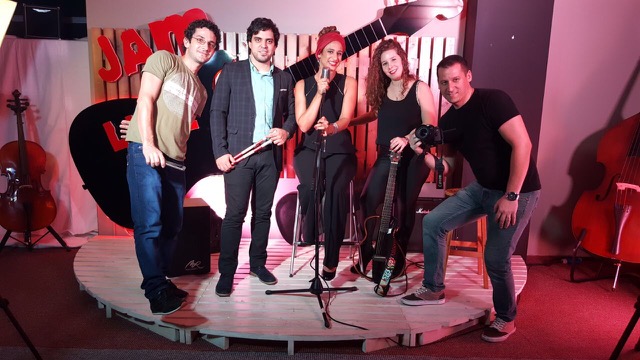
Recording with ‘Pulse and Soul’ -a local band
At the end of Ramadan, I was asked to do some recording for a local band, ‘Pulse and soul.’ The musicians are all teachers at the ‘Classical Music and Arts Institute.’ Using their show equipment and a newly purchased Focusrite Scarlett 2i4 we produced several tracks that can be used for promotional purposes. We also filmed the recordings.
The live music scene in Oman is complicated to understand as an outsider. Laws carefully regulate where and when live music can be performed. International hotels and private ceremonies such as birthdays and weddings are the main platforms away from the Royal Opera House.
After the first set of recordings, it was decided that we should also produce some tracks recorded in a more intimate setting. The drum room at the private music school in Qurum was transformed into a recording studio, and we started recording some different combinations of performances. Using the larger Focusrite Clarett 8 Pre X we started recording multi-track for more post-production flexibility. Of course, this produced much better results regarding audio quality but the downside of this being that more time was required for editing. Trying to fit this around all of our work commitments started becoming increasingly challenging!
Renaissance Day in Salalah
On the 23rd of July, Oman celebrates ‘Renaissance day.’ This is the day that the Sultan of Oman, Qaboos bin Said al Said, came to power in 1970. Various events take place across the Sultanate and the day is a public holiday. To celebrate in style, my friend and Education Manager of the Royal Opera House, Lisa Navach, visited Salalah in the South of Oman.
The trip takes about 1.5 hours by plane or 12 hours by road. We opted for the flight!
Salalah is famous for its yearly tourism festival. This takes part during a season called ‘Khareef.’ The lush green landscape and cooler temperatures are a welcome break from summer in Muscat. Hiring a car meant that we could easily get around and do some off roading to find empty beaches with pure white sand. Bliss!
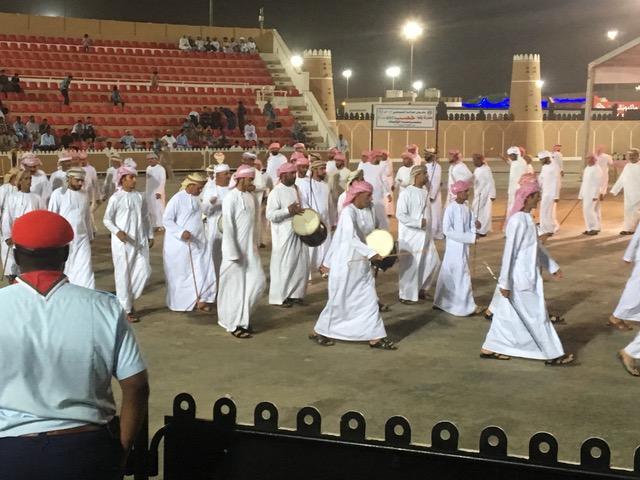
Back in Salalah, the festival was a complete cultural submersion into traditional music and dance of the Dhofar region. Slightly more conservative than Oman, there were few Western tourists, and we really felt that we were experiencing a true insight into a region that feels very in touch with its traditional roots.
All Men, women, and families have different seating areas in the audience for these displays of traditional music and dance. All performances were being transmitted live on television across the Sultanate!
Next week I will travel back to the UK for my annual leave. I’m preparing myself for the reverse culture shock that I am bound to experience back in London! The season at the Royal Opera House commences in September with an exciting programme of Ballet, Opera, and music from around the world.
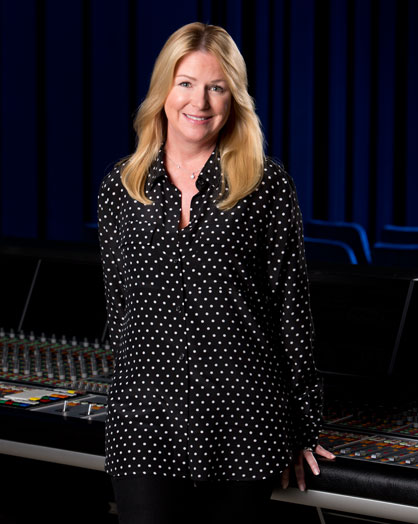
Helping Filmmakers Tell a Story – Deb Adair – Re-Recording Mixer
Deb Adair is a freelance re-recording mixer. Deb has been nominated for an Oscar (for the film Moneyball), has won three Emmys and nominated for an additional five, and has won two Golden Reel awards as Sound Supervisor. In the past couple of years, her film credits include Entourage, Pele, and Keanu.
Deb earned a degree from Syracuse University where she studied film production. She worked in the music industry in Nashville before moving to Los Angeles to pursue a career in sound for film.
April Tucker interviewed Deb about her career
Are you primarily mixing dialog/music? Are you ever in the FX chair?
I have been primarily mixing dialogue and music for the last nine or ten years but have also had the opportunity from time to time to work alongside very talented colleagues as the effects mixer.
What’s the difference between these roles?
Being the dialogue mixer, you are the person who guides the flow of the mixing process.
Give us a little background on how you got into sound, where else you’ve worked, went to school, training background, etc.
I attended Syracuse University in the TV, Radio, and Film Production program, wanting to be involved in filmmaking is some capacity. The classes that focused on sound immediately became my favorites. I started recording bands and mixing live music at some local venues.
Why did you move from music to film? How did you transition from tv work to film? Was it something you were seeking out?
I had always wanted to be involved in filmmaking, so music recording was a good way for me to learn the equipment. I started mixing in TV but had always wanted to work on feature films, and I told this to my manager at Sony at the time, Richard Branca. When an opportunity to do additional mixing on a film came up, like helping pre-dub or updating pre-dubs, Richard would bring my experience up to the clients and with the appropriate approvals I was able to participate in the completion process.
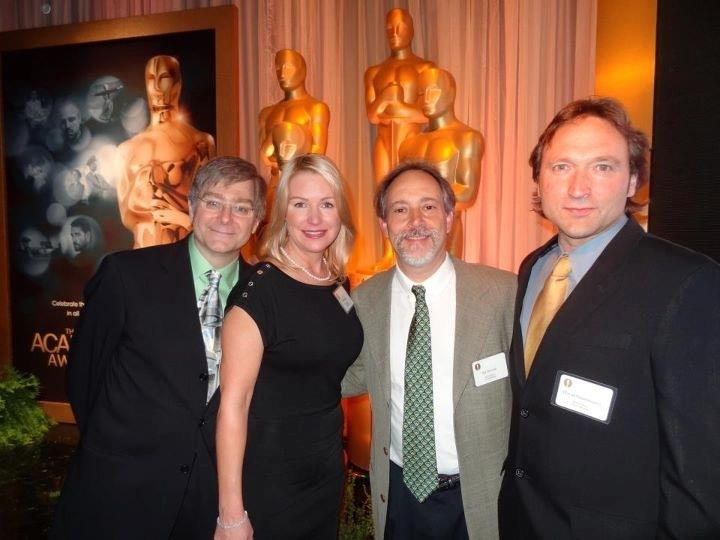
Oscar Luncheon 2012
Can you explain what a re-recording mixer is, the workflow, who is generally on the stage at your mixes, etc.?
There are usually two mixers on the dub stage. Each handles hundreds of tracks of material whether it be dialogue, music or sound effects. We work with the sound supervisor and the picture editor or the director or both (depending on the project) to balance all elements to shape the soundtrack of the film. At some point producers usually come in for playback.
Can you explain the advantage of having two (or more) mixers on a film? How does it make things easier or harder?
Mixing a motion picture is a collaboration of talent and experience learned over many years by both mixers.
Are you usually on the same stage and mixing with the same partner? If not, what dictates who you work with?
Every project is different. We could be predubbing on separate stages at the same time on each of our assigned disciplines and then come together for several weeks of a final mix. I have worked with various partners and on various stages based on client requests. The crew is usually chosen based on past working relationships with the director, picture editor, sound supervisor or post-production supervisor.
What’s your system working with multiple mixers (especially early in the mix or trying to EQ)? Taking turns, using headphones, etc.?
Most of the time we pre-dub the material simultaneously on separate stages then work together on the final stage to blend everything together.
How many stage days do you usually get on a film? How often do you see the director and how much time do you get with him/her? How long do you spend on Atmos, 7.1 vs. 5.1, or stereo mix?
The number of stage days varies based on the release date and the budget of the project. At the time of the final mix, there are so many things happening simultaneously for the director like color timing and D.I. so we will get to spend time with them based on their schedule. Atmos adds some time for deliverables, but a native Atmos mix doesn’t necessarily take longer than 7.1 or 5.1.
Do you do your own pre-dubs or how many people are involved with a mix before it gets to you?
I prefer to do my own pre-dubs. The number of people depends on the project. There is usually one music editor and one or two dialogue/ADR editors.
Favorite plugins?
I’m a big fan of Spanner because it provides a lot of flexibility to adjust separate channels of a single multichannel track.
Any other favorite gear? Are you usually working on the same console?
I’m mostly working on the Avid S6 these days. It’s a great tool. Very intuitive.
Do you think you have to do anything different from your male counterparts on the stage? How about with clients?
No. I think some clients appreciate having a variety of points of view in the room.
Any advice you have for other women and young women who wish to enter the field?
Pursue your true passion. If a new opportunity comes up, volunteer. Be ready to step out of your comfort zone and tackle new challenges.
What path do you see for someone today to get to the type of job you are in?
As a matter of fact, the Academy recently started the Gold program, which is a mentoring program for people interested in film careers. Beyond that, I would say start with an entry-level position and work your way up.
What are must-have skills to do your job?
Being a good listener for the client and understanding what they need. Helping the filmmaker tell a story and achieve their vision is the most fulfilling part of the job.
Are you mixing continuously throughout the year? How many films do you do on average and how much time off?
I’ve been very fortunate to have been busy the past several years, working on four to six films on average.
What is the average time you are working on a project?
Anywhere from one week to eight or nine weeks usually depending on budget.
Is there a time you would be working on two at once?
Schedules sometimes overlap if you are doing temp dubs for previews or creating deliverables like the home theater mix.
What is the difference between mixing for film vs. TV?
Mostly schedule, TV also has strict parameters for levels and compression, etc. for broadcast and streaming.
Any comments on work/life balance? How do you not burn out or keep things interesting?
I love my job, and I get to work with a great variety of really talented people. I have a husband who is very supportive and understanding. When I have time off, I do lots of yoga.
What do you like most about being a re-recording mixer? What do you like least?
What I love most about my job is collaboration. What I like the least is traffic!!
What is your favorite day off activity? Any other hobbies or interests?
When I’m off, I love traveling with my husband, and we love snow skiing and motorcycle riding.
What has been one of the most challenging or rewarding films you have worked on?
One of the most challenging films I’ve worked on is also the most rewarding. While mixing MONEYBALL, there were many vintage and archival recordings from real broadcasts and baseball games. There were also new recordings with specific information to help tell the story that was much “cleaner” than the archival recordings so we needed to blend the two seamlessly so that the audience wouldn’t notice the difference. This was a challenge, but it also landed my team an Oscar nomination for sound mixing.
Where: WRIR-LP 97.3 FM, 1620 West Broad Street, upstairs.. Richmond, VA 23220
How: No charge – please enroll at carololson@wrir.org
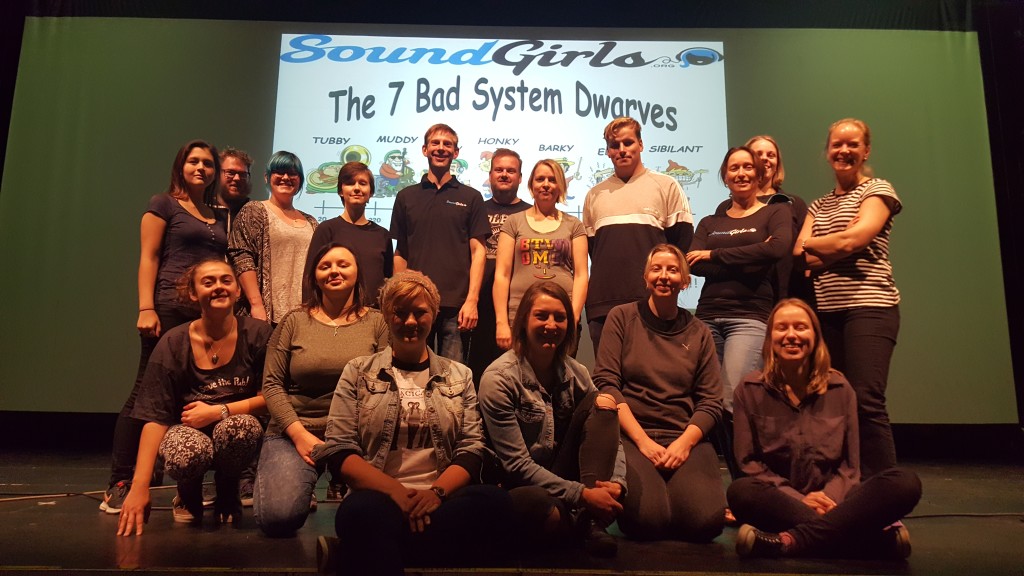
About RVA Women in Audio Open House: On Saturday, August 12th from 11am – 3pm, at the studios of WRIR-LP 97.3 FM, RVA Women in Audio is hosting a Career in Audio day in conjunction with SoundGirls.org. We will have workshops and networking. Come and meet WRIR’s awesome group of audio engineers, show hosts and producers, board operators and technicians. Women are rocking audio in Richmond! Come learn, meet and network.
Workshop A –(45-50 min) Mock Radio recording in Studio B with. Interviewing Skills with Whitney Whiting (and Sara Suarez)?
Workshop B – (10-20 min) DJ show and tell with Fontaine (host, What the Fontaine!?)
Workshop C – (35-45 min) Editing with Sonia Silveira (Producer of Prose & Cons). Production Room
Workshop D – (30-45 min) Live editing in Studio C with Caroline Griswald (aka Princess Beet Farmer)
Workshop E – (30 -45 min) On the Street Field Recording with Cameron Robinson (Production Coordinator)
Workshop F – (45-50 min) Different mics! Shotgun to Lav with Sara Suarez (Filmmaker, sound designer)
Networking – Meet local WRIR Djs, producers and volunteers making waves (SOUND WAVES LOL) in Richmond, VA!
About WRIR FM: WRIR LP 97.3 FM, a nonprofit, listener-supported radio station, is operated by the Virginia Center for Public Press, a 501(c)(3) Virginia corporation, and has been on the air since January 1, 2005. A true community radio station, WRIR is committed to presenting underrepresented news, views, and music. The station is operated solely by volunteers, and by charter, can never be purchased by any non-local entity. To learn more about WRIR programming, operations, and volunteer opportunities, visit www.wrir.org.
Shout-Out to our Lighting Friends
I know we are all audio friends here, but I have to take a moment to talk about one of our counterparts, a counterpart who is always involved in live shows. The setup can be very simple or incredibly detailed, but they are often considered competitive or our frenemy in the field. Many times we are on the same timetable, with a lot to do and in a small space, working on top of each other to accomplish a show.
As part of opening a new building, I have had to face this counterpart head on. My least favorite activity to do in tech: lighting. I mean, seriously, I’m good with just hearing the show and not seeing it!
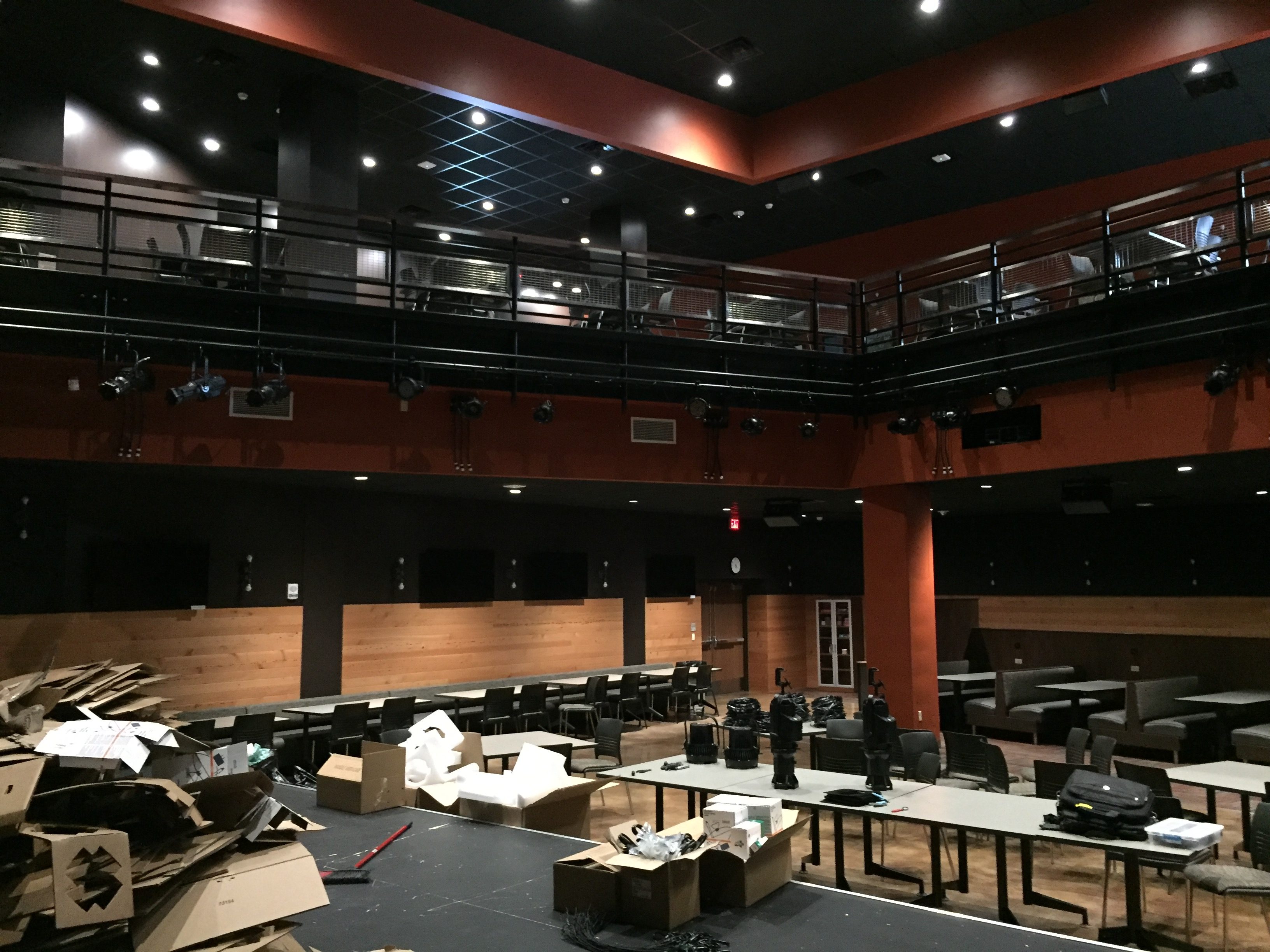
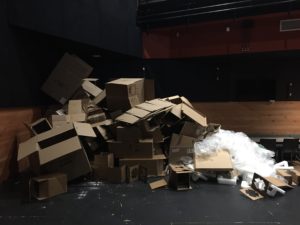
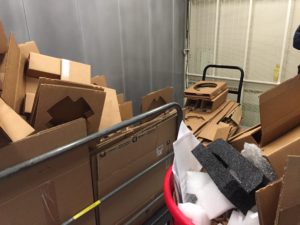
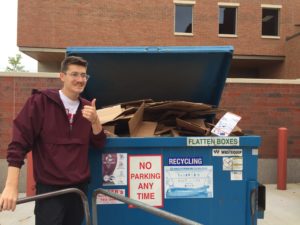
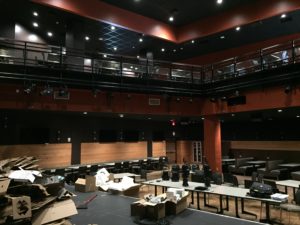
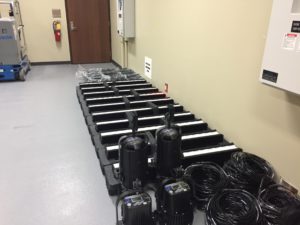
From recent firsthand experience, I can tell you lighting is a lot of work! For the first time, I had to work through spec-ing, ordering and, now, installing a full lighting system for two venues. To give you an idea of how much work this is, it took three loads just to get all that trash out!
In all seriousness though, I learned that our counterparts in lighting work just as hard to master their craft as we do. The diversity in lighting tasks resembles the variety in audio – except, instead of mic variations, different styles of speakers and tuning, it’s lamp differences, hundreds of fixture options and focusing.
As I have been working on this install, I have realized that I can’t imagine what it would be like to set it all up, wire, address, and program a rig like this every day on a large-scale tour. Let alone troubleshooting, with so many fail points and everything at least 20 ft. over my head, once it’s up. Just like audio, the details matter. There are endless options on how to do it, what it looks like, and how to please the audience. I’m happy to dead-hang some lights, make sure they work, and then let my students go to town.
Now that the products have begun arriving, it’s expected to take two weeks to complete the install, followed by spending time learning the new lighting board (which could take months to master). Major props to our counterparts, the lighting folk! I’m glad someone likes to do it.
P.S. I really did work with some lights – not just with a bunch of boxes.
Why We Don’t Use Buss Compression
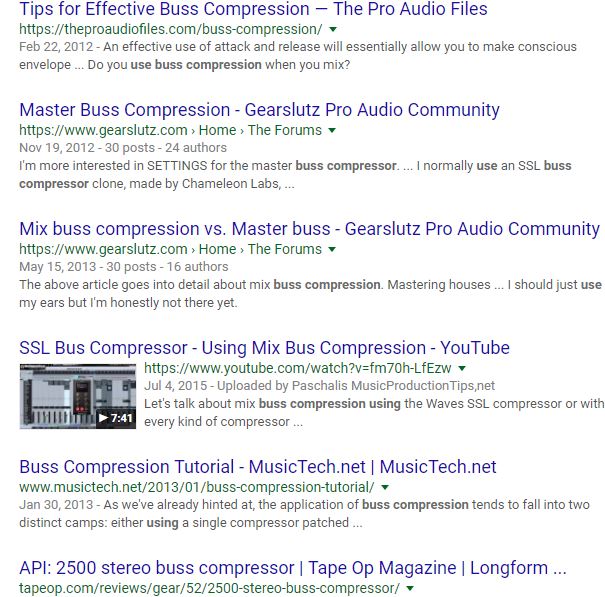
Buss compression (or mix buss compression) is a hot topic. It’s taught in audio schools, videos and tutorials, mentioned in textbooks, blogs, forums, and podcasts. For such a covered topic we rarely hear about why or when it SHOULDN’T be used.
Film/tv mixer April’s philosophy
I quit doing mix buss compression years ago for a single logistical reason: Most film and television work requires delivery of mixes and stems (dialog, music, fx, voice-over). If someone needs to edit between the mix and stems for whatever reason, it has to be seamless (other than needing a limiter on the master and maybe a small crossfade). These stems go on to have a lot of uses – foreign versions, promos, advertising, conforms/changes like airline or television versions.
Most of the music I mix is for film or tv which is a similar scenario. Music is delivered (to the mix stage) as a mix and stems of similar tracks summed together (such as vocals, strings, piano, guitars, percussion, pitched percussion, lead instruments, etc. ). Stems exist to repurpose music, also. For example, composed music may get reused in different episodes of a series but versions of different lengths. It’s easier to re-edit a music cue with stems because your reverb decays are clean, vocals are isolated from the mix, percussion is separated, etc.
I recommend anyone who mixes music to work with stems in mind. Even if a band is just making an album and not thinking about licensing or placement opportunities, it’s a simple step that will prevent major headaches and expenses down the road. If it’s time-sensitive and you can’t deliver what is needed it could mean the opportunity – and the money – goes to someone else. Twice I’ve had songwriters I recorded/mixed songs for ask for stems TEN years later because a song was placed in a film. In the digital world, there’s no guarantee your session will open, audio files won’t be missing, and plugins recalled correctly when that much time has passed (just look at .sd2 – a format that was standard at one time but won’t even open in Protools today). I now archive stems for everything I work on.
When do I use buss compression? When it has a clear purpose. Sometimes there’s a specific sound I’m looking for in a stem that can only be created with buss compression (compressing a drum kit is a good example). Sometimes I use it to help speed up dialog mixing (in instances with tight turnaround times). Buss compression can help with dialog intelligibility, too, so I might use it on an interview stem or for a news piece. In some cases, buss compression helps with DSP usage or simplifying plugins and automation – like bussing all your background vocals to an aux with processing versus a plugin on each individual channel.
On the occasions, I do use buss compression or processing I set it at the beginning of the mix, and once I’m working, I generally don’t tweak again. This is partly due to gain staging – when you make compressor adjustments it can affect the output level which triggers the buss compressor differently which means further adjusting. Compressors only get a sound in the ballpark – it takes volume automation/fader riding for nuance. It’s taken a lot of mixing with buss compression settings I don’t like to figure out what I do like. It may seem counterintuitive to finish a mix with something that isn’t working but sometimes making a minor adjustment to a buss compressor causes as many problems as it solves. That’s one of the hardest parts of mixing – to know when to leave it be!
Music mixer Ryan Tucker shares this philosophy
After fighting with stereo buss compression for many years, I’ve mostly abandoned the practice altogether. Now, I tend to subgroup as much as possible so that my entire mix is limited to a handful of stereo faders. I often compress each with the most appropriate buss compressor and settings for that sound rather than leave all the heavy lifting to a final stereo buss compressor. This gives me more dynamic control and a more transparent compressed mix then would be achievable with only a stereo buss compressor.
Further complications with stereo buss compression present themselves when you decide to add the compressor to an already leveled mix. Compressing the stereo buss after getting the levels will completely change the mix you just spent so long tweaking thus requiring you to remix your levels into the buss compressor you just added. It is much harder to do a mix then compress it rather than to mix into the buss compressor from the beginning. Even then if you make an effort to begin buss compressing early on you may have to readjust the compressor settings to meet the requirements of any new tracks inserted. You may find that the rhythm section sounds great into the buss compressor until you’ve added all tracks and drastically increased your RMS level. And so it goes, on and on, a constant battle. Like a bowl of jello, push one end and the whole things moves around and jiggles. Better to do your dynamic reduction on individual musical parts than leave it all to the buss compressor.
On top of all the aforementioned complexities, one can’t just put any old compressor (hardware or plugin) on the mix buss! Most lack the necessary features to treat the stereo buss appropriately. For example, buss compression (or really any stereo compressor) must be very sensitive to the stereo image of the instrument or mix. Some stereo compressors reduce stereo image, create imaging unbalanced to one side or the other, or pump every time the kick or bass hits.
There are different ways designers address this. Many stereo compressor plugins implement stereo difference detection and MS techniques to avoid image steering. In addition, many implement filtering in the sidechain to reduce the low-end influence over the gain reduction circuit. This is what prevents your kick (center of the stereo field) from pumping the wide panned guitars, reverbs or whatever content is found in the sides of the stereo field. Shadow Hills Mastering compressor implements stereo difference detection along with providing a side chain high pass filter. Fairchild 670 is a little more blunt in giving the user control over center image and sides by implementing a mid-side matrix. Channel 1 becomes center image compressor while channel 2 compresses only the sides of the stereo image. This implementation requires a little more user understanding and responsibility to get things compressing correctly.
Either way, a stereo compressor may or may not call out that this implementation is taking place or how they are doing it – that it sums the side chain signals rather than just triggering off the L or R side, or the loudest side, or a sum of the sides; that gain reduction focuses on the peak or the average signal levels; that the rate of gain change is fast (ex: VCA style) or slow (ex: El-Op style); that non-user accessible filtering or EQ bumps are in the sidechain; that internally program dependant release switching is occurring, etc, etc. Just as one can’t judge a book by its cover, one shouldn’t judge a compressor by its interface.
Buss compressors exist because tracking compressors aren’t very good at compressing a mix. So, if you’re going to use buss compression, make sure it is specifically designed to be a buss compressor and to operate on stereo signals appropriately. Keep in mind, people selling compressors would rather sell two monos then just one stereo. Even though they say “Sure – side-chain two of our mono compressors on your buss”, you definitely need to take into consideration whether you should use it on your buss or whether you should do some research and find an appropriately designed unit to serve all your master buss needs.
In summary, after all of this discovery, I personally decided to move my dynamic reduction downstream, off the mix buss and onto my tracks and stems. If I use stereo buss compression at all it’s only musically reducing about 2-4 dB of gain at most, and is really just meant to glue the movement of the tracks together into a unified stereo program.
Ryan Tucker: Ryan is the owner of TuckerMix a custom music mixing service for independent artists, composers, producers, and labels. In addition to mixing music, he has served many world-class music-audio companies in software and hardware product development.
April Tucker: April is a Los Angeles-based re-recording mixer and sound editor who works in television, film, and new media. She holds both a Master’s Degree and a Bachelor’s Degree in Music/Sound Recording. April enjoys doing educational outreach such as writing for industry blogs, giving lectures and presentations. April can be contacted through her website, www.proaudiogirl.com.
Denmark – Sound System Optimization Training Seminar
Sound System Optimization Training
Come learn best practices for tuning sound systems with measurement and operational concepts through a FFT-based (dual-channel) acoustical analysis software platform. The seminar will be taught by
2016 Seminar
Theis Romme – Freelance engineer for several companies with Meyer Sound Inventory. Theis is a most appreciated member of the Meyer Sound family and is also considered an expert on SIM3 as well as Smaart V7 & V8.
Rasmus Rosenberg – Freelance sound engineer and a super user on Smaart, as well as beta tester for Smaart products before they hit the market.
We recommend participants to download ‘Smaart V8 User Guide’ and read before attending the training. Please bring PC/notebooks for both dates. Participants will learn to measure and analyze the frequency content of audio signals, study timing and frequency response of electro-acoustic systems, and perform basic room acoustics analysis. Everybody regardless of experience are welcome to participate! This includes students and newcomer’s in the industry
Location: Amager Bio
Øresundsvej 6, 2300 København S, Denmark
The total cost for this event will be €100 and this includes hot drinks, snacks & lunch on both days.
September 19 – Noon till 8pm (CET)
September 20 – 10am to 6pm (CET).
The maximum number of attendees will be 20. Be sure to sign up early as our events tend to sell out. If you require financial aid please contact us at soundgirls@soundgirls.org
Airport: Take the metro to ‘Lergravsparken’, walk 100 meters south of Østrigsgade, take a right turn on Øresundsgade. The venue will come up on your left hand side after 500 metres.
Centrale station: Use the exit to Tivoli. Take bus no. 5A towards Sundbyvester Plads/Airport. Get off after 9 stops at Øresundsvej. Continue 50 metres. on Amagerbrogade. Take a left turn at the intersection and Amager Bio will come up after 50 metres.
Accommodation:
Private (free, but you might have to share room with other attendees and we only have very limited access, email mallekaas@gmail.com to make arrangements)
This is an exclusive offer to members of SoundGirls. If you are not already a member, please visit our website to sign up.
Radio Mics and Foley – UK SoundGirls Workshops with the ASD
On a warm day at the end of June, the UK chapter of SoundGirls had our first shared events with the Association of Sound Designers, in the form of two workshops about very different and equally fascinating sound skills.
First up “Pin the Radio Mic on the Actor,” given by sound engineer and expert “mic hider” Zoe Milton. A vital skill for anyone wanting to work in theatre sound, fitting radio mics is also important for film and TV location sound and in any situation where you want to conceal a body mic on a performer.
Zoe started by taking us through a brief history of the use of radio mics in the theatre. Back in the late 1990s and early 2000s, bandwidth restrictions limited the number of RF channels which meant that even large West End shows had far fewer transmitter packs than cast members. Les Miserable shared sixteen packs between their cast, which resulted in upwards of 100 pack swaps per night!
Fortunately, advancements in radio mic technology and a reduction in the costs of RF licensing in the UK means this doesn’t happen as much these days. Of course, Sound No. 2 and No. 3’s are still expected to be able to swap mic packs within a matter of minutes if necessary, especially on large shows.
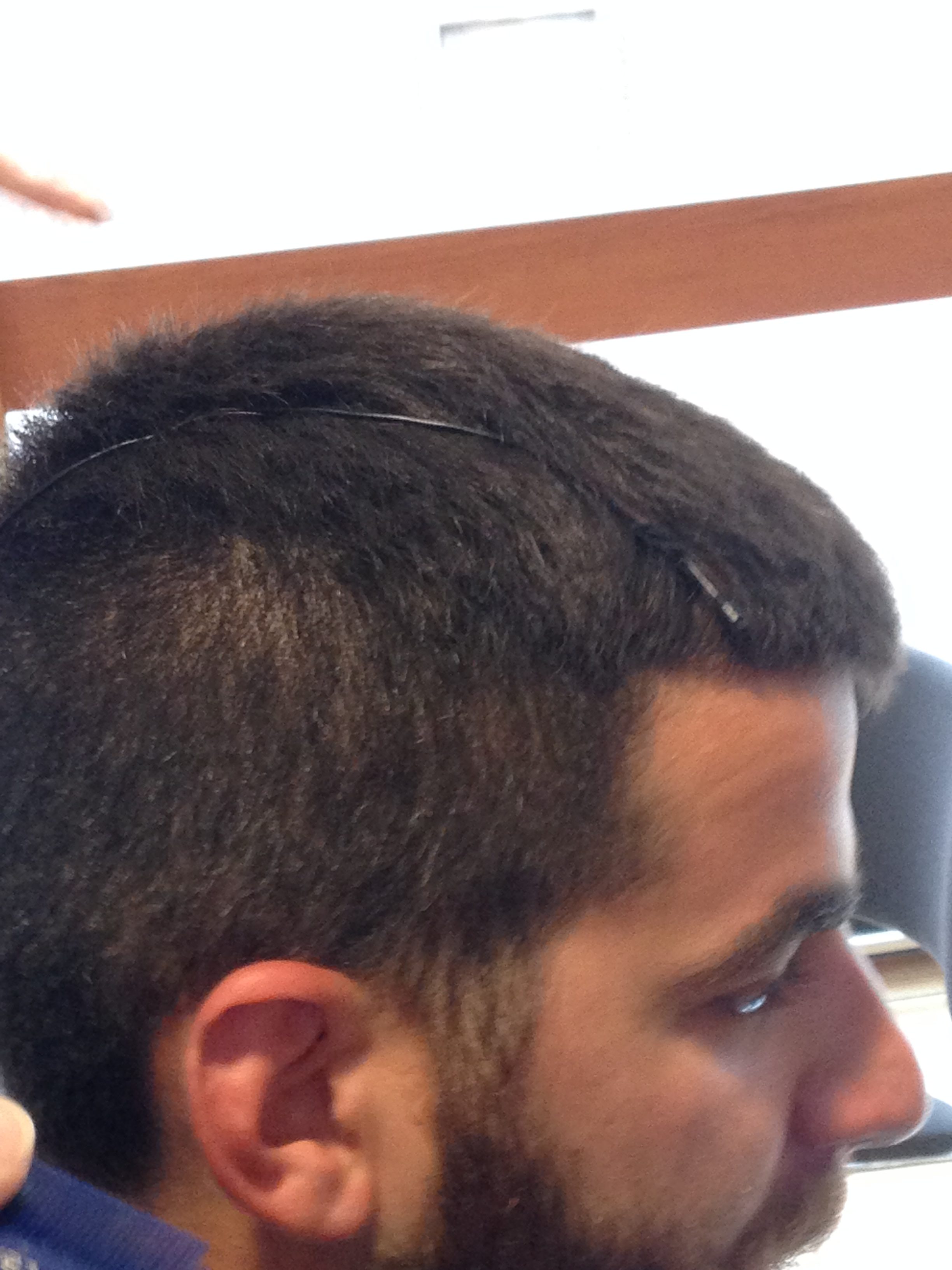
Next, we had a closer look at some of the various mic techniques used to accommodate different hair lengths – including no hair – and performance types. Zoe reminded us that that fitting a radio mic is as much about teamwork and communication as it is about technique. You work in very close proximity with the performer, and you have to make both the experience and the position of the mic and pack comfortable for them. You also have to make final decisions on the mic position that will provide the best and most consistent sound for your Sound No. 1 or sound operator. There can be a big difference in the sound of a mic fitted at someone’s hairline, and one fitted over an ear.
As well as the performer and the Sound No. 1/sound op, radio mic fitters also have to take potential costumes, hairstyles, wigs, and hats into consideration. Zoe emphasized the importance of speaking with costume and wig designers as early in the production process as possible so that you know where you might be able to hide a mic and mic pack. We looked in detail at positioning mics within hats and discussed solutions for performers with no hair (creating an ear “hanger” works well). Zoe also talked us through how to hide mics and mic packs under wigs. I was particularly impressed with one solution that Zoe and a colleague devised for an opera singer who shed his clothing after his entrance, which meant it wasn’t possible to put his mic pack in his costume. Instead, they had a half-wig created to blend in with his natural hair and give them enough volume to hide his mic pack on his head, within his hairstyle.
After giving us a rundown of the best accessories to use, including the benefits of using wig clips over the tape and how to effectively colour a mic cable, we had the chance to get up close and personal with fitting a mic ourselves.
I came away from the workshop with a much clearer idea of the solutions available when fitting radio mics, as well as feeling slightly guilty about how much I rely on tape (more wig clips, I promise, Zoe!).
In the afternoon, Tom Espiner introduced us to the fascinating world of Foley sound creation. Tom is an actor, puppeteer, theatre practitioner, and Foley artist, who has provided Foley for film and TV as well as live opera and theatre.
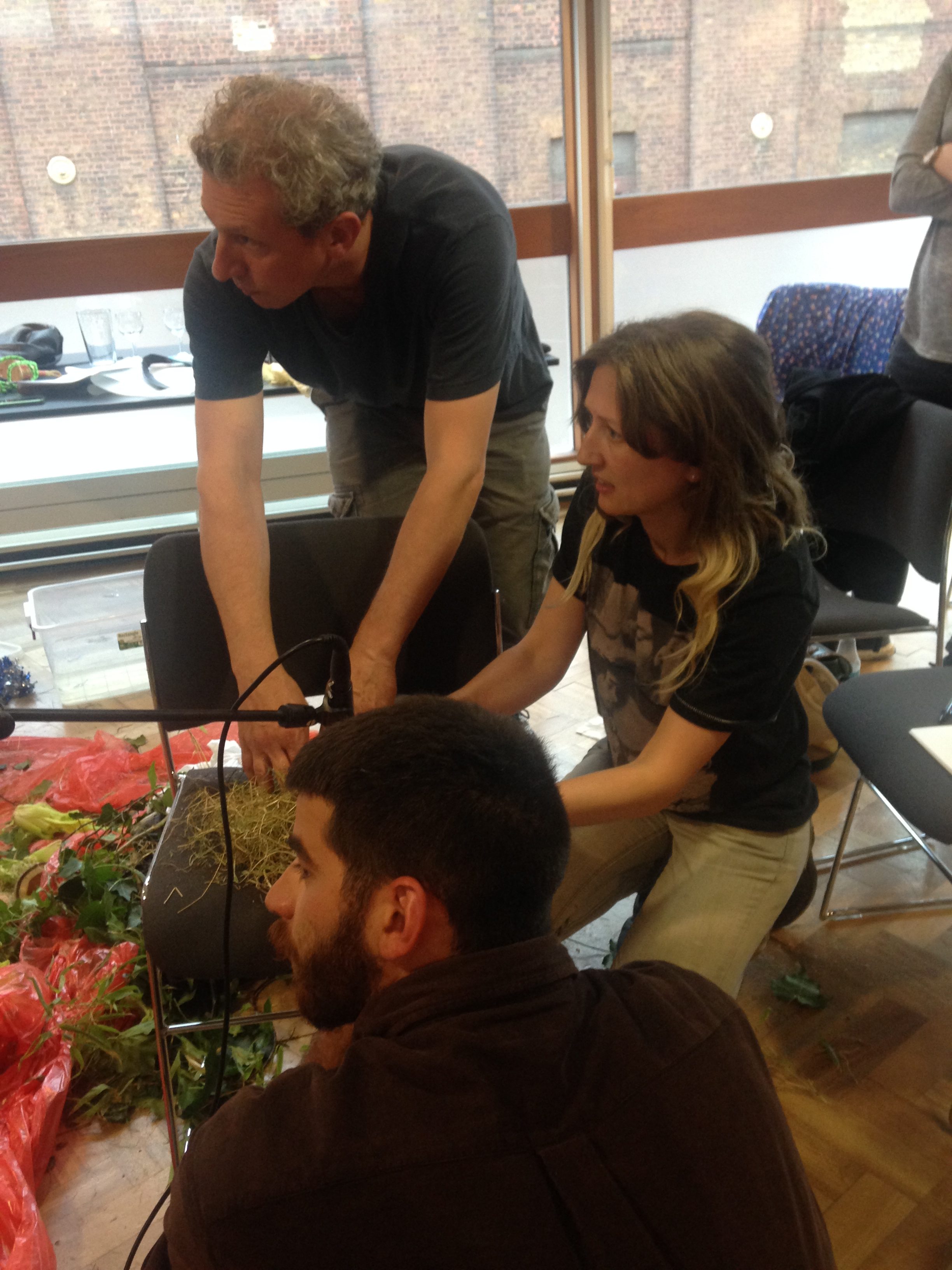
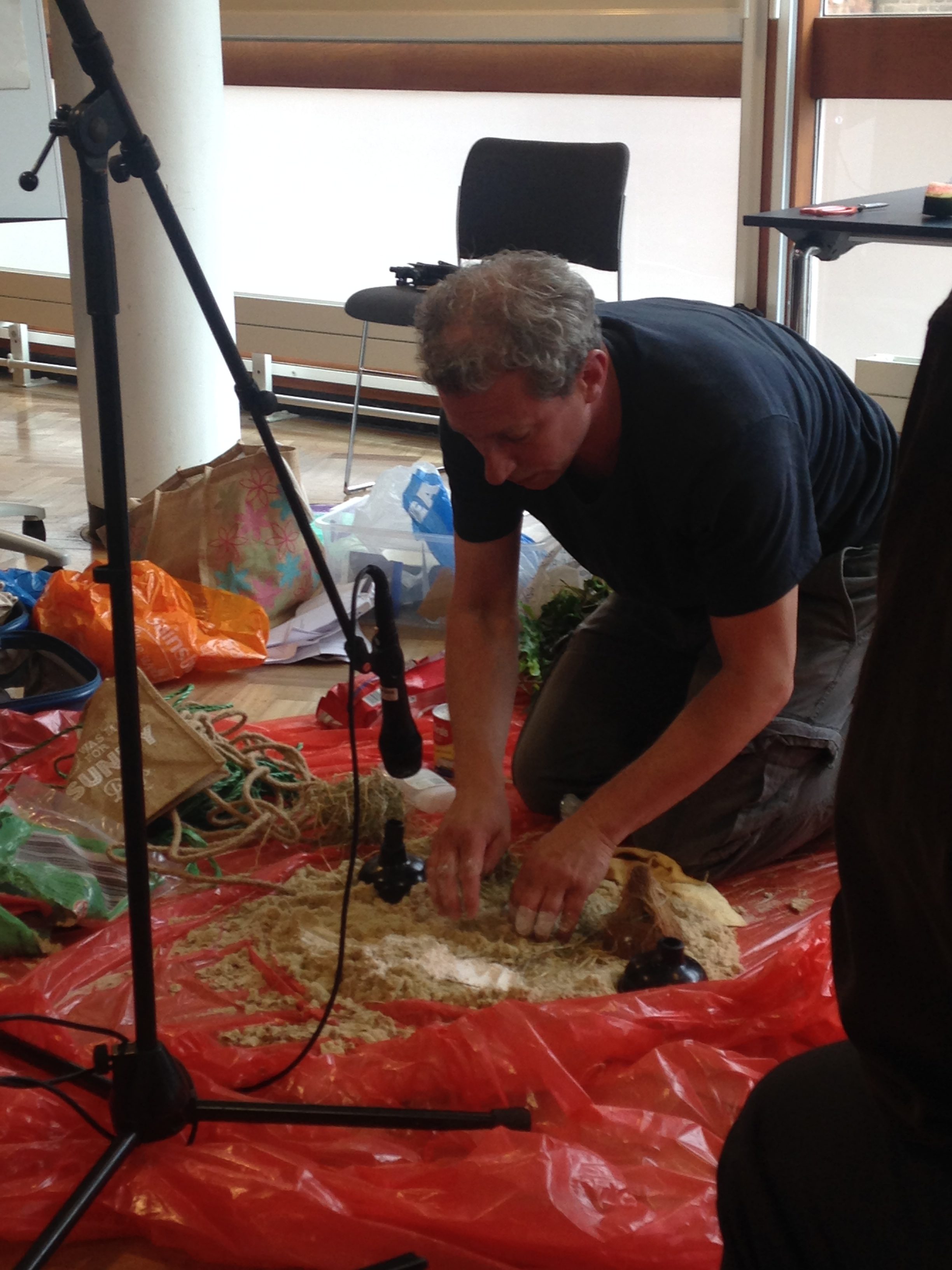
With the technical assistance of Gareth Fry, Tom demonstrated the process of recording Foley, using various objects and textures to build up multiple layers of created sound effects. It was fascinating to see Tom take everyday objects such as twine and rubber bands and turn them into snakes sliding across rocks and flicking their tongues.
After we’d seen the expert do it, it was time for us to have a go. We had a lot of fun adding horse hooves (a classic) and saddle noises to a scene from The Revenant and learning what might have gone into making the sound of a dinosaur hatching from Jurassic Park.
Later on in the workshop, we looked at adding live Foley to stage plays, and I learned how difficult it is to keep one hand making the sound of a babbling brook while the other creates splashes in sync with another actor, as they mime washing their hands. In one of the most enjoyable exercises of the day, all of us contributed to creating a Foley soundscape to illustrate a particularly descriptive piece of text, creating the sounds of a deep underground lake in a mysterious land.
As well as being very informative, both workshops reminded me how important it is to get out from behind your computer or console, try something new and get your hands wet literally, as it happens. I think all attendees left inspired to try new techniques and find new ways to make sound.
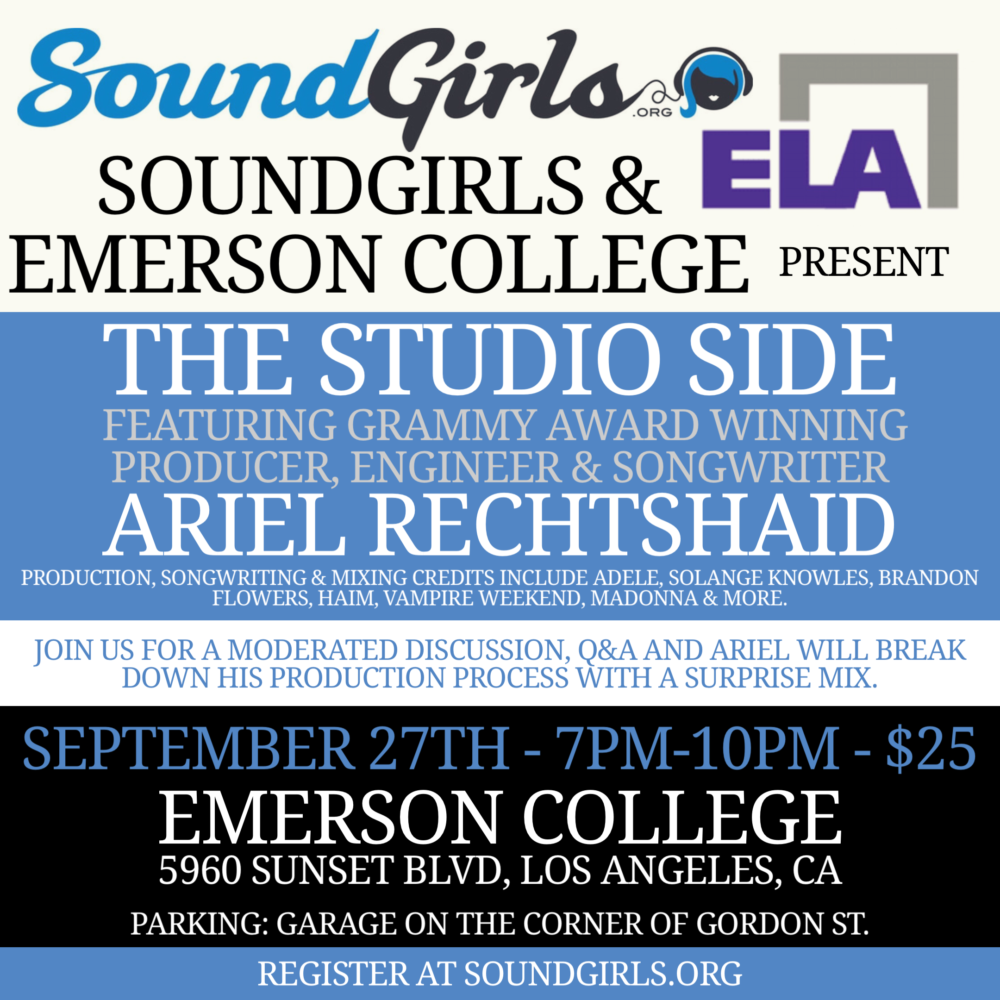
The Studio Side – Ariel Rechtshaid – Feat Grammy Award Winning Producer/ Engineer/ Songwriter
Join us for a moderated discussion, Q&A, and Ariel Rechtshaid will be breaking down his production process with a surprise mix.
Ariel Rechtshaid is a record producer, audio engineer, mixing engineer, multi-instrumentalist, and songwriter. His production, songwriting, and mixing credits include Adele, Solange Knowles, Brandon Flowers, HAIM, Vampire Weekend, Madonna, and more.
Location:
Emerson College
5960 Sunset Blvd, Los Angeles, CA 90028
Space is limited and is open to members of SoundGirls and Students of Emerson College.
The Songwriter’s Secret: The Circle of Fifths
The skills involved in producing and engineering music are different to the ones required to write and play it, but that does not say there is no overlap. Even the simplest recording job requires you to be able to capture the feel of the music, and the vision of the musicians, on record. All of the technical know-how in the world won’t matter if you have a tin-ear for the music, and so it’s helpful to make sure your knowledge of producing and engineering is backed up by an understanding of musical theory.
One of the most common examples of musical theory that is crucial to the creation of music is the circle of fifths. You may have read, or heard, someone say of a song: ‘It uses the classic I-IV-V-I progression.’ Unless you are already familiar with intermediate musical theory, this may well have baffled you; after all, you know that the scale runs from ‘A’ to ‘G’, and you know that between the notes are ‘sharps’ and ‘flats’, but that’s it. The answer to this is that ‘I-IV-V-I’ is a progression, not from one specific note or chord to another, but a pattern that repeats in terms of spacing, whatever the ‘root’ note or chord of the sequence. This progression can be explained by the concept of the circle of fifths, and in a recording situation, this could be vital knowledge. The reason is that music is written to evoke or elicit certain feelings and emotions, and there are methods for doing so, compositionally speaking; an engineer’s job is to ensure that the recording matches the vision, and an understanding of how the music works makes that job easier.
I-IV-V-I
Music is basically maths- that’s the first thing to remember. Notes sound pleasant, or consonant, together because of the mathematical ratios between them. A ‘fifth’ is the term for a specific interval between notes. To stay with the example of ‘I-IV-V-I’- mainly because it is the most common progression in popular western music, with literally thousands of songs based up in it- imagine that the starting chord of your song is a C-major; that is ‘I,’ your ‘root’ chord. ‘IV,’ your next chord, is F-major and ‘V’ is G-major. If however, the key of ‘C’ is not right for your voice, be it either too low or too high for you to sing comfortably, the ‘I-IV-V-I’ pattern can be easily transposed. If you want to sing in the key of E-major (I), then the next chord will be A-major (IV), followed by B-major (V). The progression will sound the same, only in a higher or lower key; this is because the intervals between the notes are the same. The same goes for other common progressions, such as I-V-VI-IV; if it is denoted by Roman numerals, then it is all about the intervals and can be transposed into any key.
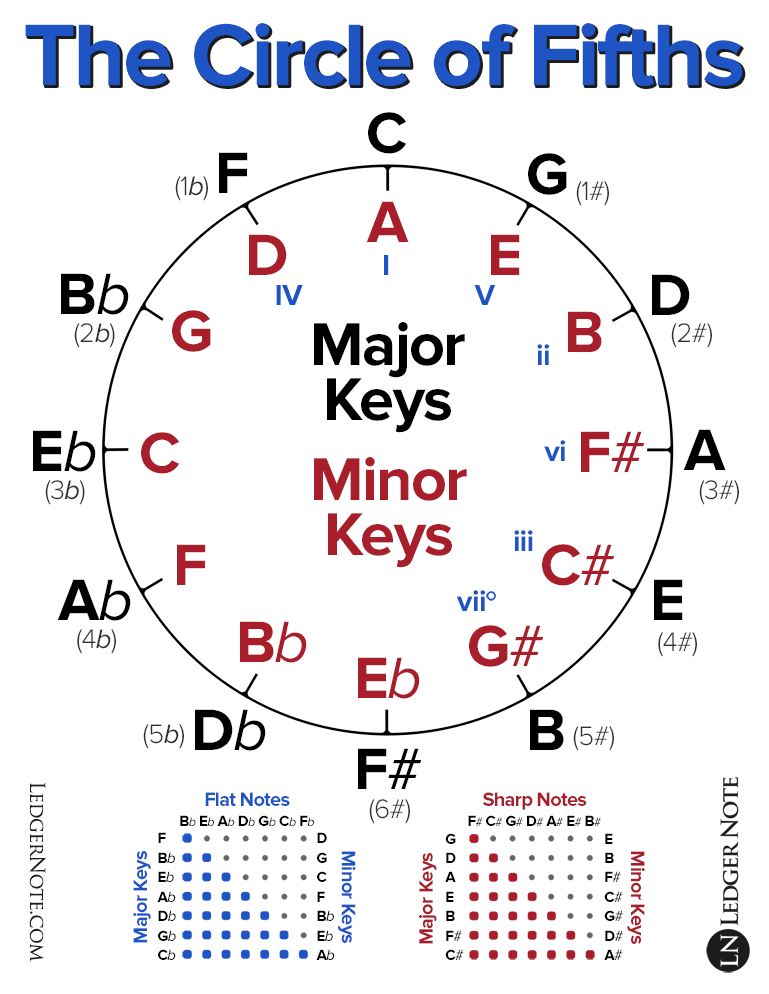
The circle of fifths is so called because the nature of the musical scale, running from A to G, means that you can start on one note and run through a sequence of ‘perfect fifths’ which will take you through each note and back to the beginning, in a circular motion, without experiencing any dissonance. It is also because this relationship can place, visually, on a circle; this diagram makes it easy to locate both the relative minor chords as well as the ‘IV’ and ‘V’ of any root note or chord. A simple trick to remember is that, on the circle of fifths diagram, the ‘IV’ of any root note is one step anti-clockwise, and the ‘V’ is one step clockwise.
There’s a great deal more theory behind this, and it becomes increasingly complex and esoteric, but if you want to understand how songs have been put together,- an important part of the recording process- then a basic understanding of the circle of fifths will be beneficial. The diagram, in particular, will show you consonant choices about chord progression, whilst also showing you the relative minor chord, which is always a favorite option for a middle-8 or B-section. As you better understand how the music works, your abilities to successfully capture its spirit will also increase.
By Sally Perkins
X
We use cookies on our website to give you the most relevant experience by remembering your preferences and repeat visits. By clicking “Accept All”, you consent to the use of ALL the cookies. However, you may visit "Cookie Settings" to provide a controlled consent.
This website uses cookies to improve your experience while you navigate through the website. Out of these, the cookies that are categorized as necessary are stored on your browser as they are essential for the working of basic functionalities of the website. We also use third-party cookies that help us analyze and understand how you use this website. These cookies will be stored in your browser only with your consent. You also have the option to opt-out of these cookies. But opting out of some of these cookies may affect your browsing experience.
Necessary cookies are absolutely essential for the website to function properly. These cookies ensure basic functionalities and security features of the website, anonymously.
Cookie
Duration
Description
cookielawinfo-checkbox-analytics
11 months
This cookie is set by GDPR Cookie Consent plugin. The cookie is used to store the user consent for the cookies in the category "Analytics".
cookielawinfo-checkbox-functional
11 months
The cookie is set by GDPR cookie consent to record the user consent for the cookies in the category "Functional".
cookielawinfo-checkbox-functional
11 months
The cookie is set by GDPR cookie consent to record the user consent for the cookies in the category "Functional".
cookielawinfo-checkbox-necessary
11 months
This cookie is set by GDPR Cookie Consent plugin. The cookies is used to store the user consent for the cookies in the category "Necessary".
cookielawinfo-checkbox-others
11 months
This cookie is set by GDPR Cookie Consent plugin. The cookie is used to store the user consent for the cookies in the category "Other.
cookielawinfo-checkbox-performance
11 months
This cookie is set by GDPR Cookie Consent plugin. The cookie is used to store the user consent for the cookies in the category "Performance".
viewed_cookie_policy
11 months
The cookie is set by the GDPR Cookie Consent plugin and is used to store whether or not user has consented to the use of cookies. It does not store any personal data.
Functional cookies help to perform certain functionalities like sharing the content of the website on social media platforms, collect feedbacks, and other third-party features.
Performance cookies are used to understand and analyze the key performance indexes of the website which helps in delivering a better user experience for the visitors.
Analytical cookies are used to understand how visitors interact with the website. These cookies help provide information on metrics the number of visitors, bounce rate, traffic source, etc.
Advertisement cookies are used to provide visitors with relevant ads and marketing campaigns. These cookies track visitors across websites and collect information to provide customized ads.