Empowering the Next Generation of Women in Audio

Join Us

The Versatile Engineer: Freelancing in Post-Production

In 2017, I answered some questions for SoundGirl Kelly Kramarik, a student in the Recording Arts program at UC Denver for her thesis about versatility in the changing world of audio.

Do you consider yourself to be a master of one type of audio engineering or do you regularly practice different trades?

I would consider myself a master of post-production sound – which means I could work as a re-recording mixer, sound editor, music editor, score mixer, Foley engineer, sound designer, or dialog editor. Some jobs I’m hired to do a bit of everything and other jobs just one specific role (sound editor or score mixer, for example). Being versatile is important.

In post-production, I’d say people consider themselves masters of certain types of content (in addition to a trade). There’s mixers or editors who specialize in commercials, promos, episodic tv, reality tv, major film, indie film, etc (at least in Los Angeles).

How long did it take you to obtain your current professional status?

This is a tough question because we sometimes don’t have clear job statuses. A good analogy would be an actor who doesn’t land many gigs but still; auditions and takes classes and pursues it as a career while having another job. That person can still say he/she is an actor.

I was a mixer (by title) after three years in the field but at that time I did other audio-related gigs to make ends meet. As a “mixer” working as an employee at a studio I had other responsibilities. I remember weeks where I spent a day recording ADR or voice-over, a couple of days mixing, some time in the machine room or assisting, and sometimes selling stuff on eBay for the studio. It was probably five years into my career when I was mixing primarily and no longer doing other side gigs.

As an independent contractor, how many different companies/clients do you work with on a regular basis?

“Regular basis” is tough cause clients come and go. When I was totally freelance I’d have ten or more clients a year; now I have a stable mixing job and 2-3 additional clients. As a contractor, you don’t want to take too many clients cause if they call to book you and you aren’t available or can’t accommodate them they quit calling. You have to balance clients who hire you once a month with clients that hire you for a month straight but never hire you again.

For me, it’s more about finding clients whose schedules will work together versus having regular clients. I’ve worked for people who don’t mind if I work on other projects during my downtime. In those cases, if I’m on standby (waiting for materials to show up or waiting for client approval) I can edit or mix another project. I’m essentially billing two clients at once for my time. I also charge a four hour minimum for on-site work with my freelance clients. If it takes an hour to get to a studio and you only work an hour it’s a lot of lost time.

What have you found to be the best way to market yourself?

Make friends with other mixers and engineers and maintain relationships with past colleagues and clients. I have a couple of groups of friends/colleagues who will recommend each other for work when they aren’t available or need help. I hire them when I need help or have a cool project and they do the same for me.

Do you find yourself needing to learn new skill sets to stay afloat financially?

Not now – but the first few years of my career I had to diversify to make ends meet. I relied on other skills – such as classical music recording and quality assurance testing for audio products – to fill in the gaps and help pay the bills. Over time I had more mixing work and needed less of those other gigs.

For someone coming into the field today, it’s absolutely necessary to have different revenue streams to sustain, though.

How did you move up in your career?

In a lot of ways career success and “moving up” has not happened how I thought it would when I was in school. For years I looked for opportunities that would advance my career and then I hit the point where the next step up looked to be overly demanding, political, or self-sacrificing. Now I don’t want to sacrifice my health or my relationships overwork. If my kid is sick I can take the day off work without concern and I couldn’t do that in a lot of my old jobs. This job probably wouldn’t have been my idea of “success” until my priorities shifted.

The people I find the most discouraged in the industry are the ones with specific expectations of what they want their career to be (versus going where the work takes them).  I never planned to get into post-production or to be a mixer but it’s turned out to be a great fit. I thought I’d be a sound editor because I wanted to work alone. Watching other mixers looked stressful! But, I was always open to an opportunity to learn something new. When I was in the mixer chair to learn I really enjoyed it and had the skill set to thrive. You never know where things will take you.


Breaking Tradition – Brinda Sreenivas

Brinda Sreenivas is a Freelance Sound Engineer from India. Born in Bangalore – India, her early life was filled with music, teaching herself to play piano by ear but this fell off when her parents were unable to send her to piano lessons. Her passion for the music industry never died even though she knew she was never going be a musician.

Raised to be a strong woman her parents were very supportive in whatever she wanted to do with her life, which is different to the traditional ways of India. Her mother in particular never told her that she couldn’t do the same stuff that guys could do, and encouraged her. She understood that Brinda might not get the same opportunities, but explained to her that she should never give up – always aim for whatever she wanted to do. Growing up, she watched plenty of music videos, and parts of these videos showed the engineer at work while the artist was recording in the studio. Brinda decided that this was her path, she wanted to be the one using the large mixers she saw in the videos – she thought they were just so cool.

When she turned 18 she decided to follow her dream and enrolled in Audiolife, where she gained a diploma in Sound Audio Engineering. Brinda was the only woman in that class and after she graduated, she soon found an opportunity to work as a studio engineer. Reality set in and after a while she realised that sitting in a room for more than twenty minutes was just not her. She had a friend who ran a theatre production company and luckily for her, they needed an engineer. Her friend asked her to do sound for the show that night and when it was finished, she realized that she felt happier doing sound for a live show rather than being at the studio. She immediately resigned from the studio work and applied for an internship at a few local venues.

Brinda got her start in live sound by interning at the venue where she ended up becoming the in-house engineer. In this role she would set up the stage, patch channels and pack up everything at the end of the night. Occasionally she was left to handle the console on nights a DJ played before she was gradually able to move on to open mic nights where she learned a great deal about live sound mixing.

Brinda has now been doing live sound for three years – mostly as the in-house engineer at an independent music venue – The Humming Tree. Her specialty is FOH although most of the gigs she also runs the monitors from FOH.  She is in charge of all the sound production at the venue – handling inventory, stage setup, maintaining the equipment, and running sound.

She has done some small tours as FOH engineer. Brinda likes touring saying “it’s always fun to go work at different venues, in different cities”. While touring the band doesn’t carry any gear except instruments and there is no crew, it’s only her and the band flying from one city to another so Brinda also takes care of the advance work. She usually gives the engineer/vendor a call for each venue, and organizes the gig and requirements with them. They need to be prepared for anything as things like the backline are substituted based on the venue’s or the promoter’s budgets. Most of the gigs are in venues where the venue’s engineer has the stage setup and ready to go and all the band had to do was plug in their instruments. She is eager to learn and touring satisfies this need in many ways as she is able to work with different consoles and crew saying “It’s all a challenge, but that’s the most fun part of it”. Her least favourite part of touring – lack of sleep!

Being a female working in this industry in India I asked Brinda how her family felt about her job. Brinda says “My family is okay with me working, they’re a bit proud of it too. But they still don’t understand what exactly it is that I do, they pretend to though, my mum just tells everyone I’m a DJ” They are not really concerned about her touring – as long as it’s with people she knows.

Recently Brinda has stepped out on her own to work as a freelance FOH engineer. Right now, in India there is huge growth in the independent music industry. There aren’t a lot of women (artists or crew members), but there is serious potential for women to grow in this field. Brinda feels this is the right time for her to become an independent operator while there is a growing acceptance of women who do sound.

While the acceptance of women in the field is growing, and the majority of work is small tours with only bands and sound engineers traveling, she is finding the bookers can get kind of awkward about touring with a woman. Brinda has experienced her share of obstacles and barriers saying “I’ve never been taken seriously. I feel like some men here still can’t deal with the fact that a woman might know what she’s talking about it. I’ve been asked if the there’s another FOH engineer at the venue. Normally, a woman has to prove herself twice to be taken seriously, but here it’s ‘prove yourself ten times, and then we’ll talk kind of a situation. But I’ve been a bit lucky because the people I work with now are not those who’d care if it were a woman or a man mixing”. Since she started freelancing, there have been times when she has been booked for a few dates and then they back out immediately when they find a male sound engineer available for those same dates. She has figured out now which bookings she can take seriously, and which ones might be a bit dodgy. There is no way for Brinda to check if she is getting paid the same rate for the same job as a guy, but if she is unsure, she check’s with her mentor, Rahul Ranganath, for advice.

In India there is a culture of mixing very, very loud. Brinda has spoken to a few other engineers about this trend but has found that they either don’t realise or don’t care about how loud it gets. The potential damage to the audience’s hearing doesn’t seem to concern them either. In her travels, Brinda hasn’t come across an engineer or venue where they display SPL meters, and states that she didn’t do this herself until recently. She is hopeful that other engineers will start doing this and become more aware of when it is getting too loud. Whenever she is not at the desk mixing, she wears her own earplugs.

Brinda has found that there can be a lack of knowledge concerning production, such as large shows with no delay stacks or fills resulting in people at the back not being able to hear and the organiser asking her to push the PA levels up. Not one for confrontation, Brinda has developed strategies on how to handle artists and organisers who just don’t get it. She will usually listen to what they have to say and reassure them that she will keep in mind whatever they have suggested and then do the best she can in any given situation.

Long term Brinda would like to continue doing FOH and eventually would like to build her own sound systems, mixers, mics, and synths etc., and continue doing FOH. Her favourite gear is the Sennheiser HD215 ii and any Soundcraft mixer.

Brinda has great advice for other women and young women who wish to enter the field saying “Do it, don’t let anyone stop you, and there are always people who will help you out. Just make sure that this is actually what you want to do”. She finds that apart from technical skills, some of the other must have skills are networking. It took her a while to learn the art of networking, and says she is still learning.

Her best tip? Develop the ability to stay calm when things go wrong – this will take you a long way in the industry.

Brinda’s final words of advice are: “There will be times when it gets frustrating when people will not listen to what you say, even though you may have the knowledge and the abilities. You’ll meet artists who come in thinking that there will be a man doing your job; it might be a huge shock for them to see a woman. You need to be able to do a good job with artists and crew that do not want to listen to you. Just pull through it, and if you do a good job I swear, the artist or crew will never doubt your abilities again. Don’t get offended by any of these things; it just shows that there is going to be more acceptance for women in this field.


aaeaaqaaaaaaaadkaaaajgvjzwrlyzewlwuxnzytndfloc04yjlmlwq0zge1m2u2ymqwygProfile by: Toni Venditti

Toni Venditti is the director of G.V. Productions that provides PA and Lighting equipment and is based in Sydney, Australia. She also is a senior industry writer for the CX Network and a contributor to SoundGirls.Org. Toni has worked in audio and lighting for over 25 years.

Scholarships Available for Smaart Training

Rational Acoustics has generously donated two scholarships for Smaart Training available to SoundGirls members.

The three-day training is valued at $750. You can use the scholarship to attend a Smaart Training on the West Coast or East Coast, in the United States. The scholarship does not include travel expenses. Please view the current Smaart Training for 2019 here

Remember All SoundGirls members are eligible for a 15% discount in the Rational Acoustics online store. email us for a coupon code at soundgirls@soundgirls.org

The 3-day Smaart Operator Fundamentals class is geared towards providing attendees a full functional knowledge of how Smaart operates as a tool and the application of Smaart to real-world system engineering and alignment.  This class covers all functionality within the program (RTA, Spectrograph, Transfer Function and Impulse Response).

Although all classes follow a set curriculum, given the wide variety of measurement applications within professional sound engineering and the broad spectrum of experience levels and skill sets of class attendees, every course session will be unique depending on the specific interests and user level of the class.

Class includes class materials, breakfast & lunch on all class days, class t-shirt and a Certificate of Attendance upon completion of the class. Class attendees are eligible for discounts on licenses of Smaart v8 or Smaart Di v2.  Details are available during the online registration process. The measurement signals used in the instruction of the Operator Fundamentals class will be distributed using a Dante audio network.  Class attendees must bring a laptop computer with both the latest version of Smaart v8 measurement software and Dante Virtual Sound Card (VSC) installed. A 30 day demo version of Smaart v8 is available online at www.rationalacoustics.com/demo-smaart.  Dante VSC can be obtained from the Audinate (Dante VSC’s manufacturer) web site at www.audinate.com either by purchase or via a temporary trial installation.


Bringing your Musical Ideas & Dreams to Reality

Making an album in today’s music industry

By Betty Moon

When I first started playing music in Toronto’s music scene, it was during an era where CDs were still dominating industry sales and the digital scene was not how we see things today. Gatekeepers on all levels from retail to record labels only allowed so many artists through, and it was at a high cost. The idea of having a record deal or even getting your music heard on a mass level was intimidating and for most simply wishful thinking. Sure, part of my success was about the timing but it was really about the hard work, networking and ensuring I would be the best songwriter possible.

As my career in music evolved, I formed my own label, music publisher, and video production company, and am asked almost daily from friends and fans on how to release music and make a splash doing so. Though today it almost seems too easy, I find that many ambitious musicians still don’t understand the critical steps to simply reaching the finish line. Here is an action list I put together to adhere by next time any of you get the spark to write and record an album:

Write and document all your ideas:

One of the best ways to stay on track when bringing your songs to life is to keep a record of them. Whether you’re playing acoustic and recording via a voice memo app or using a free program like Garage Band on the computer, it’s easy to scratch demo all your great ideas. Keeping documentation on your ideas gives you a sense of progress, and allows you to easily share songs with other collaborators within your project.

Give yourself a deadline:

We all have a musician friend who has the story “I’m working on this great album”, yet it’s already been two years and there seems to be no end in sight. It’s very easy to lean on perfectionism and as time goes on you can second guess your work, which leads to potentially endless delays and many albums never being finished. When you give yourself a realistic deadline, you will be surprised on how you figure things out and make incredible progress along the way. Think of how deadlines work in the business world, yes it works for musicians as well!

Pick a producer-engineer or choose best recording options:

Deciding on how you will record your album is a monumental moment in your steps to finishing your upcoming music. There are endless producer-engineers out there with years of experience, and at different rates to meet your budgetary needs. For those with the experience or willingness to learn, there are multiple recording suites available for PC/Mac that are relatively easy to master within a reasonable amount of time. Though being a music producer requires lifelong learning, today’s programs do much of the heavy lifting. Regardless of which route you take, making the commitment with how you will record your album shows there is a light at the end of the tunnel.

Ensure your mix and mastering are of quality:

Your music can be the best work of art in 2017, but without a quality mix and professional mastering, you may have more work to prove your worth. A great mix not only helps your music sound it’s best, but it also provides an extra set of ears that has your best interest in mind. The mastering process can be equally as important and helps your music sonically be on par with other music being listened to by fans on Spotify, Apple Music, Amazon and every other platform you can think of.

Register your music with a performing rights organization:

Many musicians don’t fully understand the world of music licensing, copyright and overall accountability for royalties when your music is used in film, television and other public locations. Make sure you register yourself and your music with your choice of a performing rights organization (PRO). In the United States, the three major players are ASCAP, BMI and SESAC. These organizations help ensure music usage is accounted for, and that you are rightly paid for its use.

Select your digital distribution option:

Putting your music on Soundcloud and Youtube is great, but those are obviously not the only platforms that music fans use for new artist discovery. Using low-cost digital distribution sources like Tunecore or CD Baby will help push your music to top engaged platforms like Apple Music and Spotify.

Market your music:

Let’s not forget the most critical step in all of this. What good is making the music with the goal of being recognized, if you don’t market it properly? So many musicians forget to allocate even a nominal budget towards marketing, and this can lead to major disappointment. Have no fear though, today you can market your music for substantially less money than artists of any other decade have. When planning for a record release, always keep in mind how you will market the efforts and how much money will you need to allocate.

Putting out an album can be a very overwhelming process, but can be easily simplified by creating your own checklist and holding yourself accountable along the way. Believe me, nothing feels more fulfilling than getting those new CDs in the mail or seeing the amazing feedback in the press about your latest music. Once you go through the steps of making an album, I promise it gets easier and your album checklist will be committed to memory.


Betty Moon is a Toronto-born singer, songwriter, producer, and filmmaker. She has recorded six albums, including the 2014 release “Amourphous”, which Moon produced and which features the single, “Valentine,” mixed by Grammy Award-winner Chris Lord-Alge. Moon’s music has been featured in a variety of television shows and films including Californication, Dexter, Bounty Hunters, Walking the Dead directed by Melanie Ansley, and Last Gasp starring Robert Patrick.

Betty Moon was signed to A&M Records in 1990, and she released her self-titled debut LP in Canada in 1991. She has been nominated for four CASBY Awards including Best Album of the Year, Best Single of the Year, Best Video of the Year, and Best Artist of the Year. Moon released three records after her self-titled debut, including Doll Machine on EMI, STIR, and Demon Flowers.

In 2010, Moon relocated to Los Angeles and released “Rollin’ Revolution,” which garnered airplay on famed L.A. rock radio station KROQ. In 2013, Moon was a featured artist at the Sunset Strip Music Festival, sharing the stage with Marilyn Manson, Quiet Riot, Black Label Society, and The Offspring. She continues to be a regular performer at iconic venues such as The Roxy, Whisky a Go Go, and The Viper Room in Hollywood, California. Her collaboration with top music industry professionals includes Kenny Aronoff, Randy Cooke, Wes Scantlin, John Christ, Jason Sutter, Glenn Milchem, Gavin Brown and Chris Lord-Alge

Kansas City Internship

SoundGirls Members can apply to intern with SoundGirl Samantha Potter

Get some real-world experience in the Kansas City area. Different kinds of experience available from Houses of Worship, to a local 8-piece R&B Band. Some events are weekly and some events are on random weekends. Anything to fit your schedule!

The right intern can be as green as spring grass, or a more experienced individual trying to get more board time. The right attitude is an attitude of learning. Don’t come into the internship thinking you have nothing to learn. I cannot teach someone who refuses to have an open mind. This internship is a real hands-on work experience, including some load-ins and load-outs.

The position is unpaid, although food is often provided.

I prefer to be a mentor to my interns and help them learn and grow and develop a friendship. This is a field all about networking and relationships, and it starts with internships. I’m interested in helping my interns find their path and get started in their careers here in KC. I’ve been professionally working in KC for five years now with experience in studio work and live sound, so I am happy to teach in either.

Preference to 21+, but 16+ accepted.

Send name, contact info, SoundGirls Member ID, cover letter and resume to soundgirls@soundgirls.org

Pin the Mic on the Actor

Soundgirls.org European Chapter Event Linkup with Association of Sound Designers: Pin the Mic on the Actor

Date: Wednesday, June 28

Time: 10:30am – 12:30pm BST (British Summer Time)

Location: Governors Room, National Theatre Rehearsal Studio, 83-101 The Cut, Lambeth, London SE1 8LL

Soundgirls.org is pleased to offer this event with the Association of Sound Designers.

Join Zoe Milton as she discusses some of the ways to hide radio mics on performers.

Zoe will talk you through the various ways to make a microphone stay on a performer for the length of the show, which tape to use and touch upon how positioning can effect audio quality.

The seminar will be useful for anyone who has had to fit or may need to fit radio mics on actors, musicians or performers, whether for live music, theatre, film or broadcasting.

This event is free for Soundgirls.org members and is limited to 25 spaces. Please register through for this event and enter the code Sound Girls.

You may also be interested in the Foley Workshop immediately following. Details here

About Zoe Milton:  Zoe is a freelance sound engineer with extensive experience in hiding radio mics for broadcast. As well as working on a broad range of projects, including broadcast theatrical events, Zoe is also the administrator for the Association of Sound Designers.


Soundgirls.org European Chapter – Foley Workshop with Tom Espinar

SoundGirls.org European Chapter Event:

Association of Sound Designers presents Foley Workshop with Tom Espinar

Date: Wednesday, June 28

Time: 2:30 pm BST (British Summer Time)

Location: Governors Room, National Theatre Rehearsal Studio, 83-101 The Cut, Lambeth, London SE1 8LL

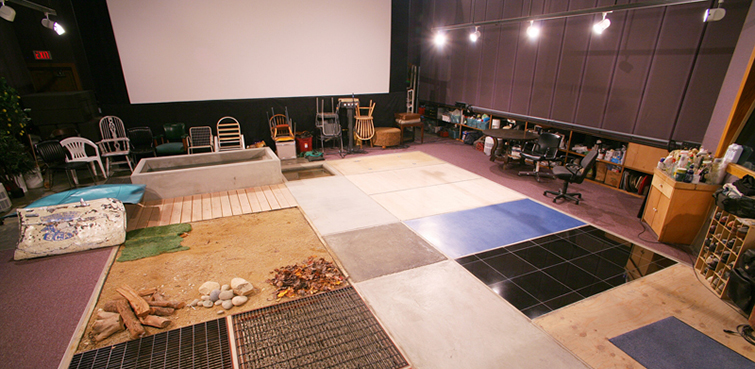
The Association of Sound Designers invites Soundgirls.org members to join them for an afternoon of exploration and experimentation within the wonderful art of Foley sound creation, with Tom Espinar.

This seminar aims to introduce the participants to the tricks employed by Foley artists. It hopes to help them to develop their listening skills so that they can begin to understand the layers of sounds used to create the soundscapes we take for granted in some of our favourite moments in film, theatre, and TV.

Participants will get the opportunity to be hands on and so are encouraged to bring an item to make sounds. Such as different kinds of fabrics (from silk, leather, to cotton fabrics of different sizes) or things that creak and squeak (metal hinges, bolts, rusty/unoiled bits of moving metal – not too big)

Maybe some fruit and veg or different sized receptacles – glasses, cutlery, teacups.

Choose an object that you’d like to investigate further.

There is the possibility that the afternoon may get a little messy, so remember this when choosing your attire.

The seminar will be held in the Governors Room at the NT studios. The Studios are not part of the main building of the National theatre but are on the Cut.

Tom Espiner is an actor, puppeteer, Foley artist and theatre practitioner. He co-founded Sound&Fury and has worked as a puppeteer for Blind Summit and as a puppeteer and Foley artist for Complicite. Previous productions include the ENO’s Madam Butterfly and the London Olympics 2012.

This event is free for SoundGirls.org members and is limited to 25 spaces in total (including ASD members). Please register for this event and enter the code Sound Girls

If you have registered for the Pin the Mic on the Actor workshop on Wednesday, June 28 and wish to attend the Foley workshop as well, you will need to register for the Foley workshop separately.


The Role of an Associate Theatre Sound Designer

I’m at the beginning of my third week of a six-week contract as Sound Associate, otherwise known as an Associate Sound Designer, for a one-woman play with a complex score and sound design. Associate creative roles are quite common in UK theatre, but as I’ve had a few sound people in the past ask me what the role entails, I thought this would be a perfect opportunity to write about what you can expect if you take a job as a Sound Associate.

The basic role of a Sound Associate is to support the Sound Designer in realising the sound design for a show, when the Sound Designer has conflicting commitments or the volume of work required is too large for one person. A Sound Associate is more than an assistant. As well as often being a professional Sound Designer themselves, they have to be prepared to not only take on any sound design responsibilities that the Sound Designer can’t cover. These include standing in for the Sound Designer for when they can’t physically be at rehearsals, tech rehearsals, or a new venue.

I’ve hired Sound Associates in the past, because of this latter scenario: when a show I designed transferred to a different venue and I wasn’t available for the required dates. In these cases, I’ve entrusted my existing sound design to an associate, who then took on the responsibility of putting the show into the new venue. Their responsibilities included setting levels, making sure everything played out at the right time from the right speaker, and applying changes to cues requested by the director

Of course, all changes were fed back to me, because it was still my sound design. As it was the second run of an already successful production, I wanted my design altered as little as possible. I was aware that this didn’t allow my Associate to have much creative input, but then, the role of an Associate isn’t necessarily a creative one. A Sound Designer may ask you to source or create particular sound effects, and some sound designers may rely on an associate for a lot of creative input. However, it’s important to remember that the overall shape and realisation of the Sound design will always be the responsibility of the Sound Designer.

So why work as a Sound Associate? For one, if you’re at the start of your career, it’s an effective way to gain Sound Design experience or to work on a particular type of show. It’s also an opportunity to learn from more experienced Designers, and it’s a useful way to build relationships with production companies, directors, and creatives. For me, I wanted the opportunity to work on a unique production and immerse myself in a more practical, collaborative way of working with sound, which I hadn’t done for a while.

The responsibilities of a Sound Associate will differ from show to show, depending on what the Sound Designer needs. At a basic level, you should be prepared to do any of the following:

I think it’s this last point that separates a Sound Assistant from a Sound Associate. An excellent Sound Associate will protect the original design has much as possible and incorporate any changes without compromising the Designer’s overall aims. Whether an Associate is responsible for part of a show or from taking the show from rehearsals to the first preview, the Sound Designer has to trust that the show is in safe hands.

Tips for Getting the Vocals on Top

Down in the trenches of clubs keeping the vocals on top of the mix and loud enough in the monitors is a challenge. Here are some strategies that Karla Barrera utilizes.

The biggest problem I have is when mixing loud music like punk or metal is how to keep the vocals loud enough. When the musicians don’t hear themselves in the monitors, and they are on the edge of feedback? First of all, the sound starts with the stage volume always. You need to control your stage volume right off the bat.

First of all, the sound starts with the stage volume always. You need to control your stage volume right off the bat.

Check levels starting with the Kick drum and beyond. Once I get to the bass and guitars, I listen to what is coming off the stage and if you feel like the stage volume is too loud, here are a few things to think  about

Is the bass the tone too woofy and boomy? Instead of having the bass player turn down his/her level, should I suggest changing the tone a bit? (Familiarize yourself with the EQ knobs on bass amps, usually Hi, MIDS, LOWS, CONTOUR,  ETC… EXAMPLE: “Can you back off the low mids a bit so that the low end won’t wash out the vocals in the monitors? ”

Is the guitar just too loud? Should I suggest turning town some of the high-end on the guitar or should I have them turn down the master level? Can you get them to warm up their tone? Example “Maybe warm up your tone a bit to give more space for the vocals.”

Should I suggest to the guitar player to face the amp towards the wall so that the amp won’t bleed into the vocal mic as much and shoot at me/the audience? (some guitar players do not want to turn down because they want to keep their tone.)

Try to get the guitarists/bass players to run thru all of their pedals. Have them toggle through their boost, clean, distortion channels to search for any dramatic level changes that will change mix too dramatically. Take a moment and work with the guitarist. What you are looking for is consistency through levels. The boost will naturally be a little louder, because, well it’s a boost pedal for solos. Once you take a moment to check their pedal levels, you are that much closer to having control of the levels coming off stage. EXAMPLE: “Your clean channel is much louder than your distortion. Can you back off your clean level and turn up your distortion to even out the levels? ”

Don’t be afraid to school musicians. Let them know nicely that sometimes their tone does not translate the same as it does in their rehearsal space as it does in your venue. (which is why you give them these suggestions). Some musicians don’t play live very much.

Once you are done with the basic sound check line check and you are ready to hear a quick song during sound check, turn off the PA and let the band know that you want to hear what is coming off stage first before you turn up the PA and you will turn up the PA shortly. Listen carefully to the stage without your mix (30 – 60 seconds or till you hear a loud part kick in) that way you can tell what is actually happening on stage before you start turning things up.

Once you have done that, start turning up the vocals, get them nice and loud before you turn any of the band up. If you can’t get the vocals loud enough before putting the band in the PA the band should turn down, flip amps around or change tone. Sometimes, it’s the snare, or the cymbals and drummers will absolutely not hit softer. They hate that.

EXAMPLE: “Right now, I am struggling to get the vocals loud enough, and I don’t have any instruments in the PA, do you guys mind turning down a bit and I’ll put more of your guitars in the monitors?” (note this is not decreasing the stage sound and will not be ideal for a struggling vocalist)

EXAMPLE: “Any way you can tape your cymbals a bit? They are much louder than the vocal right now.”

EXAMPLE: “Can we mute your snare a bit with a little bit of gaff tape on the snare? It’s bleeding straight into the vocal mic.”

When you are mixing, and there is a certain element on stage that is sticking out too much, just take the snare mic or guitar mic or hi-hat out of the house. You may not even need it because it’s loud enough coming off the stage.

The 2nd problem happened to me for the first time last night. I put Shure Beta 91 inside the kick drum but later changed it to AKG d112. I had feedback coming from somewhere when the drummer hits the kick which stopped when I muted the main vocal microphone and the guitar microphone. We turned away the whole guitar cabinet, and it got better.

Both are great mics, but here is where you should start:

First of all, you need to EQ the monitors before the band arrives to make sure there is no feedback on stage BEFORE the band arrives. You need a graphic equalizer on every monitor mix and find all the frequencies that are feedback and need to be cut out.

Once you stabilize the stage, check the lead vocal in the house before the band arrives. Get a long XLR and take the mic to FOH if possible or have someone check the mic for you while you are at FOH. Make sure you have a graphic equalizer on the house too and get it as loud as you can. When you hear feedback, start taking out those frequencies that are feeding back. You can download an RTA mic app that can help you see the offending frequencies that way you know exactly which frequency to cut (I use the app FrequenSee)

The kick drum was making the vocal mics feedback because you had them cranked so loud and you were not equalizing the monitors or the PA properly. Think about the basics. GAIN STRUCTURE IS EVERYTHING! Less gain before feedback. Instead of gaining up your vocal, turn up your monitor outputs to +5dB that way you have more headroom to turn up before reaching for the gain knob.

Should the bands be less loud on stage? should I reconsider my mic techniques?

Maybe, try my steps from above to make sure you have control of the stage. Trying new mic techniques could work. I would have to know what you are doing.


Karla Barrera is a sound engineer at The Roxy and works freelance around Los Angeles. She previously worked as a Production Manager and Sound Engineer at The Viper Room. Karla is also the artist manager for Imaad Wasif. She attended The Arts Institute of California.

X