Empowering the Next Generation of Women in Audio

Join Us

I Am A Puzzle

When I was 17 and an intern at Interscope Records in New York City, my boss, head of radio promotions, said to me, “Don’t get into this business. The music business is a terrible business.”

I can handle it. I thought to myself. I looked at the photos on the shelf next to her desk. “Haha, yeah, it seems pretty crazy. Hey is that you and Eminem?”

“We’ve been together since the beginning. He is a true artist.”

I sort of listened. And I sort of knew what she meant. Mostly I was thinking about how badly I wanted to prove, mostly to myself, that I could handle it.

When I was 11, I learned to play finger style blues guitar from the guitar teacher and music store owner in my town. He is now one of my closest friends, but at the time we barely knew each other (also I was 11, and he was a man who owned a music store so…yeah). One fall day he hosted an open mic at our community center. We never had stuff like that going on in town, so I didn’t even know what an open mic was. He encouraged me to perform, and I ended up playing “Foolish Games” and “Save Your Soul” by Jewel, and an old swing number called “Believe.” I was so nervous I was shaking. My dad filmed the whole thing on our camcorder, which my little brother recorded over a week later when he and his friends wanted to document their backyard dinosaur-bone excavations.

1991 – me and my older brother Ariel in 1991 in East Chatham, New York

For my 12th birthday, my dad took me to see Ani Difranco headlining the Falcon Ridge Folk Festival in nearby Hillsdale, New York. He bought me a pentagram—I was really into Wicca at the time—and sat on the grass hill with me, surrounded by RV hippies and babies on boobs, and watched Ani give herself to us. Her body was a channel, and her voice and guitar were the message. She hit the strings so hard that the buzzing and the sliding out of tune became part of her songs. She roared her lyrics like a lion, completely free of all fear. It felt like the first time she’d ever been in this moment, and simultaneously like she’d always been in this moment. She was her, and she was us. And yet she was beyond herself and us. I don’t know how or why, but I wanted to do that, and I felt like maybe I could. So I decided to try.

A few days later I performed a song I’d written for my dad and grandparents. It was called “I Am A Puzzle, ” and the guitar part was inspired by Ani’s playing. The lyrics were:

   I am a puzzle

   I am hard to complete

   it’s hard to find the whole thing

   and then put it all together

   but I have a missing piece

   I have a part of me missing

   if you have a puzzle

   and you wanna see

   the whole damn thing

   you’re gonna need

   that last piece

I don’t remember exactly how 12 year old me felt at the time. But I do feel like those lyrics, however silly, bore an uncanny resemblance to my life that came later.

There are so many pieces to this puzzle.

I spent my teen years performing songs like “I Am A Puzzle” and “Tears On My Pillow,” and “Crying and Cold”  to farmers, bikers and any friends and parents I could get to come out to whatever Columbia County bar and cafe would let me play. I took great pride in my ability to make bikers cry when I sang the sad songs.

2012 – Setting up Ableton for a show in Bushwick, Brooklyn

That summer at Interscope was the only summer since I was 14 that I didn’t have a paying job, and I didn’t know what to do with myself. I was living off the student loan I’d taken out earlier that year. I mostly stayed at home and worked out acoustic covers of my favorite songs by The Knife.

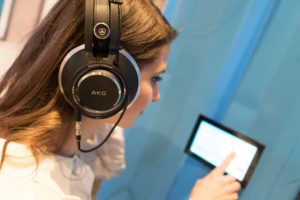
For my birthday in July, my then-boyfriend gifted me a Focusrite audio interface and a pair of AKG headphones. He’d given me a bootleg version of Logic 9 and was adamant it was going to be my “new favorite thing.” My grandparents gave me an SM58, which I’d asked them for. In my spare time between school and work, I would play in Logic. Over the next year or so my boyfriend and I collaborated quite a bit. But we ran into issues because he didn’t have to work and I did. I would get frustrated that he was making more than me, and he would want me to sing the things that he’d written. But I wanted to write and produce too. Was I territorial and stubborn? Or was I just in a different position than him?

Writing good songs was one piece of the puzzle. Producing was another. And yet another was the balance of work (for money to live) and art. It was becoming painfully obvious that the cards I’d been dealt in that regard were not the most generous.

2017 – Rehearsing with my live band this past summer, Los Angeles, CA

In the years since then, I have experienced all kinds of resentment toward those that have more cushion/support/time/money/etc. But resentment is a heavy thing to carry around, and I decided at some point to stop carrying mine. Perhaps it was when I realized that, even though I’d spent most of my life working on music, I still had many many pieces of the puzzle to find and put together before I was going to have a career.

Ten years later, I wonder where I would be if I’d heeded the advice to stay out of the music business. I have never truly considered another path aside from that of a musician and artist. Sometimes I feel overwhelmed by the complexity of it all. But mostly I still feel like I want to prove, mostly to myself, that I can handle it.

Los Angeles SoundGirls Holiday Party

It’s that time of year to take a few moments and simply enjoy our community.  Please join us for a relaxed afternoon of catching up and swapping stories, while enjoying delicious food and tasty beverages. There will definitely be a white elephant gift exchange.

Who

All SoundGirls members and friends are welcome

When

Sunday, December 15th @ 2:00pm – 4:30pm

Where

Catering

Self-pay.  Full menu and breakfast is served all day.

Gift Exchange

If you would like to participate, please bring a wrapped gift (valued under $20) to play the white elephant game.

RSVP Here


How to be Lucky

“I’ve never had those kinds of well-paid opportunities happen, not everyone is lucky.”

“She’s so lucky she got that job, I’d kill to work there.”

“You’re so lucky to be doing what you love! I wish I could do that.”

Any of these sound familiar? I saw one of them on Facebook today. One of them is something a friend said to me a few days ago.

Up until recently, I got annoyed when someone described me as “lucky.” I would have said, that where I am in my career today has very little to do with the vagaries of fate, and everything do to with hard work. But recently I was reminded of the well-known quote attributed to Seneca the Younger: “Luck is what happens when preparation meets opportunity.” And I realised, I am pretty lucky.

I have spent the past twenty years preparing for my current career and creating opportunities. I invested in training and qualifications. I moved to the other side of the world on a one-way ticket where there were more chances for work. I learned how to run a business as well as configure a console. I joined organisations, I went to events, and talked to everyone I could. I learned from other people’s experiences and my mistakes. I built up my skills and my portfolio, and then when the opportunities arose, I took them. According to Seneca, I am lucky. And I know – at the risk of sounding like a motivational speaker – you can be too.

Be prepared

If your dream sound job came up tomorrow, would you have all the skills and experience you need to take it? What do you have to do to be ready for that job? You need to be prepared not just for when opportunity knocks, but for everything leading up to it – those smaller jobs which will gradually take you to a place where you feel capable of doing the more prestigious jobs.

Back in June 2004 I really wanted to be a radio sound engineer, ideally working in radio drama. I’d got as far as the practical test round of interviews for a trainee sound engineer position at the BBC in London. It was my third application for a trainee position, and the feedback from the previous one was to get more hands-on experience. A colleague in my department suggested trying a local arts radio station, as they were always looking for volunteers. I didn’t follow it up. On the day, the test went fine, but I didn’t get the job. The feedback they gave me was that they were looking for people with practical radio experience. I had the opportunity to get a job that would put me on the path to my chosen career – but when it came to it, I wasn’t prepared.

Create your own opportunities

If you’re relying on opportunities coming from one or only a few sources, you need to broaden your horizons. Think about the people who could recommend you for jobs, not just within sound people who work in adjacent fields. Venue owners, studio owners, production managers, tour managers, producers, directors, lighting designers, other sound engineers. Make connections offline and online and maintain those connections – relationships take time to develop. Make sure you’ve got a consistent, professional profile online, whether that’s a personal website, or an online professional directory like the Directory of Women in Professional Audio and Production (sign up if you haven’t already). The adage “you never know where your next job is coming from” is a persistent one for a good reason: it’s true. And the people who might be the ticket to your next step on the career ladder can’t give you anything if they don’t know you’re out there.

Take action and keep taking it

Getting up and doing it is the first real step – no one gets lucky by waiting for the world to come to them. But what if you’ve done all the preparation you feel you need, you’ve busted a gut creating opportunities, and you’ve yet to feel that magic “lucky” moment? Keep at it. Look at learning the kinds of skills that will attract not just the jobs you’re looking at now, but the ones in the future. Reconnect with contacts who’ve dropped off your radar and tell them about the latest brilliant show, album, or project on which you worked. The more prepared you can be, and the more opportunities you can make, the luckier you will become.

Whatever your goals for the future, in every possible way, I wish you good luck in achieving them.


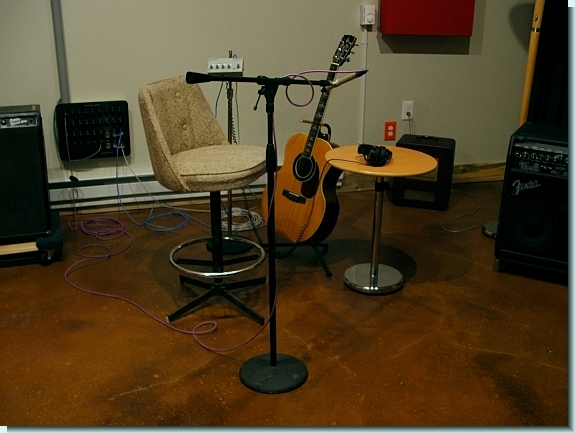
Tips For Making Better Guitar Recordings In The Studio


So you’ve gone to the studio to record your guitar tracks but the output seems off. It may not sound like the way you’ve envisioned, or there seems to be something lacking in your recording. Whatever the case may be, you know you can do better–but how? We’ve rounded up some tips to help you make better guitar recordings in the studio to get you on your way to becoming a pro!

Use the right guitar

Every guitar model has a different sound because of its size, make and strings, so it’s important to pick the right guitar. One guitar may be better than another depending on the situation, and while you may not be able to take your pick of guitars at the beginning of your career, it’s still important to be aware of this. If the recording studio has other guitars available, you can ask if you can borrow them to see which can give you the sound you’re aiming for.

Tune the guitar properly

Always make sure your guitar is perfectly tuned before each recording session. Use an electronic tuner if you haven’t learned to tune by ear.

Change your strings

It’s advisable to change out all your strings every recording session. Old strings tend to sound lifeless and dull–they may not sound that way to your ears since you’ve become accustomed to the sound, but trust us on this–you’ll get a better guitar track with new strings. Acoustic guitars will sound brighter and electric guitars will sound fuller.

Adjust the string height

The rule of thumb is the higher the action, the more “open” the guitar sounds and the greater sustain and resonance.

Secure any loose parts

Strap buttons, jacks, pickup wires and washer tuners can come loose and create unwanted noise that can be picked up during a recording session, so make sure everything is stable and in place.

Tweak the pickup height

When the pickups are too close to the strings, they can reduce sustain. When they’re too far away, the output decreases and high frequencies are dulled. Find that sweet spot first before hitting the record button.

Check the volume and tone knobs

Make sure these are in working condition and not scratchy.

Mind your mic choices

Try all of your mics to see which ones work best for the sound you’re going for. Different mics and where they’re positioned can impact the character and quality of the recording. Top tip: don’t use mics that might exaggerate the lows, mids or highs in a guitar that’s already too dark, middy or bright. If the guitar already sounds bright, use a dark-sounding mic to balance the sound. Also, Keep in mind that the closer a mic is to an instrument, the greater the proximity effect, or an exaggerated low-frequency boost, will be.

Listen and adjust

As mentioned, mic placement is crucial. Depending on where you put the mic you can get plenty of different EQ responses. It may make you feel like Goldilocks, but your efforts will pay off once you get things just right. Take time to listen to the tonal changes in each part when you position the mic.

Try again

It’s rare to perform and record a guitar track perfectly in one pass. Accept this and have patience with yourself, and your gear as well. Making adjustments a little bit at a time and taking note of which setup works will make things easier for you later on.


About the Author

Nicky Patterson is a music blogger and has written many articles related to acoustic and electric guitars. Nicky has been a keen acoustic guitar player for the past ten years and has been playing the electric guitar for five. She has also played in a number of bands and continues to play in her spare time.


Stealth Sonics – The Next Generation of IEM Technology

For a product that didn’t even exist until the late 90s, in-ear monitors have become a major part of the audio engineering world. From the first set created by Jerry Harvey for Alex Van Halen back in 1995, we now see custom IEMs with as many as 12 drivers in a single tiny earpiece. As a monitor engineer who has used IEMs with most of the bands I’ve mixed in the last 20 years, I’ve often wondered how much further the technology could go.

Well, it seems that a group of audiologists, engineers, and musicians with a passion for creating an unparalleled listening experience may have the answer. Stealth Sonics has gathered research from a vast network of audiologists and breakthroughs in the aerospace industry to create a new range of IEMs which engineer ultra-precise, second-bend ear canal impressions to position the earpiece within just a couple of millimeters of the eardrum. The advantage of this is the ability to listen at a lower, safer SPL; going as close to the eardrum as possible ‘reduces uncontrollable acoustic gain along the ear canal and therefore lends itself to higher fidelity sound.’

The Stealth Sonics approach is a new one – to the best of my knowledge, there are no other second-bend IEMs out there, although second-bend moulds are regularly created for hearing-impaired clients requiring hearing-aids. As the process is undertaken by members of a network of certified and medically trained audiologists, it is both completely safe and guarantees an optimum standard of impression-taking. The price of the IEMS includes the audiology costs for impression-taking – often not the case with other manufacturers, and I for one have fallen foul of poorly-taken impressions resulting in a very expensive pair of uncomfortable IEMs!

But it’s the level of customisation that, to my mind, makes these IEMs the most exciting thing to come to the market in a long time. Stealth Sonics don’t stop at taking a very accurate, second-bend ear impression – they actually send a sweep into the customer’s ear canal and measure the response digitally, much like how a room is acoustically treated. Using the data gathered and combining it with Minimum Hearing Thresholds, they are able to map a solution that will not just custom make a sleeve that will fit into the ear canal, but which allows them to tune the IEM to the specific acoustic ear canal response of the individual. That means they would hear the best and most accurate sound they are capable of hearing. And for a monitor engineer, this is the closest you’re ever going to get to truly hearing the same thing as your artist.

The influence of aerospace technology is an interesting factor in Stealth Sonics’ product range. Using what they call  ‘SonicFlo Tech,’ they employ science that allows the control of airflow from the drivers to the ear input, through control of parameters such as the length/diameter/aspect ratio of the delivery tubes. This control allows them to deliver sound for various purposes; their 2-driver unit is musical and designed for live sound and music lovers, 4-driver is designed for the vocalist and guitarist and the 9-driver is designed for the mastering engineer or audiophile. Their IEMS contain either balanced armature drivers or a combination of those and dynamic drivers. To explain the technology more thoroughly, in balanced armature design an electric current is passed through a coil wrapped around an armature. The coil is suspended between 2 magnets and the changes in current create attraction between the coil and magnets. Balanced armatures can be optimally tuned for specific frequency ranges, and offer better HF performance than dynamic drivers as well as a faster response and more detailed sound. They are also smaller than dynamic drivers, making them ideal for fitting into tiny earpieces.

In a dynamic driver, the diaphragm is attached directly to a voice coil. When current is applied, the voice coil moves between 2 permanent magnets causing the diaphragm to move and produce sound. They offer a better bass response than a balanced armature and tend to be more durable. The difference between the two is much like the difference between dynamic and condenser microphones – both have their advantages, and Stealth Sonics use those judiciously to produce the optimum performance for each product in their range.

Further optimisation comes from the three different types of cable available: the nylon-sheathed copper cable is ideal for extended onstage use due to its tendency to remain tangle-free; the braided oxygen-free copper cable offers improved signal delivery, and the silver oxygen-free cable offers an upgraded audiophile experience due to superior conductivity.

As audio technology gets ever more intricate, it’s exciting to see IEMs taking a bold leap forward. I for one am extremely eager to experience just how good the up-close experience of IEMs can be, when great music is delivered in first-class style to my eardrums, via an earpiece that has been perfectly tailored to the exact acoustic environment of my ears…. taking the meaning of personal monitoring to a whole new level!

Stealth Sonics will be demonstrating their new products at AES in New York October 18 – 21st. Stop by and tell them SoundGirls sent you.


Monitor Mixing Workshop

Although monitor engineering is often thought of as subordinate to handling the FOH sound, in reality, it’s as important if not more. In this short class, we will learn the basics of monitor mixing and focus on eqing different types of monitors with different types of microphones. This workshop is designed to gain insight and techniques for mixing monitors. Beginners welcome – but the workshop is geared to an intermediate level. We will be focusing hands-on on ringing out monitors.
 

Taught by Ivan Ortiz

Inquire about Financial Aid soundgirls@soundgirls.org

Topics to be covered.

Hands-on Gear (Possible wedge, side, and drum fill configurations will be (dependent on what Rat has in inventory)

About Ivan Ortiz

Ivan Ortiz is a veteran, with over 18 years of experience in professional audio – gaining his education working for a small sound company that specialized in Latin acts while attending Full Sail. After he graduated he headed to the west coast – taking an internship at Rat Sound Systems and his “can do attitude” led to weekend work with several Los Angeles based sound companies. Ivan would go on to tour as a system tech for Blink 182, Jimmy Eat World, Pepe Aguilar and toured for several years as a monitor engineer for My Chemical Romance, Gavin DeGraw, and multiple fill in gigs for other bands as FOH or MON Engineer.

Ivan would go on to work for LD Systems in Houston Texas working the Houston Rodeo as Monitors Engineer for the event for five consecutive years. While working for LD Systems Ivan also had the opportunity to work on national televised events as the A1 for NCAA Final Four, NCAA Sweet Sixteen, Houston’s Thanksgiving Day Parade, before returning to Rat as shop manager and all around Tech Master.  Ivan is now the Technical Resources Manager at Rat Sound Systems.


The Studio Side – Mix Notes From Hell – Live Podcast

SoundGirls and Emerson College Host


Join us for a recording of  the podcast Mix Notes from Hell

A pro audio podcast that isn’t all gear talk. it’s all about people, process and production.”An around-the-watercooler discussion about the music recording business with professional producers, mixers, and engineers.”

Listen to past episodes here

Podcast Hosts

Richard Furch: LA Based mix engineer and owner of MixHaus Studios and MNFH Regular

Matt Hennessey: Chicago-based producer, engineer, mixer, owner of VSOP Studios, Former NARAS Chicago chapter president, current NARAS Trustee, and MNFH Regular

Will Kennedy: LA-based producer, engineer, mixer, owner of Studio P, and MNFH Regular


This episode will center on growing your career with perspectives from people at different levels in theirs. Guest include Jett Galindo, Shivaun O’Brien, and Ali McGuire

Jett Galindo LA-based mastering engineer at The Bakery, working with artists Bette Midler, Randy Travis, Nile Rodgers, Roberta Flack and Gustavo Santaolalla, to name a few, Jett carries on the legacy left behind by her late mentor, mastering legend Doug Sax (The Mastering Lab).

Shivaun O’Brien  former manager at Sound City Studios, (featured in the “Sound City” Dave Grohl documentary), co-owner of Platinum Samples, and Traffic Management  at Vintage King, recording engineer

Ali McGuire is a L.A. based recording and mix engineer, producer, and live sound engineer working with artists such as Grammy nominated artist Fetty Wap, Post Malone, T- Wayne and more.

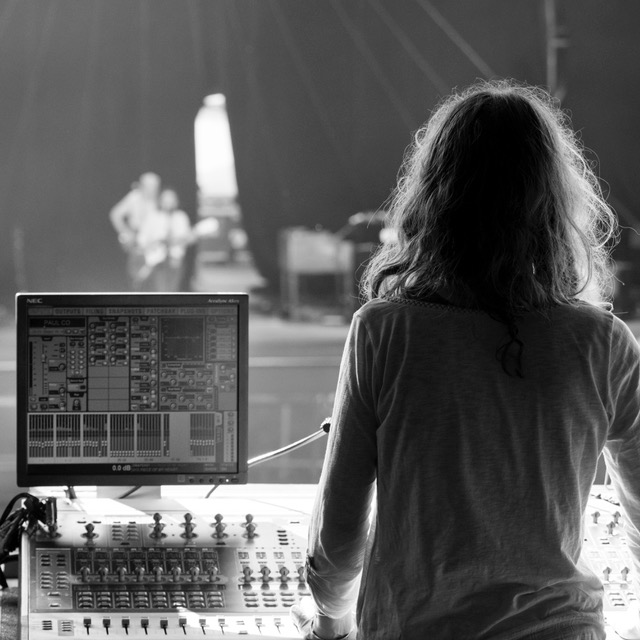
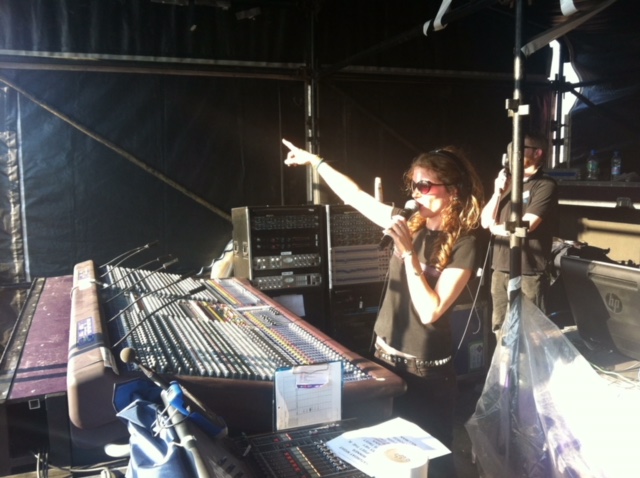
From Stage to FOH – Alice Wilder

Alice Wilder is a Front Of House engineer based out of New York City. She currently works for M.I.A., Wolf Parade, and Austra, and has done FOH for Foxygen, Divine Fits, Tinashe, The Drums, and Diana amongst others, as well as monitors for Third Eye Blind. When she is not on the road, she can be found mixing records in her home studio or working as FOH at the Music Hall of Williamsburg.

Alice grew up in Muncy, Pennsylvania, where she developed a passion for music in high school.  She went to college to study accounting, but after three years in the program realized she couldn’t see herself working in that field. She dropped out in 2006 and moved across the country to Seattle.

Once on the west coast, she started playing guitar in local bands. Alice realized she didn’t particularly enjoy being on stage and decided to focus on finding a way to be involved in the behind-the-scenes of the music industry. She started interning as a sound engineer in local live sound venues. It didn’t take long for her to get hired on as a monitor engineer at Neumos. Around that time, she had also started working at The Comet Tavern, a barebones, 16-channel analog board small venue where she refined her signal flow skills: “I would go in early, and see how everything worked. I couldn’t see (the signal flow) at Neumos, but at The Comet, I could see how the cables went out into amps and then into monitors, really understand the routing.”

Alice is a self-taught engineer and credits her interning and first gigs in Seattle with showing her the ropes of being a sound technician. She learns best through trial and error and mentions she follows her gut when mixing.

In 2009, she went on her first tour as FOH in Europe for Seattle band Grand Archives.  “I don’t think they wanted to bring me; I think I actually had to persuade them to bring me. My ex-girlfriend was opening for them, and I was in her band, and that was kind of the transition for me: I was opening for (Grand Archives), and then I would go and do sound, and I preferred doing sound. I think that was a determining year for me – I realized I did not want to be on stage anymore, get me off of here, I can’t wait to do sound!”

She worked at Neumos until 2011 when she started touring extensively with Toronto dance-electronic band Austra.  She met the band after working with them at Seattle’s block party, in 2011, and they were so impressed with her skills that they brought her on as their touring FOH. She has since found more clients, by networking at festivals after receiving compliments on her mixes or being referred to other bands through some of her current employer’s management. Her main touring gigs in 2017 are M.I.A. and Wolf Parade.

Alice’s favourite parts of touring are: “seeing/exploring places I wouldn’t normally think to go to or spend money on going to.  Meeting people from different parts of the world and experiencing the food they eat with them is fun.  This is about all the time you have on tour.”  Her least favourite parts of touring are not having enough time to visit a new town or place, not getting enough sleep and shared hotel rooms. On an off day, you’ll find her visiting local cemeteries: “I like to try to do non-touristy type things, as most people do now I think.  My favourite thing to do is visit graveyards.  I know it sounds dark, but really it’s just nice to get the peace and quiet whenever possible on tour, “smell the roses,” if you will.  The Père Lachaise cemetery in Paris is wonderful.”

When she’s not on the road, Alice has gotten into studio mixing. Although she is currently most comfortable in the live sound world, she is working on her engineering skills whenever possible: “anytime I have a day off, I’m on YouTube watching tutorials or buying plugins, or speakers or gear. I’m just trying to learn as much as possible.” She mixed Austra’s latest album, Future Politics, and is currently mixing projects for Petra Glynt and Caveboy.

In live sound, Alice’s favourite pieces of gear are outboard delay units and the Waves C6 multi-band compressor. In the studio, she currently likes Slate plugins and their monthly subscription service, which gives you access to all their products for a flat fee. She describes their plugins as very transparent and is a fan of using their EQ’s and compressors on busses when mixing in her studio.

Regarding her long-term mixing goals, she would love to one-day mix FOH for Beyoncé or Lady Gaga. She has a soft spot for working for female artists and loves helping or assisting women with elevating their music career in a male-dominated industry. She would also love to be on a tour with bigger production, where she would have her choice of mixing consoles & PA. Her long-term studio goals are to get into producing and to mix more records.

When asked about her must-have audio engineering skills, Alice states that knowing signal flow and having a good ear are crucial: “ultimately, you have to have a good ear and know how to mix if you want to have this job. You can’t just go in and start assigning compressors and slam everything. Knowing when to be dynamic, knowing what the band wants to sound like, and knowing how to translate that for them to the audience.”

The biggest barriers she has faced while touring have been “speedy line checks, communication problems and bitter house engineers,” which she has dealt with by “being a composed professional and making stuff happen however I can.” She also recalls this story: “one time, in New Orleans, the sound guy didn’t show up to work, and so the bartender pointed at a closet where he thought all the audio stuff was.  I ended up setting up the entire sound system, including the desk and wired everything together.  That was fun.  Luckily it was on one of my very first tours, so I had the drive to pull it all together. I’ve definitely had to deal with a ton of “mansplaining” too of course.  I take those instances with a grain of salt now and just rise above the silliness. Getting angry only makes you more exhausted and doesn’t help the situation.  I’ve learned how to have fun with it now, but it certainly wasn’t in the beginning.

She offers this advice to young women looking to enter the field: “there are a lot of ups and downs and bumps in the road, but if you stick with it, it’s a very fun career choice. More and more women are entering the scene, so the condescending/belittling attitudes are diminishing, and equality is happening. We need women in this field.  We need the balance, the talent, and the brains.  It’s an awesome job!”

You can find more information about Alice and her current mixing projects on her website alicewildersound.com

SoundGirls Roundtable: Diversity in Audio

Space is Limited Register Here

A roundtable hosted by SoundGirls

Professional Audio is sorely deficient in gender, racial and ethnic diversity. While there are not accurate statistics available, it is a commonly accepted that only 5% of audio engineers are women.  Eric Deggans of NPR commenting on a 2015 study from USC’s Annenberg School for Communication and Journalism, said that “the #OscarsSoWhite should probably be to changed to #HollywoodSoWhite.”

What can we do to change the face of the industry and how do we handle sexism and bias in the industry. Join us for a roundtable to help create a blueprint for change. We will have best practice information for dealing with sexual harassment.  Stay tuned for updates on speakers.

Diversity Issues in the workplace

Creating diversity in the workplace is not the same as setting quotas. Diversity in the work environment promotes acceptance, respect, and teamwork. Companies that overcome diversity issues often achieve greater productivity, profit, and company morale. How can we create diversity in an industry that runs on freelance workers?

The following issues affect women, people of color, and LGBTQ people in the industry. Women may also face further obstacles, due to their overlapping identities. Race, class, ethnicity, religion and sexual orientation impact the way they experience discrimination.

And while we understand that addressing these issues is an upward battle, we realize that these issues affect us before even getting hired. Many employers simply do not consider women for employment because of these issues or due to unconscious bias. We also must realize and accept that women can hold biases whether conscious or unconscious.

Gender

In, 2017, women are still viewed as incapable, too emotional, not dedicated enough to do the job, because of gender biases – conscious and unconscious. The problem becomes intensified when people do not fit neatly into the binary spectrum.

Harassment

In 2017, women are still told they need to be one of the boys and tune out locker room talk. How do we learn to deal with harassment and make sure we are not working in a hostile workplace. Harassment should never be tolerated.  Even the slightest comment made in jest is considered harassment if any — even remotely vague — any racial, sexual or discriminatory connotation is made. For example, “I love Asian women” or “We should have hired a man.” Sadly even, when women are in leadership roles, the problems are not always dealt appropriately.

Sexual Harassment

What are the outlets to address sexual harassment on the job? Often there is not a human resource department to handle sexual harassment complaints or claims are not handled effectively. Often the victim is blamed or threatened with being blacklisted.

Lifestyle Acceptance

One’s personal life should not affect their job performance or bar them from employment. Unfortunately, LGBTQ workers experience disrespect and discrimination from coworkers and can lead to an uncomfortable and hostile work environment.

Ethnic And Cultural Differences

In 2017, people are still holding bias (whether conscious or unconscious) and prejudices against people of color, cultures, ethnicity, and religion. Such prejudice should not be tolerated in the workplace — much less anywhere.

Respect In The Workplace

Mutual respect and acceptance are critical –  Acceptance of individual differences is essential in creating a diverse and productive work environment. Acceptance leads to respect, and ultimately opportunity.

Conflict

When prejudice, racism, discrimination and a lack of respect creep into a work environment, conflict among employees becomes inevitable. If not distinguished, such animosity can turn explosive or even violent. Businesses who provide a diversified work environment and provide sufficient diversity training often reduce or eliminate such occurrences.

Other issues: Ageism, Generation Gaps, Disabilities

What is unconscious bias?

Bias is a prejudice in favor of or against one thing, person, or group compared with another usually in a way that’s considered to be unfair. Biases may be held by an individual, group, or institution and can have negative or positive consequences.

There are types of biases

Conscious bias (also know as explicit bias) and

Unconscious bias (also know as implicit bias)

It is important to note that biases, conscious or unconscious, are not limited to ethnicity and race. Though racial bias and discrimination are well documented, biases may exist toward from any social group. One’s age, gender, gender identity physical abilities, religion, sexual orientation, weight, and many other characteristics are subject to bias.

Unconscious biases are social stereotypes about certain groups of people that individuals form outside their own conscious awareness. Everyone holds unconscious beliefs about various social and identity groups, and these biases stem from one’s tendency to organize social worlds by categorizing.

Unconscious bias is far more prevalent than conscious prejudice and often incompatible with one’s conscious values. Certain scenarios can activate unconscious attitudes and beliefs. For example, biases may be more prevalent when multi-tasking or working under time pressure.


X