Empowering the Next Generation of Women in Audio

Join Us

Five Ways to Make your Freelance Applications Work for You

Happy 2018 Soundgirls! If you’re self-employed or considering becoming so, then you’re probably preparing for another year of hustling for new work opportunities. As someone who has experienced both sides of the freelance hiring process, I thought it was an appropriate time to offer some words of advice on applying for freelance jobs.

Freelance opportunities aren’t often formally advertised. They’re passed on by word-of-mouth, email, and posted on social media. A casual approach to hiring may seem to encourage a casual response, but don’t be fooled. Even the most laid-back “Hey we’re looking for awesome peeps to join us” company will still be looking for a professional response.

Here are a few tips for increasing your success when responding to opportunities for freelance work:

Read the job description

At the very least a freelance job posting or callout should include something along the lines of “we’re looking for [this kind of] person to join our team to do [this kind of work].” If it’s a useful job advert, it will also include a list of skills and experience required for the position, and any other specific requirements, e.g., location and language. Your very first step should be to thoroughly read the job description and consider if you meet the requirements before applying.

When I’ve posted call-outs for freelancers in the past, it always surprises me how many emails I receive where the applicant either hasn’t thoroughly read the application. Or they’ve forgotten to include any evidence that they have the skills and experience required for the role or they seem to think that working in any area of sound for a few years is enough to be considered for a job that requires specific expertise.

Responding quickly to a job posting may increase your chances of the hirer reading your application, but it shouldn’t be at the expense of the content. Similarly, responding to every freelance job advert even if you’re not qualified, in the hope that someone might give you a chance, is not a winning technique. If a company is looking to expand their pool of freelance dialogue editors and your background is solely in music production, they’re probably not going to be interested. Freelance positions fulfill a professional requirement – the hiring company will want whoever they hire to be able to step in and do the job straight away. Avoid wasted effort on both sides, and make sure you understand what the hirer needs before you apply.

Do your research

Of course, not every freelance job advert has an explicit list of the job requirements, or the description might use more generic terms like “we’re looking for sound engineers” without expanding on the work involved. It pays to do a bit of research before applying. If the job posting is on a company’s website or social media account, it only takes a few clicks to get more information on what kind of work they do and for what they may be looking. And if you can’t find what you’re looking for – ask. I’m always happy to answer people’s queries about jobs I’ve posted, providing the answer isn’t already in the job post itself!

Have your portfolio and CV ready to go

If you’re applying to work for a company for which you’ve never worked, you’ll always be asked for your CV (at a minimum) and either a portfolio or details of your experience. Freelance positions often aren’t often advertised for long, and in the current climate, you can expect any job post to attract a lot of applicants, so it pays to be ready to apply as soon as you can.

Your CV should be a professionally formatted PDF – a maximum of two A4 sides, if you can get it nicely formatted on a single A4 sheet, even better. It also needs to be in the language applicable to the company or job for which you’re applying – worth considering if you’re looking to work in a different country. It can be worth having an online version as well, on a personal website, Linked In, or similar. Have your portfolio samples available both as audio/video files and online links – some companies ask for portfolios to be attached to emails or uploaded, others prefer a link to a website or media sharing site like Soundcloud or Vimeo.

Draft an excellent application email: what to include

Your application email (the modern-day cover letter), should be short (250 words maximum), contain the information requested in the job advert (skills and experience), any additional relevant information, and have the appropriate documents and work examples attached or linked, depending on what’s required. Remember: all a hirer wants to know on a first quick pass of your application is: do you have the professional skills and experience needed for this job? If they can’t see evidence that you could do the job, they’re unlikely to follow up.

From my experience as a hirer, I prefer a friendly, professional tone for application emails – not overly formal, also not quirky. I don’t need you to be creative in a cover letter to help you stand out – your portfolio or CV should do this for you. Plus, depending on the job, I might have upwards of fifty emails to go through, and if it takes me more than a couple of minutes to get the information I need, I’ll be inclined to delete and move on.

Regarding including additional relevant information: if you’ve worked with the hirer or hiring company in the past, met them in person, or have been recommended through personal contact, this is always worth mentioning. I am more interested in working with people who I know to be reliable professionals, or who come recommended by someone I trust.

Draft an excellent application email: what to leave out

Unless a job posting asks for it, the following has no place in a freelance application email (all of these come from real application emails that I’ve received)

You don’t have the exact skills and experience, but you still think you’d be great for the job

A freelancer fills a professional need for a company, and they need to trust that you can do the job straight away. Unless expressly stated, you can assume you’ll be expected to do the work as soon as it comes in, with no training. If you can’t provide evidence that you can do the job, then your application is likely to be discarded.

How much you love sound and want to work in the industry

I see this a lot from graduates and people new to the job market. If you’re a working or trained sound professional, I’ll take it as a given that you enjoy working with sound. You don’t need to spell it out in an application email.

How you can only do the job if certain conditions are met, e.g., you can only do certain days per week

Your application letter is not the place to negotiate the day-to-day details of a job (unless specifically requested). If a hiring company decides to take your application to the next stage, you’ll have the opportunity to ask questions and discuss requirements on both sides. Applications that include a list of unasked-for stipulations can make you seem inflexible, which isn’t a desirable quality in a freelancer.

The best application is always one that’s prepared, relevant, and professionally written. Good luck with all of yours for this coming year.

Check out SoundGirls Resources for Career Development

Giving Back to the Audio Community – Lenise Bent

Producer/engineer LENISE BENT is one of the first women recording engineers and has worked on many iconic records including “Aja” by Steely Dan, “Breakfast in America” by Supertramp and “Tusk” by Fleetwood Mac. She was also the first woman to receive a platinum album for engineering on Blondie’s AutoAmerican.

Lenise is a native of Los Angeles and comes from a musical and technical family. She studied piano and played flute in the Compton Festival Orchestra and at the age of eight was enrolled in the Screen Children’s Guild, working in film and television. This lead to studying film and TV production in college until one day she was invited to a recording studio. With her love of music, she was hooked, dropped out of college and enrolled in a recording school the very next day. Fortunately, her parents were supportive.

After graduating from Sound Masters Recording Institute (this was one of the only schools in Los Angeles at the time), she was hired as an assistant engineer at The Village Studios in Los Angeles, eventually working her way up to engineer. It was at The Village that Lenise furthered her education in audio recording, working with and being mentored by many legendary engineers and producers, most notably Roger “The Immortal” Nichols and Roger Linn. Lenise then became chief engineer for hit producer Mike Chapman, working with several artists including Blondie, Cher, The Knack and Suzi Quatro. Together they recorded in several iconic studios such as The Record Plant Sausalito, Air London and United Western, which is now United Recording and EastWest Studios.

Lenise’s first session as an engineer was April 1977 at the Village Studios (formerly The Village Recorder) Studio A. The equipment was a Harrison 3224 console, Ampex ATR 100 2 Track, Technics ¼ Track, and M-79 2” 24 Track tape machine. The Artist was Americana musician (and uncle) Willie Wilson. The Village encouraged all the assistants to use un-booked studios when they weren’t working on their own projects.

Lenise moved into post-production audio, beginning with creating the foreign music and effects tracks for the entire Disney cartoon catalog, and eventually specializing in recording and editing Foley. She has worked on several films and animated series, such as “Robo Cop,” “Street Sharks,” and “Extreme Ghostbusters.” She has traveled the world for Dreamworks supervising and producing the foreign dialogue and vocals for “Shrek,” “Spirit: Stallion of the Cimarron” and “Shrek 2”. This rekindled her love of recording music, and she is now engineering and producing up-and-coming musicians as well as seasoned artists. Currently, one of her projects, a blues/rock band called the Primal Kings, is all-analog, recording and mixing to tape and cutting vinyl.

Lenise believes in giving back to the audio community and is a sought-after lecturer at colleges throughout the country. She holds workshops and consults with singer/songwriters to learn basic recording techniques and is currently creating a workshop for recording and editing analog tape. She taught Production Sound, Post Production Audio and Studio Protocols and Procedures at SAE-LA and conducts “History of Audio Recording” presentations at The Grammy Museum. She also works in audio restoration and repair, including restoring the audio for the photo exhibit “Who Shot Rock n Roll” for the Annenberg Space for Photography.

Lenise is a long-standing voting member of NARAS and the Producers & Engineers Wing of the Recording Academy and is on the advisory board for the TEC Awards at NAMM as well as the executive committee of the Los Angeles chapter of the Audio Engineering Society. She also belongs to SoundGirls, Women in Music, ARSC (Assoc. of Recorded Sound Collectors), the prestigious Hollywood Sapphire Group, The Blues Foundation, and Women’s Audio Mission (WAM).

SoundGirls interviewed Lenise on her long career

What do you like best about your job?

I love working with musical creatives, inspiring and capturing their performances.

What do you like least?

The few times I got stiffed. Valuable lesson: always count your pay in front of the person paying you.

What if any obstacles or barriers have you faced?

Fortunately, very few. I was told once that I wouldn’t be working on a project I really wanted because they preferred to work with a guy but I eventually got the gig, and it was great.

How have you dealt with them?

Honestly and professionally.

Advice you have for other women and young women who wish to enter the field?

To me being a recording engineer is a genderless skill, I think the individual who is passionate about recording and producing and does the hard work to learn well will succeed. I learned early on that on a session my required skills were why I was there, not because I was a woman. In the studio, I am an engineer/producer.

Yes, I realized that there might be obstacles when I started out, there were VERY few woman in the recording world at that time, so I made sure I did my job well and brought good energy on the project.

Be versatile. The more you know, the more valuable you are. Have a strong work ethic and be willing to do the jobs others aren’t, you will move up faster.

Value yourself. Working for free is being a volunteer and if that’s what everyone else is doing then okay. Otherwise, have your rate.

Be trustworthy.

Do not say you can do something if you can’t.

Leave gender out of it. You are an audio professional; your gender is secondary. Dress appropriately.

Save your money. There was a time when being a recording engineer was a very lucrative career. Times have drastically changed. Be mindful of your audio opportunities. Join a union, work for a company that provides benefits and a pension. Start saving for retirement NOW. I know it sounds cold and unartistic, but it’s reality.

Don’t sleep with your clients or co-workers. Just don’t.

Have good social skills. You can be a ProTools wizard and know everything audio, but if no one wants to be in the same room with you for more than five minutes, it doesn’t matter. Be an asset to the project and the production team, not a liability.

Must have skills?

ProTools, basic recording techniques, signal flow, knowledge of electronics. Learn your gear and mic placement. I encourage learning what good audio sounds like. Have excellent social skills and hygiene. Remember that you are providing a service.

Favorite gear?

Neve 8068, 80 series consoles, Neumann U67,  LA2A, 1176, DBX160 (Great on female vocals) limiters and compressors, EMT 140 plate reverb, Izotope RX 6, Burl converters, Prism converters, Altiverb. There is so much great gear out there that I love!

Do you ever feel pressure to be more technical or anything else than your male counterparts?

No, I don’t think more, but I better be at least as good. I prefer to be better. : ) When I started, I knew if I was more technical and did my job really well I’d have more credibility and work.

Is there anything about paying your dues you wish you would have paid more attention to that came back to haunt you later in your career?

Yes, I wish I had better electronic knowledge. When I started out studios had maintenance departments, and assistants and engineers weren’t required to know how to solder or build mic cables, etc. Good stuff to know.

When the DAW came along were you an immediate adopter?  Or did it take you a long time to convert?

I was already doing post when it came along (SoundTool!), and it was a welcome tool for fixing audio right away. I was working on Foreign M, and E’s (Music and Effects) tracks so if there was any English it was so easy to remove it. Also editing foley was a breeze, everything could be synced so easily. The foley artist still had to have good sync though, still, do.

What part of analog engineering practices have you maintained?  

I still record to tape. The main thing I apply to digital recording is the style of recording, making commitments to performances and moving forward, like recording to tape. I like to work quickly and in the moment while the emotion is still high and not wait until later when I can’t remember what nuance I liked. I record and comp, boom.

What are your favorite plugins?

I like the UAD bundle and Altiverb. I try a new plug-in on every project so I can learn it. I admit that I don’t use many plug-ins as I am usually in a studio with the outboard gear that I’m used to. The most important thing about plug-ins is to understand how to use them and why you are using them. I’ve received tracks that I’m hired to mix, and there will be five or six plug-ins on one track!

Do you have a few stories you can tell that have taught you valuable skills? Whether industry people skills or tech skills?

Here’s a good one…do not get stoned, high, drunk, etc. during a session. I was working with the group The Band, and we were recording basic tracks to 2” tape. I’m not a pot smoker but their keyboardist Garth Hudson kept insisting that I take a hit of his pot, that it was different and would help me really focus. After several refusals, I finally took that hit just to get him off my back. We had done three takes of a song, and now it was time to comp the track.  Robbie Robertson and the others decided they wanted the first verse from take 2, the first chorus from take 3, the bridge from take one, and well you get it. Remember this is 24-track tape, folks, totally destructive audio, razor blades and splicing tape, requiring focused experience and skill in the finest of times. Thankfully, the group took a long dinner break, allowing me to spend all that time juggling take-up reels, going back and forth, as I put the track together. Yes, there was major panic. When they returned from dinner, I had just finished. We played it back, and it was all good except the bridge was upside down. They all laughed like crazy except for Robbie who was not amused. I was amazed I got it as right as I did. Ugh.


More on Lenise


Find More Profiles on The Five Percent

Profiles of Women in Audio

La magia detrás de la mezcla

By: Nizarindani Sopeña and Andrea Arenas

Como ingenieros de audio, tenemos que tomar en cuenta diferentes factores para poder optimizar nuestro trabajo y así enfocarnos en la parte artística cuando hablamos de una mezcla. Si partimos de este principio, hay varios factores sumamente importantes que debemos tener en cuenta antes de un show para llegar a nuestro objetivo con mayor facilidad:

El rider, el cual se deberá realizar con mucho detalle, ya que dependemos de esta información para poder contar con el equipo, así como para cubrir todas nuestras necesidades técnicas específicas como las siguientes:

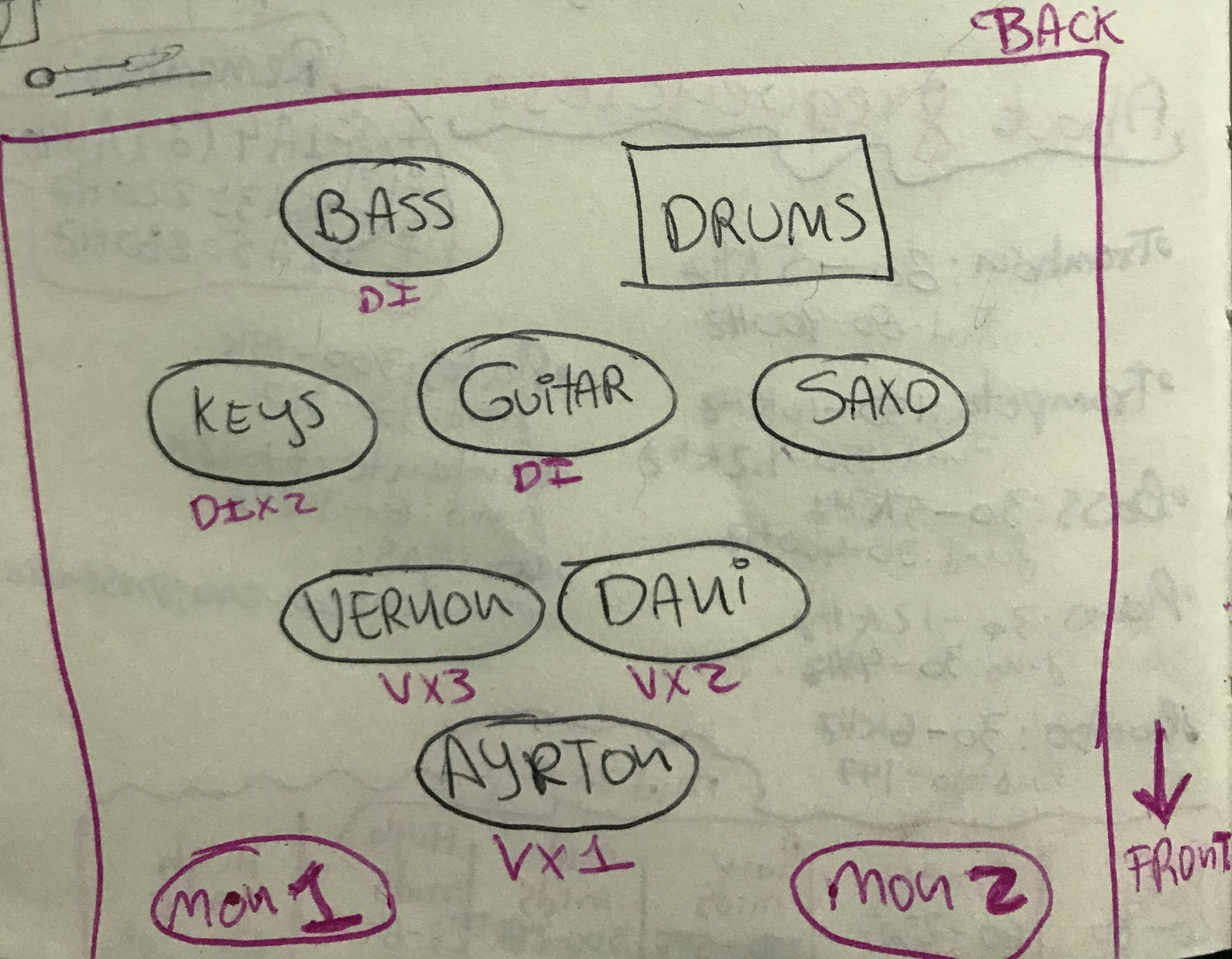
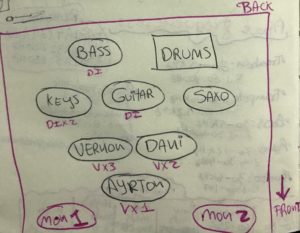
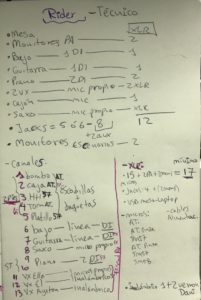
El input list y lista de Backline, esto nos ayudará a que el personal local (si se requiere), tenga el conocimiento de cuántos canales y cuáles instrumentos utilizaremos durante el show. Si esta lista no es correcta, perderemos tiempo y podemos correr el riesgo de no contar con los instrumentos y/o micrófonos que están previstos a utilizar. Adicionalmente, el input list nos permite configurar las sesiones de la consola de mezcla con anticipación y coherencia de acuerdo a los requerimientos del show.El stage plot. Como sucede con el input list, contar con un stage plot facilitará a todo el personal conocer con exactitud la posición y distribución de todos los músicos e instrumentos en el escenario, permitiendo un flujo de trabajo eficaz durante los montajes y movimientos durante el show.

Tomar en cuenta los puntos anteriores nos asegurará contar con información puntual y concisa, lo que se verá reflejado en una optimización de tiempo, trabajo y fluidez a la hora del montaje.

Usualmente, la persona encargada de FOH (Front Of House) se hace cargo de posicionar los micrófonos correctamente en los instrumentos (previamente corroborado por la persona encargada de monitores).

El o la ingeniero de monitores, en caso de llevar sistemas de monitoreo personal y no contar con personal encargado para hacer una coordinación de radiofrecuencia, deberá hacer esta coordinación de manera precisa, ya que de eso dependerá la tranquilidad de los músicos durante el show y evitará problemas técnicos que generen pérdidas de la señal de audio. En caso de utilizar monitores de piso y/o side fill, la persona encargada de monitores deberá realizar una ecualización por cada zona para evitar posibles retroalimentaciones. A su vez, en el área de FOH también deberá hacerse una ecualización y revisión del sistema de PA completo. (main PA, subwoofers, front fill, out fill, delay, etcétera).

Al término de este trabajo que ambos ingenieros realizan paralelamente, deben coincidir en hacer un line check, en el cual, con ayuda de los técnicos de escenario, revisan cada uno de los inputs en donde se verifica que llegue la señal de audio sin inducción, con una polaridad correcta y de acuerdo al input list.

A continuación se realiza el soundcheck, mismo que tiene como objetivo hacer una prueba de sonido, en el que los músicos tocan algunas canciones, mismas que normalmente tienen dinámicas que ayudan a los ingenieros a escuchar cómo responde el sonido y el sistema de amplificación dentro del recinto. Otra forma de realizar la prueba de sonido es haciendo un soundcheck virtual, que consta en reproducir multitracks previamente grabados de algún otro show y/o ensayo; esto se utiliza normalmente cuando alguno o todos los músicos no puedan presentase físicamente a la prueba de sonido, tomando en cuenta que para llevarlo a cabo se deberá contar con el equipo apropiado.

Otro factor importante al sonorizar shows en vivo es que usualmente no mezclamos en los mismos lugares; esto hace que aunque se trate del mismo grupo musical y se cuente con el mismo el mismo equipo, el show suene diferente, bien sea debido a características acústicas del recinto o a las condiciones atmosféricas del lugar. La humedad, la temperatura, el público y el viento son factores sumamente importantes que afectan directamente al sonido, por lo que se deben contemplar antes de mezclar.

Por ejemplo:

La velocidad del aire cambia cuando hay alguna variación atmosférica de humedad, viento y temperatura, de manera que debemos de tomar en cuenta el clima, así como también la altitud de donde estemos trabajando. Un show que se realiza en un recinto al aire libre será muy diferente a cuando se mezcle el mismo grupo, pero en un lugar cerrado. Esto es por la acústica del teatro, pero por otro lado, en un sitio en exteriores, nos ocasionará muchos más cambios climáticos, aunque evitará posiblemente ondas estacionarias que provocan alteraciones en el sonido. Es por esto que debemos considerar primero varios factores técnicos al hacer nuestra mezcla antes de tomar en cuenta la parte artística.

Si tomamos en cuenta todo lo anterior, deberíamos haber llegado a un punto de seguridad, el cual nos permitirá enfocarnos con mayor claridad y tranquilidad en la parte artística, que es realizar una mezcla clara, precisa y balanceada, sin perder la atención en la parte técnica.


The Role of a Production Manager

Just over six months ago, I became a Production Manager at a hotel in Bank, London. A lot of people have asked me how I ended up in this position, thinking I’m probably too young and too lucky to have ended up with such a title.

I am going, to be honest with you, I had no idea what was expected of me. However, I just knew at that point in my life that it was the right direction for my career. I always liked a good challenge; I think that is an important trait to have working within a live sound environment.

So what do I do on a daily basis? Here are a few of my many duties:

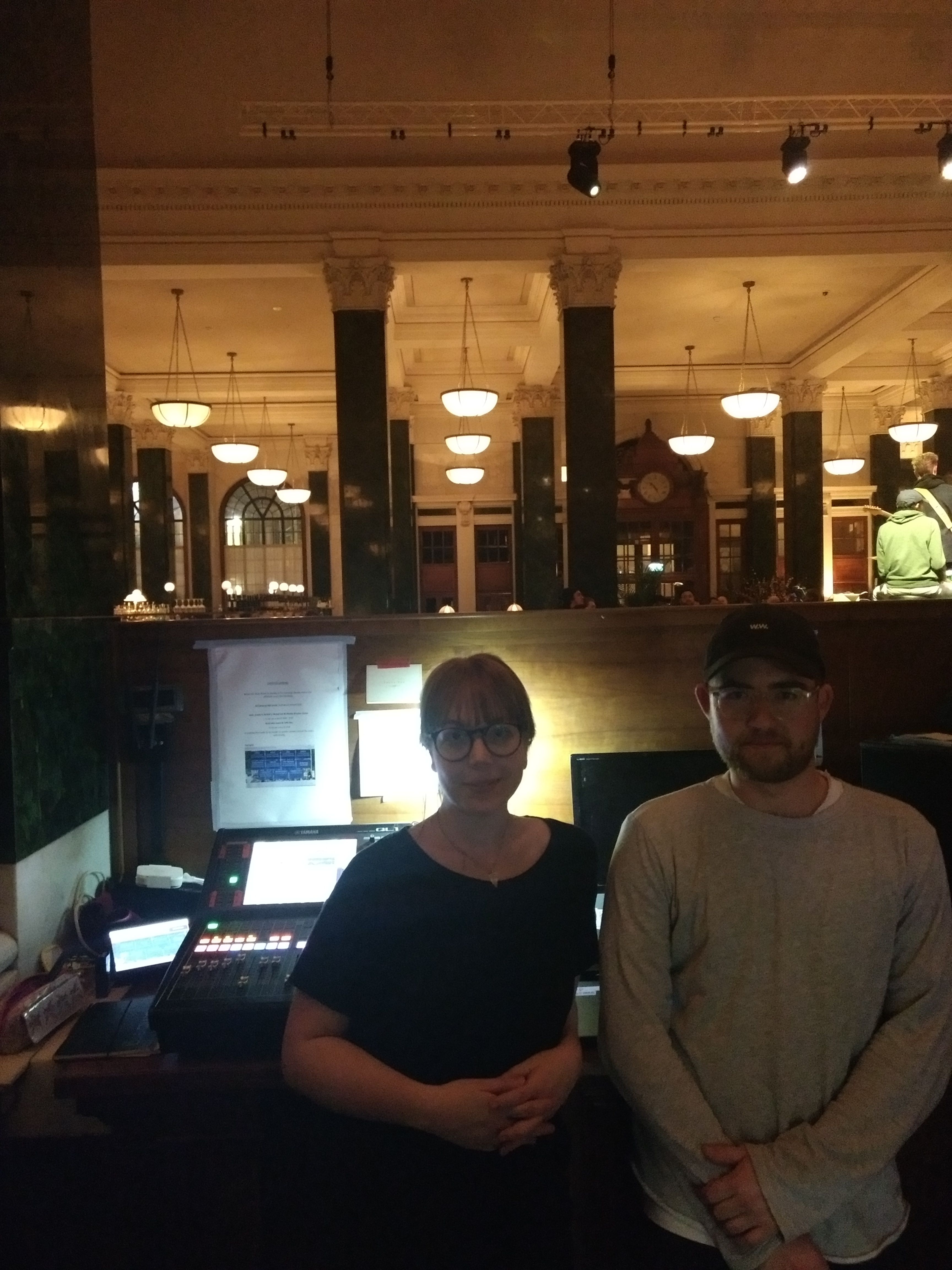
My team consists of the Head of Entertainment & Production, my freelancers, and me (Production manager). My main duty is to run the live sound on the main stage in the hotel lobby. Some production managers might not do live sound at all, but because we are such a small team, it is my main responsibility.

Our stage has a permanent setup that needs to be maintained, and I need to make sure that everything is working correctly. If anything would be faulty or damaged, it is my job to make sure the equipment either gets repaired or replaced. We have live music seven days a week, so things do tend to get run down pretty quickly.

I am the one who needs to deal with everything and everyone. This may be musicians, managers, management companies, restaurant managers, the events team, AV companies, and the list goes on. Head of Entertainment and I do work closely with each other when it comes to dealing with a lot of different people, and we make sure we’re both staying on top of everything.

As a Production Manager, you definitely need to be a ‘people person’ and to keep good relationships with everyone. A happy face goes a long way and having a ‘can do attitude is necessary, as there are often stressful situations that need to be dealt with efficiently and as quickly as possible. Being quick to come up with solutions to unexpected problems is an excellent trait to have.

In our venue, we do not have the luxury of having sound checks. Ever! It was tricky when I first started because when you are new to a system (or in this case, we have two different PA systems), it takes time to get to know the system with all its perks and flaws. It felt pretty stressful the first couple of weeks, but now after six months I have my QL1 template, and I’m confident whenever we have a new artist or band rocking up, that I can make them sound great even without a soundcheck.

Every day I have loads of fun. I absolutely love my job, even after sometimes working 13-14 hour shifts. Even when I have not had a day off, or a terrible day dealing with difficult people. Because we all do have those days, but those days are very few and far in between.

I had loads of doubt in myself when taking on this role. I thought that I did not have enough experience; I was worried I was not going to be able to do what they expected of me. This venue is also completely different to anywhere I have ever worked in before. However, I just went for it, I thought there is nothing that I am not able to solve; I had no other choice than to go for it! Therefore, if an opportunity ever presents itself to you, by all means, you will have doubts. But, take a chance and challenge yourself. I am so grateful I did not let fear stand in my way because otherwise, I would not be where I am today


Attachment and Touring

Why you should avoid getting emotionally involved on tour. And how it’s impossible not to.

Whenever anyone asks me what the best piece of advice I can give them about surviving on the road, whether it is as a woman or a man, I immediately say don’t get too emotionally involved with the people you are working for…or, in most cases, with.  It was the first and most important piece of advice my sound engineering mentor gave me before any technical teachings, and it has sat heavy at the heart of all I do for the past 20 years, albeit repeatedly without success. Let’s face it unless you are made of stone it’s virtually impossible advice to follow. However, it’s worth keeping in mind for the sake of your own wellness when embarking upon a life on the road.

I’m not really talking about getting romantically or physically involved. That of course happens, couples hook up all over the touring community with varying levels of good, bad or ugly outcomes but that’s a different blog in itself. Although I would say, it’s fundamentally a bad idea to hook up with your boss…

I’m also not necessarily talking about making friends on tour. We will all make friends for life doing this job, and we all need people who have so much in common; share the upside-down lifestyle; the cash flow or lack thereof; the in-jokes and jargon that no one else will ever understand. The thing is no one has the capacity to find or maintain that connection on every tour, and most people who are your best buddies for months on end on the road, often at best end up as acquaintances with whom you’re ‘friends with on Facebook, or it feels fantastic to share a quick hug within a random muddy field when you haven’t seen a familiar face in six weeks.

Unfortunately, friendships beyond the tour can be especially tricky for women when we are so in the minority. Reaching out to your male co-workers even in the most innocent capacity can raise eyebrows with their or our real-life partners who might not understand the close-knit family vibe of touring. This can make coming home off tour even harder on our mental health than it is for our male counterparts who can go and have a pint with each other no questions asked. It can be a delicate balancing act.

When you’re on tour, it’s hard not to get too close, be ‘family’ and care too much about the artist(s), the band members, the crew, hell even the management. It can confuse the lines between the job and your personal life. Getting too emotionally involved on tour can be really damaging for you and sometimes your career. But when you’ve been away from home for two months solid, and you’ve been through more ups and downs than with any of your ‘real’ friends or real family back home, how on earth is it possible not to feel like family? You’re thrown together 24/7 for weeks, months, or even years at a time, going through the extremes of emotion with the highs and lows of life on the road, the glamour and the not so glamorous, often while negotiating ‘real’ family crises back home. At the very root of it all, life on tour means missing out on a lot of your ‘real friends and family, so you are bound to compensate for this when thrown together in such close proximity to others. The ad-hoc nature of the work can change the way you behave around people, and you can’t help but put your livelihood at the expense of being yourself to fit in and keep the job. This can result in you giving far too much of yourself than is healthy. But the bottom line is that you would have to have a heart of stone to remain emotionally detached and business-like 24/7 in a touring situation and let’s face it, if you somehow managed to, you could get fired for not being enough of a team player.

I often tour one on one with teenage female singer-songwriters. We spend literally hours together solely in each others’ company, driving or flying, eating and drinking every meal together.  You’re not only there to get them from A-B and help them technically through the show, but inevitably to field questions, give advice ultimately often turning into a life coach. In fact, when all is said and done in these situations you often turn in to each others’ life coaches as it ends up working both ways. I worked for many years with an artist over a decade younger than me who I jokingly referred to as ‘the big sister I never had…’ because she was so wise and thoughtful about the various life crises I had from time to time.  It’s such a lovely feeling at the time to have such closeness, and it can feel like being on a big adventure together, but alas, it is ultimately their adventure, and you’re just at work. It’s imperative to keep a healthy outlook and remind yourself that this is just another job otherwise when they turn around and decide they want to work with someone else one, two or ten years later it’s going to feel like getting dumped or divorced, and impossible not to take personally. Unfortunately, this is just another one of the layers of thick skin we need to develop, simultaneously without becoming cold and distant. Impossible? Probably.

So how do you keep a balance, how do you have your own adventure without being left bereft at the end? I have a few ground rules that have helped me over the years. Although I will admit, I have felt pretty lost from time to time when the tour has come to an end, and you wake up in the morning with that feeling of nothing and no one, with no day-sheet to keep you on track or remind you what day it is. I don’t know anyone who tours who hasn’t felt like this at some point, but I will say it gets easier with age. However, that sudden lack of schedule, or familiar faces, even if they annoyed the hell out of you on tour, can unhinge even the most experienced road dogs.

The most useful rule I have made is that major life events aside, you avoid socializing outside of the tour, i.e., once it’s finished and you are based back at home, you simply have to politely make your excuses. This puts a very clear line between the tour relationship, and the ‘real life’ one.

The second piece of advice which is probably the hardest to stick at is that you invest as much energy as possible in your friends and family back home ALL of the time. You might not be around very much; you might have missed every single birthday, wedding, anniversary that there is, but you can still make a maximum effort when you are home. With modern technology: Skype, FaceTime, etc. there is no excuse for not keeping up with everything in each others’  lives when you’re on the road. I also find that when your friends realise that there is this sometimes unhealthy dynamic happening in your work life they often find it easier to relate to you and your haphazardness because it kills that inevitable facade of rock n roll glamour that they once thought you were living in.  I have very been bad at using touring as an excuse to avoid my real-life commitments as it can be like pure escapism, or you can certainly make it that way, but that’s not a route I would recommend. I often want to hide in my house as soon as I come home, but to be honest, socialising and re-rooting yourself into your homeworld once you’re back home is the best kind of decompression you can do.

Making sure everyone is aware of your hobbies and interests outside of touring, and remaining invested in them yourself is another way of keeping a slither of separation because if you have a genuine reason not always to be available to people in the downtime and on days off. It also means you have some consistency between home and tour life and something to throw yourself into when you have downtime back home.

Finally, sometimes, you may find that you have to resign yourself to giving a lot emotionally on a given tour because it’s the only way the dynamic in that particular case is going to work. Some artists are all about family to get themselves through a tour and won’t work with people who don’t fit in with that. The trick is to learn to gauge the situation on a case-by-case basis whilst always being mindful of protecting your own emotional health. It’s really not an easy balancing act. Not everyone can fit into every different touring mold, and it is, of course, a line of work that very much attracts square pegs.

I’ve often thought about this subject as something that might invariably affect women more than men. Clichés and stereotypes are ringing away here but we are ‘traditionally’ regarded as more in tune with our emotions, more empathic, and on a fundamental level, we care too much. Often these are the very traits that make us exactly the kind of people that are good and healthy to be around on tour, but it can also inflict a higher burden upon us and cause touring to be even a more unhealthy lifestyle. Each tour is obviously different and all these aspects have to be very much played by ear so its really one of those things you can only learn to manage through experience, and by taking responsibility for your own wellness, both physically and emotionally and remembering that tour life shouldn’t be your whole life-as hard/impossible as that can be.


Bryony October is UK based FOH sound engineer and tour production manager who also dabbles in radio sound production during downtime. She has been touring for over 20 years. Bryony is currently FOH engineer for multi-platinum selling singer Katie Melua and Ward-Thomas. These days she works almost exclusively with female-fronted acts, not at all by design but down to an increasing demand from such artists and their management for more women in the touring party. She feels strongly however that there is a glass ceiling hanging over FOH sound engineering as there are still so few women working in this role.

The Magic of Mixing

By: Nizarindani Sopeña and Andrea Arenas

As audio engineers, we have to take into account different factors that make our work more efficient, allowing us to focus on the art behind mixing sound. If take this principle into account, before a show we must take into account a number of extremely important factors so that we reach our goal more easily:

WHAT IS A RIDER?

The “rider” must be done with great detail, since we need on this information to be able to depend on the equipment, as well as to cover all our specific technical needs. These include:

The Input and Backline lists, which let the local staff (if required) know how many channels and what instruments we will use during the show. If these lists are not correct or complete, we will lose time and run the risk of not having the instruments and/or microphones ready when they are expected to be used. Additionally, the input list allows us to fully configure the sessions of the mixer board in advance, according to the requirements of the show.

The Stage Plot. As with the input list, having a stage plot will make it easier for all staff to know exactly the position and distribution of all the musicians and instruments on the stage. This allows for an efficient workflow during the set up and adjustments during the show.

Keeping in mind these points will ensure timely and concise information, which will be reflected in the optimization of time, work, and smoothness at the time of setup.

Usually, the person in charge of FOH (Front of House) takes charge of placing the microphones correctly in the instruments (checked beforehand by the person in charge of the monitors).

The monitor engineer, in case of doing the monitoring by themselves and not having personnel in charge to do a radiofrequency coordination,  must be very precise, since the musicians’ peace of mind during the show will depend on avoiding technical problems that generate losses of the audio signal. If using floor and/or side fill monitors, the person in charge of monitors should perform an equalization for each area to avoid possible feedbacking. In turn, in the FOH area, an equalization and revision of the entire PA system should also be made (main PA, subwoofers, front fill, out fill, delay, etc.).

At the end of this job that both engineers perform in parallel, they must agree on a line check with the help of stage technicians, during which they will check each one of the inputs and verify that the audio signal arrives without induction, and with a correct polarity according to the input list.

Next, a sound check is performed, in which the musicians play some songs, which usually have dynamics that help the engineers to hear how the sound and the amplification system within the enclosure respond. Another way to perform the sound check is virtually by playing previously recorded multi-tracks from a previous show and/or rehearsals; this is normally used when some or all of the musicians cannot physically be present themselves during the sound test, taking into account that in order to carry it out, they must have the appropriate equipment.

Another important factor when sounding live shows is that we usually do not mix in the same places; this means that although it is the same musical group and the same equipment is available, the show sounds different, either due to the acoustic characteristics of the venue or the atmospheric conditions. Humidity, temperature, the crowd, and the wind are extremely important factors that directly affect the sound, so they must be contemplated before mixing.

For example:

The speed of the wind changes when there is atmospheric variation of humidity, wind, and temperature, so we must take into account the climate, as well as the altitude where we are working. A show that takes place in an outdoor setting will be very different from one when the same group is mixed but in an enclosed venue. This is due to the acoustics of the theater. However, an outdoor location will cause many more climatic changes, although it will possibly avoid standing waves that alter the sound. This is why we must first take into consideration the technical factors when making our mix before taking the art of mixing into account.

If we take into account all the above, we should have reached a safe point, which will allow us to focus more clearly and calmly on the art of mixing, which is to make a clear, precise and balanced mix, while at the same time not disregarding the technical side.


Colorado SoundGirls Workshop

SoundGirls Presents Colorado Chapter  Workshop

Angie Dickinson Mickle has graciously volunteered to host our January SoundGirls-Colorado MeetUp at her studio – the Zephyr Room.

The Zephyr Room is about as versatile as it comes – ready for voice-overs, tracking, mixing and even audio archive transfer and restoration (including wire recordings!). Come hang out, check out her space and, as a bonus, she’ll give us a little taste of analog editing with some of the many legacy machines she’s got.

This event is limited to 20 people. Register Here


Vanessa Mering – Marketing Manager at HARMAN Professional

I pick up my phone and dial the west-coast number listed for Vanessa Mering. It rings a few times, and I am welcomed by a cheerful greeting. Vanessa and I share a few pleasantries as we talk a few details about everything we’ll get to discuss. I adjust my rudimentary phone-recorder that is carefully balancing on a large conference table. The small room I’m in has cables and papers thrown about with a small cleared area where my laptop cautiously sits. I set levels and begin recording our conversation.

To introduce her, Vanessa Mering is a marketing strategist with 15 years of experience at leading audio technology companies. Over the course of her career, she has played a key role in launching a variety of industry-shaping innovations—from democratizing music creation at M-Audio/Avid, to defining the future of live sound with HARMAN. In her current position as Marketing Manager at HARMAN Professional, Vanessa spends her days introducing new products and planning campaigns for ten world-class brands including JBL, AKG, and Soundcraft. Passionate about seeing other women succeed in the industry, Vanessa is also the leader of the HARMAN Women’s Network chapter in Northridge, California. In this role, she’s dedicated to supporting the professional and personal growth of women at HARMAN, as well as attracting new talent to the company. In her free time, she’s active in other groups dedicated to building community and expanding professional opportunities for women.

HPro Installs: JBL and other HARMAN brands installed in houses of worship, sports stadiums, and other prominent venues

“I know I sent you about 900 questions…” we both chuckled. “…but we’ll play it by ear.”

What was your first job in the audio industry?

“So, funnily enough, my first job in audio was a random temp job at Alesis while I was studying at UCLA. I was helping support administration within HR during a summer break. I do, however, remember distinctly sitting across the wall from the marketing department and hearing how much fun they were having. I got to witness them being creative and collaborative, and that was my first time thinking that marketing seemed like an awesome profession.”

I respond, “It’s actually kind of hilarious how you end up in these random positions that can change your life. You have an entire career in audio technology because of a fun group of individuals on another side of a wall at some temp job one time.”

“It is so interesting,” Vanessa says. As we both get further into the conversation, you can begin to hear the relaxation in our voices. “I admire people who have a specific vision for their career from an early age, but that just wasn’t me. All I knew was that I loved writing and being around creative people, so I let my curiosity and interests guide me. It was a total coincidence that I came right back to the audio industry by landing my first full-time job at M-Audio a couple of years later! But I quickly fell in love with the creativity of my coworkers and our customers. I’m so grateful to that team for supporting me as I discovered my passion and started building my career.”

I’ve read about some of your work with the HARMAN Women’s Network Northridge Chapter. Can you tell me more about the organization and your lead in it?

Absolutely! HARMAN has campuses all around the world, and each campus has its own Women’s Network leader. So there’s a lot of autonomy in the role. I can drive initiatives that are exciting for this campus, and at the same time learn from what other women are doing on other campuses. I’ve brought in a couple of guest speakers to help with personal and professional development. I’ve focused on a lot of soft skills, like having a mindfulness meditation instructor come in.

“Ooohh!” I interject.

“She talked about the brain science behind mindfulness and how it can reduce stress and increase cognitive function, and all kinds of other health benefits. One of my favorite things I learned is that practicing mindfulness enables you to appreciate music even more. I’ve gotten to grow so much from this initiative, and have really enjoyed the opportunity to connect with women across different divisions, departments, and campuses. And men too! It’s awesome to bring everyone together to drive change.”

Tell me about your early days at M-Audio when recording really started to change.

I came into M-Audio at a really exciting time when high-quality recording gear could finally be produced at an affordable price point, and that was changing how music was being made. It was all about mobility. You could be on the road, be on the tour bus, be in a hotel room, be in your bedroom studio, and make really good quality music. So, it democratized the whole process. You didn’t have to have this massive budget to be heard. It was a really fun, exciting time to start in the industry and that’s a lot of what I fell in love with. We were enabling people to express themselves without a huge budget.

I was curious, other than democratizing music-making, were there any other projects that were super memorable for you? Projects that really stick out in your mind.

Vanessa chuckles a bit before listing off a myriad of amazing projects she’s been a part of, but one in particular stuck out…

There was a time when I transitioned from running the M-Audio content marketing team to acting as marketing program manager for several different brands at Avid. The Eleven Rack guitar recording and signal-processing system was the first launch that I did in my new role. This is where I was looking at the entire marketing plan and program and putting it together from top to bottom, overseeing a whole launch. The experience was really gratifying for me on a lot of levels. Professionally, I got to stretch into a more significant leadership position than ever before, and collaborate with a ton of different teammates to make everything happen. And personally, I’ve always loved guitar-driven music, so getting to reach guitarists was really fun for me.

Are you a musician? Do you play any instruments or anything?

“A few years after that project, during my time working at Line 6, I finally picked up a guitar. It was really cool, they had free guitar lessons on campus, so I would get to jam with my coworkers once a week. It gave me a much deeper appreciation for my customers’ and colleagues’ dedication and skill… it wasn’t easy for me! But I’m so glad I got a chance to learn.”

If you had a few pieces of advice for your younger self or young women in the field, what would they be?

“I often see women, myself sometimes included, hesitating or apologizing for asking questions. It’s important to put yourself out there, ask questions without apology, and get the information that is going to help you grow. Earlier in my career, I felt a lot of pressure to know all the answers or figure everything out on my own. Having the freedom and confidence to reach out is important. It builds community and team. And connecting with others is what makes life a lot more fun, so go for it!”

We thank each other for the time and conversation, some 40 minutes deep into discussions. We share a few more laughs, thank each other again, and hang up. I take a few minutes to simply digest everything we’ve gotten to chat about. I walk away realizing just how far-reaching audio technology goes. Before this interview, I never considered a marketing management position, but now it seems so obvious. There are a lot of ways to take part in music and audio. Never think you’re stuck in a certain position. There are women out there blazing trails and helping make monumental differences in this industry. And, It’s so great to hear that HARMAN and Line 6 are trying to not only be inclusive for women and personal and professional growth, but they also offer ways to connect to customers even more.


The 8 Free Plugins You Need To Be Using

You may be surprised at the level of quality you can find in free VST plugins. However, there are so many to choose from it can be difficult to find the diamonds in the rough. Luckily, I’ve done a lot of the research for you.

I’ve hand-picked some of the most popular VST plugins you can use for each stage of your production. I’ve mainly focused on mixing and mastering plugins because I’ve found this is where most of the quality is.

While you probably won’t need every plugin on the list, it will likely be beneficial for you to pick and choose one or two plugins to try out during your next mixdown. Most of these plugins will be compatible with both Mac and Windows operating systems.

If you have any other free plugin recommendations, please feel free to leave them in the comment section below! Let’s get started with one of the most popular compressor plugins.


OTT – Compressor

The OTT compressor is a re-creation of the popular multiband compressor that comes stock with Ableton Live. It’s incredibly popular with electronic music producers but can easily give some life to other genres.

The main part of the sound from the OTT is derived from the upward compression (which is difficult to accomplish with a regular compressor.) Essentially, you are providing gain to quiet parts of the track. This usually comes in the form of high-end frequencies that otherwise wouldn’t be heard. A great free option for every genre.


Neutrino – Spectral Shaping

The neutrino is an interesting new plugin from iZotope. This plugin is designed to add a polished sound to your final mix. By adding neutrino to different tracks in your mix, you can reveal subtle details that were previously unheard.

The plugin is incredibly easy to use and won’t drastically change the overall sound. Rather, it will subtly enhance your mix to clear up any mud or minor mixing issues.

You get 4 settings to choose from

The neutrino is a sneak peek of what is offered in iZotope’s Neutron 2. Check it out in action here:


Span – Spectrum analysis

Span is a free spectral analysis plugin that is essential for EQing during your mixdown.  It was derived from Voxengo GlissEQ dynamic parametric equalizer and reproduces the spectrum analysis function. Great for using in conjunction with your parametric EQ.

It’s classified as a “fast Fourier transform” (just a complicated math term) spectrum analysis. The man attraction of Span is the ability to monitor two channels, or channel groups, at once. You are also able to customize the “mode” feature to have your analysis settings stored for future use.


Tynell N6 – Synth

The Tynell N6 is the only free synth I’ve included on this list. If you’re familiar with the Roland Juno, this synth will be right up your alley. Initially conceived as a hardware synth, the creator decided to release it as a free software synth once he realized the cost of producing actual hardware.

It comes with plenty of presets for you to play around with.
It features

Another great addition to your digital synth library. Hear it in action here:


Dimension Expander – Expander

The dimension expander from Xfer Records is used to give your track a little more size in the mix. It works by splitting the audio signal into four sections. It flips two of the sections, adds some delay, and re-combines them with the original signals.

The end result will have an enhanced width and increased stereo presence. It works really well on lead sounds you want to make pop. Hear it in action in the video below:


TAL Reverb-II – Reverb

One of the most popular free reverbs currently on the market. The TAL reverb is a lush reverb with a fast buildup time. It’s based on the successful TAL-Reverb 1 and works really well with atmospheric sounds. It’s a great addition if you are still using your stock reverb plugins.

It comes with simple subtractive EQ knobs so you can surgically place the reverb within your mix. Features include:

Here it is in action:


Triple EQ – EQ

One of the best free EQs available: the Blue Cat Triple EQ. The Triple EQ is a 3 band semi-parametric equalizer that can be controlled as a single filter. It allows you to create customizable shapes in addition to including a low shelf filter, a high shelf filter, and a boost/cut filter.

It has a wide gain range of  +/-40 dB per band and bandwidth of  .01 to 5 Octave. All three filters are linked. This means when you change the bandwidth, the three filters are adjusted accordingly.

A great option for anyone looking to upgrade their stock EQ.

Here’s a video showing the features:


LoudMax – Limiter

The LoudMax limiter is one of the simplest limiters available. It was designed to retain the original character of the audio even at high compression levels. It’s incredibly simple to use with only two sliders: one for the output, and one for the threshold.

If you’re looking for something to increase the overall volume of your master, this is it.

How does it compare to the popular Ozone mastering plugin? Check out the comparison below:


That wraps it for the best free plugins on the market. These plugins should give you a few more options to play with during the mixing process. As I mentioned before, if you have any other suggestions that may be useful for you fellow readers, please leave them in the comment section below.

I hope you’ve found at least one plugin to add to your suite!


About the author: Glen Parry has been involved with music for over 15 years. He’s done everything the hard way so you don’t have to. You can find more advice and buying guides, such as a review of the best electronic drum sets, over at AudioMastered.com

X