Empowering the Next Generation of Women in Audio

Join Us

33 ⅓ The Raincoats

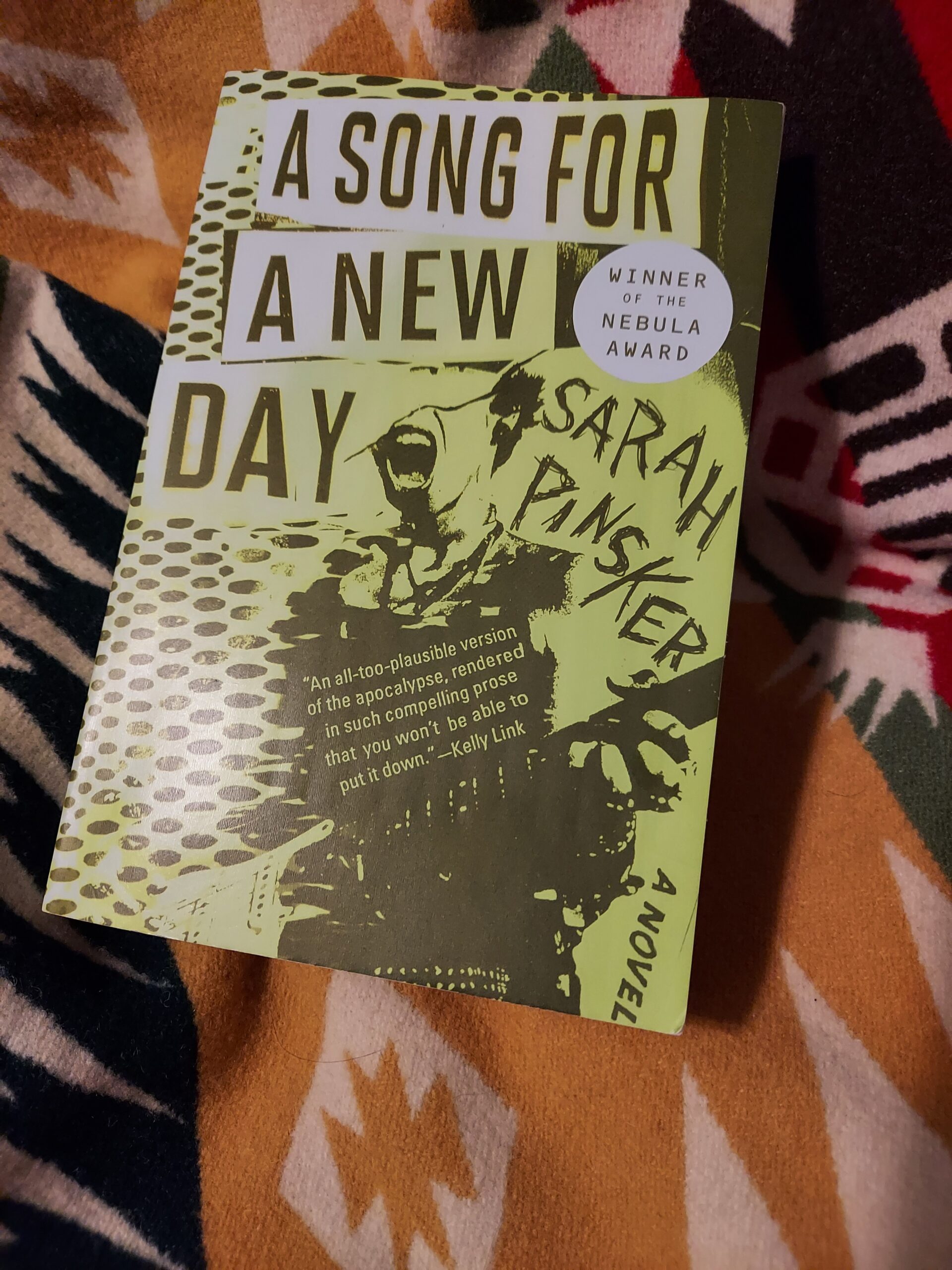
Finishing off the year with a lighter read is The Raincoats by Jenn Pelly.  This book is part of 33 ⅓, a series that deep dives into beloved albums.  I found this copy while on an annual west coast trip and I took a routine pilgrimage to the SeaTac SubPop store.  Among the collection of cassettes, LP’s, and other merch, there was a collection of bite size books, each boasting classic titles.  I scanned for something I could share with SoundGirls and a magenta spine stood out.

I am a self-declared riot grrrl fan, and therefore Fairytale in the Supermarket and Lola are on regular rotation.  Their sound is rough and full of energy.  Even though their sound matches the 90’s feminist grunge movement, they predate them by over a decade.  I was not aware of that fact before this book.  And, for those not familiar with their self-titled album, it sports a painting from Chinese propaganda of school children singing a song, I was not even aware of what the members even looked like.

Bordered by magenta and black, this petite book sports the The Raincoats self-titled album cover.  Inside is a perfect travel read while listening to the album in question. Author Jenn Pelly writes reviews for Pitchfork and other large publications.  Her hand is deft at demystifying the mythos around the Raincoats.

The Raincoats are a band that, while adjacent to British punk of the 70’s, are not cemented to any time or place.  The members have ties to The Clash, The Sex Pistols, The Slits, Patti Smith, and X-Ray Spex.  They hailed from Spain, Portugal, and England, but made their home in the squats of London.  This book introduces us to the band, their background, their ethos.  We are on a journey of song creation.  After the band introductions we are led through the track list, with the starting with the post-release addendum of Fairytale in the Supermarket.  Pelly shows us that this is a band not afraid of changes, of learning, and of discussions.  We get the whole picture through interviews and Polaroids.

Reading about The Raincoats reminded me of the crew of The Maiden, the yacht that made the first all-female crew to place in the Whitbred Round the World Race chronicled in the 2018 documentary Maiden.  Both groups had their own power, and did things their own way.  They also took the initiative to document their journey.  As if they knew their voices would be important to others, but also because it was important to themselves.  This is zine culture, creating a record of your history, because who else is going to tell it?  The boys are all looking away, but you know you are creating something of value.  Jenn Pelly adds to that narrative.  She includes quips from those who were influenced by The Raincoats, lyrics woven through narratives, handmade flyers, and tour diaries.  This is The Raincoats in their own words, and we are The Raincoats.  We can write about ourselves, we won’t get lost in ‘The Void.’

Amanda Uretsky General Entertainment Technician for the “Happiest Place on Earth”

From a young age, Amanda had a deep fascination with live entertainment, particularly the behind-the-scenes aspects of shows. Growing up, her curiosity about the technical side of performances began during family trips to Disney World, where she was more interested in the front-of-house booth than the shows themselves. In high school, Amanda took her first steps into the audio world by joining the tech crew and volunteering at a local music school’s recording studio. Her passion for audio blossomed as she learned the ropes, running sound for school assemblies and theater productions.

Amanda went on to study at Rowan University, earning a Bachelor of Science in Music Industry with concentrations in Music Technology and Music Business, along with a minor in entrepreneurship. Throughout college, she gained practical experience through internships, freelance gigs, and work-study programs, honing her skills in both live and recorded audio. Her dedication to learning, along with mentorship from a professor in live sound, solidified her career aspirations.

Now working at Disney, Amanda enjoys the variety and challenges that come with working across multiple disciplines, including audio, pyrotechnics, and props. Although the long hours and holidays away from family can be difficult, the rewards of bringing entertainment to life at Disney make it all worthwhile. Looking ahead, Amanda hopes to stay with Disney long-term, with aspirations of becoming an audio designer. Her advice for others, especially women in the field, is to keep learning, communicate well, and always be willing to grow.

Career Start

How did you get your start?

I was able to work backstage on our school production of Beauty and the Beast that fall 2015 and by the spring I was running sound for assemblies on my own. In my junior year, I was able to work mainly backstage as A2 on the school’s Hairspray. Senior year, I was co-A1 with another student for Rodgers and Hammerstein’s Cinderella. We switched on and off between who would A1 the vocals vs the band. I also was the A1 for our Musical Theatre Ensemble’s showcase. The two productions senior year really engraved in my head that is what I wanted to do as my profession and not just as a hobby or in my free time. During college I stepped up for as many freelance gigs as possible, worked in the work study program at Rowan, and interned with a professor in his recording studio.

How did your early internships or jobs help build a foundation for where you are now?

During my work study and classes, I got more comfortable in some of the areas of recording music and live that I never had learned prior. The internships and jobs helped me network with people, build relationships, and get confident in myself.

What did you learn interning or on your early gigs?

During my recording internship, I gained extensive knowledge of patching, how exactly to mic different instruments, and what works best for what instrument. With live sound, I was able to see what a true load in and load out looked like. There were days that were 17 hours long due to having to pick up the gear and then drive to a venue before setting up, running sound checks, performing shows, and then striking that same night. I learned some days will be worse than others but in the end, the outcome is almost always worth the pain, trouble, and long hours.

Did you have a mentor or someone that really helped you?

During my college career, I got extremely close with Barbara Adams, one of my professors in live sound. She taught me so much of what I didn’t learn in high school, such as how to run a board during a show and how to troubleshoot extensively.

Career Now

What is a typical day like?

At Disney, they like you to know multiple disciplines so you can be put into multiple places. Since starting at Disney, I have worked in audio, pyrotechnics, effects, parades, and props. Being in the Magic Kingdom, my day can vary depending on the season we are in. During my first year I was working 6:45am-2am some days and other days I was working 6:45am -5:15 pm or 5pm-2am. Days can be very long but they are also rewarding seeing the looks on guests’ faces as entertainment happens at Disney. It can be a lot of hard work, having to move set pieces, or climb flights of stairs and ladders, or even needing to mop a stage and dry the set off.

How do you stay organized and focused?

It definitely is difficult, I have a monthly and weekly calendar on my front door and refrigerator as well as a physical planner. I put all appointments, meetings, work shifts, even things I do in my free time because staying organized without a set schedule can be really hard. Staying focused is easier with the planner because I can see what I need to do and when it needs to happen or be done by.

What do you enjoy the most about your job?

I love being able to be constantly moving and never having the same day twice. It’s rare that you will have the exact same crew of techs day in and day out unless for special events. I love that if things such as weather is an issue, there’s communication.

What do you like least?

Since we are open 365 days a year, you most likely won’t have holidays off until you’ve gained seniority. It can get lonely on those holidays after work because most likely, your family is hundreds of miles away and you can’t just go over for dinner after work anymore.

What is your favorite day off activity? 

I love to read or spend time with my friends if our schedules work out

What are your long term goals

I would love to stay with Disney long term and even become an audio designer at some point

What if any obstacles or barriers have you faced?

The biggest obstacle isn’t with the job but it’s learning how to be away from the ones you love and learn to work with all kinds of people.

How have you dealt with them?

Being away from family just means you might call or Facetime them more often. As for working with others, it’s something everyone needs to do. There are many women in tech at Disney, so there isn’t a stigma around women in the field like other places.

Advice you have for other women and young women who wish to enter the field?

Keep learning, take constructive criticism, and be you. The profession is tough but with knowledge and communication, you can do it.

Must have skills?

Detail-oriented, willing to learn, communication. Dante, QLab, and Q-sys are all extremely helpful wherever you go in audio.

Favorite gear?

I’m partial to the Yamaha QL series mixing boards

Call for Co-Host: SoundGirls Podcast

Are you passionate about audio and storytelling? The SoundGirls Podcast is looking for a co-host to join our team!

We’re seeking someone positive, enthusiastic, and eager to explore and interview professional audio engineers across all facets of the industry.

As a co-host, you’ll work alongside Katie Maifield to record and produce 12 episodes throughout the year. This role requires a time commitment of approximately 10–20 hours per month.

You’ll collaborate with our incredible team:

If this sounds like the perfect opportunity for you, we’d love to hear from you! Apply here

Join us in amplifying the voices of audio professionals worldwide!

Emotion through Musical Interpretation

In 2017, I sat in a small chamber orchestra with colleagues, carefully treading across the churning melodies that constructed “Hammersmith” by Gustav Holst. Our mentors spent countless weeks helping us learn how to evoke an image within our audience’s minds, showing us what to listen for and how to use colors and textures on our instruments to collectively paint the image Holst had intended.

Other orchestral pieces are also really significant in their contribution to emotional perception. “The Planets,” also by Gustav Holst, is another powerful example. Throughout the composition, the players are handed a myriad of musical components that elicit the feeling of the sublime, or grief, or even charisma within the whimsical melodies.

I’m not providing a crash course on classical music, but really emphasizing the importance of musical nuances in helping evoke emotion within an audience. Becoming a critical listener and creator in the orchestral environment reinforced my perception and association of sound, and so much of this has been along my journey as a mixer. With careful consideration, we can use some of this thinking to tastefully shape the mood and audience experience.

In collegiate orchestra, our conductor encouraged specific musicians to play louder or softer with emotive hand gestures. Some tools we have as engineers help us to lean into the music in the same manner. First, the SPL meter can be a useful visual aid in helping us manage the ebb and flow of volume and dynamic range within a song, or even a set. Intentionally utilizing soft moments in contrast to huge impactful ones lets the music breathe and emphasizes what the song is probably already trying to accomplish.

Melodic content is also key. For instance, we can vary the musical journey of a song by emphasizing different harmonies or rhythms. These may provide new interest by enhancing lyrical concepts.  An intricate high hat pattern pulls forward a groove that pushes the listeners to dance a little. It might be accompanied by a complimentary guitar pattern. It’s up to creative interpretation to choose elements such as these to give the music some life. Watching the musicians and their body language may help us identify these, and even watching closely to the lighting design can be helpful to piece together musical moments.

Lastly, the use of delays and reverbs can help us evoke a mood. I personally enjoy using delays to create textures, and reverbs to create space and depth, layering them as needed. I also love a delay throw that briefly carries on a phrase, or a lingering reverb that washes an instrument or word into the next motif. Some of these can create color or tension. Other tools, such as compressors, can be artistically used to emphasize tonal characteristics. Listening to records or other live albums have helped me to shape my understanding of depth and sound stages, and learning how to incorporate those feelings and visuals into what I’m mixing is difficult but rewarding.

The ideas feel endless. The subjectivity of the craft and our tastes provides so much room for interpretation and exploration. Most importantly, let the music have life and movement. Our associations between sound and emotion are incredibly strong, and we can always continue leaning into that.

L-Acoustics – SoundGirls Grant Recipients 2024

We are thrilled to announce the recipients of the L-Acoustics – SoundGirls Grants for 2024! This year, we are proud to support a diverse group of talented individuals who are making significant strides in the audio industry, who have each demonstrated exceptional dedication and passion in their work. These grants will provide them with valuable resources and opportunities to further their careers and continue their important contributions to the sound community. A big thank you to L-Acoustics for their generous support in making these grants possible. We look forward to celebrating the achievements of our recipients and supporting their journeys in the audio field!


Carolyn Slothour (System Expert grant)

Carolyn Slothour is a freelance live sound engineer based in New York with 10 years of experience in the audio industry with a specialization in FOH, monitor, and systems engineering. She has recently worked with artists such as Matchbox Twenty, Rob Thomas and Michael Bublé, and has mixed at festivals including Download, When We Were Young, Corona Capital, Slam Dunk and Lollapalooza. In addition to engineering, she develops curriculum and teaches live sound engineering courses for a non-profit organization whose mission is to improve accessibility and diversity within the audio industry. When not working, Carolyn enjoys making electronic music and spinning fire.

Instagram: @requiemwitch / Website: www.carolynslothour.com


Monica Bolles (L-ISA grant)

Monica Bolles has been working with spatial audio since 2011, when she first gained access to her local planetarium’s 15.1 channel surround system. Since then, she has developed custom toolsets in Max MSP and explored emerging technologies to craft textured soundscapes that explore space, movement, and interaction. As both a technician and artist, she collaborates with artists and composers to bring their work into immersive spatial environments, while also producing her own large-scale multichannel installations, exhibited on systems ranging from 8 to 140 channels.

Monica co-hosts the Immersive Audio Podcast and contributes to organizing Spatial Audio Meetups through NOTAM. She frequently curates, moderates, and presents workshops and panels on spatial audio, with appearances at notable events such as the New Visions Festival, SXSW, IRCAM Forums, Ableton Loop, IMERSA Summit, and NIME, among others.

Monica currently owns and operates Resonant Interactions, a company specializing in immersive experience design and immersive music production.

Websites: 

Social Media


Madison Keefer (System Engineer grant)

Hey everyone, I’m Madison Keefer and I’m a 22 year old who is super passionate about audio engineering. I run sound for Lightning Hockey games and I am a Patch tech with ESI Audio. I aspire to be a System Engineer one day and am always working on bettering my skills. I love how fast paced this industry is and the work I get to do. I am so thankful to have the job that I have and to play a part in creating legendary memories for people around the world.


Social Media Handles:

Facebook: Madison keefer

Instagram: @maddy_keef21


Jessica Baxter (System Technician grant)

Jess hails from Perth, Western Australia. She started her audio career mixing FOH in small, local live music venues. Since then she has branched out and is working full time for one of the largest audio production companies in Perth. Here she hopes to advance her career in the field of large scale line array system design and optimization.

Call for 2025 SoundGirls Bloggers

Are you passionate about audio and eager to share your knowledge with a vibrant community? SoundGirls is seeking volunteer bloggers for 2025!

We are looking for enthusiastic individuals who can contribute their insights, experiences, and advice on various aspects of audio engineering, production, and the music industry. Whether you’re a seasoned professional, an aspiring audio engineer, or someone with valuable life lessons to share, we want to hear from you!

Why Become a Blogger?

  1. Share Your Voice: This is your chance to contribute to a community dedicated to empowering women and marginalized individuals in the audio industry. Your unique perspective can inspire and educate others.
  2. Expand Your Network: Blogging for SoundGirls connects you with a supportive network of audio professionals and enthusiasts. You’ll build relationships with fellow bloggers, industry leaders, and readers who share your passion.
  3. Enhance Your Skills: Writing for a community platform is a fantastic way to improve your communication and writing skills. You’ll gain valuable experience in content creation while showcasing your expertise.
  4. Make an Impact: By sharing your knowledge, you can help others navigate their audio careers, avoid common pitfalls, and discover new opportunities.
  5. Boost Your Visibility: As a blogger, you’ll have the chance to establish yourself as a thought leader in the industry. Your work will be featured on a respected platform, enhancing your professional profile.

Ready to Contribute?

If you’re interested in becoming a volunteer blogger for SoundGirls in 2025, please reach out to us with a brief overview of your experience and topics you’re passionate about covering. Together, let’s inspire and empower the next generation of audio professionals!

Contact us at [insert email or contact link] to get started.

Join us in making a difference—your voice matters!

Apply Here

Pistols in St. Paul’s Review

In a previous article I discussed Sonic Tourism, traveling to delight the ears. I highlighted the Mormon Tabernacle in Salt Lake City as one building of note. I had been in Salt Lake City at that moment to visit the Acoustical Society of America’s Conference to present a project I had been working on as an undergraduate student. Combining the aural delight reverberating in an architectural beauty with the cutting edge research was something that I thought would be a rare experience for me. However, I received an advance copy of Pistols in St Paul’s: Science, music, and architecture in the twentieth century by Fiona Smyth to review and I was immersed in that convergence once again. This review is my honest reflection on Pistols in St Paul’s.

Fiona Smyth, an Associate Professor School of Art History and Cultural Policy at University College Dublin, is a historian of building science and acoustics. Pistols in St Paul’s is a culmination of years of research including her doctoral thesis. It is obvious from the first page that Smyth loves her subject, as care is taken to take the reader beyond the velvet rope of tour guides and into the drama of the history of Architectural Acoustics.

Architectural Acoustics is the science behind buildings as an instrument. The main methods of controlling the sonic ambience of a building is to either design it with acoustics in mind, and to add treatment once the building is completed. Quoting a theme from Pistols in St Paul’s, Architectural Acoustics is “the space between.” It is art and science, tangible and intangible. As a field it began as a multi-disciplinary collection of experts, and based on my own experience at an ASA convention it still is. A few of the fields that are represented in this book are physiology, SONAR, architecture, mechanical engineering, electronics, and physics.

Smyth begins her history of Architectural Acoustics starting in the late 1800’s and progressing to the titular event in the 1950’s. The sections are arranged chronologically, and grouped by major research experiments. Pistols of St Paul’s focuses on London and the influence of Royal Institute of British Architects (RIBA.) While there are excursions to the United States and British occupied India, it makes sense to focus on RIBA and their influence on the development of standards of practice. The narrative coming from one perspective allows the reader to focus on how an architect in England might have incorporated Acoustics into their designs over the years. There are physicists and architects who come together to quantize the field with observations and strategic concerts. There is also the realization of the importance of Acoustics that coincides with leaps in understanding sound as a science. But with every major leap forward there are setbacks that come from inflated egos, slow communication, and even world wars.

Another aspect that Smyth choses to focus on is the social importance of acoustics. Many of the buildings chosen for the experiments are public buildings used as gathering spaces. For these buildings they might be used for orchestral performances, speeches, debates, or a combination of the above. Buildings with infamous acoustics become maligned in the press. Other more fortunate buildings may be the key to boosting Post-War morale by hosting nation-building concerts.

Fiona Smyth draws you into the world with her anecdotes and descriptions, and the historical photos add to the context. While I did notice that RIBA and many of the characters in Pistols in St Paul’s are part of a boy’s club, there was an instance of women supporting women. Smyth calls out Emily Thompson’s contribution to the study of Acoustical History. And just like some of the characters in Pistols in St Paul’s there is across the pond multidisciplinary collaboration, with Thompson focusing more on the history of American Audio Technology. Overall, Pistol’s in St Paul’s is a riveting history of the formation of Acoustics as a serious field of science. I find it essential to the context of contemporary concert hall design. And to a casual tourist to Architectural Acoustics, it is an insightful museum guide.

Keywords in Sound

During my time at university, I had the pleasure of studying under Dr. Joel Overall, who specializes in writing and rhetoric and has a particular fascination with the intersection of music and persuasion through what is known as sonic rhetoric. Prior to meeting and working with Dr. Overall, I had no idea that this was even a topic of study, but after taking some time to research it, I, too, became completely captivated. Dr. Overall recommended David Novak’s Keywords in Sound to take a closer look at not just sonic rhetoric, but sound in conjunction with “philosophical debates, and core problems in defining, classifying and conceptualizing sound, and sets new challenges for the development of sound studies” (Keywords in Sound). In today’s blog, I am going to highlight the first section of Novak’s novel that left me contemplating my own relationship to sound and the ways in which we use language to define it.

Keywords in Sound takes the idea of sonic rhetoric and divides it into twenty chapters written by twenty different specialists in various audio and linguistic fields. As a casual practitioner of epeolatry, but also someone who has studied sound only in a technological environment, I dove headfirst into this book and only came up to breathe when I turned the last page. In being shown how to analyze sound in this new perspective, I was left feeling both motivated and enlightened. I am excited to share some of my thoughts with you today in what will hopefully become the first of many philosophical deep dives on these pages.

Let’s begin with the introduction so we can get acquainted with the atmosphere of this book. Novak, in partnership with editor Matt Sakakeeny, writes that “sound resides in this feedback loop of materiality and metaphor, infusing words with a diverse spectrum of meanings and interpretations” (Novak, 1). Therefore, it is highly necessary that we are mindful and specific with the language we use to speak about sound, especially as engineers and artists. With the depth that the word, the industry, and the art that “sound” includes, the more specific and focused our language becomes, the more we are able to bring those unfamiliar (and by this I mean lacking specific knowledge and technical understanding) with the topic into the conversation. I find this to be of utmost importance, as sound effects all of us, and dictates the ways in which we live and experience life. Novak and Sakakeeny continue:

“to engage sound as the interrelation of materiality and metaphor is to show how deeply the…separate fields of perception and discourse are entwined in everyday experiences and understandings of sound, and how far they extend across physical, philosophical, and cultural contexts.” (Novak, 1)

When people hear the word “sound”, the first of which comes to mind is the physical experience with it; self-location with reverbnation, waves of music, binary codes for digital formats.

Conceptual sound experiences, such as voice and silence, “circulate not as passive descriptions…but ideas that inform experience” (Novak, 1). We have the ability to hear a person and to hear a person: one is literal, in hearing them talk or yell or sing, whereas the other is to encounter their metaphorical “voice” as a manifestation of their character and their personal beliefs.

As professionals in this industry, it is crucial that we do our part to enhance the study of sound by “saying more about what we mean when we reference sound, and becoming more reflective about how its meanings are positioned within a range of interpretations” (Novak, 5). I would argue that it is our duty to embrace the nuance and engage in depth with the conversations we have around sound, noting the contexts in which it is discussed. For example, Alvin Lucier’s artistic sound study I am sitting in a room can be discussed in several different contexts as both a technical sound analysis and likewise a composed piece of art. These things can and do coexist in the same space, and we would be remiss not to acknowledge a subject’s ability to transform based on context, as is true with our human experiences.

First, Lucier’s piece through the lens of technical sound; the heart of this composition is a feedback loop of frequencies until the ultimate room frequency is reached. I agree with percussionist Trevor Saint in his conclusion that Lucier is an “archaeologist rather than a creator, where he’s just basically making the listeners aware of the world around them,”” (Dankosky). In the artistic perspective Lucier was one of the first to demonstrate a redefinition of “music” in spatial environments, and challenge the objective interpretation of music that had been socially adopted (or rather, constructed). I love the way this idea is referenced in Keywords in Sound, suggesting that:

“the more we follow the trail of sound studies, the more we often bump into things that had always been called music, walking like a ghost through the gleaming hallways of the house that sound built….the generalizability of sound, it its most imprecise uses, can sidestep the effects of institutional histories and the structuring influence of entrenched debates. While we are not endorsing the doctrinaire approaches, the risk of ignoring the historical particularity of sonic categories is the misrecognition of sound’s specific cultural formations.” (Novak, 6)

Sound and music have been synonymous for thousands of years. However, not all sound is music and not all music is sound. Take “4’33” by John Cage. The silence itself is the composition, and yet if you listen to the piece, there is little silence at all. You hear coughing, the shifting of shoes and cloth. If you listen to “4’33” today, you hear the composition of your own environment: car engines, air conditioning, voices in the hall. Cage himself stated that he “thought of music as a means of changing the mind … In being themselves, [sounds] open the minds of people who made them or listened to them to other possibilities that they had previously considered,”(Kostelanetz, 27); in other words, “4’33” is the ultimate musical meditation, transcending and bending the way in which music was defined in the 1950s and promoting a deeper discussion of our relationship to music, sound, and artistic experience. Today more than ever, I believe it is pivotal that we take the necessary steps to address social, cultural, and

historical contexts in sound so that we might have the ability to understand, metaphorically, where the intention began, where it is projected to go, and where it ultimately lands.

If it wasn’t already clear, I am wildly passionate about this subject, this meeting place of sonic experience and cultural interpretation– particularly, the philosophical conversations that act as the bridge between them. I find these topics of nuance motivating, and I fear should we forget the subtlety in this field in presuming universality, we will continue the trend of treating sound as a unchanging, predictable and often technologically determined generalization in the social consciousness, which as Novak states “might even be reduced to an entire ‘human condition’” (Novak, 7). I hope in this first installment of my in-depth analysis of sound and language, you feel a newfound sense of invigoration, and might enter your next sound-related conversation a little more mindful of the words you use and the power behind them.

Notes:

Dankosky, John, and Ira Flatow. “The Resonating Room Tones of Composer Alvin Lucier.”

Science Friday, 2 Dec. 2021, www.sciencefriday.com/segments/soundscape-alvin-lucier/. Kostelanetz, Richard. Conversing with Cage. Routledge, 2003.

Novak, David, and Matt Sakakeeny. Keywords in Sound. Duke University Press, 2015.

Unfinished Symphony To Swan Song: What The Future May Hold

Keeping up with technological developments can sometimes feel impossible, as the changes arrive bolder and faster than ever before. Living in 2024 has often crossed into the realm of watching childhood sci-fi become a reality for those of us past a certain age, and it brings with it a series of feats as well as quandaries.

When Tupac’s hologram “performed” at Coachella 2012, it was talked about for weeks – we re-watched and spoke about it around the proverbial water cooler time and again, and it’s astonishing looking back at just how many other technological developments have been implemented in the decade since, and the relentless pace at which these creations keep coming.

Get Back To The Future

The 2021 Peter Jackson documentary The Beatles: Get Back utilised de-mix technology, meaning that the musical parts could be isolated, re-built, and edited in high quality with modern-day digital methods, with an overall effect that hit like a person living in 1955 hearing Johnny B. Goode for the first time. By the end of 2023, the documentary team and the wizards at Abbey Road Studios had achieved the unlikely task of creating an all-new Beatles track – taking the starting point of a rough vintage demo recording of John’s vocals, and adding George’s guitar parts from a 1995 session, with Paul, Ringo, and an orchestral string ensemble recording in the present day. Bearing in mind that Lennon‘s demo was a 1978 tape recording of vocal and piano, it’s quite the leap to hear the 21st century final track of Now and Then. With a creation process that spanned five decades, the emergence of this technology meant that the group could turn the “Unfinished Symphony” into a Swan Song.

Paul McCartney spoke about the decision to go ahead with the track in the mini documentary that accompanied the song’s release, saying:

“George and Ringo came down to my studio. Nice day. Fabulous day,” recalls McCartney of the ’95 reunion. “We listened to the track. There’s John in his apartment in New York City, banging away at his piano, doing a little demo. Is it something we shouldn’t do? Every time I thought like that, I thought, ‘Wait a minute. Let’s say I had a chance to ask John, ‘Hey John, would you like us to finish this last song of yours?’ I’m telling you, I know the answer would’ve been: Yeah! he would’ve loved that.

Just a few short months after the release of Now and Then, the long-awaited version of Logic Pro 11 included the new “Stem Splitter” feature, bringing this de-mix technology into portable home studios of the world. The accessibility, low cost, and ease of use with such an advanced feature is astonishing, and it makes me wonder what possibilities lie ahead in the months and years to come.

Creatives And Computers

There have been many famous “Unfinished Symphonies” which have been completed by others. Mozart’s Requiem still remains shrouded in suspicion as to how much his faithful assistant Franz Xaver Süssmayr may have contributed to it, while the Queen album Made in Heaven was completed by the remaining three band members following Freddie Mercury’s passing. In the literary world, Eoin Colfer authored And Another Thing… which was the sixth and final installment of The Hitchhiker’s Guide to the Galaxy with the blessing of Douglas Adams’ widow Jane Belson, while David Lagercrantz did the same with Stieg Larsson’s Millennium Series.

While there’s no doubt that these well-loved creations were crafted in honour and admiration, we are currently living in times that pose the question of just exactly where the line is between a homage from a friend or superfan, and something more ethically ambiguous. YouTube announced last year the upcoming launch of their new text-to-music creation Dream Track – an AI voice & music cloning tool that will create music for YouTube Shorts “in the style” of collaborating artists including John Legend, Alec Benjamin, Charlie Puth, and Charli XCX. This technology comes from Google’s DeepMind and Lyria, a music generation model that will mean users simply choose one of the artists and enter a prompt. The result will be a 30-second track with lyrics in an AI-generated voice, along with music, all in the style of the chosen artist.

Looking at how quickly de-mix technology hit the shelves, I wonder how far away we are from being able to create entire albums in the style of our favourite artists, with just a few clicks from the couch? And just how easy will it be to hijack this technology and apply it to all artists and music, whether they have partnered/opted-in or not? Are we looking at a day pretty soon when it will be possible to prompt the technology to provide us with a new “Beatles” track, singing about our exact situation in the style of our choosing, and then repeat the process ad infinitum?

Individual use of this technology admittedly sounds intriguing, however, if altered and computer-generated images of figures such as Marilyn Monroe and Albert Einstein can freely be used in advertising campaigns in the present day, what are the implications for other uses of creative works in the “style” of an artist, but which are not officially created or owned by anybody?

From the era of Tupac’s resurgence into our current Deepfake confusion, it’s becoming harder to decipher just what is real anymore, therefore is there a possibility that we will soon hear the musical equivalent of this with the advent of programs such as Dream Track? Additionally, the question arises that if I’m so inclined, and decide to make enough tweaks and changes to my generated “Beatles” song to make it my own, record it, and release it – did its creation truly come from The Beatles, the program/company, or from me?

Looking Ahead

Experts in the technology field advise caution across the board when it comes to the use of new developments, as would be expected. One such expert, Ray Kurzweil, author of The Singularity Is Nearer says: “Exponential growth in technology means we must prepare for changes beyond our current imagination.” I appreciate his choice of words, as the discourse around the definition of imagination is always the most perplexing thing when it comes to the creative process, and is the frequent focus of current issues with generated content. Everyone from the ancient Greeks to the modern day has theorised on what the heck imagination actually is, what defines genius and originality, and even whether supernatural external forces exist and give people a hand.

Perhaps looking simply at the similarities between the way machine learning and the human brain both work with information is a good enough starting point. Our creative processing tools are certainly similar to computers in the way they are an amalgam of our retained knowledge, influences, preferences, and output intentions, the difference being they are merely wrapped in a human bow of neuroses and emotion. Many have argued that there is no such thing as true originality, and perhaps it’s fair to say the ancient philosophical dilemma has simply modernised and gone digital. There’s undoubtedly a cycle of human imagination broadening when technology provides us with more capabilities, and this spiralling dance of expansion is what Kurzweil has predicted for years – leading to the point of singularity he speaks of when the technology eventually surpasses us.

While the future is filled with potential that my mind cannot comprehend, it’s clear we are standing on the shoulders of giants, with easy access to more information and tools than ever before. Documentarian Peter Jackson has hinted that he has more footage tucked away, meaning there could be further unheard real Beatles songs to come, and of course, there are the infinite possibilities of whatever music cloning and generative tools lay ahead. It’s an exciting time to observe and be a part of, and I for one am optimistic about expanding the limits of our current capabilities.

X